
NSAIDs and Kidney Risk
NSAIDs and kidney risk is one of the most important medication safety topics for anyone with kidney disease — and for the millions of people who use over-the-counter pain relievers regularly without knowing that their kidneys may already be affected. Non-steroidal anti-inflammatory drugs including ibuprofen (Advil, Motrin), naproxen (Aleve), diclofenac (Voltaren oral), indomethacin, celecoxib (Celebrex), meloxicam, and ketorolac are among the most commonly used medications in the world, available without prescription for many indications, and widely perceived as safe because they are sold over the counter. This perception is wrong for people with kidney disease, and incomplete even for people with healthy kidneys: NSAIDs are responsible for a substantial proportion of all drug-induced acute kidney injury (AKI), they can precipitate chronic kidney disease progression when used regularly, and their kidney risks are dramatically amplified when combined with other common medications — particularly ACE inhibitors, ARBs, and diuretics — in the combination known as the “triple whammy” of drug-induced AKI. Understanding why NSAIDs are dangerous for kidneys, who is most at risk, what the safe alternatives are, and how to recognize the warning signs of NSAID-induced kidney injury are essential knowledge for anyone with a kidney condition and for anyone who regularly uses these medications for pain, inflammation, or fever.
The kidney risk of NSAIDs is not a rare or theoretical concern — it is a common, preventable, and often under-recognized clinical problem. Estimates suggest that NSAIDs account for approximately 3–5% of all cases of chronic kidney disease and a much larger proportion of acute kidney injury cases requiring hospitalization. In people with pre-existing CKD, the risk of NSAID-induced AKI is dramatically higher than in people with normal kidney function — and even in healthy individuals, NSAID use during states of volume depletion (dehydration, illness, diarrhea, fever) can precipitate AKI. For people managing kidney disease who want the complete picture of medication safety beyond NSAIDs — covering all drug classes that require attention in CKD — the medication safety for kidney patients guide provides the comprehensive framework. For the broader pain management context — what to use instead of NSAIDs, and how to manage pain safely in CKD — the pain relievers and kidney safety guide covers the full spectrum of pain reliever classes and their kidney safety profiles.
How NSAIDs Damage Kidneys: The Prostaglandin Mechanism
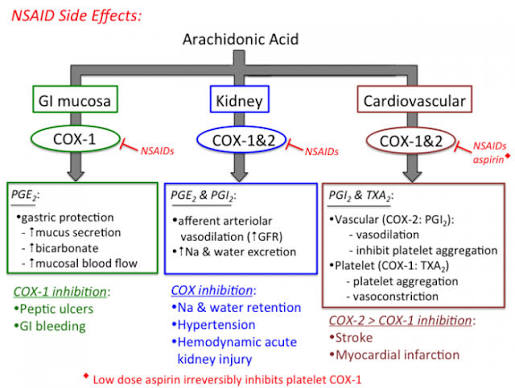
The mechanism by which NSAIDs cause kidney injury is one of the best-understood drug-organ interaction mechanisms in clinical pharmacology, and understanding it explains both why NSAIDs are safe at standard doses in healthy people with adequate hydration and why they cause serious kidney injury in CKD and in any state of volume depletion. NSAIDs inhibit cyclooxygenase enzymes — COX-1 and COX-2 — which are responsible for converting arachidonic acid to prostaglandins including prostaglandin E2 (PGE2) and prostacyclin (PGI2). In the kidney, these prostaglandins play a critical role in regulating renal vascular tone, particularly under conditions of physiological stress. Under basal conditions in a well-hydrated person with normal kidney function, renal prostaglandins play only a modest role in maintaining renal blood flow — this is why NSAIDs are generally well-tolerated in healthy, well-hydrated people who take them occasionally. However, under conditions of volume depletion or any state that activates the renin-angiotensin-aldosterone system (RAAS) — dehydration, diarrhea, vomiting, fever, heart failure, nephrotic syndrome, or cirrhosis — renal blood flow becomes critically dependent on prostaglandin-mediated afferent arteriolar vasodilation to counterbalance the RAAS-driven efferent vasoconstriction. When NSAIDs block prostaglandin synthesis under these conditions, the counterbalancing vasodilatory force is removed, allowing unopposed RAAS-driven vasoconstriction to dramatically reduce renal blood flow and glomerular filtration rate — causing pre-renal AKI that can progress to intrinsic renal injury (acute tubular necrosis) if sustained. In people with CKD, this vulnerability is not episodic but permanent: CKD kidneys are chronically underperfused relative to their scarred, reduced nephron mass, and this chronic underperfusion chronically activates RAAS, creating a permanent state of prostaglandin dependence for renal blood flow maintenance. Any NSAID use in a person with CKD superimposes prostaglandin blockade on this chronically activated RAAS, creating acute-on-chronic kidney injury risk even at standard NSAID doses and even for short durations of use. The severity of NSAID-induced AKI in CKD is proportional to the degree of baseline RAAS activation — more advanced CKD (lower eGFR), higher RAAS activation, greater prostaglandin dependence, greater AKI risk from any NSAID use. The authoritative guidance on CKD medication safety including NSAID avoidance is contained in the KDIGO CKD clinical practice guidelines.
The Triple Whammy: NSAIDs With ACE Inhibitors and Diuretics
The “triple whammy” of drug-induced AKI — the combination of an ACE inhibitor or ARB, an NSAID, and a diuretic — deserves particular attention because each component is a standard of care medication for common conditions (hypertension, heart failure, CKD, edema, pain, inflammation) that are frequently present together in the same patient, and the combination of all three creates an AKI risk that is far greater than any single component alone. The mechanism of each component’s contribution to the triple whammy explains why the combination is so dangerous. ACE inhibitors and ARBs block the conversion of angiotensin I to angiotensin II (ACE inhibitors) or block the angiotensin II receptor (ARBs), thereby reducing efferent arteriolar vasoconstriction — lowering intraglomerular pressure, which is their kidney-protective mechanism in CKD (reducing glomerular hypertension slows progression of CKD and reduces proteinuria) but which also reduces the pressure gradient that drives glomerular filtration. When circulating volume is adequate, this efferent vasodilation is well-tolerated; when volume is depleted, the reduction in filtration pressure can precipitate AKI. Diuretics — thiazides (hydrochlorothiazide, chlorthalidone) and loop diuretics (furosemide, bumetanide, torsemide) — reduce circulating blood volume by promoting sodium and water excretion, which is their mechanism for lowering blood pressure and treating edema but which also reduces the intravascular volume available to perfuse the kidney. Volume depletion from diuretics activates RAAS (the compensatory response to reduced volume), increasing angiotensin II levels and renal prostaglandin dependence. NSAIDs then block the prostaglandins that are the only remaining protection against the RAAS-driven vasoconstriction that is trying to compensate for the diuretic-induced volume loss in the context of ACE inhibitor/ARB-blocked efferent tone — the combination of reduced efferent pressure drive (RAAS blockade), reduced circulating volume (diuretic), and blocked compensatory afferent vasodilation (NSAID) produces AKI that can be severe. A landmark 2013 study in British Journal of Clinical Pharmacology found that the triple whammy combination doubled the risk of AKI requiring hospitalization compared to RAAS blockade plus diuretic alone, and a later large cohort study found that the risk of AKI hospitalization was increased approximately 8-fold in the first 30 days of triple whammy use compared to non-users. People on ACE inhibitors or ARBs for CKD should understand that adding even a single dose of an OTC NSAID during an illness with vomiting or diarrhea (further reducing volume) creates an extreme AKI risk scenario. The NIDDK CKD management page includes medication guidance relevant to NSAID avoidance in CKD.
Other Kidney Harms From NSAIDs Beyond Acute Injury
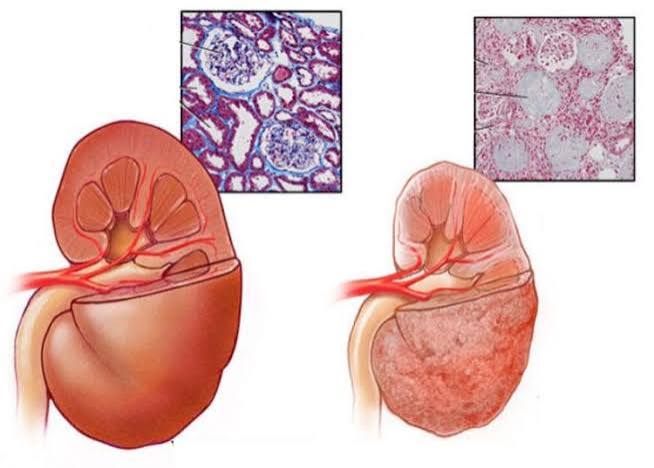
Acute kidney injury from NSAIDs — the hemodynamically mediated AKI via prostaglandin blockade described above — is the most common and well-recognized kidney harm, but NSAIDs cause additional kidney injuries through distinct mechanisms that deserve specific mention. Analgesic nephropathy — progressive chronic kidney disease from chronic analgesic use — is historically associated with combination analgesic products containing phenacetin (now withdrawn) and aspirin, but regular long-term NSAID use independently contributes to CKD progression through renal papillary necrosis (ischemic damage to the highly vulnerable papillary region of the kidney medulla, which is physiologically at the edge of hypoxia and most susceptible to prostaglandin-dependent perfusion reduction), interstitial nephritis, and recurrent low-grade AKI. People who have taken NSAIDs daily for years for conditions like chronic low back pain, osteoarthritis, or rheumatoid arthritis often have CKD that is partially attributable to NSAID use and was never labeled as analgesic nephropathy because the connection was not made. NSAID-induced acute interstitial nephritis (AIN) — an immune-mediated kidney injury distinct from the hemodynamic mechanism — can occur weeks to months after starting an NSAID and presents with declining kidney function, sometimes with a nephrotic syndrome picture (heavy proteinuria, edema, low albumin). AIN from NSAIDs typically causes kidney function decline that is more gradual than the hemodynamic AKI and may not recover fully even after NSAID discontinuation, particularly if diagnosis is delayed. Hyperkalemia — elevated blood potassium — is caused by NSAIDs through their inhibition of renin secretion (prostaglandins stimulate renin release; NSAID-mediated prostaglandin inhibition reduces renin, reducing aldosterone, impairing potassium excretion) and is particularly dangerous in people with CKD who already have reduced renal potassium excretion capacity. The combination of NSAIDs with potassium-sparing diuretics, trimethoprim, or ACE inhibitors in CKD can cause life-threatening hyperkalemia. Sodium retention and hypertension — NSAIDs blunt the natriuretic effect of loop diuretics and increase sodium reabsorption, causing fluid retention, worsening hypertension, and reducing the efficacy of diuretic therapy — a particular problem for people with CKD-associated hypertension and heart failure who rely on diuretics for volume management. The detailed clinical review of CKD complications and contributing factors including medications is available in the StatPearls CKD clinical review. For people managing CKD and heart failure together — where NSAID avoidance is critical from both a kidney and cardiac perspective — the kidney disease and heart health guide covers the overlapping medication considerations. For a broader view of which drugs to use for pain in kidney disease patients, see the pain relievers and kidney safety guide.
Who Is Most at Risk From NSAIDs: Recognizing High-Risk Scenarios
While all people with CKD have elevated NSAID kidney risk, certain clinical scenarios represent extreme risk that clinicians and patients should recognize as NSAID-contraindicated situations. Understanding these high-risk scenarios helps people with CKD know when NSAID risk is most acute — and when to seek pain management alternatives most urgently. Acute illness with vomiting, diarrhea, or reduced oral intake is the highest-risk scenario for NSAID use: the volume depletion from gastrointestinal losses maximally activates RAAS, creating the most intense prostaglandin dependence; taking even a single dose of an OTC NSAID in this context in a person with CKD on a RAAS blocker and diuretic is extremely high risk for severe AKI requiring hospitalization. People with CKD should be counseled to have a “sick day” protocol for this scenario: hold NSAIDs (and often RAAS blockers and diuretics) during acute illness with significant fluid losses and ensure prompt rehydration or medical assessment. Contrast dye procedures (CT with contrast, cardiac catheterization) are a known risk factor for AKI (contrast nephropathy), and NSAID use in the peri-procedural period additively increases AKI risk; people with CKD scheduled for contrast procedures should hold NSAIDs in the days surrounding the procedure. Heart failure decompensation — periods of reduced cardiac output and reduced renal perfusion — creates the same high-RAAS, high-prostaglandin-dependence state as volume depletion; NSAID use during heart failure decompensation or acute heart failure hospitalization carries extreme AKI risk and can worsen heart failure directly (through sodium retention and afterload increase). Advanced CKD (eGFR below 30) represents a severity threshold below which NSAID use carries a very high risk of irreversible AKI requiring dialysis initiation, and clinical guidelines consistently recommend NSAID avoidance at this stage. Uncontrolled diabetes — which is independently associated with CKD progression and with impaired renal autoregulation — amplifies NSAID kidney risk; people with diabetic nephropathy should avoid NSAIDs. Older age independently increases NSAID kidney risk: renal reserve is reduced by 1% per year from age 40 and older adults are at greater risk of volume depletion from reduced thirst perception and reduced fluid intake; OTC NSAID use in adults over 70 carries meaningful AKI risk even without CKD. The NKF patient guidance on protecting your kidneys — including medication avoidance — is available at the NKF kidney health resource page. People at any stage of CKD who have been taking NSAIDs and are unsure of the kidney impact should ask their nephrologist for a medication review — the medication safety for kidney patients guide provides the framework for these conversations and covers the full range of medications requiring attention in CKD beyond NSAIDs.
Sources: NIDDK — Managing CKD · KDIGO CKD Guidelines · StatPearls — CKD · NKF — CKD
Safer Alternatives to NSAIDs for People With Kidney Disease
The kidney safety imperative to avoid NSAIDs in CKD does not mean that people with kidney disease must simply live with unmanaged pain — safer alternatives exist for every common pain indication for which NSAIDs are used, and in many cases these alternatives are as effective as NSAIDs when used appropriately. Acetaminophen (paracetamol) is the most important NSAID alternative for mild to moderate pain — headache, musculoskeletal pain, back pain, fever, and general pain complaints — in people with CKD. At recommended doses (up to 4,000 mg/day in healthy adults, reduced to 2,000–2,500 mg/day in advanced CKD with dosing every 6–8 hours), acetaminophen provides effective analgesia without the prostaglandin-blocking mechanism that causes hemodynamic kidney injury. Unlike NSAIDs, acetaminophen does not cause fluid retention, does not raise blood pressure, does not impair diuretic efficacy, and does not interact with RAAS blockers to create triple whammy risk — making it a uniformly safer choice for CKD patients needing OTC pain relief. Topical diclofenac (Voltaren gel, Flector patch) — a topical NSAID formulation applied directly to the painful area — achieves tissue-level anti-inflammatory concentrations with minimal systemic absorption (approximately 6–7% of the systemic NSAID exposure of oral diclofenac), producing local analgesic and anti-inflammatory effects without meaningful systemic NSAID concentrations or renal prostaglandin blockade. This makes topical NSAIDs a useful option for localized osteoarthritis pain (knee, hand, wrist) in CKD patients where the systemic NSAID pathway is contraindicated; topical diclofenac should still be used with caution and at the lowest effective dose in advanced CKD but is generally considered acceptable when the oral NSAID alternative would not be. Topical lidocaine patches and topical capsaicin cream provide localized pain relief for musculoskeletal and neuropathic pain with no systemic absorption relevant to kidney function and are safe at all CKD stages. Physical therapy is the most effective long-term alternative to NSAIDs for musculoskeletal conditions — osteoarthritis, chronic back pain, tendinopathy — that account for the majority of NSAID use in chronic pain patients. Exercise therapy and strength training reduce pain, improve function, and modify disease progression in osteoarthritis with effects that are durable and do not carry the medication risks of NSAIDs; referral to physical therapy for CKD patients currently using NSAIDs for musculoskeletal pain is a clinically justified and kidney-safe treatment escalation. TENS (transcutaneous electrical nerve stimulation) units — portable devices that deliver low-level electrical current through surface electrodes — provide meaningful pain relief for many musculoskeletal and neuropathic pain conditions with no pharmacological mechanism and zero kidney risk; they are safe at all CKD stages and in people on dialysis. Corticosteroid injections (intra-articular or local) for inflammatory arthritis, gout, or bursitis deliver localized anti-inflammatory effect without systemic NSAID kidney risk; systemic corticosteroids carry their own kidney risks through fluid retention and blood pressure elevation but are a shorter-term alternative to NSAIDs for acute inflammatory flares when the anti-inflammatory mechanism is specifically needed. Colchicine — used for gout flares — is an NSAID alternative for gout specifically; it requires dose reduction in advanced CKD (eGFR below 30) but avoids the NSAID kidney mechanism. For people who have been chronically using NSAIDs for rheumatoid arthritis or other inflammatory joint diseases — where the anti-inflammatory mechanism of NSAIDs is specifically required — disease-modifying antirheumatic drugs (DMARDs) such as methotrexate or hydroxychloroquine, prescribed by a rheumatologist, can reduce the need for NSAIDs by controlling underlying disease activity; DMARDs have their own CKD dose-adjustment considerations but do not share the acute hemodynamic kidney risk of NSAIDs. The detailed comparison of pain reliever safety profiles in CKD — including all of these alternatives and their evidence bases — is the subject of the pain relievers and kidney safety guide. The kidney disease medications overview guide provides the framework for understanding all medication adjustments needed in CKD, not only pain relievers.
Recognizing NSAID-Induced Kidney Injury: Symptoms and What to Do
NSAID-induced kidney injury can present insidiously — in many cases there are no symptoms until kidney function has significantly declined — or it can present acutely with symptoms that should prompt urgent medical attention. People with CKD who use NSAIDs (knowingly or through OTC use without checking with their nephrologist) should know the warning signs that suggest kidney injury may be occurring. Reduced urine output (oliguria) — producing noticeably less urine than normal — is one of the most important signs of acute kidney injury from any cause including NSAIDs; in the context of recent NSAID use, reduced urine output warrants immediate medical evaluation. Sudden weight gain and swelling (edema) — fluid retention caused by NSAID-induced sodium retention and/or by AKI — is another early warning sign; a gain of more than 2 kg over 1–2 days suggests significant fluid retention. Worsening blood pressure — NSAIDs raise blood pressure through sodium retention and by blunting the effect of antihypertensive medications — can be an early signal of NSAID kidney effects even before overt AKI; people who monitor their blood pressure at home and notice an unexplained rise after starting an NSAID should stop the medication and contact their physician. Declining kidney function on blood tests — rising creatinine and falling eGFR — detected at routine monitoring may be the only sign of NSAID-induced CKD progression in people who use NSAIDs regularly; the connection to NSAID use may not be obvious without specifically asking about OTC medication use. What to do if you suspect NSAID kidney injury: stop the NSAID immediately, ensure adequate hydration (drink water unless you have a fluid restriction from your nephrologist), and contact your nephrologist or primary care physician for urgent kidney function testing (blood creatinine and urine tests). In most cases of hemodynamic NSAID AKI — where the injury is from reduced renal blood flow rather than structural damage — kidney function recovers within days to weeks of stopping the NSAID and restoring adequate hydration, provided the injury was caught before progressing to structural tubular damage. People with CKD who have been taking NSAIDs and want a full assessment of how their medications may be affecting their kidneys should arrange a nephrologist appointment and bring a complete medication list including all OTC drugs and supplements. The comprehensive review of how different medications affect the kidneys and what dose adjustments are needed at each CKD stage is covered in the medication safety for kidney patients guide. The KDIGO guidelines on CKD medication management are at the KDIGO CKD guidelines page.
I developed stage 3a CKD and my nephrologist traced it back to years of daily ibuprofen for chronic back pain — I had no idea OTC pain relievers could do that kind of damage. The prostaglandin mechanism you describe was a revelation: I’d always thought of prostaglandins as just inflammation chemicals, not as something that protects kidney blood flow. The triple whammy section was alarming because I was on lisinopril, hydrochlorothiazide, AND ibuprofen for at least three years. My nephrologist said stopping the ibuprofen alone won’t reverse what’s already happened but will stop further progression — and she also confirmed that my kidney decline was likely due to a combination of hypertension-related damage and NSAID-related damage that fed into each other. Switching to acetaminophen and starting physical therapy for the back pain has worked reasonably well — not as effective as ibuprofen for bad days but much better than living with CKD progression.
Excellent mechanistic explanation of NSAID nephrotoxicity. The point about CKD patients being chronically RAAS-activated — and therefore chronically prostaglandin-dependent — is the key concept that non-specialist prescribers often miss. They understand that NSAIDs occasionally cause AKI in dehydrated patients, but they don’t appreciate that in CKD, every moment of NSAID exposure is essentially a ‘dehydrated’ state for the kidney’s autoregulatory capacity, even when the patient is fully hydrated. The triple whammy epidemiology is particularly striking — the 8-fold AKI hospitalization risk in the first 30 days of triple combination use underscores that this is not a theoretical concern. I would add for readers: the sick-day guidance for stopping NSAIDs (and often RAAS blockers and diuretics) during gastroenteritis or vomiting applies with equal force in both directions — if a CKD patient has stopped their antihypertensives during illness, they should also be reminded never to add an OTC NSAID in that window to manage fever or muscle aches.
Robert, the trajectory you describe — years of daily NSAIDs for back pain alongside RAAS blockade and a diuretic, producing progressive CKD that was only identified on routine blood tests — is unfortunately common, and the fact that stopping the NSAID slows further progression is a meaningful outcome even if some of the damage already occurred. The combination of physical therapy and acetaminophen is the correct transition for chronic musculoskeletal pain in CKD, and many people who switch find that a structured exercise and manual therapy program manages their pain better long-term than the NSAID was doing. Dr. Mehta’s addition about the sick-day rule is critical: the window of greatest vulnerability is during acute illness with vomiting or diarrhea, when circulating volume falls rapidly. A practical rule for CKD patients to remember is: during any illness with significant fluid losses, hold NSAIDs (if still using any), hold RAAS blockers, hold diuretics, and drink fluids — and call your nephrologist if urine output drops or symptoms worsen over 24 hours.