
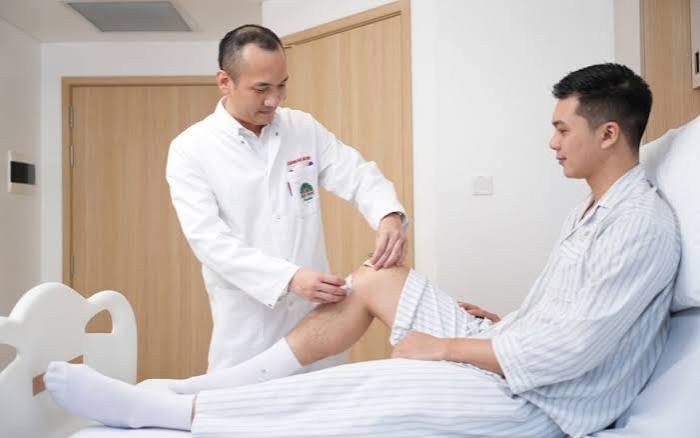
The operation is only half the story. Whether you are recovering from a hip or knee replacement, shoulder surgery, or another joint procedure, what happens in the weeks and months afterwards determines how good your result will be. Recovery after joint surgery is an active process — not something that simply happens to you while you wait — and the effort you put into it is the single biggest factor within your control. This guide explains what recovery actually involves: the phases and timeline, how to get the best result, what is normal, and the warning signs that mean you should seek help.
Recovery after joint surgery happens in three broad phases: an early phase (0–6 weeks) focused on wound healing, pain control, early movement, and preventing blood clots; a strengthening phase (6–12 weeks) building strength, movement, and independence; and a maturation phase (3–12 months) reaching the final result. The most important thing you can do is engage fully with your physiotherapy exercises — rehabilitation is the strongest factor within your control. Most people are walking with aids within a day, driving around 6 weeks, and back to most activities by 6–12 weeks.
Recovery Is an Active Process, Not a Passive One
The most important mindset shift for anyone recovering from joint surgery is this: the operation creates the opportunity, but the rehabilitation delivers the result. A technically perfect operation followed by poor rehabilitation produces a disappointing outcome, while a good operation followed by committed rehabilitation produces an excellent one. This is not a minor detail — across all the evidence, engagement with physiotherapy and exercise is consistently the strongest factor in recovery that is within the patient’s own control.
Modern joint surgery is built around this principle. “Enhanced recovery” programmes — now standard in the NHS — get you up and moving within a day of surgery precisely because early movement speeds recovery, reduces complications, and sets the trajectory for the weeks ahead. Our guides on joint replacement surgery, knee replacement, and hip replacement cover the joint-specific details; this guide covers the general principles that apply across them all.
The Three Phases of Recovery
While every joint and every person is different, recovery after joint surgery generally follows three broad phases. Understanding them helps you know what to expect and what to focus on at each stage.
| Phase | Timeframe | Main Focus |
|---|---|---|
| Early / acute | 0–6 weeks | Wound healing, pain control, early mobilisation, protecting the joint, preventing blood clots, starting gentle exercises |
| Strengthening / recovery | 6–12 weeks | Building strength and range of movement, reducing walking aids, resuming daily activities and light work |
| Maturation | 3–12 months | Final strength, return to full activity, residual swelling settling, the joint feeling “yours” |
| Source: NICE NG157; Chartered Society of Physiotherapy; NHS | ||
The Early Phase (0–6 Weeks): The Foundation
The first six weeks are the foundation of your recovery. Pain is at its most noticeable, swelling and bruising are normal, and your main jobs are to protect the healing joint, keep moving gently, do your prescribed exercises, and care for your wound. This is also the phase where the risk of complications such as blood clots and infection is highest, so following your team’s advice closely matters most here.
The Strengthening Phase (6–12 Weeks): Building Back
As the wound heals and the early soreness settles, the focus shifts to rebuilding strength and movement. You will gradually reduce your reliance on walking aids, increase your activity, and begin resuming normal daily life — often returning to driving and desk-based work in this window. Consistency with your exercises remains essential; this is where the strength and function that determine your long-term result are built.
The Maturation Phase (3–12 Months): The Final Result
Recovery continues well beyond the point where you feel “back to normal.” Strength keeps improving, residual swelling gradually settles, and the joint comes to feel more like your own over the course of the first year. Most of the improvement is usually achieved by 3–6 months, but the final result — particularly for the knee — can take a full 12 months.
The Key Components of Good Recovery
Several elements work together to produce a good recovery. Attending to all of them, rather than just one, gives you the best chance of an excellent result.
Many people worry about taking pain relief after surgery, but under-treating pain is counterproductive: if pain stops you doing your exercises, your recovery suffers. Your team will usually prescribe a combination approach — regular paracetamol as a base, with stronger medication for the early weeks, tapering as you improve. A useful tip is to time your pain relief so that it is working during your physiotherapy exercises. The goal is not to be completely pain-free (some discomfort with exercise is expected) but to keep pain manageable enough that you can do the work recovery requires.
Returning to Everyday Life
One of the most common sets of questions after joint surgery is about when you can return to specific activities. While the exact timing depends on the joint, the procedure, and your progress, here is a general guide. Always check with your own surgical team, as their advice takes priority.
| Activity | Typical Timing | Notes |
|---|---|---|
| Walking (with aids) | Day 0–1 | Early mobilisation is encouraged and important |
| Showering | Once wound sealed (often ~5–7 days) | Follow wound care advice; avoid soaking the wound |
| Driving | ~6 weeks | Must be able to perform an emergency stop and be in full control; check with surgeon and insurer |
| Desk / light work | ~4–6 weeks | Depends on comfort, commute, and role |
| Manual / heavy work | ~12 weeks or more | Depends on the physical demands and the joint |
| Sex | When comfortable (~4–6 weeks) | Observe any joint precautions, e.g. after hip replacement |
| Flying | Discuss with team | Blood clot risk; often advised to wait several weeks |
| Source: NHS; DVLA guidance; British Orthopaedic Association | ||
What Is Normal — and What Is Not
Knowing what to expect prevents unnecessary alarm and, equally importantly, helps you recognise the genuine warning signs that need attention.
- Swelling and bruising around the joint — can last weeks to months and often fluctuates with activity.
- Warmth over the joint — the operated area often feels warmer than the other side for several months.
- Some pain with exercise — discomfort during rehabilitation is expected and not harmful; sharp or escalating pain is different.
- Numbness near the scar — a patch of numb skin, especially after knee surgery, is common and usually permanent.
- Clicking or clunking from an artificial joint — usually normal.
- Fatigue — recovering from surgery is tiring; feeling more tired than usual for several weeks is normal.
Contact your surgical team, GP, or NHS 111 urgently — or attend A&E — if you develop any of the following:
- Signs of infection: increasing redness, heat, or swelling around the wound; fluid or pus leaking; a wound that opens; or fever and feeling generally unwell.
- Signs of a blood clot in the leg (DVT): calf or leg pain, swelling, warmth, and redness — particularly in one leg.
- Signs of a clot on the lung (PE) — a 999 emergency: sudden breathlessness, chest pain that is worse on breathing in, or coughing up blood.
- Possible dislocation (after hip replacement): sudden severe pain with the leg appearing shortened or rotated and an inability to bear weight.
- Pain that is severe, escalating, and not controlled by your prescribed pain relief.
How to Get the Best Possible Recovery
Much of your recovery is within your influence. These evidence-supported steps give you the best chance of an excellent outcome.

Why Rehabilitation Matters So Much
It is worth restating the central message, because it is the one that makes the biggest difference. Study after study, and the consistent experience of surgeons and physiotherapists, points to the same conclusion: the quality and consistency of rehabilitation is the strongest modifiable predictor of how well a joint operation turns out. The Cochrane evidence base supports structured rehabilitation after joint replacement, and both NICE NG157 and the Chartered Society of Physiotherapy place rehabilitation at the centre of recovery.
This is empowering, because it means the outcome is not simply handed to you by the surgeon — you are an active partner in it. The person who does their exercises every day, keeps moving, prepares well, and stays patient through the inevitable ups and downs tends to get a markedly better result than the person who waits passively for recovery to arrive. Versus Arthritis and the British Orthopaedic Association offer further patient resources on making the most of your recovery.
Frequently Asked Questions: Recovery After Joint Surgery
- NHS. Recovery after hip replacement. Available at: nhs.uk
- NHS. Recovery after knee replacement. Available at: nhs.uk
- National Institute for Health and Care Excellence. Joint replacement (primary): hip, knee and shoulder. NG157. 2020. Available at: nice.org.uk/guidance/ng157
- Chartered Society of Physiotherapy. Available at: csp.org.uk
- National Joint Registry. Available at: njrcentre.org.uk
- Cochrane. Rehabilitation following joint replacement. Available at: cochranelibrary.com
- NHS. Blood clots. Available at: nhs.uk
- NHS. Deep vein thrombosis (DVT). Available at: nhs.uk
- Versus Arthritis. Recovery and rehabilitation. Available at: versusarthritis.org
- British Orthopaedic Association. Available at: boa.ac.uk
Summary: Making the Most of Your Recovery
Recovery after joint surgery is an active partnership, not something that simply happens to you. It unfolds in three phases – an early phase of healing and gentle movement, a strengthening phase of rebuilding function, and a longer maturation phase that reaches the final result over the first year. The single most powerful thing within your control is your rehabilitation: doing your physiotherapy exercises consistently, especially in the first six weeks, is what turns a good operation into an excellent outcome. Prepare well before surgery, set up your home, manage your pain so you can exercise, eat and hydrate well, and be patient through the inevitable ups and downs. Knowing what is normal – swelling, warmth, some discomfort with exercise – prevents unnecessary worry, while recognising the genuine warning signs of infection, blood clots, or dislocation ensures you get prompt help if you need it. Approached this way, recovery is something you actively shape rather than passively endure.
The Emotional Side of Recovery
One aspect of recovery that is often overlooked is the emotional and psychological side. Major surgery and a long recovery can take a real toll on mood, and it is common and entirely normal to feel low, frustrated, or impatient at points during the process — particularly in the early weeks when progress feels slow, sleep is disrupted, and you are more dependent on others than usual. Many people are surprised by how tiring recovery is and how much it affects their emotional resilience.
Understanding that this is a normal part of recovery, rather than a sign that something is wrong, helps a great deal. Progress is rarely a straight line: good days are followed by setbacks, and plateaus where nothing seems to change are common before improvement resumes. Keeping a simple record of your milestones — the first time you walk to the end of the road, the first night you sleep through, the day you manage the stairs — can help you see the progress that is easy to miss when you are living it day to day. Staying connected with friends and family, accepting help when it is offered, and being kind to yourself about the pace of recovery all matter. If low mood is persistent, severe, or affecting your motivation to do your rehabilitation, mention it to your GP or surgical team, because support is available and your mental wellbeing is part of your overall recovery. The people who recover best are usually those who treat the emotional ups and downs as an expected part of the journey rather than an unexpected failure.
The mindset point at the start of this article is exactly right and I wish someone had put it to me so clearly before my knee replacement. I spent the first fortnight waiting to feel better, as though recovery was something that would arrive on its own, and I did my exercises half-heartedly. My progress was slow and I got disheartened. It was only when my physiotherapist bluntly told me that the operation was the opportunity and the exercises were the result that I changed my approach. Once I committed to doing them properly every day, my progress transformed. The idea that I was an active partner in the outcome rather than a passive patient made all the difference.
Marion – thank you for sharing this so honestly, because the shift you describe is the most important one anyone recovering from joint surgery can make, and far too few people hear it clearly at the start. The passive-waiting mindset is completely understandable – we are conditioned to think of surgery as the thing that fixes us – but with joint surgery the operation and the rehabilitation are genuinely two halves of one treatment, and the second half is the one you control. Your physiotherapist did you a real service with that blunt framing. Your experience of progress transforming once you committed to the exercises is exactly what the evidence predicts, and your story will help others who are in that disheartening early fortnight recognise what they need to do. Wishing you a strong continued recovery.
The table on returning to everyday activities answered a dozen questions I had been too scattered to ask at my appointment. The driving guidance in particular was useful – I had not realised the key test was being able to perform an emergency stop and being in full control, nor that returning before I was fit could affect my insurance. The note about timing pain relief so it is working during physiotherapy was a small but genuinely practical tip that improved my sessions immediately. I had been taking my medication at fixed times that did not line up with my exercises and was struggling through them in more pain than necessary. A simple change that made a real difference.