
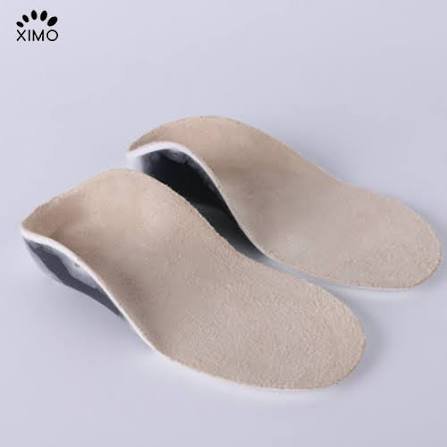
Orthotics — the insoles and devices worn inside shoes to support, cushion, or re-align the foot — are widely used for foot pain and are often promised as a solution for knee and alignment problems too. As with braces and supports, the honest picture is mixed: orthotics genuinely help some conditions well, while for others the popular theory has not held up in trials. This guide explains what orthotics are, which foot and knee problems they actually help, the real difference between off-the-shelf and expensive custom devices, and how to decide whether they are worth it for you.
Orthotics are insoles or devices worn in shoes to support, cushion, offload, or subtly re-align the foot. They have good evidence for conditions such as plantar fasciitis (heel pain), flat foot, forefoot pain, and — importantly — protecting the diabetic foot. The evidence for lateral wedge insoles to help knee osteoarthritis is weak, and NICE does not recommend them. For many common foot problems, good off-the-shelf insoles work comparably to expensive custom ones. Orthotics work best as part of a broader plan that includes exercise, not as a standalone cure.
What Orthotics Are and How They Work
An orthotic (or orthosis) is a device worn inside the shoe that changes how the foot is supported and how forces pass through it. Despite the technical-sounding name, orthotics range from a simple cushioning insole bought at a pharmacy to a precisely moulded, bespoke device made by a podiatrist. They work in several ways, depending on the design and the problem being addressed.
The reason orthotics are considered for knee and even hip problems — not just foot pain — is that the foot is the foundation of the whole leg. How the foot meets the ground influences the angles and forces at the ankle, knee, and hip (what clinicians call the “kinetic chain”). In theory, changing the foot’s position with an orthotic could therefore influence pain further up the leg. This is a reasonable idea, and it holds true in some situations — but, importantly, the body is adaptable and complex, and simply altering the foot does not reliably fix pain elsewhere. This is why the evidence for orthotics is strong for some foot conditions but disappointing for using them to treat knee arthritis.
Where Orthotics Have Good Evidence
For several specific conditions, orthotics are genuinely useful and well supported. These are the cases where investing in them — or being prescribed them — makes sense.
Plantar Fasciitis and Heel Pain
Plantar fasciitis — pain under the heel, often worst with the first steps in the morning — is one of the most common conditions for which orthotics are used, and they provide genuine symptomatic relief for many people. Cushioned heel support and arch support reduce strain on the plantar fascia, the band of tissue under the foot. Importantly, orthotics work best as part of a package that includes calf and plantar fascia stretching and managing the load on the foot; they are a helpful adjunct rather than a standalone cure. The NHS plantar fasciitis guidance covers the full approach.
Flat Feet and Fallen Arches
For flat feet (fallen arches) that cause pain, or for a condition called posterior tibial tendon dysfunction where the arch gradually collapses, arch-support orthotics can be genuinely helpful. They support the arch, reduce strain on the overworked tendons and tissues, and improve comfort during standing and walking. The NHS flat feet resource explains when flat feet need attention — many people have flat feet with no pain and need nothing at all.
Forefoot Pain (Metatarsalgia)
Pain in the ball of the foot (metatarsalgia) often responds well to orthotics with metatarsal pads or bars, which redistribute pressure away from the painful metatarsal heads. This simple intervention can make walking considerably more comfortable.
Protecting the Diabetic Foot
For people with diabetes who have reduced sensation in their feet (diabetic neuropathy), custom orthotics and specialist footwear play an important, evidence-based role. By offloading high-pressure areas, they help prevent the pressure sores and ulcers that can have serious consequences in a foot that cannot feel pain normally. This is one area where custom devices, prescribed as part of specialist diabetic foot care, are clearly justified. If you have diabetes with any foot complications or loss of sensation, foot protection is a priority — Diabetes UK provides detailed foot-care guidance, and you should be under regular podiatry review.
Where the Evidence Is Weak: Orthotics for Knee Arthritis
Here is where the popular theory and the actual evidence diverge most sharply. For many years, lateral wedge insoles — insoles thicker on the outer edge — were promoted for knee osteoarthritis affecting the inner (medial) compartment, the most common pattern. The theory was elegant: by tilting the foot, the insole would shift load away from the worn inner part of the knee.
Unfortunately, when this theory was tested in large, high-quality randomised trials and pooled in Cochrane reviews, lateral wedge insoles were found to produce little or no meaningful clinical benefit for knee osteoarthritis pain. As a result, NICE CG177 does not recommend them for knee OA. This is an important example of why evidence matters: an intervention can be based on sound-seeming reasoning and still fail to help when properly tested. If you have knee osteoarthritis, the treatments with real evidence are exercise and strengthening, weight management, and appropriate pain relief — not insoles. Our guides on knee strengthening exercises and low-impact exercise for joint pain cover what actually works.
Off-the-Shelf vs Custom Orthotics
One of the most practical — and expensive — questions about orthotics is whether you need custom-made devices or whether off-the-shelf (prefabricated) insoles will do. The marketing around custom orthotics is powerful, but the evidence is reassuring for the wallet.
| Feature | Off-the-Shelf (Prefabricated) | Custom (Bespoke) |
|---|---|---|
| Cost | Low (from a few pounds to ~£30) | High (often £150–£400+) |
| Availability | Pharmacies, shops, online | Prescribed and made by a podiatrist |
| Fit | Standard sizes; some adjustable | Moulded to your individual foot |
| Evidence for common conditions | Often comparable to custom | Not always superior for everyday problems |
| When clearly justified | Most common foot pain, first-line | Complex deformity, diabetic foot, failed off-the-shelf |
| Source: Cochrane; Royal College of Podiatry; NHS | ||
For most common conditions — plantar fasciitis, general arch support, cushioning — good-quality off-the-shelf insoles often perform comparably to custom devices at a fraction of the cost, and are a sensible first step. Custom orthotics are clearly justified for more complex situations: significant foot deformity, the diabetic foot, biomechanical problems that have not responded to off-the-shelf options, or specific needs identified by a podiatrist. If in doubt, a podiatry assessment can tell you whether custom devices are genuinely likely to add value in your case, rather than you paying for them on spec.

Types of Orthotics Explained
| Type | Best For | Notes |
|---|---|---|
| Cushioning insoles | General comfort, shock absorption | Widely available; low cost; good first option |
| Arch support insoles | Flat feet, arch pain, tendon strain | Off-the-shelf or custom |
| Heel cups / pads | Plantar fasciitis, heel pain | Symptomatic relief; pair with stretching |
| Metatarsal pads / bars | Forefoot pain (metatarsalgia) | Redistribute pressure off the ball of the foot |
| Heel raise | Leg length discrepancy | Simple, effective for a genuine difference |
| Lateral/medial wedges | Knee OA (historically) | Limited evidence; not NICE recommended |
| Custom moulded orthoses | Complex biomechanics, diabetic foot | Podiatrist-prescribed; bespoke; higher cost |
| Source: Royal College of Podiatry; NHS; Cochrane | ||
How to Decide and How to Get Orthotics
Given the mixed evidence, a sensible, stepwise approach helps you spend wisely and get the benefit where it genuinely exists.
Footwear Matters As Much As Insoles
It is easy to focus on the insole and forget the shoe it goes into. For many foot and lower-limb problems, the shoe itself is at least as important as any orthotic. Supportive, well-fitting shoes with adequate cushioning and a sensible heel height provide much of the benefit people seek from orthotics, and an orthotic placed inside an unsupportive or worn-out shoe cannot fully compensate. Before investing in orthotics, it is worth reviewing your footwear: are your everyday shoes supportive and in good condition, and are they appropriate for the activities you do? Sometimes a change of shoe achieves as much as an insole, and a good orthotic in a good shoe is far more effective than either alone.
Orthotics in the Bigger Picture
As with braces and supports, the key to using orthotics wisely is to see them as one tool among several, not as a cure. For foot conditions where they have good evidence, they are a genuinely valuable adjunct — easing pain enough to let you stay active and allow the condition to settle. For knee and alignment problems, they are far less reliable, and the evidence points firmly back to exercise, strengthening, and weight management as the treatments that work. This mirrors the message of our guide on braces and supports for joint pain: match the intervention to the evidence, use it to enable activity, and build on the foundation of an active approach supported by physiotherapy and exercise. Organisations such as Versus Arthritis and the Chartered Society of Physiotherapy offer further guidance.
Frequently Asked Questions: Orthotics for Foot and Knee Alignment
- National Institute for Health and Care Excellence. Osteoarthritis: care and management. CG177. 2014. Available at: nice.org.uk/guidance/cg177
- NHS. Flat feet. Available at: nhs.uk
- NHS. Plantar fasciitis. Available at: nhs.uk
- NHS. Foot pain. Available at: nhs.uk
- Royal College of Podiatry. Available at: rcpod.org.uk
- Cochrane. Foot orthoses and insoles for musculoskeletal conditions. Available at: cochranelibrary.com
- Diabetes UK. Foot care. Available at: diabetes.org.uk
- Versus Arthritis. Available at: versusarthritis.org
- Chartered Society of Physiotherapy. Available at: csp.org.uk
- BMJ Best Practice. Available at: bmj.com
Summary: Orthotics Done Wisely
Orthotics are a genuinely useful tool for the right foot conditions and a disappointing one for the wrong expectations. Reach for them with confidence for plantar fasciitis, painful flat feet, forefoot pain, and – importantly – protecting the diabetic foot, where the evidence supports real benefit. Be sceptical of claims that insoles will fix knee arthritis, where lateral wedges have failed in trials and NICE does not recommend them. For most common foot problems, a good off-the-shelf insole in a supportive, well-fitting shoe is a sensible and cost-effective first step, with custom devices reserved for complex needs or the diabetic foot. Above all, treat orthotics as an adjunct that enables an active approach built on exercise, stretching, and appropriate footwear – not as a standalone cure. Chosen to match the evidence and used alongside the foundations, they can be a valuable part of keeping you comfortable and on your feet.
Giving Orthotics a Fair Trial
If you do try orthotics, it helps to know what a fair trial looks like so you can judge whether they are genuinely helping. Most orthotics need a short break-in period: wear them for a few hours a day at first and gradually increase, as feet need time to adjust to a change in support, and starting with all-day wear can cause new aches. Give a well-matched orthotic several weeks of consistent use before deciding whether it is working, and use it alongside, not instead of, the stretching, strengthening, and footwear changes appropriate to your condition.
Signs that an orthotic is helping include reduced pain during and after activity, being able to walk or stand for longer in comfort, and a gradual return to the things the pain had been limiting. Signs that it is not the right device – or not the whole answer – include no improvement after a fair trial, new pain caused by the orthotic itself, or increasing reliance on it without any underlying improvement. If an orthotic is causing rubbing, pressure marks, or new pain, stop using it and seek advice rather than pushing through. And if a reasonable trial of a well-chosen orthotic, combined with the foundations, has not helped, that is a signal to seek a proper assessment rather than simply buying a more expensive device – persistent foot or knee pain deserves a diagnosis, not just another insole.
I spent nearly three hundred pounds on custom orthotics for my plantar fasciitis last year, having been told they were essential. They helped, but reading here that good off-the-shelf insoles are often comparable for this exact condition was a little deflating – I suspect I could have tried a cheaper option first. That said, the point about combining them with stretching and load management rather than relying on the insole alone was the bit I had been missing. Once I added the calf and plantar fascia stretches properly, the improvement accelerated considerably. The message that orthotics are an adjunct rather than a standalone cure is one I wish I had understood from the start.
Hazel – thank you for sharing this so openly, because your experience captures two important points at once. First, the evidence that off-the-shelf insoles are often comparable to custom for common conditions like plantar fasciitis is genuinely useful for people deciding how to spend their money, and trying a quality off-the-shelf option first is a reasonable approach for most. Second, and perhaps more importantly, your experience shows why the adjunct message matters so much: the custom orthotics helped, but the real acceleration came when you added the stretching and load management. That is exactly how orthotics are meant to work – supporting an active approach rather than replacing it. We are glad you are improving, and your insight will help others approach it the right way round from the start.
The honesty about lateral wedge insoles for knee arthritis was refreshing. I had been about to buy a pair after reading that they offload the inner knee, and the explanation that this sound-seeming theory failed when properly tested in large trials saved me the money and, more importantly, redirected me to what actually works. I have put the effort into a knee strengthening programme and weight management instead, and three months on my knee is noticeably better. The point that an intervention can be based on perfectly logical reasoning and still not help when tested is an important lesson that applies well beyond insoles.