
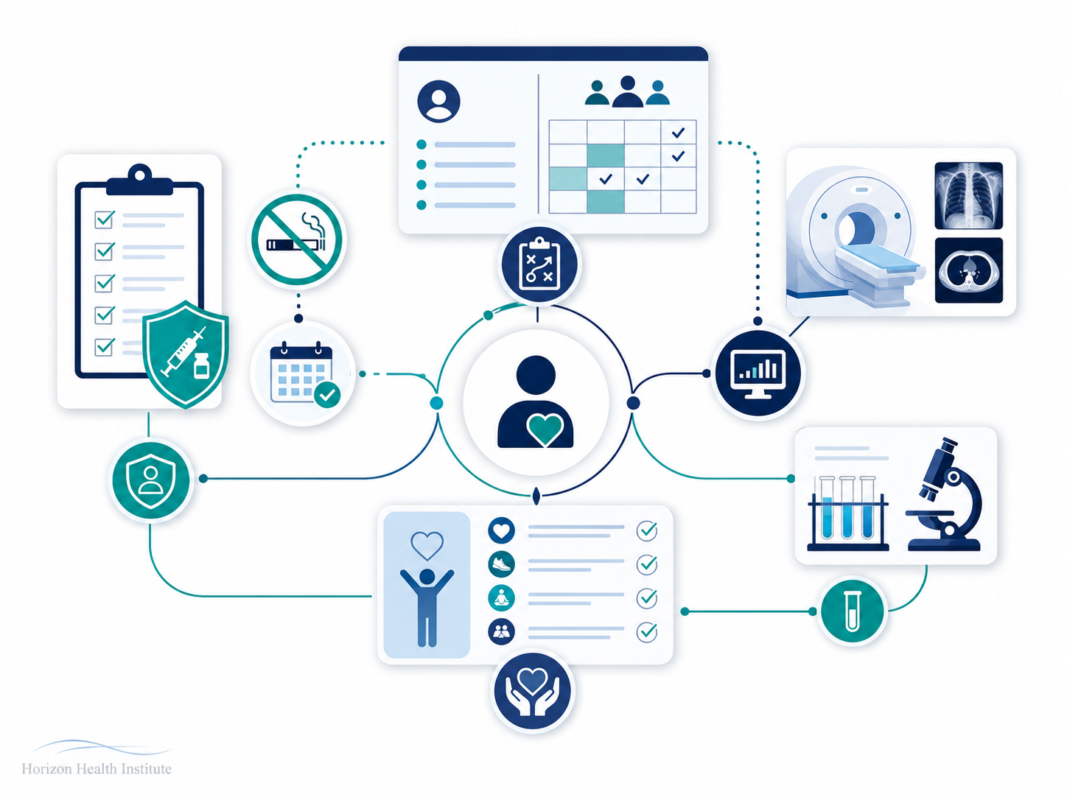
Horizon Health Institute · Cancer Education
Cancer in Adults: Symptoms, Causes, Screening, Diagnosis, and Prevention
Cancer is not one single disease. It is a broad group of conditions in which abnormal cells grow, divide, and may spread beyond where they started. For adults, understanding cancer begins with three practical ideas: knowing warning signs, following age-appropriate screening, and getting timely medical evaluation when something changes.
U.S. projected new cases in 2026
2.1M+
Source: American Cancer Society, Cancer Facts & Figures 2026
Lifetime risk in the U.S.
About 39%
Source: NCI SEER Cancer Stat Facts
Core message
Earlier matters
Screening and timely diagnosis can improve treatment options for many cancers.

What Is Cancer?
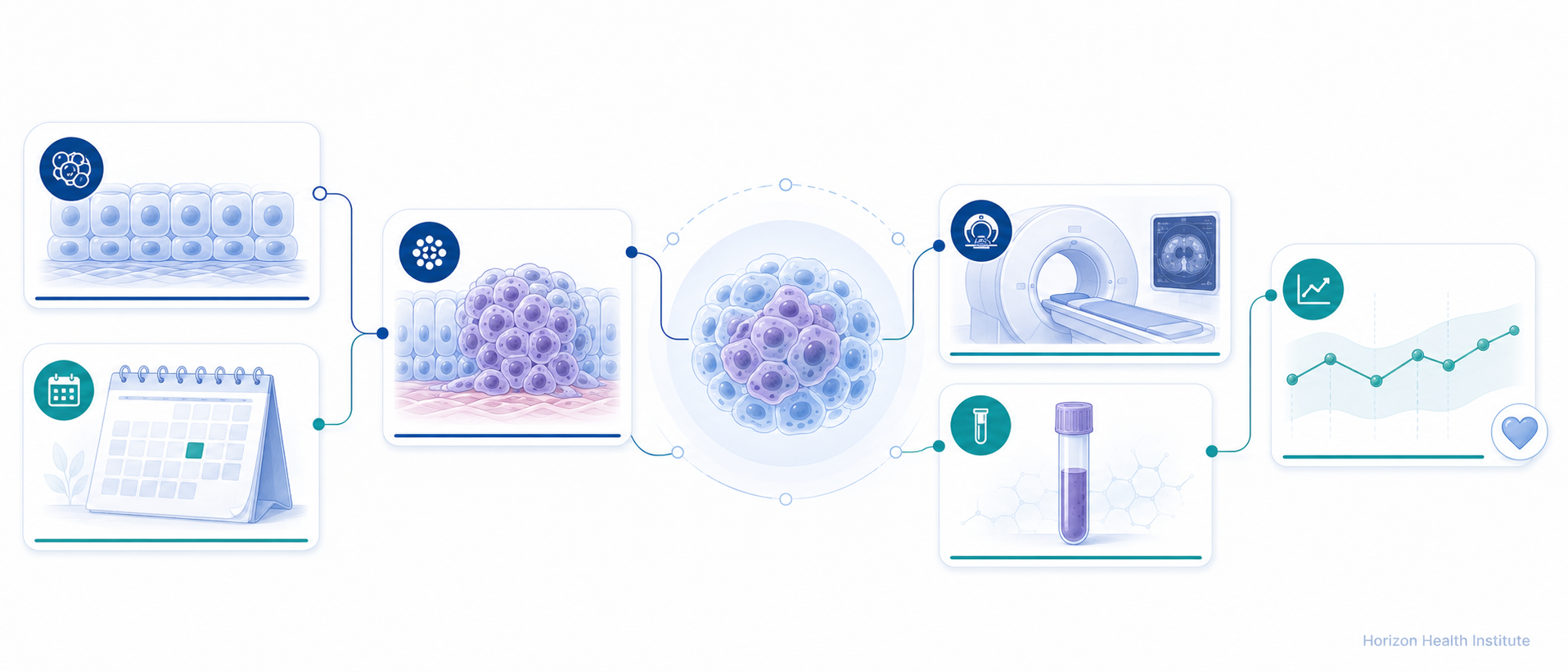
Cancer begins when normal controls inside cells no longer work as they should. Instead of growing, repairing, and dying in an orderly way, some cells keep multiplying. Over time, these abnormal cells may form a tumor, invade nearby tissue, or travel through the blood or lymph system to other parts of the body.
Some cancers grow slowly. Others behave aggressively. Some start in solid organs such as the lung, breast, prostate, colon, pancreas, liver, or kidney. Others begin in blood-forming tissues, lymph nodes, bone marrow, skin pigment cells, or the brain and spinal cord. This is why cancer care must be specific to the cancer type, stage, biology, and the person’s overall health.
Cancer is a process
It usually develops over time as genetic and cellular changes accumulate. This process can be influenced by age, inherited risk, lifestyle, infections, environmental exposures, and random DNA errors.
Cancer is not always visible early
Many cancers do not cause symptoms at first. That is why evidence-based screening and routine clinical care are important for adults, especially as age and risk factors increase.
Modern diagnosis is more precise
Today, doctors may use imaging, biopsy, pathology, laboratory testing, genetic or biomarker testing, and clinical staging to better understand a cancer and guide treatment decisions.
Common Warning Signs Adults Should Not Ignore
Cancer symptoms vary widely. Many common symptoms are caused by non-cancer conditions, but persistent, unexplained, or worsening changes deserve medical attention. A careful clinical evaluation can help determine whether symptoms are related to infection, inflammation, hormonal changes, digestive problems, benign growths, or cancer.
Unexplained body changes
- Unintentional weight loss
- Persistent fatigue
- Fever or night sweats without clear cause
- New lump, swelling, or thickening
Bleeding or skin changes
- Blood in stool or urine
- Unusual vaginal bleeding
- A mole that changes in size, shape, or color
- A sore that does not heal
Digestive or urinary changes
- Persistent trouble swallowing
- Ongoing abdominal pain or bloating
- Change in bowel habits
- Frequent or difficult urination
Breathing or pain symptoms
- Persistent cough
- Hoarseness that does not improve
- Shortness of breath
- New or persistent pain
When should an adult talk with a clinician?
A good rule is to seek medical advice when a symptom is new, persistent, unexplained, getting worse, or different from what is normal for you. Earlier evaluation does not mean assuming the worst. It means using clinical judgment, history, physical examination, and appropriate testing to find the cause sooner.
Major Cancer Risk Factors in Adults
Cancer risk is shaped by a combination of factors. Some cannot be changed, such as age, inherited genetic variants, and family history. Others may be reduced through prevention, vaccination, safer lifestyle habits, and regular medical care.
Nonmodifiable factors
- Older age
- Family history of certain cancers
- Inherited gene changes, such as BRCA-related risk
- Previous cancer or certain precancerous conditions
Modifiable or reducible factors
- Tobacco use and secondhand smoke exposure
- Excess alcohol use
- Excess body weight and physical inactivity
- High exposure to ultraviolet radiation
- Some infections, including HPV and hepatitis B or C
- Occupational or environmental exposures such as radon, asbestos, or certain chemicals
Cancer Screening: Finding Disease Before Symptoms Start
Screening means checking for cancer or precancerous changes before symptoms appear. In the United States, routine screening is especially important for breast, cervical, colorectal, and lung cancers when a person meets age and risk criteria. Screening decisions should be based on age, sex, personal history, family history, smoking history, prior test results, and overall health.
| Cancer type | Common screening approach | General adult guidance |
|---|---|---|
| Breast cancer | Mammography | Timing depends on age and risk; many U.S. recommendations focus on regular screening beginning in midlife. |
| Cervical cancer | Pap test, HPV test, or co-testing | USPSTF recommends screening for women aged 21 to 65 using age-appropriate testing intervals. |
| Colorectal cancer | Stool-based tests, colonoscopy, or other approved strategies | USPSTF recommends screening adults aged 45 to 75; ages 76 to 85 should be individualized. |
| Lung cancer | Low-dose CT scan | Recommended for adults who meet specific age and smoking history criteria. |
Sources: CDC Cancer Screening Tests; U.S. Preventive Services Task Force A and B Recommendations.
How Cancer Is Diagnosed
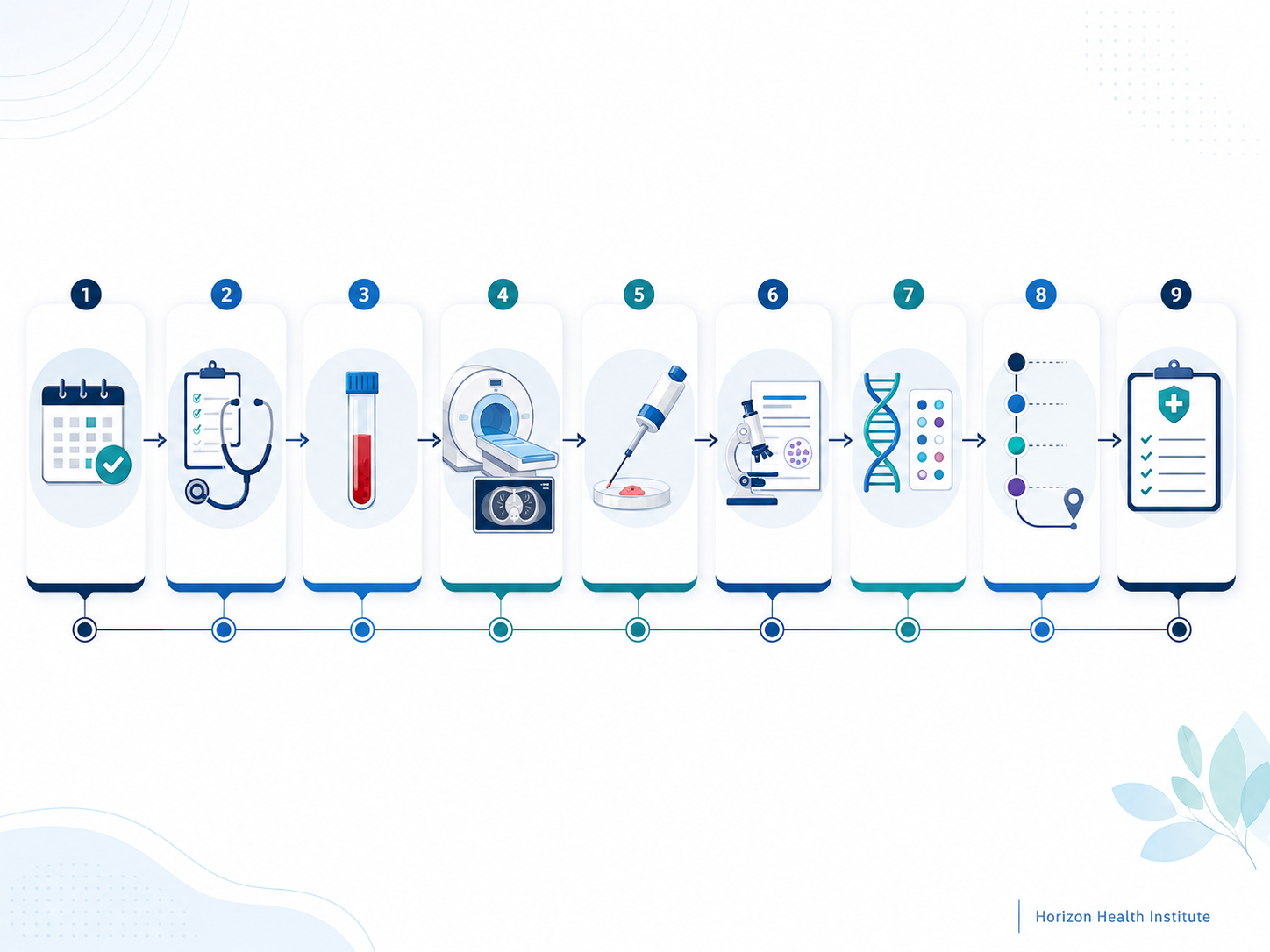
A cancer diagnosis usually begins with a symptom, an abnormal screening result, or an unexpected finding on an exam or imaging test. From there, clinicians may use a step-by-step approach to confirm whether cancer is present, identify the type, and understand how far it has progressed.
Medical history, physical exam, symptom review, medication review, and risk assessment.
Blood counts, chemistry panels, tumor markers, urine tests, or other targeted tests when appropriate.
X-ray, ultrasound, CT, MRI, PET scan, mammography, or other imaging based on the suspected cancer type.
A tissue sample is examined under a microscope to confirm cancer and identify its features.
Molecular or genetic testing may help guide targeted therapy, immunotherapy, or clinical trial options.
Staging describes where cancer is, whether it has spread, and how much disease is present.
Prevention: Lowering Risk Where Possible
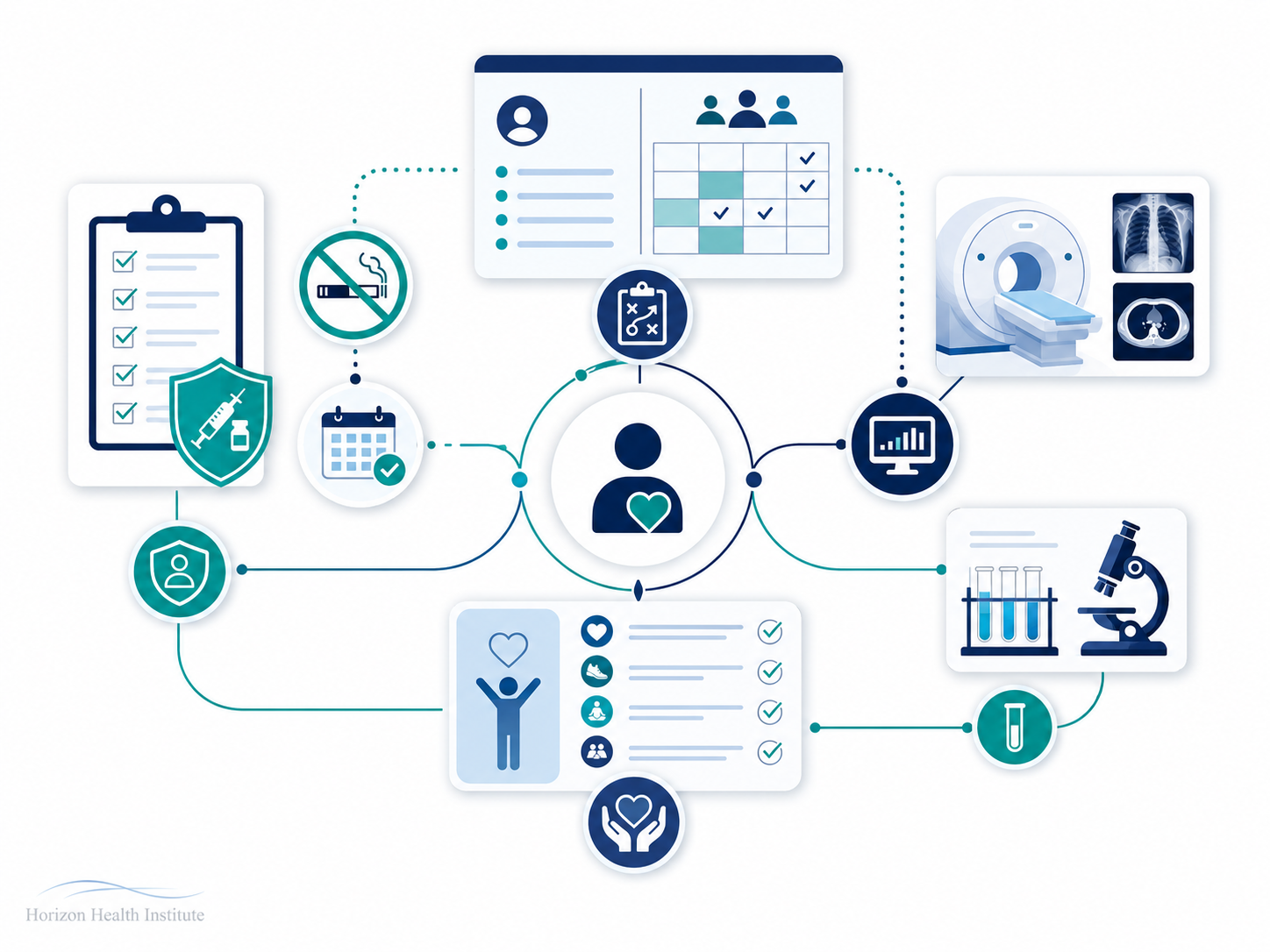
Not every cancer can be prevented. However, many risk factors can be reduced. Prevention works best when it is practical, consistent, and connected to routine healthcare. For adults, the most meaningful steps often include avoiding tobacco, limiting alcohol, maintaining a healthy weight, staying physically active, protecting skin from excessive UV exposure, receiving recommended vaccines, and completing age-appropriate screening.
Avoid tobacco
Tobacco use is one of the most important preventable cancer risks. Quitting can reduce risk over time and also improves heart, lung, and vascular health.
Use vaccination when appropriate
HPV vaccination can help prevent several HPV-related cancers. Hepatitis B vaccination helps reduce risk related to chronic hepatitis B infection.
Follow screening guidance
Screening can detect some cancers earlier and may also find precancerous changes, especially in cervical and colorectal cancer screening.
Know your personal risk
Family history, inherited risk, prior abnormal tests, and certain exposures may change when screening should start or how often it should be done.
The Role of Modern Medicine in Adult Cancer Care
Modern cancer care is increasingly precise. Instead of treating every cancer the same way, clinicians may use pathology, imaging, staging, biomarkers, genetic information, and treatment response data to personalize care. Depending on the cancer type, treatment may include surgery, radiation therapy, chemotherapy, immunotherapy, targeted therapy, hormone therapy, or a combination of approaches.
Follow-up care is also part of cancer medicine. After treatment, adults may need monitoring for recurrence, treatment side effects, organ function, blood counts, imaging changes, symptoms, nutrition, emotional health, rehabilitation needs, and survivorship planning. Good follow-up helps turn cancer care into a long-term health strategy rather than a one-time event.
Horizon Health Institute perspective
At Horizon Health Institute, cancer education is presented with a prevention-first and evidence-informed approach. The goal is to help adults understand risk, recognize important symptoms, use screening wisely, and feel more prepared when discussing testing or treatment options with a healthcare professional.
Key Takeaways
- Cancer is a group of diseases, not one single condition.
- Many cancers are more treatable when found earlier.
- Adults should pay attention to persistent, unexplained, or worsening symptoms.
- Screening is most useful when matched to age, sex, risk factors, and national guidance.
- Diagnosis often requires a combination of clinical evaluation, imaging, biopsy, pathology, and laboratory testing.
- Prevention, early detection, treatment planning, and follow-up all play important roles in modern cancer care.
References
- American Cancer Society. Cancer Facts & Figures 2026.
- National Cancer Institute. What Is Cancer?
- National Cancer Institute SEER Program. Cancer Stat Facts: Cancer of Any Site.
- Centers for Disease Control and Prevention. Cancer Screening Tests.
- U.S. Preventive Services Task Force. A and B Recommendations.
Really well-written article on cancer in adults: symptoms, causes, screening,. I have tried following advice from several sources but this is the most consistent with what my specialist told me. This gave me real confidence going into my next specialist appointment.
My cardiologist recommended I look into cancer in adults: symptoms, causes, screening, and this article covered it perfectly. The connection between diet, lifestyle, and long-term outcomes is explained clearly here. Will definitely be coming back to this site for more health information.
As someone dealing with this personally, the cancer in adults: symptoms, causes, screening, section was very helpful. It is refreshing to see an article that acknowledges individual variation rather than giving one-size-fits-all advice. Forwarding this to others in my support group who are dealing with similar issues.
My doctor recommended I look into cancer in adults: symptoms, causes, screening, and this article covered it perfectly. What I liked most was that the article didn’t just say what to avoid — it also gave alternatives. Appreciate the effort that went into researching and writing this — it shows.
Bookmarked this article on cancer in adults: symptoms, causes, screening, immediately — going to reference it regularly. The practical tips made this immediately actionable, not just theoretical. This is exactly why I prefer this website over generic health platforms.
This is one of the clearest explanations of cancer in adults: symptoms, causes, screening, I have found. The connection between lifestyle choices and long-term outcomes is explained clearly here. Exactly the kind of evidence-based information that is hard to find in one place.