
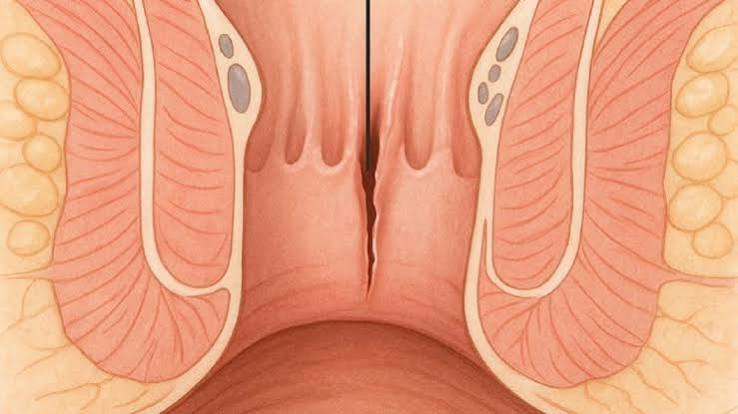
Anal fissures are one of the most painful anorectal conditions that adults encounter — and also one of the most undertreated, because many people either mistake them for hemorrhoids, manage them inadequately, or avoid seeking assessment. A fissure is a longitudinal tear in the lining of the anal canal, and what makes it persist is a self-perpetuating cycle of pain, muscle spasm, and impaired blood supply. Understanding how this cycle works — and how to break it — is the key to effective treatment.
What Is an Anal Fissure?
An anal fissure is a longitudinal tear or split in the squamous epithelium lining of the anal canal. The tear almost always occurs at the posterior midline — approximately 90% of cases — because this is the least well-vascularised part of the anal canal. Reduced blood supply here means the tissue is more vulnerable to tearing and, critically, slower to heal when it does tear.
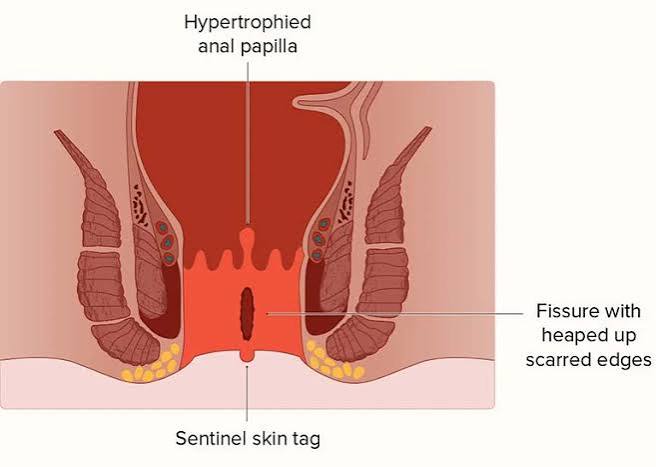
Acute vs chronic: An acute fissure (under 6 weeks) has fresh, bright-red edges and heals with conservative management in approximately 90% of cases. A chronic fissure (over 6–8 weeks) has developed structural features that distinguish it from an acute tear:
- Sentinel skin tag — a small tag of skin visible at the anal margin directly below the fissure; almost always indicates chronicity
- Hypertrophied anal papilla — a thickened fibrous mucosal tag at the upper end of the fissure
- Pale, indurated, fibrotic edges — in contrast to the fresh red edges of an acute fissure
- Exposed internal anal sphincter fibres visible at the base in well-established cases
This transition from acute to chronic matters clinically because chronic fissures rarely heal with conservative management alone and require pharmacological intervention or surgery. Anal fissures are common — lifetime prevalence is approximately 11% of the general population, affecting men and women equally.
What Causes Anal Fissures?
The primary mechanism: Hard stools and straining tear the posterior anoderm. This triggers reflex spasm of the internal anal sphincter (IAS) — the smooth muscle ring controlling resting anal tone. IAS spasm compresses submucosal blood vessels, reducing blood flow to the already poorly-vascularised posterior commissure, creating an ischaemic environment that prevents healing.
The ischaemic cycle: Pain → sphincter spasm → ischaemia → impaired healing → persistent fissure → continued pain → continued spasm. Breaking this cycle — by reducing IAS tone, improving blood flow, and maintaining soft stools — is the rationale behind all pharmacological and surgical treatments.
Constipation and low-fibre diet: The dominant modifiable cause. A diet lacking fibre produces hard stools that require high anal pressures to pass. People with constipation-dominant irritable bowel syndrome are at particular risk from the intermittent passage of very hard stools.
Postpartum women: Anterior fissures are disproportionately common in women in the weeks following childbirth, due to perineal trauma, pushing efforts during labour, and reduced anterior sphincter support in women. Most resolve within 6–8 weeks postpartum with conservative management.
Atypical fissures — when to think about secondary causes: Fissures that are off-midline, multiple, broad, cavitating, or painless should raise suspicion for secondary causes:
- Crohn’s disease — the most important secondary cause; Crohn’s fissures are characteristically off-midline, broad, deep, associated with oedematous “elephant ear” skin tags, and often less painful than typical fissures
- HIV and immunosuppression — atypical, multiple, poorly healing fissures
- Sexually transmitted infections — herpes, syphilis, chlamydia (LGV)
- Malignancy — squamous cell or other anorectal tumour
Symptoms of Anal Fissures
The characteristic pain: The hallmark symptom is sharp, tearing, burning, or stinging pain during and immediately after defecation — often described as like passing razor blades or a hot poker. The pain starts with the bowel movement, peaks during stool passage, and then continues for 30 minutes to several hours afterwards from continued IAS spasm. This post-defecation pain pattern is highly characteristic of anal fissure and distinguishes it from hemorrhoidal discomfort.
Rectal bleeding: Bright red blood in small amounts — on toilet paper or coating the stool surface. The bleeding is associated with the painful episode but is rarely the dominant symptom. The pain is what drives people to seek help.
The avoidance cycle: The pain of defecation causes many people to defer the urge — sometimes for days. Deferral allows stool to become progressively harder, causing greater trauma when defecation eventually occurs. Adequate stool softening can make defecation tolerable enough to respond promptly to the urge, which is critical to breaking this cycle.
Visible signs: In a chronic fissure, the sentinel skin tag may be visible at the posterior anal margin simply by parting the buttocks gently — a clinical diagnosis without internal instrumentation, which is deferred in the acute phase because of pain.
Acute vs Chronic Fissure — How to Tell the Difference
| Feature | Acute Fissure | Chronic Fissure |
|---|---|---|
| Duration | Under 6 weeks | Over 6–8 weeks |
| Edges | Fresh, red, soft | Pale, indurated, fibrotic |
| Sentinel tag | Absent | Present |
| Conservative healing rate | ~90% | ~30–40% |
| Pharmacotherapy needed | Rarely | Usually |
Most people seeking help have already had the fissure for weeks or months, having initially attributed the symptoms to hemorrhoids. By this point, it is commonly chronic — and recognising this calibrates the treatment plan appropriately.
Conservative Treatment (Acute and Mild Chronic Fissure)
High-fibre diet is the foundation of all anal fissure management. A target of 25–35g of dietary fibre per day softens and bulks the stool, reducing mechanical trauma during defecation. Good sources: legumes, whole grains, fruit, vegetables, nuts, and seeds. Gradual increase avoids bloating.
Adequate hydration: 6–8 glasses of water daily — essential in combination with high fibre.
Topical anaesthetics: Lidocaine gel (2% or 5%) applied 15–30 minutes before defecation significantly reduces the pain of passage — breaking the pain-avoidance cycle by making defecation tolerable enough to respond to the urge promptly, preventing further stool hardening from prolonged retention.
Sitz baths: Warm water soaks for 15–20 minutes after each bowel movement reduce IAS spasm, improve perianal blood flow, and support healing. IAS relaxation during warm water immersion has been physiologically demonstrated.
Stool softeners: Psyllium, docusate, lactulose, or macrogol can help achieve consistently soft stools, particularly during the early weeks of dietary adjustment.
Chemical Sphincterotomy — GTN and Diltiazem
For chronic fissures that have not healed with conservative management after 6–8 weeks, pharmacological therapy targeting IAS hypertonia is the next step — called “chemical sphincterotomy” because it reduces sphincter tone through medication rather than surgery.
Topical glyceryl trinitrate (GTN) 0.2–0.4%: First-line pharmacological agent for chronic anal fissure. Applied 2–3 times daily directly to the fissure, it releases nitric oxide — a potent smooth muscle relaxant — reducing IAS tone, decreasing resting anal pressure, and improving mucosal blood flow. Healing rates: approximately 55–60%. Main side effect: headache in up to 50% of patients from systemic nitrate absorption; applying a small, localised amount reduces this. Treatment duration: 6–8 weeks.
Topical diltiazem 2% or nifedipine 0.2–0.3%: Topical calcium channel blockers with comparable efficacy to GTN (~60–65% healing) but significantly fewer headaches. Diltiazem 2% cream applied twice daily for 6–8 weeks is the primary alternative for patients who cannot tolerate GTN headaches.
Botulinum Toxin Injection
Botulinum toxin injection into the IAS is more effective than topical agents for chronic anal fissure, with healing rates of approximately 70–80%. The toxin temporarily paralyses IAS smooth muscle, reducing resting anal pressure for 2–4 months — the window during which the fissure heals. By the time the effect wears off, the fissure has resolved.
The procedure is performed under local anaesthesia in an outpatient setting. Common injection sites are bilaterally in the IAS at the 3 and 9 o’clock positions. The injection takes minutes and is well-tolerated.
The main complication is temporary incontinence — typically flatus incontinence or occasional liquid stool leakage — in approximately 5–10% of patients. This resolves completely as the botox effect wears off. Patients should be counselled about this risk; for most, the temporary and minor nature of the incontinence is acceptable in the context of chronic fissure pain relief. Botulinum toxin is generally used when topical treatment has failed before surgical sphincterotomy is considered.
Surgery — Lateral Internal Sphincterotomy
Lateral internal sphincterotomy (LIS) is the gold standard surgical treatment for chronic anal fissure refractory to pharmacological management. A small incision divides a portion of the hypertonic IAS, permanently reducing resting anal pressure, restoring blood flow, and allowing healing. Healing rates are 90–95% — the highest of any treatment modality.
LIS is typically performed as a day case under local or general anaesthesia. A lateral incision is made at the 3 or 9 o’clock position (not at the posterior midline of the fissure) to reduce the risk of keyhole deformity.
The incontinence risk: The most important consideration. The IAS is responsible for approximately 70–80% of resting anal tone. Dividing part of it permanently reduces continence capacity to some degree. Approximately 5–10% of patients experience some incontinence — mostly flatus or minor liquid leakage, most cases transient. Significant or permanent solid stool incontinence is rare (0.5–2%) but a serious complication that must be discussed before surgery.
LIS is used with caution or avoided in: women (shorter anterior sphincter complex, higher incontinence risk from IAS division); patients with pre-existing sphincter injury; elderly patients with reduced baseline sphincter tone. For these patients, anal advancement flap — which covers the fissure with vascularised tissue without sphincter division — provides good results while avoiding incontinence risk.
Anal Fissures in Special Situations
Postpartum women: Anterior anal fissures are common in the weeks following childbirth from perineal trauma and labour efforts. Conservative management is the appropriate first-line approach, and most postpartum fissures resolve within 6–8 weeks. Anorectal surgery is avoided in this period where possible; any surgical decision must be preceded by sphincter physiology assessment to exclude pre-existing obstetric sphincter injury.
Crohn’s disease: Crohn’s perianal fissures are a distinct entity — off-midline, broad, cavitating, often painless, with characteristic oedematous skin tags. Standard LIS is generally avoided in Crohn’s perianal disease because wound healing is severely impaired in the context of ongoing Crohn’s inflammation. Management is primarily through systemic Crohn’s disease control, often with biologic therapy. Our guide to IBD covers the broader context of inflammatory bowel disease management. Specialist colorectal surgery input with IBD expertise is essential.
HIV and immunosuppression: Multiple, atypical, or poorly-healing fissures in an immunosuppressed patient should prompt investigation including STI swabs (herpes simplex in particular), serological testing, and potentially biopsy to exclude malignancy.
Prevention
- High-fibre diet (25–35g/day): the most important preventive measure — maintains stool consistency that passes without trauma
- Adequate hydration: 6–8 glasses of water daily; synergistic with dietary fibre
- Respond promptly to the defecation urge: deferring allows stool to harden; going when the urge arises minimises the stool hardness that must pass through the anal canal
- Treat constipation proactively: persistent hard stools are a warning sign — address them before they cause tears
- Gentle anal hygiene: excessive wiping or over-washing can compromise perianal skin integrity
- Sustain dietary habits after healing: people who return to a low-fibre diet after healing are at high risk of recurrence
For a broader perspective on bowel health across adulthood — including screening, dietary strategies, and managing colon conditions — see our guide to colon health after age 50. For those managing both fissures and other perianal conditions, our article on diverticulosis and diverticulitis covers how constipation and colonic pressure drive multiple conditions simultaneously.
Pain Management During Fissure Treatment
For many people, the most immediate barrier to recovery is not the fissure itself but the anticipation and avoidance of pain. Adequate pain management is therefore a core component of anal fissure treatment, not merely a comfort measure — it directly enables the prompt defecation response that prevents stool hardening and breaks the avoidance cycle.
Pre-defecation protocol: The most effective approach is to apply topical lidocaine gel (2% or 5%) to the perianal area and anal canal 15–30 minutes before the anticipated time of defecation. For most people with regular bowel habit, this means applying the gel at a consistent time each morning. Lidocaine works by blocking sodium channels in the peripheral nociceptive nerves, reducing the pain signals transmitted during stool passage. Many patients report that this single step transforms defecation from a feared, dread-inducing event into a manageable experience within the first 2–3 applications.
Post-defecation protocol: Immediately after defecation, a warm sitz bath for 15–20 minutes provides the most effective post-defecation pain relief. The mechanism is primarily through IAS relaxation — warm water contact on the perianal area and anal canal causes reflex relaxation of the internal sphincter smooth muscle, breaking the cycle of post-defecation spasm that is responsible for the prolonged post-defecation pain. Some physiological studies have demonstrated measurable reductions in anal resting pressure during warm water immersion. Patients should be advised to keep a sitz bath readily available, particularly in the first 2–4 weeks of treatment.
Systemic analgesia: Regular paracetamol (1g up to four times daily) is the systemic analgesic of choice for anal fissure pain. NSAIDs (ibuprofen, naproxen) are generally avoided as first-choice agents because they can impair mucosal healing and are associated with increased risk of complications in anorectal conditions. However, short-course NSAID use for severe pain in an otherwise healthy person without contraindications may be considered where paracetamol alone is inadequate. Opioid analgesics should be avoided because they cause constipation — directly worsening the condition they are intended to relieve.
Mental impact: The chronic pain of an anal fissure, particularly the post-defecation pain that can last hours and disrupts daily life, can have significant psychological impact. Anxiety about defecation, changes in eating habits to reduce stool frequency, social withdrawal during flares, and sleep disruption from overnight pain episodes are all reported by people with chronic anal fissures. Clinical teams managing chronic fissures should address this explicitly — patients who understand that definitive, effective treatments exist, and who have a clear treatment plan, typically manage the psychological aspects of the condition considerably better than those who have been managed with inadequate conservative advice alone for months or years.
Monitoring Healing and When to Escalate Treatment
Knowing when conservative management has been given an adequate trial — and when to escalate to the next treatment — is important for preventing unnecessary prolongation of suffering through repeated courses of inadequate treatment.
Assessing progress: After 4–6 weeks of consistent conservative management (high-fibre diet, adequate hydration, topical lidocaine, sitz baths, stool softeners), a clinical review should assess whether the fissure is healing. Indicators of healing include: reduced pain during and after defecation; reduced bleeding on defecation; softening of the fissure edges on examination; and regression of the sentinel tag if previously present. If no improvement is demonstrated after 6–8 weeks of consistent conservative management, escalation to topical pharmacological therapy (GTN or diltiazem) is appropriate.
Topical pharmacological therapy — monitoring response: After 6–8 weeks of topical GTN or diltiazem, clinical review assesses healing. If complete healing is confirmed, treatment is discontinued. If the fissure has partially healed or symptoms have reduced significantly, the topical agent can be continued for a further 4–6 weeks. If there is no response after a full 8-week course, escalation to botulinum toxin injection or referral to colorectal surgery is appropriate.
When to refer to colorectal surgery: Referral is appropriate when: topical pharmacological therapy has failed after an adequate treatment period; the fissure is atypical (off-midline, not healing despite appropriate treatment) suggesting possible secondary cause requiring examination under anaesthesia or biopsy; complications are present (fistula, abscess, significant ongoing bleeding); or when botulinum toxin injection or surgical sphincterotomy is being considered. Early referral — before multiple failed courses of inadequate treatment — is associated with faster overall resolution and better outcomes.
Frequently Asked Questions
How do I know if I have an anal fissure or hemorrhoids?
The key distinguishing feature is pain. Anal fissures cause sharp, tearing, or burning pain during and after defecation — typically lasting 30 minutes to several hours after a bowel movement. Internal hemorrhoids characteristically cause painless bright red rectal bleeding without this post-defecation pain pattern. A thrombosed external hemorrhoid causes acute severe perianal pain, but this is constant and not specifically triggered by defecation. The specific pattern of pain starting during defecation and persisting for an hour or more afterwards is highly characteristic of anal fissure. A sentinel skin tag at the posterior anal margin is also highly characteristic of a chronic anal fissure.
How long does an anal fissure take to heal?
An acute fissure managed with consistent conservative treatment typically heals within 4–8 weeks. A chronic fissure treated with topical pharmacological therapy (GTN or diltiazem) heals in approximately 50–65% of cases over 6–8 weeks. Botulinum toxin injection achieves healing in approximately 70–80% within 3–4 months. Lateral internal sphincterotomy achieves healing in 90–95% of cases, typically within 6–8 weeks of surgery. Without treatment targeting IAS hypertonia, a chronic fissure will not heal spontaneously — the ischaemic cycle perpetuates indefinitely.
Is an anal fissure serious?
Not usually life-threatening, but genuinely debilitating. The pain can significantly impair quality of life — causing fear and avoidance of defecation, altered bowel habits, and difficulty with daily activities. Untreated chronic fissures can persist for years. The condition itself does not progress to cancer and is not associated with systemic illness in the absence of secondary causes. However, any non-healing fissure that is off-midline, that does not respond to treatment, or that occurs with other symptoms (change in bowel habit, weight loss, anorectal mass) should be formally assessed to exclude Crohn’s disease or malignancy.
Can I treat an anal fissure at home?
An acute fissure — less than 6 weeks old — can often be resolved with home management: high-fibre diet, adequate hydration, topical lidocaine gel applied before defecation, warm sitz baths after bowel movements, and stool softeners. For a chronic fissure (sentinel skin tag present, over 6–8 weeks), home management alone is unlikely to achieve full healing. Prescription topical GTN or diltiazem requires a consultation, but the consultation is not an invasive procedure and effective treatments are straightforward. Treatment should not be delayed because of embarrassment — anal fissures are extremely common.
Will I need surgery for an anal fissure?
The majority of anal fissures do not require surgery. Approximately 90% of acute fissures heal with conservative management. For chronic fissures, topical pharmacological therapy heals approximately half; botulinum toxin injection heals approximately 70–80%. Lateral internal sphincterotomy is reserved for fissures that have failed all these approaches. In clinical practice, surgery is needed in approximately 10–15% of chronic fissure cases. When it is performed, healing rates are excellent at 90–95%.
What foods should I eat to help an anal fissure heal?
The dietary goal is consistently soft, bulky stools that pass without straining. Prioritise: vegetables (especially legumes, beans, lentils), fruit (prunes, apples, pears — natural stool softeners), whole grains (oats, brown rice, wholemeal bread), and adequate fluid (6–8 glasses of water daily). Foods that worsen constipation — processed/refined carbohydrates, low-fibre foods, excess alcohol and caffeine — should be reduced. The goal is a genuine shift toward high-fibre whole foods that support gut transit.
Can anal fissures come back after healing?
Yes — recurrence is possible if dietary and lifestyle factors are not sustained after healing. Recurrence rates after conservative management are approximately 30–40% without maintained dietary changes. After lateral internal sphincterotomy, long-term recurrence rates are approximately 5% — the lowest of any treatment modality. The most effective prevention strategy is maintaining a consistently high-fibre diet, adequate hydration, and healthy bowel habits after the fissure heals. People who return to a low-fibre diet are at high risk of recurrence.
Medical disclaimer: This article is for educational purposes only and does not constitute medical advice. Anal pain, rectal bleeding, or non-healing perianal symptoms should be assessed by a healthcare professional to exclude secondary causes and determine appropriate treatment.
References:
1. Nelson RL et al. Non surgical therapy for anal fissure. Cochrane Database Syst Rev. 2012.
2. Wald A et al. ACG Clinical Guideline: Management of Benign Anorectal Disorders. Am J Gastroenterol. 2014;109(8):1141–57.
3. Cross KL et al. Clinical practice guidelines for anal fissure. Colorectal Dis. 2008;10(7):667–72.
4. Sileri P et al. Botulinum toxin vs conservative and surgical therapy for anal fissure. Int J Colorectal Dis. 2012.
I’ve had what I now recognise is a chronic fissure for about eight months. My GP gave me two courses of GTN cream — the first course helped initially but the headaches were severe (I had to stop after 10 days), and the second course I tried to push through but the pain from the fissure never fully resolved. I had no idea diltiazem was an alternative with fewer headaches — this is the first time I’ve seen this clearly explained. I’m going to ask specifically about diltiazem at my next appointment and also ask about the botulinum toxin option, since eight months of this has been genuinely debilitating.
James — eight months is a long time to be managing a chronic fissure with inadequate treatment, and your experience with GTN headaches is extremely common. The headache mechanism is straightforward: GTN releases nitric oxide in the anal tissue, but it is also absorbed systemically through the highly vascular mucosal surface of the anal canal — causing peripheral vasodilatation and a classic nitrate headache. The severity of the headache is dose-dependent, which is why applying the smallest amount that reaches the fissure site (a pea-sized amount applied with a fingertip or cotton bud just inside the anal margin, rather than deep insertion) reduces the systemic dose and the headache frequency. Many people who cannot tolerate a 0.4% GTN formulation can tolerate 0.2%. Diltiazem 2% is a completely different pharmacological mechanism — calcium channel blockade rather than nitrate-mediated smooth muscle relaxation — and the systemic absorption is much lower from the anorectal route, which is why headaches are significantly less common. Efficacy is comparable (~60–65% healing for chronic fissure). Given that you have had an inadequate response to two GTN courses, you are entirely appropriate for escalation — diltiazem as the next pharmacological step, or a direct referral discussion for botulinum toxin injection, which at 70–80% healing for chronic fissure is more effective than either topical agent and can be performed as an outpatient procedure. Eight months of a chronic fissure that has not responded to GTN should not be managed with a third course of the same agent. Naomi — I am glad the pre-defecation lidocaine and post-defecation sitz bath approach is already making a difference. The mechanism is complementary: lidocaine reduces the pain stimulus during stool passage, while the warm sitz bath afterwards relaxes the IAS that goes into spasm in response to the pain of defecation — reducing the prolonged post-defecation pain that is typically the most debilitating component. The prognosis for postpartum fissures managed this way is very good. The majority of anterior postpartum fissures in otherwise healthy women with no pre-existing sphincter pathology resolve fully with conservative management within 6–10 weeks postpartum. Maintaining a high-fibre diet and consistent hydration in the weeks after delivery — when many women’s dietary habits are disrupted by the demands of newborn care — is the main practical challenge and the most important thing to sustain.
I developed an anal fissure about three weeks after my second delivery, which is now at six weeks and still very painful. My midwife mentioned it might be a fissure but wasn’t specific about what to do beyond ‘keep the area clean and try not to strain.’ The section on postpartum fissures and the detail about anterior fissures being more common in women was exactly what I needed. I’ve started the lidocaine gel before bowel movements and sitz baths afterwards this week and already the post-defecation pain is more manageable. I’m relieved to read that most postpartum fissures resolve within the first 6–8 weeks with conservative management.