

In 2021, a landmark randomised trial published in Cell (Wastyk et al.) found something unexpected: a high-fermented food diet increased gut microbiome diversity and reduced 19 inflammatory proteins more effectively than a high-fibre diet over 10 weeks. This finding shifted the conversation about fermented foods and gut health from an area of traditional wisdom and theoretical benefit to one with robust clinical evidence.
Fermented foods — kefir, live yoghurt, kimchi, sauerkraut, miso, tempeh, and kombucha — introduce live microbial communities directly into the gut alongside the food matrix that supports their activity. Each brings a distinct species profile, and the combination of direct probiotic inoculation, competitive exclusion of pathogens, immune modulation, and gut barrier support makes fermented foods one of the most evidence-backed dietary categories for gut health.
How Fermented Foods Benefit the Gut
Fermented foods exert their gut health benefits through six distinct, complementary mechanisms — making their effects more broadly acting than conventional probiotic supplements, which typically contain one or two isolated strains:
1. Direct probiotic inoculation: Live fermented foods introduce viable microbial communities into the gastrointestinal tract. Though most organisms do not permanently colonise (they transit through over days to weeks), during their passage they interact directly with the existing microbiome and gut immune tissue in ways that produce lasting effects even after individual organisms have passed.
2. Competitive exclusion: Lactic acid bacteria (LAB) — the dominant organisms in most fermented foods — compete with pathogenic species for adhesion sites on intestinal epithelial cells, nutrient resources, and physical space. This competition actively reduces the relative abundance of opportunistic pathogens without requiring antibiotic intervention.
3. Bacteriocin production: Many Lactobacillus and Bifidobacterium species produce bacteriocins — small antimicrobial peptides that selectively inhibit closely related pathogenic organisms. Nisin (from L. lactis), plantaricin (from L. plantarum), and lacticin are among the best-characterised examples, providing natural in-gut antimicrobial activity.
4. Immune modulation: Lactic acid bacteria interact directly with gut-associated lymphoid tissue (GALT) — the immune tissue embedded in the intestinal wall. This interaction consistently reduces pro-inflammatory cytokine production (TNF-α, IL-6, IL-1β) and promotes regulatory T cell activity — the immunological signature of reduced gut inflammation and improved immune tolerance.
5. Short-chain fatty acid contribution: Fermented food organisms, particularly Bifidobacterium and Lactobacillus species, contribute to the colonic pool of SCFAs (acetate, propionate, butyrate) through their fermentation activity — adding to the butyrate supply that fuels colonocytes and maintains the gut mucosal barrier.
6. Gut barrier support: Lactobacillus plantarum specifically has been shown in multiple human studies to increase the expression of tight junction proteins (ZO-1, occludin) in the intestinal epithelium, directly reducing intestinal permeability — the “leaky gut” state associated with systemic inflammation, food sensitivities, and autoimmune conditions.
Kefir — The Most Species-Rich Probiotic Food
Kefir stands apart from other fermented foods in its microbial diversity. While live yoghurt typically contains two to three bacterial species, milk kefir is produced by kefir grains — complex microbial communities containing 30–50 distinct bacterial and yeast species in symbiotic relationship. This diversity translates directly into a broader spectrum of gut microbiome effects than any other single fermented food.
Kefir contains dominant species including Lactobacillus kefiri, Lactobacillus acidophilus, Lactococcus lactis, Leuconostoc mesenteroides, multiple Bifidobacterium species, and beneficial yeasts such as Kluyveromyces marxianus and Saccharomyces cerevisiae. The bacteria produce lactic acid, acetic acid, and bacteriocins; the yeasts produce B vitamins and contribute to the characteristic slight carbonation of kefir.
Clinical evidence: randomised trials show kefir improves lactose tolerance (through in-transit lactase activity), reduces IBS bloating and diarrhoea, decreases serum inflammatory markers, and specifically increases Bifidobacterium and Lactobacillus populations while reducing Enterobacteriaceae (a gram-negative dysbiotic marker family). Doses of 200–400ml per day were used in the majority of clinical studies showing these effects.
Milk kefir vs water kefir: milk kefir (from cow, goat, or sheep milk) has the most clinical evidence. Water kefir (kefir grains fermented in sugar water) is a dairy-free alternative with similar species diversity but less clinical data. Both must be unpasteurised and refrigerated — heat treatment destroys all live organisms. Commercial kefir labelled “pasteurised” or sold at room temperature contains no viable bacteria and provides no probiotic benefit.
Live Yoghurt
Live yoghurt is fermented with two species: Lactobacillus delbrueckii subsp. bulgaricus and Streptococcus thermophilus — the legally required minimum in most countries. Better-quality yoghurts add Lactobacillus acidophilus, Bifidobacterium lactis, and other species, broadening the probiotic benefit.
L. bulgaricus produces its own lactase enzyme — the enzyme that digests lactose — during fermentation and continues to produce it in transit through the gut. This is the confirmed mechanism by which live yoghurt consistently improves lactose digestion in lactose-intolerant individuals in randomised trials: the bacteria deliver lactase in situ, reducing the lactose load reaching the colon and preventing the osmotic and fermentative effects that cause symptoms. Pasteurised yoghurt does not have this effect — the bacteria are dead and their enzyme activity is destroyed.
For IBS specifically, live yoghurt is associated with reduced bloating and improved stool consistency in IBS-D patients in several trials. Greek yoghurt provides the same probiotic species at higher protein concentration and lower lactose content (concentration removes some whey and lactose) — making it appropriate for those with mild lactose sensitivity. For the broader picture of gut-supportive foods, see our guide on best foods for digestive health.
Label guidance: look for “contains live active cultures,” “live bacteria,” or named species on the label. Avoid yoghurts labelled “heat treated after fermentation” — these are commercially pasteurised post-production and contain no viable organisms. Flavoured yoghurts with added sugar are nutritionally inferior to plain; add fruit at home for flavour.
Kimchi
Kimchi is a traditional Korean fermented vegetable preparation — typically napa cabbage and radishes fermented with a seasoning paste of chilli, garlic, ginger, and spring onion. It has a dual gut health mechanism: the live Lactobacillus kimchii and related Lactobacillus species provide direct probiotic effects, while the fermented vegetable matrix provides prebiotic fibre from the cabbage and other vegetables.
The evidence base for kimchi’s gut and systemic health effects has grown substantially. A systematic review and meta-analysis found that kimchi consumption was associated with increased gut microbiome diversity, reduced pro-inflammatory cytokine levels, and improved metabolic markers including BMI, blood pressure, and fasting glucose — connecting gut microbiome modulation to broader cardiometabolic health through the gut-systemic axis.
Kimchi also contains glucosinolate breakdown products from fermented cabbage — the same chemoprotective compounds found in fresh cruciferous vegetables — adding a cancer-preventive dimension beyond the probiotic effect.
Critical practical point: live kimchi is refrigerated and unpasteurised. Commercial kimchi in sealed jars at room temperature is pasteurised — it contains no live bacteria and functions only as a flavoured vegetable condiment. The packaging should say “contains live cultures” or “unpasteurised”; it should smell actively fermented and be stored in the cold section of the shop. For IBS patients, the capsaicin (chilli) in kimchi activates gut motility through TRPV1 receptors — potentially beneficial for constipation but a potential trigger for urgency and cramping in IBS-D. Starting with mild kimchi or small quantities allows tolerance assessment.
Sauerkraut
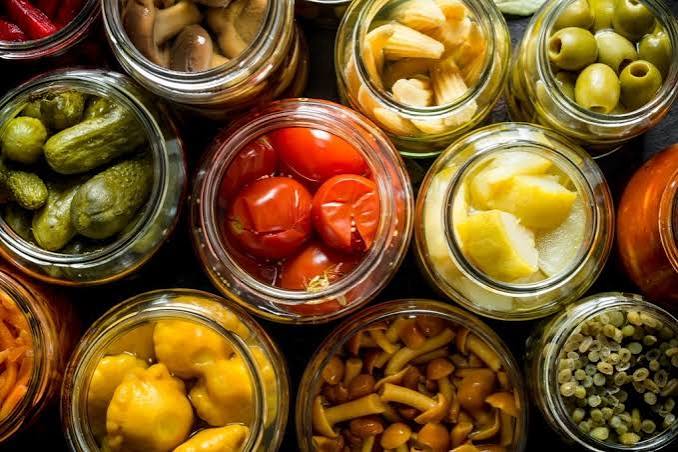
Sauerkraut — lacto-fermented cabbage — is one of the oldest and most widely produced fermented vegetables in the world. Its primary fermentation organism, Lactobacillus plantarum, has one of the strongest clinical evidence bases of any Lactobacillus species for gut health applications.
Multiple randomised controlled trials and systematic reviews demonstrate that L. plantarum supplementation reduces IBS symptom scores — including bloating, pain, and irregular stool frequency — and specifically reduces intestinal permeability by upregulating tight junction protein expression. The intact gut barrier effect of L. plantarum is particularly clinically relevant for conditions where leaky gut is a contributing pathophysiology: IBS, inflammatory bowel disease, and food sensitivities.
Like kimchi, sauerkraut must be unpasteurised to contain live bacteria. Canned sauerkraut, shelf-stable jarred sauerkraut, and hot dog-condiment sauerkraut are pasteurised and sterile — purchase from the refrigerated section and check for “unpasteurised” or “raw” labelling. One to three tablespoons daily provides a practical dose; the sodium content (approximately 1g per 100g) should be considered by those monitoring sodium intake for hypertension.
Miso and Tempeh
Miso is a Japanese fermented paste made from soybeans (and sometimes rice or barley), salt, and Aspergillus oryzae (koji mould). Extended fermentation (months to years for dark varieties) develops a complex flavour profile alongside bioactive soy isoflavones, GABA (a calming neurotransmitter precursor), and various Lactobacillus species that survive in the high-salt environment.
Observational data from large Japanese cohort studies consistently show an association between miso soup consumption and reduced gastric cancer risk — attributed to both the anti-inflammatory properties of fermented soy and the isoflavone content. Miso also provides bioavailable soy protein and glutamate (umami) — making it both flavourful and nutritionally dense. The sodium content is significant at 1–2g per serving; miso paste directly made into soup at home allows sodium control, while commercial instant miso soup packets typically contain 2–3× the sodium of homemade.
Tempeh — Indonesian fermented soybean cake — is produced by Rhizopus oligosporus mould fermenting whole soybeans into a firm, sliceable block. Fermentation increases protein bioavailability, reduces phytic acid (antinutrient), produces vitamin K2, and generates prebiotic oligosaccharides from the soybean matrix. Unlike most fermented foods, tempeh is typically cooked before eating, which destroys the live organisms — its benefit is nutritional (protein, fibre, K2, mineral bioavailability) rather than probiotic.
Kombucha
Kombucha is fermented sweet tea, produced by a SCOBY (symbiotic culture of bacteria and yeast) that converts sucrose to organic acids (acetic acid, gluconic acid, glucuronic acid), ethanol (trace amounts), B vitamins, and a range of live bacteria and yeasts. The tea polyphenols (catechins from green or black tea) are partially retained through fermentation, adding an antioxidant dimension.
The evidence base for kombucha is less robust than for kefir, yoghurt, or lacto-fermented vegetables. Most data come from animal studies and mechanistic research. One small human RCT showed improved gut permeability markers with kombucha consumption. Multiple observational studies report self-reported improvements in gut comfort, energy, and digestion — though these are subject to significant placebo and reporting bias.
Practical considerations: commercial kombucha varies widely in sugar content (4–14g per 250ml) and live organism count, depending on how long it has been stored and whether it has been filtered or pasteurised post-fermentation. Health food store varieties in the refrigerated section generally retain more live organisms than mass-market bottles. The alcohol content (typically 0.5–3%) is relevant for those avoiding alcohol. The acidic pH and carbonation may worsen reflux in GORD patients.
Safety — Who Should Be Cautious
Histamine intolerance: Fermented foods are among the highest-histamine foods in the diet — histamine is produced as a natural byproduct of lactic acid fermentation. People with histamine intolerance or diamine oxidase (DAO) enzyme deficiency may experience flushing, headache, nasal congestion, or GI symptoms after consuming fermented foods. This is not a contraindication to fermented foods for the general population but is relevant for those with diagnosed or suspected histamine intolerance.
Small intestinal bacterial overgrowth (SIBO): Some SIBO practitioners advise caution with fermented foods during active SIBO treatment, as live organisms in fermented foods may potentially feed into the already-overgrown small intestinal bacterial population. The evidence for this concern is limited, but it is a reasonable precaution during active SIBO eradication therapy. After successful SIBO treatment, fermented foods are generally beneficial for microbiome restoration.
Pregnancy: Pasteurised kefir and yoghurt made from pasteurised milk are safe in pregnancy. Unpasteurised fermented dairy and raw-milk cheeses pose a risk of Listeria monocytogenes infection — a serious pregnancy complication. Unpasteurised plant-based fermented foods (kimchi, sauerkraut) have a good safety profile in pregnancy. For general digestive health guidance that contextualises these choices, see our article on foods to limit for digestive comfort.
Building a Daily Fermented Food Routine
One to two servings of live fermented food daily is the practical target supported by current evidence — achievable through a simple daily pattern:
- Breakfast: 150g live natural yoghurt or 200ml kefir with overnight oats — provides probiotic bacteria alongside fibre and resistant starch
- Lunch: 1–2 tbsp unpasteurised sauerkraut or kimchi alongside a grain bowl or salad — adds diversity without a dedicated fermented food “dose”
- Dinner: Miso soup as a starter or miso dressing; tempeh as a protein source — provides additional fermented food variety
Rotating between different fermented food types over the week provides the greatest species diversity — different days featuring different fermented foods exposes the gut microbiome to a broader range of bacterial and yeast species than the same product daily. This diversity-through-rotation principle applies equally to yoghurt brands (different producers use different additional species) and kimchi varieties. For a complete dietary framework that integrates fermented foods, see our guide on digestive health diet: a practical guide. For the fibre foundations that complement fermented foods, see high-fiber foods for better digestion.
The Fermented Food and Fibre Combination — Why Both Matter
The Wastyk 2021 Cell study found that fermented foods outperformed fibre for microbiome diversity and inflammation reduction in a 10-week trial. This finding is important and well-validated — but the correct interpretation is that fermented foods and dietary fibre are synergistic, not competing, dietary strategies. The trial compared groups receiving one or the other; in practice, the most effective approach uses both.
The underlying biology explains why: fermented foods introduce live organisms that can transiently colonise the gut and drive microbiome shifts, but they require a sustained food source to maintain the populations they introduce. Dietary fibre — particularly prebiotic fibre from vegetables, legumes, and wholegrains — is that food source. When you eat live kimchi or kefir while also eating a high-fibre diet, the introduced organisms find an environment rich in the substrates they evolved to ferment, and they thrive and multiply rather than passing through quickly.
Conversely, the high-fibre group in the Wastyk study may have failed to show the expected microbiome diversity increase because their gut microbiome did not have sufficient populations of fibre-fermenting bacteria to respond to the additional substrate — a deficiency that fermented food introduction can remedy. The practical recommendation from this mechanistic understanding: introduce fermented foods and increase dietary fibre simultaneously, not sequentially.
A practical daily pattern that achieves both: overnight oats (fibre + resistant starch) with live natural yoghurt (probiotic) and mixed berries (fibre + polyphenols) at breakfast; a legume bowl with unpasteurised kimchi at lunch (fibre + live bacteria); roasted vegetables (fibre + prebiotic inulin) with a side of sauerkraut at dinner. This template achieves 25–35g fibre and two to three fermented food servings daily — the combined approach that most closely reflects the evidence base for gut health optimisation. See our complete guide to high-fiber foods for better digestion for the fibre foundations.
Frequently Asked Questions
References:
- Wastyk HC, et al. “Gut-microbiota-targeted diets modulate human immune status.” Cell. 2021. Cell 2021;184(16):4137-4153
- NHS. “Probiotics.” NHS.uk
- NHS. “Irritable bowel syndrome (IBS).” NHS.uk
- British Dietetic Association. “Gut health and microbiome.” BDA Food Fact Sheet
- Marco ML, et al. “Health benefits of fermented foods: microbiota and beyond.” Curr Opin Biotechnol. 2017. Curr Opin Biotechnol 2017;44:94-102
I’ve been buying kombucha thinking it was the best fermented food for gut health, but after reading this I’m switching to kefir. The comparison between 30-50 species in kefir vs 2-3 in yoghurt is striking. Also I had no idea most commercial kimchi and sauerkraut is pasteurised — I’ve been eating dead bacteria this whole time.
Great observation, Rachel! The live/pasteurised distinction is probably the most common fermented food mistake — it applies to sauerkraut and kimchi particularly. For kefir, the refrigerated aisle is your best bet; most live kefir brands now label species counts on the bottle. Water kefir is worth trying if you prefer dairy-free. The switch from kombucha to kefir is a big upgrade in terms of species diversity and clinical evidence!
The explanation of why the Wastyk fibre group didn’t improve as expected was really interesting — the idea that fibre needs the right bacterial population to work on it, and fermented foods introduce those populations, makes complete sense. It explains why I’ve tried eating more fibre before without much improvement. Going to try adding kefir and sauerkraut first.