
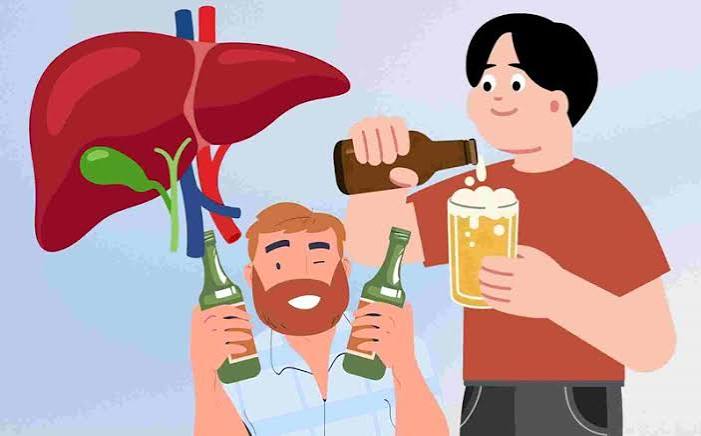
The liver processes virtually everything absorbed from the digestive tract. Every gram of fructose, every unit of alcohol, every emulsifier in processed food reaches the liver via the portal vein before entering systemic circulation. This anatomical reality means that the liver is uniquely exposed to dietary harm — and that understanding which foods to limit for liver health can make a meaningful difference to whether hepatic fat accumulates, inflammation develops, and disease progresses.
Non-alcoholic fatty liver disease (NAFLD) — now the world’s most common liver condition — is primarily a dietary disease. So is alcoholic liver disease. So is a large proportion of the inflammatory liver disease (NASH) that progresses to cirrhosis and hepatocellular carcinoma. The evidence connecting specific dietary categories to specific liver harm mechanisms is among the strongest in nutritional medicine.
Alcohol — The Primary Hepatotoxin
Alcohol (ethanol) is the most well-characterised direct liver toxin in the human diet. The mechanisms of alcohol-related liver injury are multiple, converging, and dose-dependent — producing a spectrum from alcoholic fatty liver (reversible) through alcoholic hepatitis to cirrhosis and hepatocellular carcinoma (largely irreversible).
The primary metabolic pathway: ethanol is oxidised to acetaldehyde by alcohol dehydrogenase and the CYP2E1 enzyme. Acetaldehyde is directly hepatotoxic — it forms protein adducts that disrupt normal hepatocyte function, generates reactive oxygen species (ROS) that cause lipid peroxidation of cell membranes, forms DNA adducts that drive carcinogenesis, and directly activates hepatic stellate cells — the cells responsible for depositing collagen fibres that constitute liver fibrosis.
A second, equally important mechanism operates via the gut-liver axis. Alcohol directly increases intestinal permeability by disrupting tight junction proteins (ZO-1, occludin, claudin-1), allowing bacterial lipopolysaccharide (LPS) to translocate from the gut into the portal circulation in much higher quantities than normal. Kupffer cells (the liver’s resident macrophages) respond to elevated portal LPS by producing inflammatory cytokines — particularly TNF-α — that trigger hepatocyte apoptosis and accelerate fibrosis. This LPS-mediated inflammatory mechanism explains why alcoholic liver disease is characterised by such significant inflammation beyond the direct effects of ethanol itself.
Women are substantially more susceptible to alcohol-related liver injury at equivalent doses: lower alcohol dehydrogenase activity, lower body water dilution of blood alcohol, and hormonal effects on hepatic fat metabolism mean that hepatic damage typically occurs at lower consumption levels in women than men. The evidence is unambiguous: there is no lower safe limit for alcohol in relation to liver health — the dose-response relationship for liver harm is continuous from the first drink.
Fructose and Added Sugar
Fructose metabolism is almost exclusively hepatic. Unlike glucose — which is metabolised by cells throughout the body and subject to rate-limiting enzymatic control — fructose bypasses the primary regulatory enzyme (phosphofructokinase) and floods the hepatic metabolic pathway as essentially unlimited substrate for fat synthesis. The result is de novo lipogenesis: the liver converts excess fructose directly into triglycerides, which accumulate as hepatic fat (steatosis) — the defining feature of NAFLD.
A 2017 meta-analysis (Vos et al.) found that regular sugary drink consumption was associated with a 1.5-fold higher risk of NAFLD compared with non-consumption, with a clear dose-response relationship. Fructose also drives liver inflammation through a second pathway: fructose catabolism generates AMP, which is degraded to uric acid. Elevated uric acid activates the NLRP3 inflammasome in hepatocytes — a key inflammatory signalling complex — producing a direct pro-inflammatory signal that accelerates the transition from simple steatosis to steatohepatitis (NASH).
The practical implications are significant:
- Table sugar (sucrose) is 50% fructose by weight — the most widespread added sugar in processed foods and beverages
- High-fructose corn syrup (HFCS) used in many processed foods and sodas is 55–90% fructose — a particularly efficient hepatic fat-loading substrate
- Fruit juice — despite its “natural” framing — delivers fructose loads comparable to soft drinks: a 250ml glass of apple juice contains approximately 28g fructose, without the fibre that slows absorption in whole fruit
- Whole fruit is substantially safer: the fibre matrix slows fructose absorption, the dose per piece of fruit is much lower, and the micronutrient and polyphenol content provides offsetting benefits
WHO guidelines recommend limiting added sugar to under 10% of daily caloric intake (approximately 50g/day for a 2000kcal diet), with a further benefit target of under 5%. For people with NAFLD or at high risk, the most impactful single change is typically eliminating sugary drinks — including fruit juices and sweetened “health” drinks. See our article on foods to limit for digestive comfort for the broader sugar impact on gut health.
Saturated Fat
Dietary saturated fat exerts its liver harm through mechanisms distinct from and additive to fructose. While fructose drives hepatic fat accumulation through de novo lipogenesis (making new fat), saturated fat both contributes to hepatic fat accumulation and impairs the liver’s capacity to oxidise and clear that fat.
The specific mechanism of saturated fat hepatotoxicity centres on palmitic acid — the dominant saturated fatty acid in typical Western diets, found at high concentrations in red meat, full-fat dairy products, coconut oil, and palm oil. Palmitic acid at high concentrations triggers endoplasmic reticulum (ER) stress in hepatocytes — a cellular stress response that, when chronic, leads to hepatocyte apoptosis (programmed cell death). Dead hepatocytes release damage-associated molecular patterns (DAMPs) that activate Kupffer cells, driving hepatic inflammation and fibrosis activation: the transition from steatosis to NASH.
Saturated fat also suppresses mitochondrial beta-oxidation — the process by which fatty acids are burned for energy in the liver. This is directly opposite to the effect of omega-3 fatty acids (which activate PPAR-α to increase beta-oxidation). The result: saturated fat-rich diets progressively impair the liver’s fat-burning capacity while simultaneously adding to the fat load — a compounding effect.
A further dimension: high saturated fat diets promote gut dysbiosis by reducing Bifidobacterium populations and increasing LPS-producing gram-negative bacteria. Through the gut-liver axis, this translates to elevated portal LPS and amplified hepatic inflammation — the same mechanism seen in alcohol use. High saturated fat combined with high fructose (the characteristic pattern of ultra-processed Western foods) is synergistically worse for the liver than either component alone.
Trans Fats
Industrial trans fats — produced by partial hydrogenation of vegetable oils — have been largely phased out of food supplies in high-income countries following WHO advocacy and regulatory action. In the UK and EU, trans fat content is now below 2% of total fat in most products. However, they may still be present in some imported processed foods, commercially fried fast food, some pastry products, and foods manufactured before regulation took effect.
Trans fats directly inhibit hepatic lipid metabolism enzymes responsible for clearing triglycerides from the liver, and promote hepatic steatosis at doses achievable through regular consumption of products containing them. They also significantly worsen the LDL:HDL ratio — elevating LDL and reducing HDL — with cardiovascular effects that parallel their liver effects.
Identification: “partially hydrogenated” in an ingredients list is the reliable indicator of trans fat presence. Products using “hydrogenated” (without “partially”) may have fully hydrogenated oils — these are functionally saturated fats, not trans fats, and are somewhat less harmful. Ruminant trans fats (from beef and dairy — conjugated linoleic acid, vaccenic acid) are structurally distinct from industrial trans fats and appear to have neutral or modest positive health effects at normal dietary doses.
Ultra-Processed Foods
Ultra-processed foods (UPF) represent a convergence of most of the liver-damaging food components discussed in this article: high fructose corn syrup, saturated fat, trans fats (in some), refined carbohydrates, high sodium, and multiple chemical additives — packaged in hyperpalatable formulations designed for overconsumption.
Beyond their nutrient composition, UPFs contain emulsifiers — particularly carboxymethylcellulose (CMC) and polysorbate-80 — that have been shown to disrupt the intestinal mucus layer and increase gut permeability in animal models. The resulting increase in portal LPS exposure produces direct hepatic inflammatory signalling, independently of the caloric or macronutrient content of the foods. This additive-mediated gut-liver axis effect means that UPF harm to the liver is not fully captured by analysing their macro and micronutrient content alone.
The combined hepatotoxic profile of UPF — high fructose + saturated fat + emulsifiers + additives — makes them the most efficient single food category for driving NAFLD progression. Limiting UPF consumption addresses multiple liver-harmful factors simultaneously and is one of the highest-priority dietary changes for liver health protection.

Red and Processed Meat
Red meat presents liver-specific concerns beyond its relationship to colorectal cancer discussed elsewhere. The primary liver-relevant mechanism involves iron: haem iron from red meat is absorbed at much higher rates than non-haem iron from plant sources, and excess circulating iron is stored preferentially in the liver as ferritin and haemosiderin. Hepatic iron overload (siderosis) generates ROS through the Fenton reaction — hydrogen peroxide reacts with iron to produce hydroxyl radicals, one of the most damaging forms of oxidative stress — and directly drives fibrosis activation in hepatic stellate cells.
This iron-overload risk is dramatically amplified in individuals with hereditary haemochromatosis — one of the most common genetic disorders in Northern European populations (affecting approximately 1 in 300 people of Northern European ancestry). In haemochromatosis, iron absorption is chronically dysregulated, and high red meat intake accelerates hepatic iron accumulation, siderosis, fibrosis, and progression to cirrhosis. Many people with haemochromatosis are undiagnosed — if you have unexplained liver enzyme elevation or a family history, testing for HFE gene mutations is worthwhile before assuming dietary causes alone.
Processed meat (bacon, ham, sausages, salami, hot dogs) adds N-nitroso compound (NOC) formation from nitrite preservatives, and the chemical preservative load collectively increases the hepatic detoxification burden on cytochrome P450 enzymes. Practical guidance: limiting red meat to under 500g per week and avoiding processed meat where possible applies to liver health as much as to colorectal cancer risk.
Refined Carbohydrates and Hepatic Insulin Resistance
White bread, white rice, pastries, sugary breakfast cereals, and other high-glycaemic refined carbohydrates drive liver harm primarily through the hepatic insulin resistance pathway — a mechanism distinct from but additive to the direct fructose lipogenesis effect.
Repeated high glycaemic load meals produce sustained hyperinsulinaemia (chronically elevated blood insulin). In the liver, chronic hyperinsulinaemia leads to hepatic insulin resistance — a state where the liver fails to suppress glucose production in response to insulin (causing hyperglycaemia) but simultaneously continues to activate lipogenesis via the SREBP-1c transcription factor. This paradoxical selective insulin resistance produces a situation where the liver simultaneously over-produces both glucose and fat — a central feature of the metabolic syndrome and a key driver of NAFLD progression from simple steatosis to NASH.
Refined carbohydrates also impair the gut barrier indirectly: by displacing dietary fibre, they reduce the short-chain fatty acid (butyrate) production that maintains tight junction protein expression in intestinal epithelial cells. The resulting increase in gut permeability amplifies portal LPS exposure and adds an inflammatory dimension to the metabolic harm of refined carbohydrates.
Practical approach: replacing white refined grains with wholegrains — brown rice, wholegrain bread, oats, barley — reduces the glycaemic load, maintains dietary fibre, and provides prebiotic substrate for a healthy gut microbiome. Reducing refined carbohydrate intake is particularly important for individuals with existing NAFLD or insulin resistance, where the hepatic insulin resistance pathway is already operating. For further guidance on the positive dietary changes that complement these limits, see our guide on best foods for liver health.
High Sodium
High sodium intake is an emerging but consistent dietary risk factor for liver disease. Population studies including NHANES data find that high dietary sodium is independently associated with elevated liver enzyme levels (ALT) and higher NAFLD prevalence, even after adjusting for BMI, total caloric intake, and other confounders.
Two plausible mechanisms: first, high sodium increases plasma aldosterone and promotes fluid retention, which may contribute to portal pressure elevation and worsen hepatic haemodynamics in those with existing liver disease. Second, and potentially more significant, high sodium intake alters gut microbiome composition — specifically increasing the Firmicutes-to-Bacteroidetes ratio and reducing short-chain fatty acid producers — with knock-on effects on gut permeability and portal LPS through the gut-liver axis.
The practical implication is straightforward: the primary source of dietary sodium in most Western diets is ultra-processed food (accounting for over 70% of sodium intake). Reducing UPF and cooking from minimally processed ingredients automatically reduces sodium substantially. Seasoning food with herbs, spices, lemon, and vinegar provides flavour enhancement without the sodium load of processed seasoning products.
A Practical Reduction Hierarchy
When making dietary changes for liver health, prioritising by evidence strength and mechanism magnitude avoids spreading effort across lower-impact changes:
- Alcohol — direct hepatotoxin; causes cirrhosis and HCC; most impactful single change for those who drink
- Sugary drinks and added sugar — fructose drives de novo lipogenesis; eliminating sugary drinks is the most specific change for NAFLD
- Ultra-processed foods — combined fructose + saturated fat + emulsifiers; reducing UPF addresses multiple mechanisms simultaneously
- Saturated fat sources — palmitic acid hepatotoxicity and reduced beta-oxidation; replace with EVOO and oily fish
- Trans fats — check labels for “partially hydrogenated”; generally now rare but still present in some products
- Red and processed meat in excess — limit to under 500g red meat/week; avoid processed meat; consider iron testing if family history of haemochromatosis
- Refined carbohydrates — swap for wholegrains; reduces hepatic insulin resistance pathway
- High sodium — primarily achieved through reducing UPF (sodium reduction follows automatically)
Pair these limits with the positive additions covered in best foods for liver health — particularly coffee, oily fish, extra-virgin olive oil, and cruciferous vegetables — for a comprehensive liver-protective dietary approach. For the broader digestive health picture, see digestive health diet: a practical guide.
Frequently Asked Questions
References:
- Vos MB, et al. “Added sugars and cardiovascular disease risk in children.” Circulation. 2017. Circulation 2017;135(19)
- NHS. “Non-alcoholic fatty liver disease (NAFLD).” NHS.uk
- WHO. “Guideline: sugars intake for adults and children.” 2015. WHO Guidelines 2015
- Chalasani N, et al. “The diagnosis and management of nonalcoholic fatty liver disease.” Hepatology. 2018. AASLD Practice Guideline
- IARC. “Alcoholic beverage consumption and its relation to risk of different cancers.” IARC Monographs 2010. IARC Monographs
I had no idea that fruit juice was basically as bad as soda for the liver — I’ve been having a large glass of orange juice every morning thinking it was healthy. The fructose metabolism explanation was really clear and now I get why whole fruit is different. Switching to whole fruit from tomorrow.
Great that the fructose distinction landed clearly, Lena! The whole fruit vs juice distinction is really important — the fibre in whole fruit slows fructose absorption significantly, and the dose per piece of fruit is much smaller than a glass of juice. A medium orange has about 6g fructose; a 250ml glass of orange juice has about 12–15g, absorbed much faster. Whole fruit with meals is genuinely very different from juice. Good luck with the change!
The haemochromatosis section was something I really needed to read. I’ve had slightly elevated ferritin for two years and never connected it to diet or genetics. Going to ask my GP about the HFE gene test. The practical reduction hierarchy at the end was also a great way to structure what to tackle first — makes the whole thing feel less overwhelming.