
Mobility and Healthy Aging: What Adults Should Know
Mobility and healthy aging are inseparably linked: the ability to move freely, safely, and independently is one of the strongest predictors of physical health, cognitive function, social engagement, and overall quality of life in older adults. This guide explains what mobility means medically, why it declines with age, what the science says about preserving it, and what adults can do starting today to protect their functional independence.
Mobility is often assumed to be a natural casualty of aging — something that simply declines as years accumulate, beyond anyone’s real control. This assumption is not supported by the evidence. While aging does produce physiological changes that affect movement, the rate, severity, and functional consequences of mobility decline are profoundly shaped by lifestyle factors, medical management, and deliberate physical practice. Adults who remain physically active throughout life consistently show mobility profiles decades younger than their chronological age, and even those who have experienced significant decline can make meaningful gains with appropriate intervention.
The Centers for Disease Control and Prevention reports that one in four adults over 65 experiences a fall each year, and falls are the leading cause of injury-related death in this age group. Mobility decline — reduced gait speed, impaired balance, reduced lower-limb strength and flexibility — precedes and predicts falls, hospitalization, loss of independence, and mortality.
What Is Mobility? A Clinical Definition
In the clinical and gerontological literature, mobility encompasses several related but distinct capacities:
- Gait: The ability to walk — including speed, step length, cadence, stride variability, and the smoothness and energy efficiency of the walking pattern. Gait analysis is one of the most information-rich functional assessments available in geriatric medicine.
- Balance: The ability to maintain the body’s center of mass within its base of support during both static (standing still) and dynamic (moving) conditions. Balance involves the integration of visual, vestibular (inner ear), and proprioceptive (joint position sense) inputs processed by the central nervous system.
- Transfers: The ability to move between positions — from lying to sitting, sitting to standing, standing to a chair or toilet seat. Transfer ability is a key determinant of functional independence in daily activities.
- Stair climbing: Requires greater lower-limb strength and hip/knee range of motion than level walking, and is often the first activity limited by musculoskeletal decline.
- Range of motion: The degree of movement available at joints — particularly the hip, knee, ankle, and thoracic spine — which determines the quality and safety of movement patterns.
When clinicians assess mobility, they use standardized tests including the Timed Up and Go (TUG) test, the Short Physical Performance Battery (SPPB), gait speed measurement, and balance assessments such as the Berg Balance Scale. These tools allow mobility to be measured, tracked, and compared to population norms — moving it from a subjective impression to an objective clinical measure.
Why Mobility Declines With Age
Mobility decline with aging results from changes in multiple body systems simultaneously. The key contributors are:
Sarcopenia
The progressive loss of muscle mass and function described in our muscle health basics guide is the most direct structural cause of reduced mobility. Lower-limb muscle weakness — particularly in the quadriceps, hip extensors, and ankle plantarflexors — slows gait speed, reduces step length, and impairs the ability to generate corrective forces quickly enough to prevent a stumble from becoming a fall.
Joint Changes
Osteoarthritis of the hip, knee, and ankle reduces range of motion, causes pain with weight-bearing activity, and alters the gait pattern in ways that redistribute mechanical stress to other joints. Hip and knee OA are among the most common causes of mobility limitation in older adults. As detailed in our joint health basics guide, the relationship between OA and mobility is bidirectional — reduced mobility accelerates joint degeneration, and joint degeneration reduces mobility.
Neurological Changes
Aging affects the central and peripheral nervous system in ways that directly impact mobility:
- Slower nerve conduction velocities increase reaction time, reducing the ability to respond quickly to balance perturbations
- Reduced proprioception — the ability to sense joint position and movement — impairs the reflexive postural corrections that occur hundreds of times during normal walking
- Vestibular system degeneration reduces the accuracy of balance information from the inner ear
- White matter changes and reduced cerebellar volume alter gait coordination and dual-task performance (doing two things simultaneously, like walking while talking)
Vision Changes
Visual input is essential for balance and spatial navigation. Age-related reductions in visual acuity, contrast sensitivity, depth perception, and peripheral vision all contribute to increased fall risk. Cataracts, glaucoma, and macular degeneration — all more prevalent with age — amplify this risk substantially.
Medication Effects
Polypharmacy — the simultaneous use of multiple medications — is one of the most modifiable and underappreciated risk factors for mobility limitation and falls in older adults. Medications associated with fall risk include sedative-hypnotics, antidepressants, antipsychotics, antihypertensives (particularly those causing orthostatic hypotension), opioid analgesics, and certain antihistamines. Adults on four or more medications have approximately four times the fall risk of those on fewer medications, independent of disease status.
Mobility and Healthy Aging: Measuring Your Own Mobility
Several simple assessments allow adults to gauge their current mobility status and track changes over time:
1. Timed Up and Go (TUG): From seated in a standard chair, stand, walk 3 meters, turn, walk back, and sit down. Time the entire sequence. Under 12 seconds is normal for most adults over 65; 12–20 seconds suggests moderate impairment; over 20 seconds indicates significant impairment.
2. Single-leg balance: Stand on one foot without support. Hold for up to 30 seconds (eyes open). Under 5 seconds on either leg warrants attention in adults under 70; under 10 seconds is significant in adults under 60.
3. Chair stand test: Rise from a standard chair five times without using your arms. Over 12 seconds suggests impaired lower-limb strength and power.
4. Gait speed: Walk 10 meters at your comfortable walking pace; measure the middle 6 meters. Below 1.0 m/s is below average for adults 65–74; below 0.8 m/s is associated with substantially increased fall and mortality risk.
If any of these tests reveal results outside normal ranges, sharing them with a primary care physician or physiotherapist at your next appointment provides a concrete, objective starting point for discussion — far more useful than a general complaint of “feeling less steady.”
Fall Prevention: The Most Important Application of Mobility Knowledge
Falls represent the intersection of mobility decline and adverse health outcomes. A fall-related hip fracture in an adult over 70 carries a one-year mortality rate of 15–30%, and fewer than half of those who survive regain their pre-fracture level of function. Preventing falls is therefore not merely a quality-of-life goal but a survival imperative for aging adults.
The evidence base for fall prevention is exceptionally well-developed, and the effective interventions are known:
- Exercise: The most consistently effective fall prevention intervention. Tai chi, balance training, and strength and resistance exercise programs each reduce fall rates by 20–40% in meta-analyses. The key element is balance challenge — exercises that push the limits of the balance system to force adaptation.
- Medication review: Reducing polypharmacy — particularly psychotropic medications, benzodiazepines, and sedating medications — has strong evidence for reducing fall rates. A systematic medication review by a pharmacist or geriatrician is an underutilized intervention.
- Vision correction: Treatment of cataracts in particular has been shown to reduce fall risk. Ensuring current glasses prescriptions are adequate and addressing other treatable visual impairments is straightforward and effective.
- Home hazard modification: Addressing environmental hazards — loose rugs, inadequate lighting, lack of grab bars in bathrooms, slippery floors — reduces fall rates, particularly in high-risk individuals with prior falls.
- Vitamin D: Supplementation to adequate levels is recommended in deficient older adults as part of fall prevention, given vitamin D’s role in muscle function and balance.
- Footwear: Appropriate footwear with low heels, non-slip soles, and adequate ankle support. High heels, worn soles, and socks-only walking significantly increase fall risk.
Multifactorial fall prevention programs — combining several of these elements simultaneously based on individual risk assessment — produce the largest reductions in fall rates in high-risk populations and are recommended by the British Medical Journal’s clinical evidence reviews and the U.S. Preventive Services Task Force.
Exercise for Mobility: What the Evidence Says
Not all exercise is equally effective for mobility preservation. The research has identified specific modalities and principles that produce the greatest functional benefit:
Balance and Gait Training
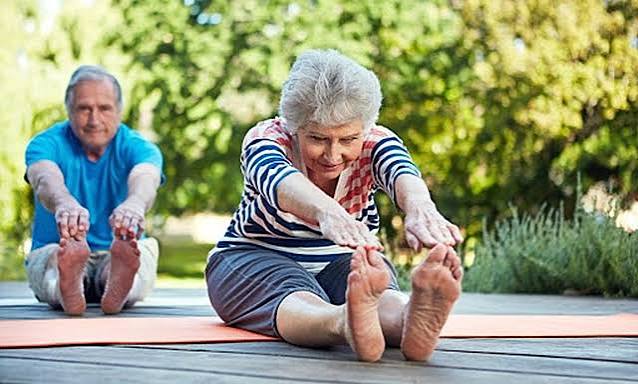
Exercise programs that directly challenge balance — progressively reducing the base of support, adding dynamic movement components, incorporating dual-task elements (balance while performing a cognitive task), and practicing recovery from perturbation — produce the strongest improvements in balance and the most robust reductions in fall rates. Tai chi is the most studied single-modality balance intervention, with consistent evidence across more than 20 trials for reducing fall risk in community-dwelling older adults. Yoga, Pilates, and physical therapy-based balance programs similarly show benefit.
Resistance Training
Lower-limb resistance training — squats, leg press, step-ups, calf raises, hip strengthening — directly addresses the muscular deficits underlying mobility decline. High-intensity progressive resistance training produces greater functional improvements than lower-intensity programs. Including explosive (fast-velocity) components targets the fast-twitch fiber function most relevant to rapid balance corrections.
Walking Programs
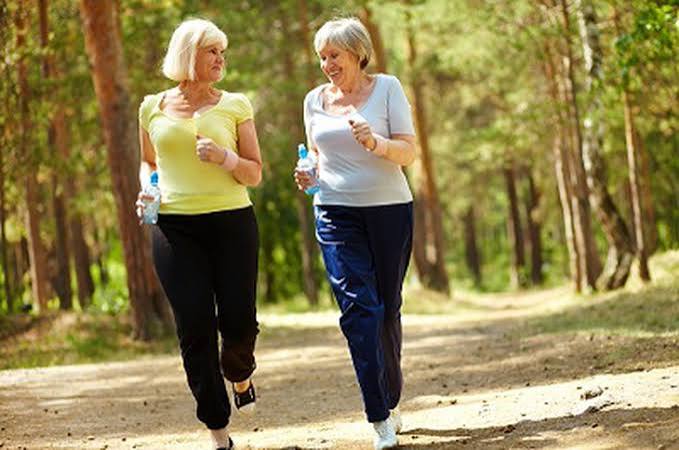
Regular walking preserves cardiovascular fitness, maintains habitual movement patterns, and provides continuous, low-intensity proprioceptive and vestibular stimulation. While walking alone is insufficient to prevent muscle strength decline, it supports overall mobility through multiple mechanisms. Walking on varied terrain (grass, gravel, slight inclines) provides greater proprioceptive challenge than treadmill or flat-surface walking.
Aquatic Exercise
Water-based exercise provides a low-impact environment for mobility training that is particularly accessible to adults with joint pain or severe deconditioning. Buoyancy reduces joint loading while water resistance provides appropriate challenge for muscle and balance function. Aquatic therapy has evidence for improving mobility and reducing fall risk in adults with osteoarthritis and those recovering from joint surgery.
Nutrition and Mobility
The nutritional foundations of mobility preservation align with those of muscle and bone health:
- Adequate protein: Preserving muscle mass requires protein intakes of 1.2–1.6 g/kg body weight/day, distributed across three to four meals with at least 25–30 g per meal. Protein adequacy is particularly important in the context of illness, surgery, or periods of reduced activity that accelerate muscle catabolism.
- Vitamin D: Serum levels above 20 ng/mL (with many guidelines suggesting above 30 ng/mL) for optimal muscle and balance function. Most older adults require supplementation to maintain adequate levels.
- Calcium: 1,200 mg per day for adults over 51, from dietary sources as much as possible, to support the bone health that underlies safe weight-bearing activity.
- Omega-3 fatty acids: Emerging evidence suggests modest benefits for muscle mass preservation (sarcopenia prevention) and joint inflammation reduction, supporting mobility from multiple directions simultaneously.
- Hydration: Dehydration impairs cognitive function and reaction time, both of which contribute to fall risk. Older adults have reduced thirst sensation and are particularly prone to chronic mild dehydration. Adequate fluid intake — approximately 1.5–2 liters per day for most adults, more in heat or with exercise — supports neurological function alongside musculoskeletal health.
Mobility and Cognitive Health
The relationship between mobility and cognitive function runs in both directions. Reduced gait speed and balance impairment predict cognitive decline and dementia onset, independent of other risk factors. Conversely, cognitive impairment — even in early or subclinical stages — impairs the dual-task coordination required for safe walking (demonstrated by the “stops walking when talking” phenomenon observed in early dementia).
The mechanisms linking mobility and cognition are multiple: shared vascular risk factors, physical activity’s direct neuroprotective effects (increasing brain-derived neurotrophic factor, stimulating hippocampal neurogenesis), and the cognitive demands of complex motor tasks. Regular aerobic and resistance exercise is the intervention with the strongest evidence for reducing dementia risk — not just maintaining mobility, but protecting the brain that controls it.
Dual-task exercise — activities that require both physical and cognitive performance simultaneously, such as walking while counting backwards, dancing (which requires learning and remembering patterns), or sports with spatial and strategic demands — appears to be particularly effective for maintaining the complex motor-cognitive integration that safe mobility requires.
When to Seek Professional Help for Mobility Concerns
• A fall, or near-falls (stumbles that almost became falls), in the past year
• Increasing fear of falling that is limiting your activity
• Difficulty with tasks that were previously easy: rising from a chair, climbing stairs, walking on uneven ground
• A TUG test time over 12 seconds, single-leg balance under 5 seconds, or gait speed below 0.8 m/s
• New dizziness, lightheadedness, or unsteadiness — these may indicate vestibular problems, orthostatic hypotension, or medication effects
• Loss of confidence walking outdoors or on slopes, which often signals early balance dysfunction before falls occur
A comprehensive geriatric or physiotherapy assessment can identify the specific contributions to mobility limitation — whether muscle weakness, balance impairment, joint pain, medication effects, or footwear issues — and generate a targeted intervention plan. The available interventions are effective; the limiting factor is usually recognition and referral, not treatment capacity.
Building a Lifelong Mobility Practice
The most effective approach to mobility and healthy aging is not a single intervention but an ongoing practice — a set of habits embedded in daily life that cumulatively preserve the physiological systems on which mobility depends:
- Move every day: Daily movement maintains joint lubrication, preserves neuromuscular patterns, and provides ongoing proprioceptive and vestibular stimulation. The specific activity matters less than consistency.
- Challenge your balance regularly: Balance ability, like strength, declines without specific challenge. Incorporating single-leg standing (while brushing teeth, waiting for a kettle), walking on varied surfaces, and formal balance exercises two to three times per week provides ongoing adaptive stimulus.
- Maintain lower-limb strength: Squats, lunges, step-ups, and calf raises — performed regularly, progressively, and with some explosive component — are the most important exercises for protecting the muscular foundation of mobility.
- Protect your sleep: Sleep is when neuromuscular repair occurs and when hormonal systems supporting muscle maintenance are active. Prioritizing sleep quality is directly relevant to mobility maintenance.
- Review medications periodically: As your medication list evolves with age, periodic review of fall-risk medications with your physician or pharmacist is a concrete risk reduction step.
- Address sensory health: Regular vision and hearing assessments, with appropriate correction, reduce two major contributors to mobility impairment and fall risk.
Additional foundational context is available in our guides to why musculoskeletal health matters after age 40, to signs of healthy bones and joints, and to bone health numbers every adult should know.
Frequently Asked Questions About Mobility and Healthy Aging
At what age does mobility typically start to decline?
Measurable changes in mobility-related physiology begin in the 30s and 40s — muscle mass begins declining at roughly 3–8% per decade after 30, and gait speed shows measurable slowing beginning in the 60s on population average. The functional consequences of these changes — slower walking, reduced confidence on stairs, more time needed for transfers — typically become noticeable in the 70s in active adults and may emerge earlier in sedentary ones. The important point is that the changes underlying mobility decline begin well before they become clinically apparent, which is why protective habits established in midlife produce substantially better outcomes than interventions begun only after mobility problems manifest.
Is tai chi actually effective for fall prevention?
Yes — tai chi has the most robust evidence base of any single exercise modality for fall prevention. A 2020 Cochrane Review of exercise interventions for fall prevention in community-dwelling older adults, which analyzed 108 trials with over 23,000 participants, found that balance and functional exercises (of which tai chi is the most studied type) reduced the rate of falls by 24%. Tai chi’s benefits extend beyond balance: it reduces fear of falling, improves gait characteristics, and has psychological benefits including reduced anxiety and depression — factors that independently affect activity levels and fall risk. Twice-weekly participation for at least 12 weeks is the duration at which consistent benefits have been demonstrated; ongoing practice continues to provide benefit.
Can mobility be improved after a major fall or fracture?
Yes, though the process requires time, appropriate rehabilitation, and realistic expectations. After a hip fracture, for example, most patients undergo surgical repair followed by intensive rehabilitation. Studies show that approximately 50% of hip fracture patients return to their pre-fracture functional level within one year, with outcomes strongly predicted by pre-fracture mobility level, cognitive function, and the intensity of rehabilitation. Rehabilitation after falls and fractures involves progressive weight-bearing, targeted strengthening, balance retraining, and psychological support to address fall-related anxiety (which itself can perpetuate mobility limitation through activity restriction). Starting rehabilitation early and continuing beyond the acute phase produces the best outcomes. Adults who have experienced a mobility-limiting fall or fracture should advocate for a comprehensive rehabilitation program rather than accepting a plateau.
How does fear of falling affect mobility?
Fear of falling is a significant and underappreciated contributor to mobility decline that affects approximately 40–60% of community-dwelling older adults who have fallen and 20–30% of those who have not. Fear of falling leads to activity restriction — avoiding activities perceived as risky — which produces deconditioning, social isolation, and further mobility decline. This creates a self-reinforcing cycle: falls produce fear, fear produces inactivity, inactivity reduces the strength and balance needed to prevent falls, and weakness increases actual fall risk. Breaking this cycle typically requires both physical interventions (exercise that rebuilds confidence through demonstrated competence) and psychological support, particularly cognitive-behavioral approaches that help reframe risk assessment and gradually expand activity tolerance.
How much exercise is enough to maintain mobility?
For maintaining mobility in healthy older adults, current evidence supports at least 150 minutes per week of moderate-intensity aerobic activity (such as brisk walking), plus two to three sessions per week of resistance exercise targeting major muscle groups, plus two to three sessions per week specifically targeting balance. This may seem like a substantial time commitment, but much of it can be integrated into daily routines — walking briskly for transport, using stairs, performing standing balance exercises during routine tasks, and combining resistance and balance work in a single session. Research suggests that even half of these targets produces meaningful benefit over sedentary behavior, and that any increase in activity from a low baseline produces proportionally large health gains.
What is the single most important thing an older adult can do for mobility?
If only one intervention were possible, the evidence most strongly supports progressive resistance exercise targeting lower-limb strength — specifically the quadriceps, hip extensors, and ankle plantarflexors. This is because lower-limb muscle weakness is the most direct cause of gait slowing, transfer difficulty, and inadequate corrective responses to balance perturbation. Resistance training also has the most evidence for reversibility — significant gains in strength and function are achievable even in very old adults (including those in their 80s and 90s) in response to appropriately designed programs. That said, the maximum benefit comes from combining resistance exercise with balance training, as both address distinct components of the mobility-fall prevention system.
Sources: Centers for Disease Control and Prevention; Cochrane Reviews — exercise for fall prevention; British Medical Journal; EWGSOP2 (sarcopenia); American Geriatrics Society/British Geriatrics Society fall prevention guidelines; National Institute on Aging
The TUG test self-assessment in this article was a revelation. I am 72 and have always thought of myself as reasonably mobile because I still walk my dog twice a day and manage the stairs without holding the rail. I timed myself on the TUG test and got 14.5 seconds, which your article says indicates moderate impairment. I was genuinely surprised. I brought this result to my GP at my next appointment and she confirmed it was concerning and referred me to a falls prevention physiotherapist. After eight weeks of balance and lower-limb strength work, I am now at 10.2 seconds and the difference in my confidence on uneven ground is substantial. The fact that a simple kitchen-table test told me something my twice-daily dog walking was masking is an important point I will share with friends of similar age.
The section on medication review as a fall prevention strategy is something that I believe is dramatically underutilized. My 79-year-old father was on seven medications and had three falls in two years. None of his physicians had reviewed his full medication list together — each specialist had added medications in their domain without looking at the whole picture. After I raised this specifically with his GP and requested a comprehensive medication review, a pharmacist identified three medications with significant interactions contributing to orthostatic hypotension and one with sedating side effects. Reducing and switching two of these led to a measurable improvement in his blood pressure on standing and in his alertness. He has not fallen in the fifteen months since. I wish someone had raised this possibility earlier in his care.
Thank you for sharing this — it is an important example of how polypharmacy review can produce meaningful clinical outcomes, and the pattern you describe (multiple specialists adding medications without a unified review) is unfortunately very common in older adults with complex care needs. The mechanism you identified — orthostatic hypotension from antihypertensives, combined with sedating side effects — is one of the most classically recognized drug-related contributors to falls, and yet it is frequently missed because it requires someone to look at the combined effect of the whole medication list rather than the appropriateness of each drug individually. The 2019 American Geriatrics Society Beers Criteria provides a comprehensive list of medications potentially inappropriate for older adults, and the STOPP/START criteria (developed in Ireland and widely used in European geriatric practice) offer a similar tool. However, neither list replaces clinical judgment by someone who knows the specific patient — which is why a pharmacist or geriatrician who can review the complete medication profile in the context of the individual’s conditions and functional goals is so valuable. For families or caregivers of older adults on complex medication regimens, requesting this kind of review — perhaps framing it as a proactive check-in rather than a complaint — is entirely reasonable and can be the most impactful single clinical intervention for fall risk in that population.