
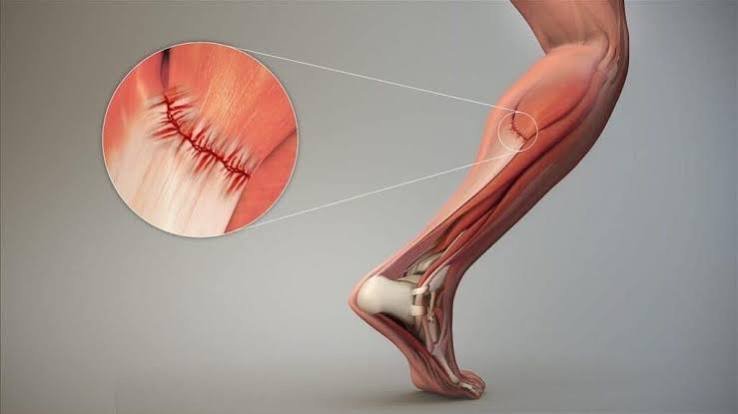
Work-related musculoskeletal disorders (WRMSDs) are the most common category of occupational ill health in Great Britain. According to the Health and Safety Executive (HSE), approximately 477,000 workers suffered a work-related musculoskeletal disorder in 2021/22, accounting for around 28% of all work-related ill health cases and costing an estimated 6.6 million lost working days in that year alone. The back, upper limbs, and neck account for the majority of cases, with manual handling, repetitive tasks, and sustained awkward postures as the dominant causes. The encouraging finding from decades of occupational health research is that the majority of workplace musculoskeletal injuries are preventable through identifiable ergonomic and organisational changes — and that early, active management produces significantly better outcomes than prolonged absence from work.
What Are Work-Related Musculoskeletal Disorders?
Work-related musculoskeletal disorders is the umbrella term for injuries and conditions of the muscles, tendons, ligaments, joints, nerves, and related soft tissues that are caused or made worse by work activities. They are classified into three broad regions:
Upper limb disorders (ULDs) affect the shoulder, elbow, forearm, wrist, and hand. Common presentations include: rotator cuff tendinopathy (shoulder pain from overhead work); lateral epicondylalgia (tennis elbow, from repetitive gripping and forearm rotation); medial epicondylalgia (golfer’s elbow); De Quervain’s tenosynovitis (wrist and thumb, from pinch grip repetition); and carpal tunnel syndrome (median nerve compression from sustained wrist flexion or vibration). These are described in detail in our guides to tendon injury and repetitive strain injury.
Work-related back pain — the single most common WRMSD category — covers acute lumbar muscle and ligament strains from manual handling, disc-related presentations from repeated spinal loading, and chronic low back pain perpetuated or exacerbated by the physical demands of work. Our guide to lifting safely covers the biomechanical principles directly relevant to reducing manual handling back injury risk.
Lower limb disorders include knee conditions associated with kneeling and squatting work (bursitis, accelerated osteoarthritis), plantar fasciitis from prolonged standing on hard surfaces, and Achilles tendinopathy from continuous loading without adequate variation.
Who Is at Highest Risk?
WRMSDs affect workers across all sectors, but the risk is not evenly distributed. The HSE consistently identifies the following as high-risk sectors: construction (manual handling, vibration, awkward working positions); health and social care (patient handling, sustained standing, repetitive procedures); agriculture (repetitive harvesting, heavy lifting, whole-body vibration from machinery); manufacturing (assembly line repetition, overhead and seated work); and cleaning and maintenance (repetitive scrubbing, mopping, overhead reaching).
Within any sector, risk is highest in workers who: perform the same movement repeatedly for more than two hours without adequate breaks; work in positions that require the neck to flex beyond approximately 20 degrees, or the trunk beyond 45 degrees; regularly handle loads above guideline weight limits without mechanical assistance; operate vibrating tools or machinery; or have returned to full work duties after a previous WRMSD without adequate rehabilitation — since previous injury is the strongest predictor of re-injury, as described in our guide to overuse injuries.
Key Risk Factors at Work
The HSE’s ergonomics framework identifies five primary physical risk factors for WRMSDs. Understanding these allows both workers and employers to identify and address the specific demands that are creating injury risk:
Repetition: Performing the same movement pattern repeatedly over extended periods is the primary driver of overuse conditions in the workplace — tendinopathy, bursitis, and nerve compression syndromes. The risk increases with frequency, duration, and the force required for each repetition. Assembly line work, keyboard and mouse use, and repetitive manual handling all create high repetitive exposure.
Awkward posture: Working in positions that deviate significantly from neutral (arms raised above shoulder height, trunk bent forward, neck flexed, wrist deviated) multiplies the muscular effort required to maintain the position and accelerates fatigue and tissue overload. The combination of awkward posture and repetition is particularly damaging — both factors are present simultaneously in many healthcare and construction tasks.
Forceful exertion: Tasks requiring significant muscular force — heavy lifting, gripping tight objects, pushing or pulling heavy loads — create high instantaneous and cumulative loading on muscles, tendons, and joints. Force is the multiplicative factor in load calculations: the same awkward posture under a light load may be acceptable; under a heavy load it becomes a significant injury risk.
Contact stress: Pressure from hard or sharp work surfaces on soft tissues — resting the forearm on a desk edge, kneeling on hard floors, pressing tools into the palm — creates localised tissue compression that can damage nerves and tendons over time. Carpal tunnel syndrome from sustained wrist pressure and knee bursitis from kneeling are classic contact stress injuries.
Vibration: Hand-arm vibration (HAV) from power tools (drills, grinders, sanders, chainsaws) causes vibration white finger (HAVS — Hand-Arm Vibration Syndrome) and contributes to carpal tunnel syndrome. Whole-body vibration (WBV) from driving heavy machinery is associated with accelerated lumbar disc degeneration and low back pain. The Control of Vibration at Work Regulations 2005 sets legal exposure limits for both.
Most Common Workplace Injuries by Body Region
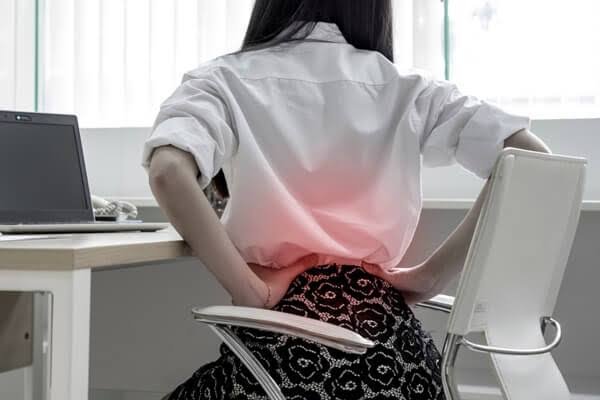
Lower back: the most common single site of work-related musculoskeletal injury. Manual handling (lifting, carrying, lowering), sustained seated posture in poor ergonomic setups, and whole-body vibration are the dominant causes. Our guide to posture and back pain describes the specific loading mechanisms and prevention strategies in detail. Key points: lumbar muscle and ligament strains are self-limiting and recover well with active management; disc herniations related to workplace loading follow the same management pathway as non-occupational disc injuries; persistent back pain beyond 6 weeks warrants medical assessment and physiotherapy.
Shoulder and rotator cuff: overhead work and repetitive reaching above shoulder height are the principal workplace causes of rotator cuff tendinopathy and impingement. Painters, decorators, warehouse workers reaching overhead shelves, surgeons and dental professionals, and construction workers are particularly affected. The shoulder is mechanically vulnerable above 90 degrees of elevation — work design should minimise sustained or repetitive overhead reach.
Elbow — lateral and medial epicondylalgia: “tennis elbow” (lateral epicondylalgia) and “golfer’s elbow” (medial epicondylalgia) are both common in occupations requiring repetitive forearm rotation and gripping — plumbing, carpentry, keyboard work, and manual assembly. These are tendinopathic conditions (degenerative rather than inflammatory) and respond to the loading-based rehabilitation approaches described in our guide to tendon injury.
Wrist and hand — carpal tunnel syndrome and De Quervain’s: carpal tunnel syndrome (compression of the median nerve at the wrist) produces numbness and tingling in the thumb, index, and middle fingers, typically worse at night. Work with sustained wrist flexion, vibrating tools, or highly repetitive hand movements is a recognised risk factor. De Quervain’s tenosynovitis (pain at the base of the thumb) is associated with pinch grip repetition and affects workers in manufacturing, healthcare, and childcare.
Knee: kneeling work (flooring, plumbing, gardening) causes pre-patellar bursitis (“housemaid’s knee”) and is associated with accelerated knee osteoarthritis in epidemiological studies. Prolonged standing on hard surfaces contributes to patellofemoral pain and plantar fasciitis.
Manual Handling and Back Injury
The Manual Handling Operations Regulations 1992 (amended 2002) place a legal duty on employers to: first, avoid hazardous manual handling where reasonably practicable; second, assess the risk of any hazardous manual handling that cannot be avoided; and third, reduce the risk of injury to the lowest level reasonably practicable. This hierarchy — avoid, assess, reduce — is the foundational framework for manual handling risk management in UK workplaces.
The HSE publishes guideline weights for manual handling under ideal conditions (load close to the body, good grip, stable footing, no twisting, infrequent handling). For men lifting at waist height, the guideline weight is up to 25 kg; for women, up to 16 kg under the same conditions. These are not legal limits but indicate the level above which a significant proportion of workers are at risk even under good conditions. The guideline weights reduce substantially for lifts at floor level, at shoulder height, with arms extended from the body, or when twisting is involved — the combination of a heavy load in a mechanically disadvantaged position is the highest-risk scenario. Our guide to lifting safely explains the biomechanical principles behind these guidelines.
Back injury accounts for approximately 37% of all manual handling accidents according to HSE data. The highest-risk tasks combine heavy loads with distance from the body, twisting, and poor footing. The morning is a particularly high-risk time for disc-related back injury from lifting — spinal discs are more hydrated and under greater internal pressure in the first hour after rising, and the spine is biomechanically less prepared for heavy loading.
Ergonomic Interventions That Work
The evidence for ergonomic interventions is strongest when they involve physical changes to the workplace rather than training alone. Ergonomic training in isolation produces modest and short-lived benefits; combining training with workplace modifications produces sustained reduction in WRMSD rates.
Workstation adjustments: adjustable desks (allowing both seated and standing work), monitors positioned at eye level to avoid sustained neck flexion, chairs with lumbar support and adjustable height, and keyboard/mouse positioned to allow neutral wrist alignment all reduce upper limb and back disorder risk for office and computer workers. The HSE guidance on DSE (Display Screen Equipment) under the Health and Safety (Display Screen Equipment) Regulations 1992 provides the legal framework for office workstation risk assessment.
Job rotation: rotating workers through tasks with different physical demands reduces cumulative exposure to any single risk factor. An assembly line worker rotating between three tasks rather than performing the same task for eight hours receives one-third of the cumulative repetitive exposure. Evidence from systematic reviews supports job rotation as an effective component of WRMSD prevention programmes — though the rotation design must ensure that the tasks genuinely differ in their physical demands, not simply vary the same motion.
Micro-breaks: systematic reviews of office and computer workers demonstrate that structured micro-breaks (approximately two minutes every 30 minutes of continuous computer use) reduce upper limb pain and discomfort more effectively than waiting for fatigue to develop. The mechanism is tissue perfusion recovery and reduction of cumulative static loading — the same principle that underlies movement break guidance for prolonged sitting described in our guide to sitting too long and back pain.
Mechanical aids: patient handling hoists in healthcare, trolleys and pallet trucks in warehousing, vacuum lifting devices in manufacturing — these substitutions eliminate the heaviest and most mechanically disadvantaged manual handling tasks and have the strongest evidence for injury rate reduction.
Returning to Work After a Musculoskeletal Injury
The evidence on return to work after WRMSDs consistently shows that early return to modified work duties is more effective than extended sick leave for most musculoskeletal conditions. Prolonged absence from work in itself worsens outcomes: it leads to physical deconditioning, reinforces fear-avoidance beliefs about movement and work, and reduces the probability of full return. The goal is not to return to full duties immediately if that would be harmful, but to return to some form of productive work as early as safely possible.
A phased or modified return programme typically involves: an initial period with reduced hours and/or modified duties that avoid the specific risk factors for the injury; progressive increases in working hours and physical demands over weeks; and a formal review at each stage. For back pain, this means returning to light duties (avoiding heavy lifting, sustained stooping) initially, rather than waiting for complete pain resolution. NICE guidance (NG59) specifically recommends that healthcare professionals advise patients with low back pain that staying active — including at work in a modified capacity — is beneficial and that complete rest is harmful.
Employer support is a significant factor in return-to-work success. Workers whose employers are proactive in offering modified duties, maintaining communication during absence, and treating return as a gradual process have consistently better outcomes than those facing adversarial or passive responses. The HSE’s Fit for Work guidance and Fit Note system are designed to facilitate this process.
When to Seek Medical Assessment
Most work-related musculoskeletal injuries — acute strains, tendinopathy, mild ULDs — respond well to self-management with activity modification, appropriate loading, and the ergonomic adjustments described above. Seek GP or occupational health assessment in the following situations:
- Symptoms that are not improving after 2–3 weeks of appropriate self-management
- Symptoms severe enough to significantly limit work function or sleep
- Neurological symptoms: numbness, tingling, weakness, or radiating pain into the limbs — these may indicate nerve compression requiring specific investigation
- Back pain with red flag features: bilateral leg symptoms, bladder or bowel change, unexplained weight loss, fever, or pain that is constant and severe regardless of position (see our guide to lower back pain causes)
- Suspected repetitive strain injury that is not responding to conservative management — occupational health or physiotherapy referral may be appropriate
- Any situation where a formal medical assessment is required for a Fit Note or workplace risk assessment
Frequently Asked Questions
What is the most common workplace musculoskeletal injury?
Lower back pain is the most common single WRMSD in UK workplaces, followed by upper limb disorders and neck conditions. HSE data consistently shows back disorders accounting for the largest proportion of WRMSD cases across most sectors. Manual handling is the most frequently cited cause for back injuries, while repetitive tasks and sustained posture are the main causes of upper limb disorders. In healthcare specifically, patient handling (transfers, repositioning) is the dominant cause of both back and shoulder injuries in nursing and care staff.
Can I claim for a workplace muscle injury?
If your injury was caused or significantly worsened by your work and your employer failed to take reasonable steps to prevent it (as required by the Manual Handling Operations Regulations or HSE ergonomics guidance), you may have grounds for a personal injury claim. You should report the injury in the workplace accident book, seek medical assessment promptly (which creates a contemporaneous record), and consult a solicitor specialising in occupational injury if you believe employer negligence contributed. Many such claims are managed on a no-win no-fee basis. Separately, you may be entitled to Statutory Sick Pay and, if the injury is serious, Industrial Injuries Disablement Benefit if your work is classified as a prescribed industrial disease.
How can I prevent musculoskeletal injuries at work?
The most effective prevention combines physical workplace changes with behavioural strategies. Key steps: ask your employer to conduct a workstation assessment if you do computer work; request a manual handling risk assessment if your job involves heavy lifting; ensure adequate recovery time between physically demanding tasks; use mechanical aids (trolleys, hoists, lifting devices) where available; report early symptoms rather than pushing through — early intervention prevents minor overuse conditions from becoming chronic; and keep generally fit and active outside work, since overall physical conditioning is a significant protective factor for musculoskeletal health. Our guides on overuse injury prevention and safe lifting provide the specific techniques.
How long does a work-related muscle injury take to heal?
Recovery time depends on the type and severity of injury. Acute muscle strains (grade I–II) typically resolve within 2–6 weeks with appropriate active management. Tendinopathies, which involve structural degeneration of the tendon rather than acute inflammation, typically require 8–12 weeks of loading-based rehabilitation before significant symptom improvement. Nerve compression conditions (carpal tunnel syndrome, cubital tunnel syndrome) have more variable timelines — mild to moderate cases often improve with conservative management and activity modification within several months; severe or long-standing cases may require surgical decompression. Importantly, continuing appropriate work in a modified capacity during recovery generally shortens overall recovery time compared to complete absence from work and physical activity.
Is carpal tunnel syndrome a workplace injury?
Carpal tunnel syndrome (CTS) has multiple risk factors, some occupational and some non-occupational. Recognised occupational risk factors include: highly repetitive hand and wrist movements; sustained wrist flexion or extension; use of vibrating tools; and prolonged use of a computer keyboard and mouse in non-neutral wrist postures. Non-occupational risk factors include: female sex (CTS is 3–4x more common in women); pregnancy (fluid retention increases carpal tunnel pressure); hypothyroidism and diabetes; and obesity. Where work activities are a significant contributing factor, CTS may qualify as a prescribed industrial disease for some occupational groups. Assessment involves a combination of clinical examination (Tinel’s sign, Phalen’s test), nerve conduction studies if needed, and a review of occupational history.
What does my employer have to do about musculoskeletal risks?
UK employers have legal duties under several pieces of legislation. The Manual Handling Operations Regulations 1992 require them to avoid hazardous manual handling where possible and reduce risk where it cannot be avoided. The Health and Safety (Display Screen Equipment) Regulations 1992 require workstation assessment for regular computer users. The Management of Health and Safety at Work Regulations 1999 require a general risk assessment covering all significant workplace hazards including musculoskeletal risks. The Control of Vibration at Work Regulations 2005 set exposure limits for hand-arm and whole-body vibration. Where a risk is identified, employers must take proportionate steps to control it — providing mechanical handling aids, adjusting workstations, modifying tasks, providing training, or redesigning work processes.
Should I see an occupational health doctor or a physio for a work injury?
For most work-related soft tissue injuries, a physiotherapist is often the most direct and effective route. An experienced physiotherapist can diagnose the specific structure involved, prescribe a rehabilitation programme, advise on work modifications during recovery, and write a report supporting a phased return to work if needed. Occupational health physicians and nurses are particularly valuable when: the injury is complex or persistent; a formal fitness-for-work assessment is needed; workplace adjustments require a medical recommendation to the employer; or there are medicolegal implications. If your employer has an occupational health service, a referral through that route may provide both clinical assessment and direct liaison with your employer on return-to-work planning.
Summary
Work-related musculoskeletal disorders affect approximately 477,000 UK workers each year, with back pain, upper limb disorders, and lower limb conditions the predominant categories. The main risk factors — repetition, awkward posture, forceful exertion, contact stress, and vibration — are identifiable and largely controllable through ergonomic assessment and workplace modification. UK employers have legal duties under the Manual Handling Operations Regulations and associated legislation to manage these risks. Early active management — including early return to modified duties where possible — produces consistently better outcomes than prolonged work absence. Our guides to lifting safely, posture and back pain, prolonged sitting, tendon injury, and repetitive strain injury provide detailed guidance on the specific conditions most commonly encountered in the workplace.
Medical disclaimer: This article is for general educational purposes and does not constitute medical or legal advice. Consult a qualified healthcare professional or occupational health specialist for assessment and management of work-related injuries.
References:
HSE. Work-related musculoskeletal disorders statistics in Great Britain. hse.gov.uk. 2022.
HSE. Manual Handling Operations Regulations 1992 — guidance (L23). hse.gov.uk.
NHS. Repetitive strain injury (RSI). nhs.uk. 2022.
NICE. Low back pain and sciatica in over 16s: assessment and management (NG59). nice.org.uk. 2016.
This is really eye-opening. I work in healthcare and the manual handling section matches exactly what we deal with. Our trust does provide training but not always the hoists and equipment that would actually prevent the injuries. The statistics about 477,000 workers affected are staggering.
Thank you Sarah – the gap between training and equipment provision is unfortunately very common in healthcare settings. The evidence is clear that mechanical aids (hoists, slide sheets, transfer belts) are far more effective than training alone at preventing patient-handling injuries. It is worth raising the equipment provision issue formally through your trust’s health and safety representative or occupational health team.
The section on carpal tunnel syndrome is very relevant. I’ve been getting numbness in my right hand after years of keyboard work and my GP mentioned CTS as a possibility. Good to know there are workplace regulations that should protect against this.