
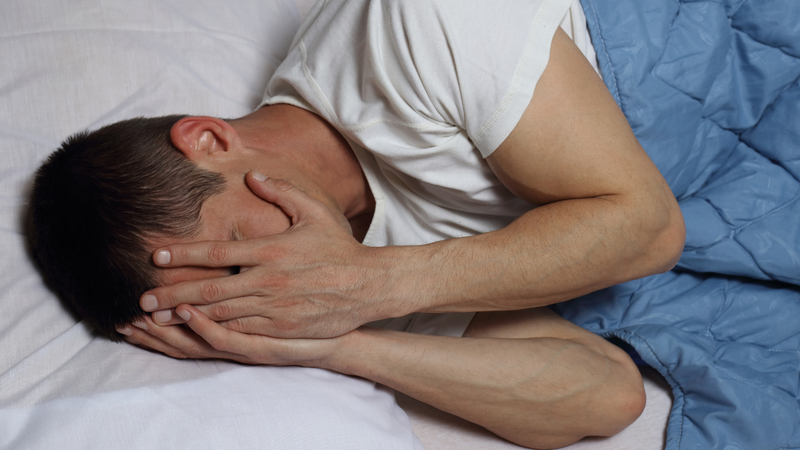
Cancer fatigue is not regular tiredness. You can sleep for 10 hours and still not be able to get off the couch. A short walk that used to be nothing leaves you depleted for hours. You rest all day and still feel like you haven’t.
This is cancer-related fatigue (CRF) — the most common, most distressing, and most undertreated symptom in oncology. It affects 70–100% of patients undergoing active treatment, and 20–30% of survivors years after treatment ends. Despite that prevalence, only about half of patients with significant fatigue ever bring it up with their oncology team.
This guide covers the clinical causes of CRF, how to distinguish it from anemia, depression, and hypothyroidism, what NCCN 2024 guidelines recommend for management, and how to have a productive conversation with your oncologist about it.
What Is Cancer-Related Fatigue?
The NCCN defines cancer-related fatigue as: “A distressing, persistent, subjective sense of physical, emotional, and/or cognitive tiredness or exhaustion related to cancer or cancer treatment that is not proportional to recent activity and interferes with usual functioning.”
The critical phrase: not proportional to recent activity. This single feature distinguishes CRF from normal tiredness — it’s not that you’ve done too much, it’s that your body’s energy system is operating below its baseline even without exertion.
CRF at 4 or above is the NCCN threshold for comprehensive evaluation and active management — not just reassurance.
What Causes Cancer Fatigue?
Understanding the cause of your specific fatigue is essential because many contributing factors are treatable. Cancer fatigue is rarely one thing.
Anemia
The most common reversible cause. Chemotherapy damages bone marrow, reducing red blood cell production. Tumor invasion (leukemia, lymphoma, myeloma) directly displaces blood cell production. When hemoglobin drops below 11 g/dL — as it commonly does during chemotherapy — oxygen delivery to tissues falls, physical performance drops, and fatigue becomes profound. A complete blood count (CBC) at each appointment can catch this early.
Hypothyroidism from Immunotherapy
Checkpoint inhibitors (pembrolizumab, nivolumab, ipilimumab) can trigger immune-related thyroid inflammation. The thyroid is attacked by the activated immune system → hypothyroidism: severe persistent fatigue, weight gain, cold intolerance, and cognitive slowing. TSH should be checked every 6–8 weeks during immunotherapy. Fully reversible with levothyroxine — but only if caught.
Sleep Disturbance, Depression, and Deconditioning
Sleep: Pain, anxiety, steroid-induced insomnia, night sweats, and frequent medical appointments all fragment sleep. When patients don’t reach restorative sleep stages, they wake exhausted regardless of hours in bed.
Depression and anxiety: Present in 40–50% of cancer patients. Depression causes fatigue that can be clinically identical to CRF — but responds to different interventions. PHQ-9 screening takes minutes and reliably identifies depression requiring treatment.
Deconditioning: Inactivity — from pain, nausea, or advice to “rest” — rapidly reduces cardiovascular fitness and muscle mass. Reduced fitness means even minimal activity feels exhausting. This vicious cycle is one of the most powerful and most fixable contributors to CRF.
Fatigue Patterns by Treatment Type
| Treatment | When Worst | Key Notes |
|---|---|---|
| Chemotherapy | 7–14 days post-infusion (nadir) | Cumulative — worse with each cycle |
| Radiation | Weeks 3–5; peaks 1–2 weeks post-RT | Accumulates; takes months to resolve |
| Immunotherapy | 1–2 weeks of each cycle; also via thyroiditis | Monitor TSH q6–8 weeks |
| ADT / AIs | Ongoing throughout hormone therapy | Muscle loss compounds fatigue; exercise is key |
NCCN-Guided CRF Management (2024)
Step 1: Screen at Every Visit
Rate fatigue 0–10 at every oncology appointment. Score 0–3: education + sleep hygiene. Score ≥4: proceed to comprehensive evaluation of reversible contributors.
Step 2: Treat Reversible Contributors First
- CBC → hemoglobin <11 g/dL: treat anemia
- TSH → hypothyroidism: levothyroxine
- PHQ-9 → depression ≥10: SSRI/therapy
- Pain assessment → optimize analgesics
- Sleep history → CBT-I referral if insomnia
- Medication review → reduce sedating agents where possible
Step 3: Nonpharmacologic Interventions (First Line for All CRF ≥4)
Exercise (Level I evidence — the strongest intervention):
A Cochrane meta-analysis of 113 randomized controlled trials found exercise reduced cancer-related fatigue by 20–40% compared to usual care. ASCO and NCCN recommend 150 min/week of moderate aerobic activity plus resistance training twice per week, even during active treatment. Why it works: breaks the deconditioning cycle, reduces depression and anxiety, improves sleep quality, lowers inflammatory cytokines, preserves muscle mass — addressing multiple CRF mechanisms simultaneously.
Pacing Principles for Cancer Fatigue
- Schedule demanding tasks during your peak energy period (usually mid-morning)
- Plan rest periods BEFORE exhaustion hits — don’t wait until you collapse
- Delegate low-priority tasks; save energy for what matters most
- Keep a 1-week fatigue diary to identify your personal energy patterns
CBT and mind-body approaches: Cognitive behavioral therapy adapted for cancer (especially CBT for insomnia) has Level II evidence for CRF. Mindfulness-Based Stress Reduction, yoga, and tai chi show moderate evidence. All reduce psychological distress and improve sleep quality.
Step 4: Pharmacologic Interventions (When Nonpharmacologic Is Insufficient)
- Methylphenidate (Ritalin) — most studied psychostimulant for CRF; multiple RCTs show benefit in advanced cancer; start 5 mg BID (morning + midday), titrate to 10–20 mg; avoid evening doses
- Dexamethasone 4 mg BID — rapid short-term energy improvement in advanced cancer; useful for 2–4 weeks maximum; side effects limit long-term use
- American ginseng (2000 mg/day) — NCCTG RCT: significant improvement vs placebo at 8 weeks; included in NCCN guidelines as a reasonable option
- ESAs (epoetin alfa/darbepoetin) — ONLY for chemotherapy-induced anemia; black box warning for thrombosis; do NOT use outside chemotherapy setting or target Hgb >12 g/dL
Cancer Fatigue vs Anemia vs Depression vs Hypothyroidism
| CRF | Anemia | Depression | Hypothyroidism | |
|---|---|---|---|---|
| Energy pattern | Low all day | Worse on exertion | Worst in morning | Low throughout |
| Sleep | Non-restorative | Usually normal | Early waking/excessive | Excessive sleeping |
| Key signs | Chemo brain, functional decline | Pallor, tachycardia | Hopelessness, tearful | Cold intolerance, weight gain |
| Key test | Clinical history | CBC (Hgb) | PHQ-9 | TSH |
| First treatment | Exercise + CBT | Treat anemia cause | SSRI + therapy | Levothyroxine |
For Survivors: When Fatigue Doesn’t End with Treatment
Post-treatment CRF affects 20–30% of survivors and can persist for years. Patients finish chemotherapy or radiation expecting energy to return in weeks. For many, it doesn’t.
Risk factors for persistent post-treatment CRF: high-dose chemotherapy (especially with stem cell transplant), brain or chest radiation, younger age at diagnosis, and comorbid depression or anxiety.
The interventions that worked during treatment still work after it. Exercise remains the most evidence-based intervention for post-treatment CRF. CBT for cancer survivors addresses the specific thought patterns that sustain fatigue after physical treatment is over. Persistent new fatigue in survivorship also warrants evaluation for recurrence — don’t automatically attribute it to treatment effects without a basic workup.
How to Talk to Your Oncology Team
Only 50% of patients with significant fatigue bring it up. Use a 0–10 scale at every visit.
- “My fatigue is a [X]/10 this week — I want to discuss it.”
- “It’s not getting better with rest. Can we check my hemoglobin and thyroid?”
- “Is there a palliative care or supportive oncology referral available?”
- “Can you refer me to an oncology physical therapist or exercise program?”
- “What are the options beyond just resting more?”
For more on fatigue as a pre-diagnosis cancer warning sign, see our guide to fatigue and cancer.
Frequently Asked Questions
References
- National Comprehensive Cancer Network. NCCN Guidelines: Cancer-Related Fatigue. Version 2024.
- Bower JE. Cancer-related fatigue: mechanisms, risk factors, and treatments. Nature Reviews Clinical Oncology. 2014;11(10):597–609.
- Mustian KM, et al. Comparison of pharmaceutical, psychological, and exercise treatments for CRF (113 RCTs). JAMA Oncology. 2017;3(7):961–968.
- Barton DL, et al. Wisconsin Ginseng to improve cancer-related fatigue. JNCI. 2013;105(16):1230–1238.
- Mitchell SA, et al. Cancer-related fatigue: state of the science. PM&R. 2009;1(12):1139–1146.
- Bower JE, et al. Fatigue in long-term breast carcinoma survivors. Cancer. 2006.
- Hofman M, et al. Cancer-related fatigue: the scale of the problem. Oncologist. 2007;12(Suppl 1):4–10.
- Minton O, et al. Drug therapy for the management of cancer-related fatigue. Cochrane Database of Systematic Reviews. 2010.
Thank you for covering cancer fatigue: causes, nccn-guided management, and so thoroughly without being overly technical. I especially valued the explanation of why these recommendations exist, not just what they are. Looking forward to reading more articles from this website.
Really well-written article on cancer fatigue: causes, nccn-guided management, and. The article answered questions I didn’t even know I had until I started reading. Forwarding this to others in my support group who are dealing with similar issues.
Thank you for covering cancer fatigue: causes, nccn-guided management, and so thoroughly without being overly technical. The connection between diet, lifestyle, and long-term outcomes is explained clearly here. Appreciate the effort that went into researching and writing this — it shows.
Bookmarked this article on cancer fatigue: causes, nccn-guided management, and immediately — going to reference it regularly. I appreciate that the article is careful about distinguishing between what is known and what is still being researched. I wish I had found this article earlier — would have saved a lot of confusion.
Really well-written article on cancer fatigue: causes, nccn-guided management, and. It is refreshing to see an article that acknowledges individual variation rather than one-size-fits-all advice. Shared this with three friends who are dealing with related issues. Very useful resource.
Bookmarked this article on cancer fatigue: causes, nccn-guided management, and immediately — going to reference it regularly. The section on managing this condition day-to-day was especially useful for planning. I wish I had found this article earlier — would have saved a lot of confusion.