
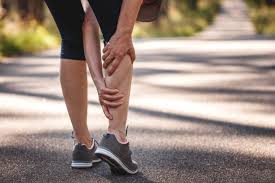
Calf pain while walking is a symptom that many adults attribute to muscle tightness, aging, or overexertion — but in a significant proportion of people, particularly those over 50 or with cardiovascular risk factors, it is the classic presentation of a serious and underdiagnosed vascular condition called peripheral artery disease. The calf cramps, aching, heaviness, or tightening that appear reliably after walking a certain distance and disappear with a few minutes of rest represent one of the most important early warning signs that the arteries supplying the legs are narrowed by atherosclerosis. Recognizing this pattern — and distinguishing it from the many non-vascular conditions that can produce similar symptoms — is the critical first step toward diagnosis, treatment, and prevention of the major cardiovascular complications associated with peripheral artery disease.
What Is Intermittent Claudication?
Intermittent claudication — from the Latin claudicare, meaning “to limp” — is the medical term for exertional limb pain caused by insufficient arterial blood flow during walking. In healthy legs, the arteries respond to the increased oxygen demand of walking muscles by dilating and delivering several times the resting blood flow. In legs with narrowed arteries from atherosclerosis, blood flow cannot rise adequately during exercise; the muscles shift to anaerobic metabolism, accumulate lactic acid, and trigger the cramping, aching, or burning pain of claudication. The defining features of claudication from arterial disease are reproducibility — the same walking distance consistently triggers symptoms — and prompt relief with rest. Stopping and standing still for two to five minutes allows the accumulated metabolites to clear and the pain to resolve completely, without requiring sitting or changing posture.
The calf is the most common location for claudication because the superficial femoral artery — the main artery supplying the calf muscles — is particularly vulnerable to atherosclerotic narrowing at its passage through the adductor canal in the mid-thigh. The Fontaine classification grades the severity of PAD-related symptoms: Stage I is asymptomatic; Stage IIa is claudication occurring after more than 200 meters of walking; Stage IIb is claudication at less than 200 meters; Stage III is ischemic rest pain; and Stage IV is tissue loss including ulceration or gangrene. Stages I and II represent stable PAD; Stages III and IV constitute critical limb ischemia, a limb-threatening emergency.
Peripheral Artery Disease as the Primary Cause of Calf Pain While Walking
Peripheral artery disease — atherosclerosis of the arteries supplying the legs — is the most important cause of calf pain while walking in adults over 50. PAD affects approximately 12% of all adults and becomes dramatically more prevalent with age, affecting up to 20–25% of adults over 70. The strongest individual risk factors are cigarette smoking — which doubles the risk of PAD and dramatically accelerates its progression — and diabetes mellitus. Hypertension, dyslipidemia, chronic kidney disease, and family history contribute additional risk. An important epidemiological point: approximately 70% of patients with PAD are asymptomatic or have atypical symptoms — leg weakness or fatigue without classic cramping pain. This means classic intermittent claudication represents only the visible tip of the PAD prevalence iceberg, and many patients with PAD are undiagnosed until they develop more advanced limb or cardiovascular complications.
The ankle-brachial index (ABI) is the pivotal diagnostic test for PAD. Measured by comparing systolic blood pressure at the ankle to the higher of the two brachial pressures, the ABI is normally 1.0–1.4. An ABI of 0.90 or less confirms PAD with approximately 90% sensitivity and 98% specificity. Moderate PAD is indicated by ABI 0.41–0.69; severe PAD by ABI 0.40 or less. An ABI above 1.4 — reflecting non-compressible calcified vessels — occurs in diabetes and chronic kidney disease and requires toe-brachial index measurement for accurate PAD assessment.
Other Vascular Causes of Calf Pain During Walking
While PAD accounts for the majority of vascular calf pain with walking, several less common vascular diagnoses cause similar symptoms. Popliteal artery entrapment syndrome (PAES) occurs when an abnormal anatomical relationship between the popliteal artery and the medial head of the gastrocnemius muscle causes arterial compression during muscle contraction. PAES predominantly affects young, athletic individuals — particularly runners and cyclists — in whom claudication would otherwise be unexpected. The diagnosis is confirmed by duplex ultrasound or MRI demonstrating arterial compression with plantar flexion against resistance. Cystic adventitial disease is a rare condition in which a mucoid cyst forms within the adventitial layer of the popliteal artery, causing sudden onset claudication typically in middle-aged men without conventional PAD risk factors, requiring surgical or ultrasound-guided drainage. Venous claudication — a bursting, pressure-like calf pain during walking — occurs in patients with severe chronic venous hypertension; the key distinguishing feature is that venous claudication is relieved by leg elevation rather than simply standing still.
Non-Vascular Causes That Mimic Calf Pain While Walking
Several common non-vascular conditions produce exertional leg pain that closely resembles arterial claudication. Lumbar spinal stenosis — narrowing of the spinal canal from degenerative changes — causes neurogenic claudication: pain, cramping, numbness, and heaviness of the legs developing with walking. Neurogenic claudication is distinguished from arterial claudication by relief with sitting down or lumbar flexion (leaning forward) rather than simply standing still; it is worsened by walking downhill (spinal extension); and it is relieved by cycling which flexes the lumbar spine. The ABI is normal in neurogenic claudication. Baker’s cyst rupture produces acute calf pain and swelling that may be confused with DVT or acute vascular event, confirmed by ultrasound of the popliteal fossa.
Deep vein thrombosis (DVT) causes calf pain and swelling but is present at rest rather than exclusively with activity — a key distinguishing feature from intermittent claudication. The Wells score stratifies DVT probability using clinical features, with D-dimer testing and compression venous ultrasound used to confirm or exclude the diagnosis. Peripheral neuropathy from diabetes or other causes produces burning or aching pain in the feet and legs that is typically worse at night and at rest rather than exclusively with walking, distinguishing it from claudication. Chronic exertional compartment syndrome — elevated compartment pressure during intense exercise — occurs predominantly in young athletes and is diagnosed by measuring compartment pressures before and after exercise.
How Doctors Diagnose the Cause of Calf Pain While Walking
Clinical assessment begins with a careful history establishing the character, onset, reproducibility, and distance to pain onset, followed by physical examination including palpation of the femoral, popliteal, dorsalis pedis, and posterior tibial pulses, and the Buerger test assessing positional color change. The ABI is the cornerstone of PAD diagnosis and should be measured in all patients with suspected claudication. Segmental limb pressures — measuring pressures at the thigh, above-knee, below-knee, and ankle levels — localize the level of significant arterial disease. Duplex ultrasound provides anatomic detail including the location, length, and severity of stenoses and occlusions. CT angiography or MR angiography offers comprehensive mapping of the lower extremity arterial tree and is used for pre-intervention planning in patients being considered for revascularization.
Treatment Options for Claudication From PAD
Smoking cessation is the single most important intervention for patients with PAD and claudication — it reduces the rate of PAD progression, doubles claudication distance within months, halves the rate of progression to critical limb ischemia, and reduces excess cardiovascular risk. Supervised exercise therapy is the most effective non-surgical treatment for improving claudication symptoms, carrying a Class I guideline recommendation from ACC/AHA. Structured programs — three sessions per week for 12 weeks, consisting of treadmill walking to near-maximal claudication pain followed by rest periods — improve claudication-free walking distance by 50–200% through mechanisms including development of collateral vessels and enhanced skeletal muscle metabolic efficiency. Statin therapy reduces cardiovascular event risk and modestly improves walking distance through anti-inflammatory and pleiotropic effects.
Antiplatelet therapy with aspirin or clopidogrel reduces the risk of major adverse cardiovascular events in patients with symptomatic PAD. The COMPASS trial demonstrated that low-dose rivaroxaban (2.5 mg twice daily) combined with aspirin further reduced major adverse cardiovascular and limb events in stable PAD patients. Cilostazol — a phosphodiesterase-3 inhibitor — improves walking distance by approximately 40–60% and is approved specifically for claudication symptoms; it is contraindicated in patients with heart failure of any severity. Revascularization — endovascular angioplasty with or without stenting, or surgical bypass — is reserved for patients with lifestyle-limiting claudication not responding to supervised exercise and medical management, or for critical limb ischemia threatening limb viability.
When Calf Pain While Walking Requires Urgent Evaluation
Certain changes in a patient with known claudication require urgent or emergency evaluation. Sudden acute worsening — particularly if pain now occurs at rest or after trivial exertion — suggests progression to critical limb ischemia or acute arterial thrombosis superimposed on chronic disease. Critical limb ischemia presents with persistent ischemic rest pain in the foot and toes, waking the patient from sleep and requiring them to hang the foot dependent over the bed for relief. Non-healing foot or toe wounds, gangrene, or unexplained recurrent skin breakdown in a patient with PAD requires urgent vascular surgery consultation for limb salvage. Calf pain accompanied by unilateral swelling, warmth, and redness should prompt evaluation for concurrent DVT.
Patients with PAD and claudication carry high systemic cardiovascular risk — the same atherosclerosis affecting the leg arteries affects the coronary and carotid arteries — and any new cardiovascular symptoms including chest pain, exertional breathlessness, or transient neurological symptoms warrant prompt cardiac and vascular evaluation. Related vascular information is available at peripheral artery disease symptoms and blue or pale skin and circulation problems. Monitoring key heart health numbers supports comprehensive cardiovascular risk management. Authoritative PAD resources are available from the American Heart Association, the National Heart, Lung, and Blood Institute, and the CDC.
PAD as a Systemic Disease: The Cardiovascular Risk Burden
Peripheral artery disease is not merely a disease of the legs — it is a systemic vascular disease that reflects diffuse atherosclerosis affecting the coronary, carotid, renal, and peripheral arteries simultaneously. Patients with symptomatic PAD carry a 3–6 times higher risk of myocardial infarction and a 2–3 times higher risk of stroke than age-matched individuals without PAD, and their five-year mortality from cardiovascular causes rivals that of patients who have already suffered a heart attack. This makes the diagnosis of PAD from calf pain while walking a critical trigger for aggressive cardiovascular risk factor management — not only to relieve claudication symptoms but to prevent the MI, stroke, and cardiovascular death that are the primary threats to life in these patients. Clinicians managing PAD should simultaneously address antiplatelet therapy, statin therapy to LDL targets below 70 mg/dL, blood pressure control below 130/80 mmHg, diabetes management, and smoking cessation with the same intensity applied to post-MI management.
The observation that PAD affects the coronary and carotid circulations in parallel has led to PAD being classified as a cardiovascular disease equivalent in guidelines — meaning that management intensity should be equivalent to that applied after a documented MI. A patient who presents with calf pain while walking and is found on ABI testing to have PAD should receive statin therapy (with high-intensity statins for LDL reduction), antiplatelet therapy, and ACE inhibitor or ARB therapy for blood pressure control, regardless of whether they have ever had a myocardial infarction, because their absolute cardiovascular event risk justifies this intensive approach.
The Role of Exercise in Managing Claudication
Supervised exercise therapy for claudication deserves more attention than it often receives, both because its evidence base is strong and because it is dramatically underutilized. In multiple randomized controlled trials, supervised treadmill exercise training has produced improvements in pain-free walking distance and maximum walking distance that equal or exceed those achieved with endovascular revascularization in patients with stable claudication. The mechanism through which exercise improves claudication extends beyond simply improving cardiovascular fitness — it promotes the development of collateral arterial vessels that route blood around the narrowed or occluded artery, improves skeletal muscle mitochondrial efficiency (so the muscles extract more oxygen from each unit of blood delivered), and reduces the inflammatory and rheological factors that contribute to blood viscosity and endothelial dysfunction.
In practice, supervised exercise programs for claudication involve 30–45 minute sessions of treadmill walking at a pace that induces claudication symptoms within 3–5 minutes, followed by rest until symptoms resolve, then resumption of walking. This intermittent claudication-ischemia-recovery cycle is the stimulus that drives collateral development and metabolic adaptation. The program duration of 12 weeks is a minimum; ongoing exercise beyond the formal program period sustains and extends gains. Home-based walking programs, while less effective than supervised programs in controlled trials, remain valuable for patients who cannot access formal supervised programs, particularly when structured with a walking diary, pedometer tracking, and defined weekly mileage targets. Physical therapists and exercise physiologists with cardiac rehabilitation experience can adapt programs for patients with comorbidities including musculoskeletal limitations that interfere with walking-based protocols.
Living With Claudication: Practical Strategies
Patients living with calf pain while walking from claudication can adopt several practical strategies to maintain quality of life while pursuing definitive treatment. The stop-rest-walk pattern — walking until claudication develops, resting briefly, then continuing — is itself a form of exercise training that promotes collateral development; patients should be encouraged to walk to near-maximum tolerable pain rather than stopping at first discomfort, as the stimulus for adaptation requires approaching the ischemic threshold. Appropriate footwear is particularly important for patients with PAD and claudication, as reduced pedal sensation from neuropathy and reduced tissue perfusion increase the risk of skin breakdown from ill-fitting shoes; well-padded, properly-sized shoes with no interior seams that can create pressure points are essential. Daily foot inspection — checking the entire foot including between the toes and at the heel — for any blisters, cuts, skin breakdown, color changes, or temperature differences that might indicate new tissue injury is a critical self-care practice for all patients with PAD, as impaired arterial supply means even minor injuries may progress to non-healing wounds.
Patients with claudication should be taught the specific signs that require same-day or emergency evaluation: any wound or skin breakdown on the foot or toes that does not show signs of healing within two weeks; new or worsening pain at rest, particularly in the foot or toes at night; a change in claudication distance that is progressing rapidly over days to weeks rather than months; any area of the foot that turns black or develops a dry, dark, leathery appearance suggesting tissue necrosis. These signs indicate progression from stable claudication toward critical limb ischemia and require prompt vascular evaluation for intervention planning, as the window for successful limb salvage may be time-limited.
Emerging Therapies and Research Directions
Several therapeutic approaches for claudication from PAD are under active investigation or have recently received expanded evidence. Gene therapy — delivery of vascular endothelial growth factor (VEGF) or hepatocyte growth factor (HGF) to ischemic limb tissue to promote therapeutic angiogenesis — has produced mixed results in clinical trials to date, with most trials showing benefit in symptom-limited patients but not meeting primary endpoints in phase 3 trials. Cell therapy using autologous bone marrow mononuclear cells or mesenchymal stem cells has shown promise in no-option critical limb ischemia patients who are not suitable for revascularization, and several randomized trials are ongoing. Spinal cord stimulation — used primarily for no-option critical limb ischemia rather than claudication — reduces ischemic pain and may improve tissue perfusion through sympatholytic mechanisms. The integration of remote monitoring through wearable activity sensors and smartphone-based step counting into claudication management programs is improving exercise program adherence and providing clinicians with objective walking distance data between appointments.
The Importance of Early Diagnosis
Early diagnosis of peripheral artery disease in patients with calf pain while walking provides substantial benefit beyond symptom management. Most patients with PAD die from cardiac or cerebrovascular events rather than limb loss — meaning that the act of diagnosing PAD from claudication creates an opportunity to intervene on the systemic atherosclerotic disease process that threatens the patient’s life, not just their walking distance. In the large PARTNERS (PAD Awareness, Risk, and Treatment: New Resources for Survival) study, PAD was found to be unrecognized in the majority of affected patients, with clinicians frequently not questioning patients about walking-related symptoms or measuring ABI in at-risk individuals. Systematic ABI screening in patients with cardiovascular risk factors — those aged 65 or older regardless of symptoms, or those aged 50–64 with diabetes or smoking history — is recommended by current ACC/AHA PAD guidelines to identify PAD before symptoms develop or progress.
For patients already experiencing calf pain while walking, the message is equally important: claudication is not a benign nuisance to be tolerated as a feature of aging. It is a cardiovascular signal requiring evaluation and management with the same urgency applied to hypertension, elevated cholesterol, and coronary artery disease. A patient who mentions to their clinician that their walking is limited by calf pain after a couple of blocks — and is told “that’s just aging” — has been misadvised. ABI measurement takes five minutes in an office setting, is non-invasive, and identifies both the presence and severity of PAD with high accuracy, providing the foundation for an evidence-based management plan that addresses both symptom relief and systemic cardiovascular risk reduction.
Monitoring Progress and Adjusting Treatment
Patients with calf pain while walking from PAD benefit from structured follow-up that objectively tracks both claudication severity and cardiovascular risk factor control. At each visit, clinicians typically reassess claudication distance (pain-free distance and maximum walking distance), review daily step counts or walking logs if available, and measure blood pressure, fasting lipids, HbA1c in diabetic patients, and eGFR in patients with CKD, to confirm that cardiovascular risk factors remain at target. ABI measurement every 12 months monitors PAD progression. A significant decline in ABI — 0.15 or more between measurements — or progression of claudication to shorter walking distances, new onset rest pain, or skin changes in the foot, triggers reassessment of the vascular anatomy and discussion of revascularization options. Vascular surgery or interventional cardiology consultation is appropriate at this point, with CT or MR angiography to map the disease pattern before planning endovascular or surgical intervention. The goal of ongoing follow-up is not simply to manage symptoms but to prevent the trajectory from stable claudication to critical limb ischemia — a transition that, when prevented through timely intervention, spares patients from limb-threatening emergencies and preserves their functional independence.
Came across this while researching calf pain while walking: possible circulation for a family member. I have tried following advice from several sources but this is the most consistent with what my specialist told me. This gave me real confidence going into my next specialist appointment.
This is one of the clearest explanations of calf pain while walking: possible circulation I have found. I appreciated how the article addressed both the clinical side and the practical lifestyle adjustments. Will definitely be coming back to this site for more health information.
Really well-written article on calf pain while walking: possible circulation. I have tried following advice from several sources but this is the most consistent with what my specialist told me. Will definitely be coming back to this site for more health information.
This breakdown of calf pain while walking: possible circulation is exactly what patients need before a specialist appointment. I appreciate that the article is careful about distinguishing between what is known and what is still being researched. Forwarding this to others in my support group who are dealing with similar issues.
Came across this while researching calf pain while walking: possible circulation for a family member. The practical tips made this immediately actionable, not just theoretical. This is going into my health folder that I bring to every doctor’s visit.
I have been reading about calf pain while walking: possible circulation for weeks and this is the most thorough guide I found. The specific numbers and thresholds mentioned are exactly what I needed to understand my results. This is going into my health folder that I bring to every doctor’s visit.