

Frequent Nighttime Urination: Possible Causes and What Helps
Waking repeatedly through the night to urinate — a condition formally called nocturia — is one of the most prevalent and consistently underappreciated urological complaints in adults. A single episode of nighttime urination is extremely common and generally not clinically significant. But two or more episodes per night, defined as the threshold for clinically meaningful nocturia in most international consensus definitions, fragments sleep in ways that accumulate into significant daytime consequences: fatigue, impaired concentration and cognitive performance, worsened mood, increased cardiovascular risk from sustained sleep deprivation, and, most concretely in older adults, substantially elevated fall risk during nighttime bathroom trips. Epidemiological data suggest that nocturia with two or more episodes per night affects approximately 20 to 30% of adults in their 40s and 50s, rising to over 60% of adults above 70. Despite this prevalence, many adults accept nocturia as a normal feature of aging and do not raise it with their healthcare provider — missing an opportunity to identify and treat conditions that are in many cases highly responsive to targeted management.
The clinical significance of nocturia goes beyond sleep disruption. In older adults, each nighttime rise to the bathroom increases fall risk: the combination of sleep inertia (the disorientation and muscle weakness immediately following awakening), darkness, time pressure from urgency, and the hypotension that can accompany rapid rises from lying positions creates conditions in which serious falls — leading to hip fractures, head injuries, and hospitalizations — occur at disproportionately high rates. Studies consistently show that adults with two or more nocturia episodes per night have significantly higher rates of fall-related injury than those without nocturia, independent of age, mobility, and other confounders. Treating nocturia effectively in older adults is therefore not merely a quality-of-life intervention but a fall prevention measure with potentially life-saving implications.
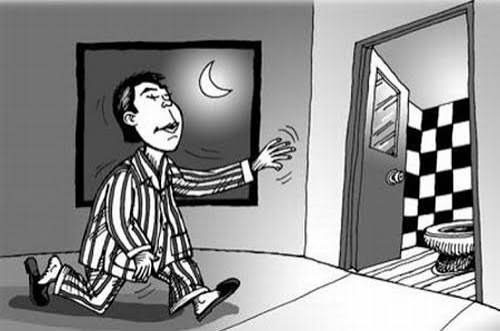
Nocturnal Polyuria: The Most Common Cause
Nocturnal polyuria — the production of an abnormally large proportion of the day’s urine output specifically during nighttime sleep hours — is the most common cause of nocturia in adults, accounting for 60 to 80% of nocturia cases in most clinical series. In healthy adults, the kidneys reduce urine output at night through the action of antidiuretic hormone (ADH, also called vasopressin), which is secreted in higher concentrations during sleep and concentrates the urine, reducing volume. Nocturnal polyuria occurs when this nighttime concentration mechanism fails or when the volume of fluid returning to the circulation at night (from peripheral edema or other sources) overwhelms the ADH concentration effect, generating an abnormally large volume of urine specifically at night.
Fluid redistribution from peripheral edema is a major mechanism of nocturnal polyuria. During the day, fluid pools in the lower extremities in patients with venous insufficiency, congestive heart failure, nephrotic syndrome, liver disease, or simply age-related reduction in venous tone — the edema that appears as ankle swelling in the afternoon. When these patients lie down to sleep, the hydrostatic pressure change allows this pooled interstitial fluid to return to the intravascular compartment, increasing circulating blood volume. The kidneys respond by producing more urine to reduce the excess volume — generating a large nocturnal urine output. This mechanism explains why a patient with significant leg edema who has low daytime voiding frequency may still have severe nocturia: the problem is not their bladder, it’s the nocturnal fluid shift from their legs. Treatment targets the underlying cause (compression stockings during the day to reduce afternoon edema accumulation, leg elevation in the late afternoon, and treatment of the underlying venous insufficiency or heart failure) rather than the bladder.
Age-related decline in ADH secretion is another common contributor to nocturnal polyuria in older adults: the normal nighttime surge of ADH diminishes with age, reducing the kidney’s ability to concentrate urine at night even without edema, cardiac disease, or other systemic conditions. Excessive evening fluid intake — particularly alcohol (which suppresses ADH secretion) and caffeinated beverages (which increase urine production through adenosine receptor blockade in the kidney) — worsens nocturnal polyuria in already susceptible older adults. Sleep apnea is an under-recognized cause of nocturnal polyuria: the repetitive hypoxia of obstructive sleep apnea triggers release of atrial natriuretic peptide (ANP) and suppresses ADH secretion, both of which drive nighttime urine production. Many patients with untreated sleep apnea report severe nocturia that improves dramatically — without any urological intervention — when CPAP therapy is initiated and sleep apnea is controlled.
Reduced Bladder Capacity and Overactive Bladder
The second major category of nocturia causes involves reduced functional bladder capacity — the maximum volume the bladder can comfortably hold before the urge to void is sufficient to wake the patient. When functional bladder capacity is reduced, the normal nocturnal urine production (even if not abnormally high) fills the bladder to its capacity threshold more frequently, producing more waking episodes. Overactive bladder (OAB) is the most common cause of reduced functional bladder capacity: the involuntary detrusor contractions and heightened bladder sensitivity of OAB lower the volume at which urgency becomes irresistible, and nocturia is one of the defining symptoms of OAB syndrome. OAB-related nocturia is characterized by urgency on awakening — the patient wakes already feeling the urge — and relatively small voided volumes (under 200 mL per episode), distinguishing it from nocturnal polyuria nocturia (where voided volumes are large, typically above 200 to 300 mL per episode, reflecting the large urine accumulation).
Bladder outlet obstruction — most commonly from benign prostatic hyperplasia (BPH) in men — reduces functional bladder capacity through a different mechanism: the chronically obstructed bladder develops detrusor hypertrophy and reduced compliance, and incomplete bladder emptying (from the obstructed outlet) means the effective storage capacity is reduced even if the anatomical bladder is of normal size. BPH is among the most common causes of nocturia in men above 50, and the lower urinary tract symptoms of BPH — which include both obstructive symptoms (weak stream, hesitancy, incomplete emptying) and storage symptoms (urgency, frequency, nocturia) — are often dominated by the nocturia component that most consistently disrupts sleep and quality of life. Interstitial cystitis (painful bladder syndrome) reduces bladder capacity through chronic inflammation and reduced bladder compliance, and nocturia is one of its cardinal symptoms. Bladder cancer, bladder stones, and urinary tract infection can each reduce functional bladder capacity and produce nocturia; these diagnoses are excluded by appropriate evaluation when symptoms are accompanied by hematuria, pain, or other red flag features.
Sleep Disorders and Primary Nocturia
Not all nighttime awakenings attributed to urinary urgency are actually caused primarily by the bladder — sleep disorders can produce nighttime awakenings for non-urinary reasons, and patients who wake from light or fragmented sleep then notice bladder filling and attribute the awakening to urinary urgency when the primary cause was the sleep disturbance itself. Insomnia, sleep apnea, restless leg syndrome, periodic limb movements of sleep, chronic pain, and depression-related early morning awakening can all produce nighttime awakenings that are secondarily attributed to urinary urgency. The distinction matters: treating the bladder will not improve nocturia caused primarily by a sleep disorder, while treating the sleep disorder may resolve the nocturia entirely or substantially. A careful history of the quality of sleep, the presence of snoring and witnessed apneas (suggesting sleep apnea), and the sequence of events at each awakening (does the patient wake urgently needing to urinate, or do they wake and then notice they need to urinate?) helps distinguish primary nocturia from sleep disorder-associated nocturia.
The voiding diary is the key diagnostic tool for characterizing nocturia: recording the time of each void and the voided volume over 3 days allows calculation of the nocturnal urine volume, the functional bladder capacity (the largest single voided volume), and the nocturnal polyuria index (nighttime urine volume as a proportion of 24-hour urine volume). A nocturnal urine volume exceeding 33% of the 24-hour total (in older adults) or 20% (in younger adults) defines nocturnal polyuria. Small voided volumes at night with large functional bladder capacity during the day suggests an OAB or bladder capacity cause; large voided volumes at night suggests nocturnal polyuria. This distinction from the voiding diary directly determines the treatment approach — treating nocturnal polyuria when the problem is OAB, or treating the bladder when the problem is nocturnal polyuria, will both fail. The overactive bladder guide on Horizon Health Guide covers the bladder capacity causes of nocturia in detail, and the urinary incontinence overview provides context on the broader spectrum of lower urinary tract symptoms.
Systemic Conditions That Cause Nocturia
Several systemic medical conditions drive nocturia through mechanisms independent of the bladder and urinary tract. Diabetes mellitus produces osmotic polyuria from glycosuria (glucose in the urine draws water with it osmotically, increasing urine volume throughout the 24-hour period, including at night), and uncontrolled diabetes is a common cause of both polyuria and nocturia. Poor glycemic control also contributes to recurrent UTIs (glucosuria provides a growth medium for bacteria), bladder sensory neuropathy, and autonomic dysfunction affecting detrusor control — multiple pathways through which diabetes impairs bladder function. Diabetes insipidus — from deficiency of ADH (central DI) or renal resistance to ADH (nephrogenic DI) — produces massive polyuria and polydipsia throughout the 24-hour period, including severe nocturia; this condition is distinguished from other causes by the enormous urine output (typically above 3 to 5 liters per day) and confirmed by specific laboratory testing. Hypercalcemia — from primary hyperparathyroidism, malignancy, or other causes — impairs ADH-mediated water reabsorption in the renal collecting duct, producing polyuria and nocturia that resolves when the calcium abnormality is corrected.
Medications are a commonly overlooked cause of nocturia: loop diuretics taken in the afternoon or evening drive nighttime diuresis that produces nocturia; lithium causes nephrogenic diabetes insipidus with polyuria; demeclocycline produces similar effects; and evening alcohol intake suppresses ADH secretion and increases nighttime urine output. A complete medication review — including over-the-counter and herbal preparations — is an essential part of the nocturia evaluation. The NIDDK bladder control resource provides patient-facing guidance on nocturia evaluation and management, and the AUA nocturia clinical guidelines offer the authoritative clinical management framework. The StatPearls review of nocturia provides a comprehensive evidence base covering the diagnosis and treatment of each nocturia subtype. For patients with concurrent bladder symptoms such as urgency or pain, the guide to when urinary symptoms need medical evaluation on Horizon Health Guide is a useful companion resource.
Sources: NIDDK — Bladder Control · AUA Nocturia Guidelines · StatPearls — Nocturia
Treatment Approaches for Nocturia
Treatment of nocturia begins with identifying the primary cause using the voiding diary to characterize whether nocturnal polyuria or reduced bladder capacity is the dominant mechanism — then directing treatment at that mechanism. Generic treatments applied without this distinction have poor efficacy and high failure rates.
For nocturnal polyuria, treatment targets the cause of excess nighttime urine production. Evening fluid restriction — limiting fluid intake in the 2 to 3 hours before bedtime — is the simplest and most immediately effective behavioral measure, reducing the volume available for nocturnal production. Afternoon leg elevation (lying with legs elevated for 60 to 90 minutes in the early evening) and compression stockings worn during the day reduce peripheral edema accumulation and decrease the volume of fluid available for nocturnal redistribution — this approach is particularly effective in patients whose nocturia is driven by venous insufficiency or heart failure edema. Afternoon (rather than evening) diuretic dosing can paradoxically reduce nocturia by promoting daytime diuresis before the fluid accumulates as nocturnal reabsorption: a loop diuretic taken at 2 to 4 PM drives daytime urination, reducing the fluid available for nighttime production, whereas the same diuretic taken in the morning or at bedtime produces peak diuresis at the wrong time. Treating sleep apnea with CPAP resolves the ANP-driven nocturnal polyuria that sleep apnea produces and is one of the most effective single interventions for nocturia in patients with concurrent sleep apnea.
Desmopressin (synthetic ADH, available as a sublingual tablet or nasal spray formulation specifically developed for nocturia) is the pharmacological treatment for nocturnal polyuria — it reduces nighttime urine production by supplementing the deficient ADH signal, reducing nocturia episodes by 50 to 70% in clinical trials. Desmopressin is effective and well-tolerated in most adults but carries a risk of hyponatremia (low serum sodium) from water retention, which can be serious in older adults — serum sodium monitoring at baseline and after dose initiation is essential, and desmopressin should not be used in patients above 65 without careful monitoring, or in patients with heart failure, liver cirrhosis, or conditions predisposing to sodium abnormalities. Current guidelines recommend desmopressin only for patients where nocturnal polyuria is confirmed on the voiding diary, avoiding its use for OAB-related nocturia where it will provide no benefit and only expose the patient to hyponatremia risk.
For OAB-related nocturia (with reduced functional bladder capacity), the OAB treatment pathway applies: behavioral therapy (bladder retraining, urgency suppression, evening fluid restriction), followed by OAB medications (antimuscarinics or beta-3 agonists) when behavioral therapy is insufficient. Anti-muscarinic and beta-3 agonist medications are primarily effective at reducing daytime urgency and frequency in OAB and have more modest effects on nocturia, reflecting the multifactorial nature of nocturia even in OAB patients (nocturnal polyuria often coexists). For BPH-related nocturia in men, alpha-1 blockers (tamsulosin, alfuzosin, silodosin) reduce the obstructive and storage LUTS that drive BPH nocturia, with modest improvements in nocturia episodes; 5-alpha-reductase inhibitors (finasteride, dutasteride) reduce prostate volume over 6 to 12 months and produce more durable improvements in LUTS including nocturia in men with large prostates; combination therapy achieves better outcomes than either class alone for nocturia in men with significant BPH.
When Nocturia Requires Medical Evaluation
Any adult with two or more nocturia episodes per night that are disrupting sleep, causing significant daytime fatigue, or contributing to fall risk should seek medical evaluation rather than attributing the symptom to aging and managing it without assessment. The evaluation is accessible — a primary care provider can begin with the voiding diary, urinalysis, blood glucose, serum creatinine, and review of medications and fluid habits — and the findings often point directly to a treatable cause. Red flag symptoms that warrant more urgent evaluation include blood in the urine (hematuria) accompanying nocturia (which requires evaluation to exclude bladder cancer or other serious bladder pathology), significant pelvic or suprapubic pain with nocturia (suggesting interstitial cystitis or another bladder pain condition), massive polyuria (producing very large urine volumes throughout the 24-hour period, suggesting diabetes, diabetes insipidus, or hypercalcemia), new neurological symptoms accompanying nocturia (suggesting a neurological cause), or nocturia that develops suddenly in a patient who previously had normal nighttime voiding patterns (which warrants evaluation for a new underlying cause rather than empirical treatment). With accurate diagnosis and cause-specific treatment, the majority of patients with nocturia can achieve meaningful reduction in nighttime voiding episodes — improving sleep quality, energy, safety, and quality of life.
Behavioral and Sleep Hygiene Strategies for Nocturia
Before pharmacological treatment is initiated for nocturia, behavioral and lifestyle interventions should be implemented — they are low-risk, often highly effective, and may resolve or substantially reduce nocturia without the need for medication in many patients. The most important behavioral modifications for nocturia are fluid timing optimization, dietary changes, and sleep environment adjustments that work with the body’s fluid regulation systems rather than against them.
Evening fluid restriction is the simplest and most universally effective behavioral intervention: limiting total fluid intake in the 2 to 3 hours before bedtime reduces the volume of urine produced during the first half of the night, when nocturia is most disruptive. This does not mean dehydrating during the evening — it means drinking adequate fluids during the morning and afternoon and deliberately tapering fluid intake as bedtime approaches. Patients who routinely drink large amounts in the evening (out of habit, from evening exercise, or as part of a medication regimen requiring large fluid volumes) often see dramatic improvements with simple timing adjustments alone. Caffeine and alcohol deserve specific attention in the evening hours: caffeine (in coffee, tea, cola, energy drinks, and chocolate) has a half-life of 5 to 6 hours and produces urine-concentrating impairment that lasts well into the night even when consumed at lunch; alcohol suppresses ADH secretion dose-dependently and reliably worsens nocturnal polyuria. Eliminating or markedly reducing afternoon and evening caffeine and alcohol often produces substantial nocturia improvement in patients who have not made these changes previously.
Afternoon leg elevation and compression garments are highly effective specifically for nocturia from venous insufficiency or mild heart failure edema. The mechanism is mechanically straightforward: preventing fluid from pooling in the legs during the day reduces the volume available for nocturnal reabsorption. Knee-high compression stockings (20 to 30 mmHg or 30 to 40 mmHg compression) worn from morning until early evening, along with a 60 to 90-minute period of leg elevation in the late afternoon, can reduce nocturia by one to two episodes per night in patients with significant venous insufficiency — a clinically meaningful improvement achieved without any medication. Good sleep hygiene practices — consistent sleep and wake times, avoiding screen light in the hour before bed, keeping the bedroom cool and dark — improve sleep quality and may reduce the number of nighttime awakenings that are attributed to urinary urgency but are actually caused by light or fragmented sleep. Patients with suspected sleep apnea should be referred for sleep study evaluation, since CPAP treatment is one of the most effective single interventions for nocturia in patients with concurrent sleep apnea, producing rapid and sustained improvements in nighttime voiding frequency without any bladder-directed treatment. For patients managing concurrent lower urinary tract symptoms beyond nocturia, the overactive bladder guide on Horizon Health Guide and the urinary incontinence overview provide complementary information on the full spectrum of bladder symptom management.
Nocturia and Fall Prevention in Older Adults
The fall risk associated with nocturia in older adults deserves specific attention because it represents one of the most concrete and potentially life-threatening consequences of this condition. Each nighttime rise to the bathroom occurs under conditions that maximize fall vulnerability: the patient transitions rapidly from deep sleep to an upright posture, experiencing sleep inertia (impaired balance, reaction time, and spatial orientation lasting several minutes after awakening), orthostatic hypotension (a drop in blood pressure on standing from the supine position that can cause dizziness and loss of balance, particularly in patients on antihypertensive medications, diuretics, or alpha-blockers), and the disorientation of navigating in darkness — often while experiencing urgency that creates time pressure. The combination of these factors in an older adult with baseline gait or balance impairment creates a high-risk scenario, and hip fractures from nighttime falls are a major source of morbidity and mortality in the geriatric population.
Fall prevention strategies for nocturia patients include: a bedside commode or urinal to eliminate the trip to the bathroom entirely for patients with severe nocturia or significant mobility impairment; nightlights along the path to the bathroom to eliminate navigating in darkness; sitting on the edge of the bed for 30 to 60 seconds before standing (allowing blood pressure to equilibrate and reducing orthostatic hypotension risk); non-slip footwear or socks with grip soles for the nighttime bathroom trip; removing trip hazards (loose rugs, electrical cords, clutter) from the bathroom path; and handrails or grab bars in the bathroom. These environmental and behavioral modifications reduce fall risk immediately, without waiting for nocturia treatment to take effect, and should be implemented in parallel with the diagnostic evaluation and treatment planning rather than sequentially. For older adults with significant fall risk, a falls prevention assessment by a geriatric medicine clinician or physiotherapist — including gait assessment, medication review, and home safety evaluation — is a valuable complement to the nocturia-specific urological evaluation.
My father is 78 and has been getting up 4 to 5 times per night. His cardiologist says it’s from his heart failure and the fluid his body shifts when he lies down. I had no idea that the solution might be as simple as afternoon leg elevation and timing his diuretic differently. He’s currently taking his furosemide first thing in the morning. After reading this article I mentioned the ‘afternoon diuretic dose’ strategy to his cardiologist and she agreed it was worth trying. Three weeks later he’s down to 2 nocturia episodes per night. This article gave me the specific question to ask his doctor that changed his treatment. That’s not nothing — that’s genuinely life-improving for a 78-year-old man who was exhausted from not sleeping.
An accurate and clinically well-structured overview of nocturia from both a urological and sleep medicine perspective. The sleep apnea connection is underappreciated in clinical practice — we regularly see patients referred for nocturia evaluation in urology clinics who have never been screened for sleep apnea, and the improvement in nocturia after CPAP initiation can be dramatic. The nocturnal polyuria index calculation from the voiding diary is the correct diagnostic tool for distinguishing nocturnal polyuria from OAB-related nocturia, and the point about desmopressin’s hyponatremia risk in older adults is essential — this medication is effective but its safety profile requires careful patient selection and monitoring, particularly in patients on concurrent thiazide diuretics or in those with heart failure.
Gerald, that’s a wonderful example of how a specific clinical concept — the mechanism of nocturnal fluid redistribution and the timing implication for diuretic dosing — translates into a practical question that leads to meaningful clinical change. The afternoon diuretic timing strategy is well established in the nocturia literature but not universally applied in cardiology or primary care practice, and your father’s response from 4-5 to 2 episodes per night is a realistic representation of what this intervention achieves. Dr. Haverford, thank you for highlighting the sleep apnea point — the bidirectional relationship between sleep apnea and nocturia (apnea drives nocturnal polyuria via ANP; and nocturia fragments sleep, worsening the apnea cycle) means that treating sleep apnea often produces nocturia improvements that exceed what any bladder-directed treatment achieves in that population.