How Much Exercise Supports Bone Health?
How much exercise supports bone health is a question that matters enormously, and the answer is more specific than most people realise. Bone is not a static structure — it adapts continuously to the mechanical forces applied to it. When those forces exceed a certain threshold, bone-building cells (osteoblasts) are stimulated and bone density increases. When forces fall below that threshold, bone is resorbed. This is the mechanostat theory, and it explains why not all exercise is equal for bone health: the type, intensity, and site-specificity of loading all determine whether an exercise programme meaningfully protects bone density or merely maintains general fitness.
Understanding this distinction matters particularly for the approximately 3.5 million people in the UK with osteoporosis and the millions more with osteopenia — reduced bone density that precedes frank osteoporosis. For these groups, the choice of exercise is a medical decision, not just a lifestyle one. This guide explains the evidence on how much exercise supports bone health, which exercise types are most effective, what the landmark research shows, and how to structure a bone-health-optimised programme at different life stages.
How Exercise Affects Bone Density
Bone is a dynamic tissue. The cells responsible for building bone (osteoblasts) and breaking it down (osteoclasts) are active throughout adult life, and the balance between their activity determines whether bone density is maintained, increasing, or declining. Exercise influences this balance through mechanical strain — the deformation that bone experiences under load.
The mechanostat theory, developed by orthopaedic researcher Harold Frost, proposes that bone has a minimum effective strain threshold. When loading exceeds this threshold, bone responds by depositing new mineral and matrix, increasing density and strength. When loading falls below it, bone resorption exceeds formation and density declines. The practical implication is that exercise must be sufficiently intense to exceed the threshold — not just any movement, but movement that creates meaningful mechanical strain.
A second critical principle is site-specificity. Bone adapts locally, at the sites where strain is applied. Running builds hip and spinal bone density because ground reaction forces travel up the skeleton from the foot, loading the femur and lumbar vertebrae. It does not meaningfully build wrist bone density. Racket sports increase bone density in the playing arm’s radius compared to the non-playing arm, because the loading is asymmetric. This means that to protect the specific bones most at risk of fracture — the hip (neck of femur), lumbar and thoracic vertebrae, and distal radius (wrist) — the exercise programme must load those sites specifically.
A third principle is progressive overload. Bone adapts to a given loading level and then plateaus. A programme that stays at the same intensity indefinitely will maintain bone density but will not continue to build it. Periodic increases in load — heavier resistance training, higher impact, greater volume — are required to continue stimulating adaptation.
How Much Exercise Supports Bone Health — The Evidence
The WHO 2020 physical activity guidelines recommend 150–300 minutes of moderate-intensity aerobic activity per week, plus muscle-strengthening activities targeting all major muscle groups at least two days per week, for all adults. For older adults (65+), the guidelines add balance and falls prevention activities. These are the baseline minimums; for bone health specifically, the evidence suggests that the resistance training and higher-intensity loading components are the most critical elements.
For bone density specifically, the consensus across major guidelines (NICE NG187, the National Osteoporosis Foundation, and the European Society for Clinical and Economic Aspects of Osteoporosis) supports a combined approach: weight-bearing impact exercise three to five days per week, combined with progressive resistance training two to three days per week. Sessions of 20–30 minutes of targeted bone loading are sufficient when performed at adequate intensity.
The key word is adequate intensity. The evidence consistently shows a dose-response relationship between the magnitude of mechanical strain and the bone adaptation produced. Low-intensity activities produce modest or no measurable BMD improvement. High-intensity impact and resistance exercise, by contrast, can produce 1–3% BMD increases annually — enough to meaningfully offset the post-menopausal bone loss rate and, in established osteoporosis, to produce net BMD gain.
Best Exercises for Bone Health (Ranked by Evidence)
1. High-Impact Weight-Bearing Exercise (Strongest Evidence)
Running, jumping, skipping, hopping, and high-impact aerobics produce the highest ground reaction forces of any exercise and generate the largest bone-building stimulus at the hip and spine. The mechanical strain from landing — the brief moment of high force when the foot hits the ground — is the primary stimulus. Each impact applies a load of approximately 2–3 times body weight through the hip and spine.
The optimal impact programme for bone health includes a mix of multidirectional impacts (not just linear running, but lateral jumps, direction changes) to load the hip in the multiple planes relevant to fracture risk. For people without osteoporosis, a programme of 10–20 high-impact movements (hops, skips, jumps) three to five times per week produces measurable BMD benefits over months to years. For people with established osteoporosis, impact exercise requires modification — see the osteoporosis section below.
2. Progressive Resistance Training (Strong Evidence)
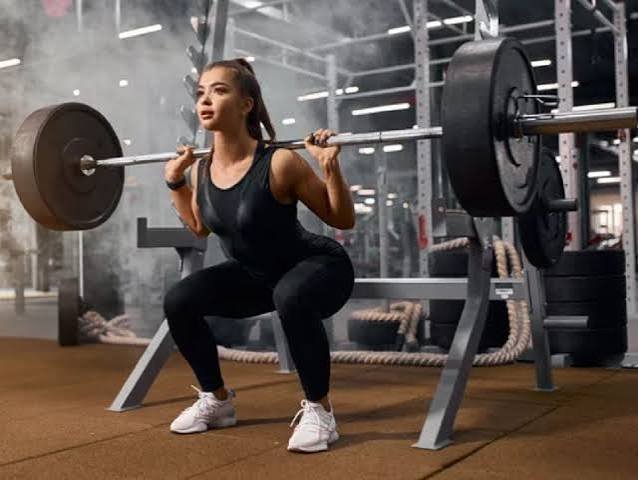
Resistance training — squats, deadlifts, hip thrusts, overhead press, rows — applies force to bone through the pull of tendons on their bony attachments. This produces bone strain at the specific sites of attachment: squats load the femur and lumbar spine; deadlifts load the hip and thoracic spine; rows and overhead press load the upper thoracic vertebrae and humerus. The key principle is progressive loading: the exercise must become harder over time to continue producing adaptation.
The LIFTMOR trial (described below) demonstrated that even in women with osteoporosis, supervised high-intensity resistance training was safe and produced meaningful BMD gains. This has changed clinical perception of what is safe for osteoporosis significantly — the old guidance to avoid high loading in osteoporosis has been substantially revised by this evidence.

3. Brisk Walking (Modest Effect, Insufficient Alone)
Walking is weight-bearing and better than sedentary activity for bone health. However, meta-analyses have consistently shown that walking alone produces inconsistent and generally modest BMD effects. The ground reaction forces from walking (approximately 1–1.2 times body weight) are below the threshold that reliably stimulates bone adaptation in adults with established bone loss. Walking is valuable for falls prevention (through cardiorespiratory fitness, endurance, and lower limb strength) and for general health, but should not be the sole bone-health strategy for people with osteopenia or osteoporosis.
4. Swimming and Cycling (Minimal BMD Effect)
Swimming and cycling are non-weight-bearing or partially weight-bearing activities that produce insufficient skeletal loading to stimulate meaningful BMD improvement. People who swim or cycle as their primary form of exercise tend to have similar or lower BMD than their sedentary peers when compared to those who perform weight-bearing exercise. This does not mean swimming and cycling are unimportant — they provide cardiovascular benefits, maintain muscle mass, and can be part of a comprehensive programme — but they cannot serve as the primary bone-health intervention.
Exercise for Bone Health at Different Life Stages
Pre-Menopausal — Building Peak Bone Mass
Peak bone mass is achieved at approximately age 25–30. The bones you build by this age form the reservoir from which any subsequent loss will be drawn. High-impact exercise and resistance training during childhood, adolescence, and early adulthood produce the highest peak bone mass. Adults in their 20s and 30s who combine regular weight-bearing exercise with adequate calcium (700–1000 mg/day) and vitamin D are building the bone capital that will protect them for the rest of their lives. This is also the period where bone is most responsive to exercise — gains are larger and faster than at any subsequent age.
Peri/Post-Menopausal — The Critical Window
The five to ten years after menopause are the period of most rapid bone loss, driven by the decline in oestrogen (which normally suppresses osteoclast activity). Without intervention, women lose 1–3% of bone density per year during this period. Exercise cannot fully compensate for this loss without additional support, but it significantly reduces the rate of decline. This is also the period where the combination of hormone replacement therapy (HRT) and exercise produces synergistic benefits: HRT reduces osteoclast activity (reducing resorption) while exercise stimulates osteoblast activity (increasing formation). Together they can maintain BMD substantially better than either alone.
Established Osteoporosis — Safe High-Intensity Training
The traditional advice that people with osteoporosis should avoid high loading has been substantially revised by the LIFTMOR trial evidence. Supervised progressive resistance training and supervised impact exercise can be performed safely by people with osteoporosis and can produce net BMD gains. The key word is supervised — at least initially, to ensure correct technique and appropriate loading that avoids positions of risk (spinal flexion under load, which increases vertebral fracture risk).
For people with established osteoporosis, the priority combination is: supervised resistance training targeting the hip and spine, multidirectional balance and falls prevention exercises, and moderate weight-bearing impact modified for the individual’s bone fragility. Spinal flexion under load (sit-ups, toe-touches with loaded spine) should be avoided due to vertebral compression fracture risk.
Men and Bone Health
Men lose bone more slowly than women because testosterone declines gradually rather than abruptly at a defined point. However, men with hypogonadism (low testosterone), those on androgen deprivation therapy for prostate cancer, and men over 70 have significant osteoporosis risk. The same exercise principles apply — weight-bearing impact and resistance training — with the additional note that resistance training specifically has strong evidence for maintaining bone density in men of all ages through testosterone-stimulated bone formation.
The LIFTMOR Trial — What It Showed
The LIFTMOR (Lifting Intervention For Training Muscle and Osteoporosis Rehabilitation) trial, conducted at Griffith University and published in the Journal of Bone and Mineral Research by Watson and colleagues in 2017, was the first rigorous RCT to test high-intensity resistance training specifically in postmenopausal women with osteoporosis or low bone mass.
The protocol involved two supervised 30-minute sessions per week for eight months, using five exercises: barbell back squat, Romanian deadlift, overhead press, jumping chin-up (with weight), and drop jumps. These are genuinely high-intensity exercises — not gentle movements, but loaded compound lifts performed progressively close to the participant’s capacity. A control group performed a low-intensity home exercise programme.
The results challenged decades of clinical conservatism about loading in osteoporosis. The high-intensity group increased lumbar spine BMD by 2.9% and femoral neck (hip) BMD by 0.3% — while the control group declined in both measures. Importantly, there were no fractures or serious adverse events in the high-intensity group. The conclusion: supervised high-intensity loading is not only safe in osteoporosis, it produces BMD gains that unsupervised low-intensity programmes do not.
The clinical implication is significant. Many people with osteoporosis have been advised to “be careful” and avoid heavy loading — advice that, paradoxically, leaves the bone without the mechanical stimulus it needs to remain strong. The LIFTMOR trial does not mean unsupervised heavy lifting is appropriate for everyone with osteoporosis. It means that with qualified supervision, high-intensity exercise is both safe and effective in this population.
What the Current Guidelines Say
NICE NG187 (osteoporosis: risk assessment, prevention, treatment) recommends exercise — specifically weight-bearing and muscle-strengthening activities — as a primary intervention for osteoporosis prevention and management. The guideline also recommends falls prevention programmes (balance training, home hazard assessment) as the intervention with the most direct evidence for fracture risk reduction.
The National Osteoporosis Foundation recommends weight-bearing and muscle-strengthening exercise specifically, noting that non-weight-bearing exercise (swimming, cycling) does not prevent bone loss. It recommends weight-bearing aerobics at least three to four times per week and muscle-strengthening at least two to three times per week.
The European Society for Clinical and Economic Aspects of Osteoporosis and Osteoarthritis (ESCEO) recommends a combination of progressive resistance training and balance/falls prevention — not one or the other, but both — as the evidence-supported combination for fracture risk reduction in older adults with osteoporosis. Versus Arthritis summarises these guidelines in accessible patient-facing guidance.
The two things that matter most for bone health
1. Load above the mechanostat threshold — high-impact or heavy resistance exercise, not walking. 2. Site-specificity — the exercise must load the bones you are trying to protect. For hip and spine (the most important fracture sites), this means squats, deadlifts, impact exercise on the legs — not swimming or upper-body-only resistance work.
Exercises That Don’t Improve Bone Density
Several popular and genuinely beneficial activities have little or no effect on bone density and should not be relied upon as bone health strategies.
Swimming: The buoyancy of water supports body weight, eliminating most of the gravitational and ground reaction forces that drive bone adaptation. People who swim exclusively tend to have lower BMD than runners and team sport athletes of the same age. Swimming is excellent for cardiovascular health, muscle conditioning, and joint-friendly aerobic exercise — but it is not a bone health intervention.
Cycling: Similar to swimming, cycling is a non-weight-bearing activity. The main loading is through the saddle and pedals, which does not provide meaningful axial skeletal loading. Professional cyclists have been shown to have significantly lower spine and hip BMD than matched runners and recreationally active adults — a consequence of training extensively in a non-weight-bearing mode.
Extended bed rest or immobilisation: Bone density declines at 1–2% per week during complete immobilisation, reflecting the mechanostat at work in reverse — bone below the strain threshold resorbs rapidly. This is relevant after injury or surgery, where early mobilisation is important for bone as well as other systems.
Walking alone (for people with osteopenia or osteoporosis): Walking maintains some bone density compared to complete inactivity, but meta-analyses show inconsistent effects on BMD in post-menopausal women. For people who already have reduced bone density, walking should be complemented by resistance training and higher-intensity activities — not relied upon as a standalone strategy.
Frequently Asked Questions
Does walking improve bone density?
Walking produces modest bone density benefits in some populations, particularly in people who were previously sedentary. However, meta-analyses consistently show that walking alone produces small and inconsistent BMD effects in post-menopausal women, who are the population most in need of bone protection. Walking is genuinely beneficial for falls prevention (through strength, balance, and cardiovascular fitness) — which is the most direct way to prevent fractures — but for bone density specifically, it should be complemented with resistance training and higher-intensity impact activities. For people with osteopenia or osteoporosis, relying on walking alone as a bone health strategy is insufficient.
How quickly can exercise improve bone density?
Bone adaptation is slow. Measurable BMD changes from exercise programmes typically require 6–12 months of consistent training to become statistically significant on DEXA scan. The LIFTMOR trial demonstrated 2.9% lumbar spine BMD increase over 8 months of twice-weekly high-intensity training — this is a meaningful change, but bone does not respond in weeks the way muscle does. The benefit of starting early is both cumulative (maintaining bone capital over years) and protective (maintaining the muscle strength and balance that prevent falls and absorb impact forces even if BMD is not increasing).
Can exercise reverse osteoporosis?
Exercise can produce net BMD gains in people with osteoporosis under the right conditions — the LIFTMOR trial is the best evidence for this. However, the magnitude of gains from exercise alone is typically 1–3%, while osteoporosis may represent a 30–40% deficit from peak bone mass. Exercise is therefore an important component of management and prevention of further loss, but it is rarely sufficient on its own to reverse established osteoporosis. The combination of exercise, adequate calcium and vitamin D, and where appropriate pharmacological treatment (bisphosphonates, denosumab) produces the best outcomes for people with established osteoporosis.
Is it safe to do high-impact exercise with osteoporosis?
With appropriate supervision, yes — this is now the evidence-supported position based on the LIFTMOR trial and subsequent research. The key conditions are: qualified supervision initially to ensure correct technique; gradual progression; avoidance of positions that specifically increase vertebral fracture risk (spinal flexion under load, forward bending with load); and assessment by a physiotherapist experienced in osteoporosis management before starting. People with severe osteoporosis (T-score below −3.5), previous vertebral fractures, or significant kyphosis should seek specialist physiotherapy assessment before starting a high-intensity programme.
How much calcium and vitamin D do I need alongside exercise?
Exercise stimulates bone formation, but bone formation requires the raw materials — calcium and vitamin D. The UK recommended intake is 700 mg/day calcium for adults (higher recommendations in some guidelines) and 10 micrograms (400 IU) of vitamin D daily. Many older adults are deficient in vitamin D, particularly in winter. Most bone health guidelines recommend supplementing both calcium and vitamin D when dietary intake is insufficient. The National Osteoporosis Foundation recommends 1,200 mg calcium and 800–1,000 IU vitamin D daily for adults over 50 with bone health concerns.
Does HRT help bone health and is it worth taking with exercise?
Yes to both. Oestrogen directly suppresses osteoclast activity (bone resorption), which is why post-menopausal bone loss is so rapid after oestrogen declines. HRT restores this suppression and substantially reduces the rate of post-menopausal BMD loss. When combined with exercise (which stimulates osteoblast activity), the two interventions address both sides of the bone remodelling equation simultaneously. For women in the peri-menopausal period, this combination is among the most effective approaches to bone health available. HRT decisions involve individual risk-benefit assessment and should be discussed with a GP or menopause specialist.
Should I get a DEXA scan to check my bone density?
A DEXA (dual-energy X-ray absorptiometry) scan is the clinical standard for measuring bone mineral density. The FRAX tool (Fracture Risk Assessment Tool) — available at sheffield.ac.uk/FRAX — uses age, weight, medical history, and optional BMD to estimate 10-year fracture probability. DEXA is recommended for: women at or past menopause with risk factors, anyone who has had a fragility fracture, people on long-term corticosteroids, men over 50 with risk factors. In the UK, GP referral for DEXA is the standard pathway; referral thresholds vary by area but FRAX scores above intervention threshold typically prompt investigation.
When to Seek Medical Advice About Bone Health
- Recent fragility fracture (fracture from a fall from standing height or less) — this is a strong indicator of reduced bone density and warrants referral to a Fracture Liaison Service (FLS) for assessment and management
- Long-term corticosteroid use (3 months or more) — significantly accelerates bone loss; bone protection therapy is usually recommended
- Menopause before age 45 — early menopause substantially increases lifetime osteoporosis risk; HRT and bone density monitoring recommended
- Family history of hip fracture — significant independent risk factor worth discussing with a GP
- Confirmed osteopenia or osteoporosis on DEXA — referral for physiotherapy assessment of appropriate exercise programme is advisable before starting high-intensity training independently
The NHS osteoporosis page provides guidance on when to seek assessment and what treatment options are available through the NHS.
Conclusion
How much exercise supports bone health depends on which exercises you are doing. The answer is clear: weight-bearing impact exercise and progressive resistance training at sufficient intensity to exceed the mechanostat threshold, targeting the sites most at risk of fracture (hip, spine, wrist), two to five days per week, with progressive overload over time. Swimming and cycling do not provide this stimulus. Walking provides modest benefit. High-impact and resistance exercise provides meaningful benefit — and the LIFTMOR trial has shown this applies even in established osteoporosis with appropriate supervision.
The most important conclusion from decades of research on exercise and bone health is that it is never too late to start, and that the traditional caution about high loading in osteoporosis has been substantially revised by the evidence. For most people, the bones that will support them in their 70s, 80s, and beyond are being built — or lost — right now. The exercise choices made today are the bone density of the future.
For related reading, explore our guides on resistance training after age 50 and strength training for bones and muscles.
Medical Disclaimer: This article is for informational purposes only and does not constitute medical advice. Always consult a qualified healthcare professional before starting a new exercise programme, particularly if you have osteoporosis, a history of fragility fractures, or are taking medications that affect bone density.
References
- National Institute for Health and Care Excellence. Osteoporosis: assessing the risk of fragility fracture. NG187. 2017 (updated 2023). nice.org.uk
- Watson SL, et al. High-intensity resistance and impact training improves bone mineral density and physical function in postmenopausal women with osteopenia and osteoporosis: the LIFTMOR randomized controlled trial. Journal of Bone and Mineral Research. 2017. pubmed.ncbi.nlm.nih.gov
- World Health Organization. Physical activity guidelines 2020. who.int
- National Osteoporosis Foundation. Calcium and vitamin D. nof.org
- Versus Arthritis. Osteoporosis. versusarthritis.org
- NHS. Osteoporosis. nhs.uk
- FRAX Fracture Risk Assessment Tool. University of Sheffield. sheffield.ac.uk/FRAX
I was diagnosed with osteoporosis two years ago and was told to walk more and be careful. Reading about the LIFTMOR trial was genuinely surprising – that high-intensity resistance training with squats and deadlifts is not only safe but actually produces BMD increases in osteoporosis, in contrast to the low-intensity programme that my GP recommended, which the research shows does not. I had assumed that the ‘be careful’ advice was based on evidence. The point that the traditional caution about high loading in osteoporosis has been substantially revised by this evidence is something I will be taking back to my GP.
Caroline – the advice to ‘be careful’ after an osteoporosis diagnosis is understandable from a precautionary perspective but the LIFTMOR evidence has substantially changed what careful should mean in practice. The critical distinction is between unsupervised heavy loading (where technique errors and inappropriate progression could increase fracture risk) and supervised progressive loading with qualified guidance. Getting a referral to a physiotherapist who specialises in osteoporosis – or to a bone health exercise class – would allow you to start the kind of progressive programme that the evidence actually supports, with appropriate oversight. In many areas, GP referral to a bone health physiotherapy service is available; worth asking specifically about this.
The swimming section was an unwelcome but useful read. I have been swimming 4-5 times a week for 15 years, mostly because I have hip OA and swimming doesn’t aggravate it. But reading that swimmers actually tend to have lower BMD than runners and that swimming cannot serve as a bone health intervention – and that the hip OA I have is itself associated with bone density concerns – suggests I need to add some weight-bearing activity. Would resistance training seated on a leg press machine count as sufficient loading for the hip? I appreciate it is not the same as squatting but I cannot squat without hip pain.