
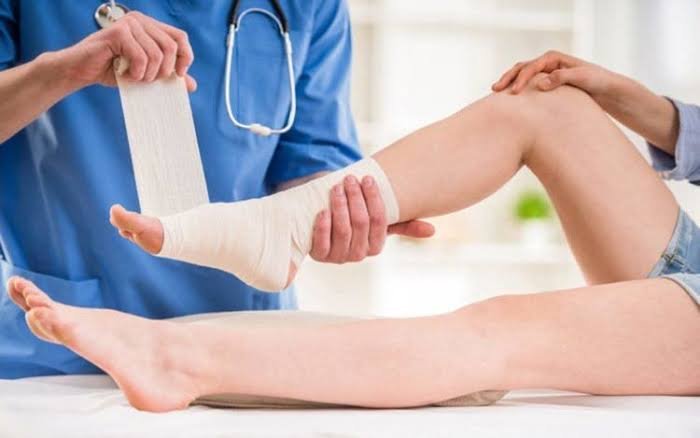
In elite sport, overuse injuries account for more than half of all sports injuries — and the same pattern is mirrored in recreational athletes, workers performing repetitive tasks, and anyone who increases a physical activity too quickly. Unlike acute injuries that follow a single traumatic event, overuse injuries develop gradually over days to weeks of loading that incrementally exceeds the tissue’s capacity to repair itself. This makes them both more insidious — they can be ignored in the early stages when they are most treatable — and, critically, more preventable than acute injuries. Understanding the mechanics, recognising the early warning signs, and applying the principles of safe load progression are the foundations of overuse injury prevention.
What Is an Overuse Injury?
An overuse injury occurs when a tissue — whether bone, tendon, bursa, cartilage, or the muscle-bone attachment — is subjected to repetitive, submaximal loading that exceeds its capacity to adapt and repair. Each loading cycle causes a small amount of microtrauma to the tissue. Under normal circumstances, the rest periods between loading cycles allow this microtrauma to be repaired through biological healing processes, leaving the tissue stronger and better adapted to the load. When loading cycles are too frequent, too intense, or too similar (not giving different tissues turns to recover), the accumulated microtrauma exceeds the repair rate — and symptoms begin.
This is fundamentally different from an acute injury, where a single traumatic event (a fall, a sudden eccentric overload) causes immediate tissue failure. In overuse injury, there is no single moment of injury — the tissue fails gradually, and the first significant symptom (pain during activity) typically occurs when the accumulated damage is already substantial. This is both why early management matters so much, and why many people dismiss the early warning signs until they are unable to continue their activity at all.
Stress Fractures — When Bone Cannot Keep Up
Stress fractures are among the most serious overuse injuries. They occur when bone microtrauma accumulates faster than the bone remodelling process can repair it. Normal bone constantly remodels through the coupled action of osteoclasts (which resorb old bone) and osteoblasts (which form new bone). When loading increases suddenly, osteoclastic resorption accelerates before osteoblastic formation can match it, temporarily weakening the bone and making it vulnerable to cumulative fractures.
The most commonly affected sites in runners and active adults are:
- Metatarsal bones (foot): particularly the 2nd and 3rd metatarsals; classic “march fracture” in military recruits who suddenly increase walking and running loads
- Tibia: particularly the posteromedial tibia; often presents as shin pain that must be distinguished from medial tibial stress syndrome (shin splints)
- Navicular: one of the midfoot bones; notoriously slow to heal and prone to delayed or non-union; requires early diagnosis and often non-weight-bearing management
- Femoral neck: a red flag site. A femoral neck stress fracture can progress to a complete hip fracture with avascular necrosis of the femoral head if not identified and managed urgently. Groin pain in a runner that worsens with loading and is reproduced on a single-leg hop warrants urgent MRI and orthopaedic referral.
Plain X-rays are often normal in the first 2–3 weeks of a stress fracture; MRI is the most sensitive investigation and the gold standard for definitive diagnosis. CT scanning is valuable for high-risk sites (navicular, femoral neck) where specificity is critical.
The female athlete triad — now updated to the broader concept of Relative Energy Deficiency in Sport (RED-S) — is an important risk factor for stress fractures in female athletes: the combination of low energy availability (insufficient caloric intake relative to energy expenditure), menstrual dysfunction (including the loss of periods from low energy status), and reduced bone density creates a significant stress fracture risk that is independent of training load. Female athletes who stop having periods should be assessed and supported to restore energy balance, not simply told to “push through.”
Tendinopathy and Bursitis from Repetitive Load
Tendinopathy — the degenerative failed-healing response in tendons described in our guide to tendon injury — is fundamentally an overuse condition. The Achilles tendinopathy of a runner who has increased mileage too quickly, the patellar tendinopathy of a basketball player in a high-volume training block, and the rotator cuff tendinopathy of a painter doing repetitive overhead work are all manifestations of cumulative load exceeding the tendon’s repair capacity.
Bursitis is inflammation of the fluid-filled sacs (bursae) that reduce friction between tissues at sites of repetitive movement. Common overuse-related bursitis sites include:
- Subacromial bursitis: shoulder pain from inflammation of the bursa between the rotator cuff and the acromion; often accompanies rotator cuff tendinopathy and collectively presented as “shoulder impingement”
- Olecranon bursitis: swelling over the posterior elbow from prolonged pressure (leaning on a hard surface) — “student’s elbow”; the swelling can be dramatic but is rarely serious unless infected
- Prepatellar bursitis: swelling over the front of the kneecap from repeated kneeling — “housemaid’s knee”
- Trochanteric bursitis: historically attributed to the bursa over the greater trochanter of the hip; now understood to be gluteal tendinopathy (degeneration of the gluteus medius and minimus tendons) in the majority of cases — the reconceptualisation matters because the treatment is loading-based rehabilitation of the gluteal tendons, not injection of the bursa
IT band syndrome (iliotibial band friction syndrome) produces sharp lateral knee pain in runners and cyclists, typically presenting after a consistent distance into a run rather than from the start. The IT band — a thick band of fascia running from the iliac crest to the lateral tibia — rubs over the lateral femoral condyle at approximately 30 degrees of knee flexion, the position of the foot strike in running. The most effective management is load reduction, hip abductor strengthening, and running gait modification; stretching the IT band itself is biomechanically ineffective because it is connective tissue rather than contractile muscle.
Runner’s Knee, Shin Splints, and Other Running Injuries
Patellofemoral pain syndrome (PFPS, “runner’s knee”) is one of the most common overuse injuries in adults, producing pain around and behind the kneecap that worsens with stairs, squatting, prolonged sitting, and running. The pain arises from abnormal loading and tracking of the patella in the trochlear groove. Contributing factors include weakness of the hip abductors and external rotators (allowing the knee to drop inward during loading — “dynamic valgus”), weakness of the quadriceps, foot overpronation (which increases tibial internal rotation and alters patellar tracking), and training load increases. Management focuses on hip and quadriceps strengthening, foot support, and graded running load.
Medial tibial stress syndrome (MTSS, “shin splints”) produces pain along the inner lower shin during and after running. It represents bone stress and periosteal irritation of the medial tibia, distinct from a tibial stress fracture (which has more focal bony point tenderness and requires imaging). Risk factors include sudden running load increase, overpronation, and calf weakness. Management is load reduction, calf strengthening, and gradual return to running over 4–8 weeks. Persistent or focal bony shin pain should be imaged to exclude a stress fracture.
Plantar fasciitis (heel pain) is one of the most common lower limb overuse conditions, producing sharp heel pain on the first steps in the morning and after periods of rest. The plantar fascia inserts at the medial calcaneal tubercle and is loaded with each step; cumulative loading from sudden activity increase, prolonged standing, and calf/Achilles tightness can produce insertional irritation and, over time, degenerative change (plantar fasciopathy). Management includes calf and plantar fascia stretching, strengthening, and load management.
The Acute:Chronic Workload Ratio — Understanding Training Load Risk
One of the most important conceptual contributions to overuse injury prevention in recent years has been the acute:chronic workload ratio (ACWR), developed by sports scientist Tim Gabbett and published in the British Journal of Sports Medicine in 2016. The ACWR expresses the relationship between recent training load (the acute load, typically the current week) and longer-term habitual training load (the chronic load, typically the rolling average of the previous 4 weeks).
The key findings from the research across multiple sports were:
- Athletes with an ACWR in the 0.8–1.3 range had the lowest injury risk — they were training at a load consistent with or slightly above their chronic conditioning, staying in a “sweet spot” of progressive overload
- Athletes with a high ACWR — above 1.5 (a sudden spike in load, doing significantly more than habitual) — had substantially elevated injury rates, confirming the “too much, too fast” principle with quantitative data
- Athletes with a very low ACWR (prolonged underloading, significant deconditioning) also had elevated injury risk when they returned to normal loads — tissues that have been insufficiently loaded lose capacity and are more vulnerable
The ACWR has been used by professional sports organisations to monitor athletes’ training loads, but its principles translate directly to recreational athletes and active workers: gradual increases in load that keep the acute load close to the chronic load, avoiding sudden spikes, are the most reliably injury-preventive approach. This gives the traditional “10% rule” (increasing weekly training volume by no more than 10% per week) a quantitative underpinning — though the specific percentage is a rough guide rather than a precise safe threshold.
Risk Factors You Can and Cannot Control
Modifiable risk factors — those that can be changed with appropriate management:
- Training errors: sudden load increases, no rest days, monotonous repetitive loading without variation — all addressable with training programme design
- Biomechanical factors: foot overpronation (addressable with running gait analysis and appropriate footwear or orthotics), hip abductor weakness (addressable with targeted strengthening), running technique errors
- Equipment: worn running shoes (should be replaced every 400–600 miles), inappropriate footwear for the activity, training on excessively hard surfaces
- Low energy availability in athletes (RED-S): addressable with nutritional support and energy balance management
Non-modifiable or less modifiable risk factors:
- Age: bone density and tissue repair capacity decline with age; older adults have a lower margin for load spikes
- Bone density: low bone mineral density from any cause (osteoporosis, RED-S, glucocorticoid therapy) increases stress fracture risk
- Prior injury: previous tendon, bone, or muscle injury creates scar tissue and altered biomechanics that can increase local overuse risk
Prevention — A Framework for Safe Load Progression
The most effective approach to overuse injury prevention combines the principles of safe load progression with tissue capacity building:
Gradual load increase: apply the ACWR principle — keep the acute load within 1.0–1.3 times the chronic load. In practice: increase training volume by 10–15% per week at most; avoid extending runs by more than 10% of the previous longest run; allow the body to accumulate a base before increasing intensity.
Rest and recovery days: at least one complete rest day per week, and ensuring that hard training sessions are separated by adequate recovery time. Tissues need time off load to repair; the adaptation happens during rest, not during the loading.
Cross-training: varying the type of training reduces the repetitive load on any single tissue. A runner who supplements with cycling and swimming applies the cardiorespiratory and muscular load in different mechanical patterns, reducing the cumulative load on the Achilles, tibia, and metatarsals from repeated impact. Cross-training is particularly valuable during recovery from overuse injuries as a way of maintaining fitness while the affected tissue heals.
Strength training: building the capacity of tendons, bones, and muscles to withstand loading is the most reliable long-term protection against overuse injury. Resistance training stimulates bone remodelling, tendon collagen production, and muscle fibre hypertrophy — raising the threshold at which the same load produces microtrauma. Even 2 sessions per week of lower body strengthening (squats, deadlifts, calf raises, hip abductor exercises) provides meaningful protection for runners and active adults.
Early symptom recognition: the window of opportunity for easy management of overuse injuries is when symptoms are mild — pain only at the end of a long session, or the next-day stiffness that resolves quickly. Continuing to load through worsening symptoms transforms a manageable early-stage tendinopathy or bone stress reaction into a fully established injury requiring weeks or months of rehabilitation. The key monitoring rule: if symptoms are getting worse rather than better week on week, reduce load rather than pushing through.
Frequently Asked Questions
What are the most common overuse injuries in adults?
The most common overuse injuries in adults are Achilles tendinopathy (runner and active adult populations), plantar fasciitis (heel pain from cumulative loading), patellofemoral pain syndrome (“runner’s knee”), medial tibial stress syndrome (“shin splints”), rotator cuff tendinopathy (shoulder), lateral epicondylitis (“tennis elbow”), and metatarsal stress fractures. In occupational settings, upper limb repetitive strain injuries — including those affecting the wrist extensors, forearm flexors, and shoulder rotator cuff — are among the most prevalent. All of these share the common mechanism of load accumulation exceeding tissue repair capacity, and all share the same prevention principle: gradual load progression, adequate recovery, and regular strengthening.
How do I know if I have a stress fracture or just shin pain?
Medial tibial stress syndrome (shin splints) typically produces pain along a broader stretch of the medial tibial border during and after running, with diffuse tenderness on palpation over the medial shin. A tibial stress fracture produces a more focal “bony” point tenderness — a specific spot on the bone that is exquisitely tender when pressed — and pain that may be present even at rest or with normal walking, not just during running. The single-leg hop test (hopping on the affected leg) reproduces pain in a stress fracture but not typically in MTSS. If shin pain is focal, not resolving with 2 weeks of rest, or associated with rest pain, imaging is warranted — X-ray first but MRI if high clinical suspicion, as early stress fractures are X-ray normal.
Can I run through an overuse injury?
Running through a minor early-stage overuse injury with appropriate load modification is often possible and sometimes recommended — complete cessation of activity is rarely the best management for tendinopathy, for example. The guiding principle is: symptoms should not be worsening week on week. A useful monitoring approach: rate pain during the activity (acceptable up to 3/10), rate pain during the 24 hours after (should return to baseline before the next session). If symptoms are not worsening and recover within 24 hours, continuing a reduced load programme while addressing the cause is reasonable. However, bone stress injuries (suspected stress fractures) should not be run through — the risk of progression to a complete fracture (particularly at the femoral neck or navicular) is too high. When in doubt about whether an injury is bony or soft tissue, seek assessment and imaging.
What is the acute:chronic workload ratio?
The acute:chronic workload ratio (ACWR) is a training load monitoring concept that expresses the ratio of an athlete’s current training load (the acute load — typically the most recent week) to their habitual training load (the chronic load — typically the rolling 4-week average). The research by Tim Gabbett across multiple sports found that athletes with an ACWR of approximately 0.8–1.3 had the lowest injury risk, while those with an ACWR above 1.5 (a sudden spike in training) had substantially higher injury rates. The concept has been widely adopted in professional sport for training load monitoring, and the underlying principle — gradual increases in training load that don’t deviate far from the established chronic baseline — is the quantitative underpinning of the familiar advice to avoid “doing too much, too fast.”
How long does an overuse injury take to recover?
Recovery time varies considerably by tissue type and injury severity. Mild early-stage tendinopathy detected and treated promptly may respond to a 4–6 week loading programme. Established Achilles or patellar tendinopathy typically takes 3–6 months of consistent physiotherapy-supervised loading to achieve full recovery. Metatarsal stress fractures typically require 6–8 weeks of load protection (often in a boot) before return to running. High-risk sites like the navicular may require non-weight-bearing for 6–8 weeks and total recovery time of 3–4 months. Shin splints (MTSS) typically resolve with 4–8 weeks of reduced running load and calf strengthening. The most important factor in all overuse injuries is avoiding the temptation to return to full load before the tissue is ready — premature return reliably extends recovery.
Does strength training help prevent overuse injuries?
Yes — strength training is one of the most consistently evidence-based strategies for preventing overuse injuries. Progressive resistance exercise stimulates bone remodelling (increasing bone density and stress fracture resistance), tendon collagen production (building tendon capacity for load), and muscle hypertrophy (providing better mechanical shock absorption and load sharing). Multiple systematic reviews show that strength training programmes reduce sports injury rates — including overuse injuries — in athletic populations. For runners specifically, hip abductor and external rotator strengthening reduces patellofemoral pain and IT band syndrome risk; calf strengthening reduces Achilles tendinopathy and metatarsal stress fracture risk. Two sessions per week of lower body strengthening is an achievable and meaningful protective practice for any active adult.
What is the female athlete triad?
The female athlete triad is a syndrome of three interrelated conditions seen in female athletes: low energy availability (insufficient caloric intake relative to energy expenditure, sometimes from intentional dietary restriction and sometimes from inadequate nutrition relative to high training demands); menstrual dysfunction (ranging from irregular periods to complete loss of periods — amenorrhoea — as a result of the low energy state); and low bone mineral density (resulting from the hormonal disruption of the low energy state, particularly reduced oestrogen, which reduces bone density and increases stress fracture risk). The triad is now understood within the broader framework of Relative Energy Deficiency in Sport (RED-S), which affects both male and female athletes and has additional health consequences beyond the original triad. Female athletes who have lost their periods should be assessed by a sports medicine physician, as this is a medical symptom requiring intervention rather than a normal training adaptation.
Summary
Overuse injuries develop when repetitive loading exceeds tissue repair capacity — in bone (stress fractures), tendon (tendinopathy), bursa (bursitis), and at specific sites including the IT band, shin, and kneecap. The acute:chronic workload ratio provides a quantitative framework for safe load progression, with an optimal zone of 0.8–1.3 and significantly elevated injury risk above 1.5. Risk factors include training errors (most modifiable), biomechanical factors, equipment issues, and intrinsic factors such as bone density and the female athlete triad. Prevention relies on gradual load progression, regular rest and recovery days, cross-training variety, and progressive strength training that builds tissue capacity. Our guides to tendon injury, muscle strain recovery, and sports injuries in adults cover the specific conditions within this broader overuse injury framework.
Medical disclaimer: This article is for general educational purposes and does not constitute medical advice. Consult a qualified healthcare professional for assessment and management of overuse injuries.
References:
NHS. Sports injuries. nhs.uk. 2023.
Versus Arthritis. Musculoskeletal conditions. versusarthritis.org. 2023.
Gabbett TJ. The training-injury prevention paradox: should athletes train smarter and harder? Br J Sports Med. 2016.
Bahr R, Krosshaug T. Understanding injury mechanisms: a key component of preventing injuries in sport. Br J Sports Med. 2005.
The ACWR concept is really helpful for understanding why I keep getting injured when I try to increase my running. I always push too hard too fast when I come back from a break and end up with shin problems every time. Having the 0.8-1.3 optimal zone as a concrete target rather than just ‘be gradual’ gives me something specific to work toward.
That is a very common injury pattern, Rebecca. The post-rest spike is actually captured in the ACWR data too — returning from a week or two of complete rest and immediately training at previous levels creates a high ACWR because the chronic average drops during the rest period. Building back gradually from 60-70% of your pre-rest volume for the first week is a more evidence-based approach than picking up exactly where you left off. The chronic load needs time to rebuild after a break.
The section on the female athlete triad is really important content that doesn’t get enough attention in mainstream health media. I coach a junior running group and this gives me useful background for conversations about energy availability and periods with the female athletes and their parents. Will be linking to this.