
Topical pain relief for joints and muscles — gels, creams, patches, and sprays applied directly to skin over the painful area — are consistently underused relative to what the evidence supports and what NHS and NICE guidelines recommend. Most adults in the UK reach for paracetamol or ibuprofen tablets when joint pain flares, unaware that for knee, hand, and wrist osteoarthritis, topical diclofenac gel is NICE’s explicit first-line recommendation before oral medication — not because it is a “gentle” alternative, but because it produces equivalent pain relief at approximately 6% of the systemic drug exposure of the oral form. The result is meaningful analgesia with substantially lower GI, cardiovascular, and renal risk. This guide covers what topical pain relief products are available in the UK, which conditions they are evidence-based for, how to use them correctly, and what the clinical research actually shows.
What Are Topical Pain Relief Products?
Topical pain relief products are formulations applied to skin over the painful area that deliver an active ingredient locally rather than systemically. Main UK categories: topical NSAIDs (diclofenac gel, ibuprofen gel — anti-inflammatory; NICE first-line for knee/hand OA); counter-irritants (menthol, camphor — sensory distraction via TRPM8 and TRPV1 channels); capsaicin cream (TRPV1 desensitisation — evidence-based for neuropathic and OA pain); lidocaine patches (local anaesthetic — licensed for post-herpetic neuralgia, used off-label for MSK pain); salicylate creams (aspirin derivative — weak evidence). The most clinically important are topical NSAIDs, which have strong evidence for OA of accessible joints and are recommended ahead of oral NSAIDs in UK guidelines.
Why “Topical” Does Not Mean “Weak” — The Pharmacokinetics
The assumption that topical means less effective is based on an incomplete pharmacokinetics model. For topical NSAIDs applied to a joint like the knee, the drug diffuses through the skin and subcutaneous tissue, reaching the synovial tissue and joint structures at concentrations substantially higher than those achieved through plasma delivery — while systemic concentrations remain very low (~6% of oral equivalent). At the knee, joint tissue concentrations of diclofenac after topical application can be 10–100 times higher than blood plasma concentration. The anti-inflammatory action takes place locally, where it is needed. For deep joints not accessible to topical application (hip, shoulder, spine), this advantage disappears — which is why topical products are recommended specifically for knee, hand, and wrist OA, not hip OA or axial pain. (Radermacher et al., 1991; NICE CG177, 2022)
Topical NSAIDs: Diclofenac and Ibuprofen Gels
Diclofenac Gel (Voltarol) — NICE First-Line for OA
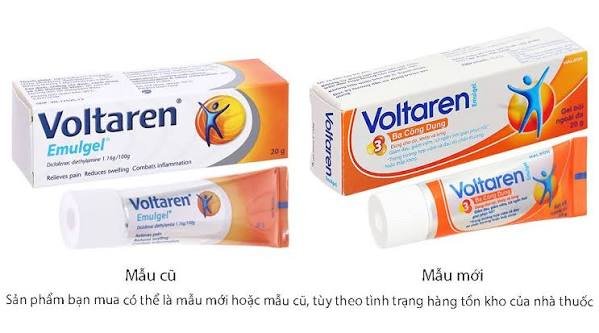
Topical diclofenac (Voltarol 1%, 2.32% gel; Voltarol Emulgel) is the most evidence-supported topical product for joint pain in the UK. NICE CG177 recommends it specifically as a first-line treatment for knee and hand OA — ahead of oral analgesics for accessible joints. The landmark Biswal 2006 randomised controlled trial (RCT) compared topical diclofenac gel 1% with oral diclofenac 75mg twice daily in knee OA over 12 weeks: both groups achieved comparable reductions in pain scores; the topical group had 12.4% GI side effects vs 28.2% in the oral group. Cochrane meta-analyses (Derry et al. 2016) found an NNT of 6.4 for 50% pain reduction with topical NSAIDs — broadly comparable to oral NSAIDs for OA. Standard application: 2–4g (a small volume, roughly the size of a 50p coin laid flat) applied four times daily over the affected joint, massaged in until fully absorbed. Hands should be washed after application (unless the hand joint is being treated). Do not apply to broken, infected, or sunburned skin.
Ibuprofen Gel (Ibugel, Nurofen Gel)
Topical ibuprofen gel is widely available OTC in the UK (5%, 10% formulations). The evidence base is most robust for acute soft tissue injuries (sprains, strains, bruising) and less established than topical diclofenac for chronic OA management — which is why NICE CG177 specifically names diclofenac gel rather than ibuprofen gel for OA. For acute muscle strains, sports injuries, and soft tissue injury with inflammation in accessible sites (wrist, ankle, calf, elbow), ibuprofen gel is an evidence-based choice. Moore et al. (Cochrane 2015) reviewed topical ibuprofen in acute pain: NNT 3.9 for 50% pain relief for acute pain, with minimal systemic absorption. Application: 4–10cm strip or 50–100mg gel, 3–4 times daily, not under occlusion.
For knee or hand OA (chronic): topical diclofenac gel (Voltarol) is the evidence-based choice and NICE’s specific recommendation — it has the most robust chronic OA RCT data and is NICE CG177 first-line. For acute soft tissue injury (sprain, strain): topical ibuprofen gel has a strong evidence base from acute pain trials and is a practical OTC choice. Both are suitable for use in adults with GI or cardiovascular risk factors who cannot take oral NSAIDs safely — the systemic exposure (~6% for diclofenac) is minimal compared to oral forms. Topical ibuprofen may be marginally less penetrating than topical diclofenac for deep tissue OA, based on pharmacokinetic studies, but for most OA applications the difference is not clinically important. (NICE CG177, 2022; Derry et al., Cochrane 2016)
Counter-Irritants: Menthol and Camphor Products
How They Work — Gate Control and TRPM8
Counter-irritant products include well-known brands: Deep Heat, Ralgex, Bengay (menthol/camphor/methyl salicylate). They do not have anti-inflammatory action — their analgesic effect operates through sensory neuroscience mechanisms. Menthol activates TRPM8 receptors (“cold receptors”) in skin nociceptors, generating a cooling sensation and triggering descending pain inhibition via gate control mechanisms in the dorsal horn. Camphor activates TRPV3 receptors. The net effect is competing sensory input that reduces the perception of musculoskeletal pain. Methyl salicylate provides mild topical aspirin-like activity. Counter-irritants provide genuine short-term relief — useful as an accessible, non-prescription option for aching muscles and joints. The evidence for sustained, disease-modifying analgesia comparable to topical NSAIDs is limited; they are best used as supplementary relief rather than primary treatment. (Mason et al., Cochrane 2004)
Appropriate Use and Limitations
Counter-irritants are well suited for: temporary relief of minor muscular aches; post-exercise stiffness; low-severity episodic joint pain; people who cannot tolerate topical NSAID products. They are not appropriate replacements for topical NSAIDs when evidence-based anti-inflammatory action is the therapeutic goal. The risk profile is minimal (local skin irritation, contact allergy to camphor or menthol in some individuals; do not apply near eyes or mucous membranes). Overheating treated skin (hot baths, heating pads immediately after application) can intensify the effect to an uncomfortable degree and should be avoided.
Capsaicin Cream — Evidence-Based but Misunderstood
Mechanism: TRPV1 Desensitisation
Capsaicin is the active compound in chilli peppers. In therapeutic cream form (0.025% to 0.075% for OA and MSK pain; 8% high-concentration patches for neuropathic pain, specialist-only), it works through a pharmacological process rather than simple sensory distraction. Capsaicin repeatedly activates TRPV1 receptors (“heat receptors”) in skin nociceptors. With sustained application, this causes receptor desensitisation — the nociceptors become less responsive to painful stimuli. The initial response to capsaicin application is burning, stinging, and warmth — which is the mechanism in action, not a side effect to be managed. This burning sensation reduces substantially with continued application over 1–2 weeks as desensitisation establishes. This is why capsaicin only works with consistent use — and why many patients try it once, experience the burning, and stop before the therapeutic effect establishes.
When starting capsaicin cream, most people experience significant burning, stinging, or warmth at the application site. This is not an adverse reaction — it is the TRPV1 receptor mechanism that produces the therapeutic desensitisation. The burning typically peaks in the first 3–5 days and diminishes progressively over 1–2 weeks as receptor desensitisation establishes. Patients who stop in the first few days because of the burning experience all the side effect and none of the benefit. Always wash hands thoroughly after application (unless treating hand joints, in which case wash only after the required absorption time). Do not touch eyes or mucous membranes. (Mason et al., Cochrane 2004; Derry et al., Cochrane 2017)
Evidence for Capsaicin in OA and Neuropathic Pain
Cochrane reviews of capsaicin in chronic musculoskeletal pain (Mason 2004) found around 40% of patients achieving at least 50% pain relief with low-concentration (0.025–0.075%) capsaicin versus placebo for OA pain. For neuropathic pain, the 8% capsaicin patch (Qutenza, applied by a healthcare professional) has strong evidence from multiple RCTs — NICE recommends it for peripheral neuropathic pain that has not responded to first-line treatments. For OA, capsaicin is a reasonable option when topical NSAIDs are insufficient or cannot be used (e.g., allergy to diclofenac), applied three to four times daily. Consistent application for at least two weeks is required before efficacy can be assessed. (Derry et al., Cochrane 2017)
Who Benefits Most from Topical Products?
| Patient Group | Recommended Topical Option | Rationale |
|---|---|---|
| OA of knee or hand | Diclofenac gel (Voltarol) 4×/day | NICE CG177 first-line; equivalent efficacy to oral NSAIDs; ~6% systemic absorption |
| Acute soft tissue injury (sprain/strain) | Ibuprofen gel 3–4×/day | Strong acute pain evidence (Cochrane 2015); anti-inflammatory locally; minimal systemic risk |
| Adults who cannot take oral NSAIDs (GI/CV risk) | Topical diclofenac gel or ibuprofen gel | ~6% systemic absorption avoids GI, CV, and renal risks of oral NSAIDs |
| Older adults (65+) with multiple medications | Topical diclofenac gel | Avoids NSAID interactions; no GI bleed, cardiovascular, or renal risks at topical doses |
| OA pain responding inadequately to topical NSAID | Capsaicin cream 0.025–0.075% alongside | Different mechanism (TRPV1 desensitisation); can be used alongside topical NSAID |
| Muscular aches; post-exercise stiffness | Menthol/camphor counter-irritant (Deep Heat) | Gate control mechanism; no anti-inflammatory action required; practical first response |
| Source: NICE CG177, 2022; Derry et al., Cochrane 2016, 2017; NHS, 2024. | ||
Conditions Where Topical Products Work Well vs Poorly
Good Evidence: Accessible Joint OA and Acute Soft Tissue
Topical NSAIDs are most effective when the painful structure is accessible — meaning: near the skin surface, so drug penetration reaches therapeutic concentrations in target tissue. Strong evidence conditions: knee OA (synovial tissue, periarticular structures all within penetration range); hand and finger joint OA (small accessible joints); wrist OA; elbow (lateral/medial epicondylitis/epicondylopathy); ankle soft tissue injury; wrist and hand tendinopathies (de Quervain’s, trigger finger).
Limited Evidence: Deep Joints and Spinal Pain
Topical products have weak or no evidence for: hip OA (joint too deep for meaningful penetration through gluteal fat pad and muscle layers); lumbar spine OA or disc pain (no clinical data supporting meaningful drug delivery); shoulder joint pain (glenohumeral joint is too deep; acromioclavicular joint and periarticular structures may benefit marginally). For these sites, oral or injectable treatment is more appropriate. This is not a failure of topical pharmacology — it is a physical limitation of diffusion distance. (NICE CG177, 2022)
For adults with knee or hand OA: NICE CG177 recommends topical diclofenac gel before oral NSAIDs, and evidence supports this fully. Biswal 2006 (RCT, 12 weeks): comparable pain relief, 12.4% vs 28.2% GI events. Cochrane 2016 (Derry): NNT comparable to oral NSAIDs for OA. Radermacher 1991: ~6% systemic absorption. Together this means: similar efficacy, radically reduced side effect exposure. For an older adult with OA, hypertension, or on anticoagulants, topical is not the “cautious” option — it is the evidence-guided first choice. The risk reduction benefit over oral NSAIDs is substantial, not marginal. (NICE CG177; Biswal 2006; Derry 2016)
How to Use Topical Pain Relief Products Correctly
Correct Application Technique for Topical NSAIDs (Diclofenac/Ibuprofen Gel)
For context on oral NSAIDs and when they are appropriate second-line, see the NSAIDs for joint pain guide. For how topical products fit into the full analgesic hierarchy, see the pain relievers for joint and muscle pain overview. For non-pharmacological approaches that underpin all joint pain management, see the weight management and joint pain guide.
Safety and Side Effects
Topical NSAID Safety Profile
Topical NSAIDs (both diclofenac and ibuprofen gel) have a substantially better systemic side effect profile than oral forms: GI events are minimal at ~6% systemic absorption; cardiovascular and renal effects are not clinically significant at topical doses; MHRA 2013 guidance on oral diclofenac cardiovascular contraindications does not apply to topical diclofenac. Local skin reactions occur in some patients: dry skin, redness, mild irritation (diclofenac gel) — these are generally mild and transient. Photosensitivity has been reported with topical diclofenac — avoid direct sun exposure on treated areas, particularly in summer. Contact allergy (rare but possible) presents as escalating skin reaction rather than mild irritation — stop use and consult pharmacist or GP.
Although systemic absorption is low (~6%), topical NSAIDs should be avoided in the third trimester of pregnancy — MHRA guidance extends the oral NSAID third-trimester contraindication to topical forms due to the theoretical risk from even low-level systemic absorption (premature closure of the ductus arteriosus). Paracetamol (at appropriate doses) is the recommended analgesic during pregnancy. (MHRA, 2024; NHS, 2024)
- Escalating skin reaction (blistering, significant swelling, spreading redness) — possible contact allergy or dermatitis; stop product immediately
- Severe local reaction with systemic symptoms (widespread rash, difficulty breathing) — possible allergic reaction; call 999
- Persistent mild skin irritation that is not improving after the first 1–2 weeks of use
- Pain is inadequately controlled with topical therapy after 4 weeks of consistent application
- You are pregnant (any trimester) — discuss whether topical analgesics are appropriate
- Mild initial burning or irritation with capsaicin cream — expected and typically resolves with continued use
- Mild skin dryness from diclofenac gel — apply to intact skin; allow to fully dry; moisturise nearby skin if needed
- Reviewing your topical product at 4–8 weeks to assess whether it is producing adequate relief
Frequently Asked Questions
For knee OA, topical diclofenac gel (Voltarol) is the evidence-based first-line recommendation from NICE CG177 — ahead of oral paracetamol and oral NSAIDs. Apply 2–4g four times daily over the knee joint, massaged in until fully absorbed. Biswal 2006 RCT demonstrated equivalent 12-week pain relief to oral diclofenac with less than half the GI side effects. Derry et al. Cochrane 2016 meta-analysis found an NNT of 6.4 for 50% pain reduction with topical NSAIDs. Allow 2–4 weeks of consistent 4×/day application before assessing effectiveness — topical diclofenac is not a fast-acting analgesic but a sustained anti-inflammatory treatment. (NICE CG177, 2022; Biswal, 2006)
Yes — Voltarol is the brand name for diclofenac gel manufactured by Haleon (formerly GSK Consumer Healthcare). The active ingredient is diclofenac diethylammonium (equivalent to diclofenac sodium). The Voltarol range includes Voltarol 1% gel (also sold as Emulgel), which matches the concentration studied in the major RCTs and recommended by NICE. Generic topical diclofenac products (own-brand pharmacy equivalents) contain the same active ingredient and should be therapeutically equivalent, though formulation differences between brands can affect skin penetration characteristics. (NHS, 2024)
Topical diclofenac and oral ibuprofen are different NSAIDs but belong to the same drug class. If you are unable to take oral ibuprofen due to GI or cardiovascular risk, topical diclofenac gel is likely safe — because ~94% of the drug does not reach systemic circulation, the GI, cardiovascular, and renal risks of oral NSAIDs are substantially reduced. However, if your contraindication to oral ibuprofen is a genuine NSAID allergy (rather than side-effect intolerance), topical diclofenac could also cause a reaction — discuss with your pharmacist or GP. The MHRA 2013 cardiovascular contraindications for oral diclofenac do not apply to topical diclofenac. (NICE CG177, 2022; MHRA, 2013)
Topical diclofenac gel should not be assessed for effectiveness at a single application. It works by building up local drug concentrations in the synovial tissue and periarticular structures over multiple doses. Most clinical trials see meaningful pain relief establishing by 1–2 weeks of consistent 4×/day use. Full effect may take 2–4 weeks. This is different from oral analgesics (paracetamol, ibuprofen) which have faster onset but shorter duration per dose. The appropriate use model is regular application at consistent intervals — not as-needed. If there is no meaningful improvement after 4 weeks of 4×/day use, review the diagnosis and consider additional or alternative treatments. (Derry et al., Cochrane 2016)
Yes — capsaicin and topical NSAIDs work through entirely different mechanisms (TRPV1 desensitisation vs COX enzyme inhibition) and there is no pharmacological interaction between them. They can be used on the same joint, but not simultaneously at the same location — allow the first product to fully absorb before applying the second, or use them on different parts of the joint area. The combination addresses two different pain pathways and can provide complementary relief for patients whose OA pain is inadequately controlled by topical NSAIDs alone. (Mason et al., Cochrane 2004; Derry et al., Cochrane 2016)
The evidence for topical NSAIDs for hip OA is weak compared to knee and hand OA, and NICE CG177 does not recommend topical NSAIDs specifically for hip pain. The hip joint sits deep beneath significant muscle and fat tissue — drug penetration from topical application to the joint space is minimal. The anti-inflammatory concentrations achieved in knee synovial tissue after topical application are not replicable for the hip. For hip OA, oral analgesics (paracetamol first-line, oral NSAIDs with PPI second-line), physiotherapy, and weight management are the evidence-based approaches. Topical products may provide mild surface-level relief for periarticular soft tissue pain around the hip, but this is a different effect from intra-articular OA treatment. (NICE CG177, 2022)
No — topical NSAIDs, including topical ibuprofen gel and topical diclofenac gel, should be avoided in the third trimester of pregnancy. MHRA guidance extends the third-trimester oral NSAID contraindication to topical forms. In the first and second trimesters, use should be minimised — paracetamol remains the analgesic of choice throughout pregnancy. Any pain management during pregnancy should be discussed with a midwife or GP. (MHRA, 2024; NHS, 2024)
Research is ongoing into enhanced topical NSAID delivery systems — including nanoparticle formulations, liposomal diclofenac, and ethosomal carriers — designed to increase dermal penetration depth and extend drug residence time in joint tissue. Some early studies suggest improved tissue concentrations with these formulations vs conventional gels. None are currently standard NHS treatment, but they represent the direction of development in topical analgesics for OA. The clinical gap these aim to fill is extending the effective depth of penetration to joints where topical treatment currently lacks evidence — potentially expanding the evidence base beyond knee and hand OA. (British Journal of Pharmacology, 2023)
The content on Horizon Health Guide is intended for informational and educational purposes only. It is not a substitute for professional medical advice, diagnosis, or treatment. Always seek the guidance of your physician or another qualified health provider with any questions you may have regarding a medical condition. Never disregard professional medical advice or delay in seeking it because of something you have read on this website. If you think you may have a medical emergency, call your doctor, go to the emergency department, or call 999 immediately.
References
- NICE. (2022). Osteoarthritis: care and management (CG177). nice.org.uk
- Derry S, et al. (2016). Topical NSAIDs for chronic musculoskeletal pain in adults. Cochrane Database Syst Rev. 4:CD007400. cochranelibrary.com
- Biswal S, et al. (2006). Efficacy of topical diclofenac in knee osteoarthritis — a double-blind randomised clinical trial. JR Soc Med. 99(4):163–6. sagepub.com
- NHS. (2024). Diclofenac gel and patches. nhs.uk
- Moore RA, et al. (2015). Topical ibuprofen for acute musculoskeletal pain. Cochrane Database Syst Rev. CD011712. cochranelibrary.com
- Mason L, et al. (2004). Systematic review of topical capsaicin for the treatment of chronic pain. BMJ. 328(7446):991. bmj.com
- Derry S, et al. (2017). Topical capsaicin (low concentration) for chronic neuropathic pain in adults. Cochrane Database Syst Rev. 1:CD010111. cochranelibrary.com
- Radermacher J, et al. (1991). Diclofenac concentrations in synovial fluid and plasma after cutaneous application. Br J Clin Pharmacol. 31(5):537–541. bpspubs.onlinelibrary.wiley.com
- MHRA. (2024). Topical NSAIDs — use in pregnancy. gov.uk
- Versus Arthritis. (2024). Topical treatments for arthritis. versusarthritis.org
The section on why capsaicin burns at first was the missing piece of information I needed. I had tried capsaicin cream twice before and stopped both times in the first week because of the stinging, assuming it was causing irritation or that something was wrong. I had no idea that the burning is the mechanism — substance P being released before it depletes. I bought a tube again this time and committed to four weeks. The burning was bad for the first ten days but then noticeably reduced, and by week five my knee pain was genuinely better than it had been in months. I should have been told this information by the pharmacist when I first bought it.
Patricia — this is one of the most consistent patterns we see with capsaicin: people try it once, encounter the burning phase, conclude it is not working or is causing harm, and abandon it just before the benefit begins. The pharmacist point is well made — product labelling does mention the expected sensation but rarely communicates clearly enough that it is the therapeutic mechanism and that persisting through it is essential. The weeks 1–2 burning resolving to meaningful pain relief by weeks 4–6 is a recognised and well-documented pattern in the clinical trial literature. The key is setting the expectation beforehand rather than discovering it mid-use. Your experience with week five improvement is consistent with the capsaicin trials.
I had been dismissing Voltarol as a minor product you might use for a sprained ankle and had not realised it was a properly evidence-based first-line treatment for osteoarthritis. The detail about equivalent efficacy to oral diclofenac at 12 weeks with only 6% systemic absorption is compelling. I have been taking ibuprofen tablets for hand and knee arthritis pain and had not been offered or discussed topical treatment by my GP. After reading this I bought Voltarol Emulgel, applied it to my knee and hand joints as described, and have found it noticeably effective over the past three weeks.