
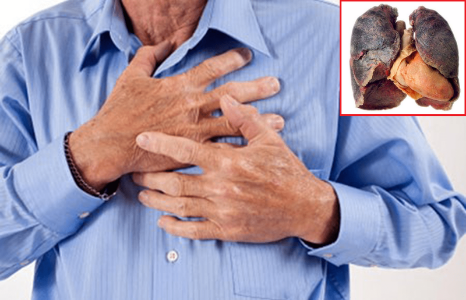
Shortness of breath — called dyspnea — is present in approximately 50 to 60% of lung cancer patients at the time of diagnosis, and in up to 90% of patients at some point during their disease. It ranks consistently as one of the most distressing symptoms of lung cancer alongside pain and fatigue, and it is the symptom most likely to leave patients house-bound and dependent on others for daily activities.
Unlike cough, which often appears early, dyspnea in lung cancer frequently signals more significant disease — a pleural effusion, a collapsing lobe, a compressed vein, or a tumor-infiltrated lymphatic system. But significant does not mean untreatable: several of the most important causes of shortness of breath respond dramatically to targeted interventions, sometimes within hours. This guide explains why lung cancer causes breathlessness, what constitutes an emergency, and what treatment options exist both to address the underlying cause and to relieve the symptom itself.
Why Lung Cancer Causes Shortness of Breath
Dyspnea in lung cancer is not a single phenomenon — it arises through multiple distinct mechanisms, each with different treatment implications. The same patient may have more than one cause operating simultaneously.
Airway obstruction and atelectasis. When a tumor grows in or near a central bronchus, it progressively narrows the airway. The lung tissue downstream receives less air; when obstruction is complete, trapped air is reabsorbed and the lobe collapses (atelectasis). This reduces the functional lung available for gas exchange, often producing a fixed unilateral wheeze that does not respond to bronchodilators — unlike the variable wheeze of asthma. Post-obstructive pneumonia frequently accompanies atelectasis, adding infection to mechanical compromise.
Pleural effusion. This is the most common and, for many patients, the most reversible cause of dyspnea in lung cancer. When a tumor invades the pleura or blocks lymphatic drainage of the pleural space, fluid accumulates between the lung and chest wall. Even one to two liters of fluid compresses the lung dramatically from outside, reducing its capacity to expand. The clinical signature — dullness to percussion and absent breath sounds on one side — is one of the most important physical findings to recognize, because draining the effusion (thoracentesis) can produce striking symptomatic relief within hours.
Phrenic nerve paralysis. The phrenic nerve controls the diaphragm, which provides approximately 70% of the work of breathing. Mediastinal tumor or lymph node compression of the phrenic nerve causes ipsilateral diaphragm paralysis — visible as an elevated hemidiaphragm on X-ray. The result is reduced inspiratory capacity, with dyspnea that is typically worse lying flat (orthopnea) because the paralyzed diaphragm rises further in the supine position.
Superior vena cava (SVC) syndrome. The SVC returns blood from the upper body to the heart. When a tumor or bulky mediastinal lymph nodes compress it, venous blood backs up above the obstruction. The result is facial, neck, and arm swelling; prominent collateral veins on the chest wall; headache; and dyspnea from venous congestion and airway edema. Approximately 80% of SVC syndrome is caused by malignancy, and lung cancer accounts for 65 to 80% of those cases.
Pericardial effusion and cardiac tamponade. Tumor invasion of the pericardium causes fluid accumulation that squeezes the heart, impairing its ability to fill and pump. The result is cardiac tamponade: dyspnea, hypotension, and distended neck veins (Beck’s triad). Unlike pleural effusion, which can accumulate slowly over weeks, pericardial tamponade can become life-threatening acutely and requires immediate pericardiocentesis.
Lymphangitic carcinomatosis. When cancer spreads through the pulmonary lymphatics, it creates bilateral interstitial infiltrates that look like pulmonary edema on imaging. The result is severe, progressive dyspnea that responds poorly to most conventional treatments and carries a poor prognosis.
Anemia, treatment-related causes, and co-existing COPD round out the picture. Cancer suppresses red blood cell production, and chemotherapy compounds this — anemia reduces oxygen-carrying capacity and causes exertional or resting dyspnea that responds well to transfusion. Radiation pneumonitis develops in approximately 10 to 15% of patients receiving thoracic radiation (typically 4 to 12 weeks after completing treatment); checkpoint inhibitor immunotherapy causes pneumonitis in 1 to 5% of patients. And many lung cancer patients already have significant COPD from smoking — making new or worsened dyspnea in this population particularly important to evaluate promptly.
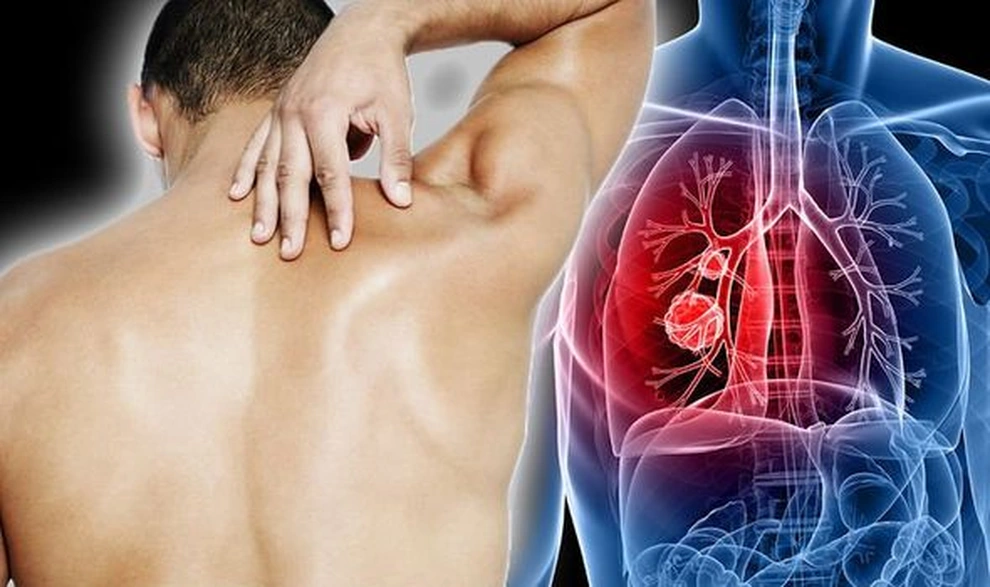
When Is Shortness of Breath a Medical Emergency?
Most dyspnea in lung cancer develops gradually. But several mechanisms can produce acute deterioration requiring immediate evaluation:
Seek Emergency Care Immediately If:
- Facial, neck, or arm swelling with sudden worsening breathlessness — suggests SVC compression or thrombosis; urgent stenting or radiotherapy needed
- Rapid-onset breathlessness + low blood pressure + distended neck veins — suggests cardiac tamponade; emergency pericardiocentesis required
- Sudden severe dyspnea + rapid heart rate + chest pain — may be acute pulmonary embolism; lung cancer raises PE risk 4–7× vs. the general population
- Breathlessness that develops over minutes and is too severe to speak — call 999 or 911 immediately
How Doctors Assess Dyspnea in Lung Cancer
Assessment serves two purposes: measuring severity to guide treatment intensity, and identifying the mechanism so the right treatment is applied.
The Medical Research Council (MRC) Dyspnea Scale rates breathlessness from 1 (only with strenuous exertion) to 5 (too breathless to leave the house, or breathless when dressing). Performance status (ECOG grade 0–4) captures functional limitation overall and largely determines treatment eligibility. Pulse oximetry at rest and on exertion identifies hypoxia — desaturation with minimal activity is a red flag for severe interstitial or parenchymal disease.
Imaging follows the suspected cause. Chest X-ray identifies pleural effusion, atelectasis, and mediastinal widening. CT chest provides the definitive picture. Echocardiography is essential when pericardial effusion or tamponade is suspected. CT pulmonary angiography is ordered when PE is on the differential.
Treating Shortness of Breath in Lung Cancer
Management works on two levels: treating the underlying cause, and relieving the symptom when the cause cannot be fully reversed.
Pleural effusion is treated with thoracentesis for immediate relief — often described by patients as dramatic. Because malignant pleural effusion typically refills within weeks to months, recurring symptomatic effusions are often managed with an indwelling pleural catheter (IPC) that remains in the pleural space and is drained at home as needed, avoiding repeated hospitalizations. Talc pleurodesis permanently closes the pleural space if the lung is re-expandable.
Airway obstruction is addressed by bronchoscopic stenting to re-open a blocked bronchus, laser or argon plasma coagulation to debulk endobronchial tumor, or external beam radiation therapy to reduce central tumor volume and re-open the airway. SVC syndrome is treated with urgent radiotherapy (particularly for SCLC), endovascular stenting (preferred for NSCLC or recurrent disease), and anticoagulation if thrombosis has occurred. Pericardial tamponade requires emergency pericardiocentesis. Anemia-driven dyspnea responds to red blood cell transfusion.
When the underlying cause cannot be fully reversed, symptom-directed treatment becomes primary. Low-dose opioids — oral morphine 4 to 5 mg every 4 hours in an opioid-naive patient, titrated to effect — are the most evidence-based pharmacological treatment for refractory dyspnea in cancer. The Cochrane Review confirms opioids significantly reduce dyspnea intensity at palliative doses without clinically significant respiratory depression. Benzodiazepines (lorazepam 0.5 to 1 mg) address the anxiety component that amplifies breathlessness in a self-reinforcing cycle. Corticosteroids reduce peritumoral edema and manage radiation and checkpoint inhibitor pneumonitis.
Three non-pharmacological interventions deserve emphasis. A handheld fan directed at the face — cool air across the nose and lips — reduces dyspnea perception in multiple randomized controlled trials. The mechanism is stimulation of trigeminal nerve endings in the face and nose, which sends signals to the brainstem that modulate the sensation of breathlessness. It is free, evidence-based, and most patients find it genuinely helpful. Sitting upright with a slight forward lean and cool room air compounds the benefit. And one of the most important misconceptions to correct: supplemental oxygen does not reduce dyspnea in patients whose oxygen saturation is normal. Multiple trials confirm that room air is as effective as oxygen for dyspnea in non-hypoxic patients (SpO2 ≥90%). Oxygen is appropriate only when there is demonstrable hypoxia — for everyone else, the fan does more good.
Frequently Asked Questions
Is shortness of breath always a sign of advanced lung cancer?
Not always, but it frequently indicates more significant disease than early symptoms like cough. A large central tumor obstructing a bronchus can cause dyspnea at an early stage; however, pleural effusion, lymphangitic carcinomatosis, and phrenic nerve palsy tend to reflect locally advanced or metastatic disease. Dyspnea alongside weight loss and fatigue should prompt urgent evaluation in any smoker over 40. For a full symptom overview, see our lung cancer symptoms guide.
Can pleural fluid come back after being drained?
Yes, and it usually does. Malignant pleural effusion typically refills within weeks. For patients with recurring symptomatic effusions, an indwelling pleural catheter — drained at home by a nurse or caregiver — is often more practical than repeated thoracentesis. Talc pleurodesis is an option to permanently prevent re-accumulation when the underlying lung is re-expandable.
Does oxygen help with breathlessness in lung cancer?
Only if the patient is hypoxic (SpO2 below 88–90%). Multiple randomized trials confirm that supplemental oxygen is no more effective than room air for dyspnea in patients with normal oxygen saturation. For non-hypoxic patients, a handheld fan directed at the face is more reliably helpful than an oxygen mask — one of the most counterintuitive but well-supported findings in palliative care research.
What is the handheld fan technique for breathlessness?
A small handheld fan — or even a folded piece of paper — is directed at the nose and lips. The cool airflow stimulates trigeminal nerve endings in the face, sending signals to the brainstem that reduce the central perception of breathlessness. Multiple randomized controlled trials confirm the benefit. The neurological mechanism is well understood, and the evidence is genuine despite how simple the intervention appears.
Is shortness of breath from lung cancer treatable in palliative care?
Yes, and effectively so. Even when the cancer cannot be cured, dyspnea is one of the most manageable symptoms in palliative oncology. Pleural effusion can be drained. SVC syndrome can be stented. Low-dose opioids reduce the central perception of breathlessness. Anxiety management interrupts the fear-breathlessness cycle. Understanding the role of lung cancer screening in earlier detection is one route to catching the disease before dyspnea becomes the presenting symptom.
Sources
- NICE NG12 (2023) — Suspected cancer: recognition and referral
- Jennings AL et al. — Opioids for the palliation of breathlessness in terminal illness; BMJ 2002;325(7375):1240
- Bausewein C et al. — Non-pharmacological interventions for breathlessness; Cochrane Database Syst Rev 2008
- Kamal AH et al. — Dyspnea review for the palliative care professional; J Palliat Med 2012;15(1):106–114
- American Cancer Society — Lung cancer signs and symptoms
- NCI SEER Program — Lung and bronchus cancer statistics
Related reading: Lung cancer symptoms | Lung cancer cough | Coughing blood and lung cancer | Lung cancer and smoking
Lung Cancer Treatment: An Overview of Therapeutic Options
Lung cancer treatment has undergone dramatic transformation over the past two decades, driven primarily by the identification of oncogenic driver mutations that define molecularly targeted therapy approaches and by the development of immune checkpoint inhibitors that harness the immune system against tumor cells. The treatment approach for a given patient depends on the stage of disease, the histological subtype (NSCLC vs. SCLC; adenocarcinoma vs. squamous cell carcinoma), and the molecular profile of the tumor.
Surgery: Surgical resection is the standard treatment for early-stage (I and II) non-small cell lung cancer (NSCLC). The standard operation is a lobectomy (removal of the involved lobe); pneumonectomy (removal of the entire lung) is occasionally necessary for centrally located tumors. Video-assisted thoracoscopic surgery (VATS) and robotic-assisted approaches allow minimally invasive lobectomy with faster recovery compared to open thoracotomy. Stereotactic body radiation therapy (SBRT), also called stereotactic ablative radiotherapy (SABR), is an alternative to surgery for early-stage NSCLC in patients who are not surgical candidates.
Radiation therapy: For locally advanced NSCLC (Stage III), concurrent chemoradiation (chemotherapy given simultaneously with radiation) is the standard approach. Durvalumab (Imfinzi), a PD-L1 checkpoint inhibitor, is given as consolidation immunotherapy after chemoradiation in Stage III patients who have not progressed, based on the PACIFIC trial, which showed significantly improved overall survival.
Targeted therapy: Approximately 50–60% of lung adenocarcinomas have an oncogenic driver mutation for which a targeted oral therapy is available. EGFR mutations (15–35% of adenocarcinomas in Western populations; higher in East Asian populations) are treated with EGFR tyrosine kinase inhibitors: osimertinib (Tagrisso) is the preferred first-line agent. ALK rearrangements (3–7% of adenocarcinomas) are treated with ALK inhibitors: alectinib (Alecensa) or brigatinib are preferred first-line agents. KRAS G12C mutations (about 13% of adenocarcinomas) are now actionable with sotorasib (Lumakras) or adagrasib (Krazati). Other actionable alterations include ROS1, MET exon 14, RET, NTRK, BRAF V600E, and HER2 mutations. Molecular profiling of all newly diagnosed metastatic lung adenocarcinomas is essential to identify actionable alterations before initiating treatment.
Immunotherapy: PD-1/PD-L1 checkpoint inhibitors — pembrolizumab (Keytruda), atezolizumab (Tecentriq), nivolumab (Opdivo), cemiplimab (Libtayo) — have transformed treatment for NSCLC without targetable driver mutations. Pembrolizumab monotherapy is preferred first-line for patients with PD-L1 ≥50% and no EGFR/ALK mutation. Pembrolizumab plus platinum-doublet chemotherapy is first-line for patients with any PD-L1 expression. Nivolumab plus ipilimumab (dual checkpoint blockade) is another approved first-line option.
For authoritative information on lung cancer treatment options, the NCCN Non-Small Cell Lung Cancer Guidelines are the most widely used clinical reference in the United States, updated regularly to incorporate the latest trial data. The American Cancer Society’s lung cancer resource provides comprehensive patient-friendly guides. The National Cancer Institute’s lung cancer PDQ offers detailed evidence summaries updated by oncology experts. For information about lung cancer symptoms that often prompt initial evaluation, see our guide to lung cancer symptoms. For information about the recommended screening approach to detect lung cancer before symptoms develop, see our guide to lung cancer screening. For information about the low-dose CT scan used for lung cancer screening, see our article on low-dose CT for lung cancer screening.
Risk Reduction and Lung Cancer Prevention
While lung cancer cannot always be prevented, the majority of cases are attributable to modifiable risk factors — most importantly cigarette smoking — meaning that population-level and individual-level risk reduction strategies can meaningfully reduce the incidence of this disease. Understanding the risk factors and the evidence for risk reduction helps patients and healthcare providers make informed decisions about preventive behaviors and screening.
Smoking cessation: Smoking cessation is the most impactful intervention for reducing lung cancer risk. The risk of lung cancer begins to decline within years of cessation, and former smokers who quit for 10 or more years have approximately half the lung cancer risk of current smokers — though former smokers never fully return to the baseline risk of lifetime never-smokers. The benefit of cessation is present at any age: even smokers who quit in their 60s reduce their lung cancer risk meaningfully. Smoking cessation also reduces risk for cardiovascular disease, COPD, and several other cancers simultaneously, making it the single highest-impact preventive health intervention available. Effective cessation strategies include nicotine replacement therapy (NRT — patch, gum, lozenge, inhaler, nasal spray), prescription medications (varenicline/Chantix and bupropion/Wellbutrin), behavioral counseling, and combinations of pharmacotherapy with behavioral support. The most effective approach combines pharmacotherapy with behavioral support rather than either alone.
Radon mitigation: Radon is the second leading cause of lung cancer in the United States, responsible for an estimated 21,000 deaths per year (EPA estimates). Radon is a naturally occurring radioactive gas that forms from the decay of uranium in soil and rock; it can accumulate in homes, particularly in basements and ground floors in areas with uranium-rich geology. Testing home radon levels is simple (do-it-yourself kits are available from hardware stores for $15–$30) and inexpensive. Mitigation — typically sub-slab depressurization, a system that draws radon from beneath the home and vents it outdoors — is effective and typically costs $800–$2,500. The EPA recommends testing all homes and mitigating if levels exceed 4 pCi/L.
Occupational exposures: Several workplace carcinogens substantially increase lung cancer risk, including asbestos (synergistic with smoking), arsenic, chromium, nickel, beryllium, diesel exhaust, silica dust, and ionizing radiation. Workers in mining, construction, shipbuilding, automotive repair, and chemical manufacturing are at elevated occupational risk. Appropriate use of personal protective equipment, engineering controls (ventilation, enclosure), and substitution of less hazardous materials reduces occupational lung cancer risk.
Air quality: Outdoor air pollution — classified as a Group 1 carcinogen for lung cancer by IARC — contributes to lung cancer risk, particularly in areas with high particulate matter (PM2.5) concentrations. While individual-level control of outdoor air quality is limited, actions such as using air quality index (AQI) data to reduce outdoor activity on high-pollution days, using HEPA air purifiers indoors, and avoiding tobacco smoke exposure in enclosed spaces meaningfully reduce personal exposure.
Diet and supplements: Contrary to earlier observational data suggesting a protective effect of beta-carotene supplementation for lung cancer, randomized controlled trials (CARET, ATBC) demonstrated that beta-carotene supplementation significantly increased lung cancer risk in smokers. High-dose antioxidant supplements should not be used for lung cancer prevention, particularly in smokers. A diet rich in fruits and vegetables is associated with modestly lower lung cancer risk in observational studies, likely through the combined effects of multiple nutrients and phytochemicals rather than any single compound.
Lung cancer outcomes have improved substantially over the past decade due to advances in molecular profiling, targeted therapy, and immunotherapy. Patients diagnosed today — particularly those with stage I or II disease detected through screening, or those with stage IV disease who have an actionable driver mutation — have meaningfully better outcomes than patients diagnosed a decade ago. Early detection through recommended screening for high-risk individuals, prompt evaluation of concerning symptoms, and access to multidisciplinary oncology care at a lung cancer program experienced in molecular testing and clinical trial enrollment are the most important factors influencing outcomes for an individual patient with lung cancer.
I have been reading about shortness of breath and lung cancer: for weeks and this is the most thorough guide I have found. The article answered questions I didn’t even know I had until I started reading. Will definitely be coming back to this site for more health information.
Thank you for covering shortness of breath and lung cancer: so thoroughly without being overly technical. I appreciated how the article addressed both the clinical side and the practical lifestyle adjustments. This is going into my health binder that I bring to every doctor’s visit.
As someone dealing with this personally, the shortness of breath and lung cancer: section was very helpful. I especially valued the explanation of why these recommendations exist, not just what they are. This is going into my health binder that I bring to every doctor’s visit.
Bookmarked this article on shortness of breath and lung cancer: immediately — going to reference it regularly. This is the kind of evidence-based writing that actually changes how people approach their health. This is exactly why I prefer this website over generic health platforms.
I shared this article on shortness of breath and lung cancer: with my doctor and they appreciated the level of detail. I appreciate that the article is careful about distinguishing between what is known and what is still being researched. Looking forward to reading more articles from this website.
I never fully understood shortness of breath and lung cancer: until I read this. What I liked most was that the article didn’t just say what to avoid — it also gave alternatives. Keep up this kind of thorough health journalism — it genuinely helps patients like me.