
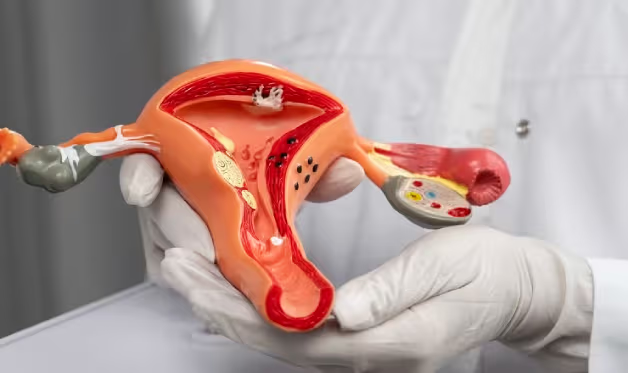
What Is an HPV Test?
An HPV test — also called a high-risk HPV test or primary HPV test — is a laboratory examination that detects the presence of high-risk human papillomavirus (HPV) strains in cervical cells. Unlike the Pap smear, which evaluates the appearance of cervical cells under a microscope for structural abnormalities, the HPV test identifies the specific virus responsible for causing virtually all cervical cancers. This distinction matters enormously: the HPV test detects the causative agent before cellular changes even become visible, giving it substantially higher sensitivity than cytology alone.
HPV is the most common sexually transmitted infection in the United States. The Centers for Disease Control and Prevention estimate that nearly 80 million Americans are currently infected with HPV and approximately 13 million new infections occur each year. Most HPV infections — including infections with high-risk strains — clear on their own within one to two years without causing any health problems. However, when a high-risk HPV infection persists for years or decades, it can cause the cellular changes that progress to cervical pre-cancer and ultimately to invasive cervical cancer. The HPV test identifies which women harbor persistent high-risk infections that require closer monitoring or intervention before cervical cancer develops.
The American Cancer Society (ACS) updated its cervical cancer screening guidelines in 2020 to designate primary HPV testing — an HPV test performed without a simultaneous Pap smear — as the preferred approach for cervical cancer screening in women ages 25 to 65. This shift reflects the superior sensitivity, the longer reassurance interval (5 years after a negative result compared to 3 years for Pap smear alone), and evidence that HPV testing detects adenocarcinoma precursors more effectively than cytology. Understanding what the HPV test is, how it works, and what a positive result means helps women engage more effectively in decisions about their cervical cancer screening.
What the HPV Test Detects
The HPV test is specifically designed to detect high-risk HPV (HR-HPV) strains that are known to cause cervical cancer. There are more than 200 HPV types; only 14 are classified as high-risk for cervical cancer: HPV types 16, 18, 31, 33, 45, 52, 58, 35, 39, 51, 56, 59, 66, and 68. These 14 types are the only ones detected by FDA-approved cervical HPV tests used in the United States.
Among these 14 high-risk types, HPV 16 and HPV 18 are the most oncogenic — they are responsible for approximately 70% of all cervical cancers worldwide. HPV 16 is particularly associated with squamous cell carcinoma, the most common type of cervical cancer. HPV 18 is disproportionately associated with adenocarcinoma of the cervix, a glandular cell cancer that originates in the endocervical canal and is less reliably detected by Pap smear cytology. Because of this higher cancer risk, HPV 16 and HPV 18 are treated differently in clinical management algorithms than the other 12 high-risk types — a woman who tests positive for HPV 16 or 18 is referred directly to colposcopy, while a woman who tests positive for other high-risk HPV types may be managed with a follow-up co-test in one year (depending on her prior screening history and clinical context).
The HPV test does not detect low-risk HPV types such as HPV 6 and HPV 11, which cause genital warts but do not cause cervical cancer. A woman who has genital warts caused by HPV 6 or 11 may receive a negative cervical HPV test result because her HPV infection is a low-risk type not covered by the test. Similarly, the HPV test is specific to high-risk cervical carcinogenesis — it is not a general STI panel and does not detect herpes, chlamydia, gonorrhea, or other sexually transmitted infections.
Key distinction: The HPV test detects HPV viral DNA (or RNA) in cervical cells — the causative virus. The Pap smear examines the cells themselves for morphological abnormalities caused by HPV. A woman can have a positive HPV test with a normal Pap smear (if the viral infection is present but has not yet caused visible cellular changes) or a negative HPV test with an abnormal Pap smear (rare, but possible with non-HPV-related cytological abnormalities). This is why co-testing (both tests together) and primary HPV testing provide more comprehensive information than either test alone.
Who Should Have an HPV Test
Recommendations for HPV testing differ slightly between the two major U.S. guideline-issuing organizations — the American Cancer Society (ACS) and the U.S. Preventive Services Task Force (USPSTF) — but both agree that routine HPV testing is an important component of cervical cancer prevention for most women between their mid-20s and age 65.
ACS 2020 guidelines (preferred approach: primary HPV testing):
- Ages 21–24: no cervical cancer screening recommended (neither HPV test nor Pap smear)
- Ages 25–65: primary HPV testing every 5 years (preferred); co-testing (HPV + Pap) every 5 years (acceptable); Pap smear alone every 3 years (acceptable)
- Ages 65 and older: discontinue screening if adequately screened (three consecutive normal Pap smears or two consecutive negative co-tests in the past 10 years, with the most recent test within 5 years)
USPSTF 2018 guidelines:
- Ages 21–29: Pap smear alone every 3 years (HPV testing not recommended in this age group)
- Ages 30–65: Pap smear alone every 3 years, or co-testing every 5 years, or primary HPV testing every 5 years (all three acceptable)
- Ages 65 and older: discontinue if adequate prior normal screening
The reason guidelines differ on the starting age for HPV testing is rooted in the biology of HPV infection in young women. Adolescents and women in their early 20s have high rates of HPV infection because of sexual activity, but these infections almost universally clear spontaneously within one to two years without causing cervical pre-cancer. Performing HPV tests in this age group generates many positive results that reflect transient infections rather than clinically significant persistent infections, leading to unnecessary colposcopy and anxiety without meaningful clinical benefit. Starting HPV screening at age 25 (ACS) or 30 (USPSTF for HPV testing specifically) targets the age range when persistent infections that progress to cervical pre-cancer become clinically relevant.
Certain groups warrant more frequent or earlier cervical cancer screening regardless of standard guidelines. Women living with HIV are at substantially elevated risk for cervical disease due to immune suppression that impairs HPV clearance. Current recommendations call for co-testing (or Pap testing with HPV reflex) at the time of HIV diagnosis and at 6 and 12 months thereafter; if all results are normal, annually thereafter rather than every 3–5 years. Women who are immunocompromised due to organ transplantation, prolonged corticosteroid therapy, or other immunosuppressive conditions should discuss individualized screening frequency with their healthcare providers.
How an HPV Test Is Performed
The HPV test requires no separate specimen collection from the Pap smear — both tests use cells collected from the same cervical sampling procedure during the same pelvic examination. A speculum is inserted to expose the cervix, a small plastic spatula sweeps the ectocervix, and an endocervical brush collects cells from the endocervical canal and transformation zone. Both implements are rinsed into a vial of liquid preservation medium (liquid-based cytology), which is then sent to the laboratory. From this single vial, the laboratory can perform cytological examination (Pap smear), HPV DNA or RNA testing, and genotyping to identify specific HPV types — without any additional sample collection from the patient.
This efficiency means that adding HPV testing to a Pap smear visit requires no additional procedure, no additional discomfort, and no additional time in the office. The clinician simply orders both tests from the same specimen at the time of collection, or the laboratory performs reflex HPV testing on the specimen if cytology results meet pre-specified criteria (for example, an ASC-US Pap smear result triggers reflexive HPV testing on the stored specimen).
Self-sampling for HPV testing — using a vaginal swab that a woman inserts herself at home, without a clinician-performed pelvic examination — is an emerging approach that has shown high concordance with clinician-collected specimens in research studies and is available in several European countries and Australia. Self-sampling holds promise for reaching women who avoid or delay cervical cancer screening due to access barriers, discomfort with pelvic examinations, or cultural concerns. As of the time of writing, self-sampling devices are not yet FDA-approved for primary cervical cancer screening in the United States, though this is an active area of regulatory development.
FDA-Approved HPV Tests
Several HPV tests have received FDA approval for use in cervical cancer screening in the United States. The three most widely used are:
cobas HPV test (Roche Diagnostics): The cobas test detects 14 high-risk HPV types, with genotyping that separately identifies HPV 16 and HPV 18 (reporting them individually) and groups the remaining 12 high-risk types together as “other high-risk HPV.” It was the first HPV test to receive FDA approval for primary HPV screening (without a simultaneous Pap smear) in 2014. The cobas test uses PCR-based detection of HPV DNA.
Aptima HPV assay (Hologic): The Aptima test differs from DNA-based assays in that it detects HPV E6/E7 messenger RNA (mRNA) rather than viral DNA. This approach has the theoretical advantage of identifying transcriptionally active HPV infections — those actively producing the oncoproteins responsible for driving malignant transformation — rather than all HPV DNA present (including latent, non-transcribing infections). The Aptima assay may therefore be more specific, reducing some false-positive results at the cost of slightly lower sensitivity compared to DNA tests.
Onclarity HPV assay (BD Diagnostics): The Onclarity test provides extended genotyping, individually identifying HPV types 16, 18, and 45 (the three highest-risk types), and grouping the remaining 11 high-risk types into three “channels” (31/33/58; 52/67; 35/39/51/56/59/66/68). This extended genotyping beyond HPV 16/18 allows more precise risk stratification for the types that cause most of the remaining 30% of cervical cancers not attributable to HPV 16 or 18.
HPV Test vs. Pap Smear vs. Co-Testing
Understanding the differences between the three main cervical cancer screening approaches — primary HPV testing, Pap smear alone, and co-testing — helps women and their providers choose the most appropriate option.
Primary HPV testing (HPV test alone): The HPV test detects high-risk HPV DNA or RNA with approximately 90–95% sensitivity for CIN 2 or higher. A negative result provides reassurance for 5 years. The primary HPV test is the most sensitive single-test option and is particularly effective at detecting adenocarcinoma precursors (glandular cell abnormalities that the Pap smear detects less reliably). The main limitation is that a positive HPV test result does not tell you whether cellular changes are already present — it only tells you that a high-risk virus was detected.
Pap smear alone (cytology only): The Pap smear examines cervical cell morphology with approximately 55–70% sensitivity for CIN 2 or higher. A negative result provides reassurance for 3 years. The Pap smear is less sensitive than HPV testing but has been the foundation of cervical cancer screening for 70 years and is responsible for the dramatic decline in cervical cancer mortality observed since the 1960s. It remains a completely acceptable screening option, particularly for women who prefer not to receive HPV test results or for whom HPV testing is not available.
Co-testing (HPV test + Pap smear simultaneously): Co-testing provides the highest sensitivity of any combination approach — missing very few CIN 2+ lesions present at the time of screening. A negative co-test (both HPV negative and Pap normal) provides reassurance for 5 years and is the approach with the lowest short-term residual risk of CIN 3 or cancer. The tradeoff is that co-testing generates more positive results requiring follow-up compared to HPV testing alone, because the Pap smear detects cytological changes that sometimes reflect low-risk or transient findings.
The ACS now recommends primary HPV testing as the preferred approach because it offers high sensitivity, a 5-year reassurance interval, better detection of adenocarcinoma precursors, and may facilitate self-sampling in the future. However, the USPSTF considers all three approaches acceptable, and the choice between them should be made in discussion with your healthcare provider based on your age, prior screening history, values, and access to care. See our comprehensive guide to cervical cancer screening for a full comparison.
Understanding HPV Test Results
HPV test results fall into three main categories, each with a specific recommended management approach per the ASCCP 2019 Risk-Based Management Guidelines for Abnormal Cervical Cancer Screening Tests and Cancer Precursors:
Negative HPV test (no high-risk HPV detected): No DNA or RNA from any of the 14 high-risk HPV types was found in the cervical sample. This result provides strong reassurance that cervical pre-cancer is not currently present. The recommended next step is a repeat HPV test (or co-test, depending on your screening approach) in 5 years. It is important to understand that a negative HPV test is not a lifetime guarantee — new HPV infections can occur after the test is performed, which is why routine scheduled repeat testing remains necessary even after a negative result.
HPV 16 positive or HPV 18 positive: One of the two highest-risk HPV genotypes was detected. Because HPV 16 and 18 carry the highest risk of underlying CIN 2, CIN 3, or early invasive cancer among all high-risk HPV types, a positive result for either genotype triggers an immediate referral for colposcopy — regardless of the concurrent Pap smear result, if one was performed. This recommendation applies even if the Pap smear result is normal (NILM), because the elevated cancer risk associated with HPV 16 and 18 is high enough that waiting for cytological changes to appear is not considered safe management.
Other high-risk HPV positive (not 16 or 18): One or more of the remaining 12 high-risk HPV types (31, 33, 45, 52, 58, 35, 39, 51, 56, 59, 66, or 68) was detected, but HPV 16 and HPV 18 were not. These types carry lower immediate cancer risk than HPV 16/18, though they are still associated with cervical pre-cancer. Management depends on the individual’s 5-year CIN 3+ risk, calculated using prior screening history. For most women with no prior abnormal results, the recommended management is a repeat co-test in 1 year. If the 1-year co-test shows HPV positive again (persistent infection), colposcopy is then recommended. If the 1-year co-test is negative (HPV has cleared), the woman returns to routine 5-year screening intervals.
The ASCCP 2019 guidelines introduced a risk-based management framework that considers not just the current test result but also the individual’s prior screening history (prior HPV results, prior Pap results, prior biopsies). This personalized approach means that two women with identical current test results may have different recommended management steps if their prior histories differ. For example, a woman who has had two consecutive prior normal co-tests may be managed more conservatively with a positive other-HR-HPV result than a woman with no prior screening history.
What Happens After a Positive HPV Test
A positive HPV test triggers a management pathway that depends on the specific result and the individual’s clinical history. It is important to emphasize that a positive HPV test does not mean cervical cancer is present — it means a virus that can cause cervical cancer was detected, and further evaluation is needed to determine whether any pre-cancerous changes have occurred.
Colposcopy: If management guidelines indicate colposcopy (immediately for HPV 16/18, or after a persistently positive result for other HR-HPV), the procedure involves a visual examination of the cervix using a colposcope — a lighted magnifying instrument — after application of dilute acetic acid (white vinegar) to highlight abnormal areas. Areas that appear abnormal are biopsied (a small tissue sample is taken) for histological examination. Colposcopy is typically performed in a gynecologist’s or colposcopist’s office; it is not painful for most women, though mild cramping may occur during biopsy.
If colposcopy finds CIN 2 or CIN 3: Treatment is recommended. The two main options are excisional procedures (LEEP, or Loop Electrosurgical Excision Procedure, which removes the transformation zone using a thin wire loop and electrical current; or cold knife cone biopsy) and ablative procedures (cryotherapy or laser ablation). LEEP is the most common treatment in the United States because it is performed in-office, provides tissue for pathological examination, and is highly effective at treating CIN 2 and CIN 3. After treatment, surveillance continues with co-testing at 6 months and then annually for several years to ensure the pre-cancer has been eradicated and has not recurred.
If colposcopy finds CIN 1 or is normal: These findings indicate either low-grade pre-cancer that usually resolves on its own, or that the cellular changes detected on the HPV test have not yet progressed to visible histological abnormality. Conservative management with surveillance (repeat co-testing at intervals specified in ASCCP guidelines) is typically recommended. Treatment of CIN 1 is not routinely recommended because most CIN 1 resolves spontaneously, and the risks of treatment (cervical shortening, incompetent cervix, potential effect on future pregnancy outcomes) outweigh the modest benefit of treating a lesion that would likely clear on its own.
HPV Testing After HPV Vaccination
Women who have received HPV vaccination — whether the bivalent (Cervarix, HPV 16/18), quadrivalent (Gardasil 4, HPV 6/11/16/18), or 9-valent (Gardasil 9, HPV 6/11/16/18/31/33/45/52/58) vaccine — still need routine cervical cancer screening according to the same guidelines as unvaccinated women. This is because:
- HPV vaccines do not protect against all high-risk HPV types: the 9-valent vaccine covers 7 oncogenic types (16, 18, 31, 33, 45, 52, 58), but types 35, 39, 51, 56, 59, 66, and 68 remain unaddressed
- Vaccination is most effective when given before first sexual exposure to HPV; women vaccinated after HPV exposure may not be fully protected against types already acquired
- HPV vaccination reduces but does not eliminate the risk of cervical pre-cancer and cancer
For women who were vaccinated at the recommended ages (ideally before age 13) and have received the complete vaccine series, the absolute risk of HPV 16- or 18-related cervical disease is substantially reduced. Current cervical cancer screening intervals remain the same for vaccinated and unvaccinated women under US guidelines, though some countries (notably Australia, which has achieved very high vaccination rates) are exploring extended screening intervals for fully vaccinated individuals. For now, adhering to recommended screening intervals remains appropriate regardless of vaccination status.
HPV Testing in Men
There is currently no FDA-approved HPV test for men and no recommendation for routine HPV testing in men for cancer screening purposes. This is because there is no validated, clinically actionable HPV test for penile cancer, head and neck cancer, or anal cancer screening in the general male population. While HPV causes approximately 70% of oropharyngeal (throat) cancers in men and a significant proportion of anal, penile, and rectal cancers, no HPV test on penile or oral samples has been shown to reduce cancer mortality in men when used for screening.
Anal HPV testing is used in clinical research settings and is sometimes performed in high-risk individuals — particularly men who have sex with men (MSM) and people living with HIV — as part of anal cancer screening programs at specialized centers. Anal high-resolution anoscopy (HRA) with biopsy, the colposcopy equivalent for anal screening, is available at some academic medical centers. However, anal cancer screening is not universally recommended and practice varies considerably by institution.
Frequently Asked Questions
Does a positive HPV test mean I have cervical cancer?
No. A positive HPV test means that a high-risk HPV strain was detected in your cervical cells at the time of testing. Most women with a positive HPV test do not have cervical cancer — and many do not even have pre-cancerous changes. The HPV test identifies women who need further evaluation (typically colposcopy, or a repeat test in one year) to determine whether cervical changes have occurred. The purpose of HPV testing is precisely to find high-risk infections before they progress to cancer, when intervention is most effective. For more information on what symptoms might indicate cervical disease that needs evaluation between scheduled tests, see our guide to cervical cancer symptoms.
Does a positive HPV test mean my partner is unfaithful?
No. HPV is extremely common, and most sexually active people are infected at some point in their lives. HPV can remain dormant (latent) in the body for months to years after initial infection before becoming detectable — meaning a positive test result cannot indicate when infection occurred or from whom it was acquired. A new positive HPV test result can reflect an infection acquired recently or one acquired years or even decades earlier. HPV test results should not be interpreted as evidence of infidelity.
Will my HPV infection go away on its own?
Most HPV infections, including infections with high-risk strains, do clear on their own — particularly in younger women with healthy immune systems. Studies suggest that approximately 70% of HPV infections clear within 1 year and 90% within 2 years. However, some infections — particularly those with HPV 16 or HPV 18 — can persist for years or decades, and it is these persistent infections that drive the pre-cancerous changes that can eventually become cervical cancer. There is no treatment that eliminates HPV infection itself; the immune system either clears the virus or controls it. What can be treated are the cervical pre-cancerous lesions that a persistent HPV infection causes.
Can I have a blood test for HPV?
No commercially available or clinically validated blood test detects HPV infection. HPV is a localized mucosal infection that does not circulate in the bloodstream in a way that current tests can detect. HPV testing is performed exclusively on cells or tissue from the infected site — cervical cells for cervical HPV screening, or rectal/anal mucosa for anal HPV testing at specialized centers.
Sources
- American Cancer Society. The American Cancer Society Guidelines for Cervical Cancer Screening. Updated 2020.
- US Preventive Services Task Force. Cervical Cancer Screening Recommendation Statement. 2018.
- National Cancer Institute. Cervical Cancer Screening.
- American College of Obstetricians and Gynecologists. Cervical Cancer Screening (ACOG FAQ).
- Perkins RB, et al. 2019 ASCCP Risk-Based Management Consensus Guidelines for Abnormal Cervical Cancer Screening Tests and Cancer Precursors. J Low Genit Tract Dis. 2020;24(2):102–131.
I have been reading about hpv test: who needs it and for weeks and this is the most thorough guide I have found. The article answered questions I didn’t even know I had until I started reading. This gave me real confidence going into my next specialist appointment.
I have been reading about hpv test: who needs it and for weeks and this is the most thorough guide I have found. I appreciated how the article addressed both the clinical side and the practical lifestyle adjustments. Will definitely be coming back to this site for more health information.
Really well-written article on hpv test: who needs it and. The article answered questions I didn’t even know I had until I started reading. This is going into my health binder that I bring to every doctor’s visit.
I have been reading about hpv test: who needs it and for weeks and this is the most thorough guide I found. I appreciate that the article is careful about distinguishing between what is known and what is still being researched. Shared this with three friends who are dealing with related issues. Very useful resource.
This is one of the clearest explanations of hpv test: who needs it and I have found. I appreciated how the article addressed both the clinical side and the practical adjustments. Appreciate the effort that went into researching and writing this — it shows.
Really well-written article on hpv test: who needs it and. What I liked most was that the article didn’t just say what to avoid — it also gave alternatives. Shared this with three friends who are dealing with related issues. Very useful resource.