
What Is Diabetes? A Clear Guide for Adults
Understanding what is diabetes is essential for the more than 37 million Americans living with the condition and the estimated 96 million adults in the United States who have prediabetes — most of whom don’t know it. Diabetes is a chronic metabolic disease in which the body cannot properly regulate blood glucose (blood sugar), resulting in persistently elevated levels that damage blood vessels, nerves, and organs over time. It is not a single condition but a group of related diseases sharing the same defining feature: a failure of the systems that keep blood sugar within a healthy range. This guide explains how diabetes works, why it develops, what the main types are, and what it means for long-term health.
What Is Diabetes, Exactly?
Diabetes is fundamentally a disease of energy metabolism. Every cell in the human body requires fuel to function, and the primary fuel is glucose — a simple sugar derived from the breakdown of carbohydrates in food. Under normal circumstances, the hormone insulin acts as a key that allows cells to absorb and use that glucose. In diabetes, this system breaks down in one of two major ways: either the body produces little or no insulin, or it produces enough insulin but cells fail to respond to it properly. Either way, glucose accumulates in the bloodstream rather than entering cells, and two problems occur simultaneously — blood sugar stays too high, damaging tissues throughout the body, while cells are deprived of the fuel they need to work normally.
To understand what is diabetes fully, it helps to first understand what blood sugar is and how it is regulated. You can find a detailed explanation in our guide on what is blood sugar, which covers how glucose enters the bloodstream, what normal levels look like, and what happens when regulation fails.
The word “diabetes” comes from the Greek word for “siphon” — referring to the excessive urination that is one of the condition’s most visible early symptoms. When blood sugar is very high, the kidneys attempt to filter out the excess glucose by producing large amounts of urine. This takes water with it, leaving the person dehydrated and constantly thirsty. The full medical name, diabetes mellitus, adds the Latin word for honey, referring to the sweet taste of glucose-rich urine — the historical method by which physicians first identified the condition centuries before blood glucose testing existed.
Diabetes affects virtually every system in the body. While its most visible effects are on the cardiovascular system, kidneys, eyes, and nerves, research has increasingly shown links between chronic high blood sugar and risk of certain cancers, cognitive decline, liver disease, and immune dysfunction. Managing blood sugar well substantially reduces these risks — which is why early identification and understanding matter so much.
How the Body Normally Controls Blood Sugar
To understand how diabetes disrupts the body, it helps to first understand how blood sugar regulation works in a healthy person. After eating, carbohydrates are digested into glucose molecules and absorbed into the bloodstream through the walls of the small intestine. Blood glucose begins rising within minutes of a meal and reaches its peak within one to two hours.
The pancreas — a gland located behind the stomach — detects this rise in blood sugar through specialized beta cells clustered in structures called the islets of Langerhans. These beta cells respond by secreting insulin into the bloodstream within seconds to minutes. Insulin then travels throughout the body, binding to receptors on the surface of muscle cells, fat cells, and liver cells. This binding triggers the cells to open their glucose transporters, allowing glucose to move from the blood into the cells where it can be used for energy or stored for later use.
As glucose enters cells and blood sugar begins falling, the insulin secretion rate drops accordingly. A second hormone, glucagon — secreted by alpha cells in the same pancreatic islets — rises when blood sugar falls too low, signaling the liver to break down stored glycogen and release glucose back into the blood. Together, insulin and glucagon form a self-correcting feedback system that keeps blood sugar remarkably stable across widely varying circumstances: meals of different sizes, periods of fasting, physical activity, and stress.
In a healthy adult, blood sugar typically stays within a range of roughly 70 to 140 mg/dL across the day — rising after meals and returning toward the lower end of normal between meals and overnight. Diabetes disrupts this tightly controlled system, causing blood sugar to stay persistently elevated above these levels.
Types of Diabetes: An Overview
Diabetes is not a single disease. The term describes several distinct conditions that share elevated blood glucose as their defining feature but differ substantially in their causes, mechanisms, onset patterns, and treatment approaches. The three main types are Type 1 diabetes, Type 2 diabetes, and gestational diabetes. Less common forms include MODY (maturity-onset diabetes of the young), a group of rare genetic conditions, and secondary diabetes caused by pancreatic disease, certain medications, or hormonal disorders.
- 37.3 million Americans have diabetes (11.3% of the population)
- 8.5 million of those are undiagnosed
- 96 million American adults have prediabetes — and 80% don’t know it
- 90–95% of all diabetes cases are Type 2
- 5–10% of cases are Type 1
- Diabetes is the 8th leading cause of death in the United States
Type 1 Diabetes
Type 1 diabetes is an autoimmune disease in which the immune system mistakenly attacks and destroys the insulin-producing beta cells in the pancreas. Once enough beta cells are destroyed — which typically happens over months to years of progressive immune attack — the pancreas can produce little or no insulin. Without insulin, glucose cannot enter most cells, and blood sugar rises rapidly and dangerously.
Type 1 diabetes most commonly appears in childhood, adolescence, or early adulthood, though it can develop at any age — including in adults over 30 or 40 (a form sometimes called latent autoimmune diabetes in adults, or LADA). The condition has a rapid onset in younger people, often presenting as a medical emergency with symptoms of extreme thirst, frequent urination, unexplained weight loss, blurred vision, and extreme fatigue developing over days to weeks. Without treatment, the condition can progress to diabetic ketoacidosis — a life-threatening accumulation of acid in the blood that occurs when the body begins breaking down fat for energy in the absence of usable insulin.
The exact cause of Type 1 diabetes is not fully understood. Genetic factors play a role — certain HLA gene variants significantly increase risk — but identical twins have only a 30 to 50 percent concordance rate, indicating that environmental triggers (possibly viral infections, gut microbiome factors, or other immune stimuli) are necessary to set off the autoimmune attack in genetically predisposed individuals.
Treatment for Type 1 diabetes requires lifelong insulin replacement. There is currently no way to prevent or cure Type 1 diabetes, though research into islet cell transplantation, artificial pancreas technology, and immunotherapy is advancing rapidly. People with Type 1 diabetes must balance their insulin doses, food intake, and physical activity carefully throughout every day of their lives — a demanding management burden that modern continuous glucose monitors (CGMs) and insulin pumps have greatly reduced, though not eliminated.
Type 2 Diabetes
Type 2 diabetes accounts for 90 to 95 percent of all diabetes cases and develops through a fundamentally different mechanism than Type 1. In Type 2 diabetes, the pancreas continues producing insulin — at least early in the disease — but the body’s cells become increasingly resistant to insulin’s signal. This condition, called insulin resistance, means that cells require more and more insulin to absorb the same amount of glucose.
Initially, the pancreas compensates by producing extra insulin, and blood sugar may remain in the normal or near-normal range for years. But over time — often over a decade or more of silent progression — the pancreatic beta cells become exhausted from the demand for ever-increasing insulin output. Beta cell function gradually declines, and blood sugar begins rising above normal levels: first into the prediabetes range, then into the diabetes range. By the time a person is diagnosed with Type 2 diabetes, they have often already lost 50 to 80 percent of their beta cell function.
Type 2 diabetes develops slowly and silently, and many people have it for years before receiving a diagnosis. Symptoms — when present — are often mild or attributed to aging or other causes: increased thirst, frequent urination, fatigue, blurry vision, slow-healing wounds, and frequent infections. Routine blood screening is the most reliable way to detect Type 2 diabetes before symptoms appear and complications begin.
The risk factors for Type 2 diabetes include overweight or obesity (particularly excess abdominal fat), physical inactivity, family history of diabetes, age over 45, high blood pressure, and abnormal cholesterol levels. Ethnicity also plays a role — Black, Hispanic, Native American, and Asian American adults face higher rates of Type 2 diabetes than white Americans, even at lower body weights. Unlike Type 1, Type 2 diabetes is largely preventable through lifestyle modification, and in some cases it can be put into remission through significant weight loss and dietary changes.
Gestational Diabetes
Gestational diabetes is a form of high blood sugar that develops during pregnancy in women who did not have diabetes before becoming pregnant. It occurs because pregnancy hormones — particularly human placental lactogen, progesterone, and cortisol — create insulin resistance as part of the normal physiology of pregnancy, diverting more glucose to the developing fetus. In most pregnant women, the pancreas compensates adequately by producing more insulin. In those who develop gestational diabetes, the pancreas cannot keep pace, and blood sugar rises above normal.
Gestational diabetes typically develops in the second or third trimester and is diagnosed through routine glucose screening between 24 and 28 weeks of pregnancy. It usually resolves after delivery, but it carries important implications for both mother and baby. Uncontrolled gestational diabetes increases the risk of the baby growing too large (macrosomia), premature birth, low blood sugar at birth, and cesarean delivery. For the mother, having gestational diabetes raises the lifetime risk of developing Type 2 diabetes to approximately 50 percent — making ongoing metabolic monitoring after pregnancy important.
What Causes Diabetes?
The causes of diabetes differ by type, though several contributing factors overlap across types.
Type 1 diabetes is caused by autoimmune destruction of pancreatic beta cells. The immune system — for reasons not yet fully understood — produces antibodies that attack the islets of Langerhans. This process can be triggered by viral infections, changes in the gut microbiome, or other environmental exposures in people with genetic susceptibility. The specific HLA gene variants on chromosome 6 are the strongest genetic risk factors identified.
Type 2 diabetes develops from a combination of insulin resistance and declining beta cell function, driven by a complex interaction of genetic predisposition, lifestyle, and metabolic factors. Excess body fat — particularly visceral fat stored around the abdominal organs — releases inflammatory signaling molecules (adipokines) that impair insulin signaling throughout the body. Physical inactivity reduces the muscles’ sensitivity to insulin by decreasing their glucose transporter activity. A diet high in refined carbohydrates and added sugars creates repeated large blood sugar spikes that demand high sustained insulin output, accelerating beta cell burnout over years. Poor sleep, chronic stress, and certain medications (including corticosteroids and some antipsychotics) also worsen insulin resistance.
Gestational diabetes is caused by the insulin-resistance-inducing hormones of pregnancy overwhelming the mother’s pancreatic capacity. Risk factors include being overweight before pregnancy, having had gestational diabetes in a previous pregnancy, being over 25, and having a family history of Type 2 diabetes.
Across all types, it is important to emphasize that diabetes is not caused by eating too much sugar. While a diet high in refined carbohydrates and added sugars contributes to obesity and insulin resistance (the pathways leading to Type 2 diabetes), no one develops diabetes simply from eating desserts or fruit. The disease is a complex metabolic condition with genetic, immune, and environmental roots — and the stigma associated with it does a disservice to the millions of people managing it every day.
Recognizing the Symptoms of Diabetes
The classic symptoms of diabetes result directly from elevated blood glucose and the body’s attempts to compensate. Many people, particularly those with Type 2 diabetes, have minimal or no symptoms for years, which is why routine screening is essential.
The most common symptoms include:
- Increased thirst (polydipsia): High blood sugar draws water from body tissues and into the bloodstream, creating dehydration and persistent thirst that water doesn’t fully relieve
- Frequent urination (polyuria): The kidneys filter excess glucose into the urine, producing large volumes of urine throughout the day and night
- Unexplained fatigue: When cells cannot absorb glucose efficiently, the body lacks adequate fuel, producing constant tiredness even without unusual activity
- Blurry vision: High blood sugar causes fluid shifts in the eye’s lens, changing its shape and focal length. Vision often improves once blood sugar is brought under control
- Slow-healing wounds or frequent infections: High glucose impairs immune cell function and circulation, reducing the body’s ability to fight pathogens and repair tissue damage
- Unexplained weight loss: More common in Type 1, this occurs when the body begins breaking down fat and muscle for energy because glucose cannot enter cells without insulin
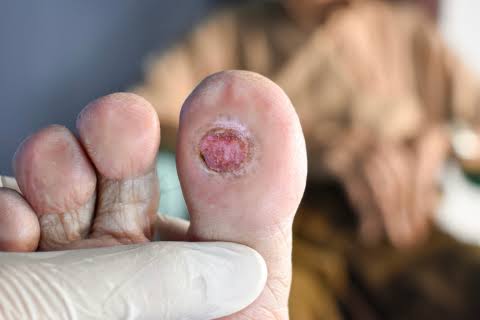
- Tingling or numbness in hands or feet: This suggests nerve damage (neuropathy) from sustained high blood sugar, often indicating the condition has been present for some time
In Type 1 diabetes, symptoms often develop rapidly over days to weeks. In Type 2 diabetes, symptoms develop slowly over months to years — or may be entirely absent until complications arise, which is why screening by age 45 (or earlier with risk factors) is recommended by the American Diabetes Association.
How Diabetes Is Diagnosed
Diabetes is diagnosed through blood glucose testing. Several tests are used, and a diagnosis typically requires either a single confirmed high result with symptoms, or two separate abnormal results on different days without symptoms.
The main diagnostic tests are the same ones used to assess overall blood sugar health. A fasting blood glucose test — taken after at least eight hours without eating — of 126 mg/dL or higher on two occasions confirms diabetes. A random blood glucose test of 200 mg/dL or higher with classic symptoms is sufficient for diagnosis without a second test. An A1C test of 6.5 percent or higher confirms diabetes; values of 5.7 to 6.4 percent indicate prediabetes. For a detailed explanation of what the A1C test measures and how it works, see our guide on the A1C test.
The oral glucose tolerance test (OGTT) — in which blood sugar is measured two hours after consuming a standard 75-gram glucose drink — is used in specific situations, particularly to diagnose gestational diabetes. A two-hour value of 200 mg/dL or higher confirms diabetes; values of 140 to 199 mg/dL indicate prediabetes (impaired glucose tolerance).
If you’ve been told your results are in the borderline range — what is known as prediabetes — don’t dismiss it. Prediabetes is a serious warning sign and a critical window of opportunity. See our guide on what is prediabetes to understand what these numbers mean and what steps can reverse the trajectory before Type 2 diabetes develops.
Managing Diabetes for the Long Term
Diabetes management aims to keep blood glucose as close to the normal range as safely possible, preventing the complications that accumulate from years of elevated glucose exposure. The specific approach depends on the type of diabetes and how far it has progressed.
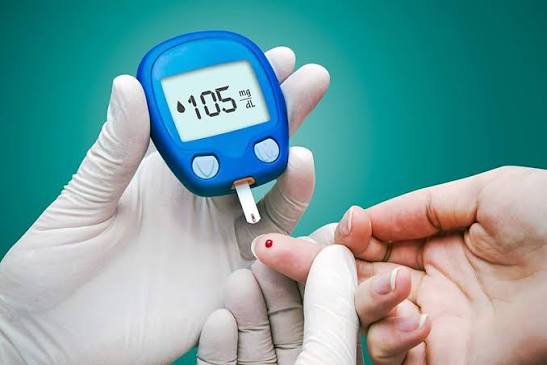
Blood sugar monitoring is the foundation of day-to-day management. Traditional finger-stick glucose meters require a small blood sample and provide a reading within seconds. Continuous glucose monitors (CGMs) — small sensors worn on the skin — track blood sugar every few minutes throughout the day and night, sending readings to a smartphone or receiver. CGMs have transformed management for many people with diabetes by revealing blood sugar patterns that finger-stick tests miss. For guidance on choosing and using home monitoring tools, see our article on home blood sugar monitoring.
Medications are used when lifestyle measures alone are insufficient. Type 1 diabetes requires insulin from the time of diagnosis — there is no alternative since the pancreas cannot produce it. Type 2 diabetes is typically managed initially with the oral medication metformin (which reduces the liver’s glucose output and improves insulin sensitivity), followed by additional agents if needed. These may include GLP-1 receptor agonists (which slow gastric emptying, reduce appetite, and stimulate insulin secretion), SGLT-2 inhibitors (which cause the kidneys to excrete excess glucose in the urine), DPP-4 inhibitors, or insulin. The choice of medication is individualized based on the person’s other health conditions, kidney function, cardiovascular risk, weight, and preferences.
Lifestyle management remains important regardless of medication status. A diet emphasizing fiber-rich carbohydrates, adequate protein, healthy fats, and minimal added sugars and refined grains significantly improves glycemic control and reduces medication requirements. Regular physical activity — particularly a combination of aerobic exercise and resistance training — improves insulin sensitivity in muscle tissue. Adequate sleep (seven to nine hours) and effective stress management reduce the cortisol-driven glucose elevation that consistently worsens blood sugar control in people with diabetes.
Regular monitoring for complications is essential, as many diabetes complications develop silently. Annual dilated eye exams, regular kidney function tests (urine albumin and creatinine), foot examinations, and cardiovascular risk assessment are standard components of diabetes care. Early detection enables treatment before complications become severe or irreversible.
Can Diabetes Be Prevented?
Type 1 diabetes cannot currently be prevented, though research into early immune intervention in high-risk individuals is ongoing.
Type 2 diabetes, however, is substantially preventable. The landmark Diabetes Prevention Program — a large randomized clinical trial — demonstrated that structured lifestyle intervention (reducing 5 to 7 percent of body weight through dietary changes and at least 150 minutes of moderate physical activity per week) reduced the progression from prediabetes to Type 2 diabetes by 58 percent over three years. This result was more effective than treatment with the medication metformin (31 percent reduction) and has been replicated in multiple subsequent studies around the world.
What this means practically is that for many adults with prediabetes or a high-risk profile, relatively modest and sustainable lifestyle changes — losing 10 to 15 pounds if overweight, adding regular walking, reducing refined carbohydrate intake — can delay or prevent Type 2 diabetes entirely. These changes don’t require extreme diets or intense exercise programs; they require consistency over time.
Even after a Type 2 diabetes diagnosis, the condition can be put into remission in some people through significant weight loss, bariatric surgery, or sustained dietary changes that reduce blood sugar requirements. Remission means blood glucose returns to the non-diabetes range without medication — a realistic goal for some people, particularly those who receive the diagnosis relatively early and pursue aggressive lifestyle intervention.
Sources: American Diabetes Association. Standards of Medical Care in Diabetes — 2024. Diabetes Care. 2024;47(Suppl 1):S20–S42. • Centers for Disease Control and Prevention. National Diabetes Statistics Report, 2022. CDC; 2022. • National Institute of Diabetes and Digestive and Kidney Diseases. What Is Diabetes? NIDDK; 2023.
Came across this while researching what is diabetes? a clear guide for a family member. I appreciated how the article addressed both the clinical side and the practical adjustments. Keep up this kind of thorough health journalism — it genuinely helps patients like me.
Finally a resource that explains what is diabetes? a clear guide in plain language. The specific numbers and thresholds mentioned are exactly what I needed to understand my results. This is exactly why I prefer this website over generic health platforms.
Came across this while researching what is diabetes? a clear guide for a family member. The section on managing this condition day-to-day was especially useful for planning. Will definitely be coming back to this site for more health information.