

What Is Gestational Diabetes and Why Does It Develop During Pregnancy?
Gestational diabetes is a form of diabetes that develops during pregnancy in women who did not have diabetes before becoming pregnant. It occurs when the body cannot produce enough insulin to overcome the natural insulin resistance that develops during pregnancy — a physiological process driven by the hormonal changes of the second and third trimesters. Understanding gestational diabetes is important not only for the management of the current pregnancy but also because it carries significant implications for both the mother’s and child’s long-term health. Our guide on what is diabetes provides the foundational overview of all diabetes types; this article focuses specifically on gestational diabetes — its causes, risk factors, screening, glucose targets, management, and long-term consequences.
During normal pregnancy, the placenta produces hormones including human placental lactogen, progesterone, cortisol, and estrogen that progressively increase insulin resistance in maternal tissues — particularly skeletal muscle and the liver — to ensure that the fetus has adequate glucose supply. In most women, the pancreas compensates by substantially increasing insulin secretion, often 2–3 times above non-pregnant baseline. When pancreatic beta cell capacity is insufficient to meet this dramatically increased insulin demand — due to underlying genetic susceptibility, obesity, previous beta cell damage, or other factors — blood glucose rises above normal, resulting in gestational diabetes.
Risk Factors for Gestational Diabetes
While gestational diabetes can develop in any pregnant woman, certain factors substantially increase the risk:
- Overweight or obesity before pregnancy: BMI above 25 at conception is the single strongest modifiable risk factor, as excess adiposity increases baseline insulin resistance substantially before the additional pregnancy-related insulin resistance develops.
- Age 25 and older: Risk increases with age, with women over 35 at particularly elevated risk relative to younger pregnant women.
- Previous gestational diabetes: Women who had gestational diabetes in a prior pregnancy have a 30–70% risk of recurrence in subsequent pregnancies.
- Family history of Type 2 diabetes: A first-degree relative with Type 2 diabetes increases gestational diabetes risk, reflecting shared genetic susceptibility for insulin resistance and beta cell limitations — see our guide on family history and diabetes risk.
- Prior large baby (macrosomia): A previous delivery of a baby weighing more than 9 pounds may indicate prior unrecognized gestational diabetes or underlying insulin resistance.
- Race and ethnicity: Black, Hispanic, Asian American, Native Hawaiian, Pacific Islander, and American Indian women have higher gestational diabetes rates than non-Hispanic white women — see our guide on ethnicity and diabetes risk.
- Polycystic ovary syndrome (PCOS): PCOS is strongly associated with insulin resistance, which directly elevates gestational diabetes risk.
- Prediabetes before pregnancy: Women with prediabetes (fasting glucose 100–125 mg/dL or A1C 5.7–6.4%) are at very high risk of gestational diabetes; some may already have undiagnosed Type 2 diabetes that becomes apparent during pregnancy glucose screening.
How Gestational Diabetes Is Screened and Diagnosed
Gestational diabetes screening is a routine part of prenatal care in the United States, typically performed between 24 and 28 weeks of pregnancy — the period when pregnancy-related insulin resistance peaks. For women with high risk factors (prior gestational diabetes, significant obesity, prior large baby, or A1C 5.7–6.4% before pregnancy), earlier screening at the first prenatal visit is recommended. There are two primary screening approaches:
Two-step approach (most common in the U.S.): Step 1 is a non-fasting 1-hour 50-gram glucose challenge test (GCT). If blood glucose is 140 mg/dL or above (some practices use 130 mg/dL) at 1 hour, the woman proceeds to Step 2 — a fasting 3-hour 100-gram oral glucose tolerance test (OGTT) performed on a different day. Gestational diabetes is diagnosed if two or more of the 3-hour OGTT values exceed the threshold values (specific thresholds vary between the Carpenter-Coustan and NDDG criteria; the most commonly used are fasting 95 mg/dL, 1-hour 180 mg/dL, 2-hour 155 mg/dL, 3-hour 140 mg/dL).
One-step approach: A single fasting 2-hour 75-gram OGTT, with gestational diabetes diagnosed if any value meets or exceeds fasting 92 mg/dL, 1-hour 180 mg/dL, or 2-hour 153 mg/dL. This approach diagnoses gestational diabetes at a lower glucose threshold than the two-step approach and thus identifies more women, but is not yet universally adopted in the U.S.
Women who test positive for gestational diabetes should be referred to a multidisciplinary team including a maternal-fetal medicine specialist, a certified diabetes care and education specialist, and a registered dietitian. Our guide on fasting blood sugar explained covers what fasting glucose values mean in detail, and our guide on what is normal blood sugar provides the full range of glucose values and their clinical significance.
Blood Glucose Targets During Gestational Diabetes
The blood glucose targets for gestational diabetes management are tighter than for non-pregnant adults with diabetes — because fetal growth and organ development are exquisitely sensitive to maternal glucose levels, and even modest elevations above optimal glucose can drive fetal macrosomia and other complications. The American Diabetes Association’s recommended blood glucose targets for gestational diabetes are:
- Fasting glucose: below 95 mg/dL
- 1-hour post-meal glucose: below 140 mg/dL
- 2-hour post-meal glucose: below 120 mg/dL
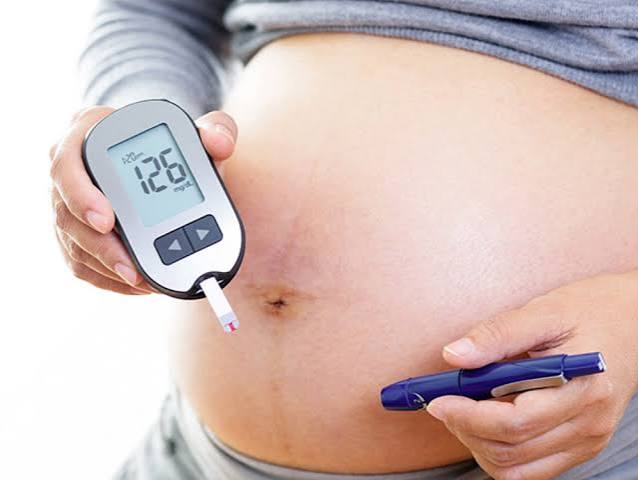
Self-monitoring of blood glucose (SMBG) is the standard method for assessing glucose control in gestational diabetes — typically performed fasting upon waking and 1–2 hours after the start of each meal, producing 4 readings per day. Our guide on blood sugar after meals covers the significance of post-meal glucose and why the 1-hour and 2-hour values often differ substantially in people with impaired insulin secretion.
Risks of Gestational Diabetes for Mother and Baby
Untreated or poorly controlled gestational diabetes carries significant risks for both the pregnant woman and the developing baby, which is why timely diagnosis and consistent management are critical:
For the baby: Excess glucose crosses the placenta and stimulates the fetal pancreas to produce excess insulin — a combination that drives fetal overgrowth (macrosomia, defined as birth weight above 9 pounds or above the 90th percentile for gestational age). Fetal macrosomia increases the risk of birth injuries (shoulder dystocia, brachial plexus injury) and cesarean delivery. After birth, babies of women with gestational diabetes are at risk for hypoglycemia (low blood glucose) from continued insulin secretion without the maternal glucose supply, respiratory distress syndrome (from inadequate lung maturation), jaundice, and low calcium levels. Children born to mothers with gestational diabetes also have higher long-term rates of obesity, metabolic syndrome, and Type 2 diabetes later in life — reflecting both genetic inheritance of diabetes risk and the epigenetic effects of intrauterine glucose exposure.
For the mother: Gestational diabetes increases the risk of preeclampsia (dangerous high blood pressure in pregnancy), cesarean delivery, and the need for labor induction. The most significant long-term risk to the mother is the dramatically elevated lifetime risk of Type 2 diabetes — approximately 35–50% of women with gestational diabetes will develop Type 2 diabetes within 5–10 years after delivery. This risk is substantially reducible through lifestyle intervention (weight loss, physical activity) and, in some cases, metformin. Screening for Type 2 diabetes at 6–12 weeks postpartum and every 1–3 years thereafter is therefore recommended for all women with a history of gestational diabetes. Our guide on Type 2 diabetes symptoms, causes, and diagnosis covers the long-term diabetes risk in detail.
Managing Gestational Diabetes: Medical Nutrition Therapy, Exercise, and Insulin
The cornerstone of gestational diabetes management is medical nutrition therapy (MNT) — an individualized eating plan developed with a registered dietitian that distributes carbohydrate intake across 3 meals and 2–3 snacks per day, emphasizes lower-glycemic carbohydrate choices, and limits simple sugars and refined carbohydrates that cause rapid post-meal glucose spikes. The goal is to achieve the blood glucose targets described above while consuming adequate nutrition for fetal growth and maternal health. Our guide on what foods raise blood sugar covers the glycemic impact of different food categories that is central to gestational diabetes dietary management.
Physical activity is a safe and effective adjunct to MNT in gestational diabetes — moderate-intensity exercise (brisk walking, swimming, prenatal yoga) for 30 minutes most days of the week improves insulin sensitivity and can reduce post-meal glucose elevations. Our guide on sedentary lifestyle and blood sugar covers the mechanisms by which physical activity improves glucose control that apply in gestational diabetes as well as other conditions.
When MNT and physical activity alone do not achieve target blood glucose values — approximately 15–30% of women with gestational diabetes require pharmacological treatment — insulin therapy is the preferred option. Insulin does not cross the placenta and has decades of safety data in pregnancy. The specific insulin regimen is tailored to the patient’s glucose pattern: fasting hyperglycemia typically requires basal insulin (NPH insulin or insulin detemir), while post-meal hyperglycemia requires rapid-acting insulin (insulin aspart or insulin lispro) with meals. Metformin and glyburide are sometimes used as alternatives to insulin in gestational diabetes, though both cross the placenta and are generally considered second-line to insulin in current practice.
Postpartum Care After Gestational Diabetes: Protecting Long-Term Health
The care of women with gestational diabetes does not end at delivery — in fact, the postpartum period represents one of the most critical junctures for long-term diabetes prevention and cardiometabolic health in this population. Women who had gestational diabetes have a lifetime Type 2 diabetes risk of approximately 35–50%, yet this risk can be substantially reduced by lifestyle intervention initiated in the postpartum period — making the months following delivery a critical window for disease prevention. The following postpartum care steps are essential for women with a gestational diabetes history:
Postpartum glucose testing: All women with gestational diabetes should undergo a 2-hour 75-gram OGTT (oral glucose tolerance test) at 6–12 weeks postpartum to screen for persistent prediabetes or Type 2 diabetes. Approximately 5–10% of women who had gestational diabetes will have persistent Type 2 diabetes diagnosed at this postpartum visit — often because they had undiagnosed pre-existing Type 2 diabetes that was first identified during pregnancy screening. The 2-hour OGTT is preferred over A1C or fasting glucose alone for this screening because it is more sensitive for detecting impaired glucose tolerance in the postpartum period, when A1C may still be partially normalized by the physiological changes of pregnancy. Our guide on fasting blood sugar explained covers how to interpret fasting glucose values, and our guide on what is normal blood sugar helps interpret the full range of post-OGTT values.
Ongoing screening for Type 2 diabetes: Women who test normal at the 6–12 week postpartum visit should continue to be screened for prediabetes and Type 2 diabetes every 1–3 years throughout their lives, using fasting glucose, A1C, or a 2-hour OGTT. The lifetime progression risk from gestational diabetes to Type 2 diabetes is one of the most consistent findings in diabetes epidemiology — making this one of the few preventable chronic diseases where a high-risk period (the gestational diabetes pregnancy) provides an opportunity to identify and intervene before the disease is established.
Breastfeeding: Breastfeeding is strongly encouraged for women with a gestational diabetes history, for multiple reasons: it improves maternal insulin sensitivity (reducing postpartum glucose levels), promotes more rapid postpartum weight loss, and has been associated in multiple studies with reduced risk of Type 2 diabetes in the mother in the years following delivery. Additionally, breastfeeding may reduce the baby’s long-term obesity and diabetes risk through mechanisms related to early gut microbiome colonization and the nutritional composition of breast milk.
Lifestyle intervention for diabetes prevention: The evidence for lifestyle intervention after gestational diabetes is among the strongest in preventive medicine. The landmark Diabetes Prevention Program (DPP) trial demonstrated that intensive lifestyle intervention (achieving 7% weight loss and 150 minutes of moderate-intensity exercise per week) reduced progression from prediabetes to Type 2 diabetes by 58% — a larger effect than metformin. For women with a gestational diabetes history who are identified with prediabetes in the postpartum period, referral to a DPP-based lifestyle intervention program should be a standard recommendation. Our guide on what is prediabetes covers the full range of evidence-based prevention strategies for people in the prediabetes range.
Gestational Diabetes and Subsequent Pregnancies
Women who had gestational diabetes in one pregnancy face a significantly elevated risk of recurrence in subsequent pregnancies — approximately 30–70% depending on the population studied, the degree of weight gain between pregnancies, and the time interval between pregnancies. Several factors influence the recurrence risk:
- Interpregnancy weight change: Gaining weight between pregnancies — particularly gaining enough weight to cross into a higher BMI category — substantially increases recurrence risk. Conversely, weight loss between pregnancies (even modest amounts of 5–10% of body weight) significantly reduces recurrence risk and improves pregnancy outcomes in subsequent pregnancies.
- Interpregnancy interval: Short intervals between pregnancies (less than 18 months) are associated with higher gestational diabetes recurrence risk, partly due to insufficient time for weight normalization and metabolic recovery after the previous pregnancy.
- Severity of prior gestational diabetes: Women who required insulin therapy in a prior gestational diabetes pregnancy — indicating more significant beta cell limitation — have higher recurrence rates and tend to develop gestational diabetes earlier in subsequent pregnancies.
Women with a prior gestational diabetes history should be screened for gestational diabetes at their first prenatal visit in subsequent pregnancies (rather than waiting for the standard 24–28 week screening) to allow earlier identification and treatment. If the first-trimester screen is normal, the standard 24–28 week screening should still be performed, as gestational diabetes can develop at any point when pregnancy-related insulin resistance peaks. Planning for preconception optimization — achieving a healthy weight before conception, establishing excellent glucose control, and addressing any metabolic risk factors — is strongly recommended for women with a prior gestational diabetes history who are planning future pregnancies.
Special Considerations: Gestational Diabetes and Mental Health
The psychological impact of a gestational diabetes diagnosis is frequently underappreciated in clinical practice. A gestational diabetes diagnosis arrives in the middle of what should be an emotionally positive life experience (pregnancy), attaches a medical diagnosis to a previously healthy woman, and immediately imposes significant demands — finger-stick glucose monitoring four times daily, dietary restrictions, frequent prenatal appointments, and the anxiety of knowing that glucose values directly affect fetal development. Research shows that women with gestational diabetes have significantly higher rates of anxiety and depression during pregnancy compared to those without gestational diabetes, and this psychological burden can impair the adherence to self-monitoring and dietary recommendations that is essential for achieving glucose targets.
Proactive screening for anxiety and depression in women with gestational diabetes, integration of behavioral health support into the multidisciplinary care team, and explicit clinical acknowledgment of the psychological burden of gestational diabetes management are important components of comprehensive care. Support groups — particularly those connecting women currently managing gestational diabetes with women who successfully managed prior gestational diabetes pregnancies — can be particularly effective. The recognition that gestational diabetes reflects physiological factors (hormone-driven insulin resistance in the context of genetic susceptibility) rather than lifestyle failure is an important framing for clinicians to communicate to patients, who often experience inappropriate guilt about the diagnosis.
What Gestational Diabetes Means for Your Baby’s Long-Term Health
The consequences of gestational diabetes for the child extend well beyond birth. Children born to women with gestational diabetes have higher rates of obesity in childhood and adolescence, higher rates of metabolic syndrome in young adulthood, and a substantially elevated risk of Type 2 diabetes later in life compared to children born to mothers with normal glucose tolerance. These intergenerational effects reflect two distinct mechanisms: genetic inheritance of diabetes susceptibility from both parents, and epigenetic programming driven by the intrauterine glucose environment. Animal and human studies show that excess intrauterine glucose exposure during critical windows of fetal development alters gene expression in ways that increase the child’s susceptibility to obesity, insulin resistance, and beta cell dysfunction — effects that persist through childhood and into adult life. This means that gestational diabetes management is not only about the current pregnancy but about reducing the transmission of diabetes risk to the next generation. Optimal glucose control during pregnancy — achieving the targets described above — reduces fetal glucose exposure and the associated epigenetic programming effects, making it one of the most high-leverage interventions for breaking the intergenerational cycle of diabetes risk. Our guide on what is insulin resistance covers the underlying mechanisms that predispose both mothers with gestational diabetes history and their children to future metabolic dysfunction, and our guide on belly fat and diabetes risk explains how central adiposity — which is more common in children of gestational diabetes pregnancies — drives the metabolic syndrome and Type 2 diabetes risk that tracks through the lifespan.
Sources: American Diabetes Association. “Standards of Medical Care in Diabetes.” Diabetes Care 2024. | CDC — National Diabetes Statistics Report 2022. | National Institute of Diabetes and Digestive and Kidney Diseases — Gestational Diabetes. | American College of Obstetricians and Gynecologists — Gestational Diabetes Mellitus Practice Bulletin. | Metzger BE, et al. “Hyperglycemia and Adverse Pregnancy Outcomes.” New England Journal of Medicine 2008.
Bookmarked this article on gestational diabetes: what pregnant women should immediately — going to reference it regularly. The article answered questions I didn’t even know I had until I started reading. This gave me real confidence going into my next specialist appointment.
As someone dealing with this personally, the gestational diabetes: what pregnant women should section was very helpful. I especially valued the explanation of why these recommendations exist, not just what they are. This is going into my health folder that I bring to every doctor’s visit.
Really well-written article on gestational diabetes: what pregnant women should. I appreciate that the article is careful about distinguishing between what is known and what is still being researched. This gave me real confidence going into my next specialist appointment.