
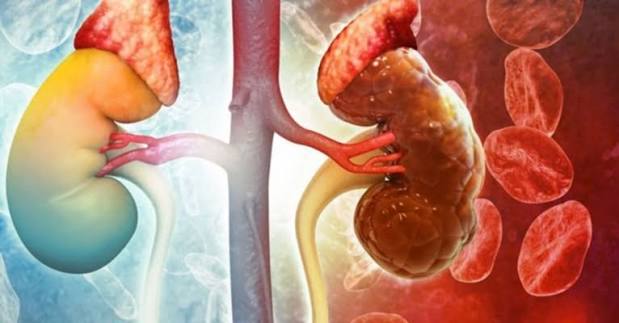
Chronic kidney disease and acute kidney injury both cause the kidneys to malfunction and both produce elevated creatinine on a lab report — but they are fundamentally different conditions with different causes, different trajectories, different treatments, and different long-term consequences. Understanding the distinction between CKD and AKI is more than a medical technicality: misidentifying one as the other delays appropriate treatment, leads to incorrect long-term management decisions, and obscures the real risk picture for the patient. This guide explains what separates these two conditions, how to distinguish them in practice, and — critically — what happens when both occur at the same time, which is among the most clinically significant scenarios in kidney medicine.
The Core Difference — Speed and Reversibility
The fundamental difference between chronic kidney disease and acute kidney injury is timescale. Chronic kidney disease is defined by lasting three months or longer — the kidney changes are established and persistent, not newly occurring. Acute kidney injury is defined by a rapid decline occurring over hours to days. A creatinine that was 0.9 mg/dL last week and is 2.1 mg/dL today is almost certainly an AKI. A creatinine that has been slowly rising from 0.9 to 1.4 over the past two years is consistent with CKD progression.
Reversibility is the second fundamental difference. In AKI, the nephrons themselves are not necessarily permanently destroyed — in pre-renal AKI, only perfusion is reduced; kidney tissue is intact. In ischemic ATN, tubular cells can regenerate over days to weeks. In post-renal AKI, the kidneys recover if obstruction is relieved before permanent damage occurs. CKD is different: nephron loss in CKD is permanent. Scarred glomeruli do not unscar. Lost nephrons do not regenerate. The management goal in CKD is slowing further loss — not recovery. An AKI demands immediate identification and reversal of the cause; CKD demands long-term protective strategies applied consistently over months and years.
A Side-by-Side Comparison
In terms of timescale: CKD evolves over months to years; AKI evolves over hours to days. In terms of cause: CKD is caused by sustained metabolic or immune injury — diabetes, hypertension, glomerulonephritis, PKD; AKI is caused by an acute insult — dehydration, sepsis, nephrotoxins, or obstruction. In terms of reversibility: CKD is not reversible; AKI is often reversible if caught early. In terms of kidney imaging: CKD typically shows small, echogenic, scarred kidneys; AKI shows normal-sized kidneys with normal echogenicity. In terms of urine output: CKD preserves near-normal urine output until Stages G4–G5; AKI often causes oliguria or anuria. In terms of detection: CKD is found on routine annual screening; AKI is found acutely during illness or hospitalization. In terms of creatinine trajectory: CKD shows a slow upward trend over years; AKI shows a sharp rise over days, then plateau, then either recovery or further deterioration.
What Causes Each Condition
CKD causes are chronic sustained injuries: diabetes mellitus (~44% of end-stage kidney disease in the US), hypertension (~28%), glomerulonephritis (IgA nephropathy, FSGS, membranous nephropathy), polycystic kidney disease, lupus nephritis, reflux nephropathy, and chronic analgesic overuse. These causes operate over years before CKD becomes measurably advanced.
AKI causes are acute insults: pre-renal events (severe dehydration, sepsis, hemorrhage, heart failure, hepatorenal syndrome), intrinsic renal damage (acute tubular necrosis from ischemia or nephrotoxins such as aminoglycosides, contrast, myoglobin, or cisplatin; acute interstitial nephritis from drug hypersensitivity; and acute glomerulonephritis), and post-renal obstruction (BPH-related bladder outlet obstruction, bilateral ureteral obstruction). AKI causes operate over hours to days and are typically identifiable by clinical context.
How Each Is Diagnosed
CKD diagnosis requires two measurements of eGFR below 60 mL/min/1.73m² or significant albuminuria (UACR above 30 mg/g), separated by at least three months. The three-month requirement is specifically designed to exclude AKI — ensuring that what is diagnosed is a persistent state rather than an acute episode. AKI diagnosis requires identifying a creatinine rise within 48 hours (above 0.3 mg/dL) or within 7 days (1.5 times or more the known baseline).
Distinguishing in practice: Kidney size on ultrasound (small/echogenic = CKD; normal = AKI); urine sediment (muddy brown casts = ATN; RBC casts = acute GN; bland sediment = CKD or pre-renal); anemia pattern (chronic normocytic = CKD; acute hemolytic = AKI-related HUS/TTP); and historical creatinine — even a single prior result is invaluable for determining whether kidney function abnormality is new or pre-existing.
Symptoms and When They Appear
Both CKD and AKI are frequently asymptomatic in early stages — and this shared silence means that lab testing, not symptom-based screening, is the primary detection tool for both. CKD causes no symptoms in Stages G1 and G2 and only mild symptoms in G3 (fatigue, nocturia, ankle edema). Uremic symptoms (nausea, mental fogginess, pruritus) appear only in Stage G4–G5. AKI also frequently causes no direct symptoms, particularly in mild or moderate cases detected by routine monitoring. When AKI does cause symptoms, they often reflect fluid overload (edema, dyspnea) or electrolyte disturbance (hyperkalemia causing palpitations or muscle weakness) rather than the kidney injury itself.
AKI on CKD — The Most Common Real-World Scenario
An estimated 40 to 60 percent of hospital-acquired AKI occurs in patients with pre-existing CKD — a phenomenon called AKI on CKD. Adults with CKD have reduced nephron reserve, reduced compensatory capacity, and often take medications (ACE inhibitors, diuretics) that further sensitize the kidneys to volume depletion. What would cause Stage 1 AKI in an adult with healthy kidneys — significant dehydration during a stomach bug — may cause Stage 3 AKI in an adult with eGFR of 45. Each AKI episode in a person with CKD causes damage that further reduces the already-reduced nephron pool — meaning the CKD stage advances faster with each AKI episode than it would from the underlying CKD alone.
This compounding effect explains why adults with CKD are advised to hydrate aggressively during illness, avoid NSAIDs, hold ACE inhibitors/ARBs during severe dehydration, and check creatinine after significant illness rather than assuming everything normalized on its own.
Shared Risk Factors for Both Conditions
Diabetes is the dominant shared risk factor — the leading cause of CKD and also a major risk factor for AKI through volume depletion, reduced renal reserve, susceptibility to contrast nephropathy, and autonomic neuropathy impairing the perception of dehydration. Hypertension causes CKD through chronic glomerulosclerosis and predisposes to AKI by reducing perfusion pressure during any acute hypotensive event. Older age reduces nephron reserve, reduces tubular regenerative capacity, and increases the burden of comorbidities — making both CKD progression and AKI risk significantly higher with each decade after 60. Cardiovascular disease reduces renal perfusion through reduced cardiac output and is one of the most common triggers of pre-renal AKI, while also accelerating CKD through chronic hypoperfusion.
Treatment Differences
CKD management is long-term and preventive: ACE inhibitors or ARBs for albuminuric CKD; SGLT-2 inhibitors for eligible patients; blood pressure below 130/80 mmHg; HbA1c below 7% for diabetics; dietary sodium restriction; nephrology monitoring; and nephrotoxin avoidance. These interventions must be applied consistently over years to slow eGFR decline. AKI management is acute and cause-directed: restore perfusion in pre-renal AKI; remove the nephrotoxin in intrinsic AKI; relieve the obstruction in post-renal AKI; manage hyperkalemia and metabolic acidosis; initiate dialysis for life-threatening complications.
A critical nuance: ACE inhibitors and ARBs — first-line therapy for CKD — must be held during acute AKI to avoid worsening renal perfusion, particularly in the setting of volume depletion. They are restarted once AKI has resolved and volume status is restored.
The AKI-CKD Continuum
A major conceptual advance in nephrology has been the recognition that AKI and CKD are not independent diseases but points on a continuum of kidney injury. AKI can cause CKD by leaving irreversibly damaged nephrons after an acute episode. CKD can cause AKI by reducing the threshold at which any acute insult tips into measurable kidney injury. KDIGO recommends that all adults who experienced AKI during hospitalization have creatinine and UACR checked at 3 months post-discharge. If creatinine has not returned to baseline or UACR is newly elevated, CKD has developed or progressed and should be treated with the full chronic management protocol. For more on what chronic kidney disease involves, see our article on what is chronic kidney disease. For more on the acute form, see our article on what is acute kidney injury.
Long-Term Outlook — CKD vs AKI
CKD, when managed early and aggressively, can remain stable at lower stages for decades. Adults with Stage G2 or G3 CKD who achieve blood pressure control, use RAAS blockade, start SGLT-2 inhibitors, and eliminate nephrotoxin exposure may sustain their eGFR within the same stage for 10 to 20 years. AKI has a more variable prognosis: most Stage 1 and many Stage 2 cases recover fully; Stage 3 AKI has a 15 to 30 percent risk of non-recovery. AKI on CKD has the worst outcomes — each episode accelerates progression. Preventing AKI in people with CKD is as important as the chronic CKD management itself. For warning signs that precede significant kidney decline, see our article on early signs of kidney problems. For the numbers used to track and monitor both conditions, see our guide on kidney health numbers every adult should know.
Reading Your Lab Results — CKD or AKI?
One of the most common situations in which the CKD vs AKI distinction matters for a patient is when they receive an abnormal creatinine result and need to understand what it means. If your creatinine on this visit is significantly higher than it was six months or a year ago — and the rise happened recently rather than gradually — the clinical team needs to determine whether this represents AKI, accelerated CKD progression, or AKI on a background of gradually progressing CKD. The answer changes everything about what happens next.
If your creatinine has been slowly drifting upward over the past two to three years (from 1.0 to 1.1 to 1.2 to 1.35), this is consistent with CKD progression and calls for chronic management review: blood pressure optimization, medication adjustment, dietary review, and possibly an SGLT-2 inhibitor or nephrology referral. If your creatinine was 1.0 three months ago and is now 1.9 — and you recently had a severe gastroenteritis, an NSAID course, or started a new medication — this pattern is more consistent with AKI, and the priority is identifying and reversing the cause, checking electrolytes for hyperkalemia, and repeating the creatinine in 2 to 4 weeks to determine whether recovery is occurring. Knowing your own creatinine history is the most powerful tool for making this determination — which is why requesting printed lab records from the past 3 to 5 years and tracking them in a simple log is one of the most useful things an adult at kidney risk can do.
Medications to Hold During AKI — Even if Prescribed for CKD
Several medications that are prescribed as long-term kidney-protective therapy in CKD must be temporarily held during an AKI episode. This apparent contradiction — stop the kidney-protective drug when the kidneys are most stressed — is one of the most practically important nuances at the interface of CKD and AKI management. ACE inhibitors and angiotensin receptor blockers (ARBs) are first-line kidney-protective therapy in CKD with albuminuria. However, during acute volume depletion (dehydration, severe illness, hemorrhage), these drugs block the efferent arteriolar constriction that the kidney relies on to maintain filtration pressure — causing further reduction in GFR. In this setting, continuing the ACE inhibitor or ARB can convert a mild pre-renal AKI into a more severe intrinsic AKI. The standard recommendation is to hold ACE inhibitors and ARBs during any acute illness involving significant dehydration, fever above 38.5°C, vomiting, or inability to maintain oral fluid intake — the so-called “sick day rule.” They are restarted 24 to 48 hours after recovery of fluid status and urine output.
SGLT-2 inhibitors (empagliflozin, dapagliflozin, canagliflozin), similarly, should be held during acute illness and before any surgical procedure — they cause osmotic diuresis that worsens volume depletion, and their use during AKI is associated with greater risk of diabetic ketoacidosis. Metformin should be held during any AKI because AKI impairs metformin excretion, allowing accumulation to levels that can cause lactic acidosis. NSAIDs are contraindicated in AKI and in any situation where AKI risk is elevated. Reviewing which of your regular medications need to be paused when you are acutely ill is an important conversation to have with your care team before it becomes an emergency.
When a High Creatinine Should Prompt Emergency Evaluation
Not all elevations in creatinine require the same urgency of response. Recognizing which situations constitute a kidney emergency versus which can wait for scheduled follow-up is important practical knowledge. Situations that require emergency evaluation (emergency department or urgent same-day nephrology contact) include: creatinine that has doubled or more from a recent baseline; creatinine above 4.0 mg/dL in someone without known advanced CKD; significantly reduced or absent urine output (less than 400 mL in 24 hours); severe symptoms of fluid overload (pulmonary edema, severe dyspnea); potassium above 6.0 mEq/L; suspected obstructive uropathy (no urine output after catheterization); or neurological changes suggesting uremic encephalopathy.
Situations that can be managed with same-day or next-day urgent outpatient evaluation include: creatinine mildly elevated above baseline without symptoms, in the context of a recent illness now resolving; a creatinine that is elevated but similar to a prior baseline with stable urine output; or a rising creatinine trend in someone with known CKD who is stable and asymptomatic. Understanding this risk stratification allows you to seek appropriate care at the right speed — neither dismissing a concerning result nor presenting to the emergency department for a finding that can be safely managed outpatient. When in doubt, the safer default is to call your physician’s office that day rather than waiting for the next scheduled appointment.
Protecting Both CKD and AKI Risk Simultaneously
For adults who carry risk factors for both CKD and AKI — which is most adults with diabetes, hypertension, or a family history of kidney disease — the protective strategies for both conditions overlap substantially. Maintaining good blood pressure control protects against both CKD progression and the reduced perfusion reserve that makes AKI more severe. Staying adequately hydrated protects against pre-renal AKI — the most common and most preventable form. Avoiding NSAIDs (in people with CKD, heart failure, or dehydration) reduces both AKI risk and the long-term tubular attrition that contributes to CKD. Annual eGFR and UACR monitoring allows both chronic progression (CKD component) and any acute superimposed episode (AKI component) to be identified and documented. Telling every new healthcare provider — doctor, specialist, dentist, radiologist — that you have CKD or kidney risk factors before any procedure, medication prescription, or imaging study involving contrast allows them to adjust dosing, pre-hydrate appropriately, and avoid nephrotoxic combinations. The most effective kidney protection strategy is not specific to CKD or to AKI — it is a consistent, well-maintained approach to avoiding the modifiable risks that drive both.
How the Kidney Recovers — and Why Some Recovery Is Incomplete
The kidney’s capacity for recovery after injury depends on the type, severity, and duration of the insult. In pre-renal AKI that is reversed promptly, recovery is complete because no tubular damage has occurred — the filtration apparatus is structurally intact and resumes normal function once perfusion is restored. In ischemic ATN, recovery occurs through tubular cell regeneration — the proximal tubular cells that died are replaced by new cells migrating from adjacent segments, restoring the tubular lining over 1 to 3 weeks in moderate cases. The remarkable regenerative capacity of tubular cells — unlike neurons or cardiomyocytes, which essentially cannot replace themselves — is the physiological basis for the often-surprising functional recoveries seen in clinical practice. A patient who required dialysis in the ICU for three weeks due to severe ATN can sometimes stop dialysis entirely as tubular regeneration restores adequate function.
However, not all tubular damage is reversible. In cases where ischemia is prolonged, where nephrotoxic exposure is sustained, or where multiple simultaneous insults compound each other, the degree of tubular and interstitial damage exceeds the kidney’s regenerative capacity. Persistent injury triggers a fibrotic response — activated fibroblasts deposit collagen in the interstitium, replacing functional tissue with scar. This interstitial fibrosis and tubular atrophy (IFTA) is the histological hallmark of irreversible AKI-to-CKD transition and the same pattern seen in CKD from any cause. Once established, interstitial fibrosis does not resolve — it represents permanently lost nephron function. This is the biological mechanism by which AKI leaves a permanent mark on the kidney: not all episodes end cleanly, and the ones that end incompletely contribute to the cumulative nephron loss that defines CKD.
CKD and AKI in the Elderly — A Special Consideration
In adults over 70, the clinical picture of CKD and AKI is more complex for several reasons. Normal physiological aging reduces eGFR by approximately 1 mL/min/1.73m² per year after age 40, so an eGFR of 60 to 70 in a 75-year-old may represent healthy aging rather than CKD — if UACR is normal and the trajectory is stable. Distinguishing age-related eGFR decline from pathological CKD requires longitudinal data and UACR measurement rather than a single eGFR reading. AKI risk is substantially higher in older adults: reduced nephron reserve, reduced tubular regenerative capacity, polypharmacy including nephrotoxic medications, reduced thirst perception, reduced ability to concentrate urine, and higher comorbidity burden all compound. The AKI threshold is lower in older adults — the same level of dehydration that causes no measurable creatinine rise in a 40-year-old may cause clinically significant AKI in a 78-year-old. Recovery from AKI in older adults is also slower and less complete on average, with higher rates of AKI-to-CKD transition. For older adults with multiple risk factors, proactive annual kidney monitoring, careful medication review, and a low threshold for checking creatinine during any acute illness are the most effective tools for catching both CKD and AKI before they become difficult to reverse.
Putting It All Together
Chronic kidney disease and acute kidney injury are two fundamentally different presentations of a failing kidney — one defined by its chronicity and permanence, the other by its acuity and potential for recovery. They share overlapping risk factors, they interact in ways that make each worse, and they require different immediate responses. What unites them is the kidney: an organ that works silently until it cannot, that provides no pain signal when its nephrons are quietly being lost, and that rewards early detection with decades of extended function. The distinction between CKD and AKI matters most at the two moments that actually determine outcome — when a lab result comes back abnormal and someone has to decide what it means, and when someone with kidney disease falls acutely ill and their regular kidney-protective medications need to be temporarily reconsidered. Understanding both conditions, and how they interact, is the foundation for navigating those moments correctly.
Sources: National Institute of Diabetes and Digestive and Kidney Diseases (NIDDK), niddk.nih.gov; National Kidney Foundation, kidney.org; American Kidney Fund, kidneyfund.org. KDIGO AKI Guidelines 2012; KDIGO CKD Guidelines 2012/2024.
I never fully understood chronic kidney disease vs acute kidney until I read this. The specific numbers and thresholds mentioned are exactly what I needed to understand my results. This gave me real confidence going into my next specialist appointment.
Came across this while researching chronic kidney disease vs acute kidney for a family member. I have tried following advice from several sources but this is most consistent with what my specialist told me. Keep up this kind of thorough health journalism — it genuinely helps patients like me.
Thank you for covering chronic kidney disease vs acute kidney so thoroughly without being overly technical. The specific numbers and thresholds mentioned are exactly what I needed to understand my results. This gave me real confidence going into my next specialist appointment.