
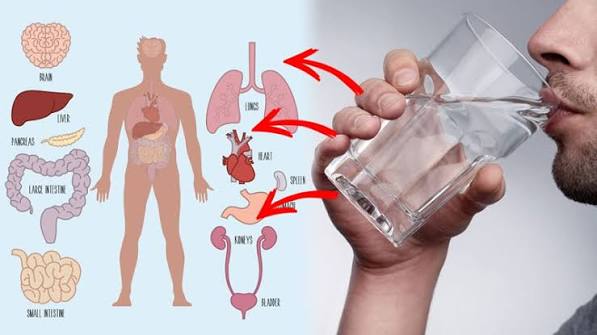
Water is foundational to every stage of the digestive process. The relationship between hydration and digestion extends well beyond preventing constipation: water is the solvent in which digestive enzymes function, the medium through which nutrients are absorbed, the substrate for the hydrolysis reactions that break chemical bonds in food, and the fluid that protects the gut lining throughout the entire digestive tract.
This guide explains the role of water at each stage of digestion, what happens when hydration is insufficient, the evidence on drinking water with meals, and practical guidance for meeting fluid needs for optimal digestive function.
How Much Water Does Digestion Use?
The digestive system secretes a remarkable volume of fluid daily — far more than most people realise, and most of it is efficiently recovered. The digestive secretions include saliva (~1–1.5L), gastric fluid including hydrochloric acid and pepsin (~2L), pancreatic juice (~1.5L), bile (~0.5–1L), and intestinal secretions (~1–2L). In total, the gut secretes approximately 7–8 litres of fluid every day.
To this, add approximately 2L of fluid consumed by drinking and 0.5L from food. The small intestine receives and absorbs approximately 8–9L of fluid per day from this combined source. The large intestine receives the remaining 1.5L and reabsorbs most of it, leaving only 100–200mL of water in the stool under normal conditions.
This water cycle has a critical implication for constipation: when the body is dehydrated, the colon receives a systemic signal (mediated by antidiuretic hormone) to reclaim additional water from the stool. More water extracted from stool means harder, drier stools — the direct mechanism of dehydration-related constipation.
Water at Each Stage of Digestion
Mouth and Saliva
Saliva production — 1 to 1.5 litres per day — is the first digestive act and the first casualty of inadequate hydration. Saliva contains salivary amylase (which begins starch digestion) and lingual lipase (which begins fat digestion), and its most fundamental role is mechanical: it moistens food to form a swallowable bolus. Dry mouth from mild dehydration impairs swallowing, reduces initial starch digestion, and makes solid food harder to manage.
Stomach
The stomach secretes approximately 2 litres of fluid per day, including hydrochloric acid, pepsin (which begins protein digestion), and mucus (which protects the stomach lining from its own acid). All of these secretions require adequate systemic hydration to maintain their production rates. In significantly dehydrated states, gastric secretion rates decline, reducing the efficiency of protein digestion and the acidification required to sterilise swallowed bacteria.
Small Intestine
The pancreas secretes approximately 1.5L of pancreatic juice per day, containing bicarbonate to neutralise gastric acid and the full complement of digestive enzymes. The liver secretes 0.5–1L of bile for fat emulsification. All of the enzymatic reactions that break down food — hydrolysis of peptide bonds, ester bonds in fats, glycosidic bonds in carbohydrates — are literally hydrolysis reactions: they use water molecules to break chemical bonds. The small intestine absorbs approximately 8–9L of fluid per day, driven by nutrient transport that carries sodium and water along with it.
Large Intestine
The colon receives approximately 1.5L of fluid from the small intestine and reabsorbs most of it. When the body is dehydrated, antidiuretic hormone increases colonic water absorption — more water is extracted from stool, making it progressively harder. Stool consistency on the Bristol Stool Scale (types 1–2 being hard and lumpy, types 3–4 being normal soft shapes, types 5–7 being increasingly loose) is largely determined by how much water the colon extracts. For context on how transit time and stool consistency relate to gut health, see our guide to what gut health really means.
Hydration and Constipation
The relationship between hydration and constipation is more nuanced than the common advice “drink more water” implies.
In dehydrated individuals, increased fluid intake does improve stool consistency and frequency. When systemic hydration is restored, the colon stops extracting excess water from stool, resulting in softer, more passable stools. For people who are chronically mildly dehydrated — including many older adults and sedentary desk workers — increasing daily fluid intake is a meaningful intervention for constipation.
In adequately hydrated individuals, the evidence is less compelling. Multiple clinical trials have shown that drinking additional water above adequate hydration does not significantly increase stool frequency. The kidney and colon maintain fluid balance within the system; excess fluid is excreted via urine, not retained in the colon.
The fibre-water interaction is critically important for anyone increasing dietary fibre. Fibre absorbs water in the gut — this is how it adds bulk and softens stool. Without adequate water, increased fibre intake can worsen constipation: the fibre creates a bulky but dry mass. Every additional 10g of dietary fibre requires approximately 350mL of additional fluid intake. This is the most practically important hydration principle for gut health, particularly given how many people are increasing fibre through supplements or dietary changes without matching increases in fluid. For more on the specific effects of fibre types on the gut, see our article on fiber and digestive health.
Mineral water with magnesium has some evidence for mild laxative effect through an osmotic mechanism: unabsorbed magnesium draws water into the colon, softening stools. This is the mechanism behind magnesium-based laxatives (magnesium hydroxide), present at lower doses in naturally high-magnesium mineral waters.
Signs That Dehydration Is Affecting Your Digestion
Hard stools and reduced frequency are the most direct sign. Type 1–2 on the Bristol Stool Scale (separate hard lumps or lumpy sausage) with infrequent bowel movements indicates insufficient water reclamation, often from inadequate fluid intake alongside insufficient fibre.
Dry mouth and difficulty swallowing indicate impaired saliva production — a sign of moderate dehydration. Difficulty with dry foods and a sticky sensation in the mouth reflect insufficient saliva.
Nausea and slow gastric emptying: dehydration reduces gastric secretion rates and gut blood flow, manifesting as nausea and a sensation of food sitting heavily after eating.
Dark amber urine is the most reliable everyday indicator of systemic dehydration. The kidneys concentrate urine when systemic hydration is low — the same state that triggers colonic water reclamation and harder stools. Pale yellow is the target; dark amber means increase fluid intake immediately.
Drinking Water With Meals: Does It Impair Digestion?
The claim that drinking water with meals impairs digestion by diluting stomach acid or digestive enzymes is widespread — and not supported by physiology.
Gastric acid is not diluted by drinking water. The stomach’s parietal cells continuously produce hydrochloric acid on demand, responsive to the presence of food and the gastric pH. A glass of water transiently raises gastric pH, but the parietal cell response rapidly restores the acidic environment. The volume of acid produced by the stomach vastly exceeds any practical dilution effect.
Digestive enzyme function is not impaired by normal drinking during meals. Digestive enzymes work in aqueous environments by definition; additional water does not inhibit their activity. There is no evidence from any clinical trial that drinking water with meals reduces nutrient absorption or digestion efficiency.
Benefits of drinking with meals: water aids the transit of food through the oesophagus (particularly for dry foods), helps dissolve food particles for enzymatic contact, and supports the production of digestive secretions. The recommendation not to drink during meals has no clinical evidence base.
Specific Conditions and Hydration
Constipation-dominant IBS: increased fluid intake is recommended as a first-line measure in most clinical guidelines, alongside psyllium fibre. The combination of adequate hydration and soluble fibre supplementation has the most consistent evidence for this condition. For a full guide to what helps IBS digestion, see our article on probiotics and gut health.
Diarrhoea-dominant IBS: hydration is critical to replace fluid losses. When diarrhoea is severe or prolonged, oral rehydration solution (ORS) — containing glucose and electrolytes in proportions that maximise sodium-glucose cotransport and water absorption — is more effective than plain water. The WHO ORS formula (20g/L glucose, 3.5g/L NaCl, 2.9g/L trisodium citrate) is the gold standard for rehydration in diarrhoeal disease.
GERD: excessive fluid intake with meals increases intragastric pressure and may worsen reflux. For people with GERD, drinking moderately during meals and avoiding large fluid boluses immediately after eating is a sensible practical approach.
How Much Should You Drink?
The EFSA dietary reference values for water recommend 2L per day for women and 2.5L for men from all sources. Approximately 20% of total water intake (400–500mL) typically comes from food. Individual needs vary with physical activity, climate, and body size. The Popkin et al. 2010 review in Nutrition Reviews provides a comprehensive overview of hydration science and individual variation.
The most reliable everyday indicator is urine colour: pale yellow to light straw indicates adequate hydration; dark yellow or amber indicates insufficient intake. Consistently checking urine colour provides better individual calibration than any fixed volume recommendation.
Coffee and tea at moderate intake (3–4 cups/day) count toward daily fluid intake — the mild diuretic effect of caffeine is well offset by the fluid volume. High alcohol intake (not moderate wine or beer) causes net fluid loss and should not be counted. For a review of the caffeine-hydration relationship, see Maughan and Griffin’s 2003 review in the Journal of Human Nutrition and Dietetics.
Electrolytes, Sodium, and Digestive Fluid Balance
Water alone is not the complete picture of digestive hydration. The movement of water across the gut wall is driven by electrolyte gradients — primarily sodium, potassium, and chloride. Understanding this relationship is essential for people with chronic digestive conditions, athletes, and anyone who has experienced significant fluid loss through diarrhoea or vomiting.
The sodium-glucose cotransporter (SGLT1) in the small intestinal lining is the most important molecule in gut fluid management. It simultaneously transports one molecule of glucose and two sodium ions into the absorptive cell — and water follows by osmosis. This is the molecular basis of oral rehydration therapy (ORT), discovered in the 1960s and recognised by the Lancet as potentially the most important medical advance of the 20th century. Plain water is absorbed much less efficiently from the small intestine than glucose-electrolyte solutions because it lacks this active cotransport mechanism.
For ordinary daily hydration, this matters mainly in the context of sports and exercise: sweat contains sodium and other electrolytes, and replacing fluid losses with plain water during prolonged exercise can dilute plasma sodium (hyponatraemia). Sports drinks and electrolyte solutions replace both fluid and sodium, supporting continued gut fluid absorption even when sweat losses are high. For most people engaged in moderate exercise under an hour, plain water is entirely adequate.
In chronic diarrhoeal conditions, the electrolyte dimension is critical. Secretory diarrhoea — common in infectious gastroenteritis and some forms of IBS — involves active secretion of chloride into the gut lumen, with sodium and water following. The result is fluid loss that is richer in electrolytes than plain water. Replacing these losses with plain water corrects volume but not electrolyte composition, which can worsen clinical outcomes in severe cases. The WHO oral rehydration solution formula (20g/L glucose, 3.5g/L sodium chloride, 2.5g/L sodium bicarbonate or 2.9g/L trisodium citrate, 1.5g/L potassium chloride) is designed to maximise sodium-glucose cotransport absorption and is far more effective than plain water or sports drinks for rehydration in diarrhoeal illness.
Practical Hydration Habits for Better Digestion
Translating the physiology of hydration and digestion into daily practice involves a few evidence-grounded habits that have a meaningful impact on digestive comfort, stool consistency, and gut health over time.
Start with water before caffeine. Many people reach for coffee immediately on waking, when the body is already at its lowest hydration point after overnight fasting. Drinking 250–400mL of water before the first coffee supports morning saliva and gastric secretion production and gives the digestive system its first fluid input before the mild diuretic effect of caffeine. This does not mean coffee is harmful — it means the order matters.
Match fluid to fibre. The single most practically important hydration rule for digestive health is the 350mL/10g fibre relationship. If you are eating 25–35g of dietary fibre per day (as recommended), you need at least 2L of total fluid intake for that fibre to work effectively. Most high-fibre foods (vegetables, legumes, whole grains) contain some water, which contributes to this balance — but the formula still requires conscious attention to fluid intake alongside fibre-rich eating patterns.
Use urine colour as a daily dashboard. Rather than counting millilitres, the simplest and most reliable feedback mechanism for hydration is urine colour. Aim for pale yellow — not colourless (which may indicate over-hydration), not dark amber (which indicates under-hydration). Check first morning urine: it will naturally be darker after overnight fasting, but if it is consistently deep amber or orange, daily fluid intake is insufficient.
Front-load fluid intake in the day. Digestion is most active during the day, and early fluid intake supports morning gastric and intestinal secretion cycles. Many people find that drinking the majority of their daily fluid before 4–5pm also reduces nocturia (night-time urination) that disturbs sleep. There is no hard evidence that evening fluid intake significantly impairs digestion, but front-loading is practical and comfortable for most people.
Eat water-rich foods. Vegetables and fruits — cucumber (96% water), lettuce (95%), celery (95%), tomatoes (94%), strawberries (91%), watermelon (92%) — provide both water and dietary fibre simultaneously. Soups and broths are another efficient vehicle for both hydration and electrolytes. People who eat predominantly whole foods rather than ultra-processed foods typically obtain 600–800mL of fluid from food alone, compared to 100–200mL for people eating primarily dry, processed foods.
Increase fluid during digestive stress. Fever, vomiting, diarrhoea, and heavy sweating all increase fluid and electrolyte losses beyond normal daily replacement needs. Gastroenteritis in adults typically requires an additional 200–300mL of fluid per episode of loose stool or vomiting — more than most people intuitively replace. Persistent nausea that prevents oral fluid intake for more than 24 hours in adults (12 hours in young children) warrants clinical assessment, as dehydration can develop rapidly.
Frequently Asked Questions
Can dehydration cause digestive problems?
Yes — dehydration directly affects digestion through multiple mechanisms. The most common effect is harder stools and constipation, as the colon extracts additional water from stool when systemic hydration is low. Dehydration also reduces saliva and gastric secretion rates, impairs swallowing, and can cause nausea and slowed gastric emptying. Chronic mild dehydration — common in older adults and sedentary workers — is one of the most underappreciated causes of persistent constipation.
Should I drink water before or after meals?
Drinking water before meals (30 minutes before) has some evidence for reducing appetite and caloric intake. Drinking with and after meals is equally safe from a digestive standpoint. The idea that you should avoid drinking with meals to protect stomach acid is physiologically unfounded. Drinking sufficient water throughout the day is more practical and more effective than timing fluid intake relative to meals.
Does drinking water during meals weaken digestion?
No. This is a persistent myth not supported by physiology. The stomach continuously produces acid in response to food and regulates its pH internally — a glass of water does not impair this. Digestive enzymes work in aqueous environments; they are not inhibited by drinking normal amounts of water. Drinking with meals aids swallowing, helps dissolve food particles, and has no negative effect on digestion at typical drinking quantities.
How much water do I need per day for good digestion?
EFSA recommends 2L per day for women and 2.5L for men from all sources. For digestive health, the more relevant benchmark is pale yellow urine. For people increasing fibre intake — which is one of the most important digestive health interventions — matching increases in fluid intake are essential: approximately 350mL extra per 10g of additional fibre per day to prevent the fibre from hardening in the colon.
Does coffee count toward daily fluid intake?
Yes, at moderate intake (3–4 cups/day). The mild diuretic effect of caffeine is well offset by the fluid volume of the beverage — net fluid balance from moderate coffee consumption is positive. At high intake, the diuretic effect becomes more significant. Alcohol causes net fluid loss at any significant dose and should not be counted toward hydration.
What is the best drink for digestion?
Water is the best overall choice — it provides fluid without caloric load, and no drink provides unique digestive benefits beyond adequate hydration. Warm water may slightly increase gastric motility through the gastrocolic reflex. Kefir provides live bacteria with potential microbiome benefits. Ginger tea has some evidence for reducing nausea. But none of these is required — plain water in adequate amounts covers the digestive hydration requirement for most people.
Can drinking more water help with IBS?
In dehydrated people, yes. Adequate hydration combined with psyllium fibre is a well-supported first-line intervention for constipation-dominant IBS. For people who are adequately hydrated, additional water alone does not resolve IBS symptoms — IBS involves visceral hypersensitivity, altered gut motility, and microbiome changes that hydration alone does not address. Hydration is a necessary component of IBS management but works best as part of a broader approach including appropriate fibre, probiotic consideration, and dietary modification.
Disclaimer: This article is for educational purposes only and does not constitute medical advice. People with kidney conditions, heart failure, or conditions affecting fluid regulation should consult a clinician before significantly changing fluid intake.
References
- Manz F, Wentz A. The importance of good hydration for the prevention of chronic diseases. Nutr Rev. 2005;63(6 Pt 2):S2–5.
- Popkin BM et al. Water, hydration and health. Nutr Rev. 2010;68(8):439–58.
- Arnaud MJ. Mild dehydration: a risk factor of constipation? Eur J Clin Nutr. 2003;57 Suppl 2:S88–95.
- EFSA. Scientific opinion on dietary reference values for water. EFSA Journal. 2010;8(3):1459.
- Boilesen SN et al. Water and fluid intake for the prevention and treatment of functional constipation. Cochrane Database Syst Rev. 2017.
- Maughan RJ, Griffin J. Caffeine ingestion and fluid balance: a review. J Hum Nutr Diet. 2003;16(6):411–20.
- Whelan K. Mechanisms and effectiveness of prebiotics in modifying the gastrointestinal microbiota. Proc Nutr Soc. 2013;72(4):442–9.
- Rogers PJ et al. Water consumption, not expectancies about water consumption, affects cognitive performance. Appetite. 2016;96:1–8.
This finally cleared up my confusion about drinking water with meals. I’d been told for years not to drink during eating because it dilutes stomach acid — now I understand that’s actually a myth. I’ve also been increasing my fibre intake for IBS and had been getting more bloated, not less. The section on the 350mL per 10g fibre rule explains exactly what was happening — I was adding the fibre without adding the extra water. Starting to fix that now.
Rachel, you’ve identified the two most clinically important points in this article. The water-with-meals myth is extraordinarily persistent — it comes from a misunderstanding of how gastric acid production works. The stomach’s parietal cells regulate pH dynamically and continuously; a glass of water does not override that regulatory mechanism. On the fibre-water interaction: you’re experiencing exactly what the physiology predicts. Soluble fibre (like psyllium, which is first-line for IBS-C) absorbs water to form a gel — if insufficient water is available, it forms a firm, slow-moving mass rather than the soft bulk that improves transit. The 350mL/10g rule is a rough guide; individual needs vary based on fibre type and baseline hydration. Tracking urine colour (as Daniel noted) is the best real-time adjustment signal — if it stays pale yellow while you increase fibre and fluid together, the system is working. IBS management typically combines hydration, fibre, and sometimes probiotic support; our articles on prebiotics and probiotics cover the microbiome side of that equation if those are relevant to your situation.
Interesting point about coffee and hydration. I drink 3-4 cups a day and always assumed I was dehydrating myself and had to compensate with extra glasses of water. The net balance point is reassuring. Also the urine colour guide is way more practical than trying to track how many millilitres you’ve drunk — I’ll use that instead.