

How Much Water Is Good for Kidney Health?
“Drink eight glasses of water a day.” It is one of the most repeated pieces of health advice in the world — and it is not evidence-based. The eight-glass figure originated from a misquoted 1945 nutrition report that was never a clinical recommendation for kidney health specifically. The actual answer to how much water is good for your kidneys depends on your kidney function, your underlying conditions, your climate, your age, and your body weight — and in some cases, drinking more water provides no kidney benefit at all.
This guide covers what the research actually shows about water intake and kidney health: when more water helps, when it does not, how to calculate a reasonable target for your situation, and the simple daily signals that tell you whether you are getting it right.
Where Did “Eight Glasses a Day” Come From?
The eight-glasses prescription traces to a 1945 US Food and Nutrition Board statement recommending approximately 2.5 liters of water per day for adults — but the original text specified that most of this quantity is already contained in prepared foods. The drinking requirement was closer to 1.5 liters per day. The context was lost, the “most of this is in food” qualifier was dropped, and the simplified rule propagated for decades without clinical testing.
The Institute of Medicine’s 2004 update established total daily water recommendations of 3.7 liters for men and 2.7 liters for women — but these figures include all water from beverages and food combined. Actual drinking targets depend on diet composition, and someone eating a fruit- and vegetable-rich diet may need considerably less additional fluid than someone eating a dry, processed-food-heavy diet. No randomized controlled trial has ever compared eight glasses per day to other amounts for kidney-specific outcomes in otherwise healthy adults.
The CKD WATER Trial: When More Water Doesn’t Help
The most important clinical trial on water intake and kidney disease is the CKD WATER trial (Clark et al., 2018), which enrolled 631 patients with CKD stages 3–4 and randomized them to either increase water intake by approximately one liter per day above their usual intake, or to continue their usual hydration habits. The trial ran for one year, with careful monitoring of hydration status and kidney function.
The result was clear and initially surprising: there was no significant difference in GFR decline between the high-water-intake group and the control group. Drinking more water did not slow CKD progression in patients with already established moderate-to-advanced kidney disease. The kidney-protective benefit of adequate hydration — suppressing vasopressin, reducing tubular stress, preventing stone crystallization — appears to operate primarily in prevention and in early kidney disease, not in reversing or stabilizing established GFR loss at stages 3–4.
This finding does not mean that hydration is irrelevant in CKD — it means that the benefit of higher-than-usual water intake is not universal across all CKD stages. Adequate hydration remains important to prevent dehydration-related AKI, maintain medication safety, and support overall health. But forcing an extra liter per day beyond what the kidneys need to produce adequate urine appears not to produce additional benefit at advanced stages.
When More Water Clearly Does Help Kidneys
While the evidence for increased water intake in established CKD is limited, several specific conditions have robust evidence for water intake as a kidney-protective intervention.
Kidney stone prevention. The most consistent and strongest evidence for water intake as kidney protection is in stone prevention. Every 500 mL per day increase in fluid intake reduces kidney stone recurrence by approximately 35%, and achieving a 24-hour urine output of 2.5 liters or more — requiring approximately 3 liters of daily fluid intake in temperate climates — is the single most effective stone prevention strategy available. The kidney disease prevention framework, including stone risk management, is covered in the kidney disease prevention guide.
Polycystic kidney disease. Vasopressin directly drives cyst epithelial proliferation in PKD. High water intake — sufficient to suppress vasopressin and reduce urine osmolality — has been shown to slow cyst growth in the PREVENT-ADPKD trial. PKD patients are typically advised to drink 3 or more liters per day and to target pale urine, as part of the vasopressin-suppression strategy that complements pharmacological treatment.
Recurrent urinary tract infections. Higher fluid intake increases urine flow rate, which reduces bacterial residence time in the bladder and urethra and is associated with lower UTI recurrence rates in multiple observational and interventional studies. Women with recurrent UTIs who increased fluid intake by 1.5 liters per day had significantly fewer UTI episodes in a randomized trial.
Post-contrast or post-procedure kidney protection. Adequate hydration is standard protocol before and after contrast imaging (CT, angiography) to reduce the risk of contrast-induced nephropathy. Patients who are dehydrated at the time of contrast exposure have significantly higher rates of post-procedure eGFR decline, and pre-procedure IV or oral hydration substantially reduces this risk.
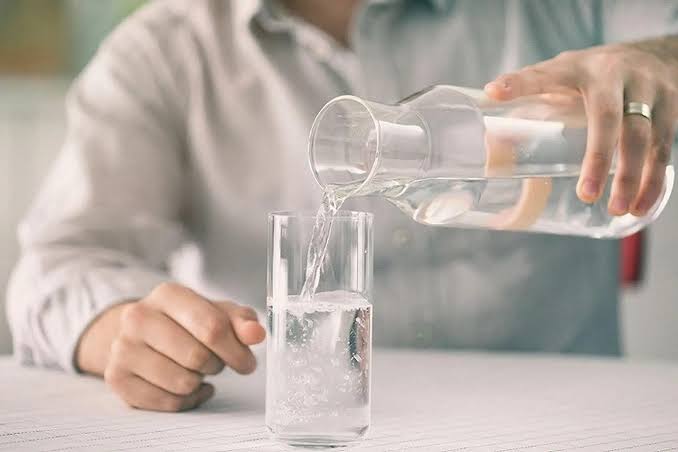
How to Calculate Your Personal Water Target
Rather than a one-size-fits-all figure, water needs for kidney health are best estimated by one of three practical methods.
Body weight method. The standard clinical estimate is 30–35 mL of fluid per kilogram of body weight per day. A 70 kg adult requires approximately 2.1–2.45 liters per day; an 85 kg adult requires 2.55–3 liters. This provides a reasonable starting estimate that adjusts automatically for body size. For CKD patients with fluid restrictions, this method should be discussed with the care team, as their limit may override the calculated target.
Urine output method. A useful functional target is 1.5–2 liters of urine output per day. This requires fluid intake of approximately 2–2.5 liters in a temperate climate (some fluid is lost through breathing, skin, and stool). Urine output can be roughly estimated by the number of urinations per day at a normal volume — roughly 6–8 times per day at adequate hydration, each time producing a visible stream of urine, corresponds to approximately 1.5 liters output.
Urine color method. The simplest real-time monitor is urine color. Pale straw or light yellow urine indicates adequate hydration. Dark yellow or amber urine indicates concentration and the need to drink more. This method requires no calculations and provides continuous feedback. It is the approach endorsed by the National Kidney Foundation as the most practical daily hydration guide for CKD patients.
Adjusting Water Intake for Your Situation
Hot climates and exercise. Sweat loss increases fluid requirements substantially. In hot or humid conditions, or during physical activity, add approximately 500 mL per hour of moderate activity. The importance of adequate hydration during physical activity for CKD patients is covered in the walking and kidney health guide — daily walking increases fluid requirements that should be proactively addressed, not waited for thirst to signal.
Older adults. The thirst sensation diminishes significantly with age, making older adults chronically vulnerable to mild dehydration despite having no feeling of thirst. For CKD patients over 65, deliberate scheduled fluid intake — a glass of water at each meal and at each medication dose — is more reliable than drinking to thirst.
Dialysis patients. The question of how much water is good for kidney health changes fundamentally at dialysis: the kidneys can no longer process fluid, and excess intake becomes harmful rather than protective. Individual fluid limits are set by the dialysis team based on residual urine output and interdialytic weight gain targets. The answer to “how much water is good?” for a dialysis patient is “exactly as much as your team prescribes” — typically 500–1,000 mL per day plus the previous day’s urine output.
CKD with concurrent heart failure. Patients managing both kidney disease and heart failure face competing requirements: kidneys may benefit from liberal fluids, but a failing heart cannot tolerate fluid overload. This balance requires explicit guidance from both nephrologist and cardiologist, as the safe range may be narrower than for patients with only one condition. Self-adjusting fluid intake in this context without medical guidance carries significant risk.
Timing Your Water Intake for Maximum Kidney Benefit
When you drink matters as well as how much. Distributing fluid intake evenly across the day maintains steady tubular flow and consistent urine dilution — more kidney-protective than drinking large volumes infrequently with long dry intervals. A glass of water before or with each meal automatically distributes intake across three anchors in the day.
Morning is the highest-priority time for fluid intake: overnight fasting without fluid produces the most concentrated urine of the day, and the first morning void is typically the darkest. Drinking water upon waking — before breakfast, before checking a phone, before coffee — addresses the overnight deficit before it compounds through the morning. For kidney stone formers specifically, the middle-of-the-night hydration period is also relevant: concentrated urine during the longest dry period of the day (overnight) is when stone crystallization is most likely to begin.
For patients concerned about nocturia — nighttime urination disrupting sleep — the solution is not to reduce total daily fluid intake but to shift the timing: drink more in the morning and afternoon, and reduce fluid intake after 6 or 7 pm. This maintains adequate 24-hour hydration while reducing the overnight urine production that interrupts sleep. The connection between sleep, nocturia, and kidney health is explored in the sleep and kidney health guide.
What Counts as Water for Kidney Health?
Plain water is the optimal fluid for kidney health — no sugar, no sodium, no potassium, no calories — but it is not the only fluid that counts toward daily intake. Coffee and tea at moderate amounts (2–4 cups daily) contribute to hydration equivalently to water despite their mild diuretic effect, which is fully offset by the fluid volume consumed. Herbal teas, broth, and low-sodium soups all contribute meaningfully to fluid intake, though CKD patients in advanced stages should check potassium content of herbal teas.
The NIDDK’s dietary guidance for CKD recommends that patients discuss their fluid needs with a registered dietitian who specializes in kidney disease — a resource available through most nephrology practices and dialysis centers. Individual dietary needs in CKD vary significantly by stage, electrolyte status, and comorbidities, and a single water intake number cannot substitute for personalized guidance. The American Heart Association emphasizes that adequate hydration is part of cardiovascular health — directly relevant to CKD patients, whose leading cause of death is cardiovascular disease.
Conclusion
There is no single correct answer to how much water is good for kidney health — the right amount depends on who you are, what stage of kidney disease you have, what you are trying to prevent, and what conditions you live and work in. The evidence is clearest for kidney stone prevention (3 L/day to produce 2.5 L urine output), for vasopressin suppression in PKD (3+ L/day), and for avoiding the dehydration episodes that cause acute kidney injury in any CKD stage. For established CKD at stages 3–4, the evidence does not support forcing extra water beyond adequate hydration as a means of slowing progression. For dialysis, excess fluid is actively harmful. Use urine color as your daily guide, adjust for heat and activity, calculate a rough target using body weight, and let your nephrologist or dietitian refine the target for your specific situation.
Tracking Your Water Intake: Practical Tools That Work
Knowing a daily water target is only useful if it translates into consistent behavior. The gap between intention and action in hydration is one of the most common self-management failures in CKD — patients report understanding they should drink more, but find that days pass without reaching their target without any particular feeling of thirst alerting them to the shortfall. The following practical tracking approaches have the strongest evidence for sustained behavior change.
Marked water bottles. Using a water bottle with volume markings — 500 mL, 1 L — provides concrete visible feedback on progress toward a daily target. Knowing that the bottle holds 750 mL and that you need to finish it twice by dinner to reach your target converts an abstract number into a manageable visual goal. Bottles with time markers (labeled “by 10 am: 500 mL,” “by 2 pm: 1 L”) further prompt intake at specific points in the day, which is more effective than a single end-of-day target.
Medication timing anchors. For CKD patients who take medications at specific times — which is most CKD patients — taking medications with a full glass of water (250 mL) instead of a sip automatically adds 250–500 mL to daily intake depending on medication frequency, requires no additional behavior change beyond what already happens, and is associated with high adherence because it is attached to an existing habitual action.
Smartphone reminders. Simple hourly or two-hourly water reminders on a phone are effective for people who otherwise go long periods without drinking due to work absorption or reduced thirst sensation. The reminder does not need to be elaborate — a simple alarm labeled “drink water” produces measurable increases in daily fluid intake in short-term studies. For older adults with diminished thirst, scheduled reminders overcome the absence of the biological prompt that younger adults experience.
The end-of-day urine check. Beyond the individual voiding color check, reviewing the overall color pattern across the day — was urine consistently pale, or was it darker in the afternoon and evening? — provides feedback on whether intake was well-distributed or concentrated in the morning only. CKD patients who bring urine color observations to nephrology appointments provide their care team with practical hydration data that is difficult to assess through blood tests alone.
Water Intake and Kidney Health: What to Tell Your Doctor
Hydration should be a standing topic in CKD management conversations, not an afterthought. The following questions are worth raising with your nephrologist or kidney dietitian at routine visits:
What is my specific daily fluid target? Given your current eGFR, urine output, blood pressure, and any concurrent conditions (heart failure, stone history, PKD), your care team should be able to give you a specific range rather than a generic “drink plenty of fluids” instruction. If you have received only the generic version, ask for a number.
Should my target change seasonally? If you live in a climate with significant temperature variation, or if your activity level changes seasonally, your fluid target should adjust accordingly. This is a practical question your care team can answer quickly but may not raise proactively.
Does my fluid target need adjustment after illness? GI illness with vomiting or diarrhea, fever, or any period of reduced intake due to hospitalization changes the immediate fluid situation significantly. Your care team should have guidance on when to seek IV fluids and how to rehydrate safely at home — particularly if you are on ACE inhibitors, ARBs, or diuretics, which amplify dehydration risk during illness.
The broader picture of kidney disease management — including how hydration integrates with diet, medications, physical activity, and blood pressure control — is covered in the kidney disease prevention guide. The hydration and kidney health overview covers the biological mechanisms and stage-specific fluid guidance in greater depth.
Water Intake Myths That Can Harm Kidneys
Several popular beliefs about water and kidney health are not only unsupported by evidence but can cause harm when acted upon, particularly in CKD patients.
Myth: Drinking large amounts of water “flushes the kidneys” and cleans them. The kidneys do not require high-volume flushing to function. They filter blood continuously at whatever volume is presented, concentrating or diluting urine to match the body’s needs. Forcing water consumption well beyond what is needed to produce pale urine does not enhance filtration, remove more toxins, or accelerate healing in damaged kidneys. In advanced CKD and dialysis, it causes fluid overload. The filtration function depends on intact nephron mass, not on forcing volume through damaged tissue.
Myth: Alkaline water is better for kidneys. Alkaline water (pH 8–9) has no documented kidney benefit in clinical trials. The kidneys regulate blood pH through bicarbonate handling and acid excretion — mechanisms that operate independently of the pH of ingested water, which is neutralized in the stomach acid environment before reaching the bloodstream. Marketing claims for alkaline water exceed what any clinical evidence supports.
Myth: If you are not thirsty, you are adequately hydrated. Thirst lags behind actual dehydration by approximately 1–2% of body weight lost in body water. By the time you feel thirsty, urine is already more concentrated than the kidney-protective target. For older adults, diabetics, and CKD patients with autonomic changes, the thirst signal may be even more blunted. Relying on thirst alone is not adequate hydration monitoring, particularly in hot weather or during illness.
Myth: More water always means better kidneys. The CKD WATER trial settled this for established CKD stages 3–4: more water than the adequate amount adds no benefit. For dialysis patients, more water is directly harmful. The goal is not maximum intake but optimal intake — enough to maintain pale urine and avoid dehydration, within the fluid limit appropriate to your kidney function and medical situation.
Appropriate daily water intake for kidney health is ultimately about matching fluid intake to the kidneys’ actual filtration capacity — supporting their work when function is adequate, and not overwhelming them when it is not. Walking regularly, managing blood pressure, sleeping well, and maintaining a healthy weight all support the kidney function that makes hydration effective; these interconnected factors are detailed across the full kidney health content series on this site.
How Different CKD Conditions Change the Water Intake Equation
Beyond stage-based fluid targets, specific kidney conditions alter the optimal water intake in ways that go beyond general guidance.
Chronic kidney disease with recurrent kidney stones. Stone formers with CKD face a particularly important hydration target: even modest dehydration episodes concentrate urine sufficiently to restart the crystallization process that caused the original stone. For these patients, the daily target of 3 liters of fluid and 2.5 liters of urine output is a clinical priority, not a suggestion. Consistently dark urine in a stone former with CKD is a signal that should be addressed the same day, not at the next appointment.
Diabetic kidney disease. Elevated blood glucose causes osmotic diuresis — the kidneys excrete more water to dilute and eliminate glucose — which increases fluid requirements above those of non-diabetic CKD patients at the same GFR. CKD patients with poorly controlled diabetes may chronically underhydrate without realizing it because the increased urine output from osmotic diuresis mimics adequate hydration. Measuring urine osmolality or specific gravity provides more accurate hydration assessment than urine color alone in diabetic patients.
Hypertensive kidney disease. For CKD patients whose primary driver is hypertension, adequate hydration supports blood pressure stability by maintaining plasma volume and reducing compensatory RAAS activation that dehydration provokes. A dehydrated CKD patient with hypertension may have paradoxically higher blood pressure on a given day than a well-hydrated one — an interaction that becomes clinically relevant when interpreting home blood pressure readings. The interaction between hydration and blood pressure in kidney disease is covered in blood pressure control and kidney protection, and the broader kidney prevention framework is detailed in the kidney disease prevention guide.
Sources: National Kidney Foundation (kidney.org); NIDDK (niddk.nih.gov); American Heart Association (heart.org); Clark WF et al., “Effect of Coaching to Increase Water Intake on Kidney Function Decline in Adults With Chronic Kidney Disease,” JAMA (2018); Borghi L et al., N Engl J Med (1996).
Came across this while researching how much water is good for for a family member. The specific numbers and thresholds mentioned are exactly what I needed to understand my results. Thank you for making complex medical information accessible without dumbing it down.
Bookmarked this article on how much water is good for immediately — going to reference it regularly. It is refreshing to see an article that acknowledges individual variation rather than one-size-fits-all advice. This gave me real confidence going into my next specialist appointment.
This is one of the clearest explanations of how much water is good for I have found. I appreciated how the article addressed both the clinical side and the practical adjustments. Forwarding this to others in my support group who are dealing with similar issues.