
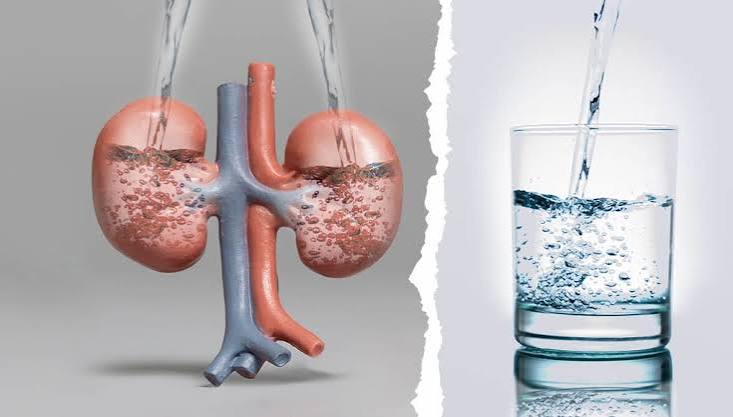
Hydration and Kidney Health
The kidneys filter approximately 200 liters of blood every day, producing urine that carries dissolved waste products out of the body. Water is the medium that makes this possible. Without adequate fluid intake, waste concentrates, minerals crystallize, tubular cells work under oxidative stress, and the filtration apparatus sustains damage that is silent, cumulative, and largely preventable. Hydration is the most fundamental — and most modifiable — variable in kidney health.
Yet the guidance most people receive is not evidence-based. “Drink eight glasses a day” is a cultural prescription, not a clinical one. The optimal fluid intake for kidney protection varies significantly by CKD stage, climate, activity level, and underlying kidney condition. This guide covers what the research actually shows about hydration and kidney function, how much to drink at each stage of kidney disease, what to drink, and the simple daily habits that protect kidney health over time.
Why Hydration Matters for Your Kidneys
The kidneys produce urine by filtering plasma across the glomerular filtration barrier and then reabsorbing water and nutrients in the tubules. The concentration of the final urine — how much waste is dissolved in how little water — depends directly on how much fluid the person is drinking. When fluid intake is low, the kidneys produce small volumes of highly concentrated urine. When it is adequate, urine is dilute and flows freely.
Concentrated urine is the environment in which kidney damage begins. Minerals — calcium, oxalate, uric acid — reach saturation point and begin to crystallize, forming kidney stones. Nephrotoxic substances that transit the tubules become more concentrated, increasing their contact time and injurious potential. And the hormonal response to low fluid intake — vasopressin release — triggers a cascade of cellular changes in the tubular epithelium that, over years of chronic mild dehydration, contribute measurably to CKD progression.
The connection between hydration and kidney health is supported by epidemiological data: adults who drink more fluids consistently show lower rates of kidney stone formation, lower rates of incident CKD, and slower eGFR decline over long-term follow-up compared to those who drink less. The relationship is dose-responsive — more adequate hydration, more kidney protection — within the bounds appropriate to each patient’s kidney function and fluid management capacity.
Vasopressin: The Hidden Link Between Dehydration and Kidney Damage
When fluid intake falls and plasma osmolality rises, the brain releases vasopressin (antidiuretic hormone, ADH) from the posterior pituitary. Vasopressin acts on V2 receptors in the renal collecting duct to increase water reabsorption — concentrating urine and conserving fluid. This is an essential short-term adaptive mechanism. The problem arises when it operates chronically.
Chronic vasopressin elevation drives tubular hypermetabolism — the collecting duct cells work harder to reabsorb water, generating oxidative stress and triggering pro-fibrotic signaling pathways including mTOR activation. Over time, this produces tubulointerstitial fibrosis — the progressive scarring that is one of the hallmarks of CKD progression independent of the primary disease cause. Copeptin, a stable surrogate marker for vasopressin, is independently associated with faster GFR decline in multiple prospective cohort studies of CKD patients, supporting a causal role rather than a mere association.
The vasopressin-kidney damage pathway is most clearly demonstrated in polycystic kidney disease (PKD), where vasopressin directly drives cyst epithelial cell proliferation and cyst fluid secretion. The PREVENT-ADPKD trial showed that high water intake — sufficient to suppress vasopressin — slowed kidney cyst growth compared to standard fluid intake. Tolvaptan, a selective V2 receptor blocker that pharmacologically mimics the effect of suppressing vasopressin, has demonstrated slowing of total kidney volume growth and eGFR decline in ADPKD in large randomized trials — directly confirming that the vasopressin pathway drives disease progression and that blocking it produces kidney-protective benefit.
The practical implication for all CKD patients — not just those with PKD — is that chronic mild dehydration is not a benign inconvenience. It sustains vasopressin elevation, which sustains tubular stress, which accelerates the fibrotic remodeling that underlies progressive kidney function loss. Maintaining adequate hydration suppresses this pathway at no cost and with no side effects beyond the need to urinate more frequently.

How Much to Drink — Evidence-Based Targets by CKD Stage
General Population and CKD Stage 1–3
For adults with normal or mildly reduced kidney function, the evidence supports a total fluid intake of 2–3 liters per day, including water derived from food (approximately 500–700 mL from a typical mixed diet). The practical target is pale straw-colored urine throughout the day — not colorless (which may indicate overhydration) and not dark yellow or amber (which indicates concentration). In hot climates or during exercise, add approximately 500 mL per hour of moderate physical activity to replace sweat losses. For kidney stone formers specifically, the target is urine output of at least 2.5 liters per day — which typically requires fluid intake of 3 or more liters, as some fluid is always lost through breathing, skin, and stool.
CKD Stage 4–5 (Pre-Dialysis)
At advanced CKD, the kidneys progressively lose tubular concentrating ability — producing more dilute urine and requiring more fluid intake to maintain adequate urine output. Fluid restriction is generally not needed as long as the kidneys are producing adequate urine and the patient is not experiencing signs of fluid retention such as ankle swelling or breathlessness. The blood pressure management approach at this stage interacts with fluid balance — high fluid intake supports blood pressure stability, but fluid retention is more likely at this stage. Monitoring daily weights to detect fluid accumulation is more useful than a fixed fluid target at stage 4–5.
Dialysis Patients
Hemodialysis patients typically require fluid restriction of 500–1,000 mL plus the previous day’s urine output — if any residual kidney function remains. Excess fluid accumulates between sessions, raising blood pressure, stressing the heart, and requiring more aggressive ultrafiltration during dialysis, which in turn reduces residual kidney function through repeated hemodynamic stress. For patients with minimal residual urine output, the fluid limit may be as low as 500–750 mL per day. Managing thirst on this restriction is a significant quality-of-life challenge; ice chips (counted within the fluid allowance) and sucking on small frozen lemon wedges stimulate salivation and reduce perceived thirst more effectively than drinking equivalent volumes of liquid.
Kidney Transplant Recipients
After kidney transplant, generous fluid intake — generally 2 or more liters per day — is encouraged to support blood flow to the transplanted kidney and reduce the risk of acute tubular injury from dehydration. Adequate hydration in the early post-transplant period is particularly important, as the newly transplanted kidney is vulnerable to ischemic injury from reduced perfusion. Most transplant programs provide specific fluid intake targets for the early post-transplant period; these should be followed closely and adjusted as kidney function stabilizes.
What to Drink — and What to Avoid
Water is the optimal hydration source for kidney health: no added sugar, no sodium, no potassium, no calories, and no interference with kidney medications. Filtered or tap water is equally effective for most patients; the preference between them is a practical and taste question, not a clinically meaningful one in regions with safe public water supplies.
Coffee and tea do not cause net dehydration at moderate intake (2–4 cups per day). Their mild diuretic effect is offset by the fluid volume consumed; multiple studies confirm that coffee and tea contribute to daily fluid intake in a manner equivalent to water for most adults. For CKD patients, moderate coffee consumption has not been shown to accelerate kidney decline, and some epidemiological data suggests modest protective association.
Lemon water and lemonade have a specific benefit for calcium oxalate stone formers: the citric acid in citrus fruit provides urinary citrate, which binds calcium in the tubular lumen and inhibits calcium oxalate crystal formation. Low-sugar lemonade (diluted or sugar-free) is a commonly recommended addition to fluid intake for stone prevention.
Herbal teas are generally well-tolerated at CKD stages 1–3, but at advanced CKD, some herbal teas contain significant potassium (hibiscus, nettle) and should be checked against potassium limits before regular consumption.
Sports drinks, fruit juices, and coconut water should be limited or avoided in CKD: they are typically high in potassium, sodium, and sugar — nutrients that require careful management in kidney disease. They may contribute to fluid intake volume but also add electrolyte loads that the impaired kidneys cannot efficiently excrete.
Alcohol suppresses vasopressin secretion, producing a diuretic effect that causes net dehydration despite the fluid volume consumed. For CKD patients seeking kidney-protective hydration, alcohol is counterproductive — it reduces the very hormone suppression that adequate water intake is intended to maintain.
The Urine Color Method: A Free Daily Hydration Guide
The simplest and most practical real-world hydration monitoring tool is urine color. It requires no devices, no apps, and no cost — only the habit of checking.
- Pale straw or light yellow — well hydrated; maintain current fluid intake
- Medium yellow — adequate but could drink a bit more
- Dark yellow or amber — concentrated; increase fluid intake now
- Clear or nearly colorless — possibly over-hydrated (rarely a problem except in dialysis patients on fluid restriction)
- Cloudy, pink, red, or brown — not a hydration issue; contact your doctor
Note that some medications (rifampin, phenazopyridine) and B-vitamins can artificially darken or brighten urine color, reducing the reliability of this method. If you take these, discuss with your care team whether another monitoring method is more appropriate. For the majority of CKD patients not on these agents, urine color is the most immediately actionable daily hydration signal available.
Hydration and Kidney Stone Prevention
Kidney stones are among the most painful and most preventable urological conditions, and adequate fluid intake is the most effective single intervention for prevention. Stones form when minerals — most commonly calcium and oxalate — reach crystallization saturation in concentrated urine. Diluting urine with higher fluid intake reduces concentration and substantially reduces crystallization risk.
The evidence is quantitatively strong: each 500 mL per day increase in fluid intake is associated with approximately a 35% reduction in kidney stone recurrence in stone formers. The target for stone prevention is a 24-hour urine output of at least 2.5 liters — which requires drinking approximately 3 liters of fluid per day in temperate climates, more in hot or dry environments. Water is the most effective single fluid for stone prevention; for calcium oxalate stone formers (the most common type), low-sugar lemonade provides the additional benefit of urinary citrate. The broader context of kidney disease prevention, including stone risk factors and dietary contributors, is covered in the kidney disease prevention guide.
Building a Daily Hydration Habit
Adequate daily hydration requires consistency, not heroism. The most effective hydration habits are built into existing daily routines rather than tracked as a separate discipline. The following strategies have the best evidence for sustained fluid intake in adults:
Start the morning with water. Drinking a glass of water before or with morning medication is one of the highest-adherence hydration habits across multiple behavioral studies — it is already attached to a non-negotiable routine, requires no additional decision-making, and addresses the overnight fluid deficit that makes morning urine consistently more concentrated than afternoon urine.
Keep water visible. A water bottle or glass on the desk, counter, or dialysis chair is a persistent visual cue that consistently increases daily intake without requiring conscious effort. Out of sight reliably means out of mind for hydration.
Drink with meals. Pairing a glass of water with each meal automatically distributes fluid intake across the day, which is more kidney-protective than drinking large volumes infrequently — consistent flow through the tubules is more effective at preventing stone crystallization and vasopressin spikes than bolus intake followed by long dry periods.
Adjust for activity and weather. Regular walking or exercise — documented in the walking and kidney health guide — increases fluid requirements. In hot or humid conditions, or during any physical activity, fluid intake should increase proactively before thirst signals appear, as thirst lags behind actual dehydration by a measurable margin, particularly in older adults.
Conclusion
Hydration is the most basic, most modifiable, and most consistently undervalued component of kidney health. Adequate fluid intake prevents kidney stones, suppresses kidney-damaging vasopressin, dilutes nephrotoxic substances in the tubules, and supports the continuous filtration that keeps the blood clean. The specific target shifts by CKD stage — generous and unrestricted at early kidney disease, carefully managed at dialysis — but the underlying principle is constant: match fluid intake to kidney function, use urine color as a daily guide, choose water as the primary source, and build intake into daily routines rather than treating it as a separate effort. No medication replaces adequate hydration in the treatment plan for kidney disease prevention and management.
Hydration and Kidney Health: Common Questions Answered
Does drinking more water improve kidney function? For people with early CKD (stages 1–3) and intact urine production, higher fluid intake supports kidney function by maintaining adequate tubular flow, diluting nephrotoxins, and suppressing vasopressin. It does not regenerate lost nephrons or reverse established fibrosis — but it slows the rate of further damage. For dialysis patients with minimal residual kidney function, excess fluid intake is harmful rather than beneficial, because the kidneys can no longer process the extra volume.
Can I drink too much water? Yes — excessive fluid intake in advanced CKD or dialysis causes fluid overload, raising blood pressure and stressing the cardiovascular system. In people with healthy kidneys, the risk of true water overload from normal drinking is very low (the kidneys can excrete 800–1,000 mL per hour), but it is possible in extreme situations. For the vast majority of CKD patients at stages 1–3, the more common problem is too little fluid, not too much.
Do I need to drink differently in hot weather? Yes. Sweat loss in hot weather concentrates blood faster, triggering an earlier and stronger vasopressin response. CKD patients working outdoors or exercising in warm weather should increase fluid intake by approximately 500 mL per hour of activity — proactively, before thirst develops. Thirst lags actual dehydration by 1–2% of body weight lost, which is enough to significantly elevate urine concentration and vasopressin levels.
Is bottled water better than tap water for kidneys? For most people in regions with safe public water supplies, tap water is equivalent to bottled water for kidney health. Some bottled waters have high mineral content (calcium, magnesium, sodium) that may be relevant for specific conditions (stone formers with high calcium excretion, CKD patients on sodium restriction) but is irrelevant for most. Filtered tap water addresses taste and trace contaminant concerns without the environmental and financial cost of bottled water.
The Relationship Between Hydration, Medications, and Kidney Safety
Several commonly used medications have nephrotoxic potential that is significantly amplified by dehydration. Understanding these interactions is an important aspect of kidney-protective hydration that goes beyond simply “drinking enough.”
NSAIDs (ibuprofen, naproxen, diclofenac) reduce prostaglandin synthesis in the kidney, which normally maintains afferent arteriole dilation. In a well-hydrated patient, this effect is modest. In a dehydrated patient, prostaglandin-mediated dilation is already the primary mechanism maintaining renal blood flow; blocking it produces acute kidney injury. CKD patients taking NSAIDs — even occasionally — during periods of dehydration from illness, sweating, or inadequate fluid intake are at significantly elevated risk of acute-on-chronic kidney injury. Acetaminophen (paracetamol) is the preferred analgesic for CKD patients requiring pain relief, as it does not impair renal hemodynamics.
Contrast agents used in CT scans and cardiac catheterization carry contrast-induced nephropathy risk that is substantially reduced by adequate pre-procedure hydration. Standard protocols involve IV fluid administration before and after contrast procedures; patients should also maintain oral fluid intake in the days before elective contrast procedures and report any dehydration from illness to their care team before proceeding.
ACE inhibitors and ARBs — the primary medications for kidney protection in CKD — reduce glomerular filtration pressure as part of their mechanism. In a well-hydrated patient, this effect is kidney-protective. In a significantly dehydrated patient with volume depletion, the same reduction in filtration pressure can precipitate acute kidney injury by reducing GFR below the threshold needed to maintain kidney function. CKD patients on ACE inhibitors or ARBs who develop diarrhea, vomiting, or heavy sweating should increase fluid intake and contact their care team if they cannot maintain hydration — not simply continue their medication doses unchanged.
Hydration is not a passive background requirement in CKD management — it actively shapes the safety profile of the medications that protect the kidneys. The full framework of kidney disease prevention and lifestyle management, including how hydration integrates with medication protocols, dietary changes, and physical activity, is explored in the kidney disease prevention guide.
Hydration Across the Seasons: Adjusting for Real-Life Conditions
Fluid requirements are not static — they vary by season, activity level, and health status in ways that require active adjustment rather than a fixed daily target. Understanding when to increase intake prevents the acute dehydration episodes that produce the most immediate kidney damage in CKD patients.
In summer months, particularly in humid climates, insensible fluid losses through perspiration can increase by 500–1,500 mL per day compared to winter. CKD patients who maintain a fixed winter hydration routine through the summer may chronically underhydrate during hot months without noticing — until an episode of acute dehydration produces a significant eGFR drop that may not fully reverse. The habit of checking urine color becomes especially important during warm weather: if urine is consistently darker in summer than in winter, fluid intake needs to increase.
Illness — particularly gastrointestinal illness with vomiting or diarrhea — represents the highest-risk scenario for dehydration-induced kidney injury in CKD patients. Fluid losses can be large and rapid, and nausea or vomiting makes oral replacement difficult. CKD patients and their families should have a clear plan in advance: at what point to contact the nephrologist or proceed to emergency care for IV fluid replacement. The threshold should be lower in CKD patients taking ACE inhibitors, ARBs, or diuretics — all of which amplify the kidney injury risk from volume depletion. Regular physical activity, including walking, maintains the cardiovascular reserve and kidney perfusion that makes CKD patients more resilient to these acute challenges; the evidence is detailed in the walking and kidney health guide.
For CKD patients managing blood pressure alongside hydration — and most do, given hypertension’s prevalence in kidney disease — consistent fluid intake supports more stable blood pressure throughout the day. Dehydration produces compensatory sympathetic nervous system activation and RAAS engagement that raises blood pressure acutely and makes antihypertensive medications appear less effective. The interaction between hydration, blood pressure, and kidney protection is explored in detail at blood pressure control and kidney protection.
Sources: National Kidney Foundation (kidney.org); National Institute of Diabetes and Digestive and Kidney Diseases (niddk.nih.gov); American Heart Association (heart.org); Higashihara E et al., PREVENT-ADPKD trial; Torres VE et al., TEMPO 3:4 trial (tolvaptan in ADPKD).
Pingback: How Much Water Is Good for Kidney Health? - Horizon Health Guide
Pingback: Smoking and Kidney Disease Risk - Horizon Health Guide
Pingback: Best Foods for Kidney Health - Horizon Health Guide
I never fully understood hydration and kidney health until I read this. I appreciated how the article addressed both the clinical side and the practical adjustments. Looking forward to reading more articles from this website.
I shared this article on hydration and kidney health with my doctor and they appreciated the level of detail. It is refreshing to see an article that acknowledges individual variation rather than one-size-fits-all advice. Shared this with three friends who are dealing with related issues. Very useful resource.
My doctor recommended I look into hydration and kidney health and this article covered it perfectly. I appreciate that the article is careful about distinguishing between what is known and what is still being researched. I wish I had found this article earlier — would have saved a lot of confusion.