
Pain Relievers and Kidney Safety
Pain relievers and kidney safety are topics that every person with kidney disease — and many people without diagnosed kidney disease — need to understand clearly. The category of pain relievers encompasses several distinct drug classes with very different kidney safety profiles: acetaminophen (paracetamol), NSAIDs (non-steroidal anti-inflammatory drugs such as ibuprofen and naproxen), opioids, and certain adjuvant pain medications such as gabapentin and pregabalin. Of these, NSAIDs carry the greatest kidney risk — they are responsible for a substantial proportion of acute kidney injury cases in people with CKD and even in people with previously healthy kidney function — while acetaminophen at recommended doses remains the safest over-the-counter pain reliever option for most people with kidney disease. Understanding which pain relievers are safe, which require dose adjustment in CKD, and which to avoid entirely is practical knowledge that protects kidney function and prevents the avoidable kidney injuries that occur when people with CKD take pain medications without this knowledge. This guide covers the complete pain management landscape from a kidney safety perspective — what each class of pain reliever does to the kidney, the safest options for acute and chronic pain in people with CKD, and when specialist pain management is needed.
The relevance of pain management to kidney health extends in both directions: kidney disease itself causes pain (flank pain from cysts in polycystic kidney disease, musculoskeletal pain from CKD-mineral bone disorder and secondary hyperparathyroidism, neuropathic pain from uremic polyneuropathy in advanced CKD, and headaches and muscle cramps from electrolyte imbalances and dialysis sessions), and the pain medications commonly used to treat these and other conditions carry kidney-specific risks that must be weighed carefully. People with CKD are a particularly vulnerable population for pain reliever-related kidney injury because their reduced nephron mass, impaired autoregulatory capacity, and altered drug metabolism and excretion mean that drugs which are safe in people with normal kidneys may accumulate to toxic levels or cause disproportionate hemodynamic harm in CKD. For the complete overview of medication safety for kidney patients — including pain relievers alongside all other medications that require special consideration in CKD — the medication safety for kidney patients guide provides the comprehensive framework. For the specific detailed review of NSAIDs and their kidney risks — the most important pain reliever safety concern in CKD — the dedicated NSAIDs and kidney risk guide covers the mechanisms, risks, and safer alternatives in detail.
Acetaminophen (Paracetamol): The Safest First-Line Analgesic in CKD
Acetaminophen — known as paracetamol outside the United States — is the pain reliever most consistently recommended for people with CKD for the management of mild to moderate pain, including headache, musculoskeletal pain, and other common pain complaints. Unlike NSAIDs, acetaminophen does not affect renal prostaglandin synthesis, does not cause afferent arteriolar vasoconstriction, and does not cause acute hemodynamic kidney injury — its mechanism of analgesia (central and peripheral cyclooxygenase inhibition with minimal peripheral anti-inflammatory effect) does not involve the prostaglandin-dependent pathways that protect renal blood flow. At recommended doses — up to 4,000 mg per day in healthy adults — acetaminophen is safe in CKD stages 1–5 and in people on dialysis, with no reduction in dose required for kidney function per se. The dose adjustment that IS required in CKD relates to extended dosing intervals rather than dose size: people with advanced CKD (eGFR below 30) and those on dialysis should not take acetaminophen more frequently than every 6–8 hours (rather than the 4–6 hour interval permitted with normal kidney function) because minor acetaminophen metabolites can accumulate in renal failure; the maximum daily dose should be reduced to approximately 2,000–2,500 mg in advanced CKD as a precaution, particularly in older patients and those with reduced hepatic metabolism. The liver toxicity concern with acetaminophen — primarily relevant at doses above 4,000 mg per day or in the setting of alcohol use, malnutrition, or hepatic disease — is not a kidney-specific risk, but people with CKD who also have liver disease (hepatorenal syndrome, hepatitis B or C complicating CKD) require lower acetaminophen doses to respect hepatic safety. Chronic high-dose acetaminophen use (daily use at maximum doses for years) has been associated with analgesic nephropathy in some epidemiological studies, though the evidence is less clear than for phenacetin (a now-withdrawn analgesic that was the primary cause of analgesic nephropathy and which acetaminophen is metabolized to); the clinical consensus is that occasional or regular use at recommended doses is safe for CKD kidneys, and it remains the analgesic of choice. For people who regularly use acetaminophen for chronic pain management alongside their CKD medications, periodic liver function monitoring is reasonable, particularly if there is any hepatic comorbidity. The NIDDK guidance on managing CKD complications, including pain management, is available at the NIDDK CKD management page.
NSAIDs and the Kidney: Why They Are Dangerous in CKD
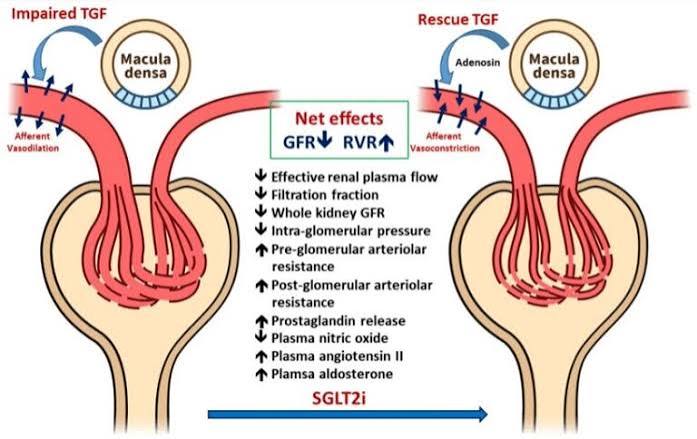
Non-steroidal anti-inflammatory drugs — ibuprofen (Advil, Motrin), naproxen (Aleve), diclofenac (Voltaren), indomethacin, celecoxib, and related agents — are among the most widely used medications in the world and among the most dangerous for people with kidney disease. NSAIDs inhibit cyclooxygenase (COX) enzymes — COX-1 and COX-2 — blocking the synthesis of prostaglandins from arachidonic acid. In the healthy kidney, prostaglandins (particularly prostaglandin E2 and prostacyclin) play a modest role in maintaining renal blood flow under basal conditions; their role becomes critical during states of reduced effective circulating volume — dehydration, heart failure, diuretic use, blood loss, or fever — where the renin-angiotensin system is activated and afferent arteriolar constriction would dramatically reduce renal perfusion without the counterbalancing vasodilatory prostaglandin effect. By inhibiting prostaglandin synthesis, NSAIDs remove this protective vasodilatory response, allowing unopposed RAAS-mediated afferent vasoconstriction to reduce renal blood flow to the point of acute kidney injury. In people with CKD, this vulnerability is permanently elevated — they are chronically in a state of relative renal prostaglandin dependence because RAAS activation from the reduced perfusion of the scarred CKD kidney is always present; any NSAID use superimposes prostaglandin blockade on this already-activated RAAS, creating acute-on-chronic kidney injury risk even at standard NSAID doses and short durations of use. The specific mechanisms, magnitude of risk, and safer alternatives to NSAIDs for people with CKD are covered in detail in the NSAIDs and kidney risk guide. For people currently taking ACE inhibitors or ARBs for CKD — the standard kidney-protective medications — the combination of ACE inhibitor/ARB plus NSAID plus any diuretic creates the so-called “triple whammy” of AKI risk: the ACE inhibitor/ARB blocks RAAS-driven efferent tone, the NSAID blocks prostaglandin-driven afferent vasodilation, and the diuretic reduces circulating volume — the three together dramatically increase AKI risk and are responsible for a substantial proportion of hospital admissions for acute kidney injury. The kidney-protective medication regimen is covered in the ACE inhibitors and ARBs for kidney health guide.
Opioid Pain Relievers in CKD: Dose Adjustments and Risks
Opioid analgesics — codeine, tramadol, morphine, oxycodone, hydrocodone, fentanyl, buprenorphine, and hydromorphone — are sometimes required for moderate to severe pain in people with CKD that is not adequately managed by acetaminophen alone. Opioids have a complex pharmacology in CKD that requires careful dose adjustment and selection to avoid accumulation of active metabolites that can cause toxicity. Morphine is metabolized to morphine-6-glucuronide (M6G), an active metabolite that is renally cleared and accumulates in CKD — causing sedation, respiratory depression, and opioid neurotoxicity at doses that would not cause these effects in people with normal kidney function. Morphine is generally avoided in CKD stage 4–5 for this reason. Codeine is a prodrug converted to morphine (and codeine-6-glucuronide) in the liver; the same M6G accumulation concern applies, and codeine is also generally avoided in advanced CKD. Tramadol and its active metabolite O-desmethyltramadol accumulate in CKD, increasing seizure risk (tramadol lowers seizure threshold) and opioid adverse effects; maximum doses should be reduced and dosing intervals extended in CKD, and tramadol is avoided in CKD stage 4–5. Oxycodone has active metabolites (oxymorphone) that accumulate in renal failure; dose reduction and careful monitoring are required in advanced CKD. Fentanyl and buprenorphine are the safest opioids in advanced CKD and dialysis — fentanyl’s metabolites are inactive (no active metabolite accumulation), and buprenorphine’s metabolites are primarily biliary-excreted with minimal renal clearance; both are preferred for opioid pain management in CKD stages 4–5 and dialysis when opioid analgesia is unavoidable. Buprenorphine (available as patches for chronic pain) is increasingly used in palliative CKD care for its favorable kidney pharmacokinetic profile. The general principle is: when opioid analgesia is necessary in CKD, start at the lowest effective dose, use agents with the most favorable CKD pharmacokinetic profile (fentanyl or buprenorphine in advanced CKD), extend dosing intervals, and monitor closely for sedation, respiratory depression, and opioid neurotoxicity signs (myoclonus, confusion, allodynia). The comprehensive guide to kidney patient medication safety — including all prescription analgesics — is the medication safety for kidney patients guide. The authoritative clinical review of pain management in CKD is available in the StatPearls CKD review.
Adjuvant Pain Medications in CKD: Gabapentinoids and Topicals
Adjuvant analgesics — medications used for pain management that are not primarily analgesics but provide pain relief in specific contexts — include gabapentinoids, tricyclic antidepressants, SNRIs, topical agents, and muscle relaxants. Their use in CKD requires careful attention to dose adjustment and kidney clearance. Gabapentin and pregabalin — used for neuropathic pain, which is common in CKD (uremic polyneuropathy affects approximately 60–70% of people with CKD stage 5 or dialysis), restless legs syndrome, and as adjuvants for chronic pain — are entirely renally excreted without hepatic metabolism. This means their dose must be dramatically reduced in CKD: gabapentin at standard doses (900–3,600 mg/day for epilepsy or neuropathy) is reduced to 200–700 mg/day in CKD stage 3–4 and to 100–300 mg/day in CKD stage 5 and dialysis; pregabalin is similarly reduced from standard doses of 300–600 mg/day to 25–75 mg/day in advanced CKD. Failure to adjust gabapentinoid doses in CKD causes sedation, ataxia, dizziness, falls, and encephalopathy from gabapentinoid accumulation — adverse effects that are frequently under-recognized as medication-related in CKD patients receiving standard doses. Topical analgesics — topical diclofenac (Voltaren gel), topical lidocaine patches, and topical capsaicin — achieve local analgesic effects with minimal systemic absorption and are generally safe for use in CKD; topical diclofenac, despite being an NSAID, has very low systemic NSAID concentrations and is considered safe in CKD for localized musculoskeletal pain where systemic NSAID avoidance is important. Tricyclic antidepressants (amitriptyline, nortriptyline) — used for neuropathic pain and as sleep aids in CKD — require dose reduction in advanced CKD and carry anticholinergic side effects (urinary retention, constipation, confusion) that are more pronounced in older CKD patients. Duloxetine (SNRI) — used for diabetic neuropathy pain — requires dose reduction below eGFR 30 and is avoided in end-stage renal disease due to metabolite accumulation. For people with CKD who need chronic pain management and want to understand which medications are safe and which to discuss with their nephrologist, the kidney disease medications overview guide provides the broader medication framework. The kidney health monitoring numbers that guide dose adjustment decisions in CKD — including the eGFR values that trigger dose changes for pain medications — are explained in the kidney health numbers guide. The National Kidney Foundation’s patient resources on CKD medication management are available at the NKF CKD patient information page.
Sources: NIDDK — Managing CKD · NKF — CKD Information · StatPearls — CKD
Non-Drug Pain Management Strategies for Kidney Patients
For people with CKD who want to minimize their reliance on pain medications — particularly given the risks of NSAIDs and the dose-adjustment requirements of opioids and gabapentinoids — non-pharmacological pain management strategies are an important and often underutilized component of comprehensive pain care. These approaches carry no kidney toxicity risk, do not require dose adjustment for eGFR, and in many CKD pain contexts deliver clinically meaningful pain reduction that reduces or eliminates the need for medications that carry kidney risks. Physical therapy and graded exercise are the most evidence-supported non-drug interventions for musculoskeletal pain — the most common pain type in CKD — including the low back pain, joint pain, and muscle cramping that accompanies CKD-mineral bone disorder and secondary hyperparathyroidism. Exercise in CKD also independently improves cardiovascular outcomes and may slow CKD progression through improvements in blood pressure control and insulin sensitivity; supervised exercise programs specifically designed for CKD are available through nephrology centers and are increasingly recognized as part of comprehensive CKD care. A major barrier is that many people with CKD are advised to limit exercise due to fatigue or are not referred to physical therapy — this is often an outdated recommendation, as supervised low-to-moderate intensity exercise is safe and beneficial at most CKD stages including stable dialysis. Heat and cold therapy — heating pads for musculoskeletal pain and cold packs for acute inflammatory pain — provide localized pain relief with no systemic effects and are completely safe in CKD at all stages. Transcutaneous electrical nerve stimulation (TENS) has evidence for reducing neuropathic pain and musculoskeletal pain; it is safe in CKD, including dialysis, as it does not involve medications or metabolic pathways affected by kidney function. TENS units are available without prescription and can be used at home for both acute and chronic pain. Cognitive behavioral therapy (CBT) for chronic pain — a structured psychological approach to pain catastrophizing, activity avoidance, and pain-related fear — is highly effective for chronic pain conditions and is particularly relevant for people with CKD who have overlapping depression and anxiety (which are highly prevalent at CKD stages 4–5 and dialysis and independently worsen pain experience). Mindfulness-based stress reduction (MBSR) has RCT evidence for reducing pain severity and improving quality of life in chronic pain populations, and a growing evidence base specifically in CKD dialysis patients for reducing dialysis-associated fatigue and pain. Acupuncture has evidence for reducing musculoskeletal pain and neuropathic pain in general populations; the evidence base in CKD specifically is limited but the kidney safety is excellent (no pharmacological mechanism means no kidney risk). For CKD patients with restless legs syndrome — a significant pain and discomfort source at advanced CKD stages — both non-pharmacological approaches (sleep hygiene, leg stretching, iron supplementation when deficient) and CKD-appropriate pharmacological approaches (low-dose dopamine agonists with dose adjustment, or gabapentin with significant dose reduction as noted above) are more appropriate first-line approaches than opioids. The NKF patient resources include guidance on lifestyle approaches to CKD symptom management. For people with CKD whose pain is related to musculoskeletal complications of CKD-mineral bone disorder — bone pain from secondary hyperparathyroidism, fracture risk from adynamic bone disease — addressing the underlying mineral metabolism abnormality with phosphate binders, vitamin D receptor activators, and calcimimetics is the most effective approach to this specific pain type, as reviewed in the kidney disease and bone health guide.
When to Ask for a Pain Specialist: Managing Chronic Pain in CKD
Chronic pain management in CKD is complex enough that many patients benefit from specialist pain management consultation — a step that is underused in nephrology care, partly because of the traditional perception that CKD limits pain management options so severely that specialist referral is unlikely to help. In reality, specialist pain management for CKD patients has expanded significantly: pain medicine specialists with CKD pharmacology knowledge can optimize the use of safer analgesics, coordinate multimodal approaches, identify pain generators that may be treatable (nerve blocks, joint injections, or interventional spine procedures that do not involve systemic nephrotoxic medications), and help patients transition off NSAIDs they have been taking chronically to safer alternatives. Indications for pain specialist referral in CKD include: chronic pain not adequately controlled with acetaminophen and non-pharmacological approaches; pain requiring opioid medications (where specialist oversight improves both analgesic outcomes and safety monitoring); neuropathic pain (uremic polyneuropathy, diabetic neuropathy) that has not responded to appropriately dose-adjusted gabapentinoids; and pain related to CKD complications such as calciphylaxis (calcium deposition in blood vessels causing severe ischemic pain) where specialist wound care and pain management are both needed. Palliative care teams with CKD expertise are increasingly involved in pain management for CKD stage 4–5 patients — not only for end-of-life care but for symptom management across the CKD trajectory — and their expertise in complex pharmacological management, psychosocial support, and patient goals-of-care conversations is particularly relevant for CKD patients with multiple symptom burdens. For people with CKD who are currently taking NSAIDs regularly and want to safely transition off — a process called NSAID tapering — working with their nephrologist or pain specialist to substitute acetaminophen, add non-pharmacological approaches, and address the underlying pain generator is more effective and safer than abrupt discontinuation. Some people taking daily NSAIDs for conditions like osteoarthritis or inflammatory arthritis have never been told that they have CKD (undiagnosed CKD affects a substantial proportion of the adult population), and for them, getting a kidney function check — a simple blood test measuring creatinine and eGFR — is the first step to understanding whether their NSAID use has been affecting their kidneys and whether a change in pain management approach is needed. People with kidney disease and those who want to review their complete medication safety picture — not only pain relievers but all medications — should review the medication safety for kidney patients guide, which covers the full spectrum of medication classes requiring attention in CKD. The KDIGO CKD clinical practice guidelines, which include recommendations on pain management and medication safety in kidney disease, are available at the KDIGO CKD evaluation and management guidelines page. For people seeking to understand how to protect their kidneys over the long term — including medication choices and lifestyle approaches — the kidney disease medications overview guide provides the comprehensive framework that integrates all of the above considerations into a practical CKD medication management approach.
Key Takeaways: Pain Relievers and Kidney Safety
The core message of pain reliever safety for kidney patients can be summarized in five practical points that apply across CKD stages and pain types. First: acetaminophen is the safest OTC pain reliever for people with CKD — it does not cause the prostaglandin-dependent hemodynamic kidney injury that NSAIDs cause, it does not accumulate via active metabolites the way opioids and gabapentinoids do, and at recommended doses (reduced to ≤2,000–2,500 mg/day in advanced CKD with dosing intervals extended to every 6–8 hours) it provides effective mild-to-moderate analgesia without kidney risk. Second: NSAIDs — ibuprofen, naproxen, diclofenac, celecoxib — should be avoided in CKD at all stages, particularly in the context of ACE inhibitor/ARB plus diuretic use (the “triple whammy”), and replaced with acetaminophen, topical analgesics, or non-pharmacological approaches for musculoskeletal and inflammatory pain. Third: opioids require careful selection and dose adjustment in CKD — fentanyl and buprenorphine are the safest options in advanced CKD; morphine, codeine, and tramadol should be avoided in CKD stage 4–5 due to active metabolite accumulation. Fourth: gabapentin and pregabalin require dramatic dose reduction in CKD — accumulation causes sedation, falls, and encephalopathy in people receiving standard (non-adjusted) doses in advanced CKD or dialysis. Fifth: non-pharmacological approaches — exercise, physical therapy, TENS, cognitive behavioral therapy — should be integrated into every CKD pain management plan, both to reduce the need for medications with kidney risks and to address the musculoskeletal and neuropathic pain that is common in CKD and responds well to these approaches. People with CKD and pain management questions should bring their complete medication list — including over-the-counter pain relievers and supplements — to their nephrologist or primary care provider for a medication review. The medication safety for kidney patients guide provides the complete framework for this conversation. The in-depth guide to NSAID-specific kidney risk is the NSAIDs and kidney risk guide.
I have stage 3b CKD and I’ve been taking ibuprofen for my knee osteoarthritis for years — my rheumatologist prescribed it but nobody ever mentioned the kidney connection until my nephrologist saw my blood tests getting worse and asked specifically about pain medications. The section on NSAIDs and the triple whammy was exactly my situation: I was on lisinopril, a diuretic, and daily ibuprofen. Once I switched to acetaminophen and added a TENS unit for flare-ups, my creatinine actually stabilized for the first time in two years. I wish this information had been given to me at the start — the interaction between those three drug classes is not obvious at all unless someone specifically tells you. The point about topical diclofenac being safer than oral NSAIDs was new to me too — I’d been avoiding all diclofenac forms but apparently the gel has much less systemic absorption.
Pain management in CKD is one of the most challenging areas in nephrology practice and this article covers the pharmacology accurately. The triple whammy (ACE inhibitor/ARB + NSAID + diuretic) mechanism is well explained — it is responsible for a disproportionate share of medication-related AKI admissions, and the tragedy is that it is almost entirely preventable with patient education. The opioid section correctly identifies fentanyl and buprenorphine as the preferred agents in advanced CKD — I would add that buprenorphine patches (Butrans) have become my preferred chronic pain option for CKD stage 4-5 patients who require opioid analgesia, because the transdermal route avoids peak plasma levels, the biliary excretion minimizes accumulation, and the partial agonist ceiling effect reduces overdose risk. The gabapentinoid dose reduction table — 100-300 mg/day of gabapentin in ESRD versus the 900-3600 mg/day standard dose — is the most practically important single piece of information in this article for reducing medication-related harm in dialysis patients.
Sandra, your experience is unfortunately very common — the triple whammy interaction is well-documented in nephrology literature but poorly communicated across the specialties that prescribe each individual component. Rheumatologists, cardiologists, and primary care physicians often prescribe from within their own specialty without a full view of the kidney risk created by the combination. The fact that your creatinine stabilized after switching away from NSAIDs is consistent with what the trial data shows: removing the prostaglandin-blocking component often allows the kidney’s autoregulatory capacity to recover to baseline. Dr. Whitfield’s point on buprenorphine patches is clinically important — the combination of partial agonism, biliary excretion, and transdermal delivery makes it particularly well-suited for chronic CKD pain management where the accumulation risks of full-agonist renally-cleared opioids are unacceptable. For people reading this who are in Sandra’s situation — multiple medications, worsening kidney function, no one has specifically reviewed pain medication interactions — bringing this article to a nephrologist visit and asking for a complete medication review is exactly the right first step.