
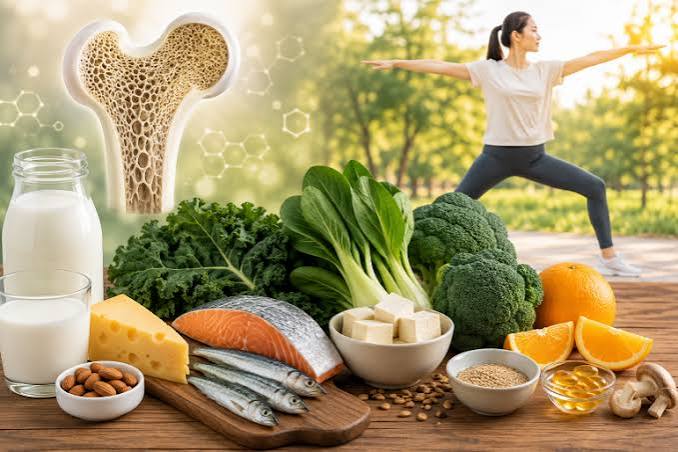
Supporting bone health naturally means building a lifestyle that consistently gives the skeleton what it needs — nutritional raw materials, mechanical loading, adequate rest and recovery, and the absence of habits that directly damage bone. The evidence base for natural bone health interventions is well-established: adequate calcium, vitamin D, protein, and vitamin K2; regular weight-bearing and resistance exercise; not smoking; moderate or no alcohol; and maintaining a healthy body weight are all associated with better bone density and lower fracture risk in population studies and clinical trials. This guide brings together the full picture of what lifestyle can achieve for bone health, what its limits are, and when natural approaches need to be supplemented with clinical assessment and, where indicated, pharmacological treatment. The goal is not to replace medical advice but to give adults the specific, evidence-based information needed to make decisions that genuinely protect their skeletal health over the long term.
Nutrition for Bone Health — The Core Four
Four nutrients form the nutritional foundation of bone health in adults. Deficiency in any one of them impairs the others, and optimising all four simultaneously produces better outcomes than addressing any single nutrient alone:
Calcium is the principal mineral of bone — hydroxyapatite (the mineral phase of bone) is a calcium-phosphate compound, and approximately 99% of the body’s calcium is stored in the skeleton. Adults need 700–1,200 mg/day, achievable from dairy (approximately 300 mg per 200 ml glass of milk), calcium-set tofu, canned sardines or salmon with bones, fortified plant milks, kale, pak choi, and almonds. Supplementation at 500–600 mg/day is appropriate when dietary intake falls short — but not higher, as high-dose supplements may marginally increase cardiovascular risk without additional bone benefit. Our guide to calcium and bone health covers sources, absorption, and supplementation in detail.
Vitamin D is essential for intestinal calcium absorption (passive and active transport) and directly supports osteoblast function. Without adequate vitamin D, even high calcium intake is poorly absorbed. Adults over 50 should supplement 400–800 IU/day year-round; adults over 65 should supplement 800–1,000 IU/day. Diet provides at most 200–300 IU/day from oily fish and eggs — supplementation is practically unavoidable for adequate status in older adults, particularly in northern climates. Our guide to vitamin D and bone health covers the evidence for supplementation doses and the 25-OHD testing threshold.
Protein is the structural backbone of the organic bone matrix — type I collagen constitutes 90% of the organic phase, providing tensile strength and fracture toughness. Adults over 50 need 1.0–1.2 g/kg/day to maintain both collagen and the muscle mass that loads and stimulates bone. Protein from any complete source (meat, fish, dairy, eggs, or complemented plant proteins) supports bone health; the critical factor is adequacy of total intake and even distribution across meals. Our guide to protein and bone strength covers the evidence including the muscle-bone mechanical coupling.
Vitamin K2 (particularly MK-7, menaquinone-7) activates osteocalcin — the protein that directs calcium into the bone matrix — and MGP, which prevents vascular calcification. Dietary K2 is found in fermented foods (natto contains up to 1,000 µg MK-7 per 100g; aged cheeses such as gouda provide 15–20 µg per serving) and in supplemental form (100–200 µg/day MK-7). K1 (from leafy greens) provides background vitamin K but is less efficiently converted to the tissue-active forms than MK-7. Our guide to vitamin K and bone health covers K1 vs K2, the osteocalcin activation mechanism, and supplementation guidance in detail.
Supporting these four with adequate magnesium (from nuts, seeds, dark leafy greens, and wholegrains — 300–400 mg/day) completes the core nutritional picture. Magnesium regulates PTH activity, supports vitamin D hydroxylation, and contributes directly to hydroxyapatite crystal structure in bone. Our guide to magnesium and bone health covers the evidence and the dietary sources in detail.

Exercise — The Irreplaceable Stimulus
No nutritional supplement replaces the bone-building stimulus of mechanical loading. Bone responds to the forces applied through it by increasing its mineral density, thickness, and structural integrity — a process called Wolff’s law. Without that mechanical stimulus, even optimal calcium and vitamin D intake cannot prevent bone loss. The skeleton is a dynamic organ that adapts to the demands placed on it.
The two exercise types with the strongest evidence for bone health are:
Weight-bearing aerobic exercise — any activity performed on the feet against gravity. Walking, hiking, dancing, tennis, aerobics, and jogging all apply impact forces to the skeleton at weight-bearing sites (hip, spine, femur) that stimulate osteoblast activity. Swimming and cycling, while excellent for cardiovascular health, do not provide this mechanical stimulus and should not be the sole form of exercise for bone health. The general physical activity target of 150 minutes per week of moderate intensity weight-bearing activity is a reasonable bone health target.
Progressive resistance training — strength training with weights, bands, or bodyweight. Muscle contraction during resistance exercise applies large forces to the attachment sites on bone, stimulating periosteal bone formation and increasing cortical thickness at the specific sites trained. Progressive overload — gradually increasing the challenge over time — is essential; repeating the same routine at the same weight without progression produces diminishing returns. Two to three sessions per week, targeting major muscle groups (legs, hips, back, shoulders) is the recommended minimum for bone health benefit. Starting exercise in the 50s — before significant bone loss has occurred — provides the greatest cumulative benefit, but resistance training produces measurable BMD improvements at any age.
Lifestyle Factors That Damage Bone
Smoking: Cigarette smoking is an independent risk factor for osteoporosis and fragility fracture. Nicotine and oxidative stress from tobacco smoke directly activate osteoclasts and suppress osteoblast activity, accelerating bone resorption and impairing bone formation. Women who smoke reach menopause 1–2 years earlier on average than non-smokers, extending the window of oestrogen-deficient bone loss. Smokers have approximately 25% higher hip fracture risk than non-smokers at equivalent age and bone density. Smoking cessation reverses some of the increased osteoclast activity — ex-smokers have intermediate bone density between current smokers and never-smokers — making cessation worthwhile at any age.
Alcohol: Alcohol has a direct suppressant effect on osteoblast activity — chronic alcohol exposure reduces new bone formation, independently of falls risk. Alcohol above 14 units per week (the UK low-risk guideline) is associated with meaningfully higher osteoporosis and fracture risk in population studies. Heavy drinking also impairs calcium absorption, often coincides with poor nutritional status, and increases falls risk substantially. Moderate alcohol intake (up to 14 units per week) has a less clear effect on bone — some observational studies suggest modest protection from the bone-protective effect of oestrogen metabolism in women, but this is insufficient justification for drinking alcohol for bone health.
Sleep: Inadequate sleep — consistently less than 6–7 hours per night — is associated with elevated markers of bone resorption (particularly CTX, C-terminal telopeptide) in observational studies. The mechanism likely involves HPA axis activation and elevated cortisol from sleep disruption, which suppresses osteoblast activity through the same pathway as pharmacological glucocorticoids, though at a milder degree. Prioritising 7–9 hours of sleep per night is a reasonable bone health recommendation alongside the better-established cardiovascular and metabolic benefits of adequate sleep.
Sun Exposure and Vitamin D Synthesis
The skin synthesises vitamin D3 when exposed to UVB radiation from sunlight — specifically, the 290–315 nm wavelength range. In the UK, this synthesis is possible approximately from April to September at midday, when the sun is high enough for UVB to reach ground level. From October to March, UVB is effectively absent from UK sunlight and no synthesis occurs — making food and supplements the only sources during this period.
During the synthesis season, 10–15 minutes of midday sunlight on arms and legs (without sunscreen) in the UK is sufficient for adequate vitamin D synthesis in lighter-skinned adults. Darker skin pigmentation reduces synthesis efficiency and requires longer exposure for equivalent production. Sun exposure sufficient for vitamin D synthesis does not require burning — in fact, prolonged UV exposure degrades vitamin D3 in the skin. The practical recommendation is: moderate, non-burning sun exposure on exposed skin during summer months as a contribution to vitamin D status, alongside year-round supplementation, particularly from October to April.
Sunscreen with SPF 15 or above significantly reduces vitamin D synthesis (by approximately 95%). The public health message is nuanced: adequate skin cancer protection during prolonged sun exposure is important, but brief, non-burning sun exposure on arms or legs without sunscreen for vitamin D synthesis is a reasonable balance for adults who are not at high skin cancer risk. For those who cannot or do not expose skin to sunlight, year-round vitamin D supplementation is essential.
Body Weight and Bone Health
Body weight has a complex relationship with bone health. Mechanical loading from body weight provides an ongoing stimulus for bone maintenance — heavier individuals (up to a point) have higher BMD at weight-bearing sites than lighter individuals, partly through this loading effect and partly through higher oestrogen levels in adipose tissue. However, both extremes of body weight present bone health risks:
Underweight (BMI below 18.5): Low body weight is a significant independent risk factor for osteoporosis and fragility fracture, included as an explicit input in the FRAX tool. Reduced mechanical loading, lower oestrogen levels, and nutritional deficiencies (protein, calcium, vitamin D, and energy) all contribute. Women with a history of restrictive eating disorders that affected their 20s and 30s — the peak bone mass building years — often have persistently lower BMD than expected for their age.
Obesity (BMI above 30): While obesity generally protects against hip fracture (through greater soft tissue padding around the hip and higher BMD at weight-bearing sites), it is associated with higher ankle and wrist fracture risk. Obese adults also have higher rates of vitamin D deficiency (fat-soluble vitamin D is sequestered in adipose tissue), type 2 diabetes (which impairs bone quality), and physical inactivity — all negative for bone health. Maintaining a healthy weight in the 20–27 BMI range is the optimal bone health target.
Gut Health and Calcium Absorption
Calcium absorption in the small intestine is substantially affected by the gut environment, and several common conditions and medications impair it significantly:
Proton pump inhibitors (PPIs) (omeprazole, lansoprazole, pantoprazole) reduce stomach acid, which is needed to ionise calcium from food and supplements into the soluble form required for absorption. Long-term PPI use is associated with higher fracture risk, which the FDA flagged with a safety communication in 2010. For people on long-term PPIs, calcium citrate (which does not require acid for absorption) is preferable to calcium carbonate as a supplement. If PPIs are being taken for a condition that could be managed with a lower dose or alternative, discussing this with a GP is worthwhile.
Coeliac disease damages the intestinal epithelium that absorbs calcium and vitamin D. Undiagnosed or poorly controlled coeliac disease is a significant secondary cause of osteoporosis; a strict gluten-free diet reverses the malabsorption but BMD recovery is slow. Any adult with osteoporosis and unexplained gastrointestinal symptoms should be screened for coeliac disease.
Dietary inhibitors of calcium absorption — oxalates (in spinach, rhubarb, beetroot) and phytates (in unsoaked whole grains and raw legumes) form insoluble complexes with calcium that reduce absorption. While these foods are nutritious and should not be avoided, very high-oxalate foods should not be the primary calcium source (kale and pak choi, which are low-oxalate, are preferable to spinach for calcium delivery).
When Lifestyle Is Not Enough
Natural approaches to bone health are powerful preventive tools — particularly when consistently applied through the 30s, 40s, and 50s. But they have clear limits. No amount of calcium, vitamin D, or exercise will produce the 30–50% fracture risk reduction that bisphosphonates provide in adults with osteoporosis above the NICE treatment threshold. The physiological rate of bone formation through lifestyle measures is too slow to compensate for accelerated postmenopausal bone loss or to meaningfully build BMD in an adult with severe osteoporosis.
The appropriate use of lifestyle measures is as a foundation — not an alternative to clinical assessment and treatment where indicated. FRAX and DEXA assessment identifies who has fracture risk above the intervention threshold; pharmacological treatment then provides fracture risk reduction that lifestyle alone cannot match. For those below the treatment threshold, lifestyle optimisation is both appropriate and effective. For those above threshold, lifestyle measures complement rather than replace pharmacological treatment. Our guide to fracture risk: what adults should know covers how clinical assessment identifies who needs treatment.
Frequently Asked Questions
What are the best foods for bone health?
The best bone health foods are those that deliver calcium, protein, vitamin D, vitamin K2, and magnesium in bioavailable forms. Dairy products (milk, yogurt, cheese) remain the most convenient and bioavailable source of calcium and also provide protein. Oily fish (salmon, sardines, mackerel) contribute vitamin D, omega-3 fatty acids, and if eaten with bones (sardines, canned salmon), calcium. Eggs provide vitamin D and protein. Fermented dairy (yogurt, kefir) and aged cheeses provide vitamin K2. Dark green vegetables (kale, pak choi, broccoli, watercress) contribute calcium, vitamin K1, magnesium, and other micronutrients. Nuts and seeds (pumpkin seeds, almonds, cashews) are excellent magnesium sources. Legumes (black beans, edamame, lentils) provide protein, calcium, and magnesium. For those who do not eat dairy, calcium-fortified plant milks set with calcium carbonate or tricalcium phosphate, calcium-set tofu, and canned fish with bones are the most reliable dairy-free calcium sources.
Can you reverse bone loss naturally?
Modest increases in BMD are achievable through lifestyle measures — particularly progressive resistance training combined with adequate calcium, vitamin D, and protein. Studies of resistance training in early postmenopausal women show BMD improvements of 1–3% at the spine and hip over 12–24 months. This is meaningful but modest compared to the 2–3% annual spinal loss in the early postmenopausal period. The realistic goal of natural interventions is to slow the rate of loss significantly and produce modest gains where possible, rather than to fully reverse established osteoporosis. For adults with established osteoporosis (T-score below −2.5) or above the NICE fracture risk intervention threshold, pharmacological treatment (bisphosphonates, denosumab) produces larger BMD gains and substantially greater fracture risk reduction — lifestyle measures are essential but complementary, not substitutes.
Does dairy improve bone health?
Dairy foods are among the most concentrated and bioavailable sources of calcium in the diet — a glass of milk provides approximately 300 mg of calcium with approximately 30–35% absorption efficiency, which compares favourably with non-dairy sources. Population studies consistently show that higher dairy intake in childhood and adolescence is associated with higher peak bone mass, and that adequate dairy intake throughout adult life is associated with lower fracture risk. However, dairy is not uniquely necessary for bone health — adequate calcium from non-dairy sources (fortified plant milks, canned fish with bones, calcium-set tofu, kale) also supports bone health in people who avoid dairy. The critical factor is achieving the total calcium intake target (700–1,200 mg/day), not the source from which it comes.
Is walking enough exercise for bone health?
Walking is beneficial for bone health — it is weight-bearing, moderate-impact, and accessible — but it is not sufficient on its own to provide the full bone health stimulus from exercise. Walking applies relatively low-magnitude forces to the skeleton compared to higher-impact activities or resistance training, and the skeleton adapts to repeated low-magnitude loading over time, reducing the stimulus further. Progressive resistance training adds the higher-force mechanical stimulus that walking does not provide, and is specifically recommended alongside weight-bearing aerobic exercise in bone health guidelines. For older adults already walking regularly, adding 2–3 resistance training sessions per week (with weights, resistance bands, or bodyweight) provides a meaningfully larger bone health benefit than increasing walking time alone. Balance training (separately from resistance training) is also specifically recommended for falls prevention from the 60s onward.
Does caffeine affect bone health?
Caffeine has a modest effect on calcium metabolism — it slightly increases urinary calcium excretion and may transiently reduce intestinal calcium absorption. At moderate intakes (3–4 cups of coffee per day), the effect on bone density is small and is largely offset by the calcium in milk added to the coffee. Population studies do not consistently show an association between moderate caffeine intake and increased fracture risk, particularly in adults with adequate calcium intake. Very high caffeine intake (more than 4–5 cups of coffee per day) is associated with marginally lower BMD in some studies, particularly in adults with low calcium intake. The practical guidance is that moderate coffee and tea intake is not a significant bone health concern for adults meeting their calcium requirements, but very high caffeine intake combined with low calcium intake is best avoided.
Do collagen supplements help bone health?
Hydrolysed collagen peptides have a small but growing evidence base for bone health. A 2018 randomised trial (König et al.) found that 5 g/day of specific collagen peptides over 12 months in postmenopausal women produced a 3% increase in BMD at the spine compared to placebo. The proposed mechanism is that bioactive collagen peptides stimulate osteoblast activity and reduce osteoclast activity. The evidence is preliminary and the effect modest — collagen supplements are not equivalent to bisphosphonates in fracture risk reduction, and the evidence does not yet support recommending them as a primary bone health intervention. They may be a useful adjunct for adults who are already eating adequate protein but want to specifically support collagen synthesis, particularly during fracture recovery. They should be considered a supplement to, not a substitute for, adequate total dietary protein.
What is the fastest way to improve bone density naturally?
The fastest natural improvement in BMD comes from combining progressive resistance training with optimised calcium, vitamin D, and protein intake — all simultaneously, consistently applied over 12–24 months. Studies of this combination in early postmenopausal women show BMD improvements of 1–3% per year at the hip and spine. The key word is progressive: resistance exercises must continue to increase in challenge over time to maintain the bone-building stimulus. Correcting specific deficiencies — particularly severe vitamin D deficiency or inadequate protein intake — also produces relatively rapid gains because it removes a specific limiting factor. It is important to be realistic: even the fastest natural bone density improvement rates are modest, and for adults with established osteoporosis or above the NICE intervention threshold, pharmacological treatment provides substantially larger and faster fracture risk reduction than lifestyle measures alone.
Summary
Supporting bone health naturally requires a consistent, integrated approach: calcium (700–1,200 mg/day), vitamin D (400–800 IU/day supplementation year-round), protein (1.0–1.2 g/kg/day), vitamin K2 (from fermented foods or 100–200 µg/day MK-7 supplement), and magnesium (from nuts, seeds, and leafy greens) form the nutritional foundation. Regular weight-bearing aerobic exercise and progressive resistance training provide the mechanical stimulus that no supplement can replace. Not smoking, keeping alcohol within 14 units per week, and prioritising adequate sleep round out the lifestyle picture. Ensuring adequate gut conditions for calcium absorption — particularly reviewing PPI use and coeliac screening if unexplained bone loss is present — adds a frequently overlooked layer. Our guides to bone health after age 50, fall prevention and bone health, and fracture risk: what adults should know cover how natural approaches work alongside clinical assessment and treatment to provide comprehensive fracture prevention.
Medical disclaimer: This article is for general educational purposes and does not constitute medical advice. Consult a qualified healthcare professional for personalised bone health assessment and management.
References:
NHS. Osteoporosis. nhs.uk. 2023.
NICE CG146. Osteoporosis: assessing the risk of fragility fracture. NICE. 2023.
Royal Osteoporosis Society. Diet and bone health; Exercise and bone health. theros.org.uk. 2023.
SACN. Vitamin D and Health. Scientific Advisory Committee on Nutrition. 2016.
König D et al. Specific collagen peptides improve bone mineral density and bone markers in postmenopausal women. Nutrients. 2018.