
The number of adults over 35 participating in recreational sport and structured exercise has increased significantly over the past two decades — and so has the clinical challenge of managing sports injuries in this age group. Adults who return to regular sport after a gap, those who take up a new sport in their forties or fifties, and long-term recreational athletes all face a distinctive injury landscape: more overuse injuries relative to acute trauma, slower tissue healing, and the compounding effect of pre-existing degenerative changes on top of new injuries. The management principles are the same as for younger athletes, but the application requires greater attention to the pace of return, the adequacy of rehabilitation, and the specific risks of medications and pre-existing conditions that are more common in adults. This guide covers the most important sports injuries in adults, sport-specific patterns, concussion management, and the evidence-based framework for safe return to sport.
How Sports Injuries in Adults Differ from Younger Athletes
Adults in their thirties, forties, and beyond are not simply older versions of younger athletes. The biological, biomechanical, and psychosocial context of sport in adults differs in important ways:
Reduced tissue healing capacity: collagen synthesis and muscle protein synthesis both decline with age. Tendons, ligaments, and muscles all heal more slowly in adults than in teenagers, and the quality of healed scar tissue may be inferior. What takes 2–3 weeks to recover in a 22-year-old may take 4–6 weeks in a 50-year-old. Rehabilitation programmes should be paced accordingly, and return-to-sport timelines based on functional criteria are more important than ever.
Accumulated degenerative changes: adults bring a history of prior injuries, wear-and-tear changes in cartilage, discs, and tendons, and asymmetric biomechanical adaptations into their sport. A new acute injury in an adult is often superimposed on pre-existing changes — a hamstring strain in a runner who has had repeated subclinical strains, a knee ligament injury in a joint that already shows early cartilage thinning, an acute rotator cuff tear in a tendon that was already partially degenerated. These layered changes complicate both diagnosis and prognosis.
Returning after gaps: many adults return to sport after periods of reduced activity — the COVID period saw many adults return to sport after months of enforced rest. A deconditioned adult returning to competitive sport at their previous intensity faces very high overuse injury risk because their current tissue capacity is far below their previous performance level. The acute:chronic workload ratio concept described in our guide to overuse injuries is particularly important here: returning at 60–70% of previous volume and progressively building is far safer than resuming at full intensity.
Medication effects: adults are more likely than younger athletes to be taking regular medications that affect musculoskeletal health: statins (associated with muscle pain and statin myopathy in a small proportion of users), corticosteroids (reduce bone density and impair tendon healing), fluoroquinolone antibiotics (tendon rupture risk as described in our guide to tendon injury), and anticoagulants (haematoma formation risk after soft tissue injury). Any adult athlete on regular medication should understand whether it affects injury risk.
Most Common Sports Injuries by Type
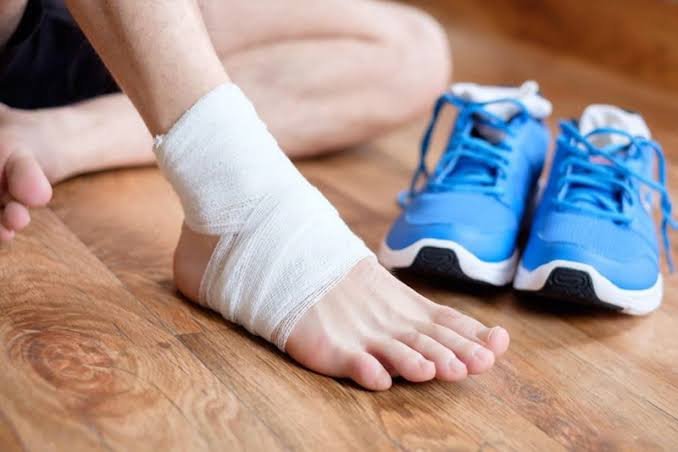
Ankle sprain is the most common acute sports injury across virtually all sports in adults, accounting for a significant proportion of all sports-related emergency and primary care presentations. Lateral ankle sprain from inversion is the predominant form; management and prevention are described in our guide to ligament sprains.
Hamstring and calf strains are the most common acute muscle injuries in running and field sports, following the eccentric loading mechanism described in our guide to muscle strain. Both have high re-injury rates without adequate rehabilitation.
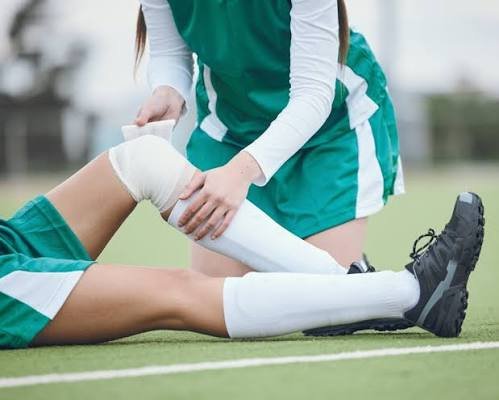
Knee ligament injuries: the MCL is most commonly sprained in adult recreational sport; ACL tears are less common but more disabling. The knee is also prone to meniscal tears in adults — often presenting after a seemingly minor twisting incident on a knee with pre-existing degenerative meniscal change.
Shoulder injuries: rotator cuff tendinopathy and tears are increasingly prevalent with age and overhead sporting demands. Shoulder impingement, AC joint sprains from cycling falls, and SLAP labral tears from overhead throwing sports are other common shoulder injuries in adult recreational athletes.
Back pain in sport: up to 80% of adults will experience significant back pain during their lifetime, and sport can both trigger acute episodes and provide long-term protection through the conditioning of spinal stabilising muscles. Acute lumbar muscle and ligament strains, disc herniations under sport load, and sacroiliac joint irritation are all sports-related back presentations. Our guides to lower back pain causes and herniated disc cover these in detail.
Sport-Specific Injury Patterns
Running is predominantly an overuse injury sport. The repetitive impact of 600–800 steps per minute on the same tissues creates the conditions for Achilles tendinopathy, patellar tendinopathy, patellofemoral pain, IT band syndrome, stress fractures, and shin splints — all described in our guide to overuse injuries. Acute injuries do occur — ankle sprains, hamstring and calf strains — but are less dominant than overuse. Successful injury prevention in runners centres on gradual load progression (the ACWR principle), regular strength training for the hip and calf, and appropriate footwear management.
Football, rugby, and contact sports produce the broadest spectrum of adult sports injuries, including acute trauma (ankle sprains, hamstring strains, ACL tears, shoulder dislocations, and fractures from collisions) and overuse injuries from training volume. Concussion is an increasingly important concern in contact sports — see the section below. The FIFA 11+ programme has the strongest evidence base for reducing injury rates across multiple injury types in football players.
Cycling produces a distinctive injury pattern: overuse injuries dominate (knee pain from patellofemoral or IT band issues, lower back pain from sustained flexed posture, “cyclist’s neck” from prolonged cervical flexion, Achilles and calf overuse); acute injuries from falls produce clavicle fractures, acromioclavicular joint sprains, and road rash. Bike fit is a significant modifiable risk factor for cycling overuse injuries — saddle height, cleat position, and handlebar reach all influence the loading pattern on the knees, back, and neck.
Gym and weightlifting injuries in adults most commonly involve the lumbar spine (acute strain from overloaded or poorly executed lifts), shoulder (rotator cuff, AC joint, biceps tendon), and knee (patellar tendon from squatting). The principles of our guide to lifting safely apply directly — neutral spine, core bracing, appropriate progressive load, and avoiding twisting under load.
Swimming produces primarily shoulder overuse injuries — “swimmer’s shoulder” is a common presentation of rotator cuff tendinopathy from the high volume of shoulder rotation in freestyle and butterfly strokes. Unlike most other sports, swimming is very low impact for the lower limbs and is an excellent cross-training option for adults recovering from lower limb overuse injuries.
Concussion in Adult Sport
Concussion — a traumatic brain injury caused by a biomechanical force to the head or body that results in neuropathological changes — has become one of the most discussed topics in adult sport. The management principles are clear and evidence-based:
Immediate: remove from play. Any player who is suspected of having a concussion must be removed from the field or court immediately, regardless of the stage of the game or the player’s insistence that they are fine. No same-day return to play is permitted. This is universal guidance from the UK’s Concussion in Sport guidelines, the International Consensus Statement on Concussion in Sport, and every major sports governing body.
Assessment: SCAT5. The Sport Concussion Assessment Tool (5th edition) is the internationally standardised tool for on- and off-field concussion assessment, covering symptoms, cognitive testing (orientation, concentration), balance, and coordination. It should be administered by a trained healthcare professional; a normal initial SCAT5 does not rule out concussion, which may evolve over hours.
Emergency red flags that require immediate 999 call: loss of consciousness of any duration; convulsion or seizure; deteriorating consciousness or confusion; repeated vomiting; visible deformity of the skull; focal neurological signs (weakness, sensory loss, speech difficulty, visual disturbance); unusual drowsiness. These suggest a more serious brain injury beyond concussion.
Graduated return to sport: the internationally recommended protocol involves six stages, with a minimum of 24 hours at each stage before progressing. The stages are: (1) symptom-limited activity (rest); (2) light aerobic exercise (walking, swimming — no resistance training); (3) sport-specific exercise (no head impact); (4) non-contact training; (5) full contact practice; (6) return to competition. Total minimum time from symptom resolution to full return is typically 6 days for adults. Children and adolescents require longer protocols. Any symptoms recurring at a given stage require returning to the previous stage.
Warm-Up, Cool-Down, and Neuromuscular Training
Structured warm-up and neuromuscular training programmes have among the strongest injury prevention evidence in sports medicine. The FIFA 11+ programme — a structured warm-up developed by the FIFA Medical Assessment and Research Centre — consists of three parts (running exercises, strength and balance exercises, and plyometrics) delivered over approximately 20 minutes, 2–3 times per week as a replacement for the standard warm-up. Multiple randomised controlled trials have demonstrated:
- Approximately 30–50% reduction in training injuries
- Approximately 35% reduction in match injuries
- Specific reductions in ACL injuries, ankle sprains, and hamstring strains
The mechanism is threefold: the programme builds core stability, hip and knee strength, and proprioceptive control — the neuromuscular qualities that protect the ligaments, tendons, and muscles under the dynamic demands of sport. While the FIFA 11+ was developed for football, its principles — structured neuromuscular warm-up replacing passive stretching — have been adapted for other sports and shown similar benefits.
General warm-up evidence is more modest in its specific effect sizes, but the physiological rationale is strong: raising muscle temperature improves contractile properties and elasticity, increasing nervous system readiness, and mentally preparing for the demands of the activity. A minimum of 10–15 minutes of progressive aerobic activity (light jogging to brisk running) followed by dynamic movements specific to the sport (lunges, leg swings, lateral shuffles) is the standard recommendation.
Return to Sport — Getting It Right
The most consistent finding in sports injury prevention research is that previous injury is the strongest predictor of future injury — athletes with a history of a specific injury are significantly more likely to sustain the same injury again than uninjured athletes. This is primarily because inadequate rehabilitation leaves the healed tissue mechanically inferior to the original, and because the neuromuscular control deficits from the injury (particularly proprioception) are not fully restored.
Return-to-sport decisions should be based on functional criteria rather than time alone: full pain-free range of motion; strength at least 90% of the uninjured side on relevant testing (isokinetic strength testing where available, or standardised clinical tests); successful completion of sport-specific movement tests (change of direction, cutting, sprint, jump-land) without pain or apprehension; and, increasingly recognised as important, psychological readiness — the athlete’s confidence in their ability to perform the demands of their sport without fear of re-injury. Fear-avoidance behaviour (excessive movement restriction and avoidance of loading based on fear rather than tissue insufficiency) can prevent functional recovery even when physical criteria are met.
Pre-participation screening — assessing injury history, movement quality, and strength symmetry before a new season or return from injury — is standard practice in professional sport and increasingly available to recreational athletes through physiotherapy and sports medicine clinics. Identifying the high-risk athlete (those with prior injury, asymmetric strength, or poor movement control) before the season allows targeted intervention.
When to Seek Medical Assessment for a Sports Injury
Most minor sports injuries can be managed with self-care following the PEACE & LOVE framework. Seek medical assessment — via GP, minor injuries unit, or emergency department depending on urgency — in the following situations:
- Suspected fracture: inability to bear weight, bony point tenderness, significant deformity, mechanism consistent with fracture
- Suspected dislocation: visible joint deformity, complete loss of movement, major mechanism
- Neurovascular compromise: numbness, tingling, significant weakness, or pallor of the limb below the injury
- Significant haemarthrosis: rapid, tense swelling of a joint (particularly the knee) within hours of injury, suggesting ACL tear or internal derangement
- Head injury with any red flag features: as listed in the concussion section above
- Injury that is not improving as expected: a minor sprain still significantly symptomatic at 2–3 weeks, or any injury with worsening rather than improving symptoms
Frequently Asked Questions
What are the most common sports injuries in adults?
The most common sports injuries in adult recreational athletes are: ankle sprain (the single most common acute sports injury across virtually all sports); hamstring strain (particularly in running and field sports); knee injuries including MCL sprain and patellar tendinopathy; rotator cuff tendinopathy and impingement syndrome in overhead sports; Achilles tendinopathy in runners; lower back muscle strains; and overuse conditions including IT band syndrome, patellofemoral pain, and stress fractures. Adults over 35 experience proportionally more overuse injuries relative to acute trauma than younger athletes, reflecting the cumulative effects of prior tissue loading and age-related changes in tissue healing and repair capacity.
How long should I rest after a sports injury?
The answer depends entirely on the nature and severity of the injury. Modern sports medicine guidance (particularly the PEACE & LOVE framework) recommends against complete rest for most soft tissue injuries beyond the first 1–3 days of protection. Early active rehabilitation — beginning gentle range of motion and pain-free loading within the first week — consistently produces better recovery than prolonged rest. The exception is bone stress injuries (stress fractures), where the affected limb may need to be non-weight-bearing for several weeks. For any injury that is not clearly minor, physiotherapy assessment — to determine the grade, design an appropriate loading programme, and guide the return-to-sport progression — provides the most accurate guidance on recovery timeline and safe return.
Can I prevent sports injuries with a warm-up?
A structured warm-up reduces injury risk, but the evidence is clearest for specific neuromuscular warm-up programmes rather than passive stretching. The FIFA 11+ programme, originally developed for football but applicable across sports, has the strongest evidence base — randomised controlled trials show 30–50% reductions in training injuries and approximately 35% reductions in match injuries across ankle sprains, hamstring strains, and ACL injuries. The active components (running drills, strength exercises, balance work, and plyometrics) build the neuromuscular control qualities that protect ligaments and tendons under sport demands. Static stretching alone before exercise does not significantly reduce injury rates and may temporarily reduce muscle performance; active dynamic warm-up is preferable.
What should I do if I have a concussion during sport?
If you suspect a concussion — any head injury with dizziness, headache, confusion, feeling “foggy,” loss of balance, nausea, or brief loss of consciousness — you must stop playing immediately and not return on the same day. Seek assessment from the medical team on site, or from your GP or a minor injuries unit as soon as possible. Call 999 immediately if there is loss of consciousness, repeated vomiting, convulsions, worsening confusion, or any focal neurological symptoms (weakness, speech difficulty, visual disturbance). After assessment, follow the graduated 6-stage return-to-sport protocol — do not shortcut the stages even if symptoms have resolved, as the brain needs full recovery time. Most adults recover from a single uncomplicated concussion within 7–14 days with appropriate management.
Does age affect sports injury recovery?
Yes — age affects both injury risk and recovery capacity. Collagen synthesis and muscle protein synthesis decline with age, so soft tissue injuries (muscle strains, ligament sprains, tendinopathy) heal more slowly in adults than in teenagers. The baseline level of degenerative change (disc degeneration, cartilage thinning, tendon degeneration) also increases with age, meaning new acute injuries are often superimposed on pre-existing changes that complicate recovery. In practice, adults should expect recovery timelines to be 20–30% longer than published averages based on younger athletic populations, should pace rehabilitation accordingly, and should not be discouraged when their recovery appears slower than they anticipated from previous experience in their twenties or thirties.
Why do I keep re-injuring the same area?
Recurrent injury to the same site is one of the most common problems in adult sport, and it almost always reflects one of three failures: inadequate rehabilitation of the original injury (the tissue was not fully restored before the demands of sport were resumed); premature return to sport based on time rather than functional criteria (the tissue looked healed but was not yet strong enough); or an unaddressed underlying cause (a proprioceptive deficit after ankle sprain, a persistent strength asymmetry, a biomechanical issue that continues to overload the same structure). Previous injury is the single strongest predictor of re-injury across virtually all sports injury types. Addressing the reason for the first injury — not just the injury itself — is the critical step that prevents recurrence.
Should I see a physiotherapist or a doctor for a sports injury?
For most soft tissue sports injuries — muscle strains, ligament sprains, tendinopathy, bursitis — a physiotherapist is often the most appropriate and direct route to management. Physiotherapists can diagnose the grade and nature of soft tissue injuries, prescribe and supervise the rehabilitation programme, and guide the return-to-sport progression. For injuries where a fracture, dislocation, significant ligament rupture, or neurological injury needs to be excluded, or where imaging is required, a GP referral or emergency/minor injuries unit attendance is the appropriate first step. Suspected ACL tears, significant knee haemarthrosis, and complete tendon ruptures benefit from orthopaedic review. In practice, many adults go to a physiotherapist first for a sports injury assessment — most experienced physiotherapists will refer for medical assessment or imaging if indicated.
Summary
Sports injuries in adults reflect a distinctive combination of overuse predominance, slower tissue healing, accumulated degenerative change, and return-to-sport challenges after periods of deconditioning. The most common injuries — ankle sprain, hamstring and calf strain, knee ligament injuries, rotator cuff tendinopathy, Achilles tendinopathy, and back pain — all have well-evidenced management pathways. Structured neuromuscular warm-up programmes (particularly FIFA 11+) reduce injury rates by 30–50%. Concussion requires immediate removal from play and a graduated 6-stage return-to-sport protocol. Return to sport should be based on functional criteria rather than time, with particular attention to prior injury as the strongest recurrence predictor. Our guides to muscle strain, ligament sprains, tendon injury, and overuse injuries provide detailed management guidance for the specific injury types covered here.
Medical disclaimer: This article is for general educational purposes and does not constitute medical advice. Consult a qualified healthcare professional for assessment and management of sports injuries.
References:
NHS. Sports injuries. nhs.uk. 2023.
Versus Arthritis. Muscle and joint conditions. versusarthritis.org. 2023.
Soligard T et al. Comprehensive warm-up programme to prevent injuries in young female footballers (FIFA 11+). BMJ. 2008.
McCrory P et al. Consensus statement on concussion in sport — the 5th International Conference on Concussion in Sport. Br J Sports Med. 2017.
Really useful article. I’m 48 and came back to football after a 5-year gap and got a hamstring strain within three weeks. Reading this I can see I went back at full intensity straight away which was clearly the problem. The point about the acute:chronic workload ratio makes complete sense in retrospect.
Thank you David – this is such a common story. The temptation after a long gap is to jump straight back to previous intensity, but the tissues need time to rebuild their capacity. Starting at 60-70% of previous volume and progressively building over 4-6 weeks makes a significant difference to injury risk. Hope the rehabilitation is going well.
The concussion section is something every adult sports player should read. My club still has players shaking it off and going back on the same day which is obviously wrong. I’ll be sharing this with the committee. The 6-stage graduated return protocol is very clear.