
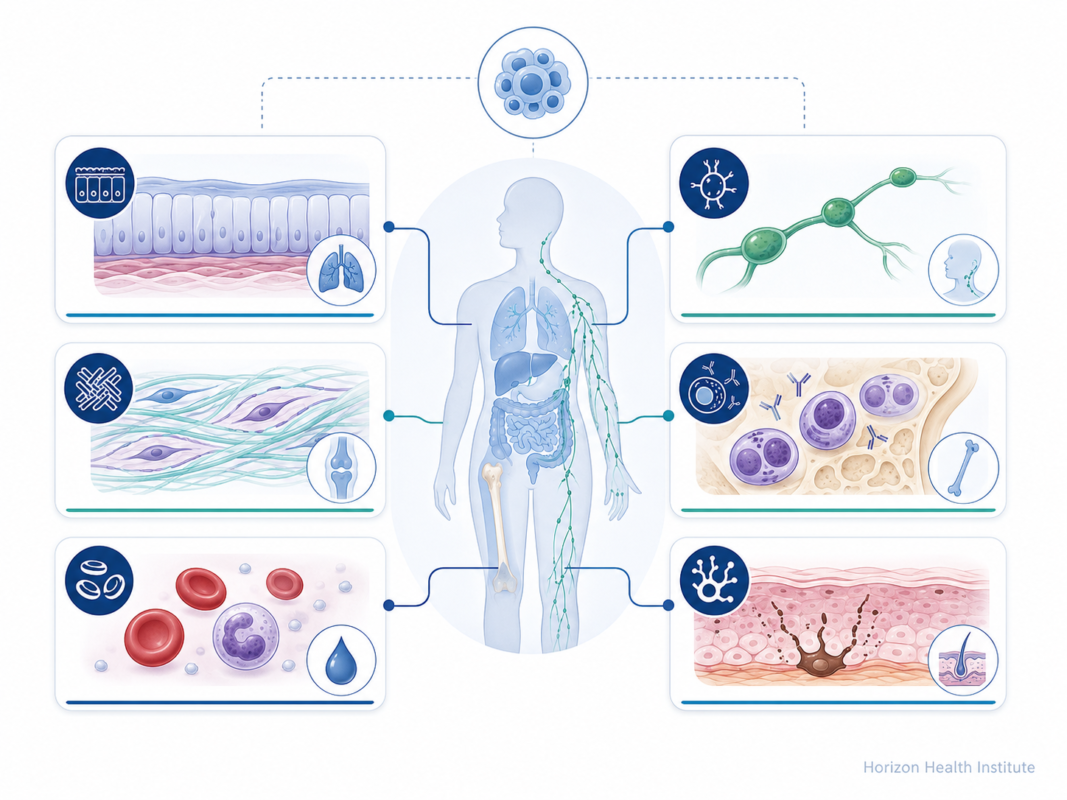
Types of Cancer: A Clear Guide to Major Cancer Categories and Common Cancer Sites
Cancer is not one disease. It is a large group of diseases that can begin in many different tissues, behave in different ways, and require different approaches to diagnosis, treatment, and follow-up care. Understanding the main types of cancer helps patients and families read pathology reports, ask better questions, and understand why modern cancer care often involves imaging, biopsy, laboratory testing, biomarker testing, and long-term monitoring.
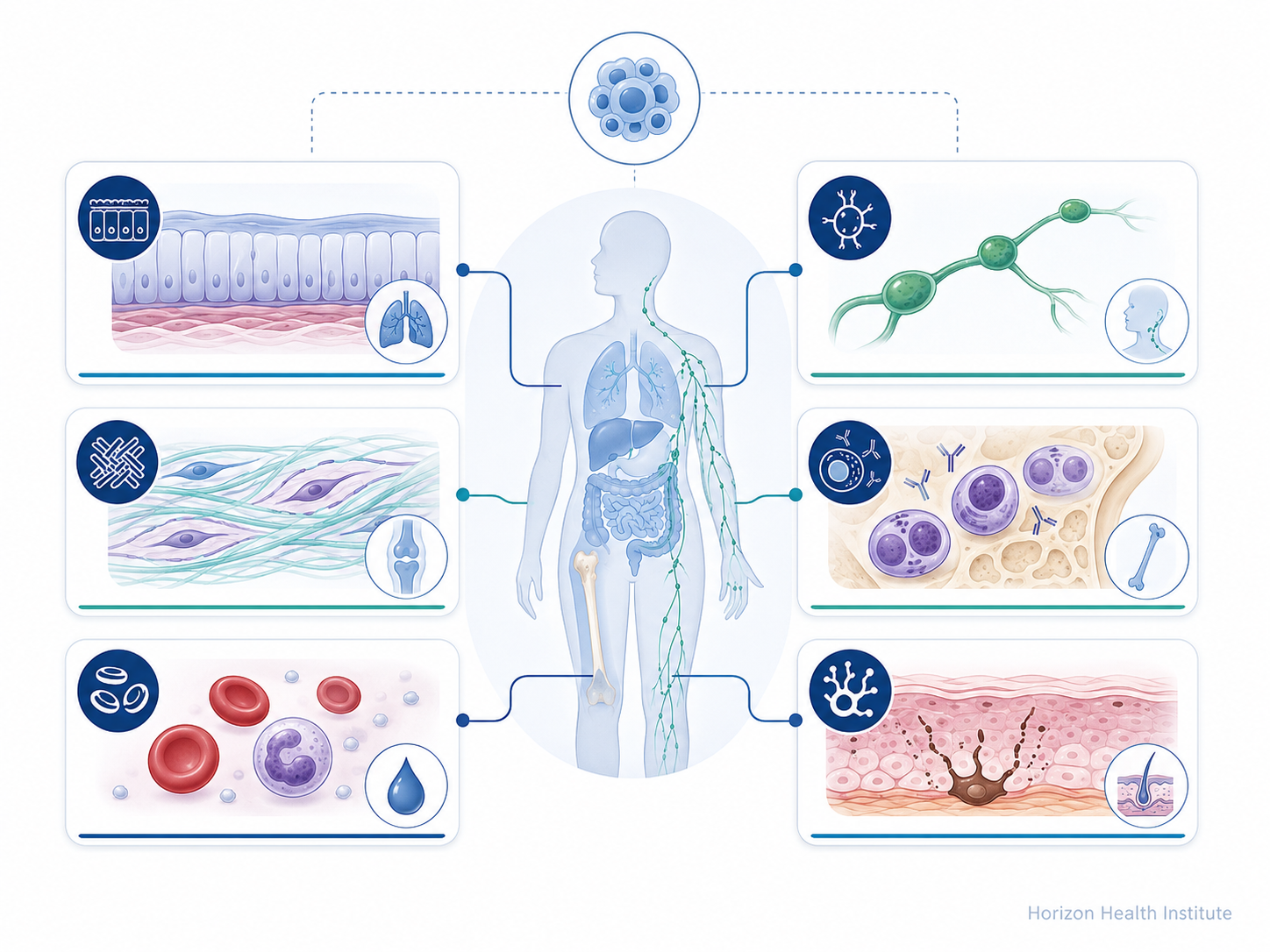
Doctors classify cancer by the tissue where it begins and by the body site where it first develops.
A lung cancer that spreads to bone is still lung cancer, not bone cancer, because the original site guides care.
Pathology and biomarker testing can help identify the cancer type and match treatment to tumor biology.
Sources used for medical review: National Cancer Institute, SEER/NCI, American Cancer Society, and CDC cancer statistics resources.
How Doctors Classify Cancer
Cancer classification is more than a label. It helps clinicians understand where the disease started, what kind of cells are involved, how the tumor may behave, which tests are needed, and which treatments are most likely to help.
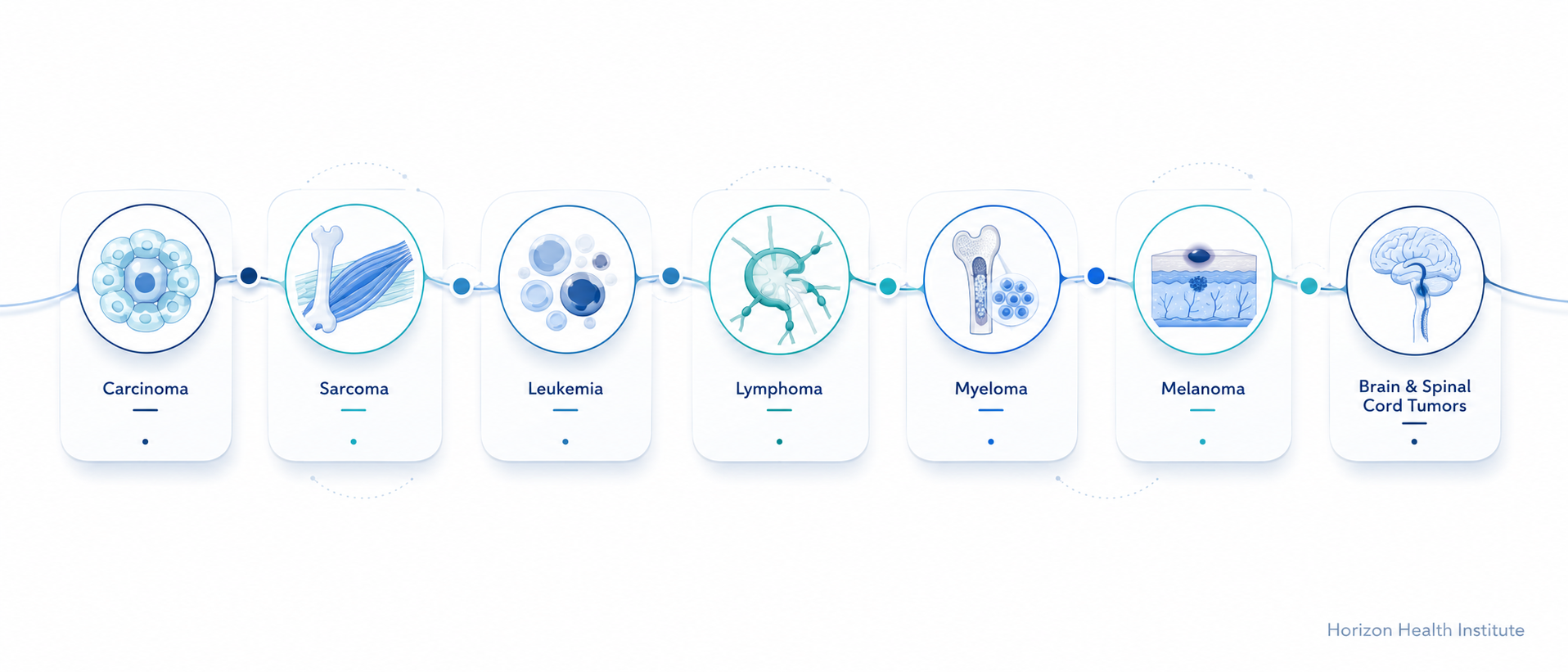
In clinical practice, cancer is commonly described in two major ways: by the type of tissue where it begins and by the primary site, meaning the original location in the body. For example, breast cancer, prostate cancer, lung cancer, and colorectal cancer are named by primary site. Carcinoma, sarcoma, leukemia, lymphoma, and myeloma describe broader biologic categories.
A key point: metastatic cancer is named after where it started. If colon cancer spreads to the liver, it is still treated as metastatic colon cancer, not primary liver cancer.
Major Categories of Cancer
The major cancer categories below are based on the tissue or cell type where the cancer begins. This is why a pathology report is so important: it helps confirm the exact cancer type under the microscope and, when needed, with molecular or biomarker testing.
Carcinoma
Carcinoma begins in epithelial tissue, which lines the skin, organs, glands, and internal body surfaces. It is the most common broad category of cancer.
- Common examples include breast, lung, prostate, colon, bladder, and many skin cancers.
- Major subtypes include adenocarcinoma and squamous cell carcinoma.
- Diagnosis often involves imaging, biopsy, pathology review, and sometimes biomarker testing.
Sarcoma
Sarcoma begins in connective or supportive tissues such as bone, muscle, fat, cartilage, blood vessels, or soft tissue.
- Examples include osteosarcoma, liposarcoma, leiomyosarcoma, and angiosarcoma.
- Sarcomas are less common than carcinomas and often need specialty evaluation.
- MRI, CT, biopsy, and expert pathology review are often important in diagnosis.
Leukemia
Leukemia is a cancer of blood-forming tissues, usually involving the bone marrow and blood cells.
- It may be acute or chronic, depending on how quickly it develops.
- Common tests include complete blood count, blood smear, bone marrow biopsy, flow cytometry, and genetic testing.
- Symptoms may include fatigue, infections, easy bruising, fever, or abnormal blood counts.
Lymphoma
Lymphoma begins in lymphocytes, a type of white blood cell that is part of the immune system.
- Main groups include Hodgkin lymphoma and non-Hodgkin lymphoma.
- It may involve lymph nodes, spleen, bone marrow, or other organs.
- Diagnosis usually requires tissue biopsy, pathology, imaging, and sometimes molecular testing.
Myeloma
Myeloma begins in plasma cells, immune cells found mainly in the bone marrow.
- Multiple myeloma can affect bones, kidneys, blood counts, and immune function.
- Testing may include blood protein studies, urine testing, bone marrow biopsy, and imaging.
- Modern treatments may include targeted therapy, immunotherapy, and stem cell transplant in selected patients.
Melanoma
Melanoma begins in melanocytes, the pigment-producing cells found mostly in the skin, but it can also occur in the eye or mucosal surfaces.
- It is less common than many skin cancers but can be more likely to spread if not detected early.
- Evaluation may include skin exam, biopsy, staging imaging, and tumor mutation testing.
- Modern immunotherapy and targeted therapy have changed treatment for many advanced melanoma patients.
Reference: SEER/NCI describes cancer classification by tissue type and primary site, including carcinoma, sarcoma, myeloma, leukemia, lymphoma, and mixed types.
Common Cancer Sites in the United States
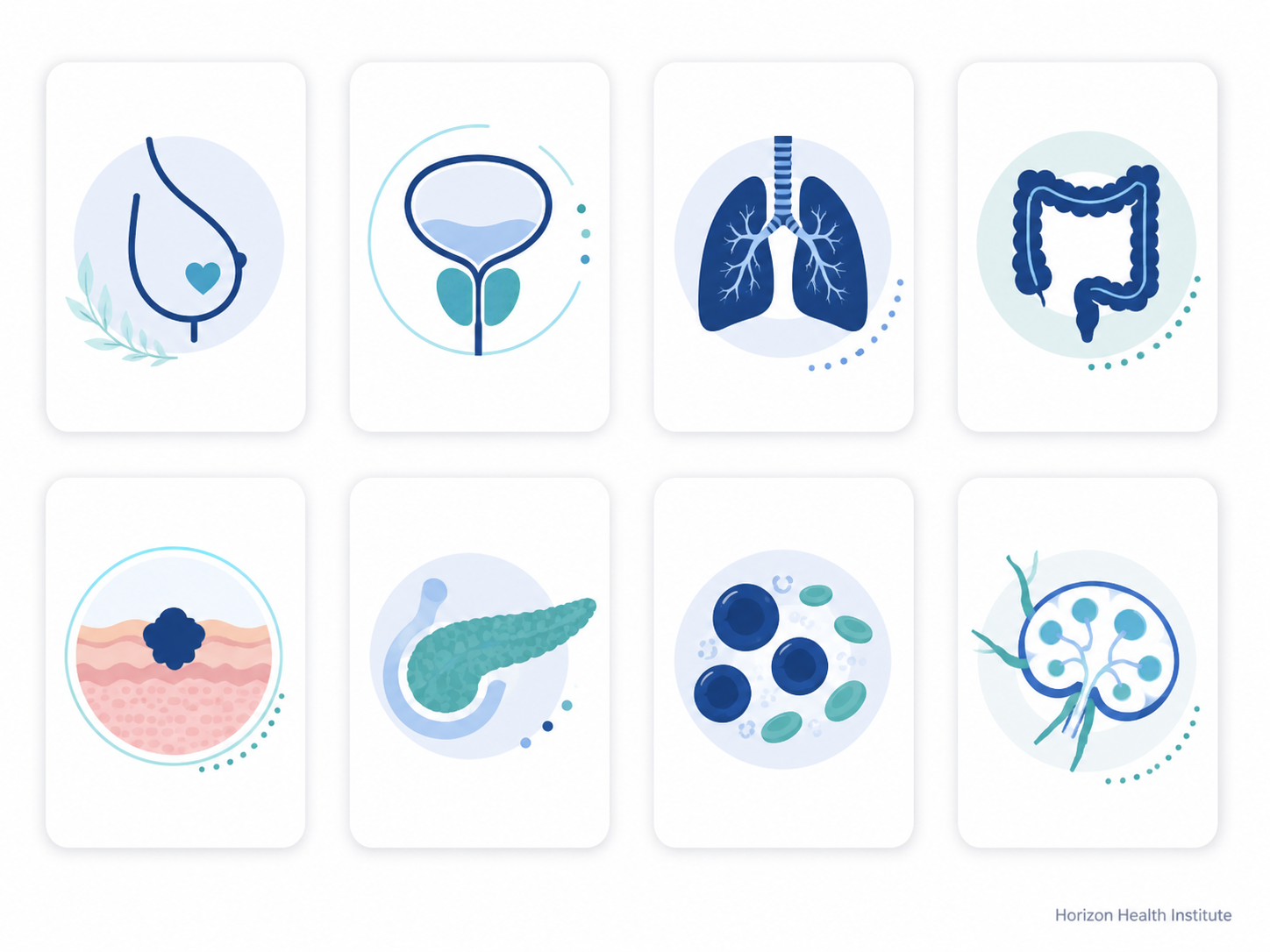
Another way to understand cancer is by the organ or body site where it first develops. In the United States, common cancer sites include prostate, breast, lung and bronchus, colorectal, melanoma of the skin, bladder, kidney, uterus, leukemia, pancreatic, thyroid, and non-Hodgkin lymphoma.
According to 2026 U.S. estimates reported through ACS/SEER cancer statistics, prostate cancer is projected to be the leading new cancer diagnosis, followed by breast cancer and lung and bronchus cancer. Lung and bronchus cancer is projected to cause the most cancer deaths, followed by colorectal cancer and pancreatic cancer.
| Common cancer site | What it means | Common diagnostic tools | Why early evaluation matters |
|---|---|---|---|
| Breast cancer | Begins in breast tissue, often ducts or lobules. | Mammogram, ultrasound, MRI, biopsy, hormone receptor and HER2 testing. | Earlier-stage breast cancer often has more treatment options and better outcomes. |
| Prostate cancer | Begins in the prostate gland. | PSA blood test, digital rectal exam, MRI, biopsy, genomic testing in selected cases. | Some prostate cancers grow slowly, while others need active treatment. |
| Lung cancer | Begins in lung tissue or bronchial airways. | Low-dose CT screening for eligible high-risk adults, CT scan, biopsy, biomarker testing. | Finding lung cancer earlier can make surgery, radiation, or targeted treatment more feasible. |
| Colorectal cancer | Begins in the colon or rectum, often from precancerous polyps. | Colonoscopy, stool tests, CT imaging, biopsy, mismatch repair or MSI testing. | Screening can detect cancer early and may also prevent cancer by removing polyps. |
| Melanoma | Begins in pigment-producing melanocytes, usually in the skin. | Skin exam, dermoscopy, biopsy, lymph node evaluation, mutation testing for advanced disease. | Early melanoma can often be treated surgically before it spreads. |
| Pancreatic cancer | Begins in the pancreas, an organ involved in digestion and blood sugar regulation. | CT, MRI/MRCP, endoscopic ultrasound, biopsy, CA 19-9 in selected clinical contexts. | Symptoms may appear late, so persistent warning signs need careful medical evaluation. |
| Leukemia and lymphoma | Begin in blood-forming tissues or lymphatic immune cells. | Blood tests, bone marrow biopsy, lymph node biopsy, flow cytometry, cytogenetic and molecular testing. | Accurate subtype identification is essential because treatment varies widely. |
Source note: SEER Cancer Stat Facts reports 2026 U.S. estimates of roughly 2.1 million new cancer diagnoses and 626,140 cancer deaths, with lung and bronchus cancer projected to cause the largest number of cancer deaths.
Why the Exact Cancer Type Changes the Care Plan
Two cancers can occur in the same organ but behave very differently. For example, lung cancer includes several subtypes, and breast cancer treatment often depends on hormone receptors, HER2 status, stage, grade, and other tumor features. This is why modern oncology is not based on the cancer name alone. It combines clinical evaluation, imaging, pathology, and molecular information.
1. Clinical evaluation
The process often begins with symptoms, screening results, family history, physical examination, and review of risk factors. This helps determine the most appropriate next test.
2. Imaging
Imaging tests such as ultrasound, mammography, CT, MRI, PET/CT, or X-ray can help locate a suspicious area, estimate extent of disease, and guide biopsy planning.
3. Biopsy and pathology
A biopsy allows tissue to be examined under a microscope. Pathology can confirm whether cancer is present, identify the cancer type, and describe features such as grade or tumor pattern.
4. Biomarker testing
Biomarker or molecular testing can identify changes in cancer cells that may help guide targeted therapy, immunotherapy, clinical trial options, or prognosis in selected cancers.
Solid Tumors vs. Blood Cancers
Many cancers form a mass or tumor in an organ or tissue. These are often called solid tumors. Examples include breast cancer, lung cancer, colorectal cancer, prostate cancer, melanoma, kidney cancer, thyroid cancer, and many sarcomas.
Blood cancers, such as leukemia, lymphoma, and myeloma, usually involve the blood, bone marrow, lymph nodes, or immune cells. They may not always appear as one single mass. Instead, they may show up through abnormal blood counts, enlarged lymph nodes, bone pain, infections, fatigue, or changes seen on specialized laboratory testing.
The practical message: the right diagnosis depends on matching the cancer’s location, cell type, stage, and molecular features—not just the first symptom a person notices.
What Patients Should Ask After Learning the Cancer Type
A cancer diagnosis can feel overwhelming, but clear questions can help patients understand the next step. Horizon Health Institute encourages readers to organize their questions around the diagnosis, stage, testing, and follow-up plan.
| Question to ask | Why it matters |
|---|---|
| What is the exact cancer type and subtype? | The subtype can affect treatment options, prognosis, and whether additional testing is needed. |
| Where did the cancer start? | The primary site usually guides treatment, even if the cancer has spread to another area. |
| What stage is it? | Stage describes how far cancer has spread and helps guide treatment planning. |
| Do I need biomarker or genetic testing? | Some cancers have molecular features that can guide targeted therapy or immunotherapy. |
| What imaging or lab tests are needed next? | Testing helps confirm the diagnosis, plan treatment, and establish a baseline for monitoring. |
| How will treatment response be monitored? | Follow-up may include physical exams, labs, imaging, symptom review, and survivorship care planning. |
The Role of Modern Medicine in Understanding Cancer Types
Cancer care has become more precise because doctors can now combine multiple layers of information. Imaging can show where a tumor is located. Pathology can identify the cancer under the microscope. Laboratory tests can show how the body is responding. Biomarker testing can reveal tumor features that may affect therapy. Follow-up monitoring can help detect recurrence, treatment side effects, or long-term health needs.
This does not mean every person needs every test. The best testing plan depends on the suspected cancer type, symptoms, age, risk factors, screening history, and the judgment of the care team.

References
This Horizon Health Institute article was prepared using publicly available educational and statistical resources from leading cancer organizations. Readers should use these sources for deeper learning and updated statistics.
SEER / National Cancer Institute
Cancer classification by tissue type and primary site; U.S. cancer statistics by site.
American Cancer Society
Cancer Facts & Figures 2026, including estimated new cases, deaths, risk factors, early detection, and treatment information.
CDC U.S. Cancer Statistics
U.S. cancer data visualization resources for incidence, mortality, trends, survival, and prevalence.
Horizon Health Institute creates evidence-informed health education content for readers who want clear, practical, and trustworthy explanations of medical topics.
This is one of the clearest explanations of types of cancer: a clear guide I have found. I have tried following advice from several sources but this is the most consistent with what my specialist told me. This is going into my health binder that I bring to every doctor’s visit.
Really well-written article on types of cancer: a clear guide. I have tried following advice from several sources but this is the most consistent with what my specialist told me. Will definitely be coming back to this site for more health information.
I shared this article on types of cancer: a clear guide with my doctor and they appreciated the level of detail. I appreciated how the article addressed both the clinical side and the practical lifestyle adjustments. I wish I had found this article when I was first diagnosed — would have saved a lot of confusion.
My doctor recommended I look into types of cancer: a clear guide and this article covered it perfectly. The section on managing this condition day-to-day was especially useful for planning. Thank you for making complex medical information accessible without dumbing it down.
Bookmarked this article on types of cancer: a clear guide immediately — going to reference it regularly. The specific numbers and thresholds mentioned are exactly what I needed to understand my results. Appreciate the effort that went into researching and writing this — it shows.
My doctor recommended I look into types of cancer: a clear guide and this article covered it perfectly. It is refreshing to see an article that acknowledges individual variation rather than one-size-fits-all advice. I wish I had found this article earlier — would have saved a lot of confusion.