
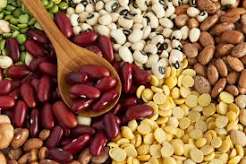
Beans, lentils, and other legumes are the most nutritionally significant food group for digestive health that most people in Western populations eat too infrequently. They are the most fibre-dense commonly available foods, providing 7–9g of fibre per 100g cooked — two to three times more than most vegetables and wholegrains. They provide both soluble and insoluble fibre, plus resistant starch and prebiotic oligosaccharides. The relationship between beans and digestive health operates through multiple independent and synergistic mechanisms that make legumes uniquely valuable for gut function and long-term colorectal health.
Despite this, beans are consumed infrequently by most Western adults — partly due to concerns about gas and bloating. This guide addresses the evidence for legume benefits, the mechanisms behind the bloating concern, and practical strategies that allow legumes to be incorporated at gut-health-supporting frequencies without digestive discomfort.
Why Beans Are the Most Important Food for Gut Health
The evidence for legumes as the single most impactful food category for long-term digestive health rests on several converging lines of research. Epidemiological studies across multiple continents consistently find that populations with high legume consumption have substantially lower rates of colorectal cancer, constipation, diverticular disease, and gut dysbiosis compared with populations with low legume intake — even after controlling for other dietary variables.
The mechanistic basis for this benefit is multifaceted and better characterised than for almost any other food category. Legumes provide:
- Soluble fibre (pectin, galacto-oligosaccharides): forms gel; prebiotic; feeds Bifidobacterium; produces acetate and propionate SCFAs
- Insoluble fibre (cellulose, hemicellulose): bulks stool; accelerates transit; reduces constipation and diverticular pressure
- Resistant starch (RS2 in raw/undercooked; RS3 in cooked-cooled): the most potent dietary butyrate production substrate; colonocyte fuel; anti-inflammatory in colonic tissue
- Galacto-oligosaccharides (GOS): specifically and powerfully stimulate Bifidobacterium growth — one of the best-evidenced prebiotics available in whole food form
- Plant protein: provides gut-relevant amino acids (glutamine especially) without the haem iron and N-nitroso compound risks associated with red meat protein
This combination — particularly the simultaneous provision of resistant starch and GOS — makes legumes the most potent single food category for butyrate production and Bifidobacterium stimulation available in the standard diet. No other food provides both of these in comparable quantities.
Butyrate — The Critical Link Between Beans and Gut Health
Butyrate is a short-chain fatty acid produced when gut bacteria ferment resistant starch and soluble fibre. It is the primary energy source for colonocytes — the cells lining the colon — providing approximately 60–70% of their total energy supply. Without adequate butyrate production, colonocytes become metabolically compromised: their renewal slows, the mucosal barrier weakens, and inflammatory signalling increases.
Beyond energy supply, butyrate has direct anti-inflammatory effects in colonic tissue: it inhibits NF-κB signalling, reduces pro-inflammatory cytokine production, and promotes regulatory immune states in the gut-associated lymphoid tissue. It also has well-documented epigenetic effects — inhibiting histone deacetylase enzymes in colonocytes in ways that upregulate tumour suppressor gene expression and suppress oncogene activity — providing the mechanistic basis for the consistent colorectal cancer risk reduction associated with high-fibre diets.
Legume resistant starch is among the most efficient dietary butyrate production substrates. Cooking and cooling legumes before eating increases resistant starch content (formation of RS3) substantially. Lentil soup stored overnight and eaten the next day, or a three-bean salad prepared in advance and refrigerated, delivers significantly more resistant starch than freshly cooked hot legumes.
The Fibre Profile of Different Legumes
Different legumes offer distinct fibre profiles and practical characteristics:
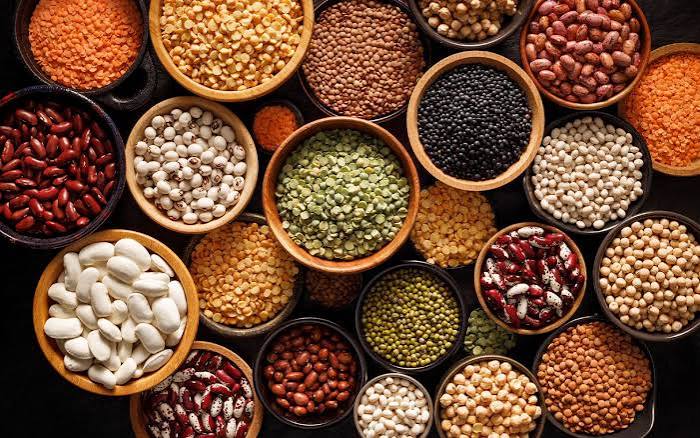
Lentils: 7.9g fibre per 100g cooked; fastest cooking time (no soaking required); highest prebiotic content of common legumes; red lentils in soups and curries provide the easiest daily integration. Green and brown lentils have a slightly firmer texture suitable for salads.
Chickpeas: 7.6g fibre per 100g cooked; high GOS content; versatile — hummus, roasted chickpeas, curries, salads; canned varieties are convenient and retain full fibre content (rinsing removes surface GOS, reducing initial gas effect).
Black beans: 8.7g fibre per 100g cooked — highest of common legumes; high anthocyanin content (polyphenol, anti-inflammatory); well-suited to soups, stews, tacos, and rice dishes.
Kidney beans: 7.4g fibre per 100g cooked; a common component of mixed bean dishes; contains lectins in raw form that must be destroyed by cooking (always boil from raw for at least 10 minutes; canned kidney beans are pre-cooked and safe).
Edamame (soybeans): 5.2g fibre per 100g; highest protein legume (11g/100g cooked); contains soy isoflavones with additional gut-protective properties.
Split peas: 8.3g fibre per 100g cooked; very high soluble fibre content; traditional pea soup provides a concentrated prebiotic dose with relatively low gas effect compared with some other legumes.
Managing Gas and Bloating
The gas and bloating associated with legumes is the primary reason most people limit them. This response occurs because GOS (galacto-oligosaccharides) are fermented rapidly by colonic bacteria, producing hydrogen and methane gas. The response is real, dose-dependent, and microbiome-dependent — people who eat legumes regularly experience substantially less gas than those who introduce them after a period of low intake, because the microbiome adapts to produce a more efficient, less gas-producing fermentation profile.
Practical management strategies, each with evidence:
- Rinse canned legumes: removes surface-level GOS that would otherwise ferment immediately; reduces gas by approximately 20–30% per serving
- Cook from dried with soaking and discard water: soaking overnight and discarding the water removes substantial GOS; cooking in fresh water further reduces it. Higher GOS removal than rinsing canned, but more labour-intensive
- Carminative spices: fennel seeds, cumin, asafoetida (hing), ginger, and bay leaf reduce fermentation gas through antimicrobial volatile compounds that selectively reduce gas-producing bacteria. Add to cooking water or sauté before adding legumes
- Gradual introduction: start with 2–3 tablespoons per serving (rather than a full portion), 3× per week; increase by one tablespoon per week over 3–4 weeks
- Digestive enzyme supplements (alpha-galactosidase): the enzyme that breaks down GOS; commercial product Beano contains this enzyme; taken immediately before eating legumes, reduces gas production significantly. Evidence: multiple small RCTs
Legumes and Colorectal Cancer Risk
The association between legume consumption and reduced colorectal cancer (CRC) risk is among the most consistent findings in gastrointestinal epidemiology. A systematic review and meta-analysis found that 3 or more servings of legumes per week was associated with a 25–30% reduction in CRC risk compared with low consumption, with a dose-response relationship.
Multiple mechanisms contribute to this protective effect beyond butyrate and its epigenetic effects on colonocytes:
- Reduced transit time (insoluble fibre) decreases carcinogen contact time with the colonic mucosa
- Prebiotic GOS increases Bifidobacterium populations that produce secondary metabolites with direct anti-cancer activity
- Legume plant protein displaces red and processed meat in the diet, reducing haem iron and N-nitroso compound exposure
- Folate in legumes (lentils are particularly rich at 179mcg/100g cooked) supports DNA methylation and repair — reducing mutation accumulation in colonic cells
- Phytochemicals (saponins, phytates, phenolic compounds in legume seed coats) have independent antiproliferative activity in colonic epithelial cell models
Practical Integration — Reaching 3 Servings Per Week
Three servings of legumes per week (each approximately 80–100g cooked) is the evidence threshold associated with CRC risk reduction. This is achievable through simple daily integration:
- Monday: red lentil soup (lentils cook in 20 minutes without soaking)
- Wednesday: chickpea salad or hummus as a dip alongside vegetables
- Friday: three-bean chilli, bean tacos, or black bean rice bowl
This rotation provides variety across legume types (different fibre and prebiotic profiles) while distributing the GOS load across the week rather than concentrating it in adjacent meals. Canned legumes are nutritionally equivalent to dried for fibre purposes and require zero preparation time beyond rinsing. For a full fibre-rich dietary framework, see our guide on high-fiber foods for better digestion, and for the complete digestive diet approach, see digestive health diet: a practical guide.
The Gut Microbiome Response to Regular Legume Consumption
The microbiome changes produced by regular legume intake are among the most reproducible and clinically significant dietary microbiome effects documented in the literature. Within 2–4 weeks of introducing 3+ weekly legume servings, measurable shifts occur in the composition and metabolic activity of the gut microbiome — most significantly, Bifidobacterium and Faecalibacterium prausnitzii populations increase substantially in most individuals.
Faecalibacterium prausnitzii is a butyrate-producing anaerobic bacterium that is among the most abundant species in a healthy adult gut and consistently depleted in people with Crohn’s disease, ulcerative colitis, IBS, and metabolic syndrome. It is exquisitely sensitive to dietary fibre availability and responds rapidly to increased legume intake. Its increase on a legume-rich diet is associated with reduced colonic inflammation markers, improved mucosal barrier function, and reduced intestinal permeability.
Bifidobacterium increases on a legume-rich diet primarily through the GOS (galacto-oligosaccharide) content. GOS are among the most selective prebiotics for Bifidobacterium known — more selective than inulin or FOS, which also stimulate Lactobacillus. Bifidobacterium species produce acetate (from GOS fermentation), which maintains a mildly acidic pH in the colon, inhibiting pathogen colonisation and supporting further Faecalibacterium prausnitzii growth in a positive feedback cycle.
These microbiome changes are not merely theoretical — they are associated in intervention studies with measurable improvements in stool consistency and frequency, reductions in inflammatory markers (calprotectin in stool; CRP in blood), and improvements in glycaemic control via SCFA-mediated gut-liver signalling. The microbiome response to legumes is the mechanism through which dietary fibre produces whole-body metabolic benefits beyond the gut itself.
Legumes and Diverticular Disease — Evidence for Prevention
Diverticular disease — the development of small pouches (diverticula) in the colon wall — affects approximately 50% of people over 60 in Western populations and is strongly associated with low dietary fibre intake and slow colonic transit. The Nurses’ Health Study and Health Professionals Follow-up Study — two of the largest and longest dietary intervention cohort studies ever conducted — consistently find that high dietary fibre intake, and legume consumption specifically, is associated with a substantially reduced risk of diverticular disease and diverticulitis (infected or inflamed diverticula).
The mechanism is straightforward: insoluble fibre from legumes accelerates colonic transit, reduces intraluminal pressure (the pressure that drives the herniation of mucosa through weak points in the colon wall to form diverticula), and produces larger, softer stools that require less muscular effort and pressure to move through the bowel. In addition, the butyrate produced from legume resistant starch supports colonocyte health and mucosal integrity, potentially reducing the tissue weakness that allows diverticula to form.
For people who already have diverticulosis (diverticula present but not inflamed), high-fibre eating — including legumes — is now the standard dietary recommendation to prevent progression to diverticulitis. The previous advice to avoid seeds and nuts (including legumes) to reduce diverticulitis risk has been reversed based on the epidemiological evidence: people eating the most fibre have the lowest, not the highest, rates of diverticulitis. A practical digestive health diet framework that incorporates legumes alongside other fibre-rich foods is available in our digestive health diet: a practical guide.
Legumes as a Protein Source — The Gut Health Advantage Over Meat
One of the most clinically significant aspects of legume consumption for digestive health is its role as a protein source that displaces animal protein — particularly red and processed meat — in the diet. This matters because the protein source has direct implications for gut health independent of fibre content.
Red meat and processed meat are consistently associated with increased colorectal cancer risk, and the mechanisms are well-characterised: haem iron promotes the formation of N-nitroso compounds (NOCs) in the colon — potent carcinogens that form directly from the haem group in contact with colonic bacteria. Processed meat also provides N-nitrosamines directly from the curing and smoking process. Both haem iron and NOCs damage colonocyte DNA in a dose-dependent way, and populations with high red and processed meat intake consistently show higher rates of CRC than those with low intake — even after controlling for fibre and other dietary variables.
Legume protein contains no haem iron (plant iron is non-haem, which does not promote NOC formation) and provides the full essential amino acid spectrum (when combined across a day with other plant proteins or complemented with small amounts of animal protein). The displacement of 100–150g red meat per day with 150–200g cooked legumes is associated in dietary modelling studies with a meaningful reduction in modelled CRC risk, independent of the fibre benefit from legumes themselves.
This protein displacement effect adds a second dimension to the 25–30% CRC risk reduction associated with high legume intake: it is not only that legumes provide beneficial fibre, butyrate, and prebiotic GOS — it is also that they replace a food category that is independently harmful to the colonic mucosa. The two effects compound to produce the epidemiologically observed risk reduction. For people eating red meat daily, shifting 2–3 meals per week to legume-based alternatives is one of the highest-impact dietary changes available for long-term colorectal health. For complementary fibre-rich foods that support this approach, see our overview of best foods for digestive health.
How Much Is a Serving of Legumes?
A standard serving of legumes for gut health purposes is approximately 80–100g cooked (roughly half a cup). This equates to about 40–45g dried legumes before cooking. Three servings per week — the threshold associated with meaningful CRC risk reduction in epidemiological studies — is achievable with minimal dietary disruption: two meals per week featuring legumes as a main protein source, plus one day with legumes as a side (such as hummus with vegetables, or lentil soup). A tin of chickpeas (240g drained weight) provides approximately 3 standard servings; a tin of lentils (240g drained) similarly provides 3 servings, making tinned legumes the most practical route to meeting the evidence-based intake threshold without any advance preparation. For a broader digestive health food framework, see our guide to fermented foods and gut health, which covers the complementary probiotic dimension of a gut-supportive diet.
Frequently Asked Questions
References:
- Bazzano LA, et al. “Legume consumption and risk of coronary heart disease in US men and women.” Arch Intern Med. 2001. Arch Intern Med 2001;161(21)
- NHS. “How to get more fibre into your diet.” NHS.uk
- British Dietetic Association. “Dietary fibre.” BDA Food Fact Sheet
- Halmos EP, et al. “A diet low in FODMAPs reduces symptoms of IBS.” Gastroenterology. 2014. Gastroenterology 2014
- Cummings JH, Macfarlane GT. “Colonic microflora: nutrition and health.” Nutrition. 1997. Nutrition 1997;13(5)
I’ve been avoiding beans for years because of the gas and this is the first article that actually explained the mechanism properly and gave me strategies that work. The gradual introduction tip made a huge difference — I started with two tablespoons of chickpeas in my salad three times a week and now I can eat a full portion without any issues. The note about the microbiome adapting after a few weeks was exactly right.
That’s great to hear, Sarah! The microbiome adaptation is genuinely surprising to most people — the first 2–3 weeks are the hardest because your gut hasn’t yet shifted toward a more efficient fermentation profile. Canned chickpeas rinsed under cold water are particularly good for gradual introduction because rinsing removes a significant amount of the surface GOS. Once you can tolerate a full portion regularly, the prebiotic benefit really kicks in. Thanks for sharing your experience!
The section on colorectal cancer risk reduction was eye-opening. I had no idea that eating beans three times a week was associated with a 25-30% reduction in risk. I’m 55 and my doctor has been telling me to increase fibre for years — now I have a concrete target and a mechanism that makes sense. The cooking-and-cooling tip for resistant starch was something I’d never heard before either.