
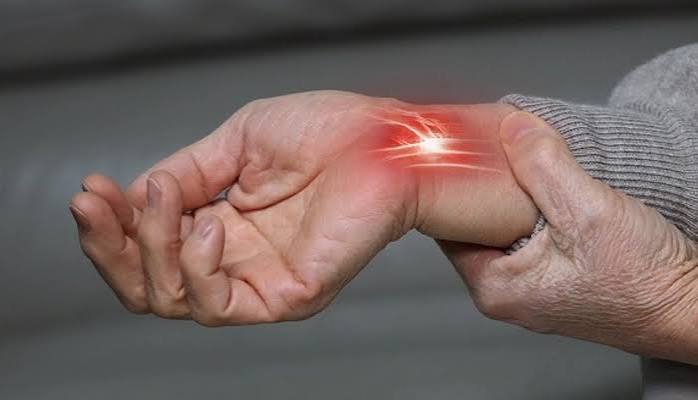
Waking up in the night with numb, tingling, or burning fingers — then shaking the hand to relieve it — is one of the most recognisable symptoms in medicine. Carpal tunnel syndrome is the most common peripheral nerve entrapment condition, affecting an estimated 3–4% of the adult population and up to 10% of adults over their lifetime. It is caused by compression of the median nerve as it passes through the carpal tunnel at the wrist, and it is both treatable and, in many cases, preventable through awareness of the risk factors and appropriate ergonomic adjustments.
What Is Carpal Tunnel Syndrome?
The carpal tunnel is a narrow, rigid fibro-osseous channel on the palm side of the wrist. Its floor and walls are formed by the eight carpal bones arranged in a shallow U-shape, and its roof is the flexor retinaculum — a thick fibrous band that holds the contents in place. Passing through this tunnel are the median nerve and nine flexor tendons that supply the fingers and thumb. Because the carpal bones and retinaculum are essentially rigid, any increase in pressure within this confined space is transmitted directly to the most vulnerable structure: the median nerve.
Raised pressure within the carpal tunnel compresses the median nerve, initially causing episodic ischaemia (reduced blood supply) that produces temporary sensory symptoms — the numbness and tingling of early carpal tunnel syndrome. With sustained or severe compression, persistent nerve fibre damage follows, producing constant symptoms, weakness, and in long-standing cases, irreversible wasting of the thenar muscles at the base of the thumb.
Symptoms of Carpal Tunnel Syndrome
The symptom pattern of carpal tunnel syndrome is distinctive enough that an experienced clinician can often make a confident diagnosis from the history alone — before any examination or investigation.
Numbness, tingling, and burning sensations waking the patient from sleep — often in the early hours of the morning. Relieved by shaking or hanging the hand out of bed (the “Flick sign”).
Thumb, index finger, middle finger, and the radial (thumb-side) half of the ring finger. The little finger is NOT affected — that is the ulnar nerve territory. The palm itself is typically spared.
Sustained grip or wrist flexion — driving, holding a phone, reading a book, typing. Activities that maintain the wrist in a flexed or extended position increase tunnel pressure and provoke symptoms.
Difficulty with precision grip tasks: fastening buttons, turning a key, opening a jar. In advanced cases, wasting of the thenar muscle pad at the base of the thumb is visible.
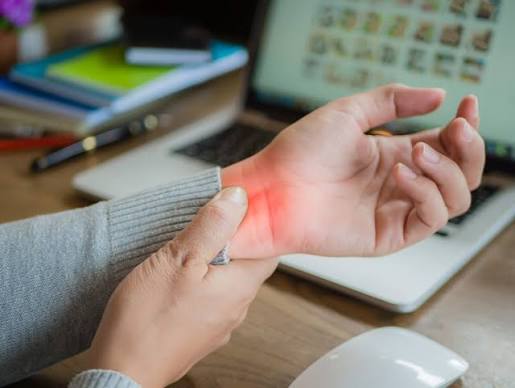
A useful self-test is the Flick sign: if shaking or dangling your hand relieves the symptoms within seconds, this has approximately 90% sensitivity and specificity for carpal tunnel syndrome. The mechanism is that shaking the hand shifts fluid within the tunnel, temporarily reducing the pressure on the median nerve. Tingling that does not respond to this manoeuvre — or that involves the little finger — is less likely to be carpal tunnel syndrome and warrants further assessment. General guidance on when sensory symptoms in the hands and arms need medical evaluation is in our article on when joint pain needs medical evaluation.
What Causes Carpal Tunnel Syndrome?
In most adults, carpal tunnel syndrome develops without a single identifiable cause — it is the result of gradual degenerative thickening of the flexor tenosynovium (the tissue surrounding the flexor tendons in the tunnel), which over time reduces the available space and increases pressure on the median nerve. However, several conditions and exposures substantially increase this process:
Systemic Conditions
Hypothyroidism is one of the most important systemic causes. Myxoedematous (mucoid) deposits accumulate in the carpal tunnel contents, directly increasing tunnel pressure. Carpal tunnel syndrome may be the presenting complaint of undiagnosed hypothyroidism, and thyroid function testing in new presentations — particularly in women over 40 — is a worthwhile screen. Diabetes mellitus increases CTS risk through peripheral nerve vulnerability and tendon glycation effects; both type 1 and type 2 are implicated. Rheumatoid arthritis causes tenosynovitis within the carpal tunnel, increasing the volume of the tunnel contents. Pregnancy — particularly the third trimester — causes fluid retention that raises tunnel pressure, typically producing nocturnal symptoms that resolve spontaneously within weeks of delivery in most women.
Other less common but relevant associations include gout (crystal deposits within the tunnel — more details in our guide to gout symptoms and prevention), acromegaly (soft tissue hypertrophy), chronic renal failure (amyloid deposition in dialysis patients), and obesity (fatty infiltration of tunnel contents).
Occupational and Mechanical Causes
The strongest occupational risk factors, as established by the US National Institute for Occupational Safety and Health (NIOSH), are the combination of high force + high repetition + vibrating tools. Any one factor alone carries moderate risk; the combination substantially amplifies it. Occupations at highest risk include:
- Assembly-line work requiring repetitive hand motions (food processing, manufacturing)
- Supermarket checkout (repetitive scanning motions)
- Construction and manual trades using vibrating tools (jackhammers, grinders, chainsaws)
- Intensive keyboard use — particularly with sustained wrist extension and deviation
- Hairdressing (repetitive scissor use + sustained wrist postures)
Anatomical factors also contribute. A prior wrist fracture — particularly a Colles’ fracture of the distal radius — can cause post-traumatic narrowing of the carpal tunnel, producing CTS months or years after the fracture heals. A ganglion cyst arising from the wrist joint may occasionally compress the tunnel from within. Smaller wrist canal dimensions appear to be an individual anatomical risk factor that partly explains the female predominance of the condition.
How Is Carpal Tunnel Syndrome Diagnosed?
For most patients, the diagnosis can be made clinically with high confidence. Three examination tests are routinely used:
- Phalen’s test: the patient holds both wrists in maximum flexion for 60 seconds — reproducing paraesthesia in the median distribution suggests CTS (sensitivity 68%, specificity 73%)
- Tinel’s sign: percussion over the carpal tunnel at the wrist crease produces a tingling sensation in the median nerve distribution (sensitivity 50%, specificity 77%)
- Durkan’s compression test: the examiner applies direct pressure over the carpal tunnel for 30 seconds — the most accurate of the three bedside tests (sensitivity 87%, specificity 90%)
A hand symptom diagram — on which the patient shades in the areas of tingling and numbness — is a highly specific tool when the shading follows the median nerve distribution. Tingling affecting only the little finger argues against CTS and points toward ulnar nerve pathology. Cervical radiculopathy at the C6 level can produce a pattern similar to CTS but typically also involves neck and upper arm symptoms and is associated with restricted neck movement.
Nerve conduction studies (NCS) are the gold standard investigation, required before surgical treatment in most centres. They measure the conduction velocity and amplitude of the median nerve across the carpal tunnel, confirming the diagnosis and grading severity (mild, moderate, severe). Ultrasound can assess the cross-sectional area of the median nerve at the tunnel inlet — an enlarged nerve (typically ≥10–12 mm²) is characteristic of CTS — and is a useful and accessible non-invasive investigation. MRI is rarely needed.
Treatment Options
Night Splint
A neutral-wrist night splint — worn during sleep with the wrist held in the neutral position (neither flexed nor extended) — is the most evidence-supported first-line treatment for mild to moderate CTS. Sleep is the period of highest carpal tunnel pressure for most people, because the wrist naturally falls into flexion during sleep, compressing the tunnel. The neutral splint prevents this flexion, maintaining lower tunnel pressure throughout the night and significantly reducing nocturnal symptoms — typically within the first few nights. Systematic reviews confirm the effectiveness of splinting compared with no treatment for mild to moderate CTS. Splints are available without prescription and represent a low-risk, low-cost intervention worth trying before considering injection or surgery.
Corticosteroid Injection
A single corticosteroid injection into the carpal tunnel produces reliable and often dramatic symptom relief within one to two weeks. It is the most effective short-term non-surgical treatment for CTS. However, the duration of benefit is limited: approximately 50% of patients who respond to injection relapse within 12 months, and repeat injections are progressively less effective. The injection is appropriate as a first-line intervention for moderate CTS, to provide relief while awaiting surgery or to determine whether the symptoms are truly from the carpal tunnel (a diagnostic role), and in pregnancy where the condition is expected to resolve post-partum. A maximum of two injections is generally advised before moving to surgical consideration.
Carpal Tunnel Release Surgery
Division of the flexor retinaculum — decompressing the carpal tunnel — is the definitive treatment for moderate to severe CTS and for cases that have not responded adequately to conservative management. The operation can be performed by open incision or endoscopic technique; both produce equivalent long-term outcomes in randomised trials. Endoscopic release is associated with faster return to work and activity (typically 1–2 weeks versus 4–6 weeks for open release) but a slightly higher rate of minor transient nerve irritation. Open release has a longer established track record and may be preferred when anatomy is uncertain.
Indications for surgery include: constant (not only nocturnal) symptoms, objective weakness or thenar wasting, severe nerve conduction changes, failure of at least one conservative treatment trial, or patient preference after clear information about the options. Long-term outcomes are excellent — 70–90% of patients have very good or complete resolution of symptoms at two to five years. The most important predictor of surgical outcome is the duration and severity of symptoms before surgery: patients with established thenar wasting or very severe NCS changes may not regain full motor function post-operatively, even with successful decompression. Earlier surgical intervention tends to produce better motor recovery. Recovery of grip strength is usually complete by three months. Related information on grip strength recovery is in our guide to limited range of motion in adults.
Prevention of Carpal Tunnel Syndrome
Prevention is most effective when directed at the modifiable risk factors — particularly occupational ergonomics and systemic disease management.
Workstation and Keyboard Ergonomics
The most important workstation modification for CTS prevention is maintaining a neutral wrist position during keyboard use — the wrist should be straight, neither extended upward nor flexed downward. A keyboard positioned at elbow height, with the forearm roughly horizontal, facilitates this. Wrist rests should be used during pauses, not while actively typing — pressing the wrist against a rest during typing can actually increase carpal tunnel pressure. A mouse positioned at keyboard height and close to the body reduces ulnar deviation of the wrist during use. For people who perform extensive keyboard work, regular short breaks (5 minutes per hour of hands activity) and brief stretching of the wrist flexors and extensors reduce cumulative tunnel pressure.
Occupational Vibration and Force Reduction
Anti-vibration gloves reduce vibration exposure from hand tools and are the primary protective measure for workers using pneumatic or electric vibrating tools. Limiting the duration of continuous vibrating tool use — through task rotation or scheduled breaks — reduces cumulative nerve exposure. Where possible, tool handles with lower vibration transmission (anti-vibration isolators) reduce the dose delivered per minute of use. Reducing grip force requirements through better-designed tools (ergonomic handles, sharper cutting tools) also reduces the combination of force and repetition that most strongly predicts occupational CTS.
Systemic Disease Management
Adequate control of hypothyroidism, diabetes, and rheumatoid arthritis reduces the systemic contribution to CTS. In particular, correcting hypothyroidism with levothyroxine can produce significant improvement in CTS symptoms before any local wrist treatment is needed — and failure to investigate thyroid function in a new CTS presentation misses a common, easily correctable cause. CTS in the context of poorly controlled type 2 diabetes is an opportunity to review glycaemic management; improved HbA1c is associated with reduced progression of peripheral nerve compression. For related tendon and joint conditions that share metabolic risk factors, see our guide on tendinitis in adults.
Carpal Tunnel Syndrome in Pregnancy
Carpal tunnel syndrome is common in the third trimester of pregnancy, affecting an estimated 20–35% of pregnant women to some degree. The mechanism is fluid retention — oedema of the tunnel contents increases pressure on the median nerve. The characteristic nocturnal pattern is the same as in non-pregnant adults, and the Flick sign remains a useful diagnostic pointer.
In the vast majority of cases, pregnancy-related CTS resolves spontaneously within weeks of delivery as fluid balance normalises. Treatment during pregnancy is therefore focused on symptom management: a night splint is safe and effective during pregnancy, and the neutral-wrist position significantly reduces the nocturnal symptoms. Corticosteroid injection is generally avoided during pregnancy unless symptoms are severe; if injection is necessary, methylprednisolone and betamethasone are the preparations with the best safety data in pregnancy. Surgery is very rarely required for pregnancy-related CTS and is deferred until after delivery in almost all cases.
If symptoms persist beyond three months post-partum, nerve conduction studies should be arranged as for non-pregnant adults, since a small proportion of women who develop CTS during pregnancy have an underlying predisposition that will require active treatment.
Frequently Asked Questions
How do I know if my hand tingling is carpal tunnel syndrome?
The most characteristic pattern is nocturnal tingling or numbness in the thumb, index finger, middle finger, and the thumb side of the ring finger — waking you from sleep, and relieved by shaking the hand (the Flick sign). The little finger being affected, or symptoms involving the whole hand including the palm, makes CTS less likely. If symptoms are bilateral, predominantly in the feet as well as hands, or accompanied by fatigue and cold intolerance, hypothyroidism may be contributing and thyroid function should be checked. Your GP can assess the clinical pattern using Phalen’s, Tinel’s, and Durkan’s tests, and arrange nerve conduction studies if the diagnosis is uncertain.
Can I treat carpal tunnel syndrome at home?
Yes, for mild to moderate symptoms. A neutral-wrist night splint — available without prescription from pharmacies and online — is the most evidence-based home treatment and often produces significant improvement in nocturnal symptoms within days. Activity modification (reducing sustained wrist flexion, taking more frequent breaks from keyboard work) is also helpful. Significant improvement with a night splint confirms the diagnosis and may be sufficient for long-term management if the cause is remediable. However, if symptoms persist beyond six weeks of consistent splinting, or if you have weakness or visible muscle wasting at the thumb base, a GP assessment and referral is appropriate.
Is carpal tunnel surgery worth it?
For most patients with moderate to severe CTS, or those who have not responded adequately to splinting and injection, surgery produces excellent outcomes — 70–90% very good or complete resolution at two to five years in multiple large studies. The operation is low-risk, performed under local anaesthetic as a day case, and most patients return to light activities within two weeks. The main caveat is that thenar muscle wasting — indicating established motor nerve damage — may not fully recover even with successful surgery, which is why earlier treatment (before wasting develops) produces better motor outcomes. For sensory symptoms alone, the results of surgery are consistently excellent.
Does typing cause carpal tunnel syndrome?
Keyboard use is a contributing factor in some cases of CTS, particularly when sustained wrist extension is maintained during typing. However, the relationship between keyboard use and CTS is weaker than commonly believed — the evidence links CTS most strongly to high-force, high-repetition manual work and vibrating tools rather than light keyboard tasks alone. In keyboard workers, CTS is more likely to develop when an underlying predisposing factor is present (hypothyroidism, diabetes, obesity, prior wrist injury). Good workstation ergonomics — neutral wrist position, regular breaks — reduce any occupational contribution, but a new CTS diagnosis in a keyboard worker should prompt screening for systemic causes rather than attributing it solely to the keyboard.
What is the difference between carpal tunnel and arthritis of the wrist?
These are distinct conditions that can occasionally coexist. Carpal tunnel syndrome produces tingling, numbness, and burning in the median nerve distribution — it is a nerve compression syndrome, not a joint condition. Wrist arthritis produces pain, stiffness, and sometimes swelling at the wrist joint, without the characteristic tingling and nocturnal pattern. Carpal tunnel syndrome does not show abnormalities on a wrist X-ray (which is normal for nerve conditions), whereas wrist arthritis is visible as narrowed joint spaces and bone changes. Both can cause hand weakness and reduced function, but the sensory pattern clearly differentiates them — nerve involvement produces tingling in a specific distribution, which joint conditions alone do not cause.
Can carpal tunnel syndrome go away on its own?
In pregnancy, yes — the majority of pregnancy-related CTS resolves spontaneously after delivery. For non-pregnancy CTS in adults, complete spontaneous resolution without treatment is uncommon in established cases. The natural history without intervention is of gradual progression: symptoms that are initially only nocturnal become daytime-persistent, and eventually weakness and muscle wasting develop. This is why early identification and management matters. Very mild, recently developed CTS — particularly where a temporary precipitating factor (such as fluid retention or a recent load spike at work) is identifiable — may improve with correction of that factor and a period of splinting, without requiring injection or surgery.
When should I ask for a referral for carpal tunnel syndrome?
Most GPs manage mild to moderate CTS with splinting and injection without referral. Consider asking for a referral if: symptoms have not improved after three months of consistent splinting; two corticosteroid injections have not produced durable relief; you have visible thenar muscle wasting or constant (not only nocturnal) symptoms — both indicate the need for nerve conduction studies and likely surgical assessment; or you are uncertain about the diagnosis and want imaging or NCS. NHS referral for carpal tunnel release is straightforward — it is one of the most commonly performed elective hand operations in the UK — and waiting times are generally reasonable.
Summary
Carpal tunnel syndrome is a manageable and largely treatable condition, with a clear diagnostic picture and well-evidenced treatment pathway. Nocturnal tingling in the median nerve distribution — thumb, index, middle, and half the ring finger — relieved by shaking the hand, is the most reliable symptom pattern. Prevention is achievable through neutral-wrist ergonomics, reduction of vibration and repetitive force exposure, and early management of systemic contributors including hypothyroidism and diabetes. Night splinting is a safe and effective first-line treatment for mild to moderate symptoms. For persistent or progressive CTS, surgical carpal tunnel release produces excellent outcomes — with better results when performed before thenar muscle wasting develops. For related conditions affecting the hand and wrist that can coexist with CTS, see our guide on understanding different types of hand and arm pain.
Medical disclaimer: This article is for general educational purposes and does not constitute medical advice. If you have symptoms of carpal tunnel syndrome or any musculoskeletal condition, consult a qualified healthcare professional for personalised assessment and management.
References:
NHS. Carpal tunnel syndrome. NHS. 2023.
NICE Clinical Knowledge Summary. Carpal tunnel syndrome. NICE CKS. 2022.
Padua L, Coraci D, Erra C, et al. Carpal tunnel syndrome: clinical features, diagnosis, and management. Lancet Neurol. 2016;15(12):1273–1284. doi:10.1016/S1474-4422(16)30231-9
Versus Arthritis. Carpal tunnel syndrome. versusarthritis.org. 2023.
NICE. Musculoskeletal conditions guidance. nice.org.uk.
I developed carpal tunnel symptoms in both hands at 52 and assumed it was related to my 20 years of admin and keyboard work. My GP arranged nerve conduction studies which confirmed bilateral moderate CTS, and I was given two splints and put on a waiting list for surgery. Six weeks before my surgery date, my GP checked my thyroid as part of routine blood tests and found my TSH was 28 — severely hypothyroid. I had been hypothyroid for at least a couple of years based on the degree of elevation. Within 8 weeks of starting levothyroxine my CTS symptoms had reduced by about 70 percent. My surgery was deferred, and 6 months on I’m still managing with just the splints on bad nights. The article’s point about checking thyroid function in new CTS presentations — especially in women over 40 — could not be more important.
Margaret, your case is a textbook illustration of why systemic screening matters in carpal tunnel syndrome. Hypothyroidism causes myxoedematous infiltration of the tunnel contents — a direct volume increase within a fixed space — that produces carpal tunnel syndrome through the same mechanism as fluid retention in pregnancy, but more slowly and insidiously. The dramatic response of your CTS symptoms to levothyroxine, with near-complete resolution without surgery, reflects correction of the primary cause rather than just symptom management. This response is not universal — patients with longer-standing hypothyroid CTS and structural nerve changes may still require surgery after thyroid correction — but your outcome illustrates why a thyroid screen is cost-effective and clinically important before committing to surgery. Kevin, your experience describes the most important clinical consequence of delayed diagnosis in CTS: the distinction between ischaemic (reversible) and structural (potentially irreversible) nerve damage. In the early stages, compression produces episodic ischaemia of the nerve fibres — when pressure is relieved by surgery, the nerve recovers because the fibres are anatomically intact. In severe, long-standing CTS, axonal degeneration and Wallerian degeneration occur within the nerve fibres, and the myofibrils that produce the thenar motor function are lost. Surgical decompression removes the compressive force but cannot regenerate axons that have already died. Sensory fibres are generally more resilient and recover better than motor fibres, which explains your pattern of good sensory but incomplete motor recovery. The lesson of earlier presentation — as you have identified — is the single most important preventive message in CTS management.
I worked in construction using pneumatic tools for 18 years before my CTS diagnosis. My right hand was affected first, then my left within 18 months. By the time I had nerve conduction studies my right was classed as severe and there was already visible wasting at the base of my thumb. I had bilateral open carpal tunnel release — the right side first, then the left six weeks later. The sensory symptoms resolved almost completely on both sides within weeks. The motor weakness and the wasting on the right side improved significantly but not completely. The hand surgeon was honest with me: the wasting had been there long enough that full motor recovery was unlikely even with successful surgery. I wish I had gone earlier when symptoms were only nocturnal rather than waiting until I had constant daytime numbness.