
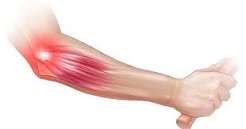
Despite its name, tennis elbow is primarily an occupational condition, not a sporting one. Fewer than 5% of cases occur in tennis players. The condition affects an estimated 1–3% of adults — most commonly between the ages of 35 and 54 — and is caused by repetitive overloading of the tendon that attaches the wrist extensor muscles to the outside of the elbow. Understanding what actually causes tennis elbow, which activities put you most at risk, and what measures have evidence behind them for prevention can make a real difference to both avoiding the condition and recovering from it when it occurs.
What Is Tennis Elbow?
Tennis elbow is the common name for lateral epicondyle tendinopathy — a condition of the tendon at the lateral epicondyle (the bony prominence on the outer side of the elbow). The tendon most commonly involved is the extensor carpi radialis brevis (ECRB), which originates at the lateral epicondyle and acts to extend the wrist. When this tendon is overloaded repeatedly, it undergoes a degenerative process rather than an inflammatory one — meaning the problem is not primarily about acute inflammation (as the historical term “lateral epicondylitis” implies) but about disrupted collagen structure and failed healing.
The technical term for this process is angiofibroblastic hyperplasia — a histological picture of disorganised collagen, abnormal tenocyte activity, and new blood vessel formation without the immune cell infiltration of classic inflammation. This is important clinically because it explains why anti-inflammatory treatments — including corticosteroid injections and NSAIDs — provide only temporary relief rather than resolving the underlying tendon problem. The fundamental driver of recovery is restoring healthy collagen organisation through appropriate mechanical loading, not suppressing an inflammatory process that is not the primary pathology. This is explored further in our guide to tendinitis in adults.
What Causes Tennis Elbow?
Tennis elbow is caused by cumulative overload of the ECRB tendon at its origin on the lateral epicondyle. The specific mechanical pattern is repetitive gripping combined with wrist extension — the forearm pronation and wrist extension required when gripping a tool, turning a screwdriver, lifting a bag, or striking a tennis ball all load the ECRB in a way that concentrates stress at its origin. When the volume of this load exceeds the tendon’s capacity to repair between sessions, microtrauma accumulates and tendinopathy develops.
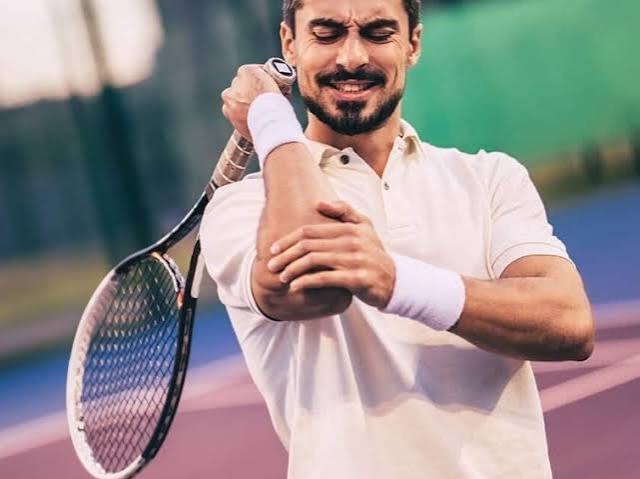
40–50% of regular racquet sport players develop tennis elbow at some point. Poor backhand technique — hitting late with a leading wrist — concentrates maximum load at the ECRB origin.
Plumbers, painters, carpenters, and butchers experience high repetitive gripping loads across long working days. This is the largest occupational group affected by lateral epicondyle tendinopathy.
Prolonged keyboard use with the wrist extended — particularly with heavy keystrokes or mouse clicking — loads the ECRB in a sustained low-level pattern that over time can produce tendinopathy.
Unaccustomed activities — a day of heavy gardening, moving furniture, painting a ceiling — can trigger reactive tendinopathy at the ECRB in someone who otherwise has no habitual load at that site.
Collagen quality and tenocyte repair capacity both decline with age. This explains why tennis elbow is predominantly a condition of middle-aged adults rather than younger people who may have identical workloads.
A prior episode of tennis elbow is the single strongest predictor of recurrence. Once the ECRB tendon has undergone degenerative change, it remains more vulnerable to future overload — which makes a structured programme of eccentric conditioning after recovery an important preventive measure.
Symptoms: How to Recognise Tennis Elbow
The pain of tennis elbow is located at the outer elbow — specifically at or just below the lateral epicondyle, which is the bony prominence you can feel when you bend your elbow to a right angle and palpate the outside. The pain is typically provoked by gripping, lifting, and rotating the forearm, and may radiate into the outer forearm. Common symptom triggers include:
- Lifting a kettle, mug, or bag (especially with the elbow extended)
- Gripping a steering wheel, tool handle, or door handle
- Turning a screwdriver or wringing a cloth
- Typing or using a computer mouse for extended periods
- Shaking hands — many patients describe a sharp pain with handshakes
Two clinical tests reliably reproduce tennis elbow pain and help distinguish it from other elbow conditions. Cozen’s test: with the elbow extended and forearm pronated, the patient resists the examiner pushing the wrist into flexion — this resists the wrist extensors and loads the ECRB at its origin, reproducing the characteristic pain. Mill’s test: with the elbow extended, the examiner passively flexes the wrist and fingers fully — this stretches the ECRB along its length and reproduces pain at the lateral epicondyle.
It is worth knowing about radial tunnel syndrome, a condition that can mimic or coexist with tennis elbow. Radial tunnel syndrome involves compression of the radial nerve as it passes through the radial tunnel, approximately 4–5 cm distal to the lateral epicondyle. The pain is in the outer forearm rather than at the epicondyle itself, and Cozen’s test at the epicondyle is typically negative. If you have outer forearm pain that does not quite fit the tennis elbow picture, this distinction is worth discussing with your GP or physiotherapist. Related patterns of referred and travelling arm pain are covered in our guide to injury pain versus chronic pain.
Who Is Most at Risk?
Anyone can develop tennis elbow, but some groups are significantly more vulnerable:
- Manual workers aged 35–54 — particularly those in trades involving sustained gripping (plumbers, painters, carpenters, electricians, butchers)
- Racquet sport players — especially those playing three or more times per week, using incorrect technique or poorly fitting equipment
- Musicians — particularly string players and pianists who sustain high repetitive forearm loading over practice sessions
- Keyboard-intensive office workers — especially those with workstation setups that maintain prolonged wrist extension
- People with prior lateral elbow pain — recurrence rates are significantly higher than first-episode rates
- Adults with diabetes or hyperlipidaemia — metabolic conditions that impair tendon collagen maintenance increase general tendon vulnerability
The dominant arm is affected in approximately 75% of cases. Bilateral involvement occurs in about 20%, usually with one side more severe, and often where the underlying cause is bilateral (e.g., keyboard use).
Treatment Options
The large majority of tennis elbow cases — 80–90% — resolve without surgery within one to two years. However, “waiting it out” without any management is not the optimal approach: treated patients recover faster and have better functional outcomes than those who simply rest.
Activity Modification and Physiotherapy
The first step is identifying and reducing the specific load that is causing the ECRB overload — not stopping all activity. A physiotherapist will assess the load fault (the specific movement pattern or volume driving the problem), prescribe an eccentric wrist extension programme specific to the ECRB, and monitor progress using grip strength measurements. Heavy slow resistance training of the wrist extensors is an effective alternative to pure eccentric exercise. Both approaches share the principle that the tendon needs controlled mechanical loading to drive collagen reorganisation and healing.
Physiotherapy with rehabilitation exercise consistently outperforms corticosteroid injection at 6–12 month follow-up in randomised controlled trials. A 2013 study by Coombes and colleagues in JAMA found that a physiotherapy-led programme produced significantly better outcomes at 12 months than injection alone, and that the combination of injection plus physiotherapy produced no better 12-month outcomes than physiotherapy alone — underscoring that the exercise component drives the long-term result.
Counterforce Brace
A counterforce brace (also called a lateral elbow brace or epicondyle strap) is a band worn around the proximal forearm, just below the lateral epicondyle. By dispersing grip forces across the muscle belly rather than concentrating them at the tendon origin, it reduces the peak load on the ECRB during activities. Evidence for its effectiveness is moderate — it does not accelerate healing but can reduce pain during activity sufficiently to allow continued work or sport participation while rehabilitation proceeds. It should be seen as a load management tool rather than a treatment in itself.
Corticosteroid Injection
Corticosteroid injection into the ECRB origin provides reliable short-term pain relief — typically significant improvement within one to two weeks lasting four to eight weeks. However, the evidence on long-term outcomes is consistently less favourable than for physiotherapy. The landmark 2006 BMJ study by Bisset and colleagues found that patients who received a corticosteroid injection had better outcomes at six weeks, but at 12 months had significantly more recurrences and worse overall outcomes than the physiotherapy group. The wait-and-see group (no active treatment) actually had better 12-month outcomes than the injection group, suggesting injection may disrupt the natural healing process.
This does not mean injections are never appropriate. For patients with severe pain that prevents participation in any rehabilitation programme, a single injection can reduce pain to a level that allows physiotherapy to begin. The critical principle is that injection must be followed by a structured rehabilitation programme — injection as a standalone treatment, without any load-based rehabilitation, is associated with high relapse rates. A maximum of two to three injections over the course of the condition is generally advised; repeated injections beyond this number add risk without evidence of additional benefit.
Shockwave Therapy (ESWT)
Extracorporeal shockwave therapy has good evidence for lateral epicondyle tendinopathy. Systematic reviews support its use after a supervised physiotherapy programme has been tried for at least six weeks without adequate response. ESWT stimulates neovascularisation and collagen synthesis within the tendon and is delivered over three to six sessions at weekly intervals. Most patients experience a temporary increase in discomfort after each session, with improvement building over the weeks following treatment.
PRP and Surgery
Platelet-rich plasma (PRP) injection has been studied in lateral epicondyle tendinopathy with some promising results, particularly in chronic cases that have not responded to conventional management. Results from trials are variable in quality, and PRP is not currently available within standard NHS pathways but is offered by private sports medicine clinics. Surgery — lateral epicondyle release or ECRB debridement — is reserved for cases that have failed at least six to twelve months of consistent conservative management; success rates exceed 90% in appropriately selected patients at two years. For information on when joint and elbow symptoms warrant urgent review, see our guide on when joint pain needs medical evaluation.
How to Prevent Tennis Elbow
Prevention strategies fall into three categories: technique and equipment modification for sport, ergonomic modification for occupational exposure, and training-load management for both contexts.
Sport: Technique and Equipment
In racquet sports, the most important risk reduction step is correcting backhand technique. The late backhand — hitting the ball too close to the body, with the wrist leading rather than the shoulder — generates the highest ECRB loading of any tennis stroke. A structured lesson series focused specifically on backhand mechanics is more effective at preventing recurrence than any equipment modification. However, equipment modifications are also evidence-based:
- Grip size: a grip that is too small forces over-gripping; a neutral-wrist grip should produce a finger-tip-to-palm gap of approximately one index finger width. Both too small and too large increase ECRB loading.
- String tension: lower string tension (reducing from 60 to 55 lbs or lower) reduces impact shock transmitted through the grip to the elbow. Many players over-tighten strings for control at the expense of arm health.
- Racquet weight and stiffness: a lighter, more flexible racquet produces less vibration at impact. A vibration-dampening device in the strings reduces high-frequency vibration without affecting the ball-contact impact substantially.
- Ball type: playing with pressureless balls or heavier balls increases ECRB loading; standard pressurised balls are lower risk.
Occupational: Ergonomics and Tool Use
For manual workers, the key modifiable factors are rest breaks during sustained gripping tasks, tool modifications, and technique adjustments. Power tools with vibration dampening reduce the sustained isometric grip load that the ECRB must maintain during operation. Screwdriver and similar tool handles with a larger diameter reduce the gripping force required for the same torque output. Workstation modifications for keyboard workers — positioning the keyboard to keep the wrist in a neutral rather than extended position, using a wrist rest, and ensuring the mouse is positioned to avoid sustained ulnar deviation — reduce cumulative ECRB loading across a working day.
Exercise and Load Progression
Tendons adapt to load by strengthening — but only when load is increased progressively rather than through sudden spikes. After recovering from tennis elbow, a structured eccentric wrist extensor conditioning programme (two to three times per week, progressively loaded over eight to twelve weeks) substantially reduces the risk of recurrence by building ECRB tendon capacity above the threshold of everyday activities. Avoiding sudden increases in physical demand — the new project at work, the intensive sports weekend after months of inactivity — is the single most important lifestyle habit for prevention. Related guidance on managing activity levels after tendon injury is in our article on limited range of motion in adults.
Recovery and Prognosis
Tennis elbow has a fundamentally favourable prognosis: 80–90% of patients recover fully or to functional normal within one to two years, and the majority do not require surgery. However, the recovery period can be lengthy and the condition has a significant impact on daily life during that time — grip strength is often reduced, and activities that require gripping or lifting can be significantly limited.
Factors associated with slower or incomplete recovery include: continuing the provoking activity without modification, receiving repeated corticosteroid injections without following them with rehabilitation, the presence of diabetes or hyperlipidaemia, prior history of the same condition, and workplace tasks that are difficult to modify. A small proportion — around 10% — develop chronic lateral elbow pain that persists beyond two years and may ultimately require surgical management.
Return to full sport or occupational activity depends on achieving adequate grip strength (typically ≥90% of the unaffected side) and completing the full eccentric loading programme rather than simply waiting until pain has gone. Pain-free grip in the clinic does not reliably predict pain-free grip under full occupational or sporting load. For conditions that commonly occur alongside tendon problems at the shoulder and elbow, see our guides on bursitis symptoms and causes and tendinitis in adults.
Frequently Asked Questions
Do you need to play tennis to get tennis elbow?
No — fewer than 5% of tennis elbow cases occur in tennis players. The condition is far more common in manual workers, keyboard users, and anyone else who performs repetitive gripping and wrist extension over sustained periods. The “tennis” label is a historical accident from the sport’s popularity at the time the condition was first formally described in the 1880s. Lateral epicondyle tendinopathy is a more accurate name — it refers to tendon disease at the lateral epicondyle of the elbow, regardless of cause.
What is the quickest way to treat tennis elbow?
A corticosteroid injection provides the fastest pain relief — typically significant improvement within one to two weeks. However, it is not the best long-term treatment: randomised trials consistently show higher relapse rates in patients who received injections compared with those who completed a physiotherapy programme. The most effective and durable approach is a physiotherapist-supervised eccentric loading programme, which takes longer to show benefit (six to twelve weeks) but produces better outcomes at one year. For most patients, the combination of short-term activity modification, a counterforce brace during provoking activities, and a structured exercise programme is the optimal approach.
Should I wear a tennis elbow brace?
A counterforce brace (epicondyle strap) is worth trying as a load-management tool during activities that provoke pain. It disperses gripping forces across the muscle belly rather than concentrating them at the ECRB origin, which reduces pain during activity sufficiently for many people to continue working or playing sport. The evidence base for bracing is moderate — it does not accelerate underlying tendon healing, but it can meaningfully reduce pain during the period when rehabilitation is underway. It should be worn during provoking activities and removed at rest.
Is a corticosteroid injection a good idea?
It depends on the circumstances. For severe pain that is preventing participation in any rehabilitation programme, a single injection can reduce pain to a level that allows physiotherapy to begin — and in that context it is a reasonable bridge. However, injection as a standalone treatment, without a structured follow-up rehabilitation programme, is associated with high relapse rates and worse outcomes at 12 months compared with physiotherapy alone. A maximum of one to two injections over the course of the condition is generally advisable; repeated injections at the lateral epicondyle can cause local tissue damage and do not improve the underlying tendon health.
Can I continue to work or play sport with tennis elbow?
In most cases, yes — but with modification. Complete rest from all activities is counterproductive because tendons require mechanical loading to heal. The goal is to reduce the specific loads that provoke symptoms to a level within the tendon’s current tolerance, while the rehabilitation programme builds capacity. For sport, this typically means reducing training volume and modifying technique rather than stopping altogether. For work, it may mean task modification, ergonomic adjustments, and the use of a counterforce brace during high-demand tasks. A physiotherapist can help you establish which specific loads to reduce and which are safe to continue.
What exercises help tennis elbow?
The exercise with the strongest evidence for tennis elbow is the eccentric wrist extension programme: using a light dumbbell (0.5–1 kg initially), extend the wrist slowly against gravity, then use the other hand to return the wrist to flexion (taking the eccentric load off the return phase). Three sets of fifteen repetitions, once or twice daily, progressively increasing weight as tolerated. This should produce mild discomfort during exercise (3–4 out of 10) that settles within 24 hours — if pain is severe or does not settle, the load is too high. Heavy slow resistance training (same movement but with a five-second lowering phase) is an equally evidence-based alternative that some patients find more sustainable.
When should I see a specialist for tennis elbow?
Most tennis elbow cases are manageable by a GP and physiotherapist without specialist involvement. Consider requesting a referral if: your symptoms are not improving after three months of supervised physiotherapy; you have had more than two corticosteroid injections without durable benefit; the diagnosis is uncertain (for instance, if numbness, tingling, or widespread weakness are present suggesting a nerve component); or you have been offered surgery and would like a specialist opinion. A sports medicine physician or orthopaedic surgeon with an upper limb interest are the appropriate specialists for persistent lateral elbow tendinopathy.
Summary
Tennis elbow is a tendon overload condition driven by repetitive gripping and wrist extension — not an inflammatory one, despite its historical label. The occupational and sporting causes are well understood, and prevention is genuinely achievable through technique correction, equipment optimisation, ergonomic workplace modification, and progressive eccentric conditioning of the wrist extensors. Treatment is most effective when it centres on a supervised rehabilitation programme rather than injections alone: the evidence consistently shows that physiotherapy produces better one-year outcomes than corticosteroid injection, even though injection provides faster short-term relief. With the right approach, 80–90% of patients recover without surgery — though patience and consistency with the loading programme over the required twelve or more weeks is essential.
Medical disclaimer: This article is for general educational purposes and does not constitute medical advice. If you have symptoms of tennis elbow or any musculoskeletal condition, consult a qualified healthcare professional for personalised assessment and management.
References:
NHS. Tennis elbow. NHS. 2023.
Bisset L, Beller E, Jull G, et al. Mobilisation with movement and exercise, corticosteroid injection, or wait and see for tennis elbow. BMJ. 2006;333(7575):939. doi:10.1136/bmj.38961.584653.AE
Coombes BK, Bisset L, Brooks P, et al. Effect of corticosteroid injection, physiotherapy, or both on clinical outcomes in patients with unilateral lateral epicondylalgia. JAMA. 2013;309(5):461–469. doi:10.1001/jama.2013.129
Versus Arthritis. Tennis elbow. versusarthritis.org. 2023.
NICE. Musculoskeletal conditions guidance. nice.org.uk.
I’m a carpenter and I’ve had tennis elbow twice — the first time at 38, the second at 44. Both times it started with a particularly heavy week of work. What the article says about prior injury being the strongest predictor of recurrence is exactly my experience. After the second episode I saw a sports physio who put me on an eccentric wrist extension programme for twelve weeks. I was sceptical because it seemed too simple, but by the end of the programme my grip strength was equal on both sides and I’ve been symptom-free for two years. The key thing my physio said that the article also mentions: the pain during the exercise should be manageable, not severe. I nearly gave up after the second week because it was uncomfortable, but she reminded me that the discomfort meant the tendon was being loaded and adapting.
James, your experience with the eccentric programme is a model account of how this rehabilitation approach works in practice. The initial discomfort during eccentric loading is mechanically necessary — it reflects the tendon being loaded at the threshold required to trigger collagen synthesis and reorganisation. The 3–4 out of 10 pain rule during exercise, with recovery within 24 hours, is the established monitoring framework. The discomfort you experienced in the early weeks, which you nearly stopped for, is precisely when the adaptive response is beginning — and stopping at that point would have prevented the benefit you ultimately achieved. The two-year symptom-free period following a properly completed programme is the expected outcome and reflects genuinely improved tendon capacity rather than pain suppression. Claire, your case illustrates one of the most important principles in sports-related tendinopathy: removing the mechanical cause of overload is a prerequisite for successful recovery — not an optional adjunct. Your two injections each provided temporary symptom relief, but because the biomechanical load fault — the late-hit backhand generating maximal ECRB tension — was still present at every session, the tendon never had the opportunity to recover between bouts of damage. The sports medicine physician’s decision to address technique first before relying further on injections was clinically correct. Corticosteroid injection in that scenario was functioning as a pain-masking intervention rather than a therapeutic one, which is exactly when it is most likely to produce the relapse pattern you experienced.
The section on racquet sports technique explains something I wish my club coach had told me years ago. I played three times a week for ten years without problems, then started having coaching sessions to improve my backhand and within six weeks developed lateral elbow pain. The coach later told me she had been getting me to hit the ball later to generate topspin — which as the article describes loads the ECRB maximally. I had two corticosteroid injections from my GP that each gave me about five weeks of relief before the pain returned. Eventually a sports medicine doctor told me the injection was never going to solve the problem while my technique was the cause. Six weeks of backhand correction and three months of physio later I was pain-free.