
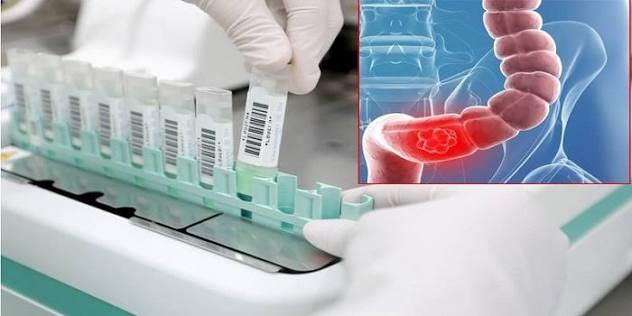
Stool-based colon cancer screening tests offer something that colonoscopy cannot: the ability to screen for colorectal cancer at home, without bowel preparation, without sedation, and without time off work. For the majority of average-risk adults who find colonoscopy daunting enough to defer it, stool-based tests represent a genuinely evidence-supported alternative that — when completed annually as recommended — achieves comparable colorectal cancer mortality reduction to periodic colonoscopy. The key limitation is that any positive result must be followed by diagnostic colonoscopy, making stool-based testing a detection strategy rather than a prevention strategy: it finds cancer and large polyps but does not remove them.
This article covers the three main stool-based colon cancer screening tests — guaiac FOBT (gFOBT), the faecal immunochemical test (FIT), and the stool DNA test (Cologuard/FIT-DNA) — in detail: how each works, sensitivity and specificity data from clinical trials, how to use them correctly, what a positive result means, and how to choose between them. The broader framework of colon cancer screening — including who should be screened and when — is covered in the companion article on colon cancer screening: what adults should know. Colonoscopy preparation guidance is covered in the article on colonoscopy preparation: a simple guide.
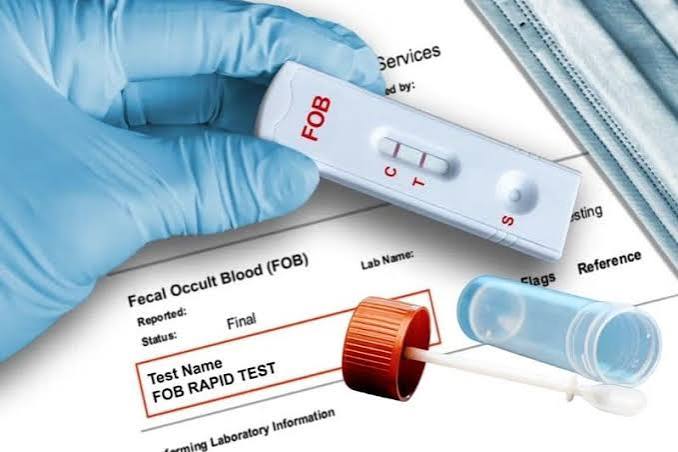
Guaiac Faecal Occult Blood Test (gFOBT)
The guaiac FOBT was the first stool-based colorectal cancer screening test to demonstrate mortality reduction in large RCTs — the Minnesota Colon Cancer Control Study, the UK FOBT Trial, and the Funen trial collectively enrolled over 400,000 participants and showed 15–33% reductions in colorectal cancer mortality with annual or biennial guaiac FOBT over 10–18 years of follow-up. This evidence base is what established stool-based testing as a credible alternative to endoscopic screening.
How it works: Guaiac paper is coated with a chemical that turns blue in the presence of haemoglobin’s peroxidase activity. This reaction is not human-specific — it will detect haemoglobin from dietary red meat, fish, certain vegetables (turnips, horseradish), and vitamin C (which inhibits the reaction rather than triggering it). This lack of specificity is the primary limitation of gFOBT and the reason dietary restriction is required before testing.
Performance: Single-round sensitivity for colorectal cancer is approximately 60–80% with high-sensitivity guaiac tests (like Hemoccult SENSA). Specificity is approximately 96–98%. Sensitivity for advanced adenomas is substantially lower — approximately 10–17% — meaning gFOBT primarily detects bleeding cancers and larger polyps rather than precancerous lesions. The mortality reduction evidence comes from annual use over many years, not from a single test.
Correct use: Three consecutive stool samples, taken on different days. Each sample is applied to the test card immediately after collection. Dietary restrictions (no red meat, poultry blood, fish, horseradish, turnips, vitamin C supplements, aspirin or NSAIDs) must be followed for 3 days before and during collection. The test card is returned to the clinician’s office or laboratory for processing — it should not be exposed to heat, moisture, or prolonged delay. Rehydrating the guaiac paper with water before development increases sensitivity but also substantially increases false-positive rates; this is no longer recommended in standard screening protocols.
Faecal Immunochemical Test (FIT)
FIT has largely replaced guaiac FOBT in population-based colorectal cancer screening programmes globally and in primary care in the United States. Its advantages over gFOBT are significant: it requires no dietary restriction, uses a specific antibody to detect human haemoglobin (not dietary haemoglobin), requires only a single stool sample in most commercial formats, and has superior sensitivity for cancer and advanced adenomas.
How it works: FIT uses antibodies that bind specifically to the human globin protein in haemoglobin. Since globin is degraded by digestive enzymes in the upper GI tract, FIT predominantly detects bleeding from the lower GI tract (colon and rectum) — precisely the location of colorectal cancers and large polyps. This lower-GI specificity contributes to both its higher sensitivity for colorectal cancer and its reduced false-positive rate compared to gFOBT for upper GI lesions.
Performance: Pooled sensitivity for colorectal cancer is approximately 74% per round (range across studies: 60–85%), with specificity of approximately 94–96%. Sensitivity for advanced adenomas is approximately 24–35%, which is higher than gFOBT but still means FIT misses a substantial proportion of precancerous polyps in a single round — this is why annual testing is essential to achieve the cumulative sensitivity needed for meaningful cancer risk reduction. Multiple consecutive annual negative FIT results substantially reduce the probability of undetected significant disease.
Correct use: Most FIT kits require a single stool sample collected by the provided brush or probe from the stool surface (not water), placed in a buffer solution tube, labelled, and returned to the lab within the manufacturer-specified timeframe (typically within 48 hours at room temperature or up to 7 days refrigerated, depending on the kit). No dietary restriction is required. Heat exposure significantly degrades sample quality — samples should not be left in a warm car or mail box in hot weather. The key determinant of kit-level performance is the haemoglobin cut-off used for positivity — lower cut-offs increase sensitivity but reduce specificity. Some FIT platforms allow clinicians to adjust the cut-off threshold, which affects the balance of sensitivity and the downstream colonoscopy burden.
Stool DNA Test (FIT-DNA, Cologuard)
Cologuard (Exact Sciences) is the only FDA-approved stool DNA test for colorectal cancer screening and is endorsed by the USPSTF as a recommended option at an interval of every 1–3 years. It combines FIT with analysis of 11 DNA biomarkers in stool — methylated NDRG4 and BMP3 genes, KRAS mutations, and a DNA integrity marker — shed by colorectal cancer cells and precancerous lesions.
How it works: Colorectal cancers and some adenomas shed abnormal DNA into the stool as cells slough from the tumor or polyp surface. This DNA contains somatic mutations and methylation patterns that differ from normal colonocyte DNA. By detecting both haemoglobin (via FIT) and abnormal DNA biomarkers simultaneously, the stool DNA test improves sensitivity over FIT alone — particularly for right-sided cancers and large sessile serrated lesions, which are more likely to be detected by DNA markers than by haemoglobin alone.
Performance: In the pivotal DeeP-C trial (Imperiale et al., NEJM 2014), Cologuard detected 92.3% of colorectal cancers compared to 73.8% for FIT — a statistically significant improvement. For advanced adenomas, Cologuard detected 42.4% versus 23.8% for FIT. However, Cologuard had a substantially higher false-positive rate: 13.1% of individuals without significant findings tested positive with Cologuard versus 4.9% with FIT — each of which requires a diagnostic colonoscopy. A 2021 real-world performance study found Cologuard false-positive rates of approximately 16% per round in clinical practice, higher than the trial data.
The sensitivity-specificity tradeoff: Cologuard finds more cancers per round but also sends more people without significant pathology to colonoscopy — a tradeoff that has cost, access, and harm implications. The colonoscopy-complication risk (bleeding, perforation) multiplied by the number of false-positive-driven colonoscopies is a real, if small, absolute harm. For individuals who want maximum per-round sensitivity and are willing to accept the higher follow-up colonoscopy burden, Cologuard is a reasonable choice. For individuals who prefer fewer colonoscopies overall, annual FIT achieves comparable cancer mortality reduction over time with fewer unnecessary follow-up procedures.
Practical notes: Cologuard requires collecting an entire bowel movement in the provided collection container, preserving with the supplied buffer, and shipping via the prepaid label within 24 hours. It is more complex to collect than FIT. Medicare covers it every 3 years for average-risk adults over 45. Some private insurers cover it; others require prior authorisation. A positive Cologuard result is a screening positive and requires follow-up colonoscopy — it does not diagnose cancer. The proportion of positive Cologuard tests that result in a cancer diagnosis is approximately 4–5%.
What a Positive Result Means and What to Do
A positive stool-based test — whether gFOBT, FIT, or Cologuard — means that the test found something that warrants further investigation. It does not mean that cancer has been found. The appropriate response is diagnostic colonoscopy, without delay:
- Do not repeat the stool test: A positive stool-based test should be followed by colonoscopy, not by repeating the stool test. A second stool test after a positive result may come back negative — due to intermittent bleeding from lesions — and falsely reassure that nothing is present. Guidelines are unambiguous: positive stool test → colonoscopy.
- Timeliness matters: Studies have shown that delays between a positive stool test and follow-up colonoscopy are associated with worse outcomes. A 2021 study published in JAMA Internal Medicine found that colorectal cancer diagnoses were significantly more likely to be at an advanced stage when follow-up colonoscopy was delayed more than 9–12 months after a positive FIT. Aim for colonoscopy within 3–6 months of a positive result.
- Do not self-diagnose based on the test result alone: Most positive stool tests — even most positive Cologuard tests — do not result in a cancer diagnosis. The colonoscopy will find the cause of the positive result, which is most commonly haemorrhoids, an anal fissure, a benign polyp, or no visible pathology at all. Anxiety about a positive test, while understandable, is often far in excess of the actual probability of cancer.
Managing digestive health proactively — and understanding when symptoms warrant investigation beyond standard screening — is part of the broader picture of digestive health across age groups. This broader approach is covered in the article on digestive health after age 60.
Factors That Affect Stool Test Accuracy
Several factors influence the sensitivity and specificity of stool-based tests in real-world use, and understanding them helps interpret results and optimise testing conditions:
Cancer location: Colorectal cancers in the right (proximal) colon bleed less consistently and at lower volumes than left-sided cancers, making them less reliably detected by haemoglobin-based tests. FIT sensitivity for right-sided cancers is approximately 60–65%, compared to approximately 80–85% for left-sided and rectal cancers. Stool DNA tests perform better for right-sided lesions than FIT alone, which is part of the rationale for Cologuard’s DNA biomarker component.
Cancer stage: FIT sensitivity increases with cancer stage — early-stage cancers that bleed intermittently are more likely to be missed than advanced cancers with consistent haemorrhage. A study by Omata et al. found FIT sensitivity of approximately 45% for Stage I colorectal cancer versus over 90% for Stage III–IV. This stage-related sensitivity difference is a genuine limitation: early-stage cancers (which have the best prognosis) are the ones FIT is least likely to detect. This is not a reason to avoid FIT — it detects a meaningful proportion of early-stage cancers and prevents many advanced cancers by prompting colonoscopy — but it does underscore why annual completion is important rather than relying on a single negative result.
Sample handling: Both FIT and gFOBT are sensitive to sample degradation. Heat exposure accelerates haemoglobin breakdown and reduces FIT sensitivity — samples should not be stored in warm environments. FIT samples should be returned to the laboratory within 24–48 hours of collection at room temperature, or refrigerated if there will be a delay. gFOBT cards exposed to heat, direct sunlight, or kept past their expiry date may give unreliable results.
Haemoglobin concentration cut-off: FIT platforms allow adjustment of the haemoglobin concentration threshold used to define a positive result. A lower threshold increases sensitivity (finds more cancers) but reduces specificity (more false positives, more follow-up colonoscopies). Programmes balance this depending on the capacity of their endoscopy system to handle follow-up colonoscopies. Individuals using FIT kits from different providers may find different positive rate thresholds and follow-up rates for this reason.
Recent GI procedures or conditions: FIT should not be completed within 1–2 weeks of a colonoscopy, sigmoidoscopy, or other lower GI procedure, as residual mucosal bleeding from the procedure can cause false positives. Active haemorrhoid bleeding, anal fissures, or menstruation in women may also contribute to false-positive FIT results. These are not reasons to avoid FIT, but they may prompt a clinician to note the context when interpreting a positive result and ordering follow-up.
Stool-Based Testing in the Context of Digestive Health
Colon cancer screening does not occur in isolation from broader digestive health management. Several digestive conditions and their treatments affect the stool-based screening context:
Inflammatory bowel disease (IBD): Patients with ulcerative colitis or Crohn’s disease involving the colon are at elevated colorectal cancer risk and follow a specialist-supervised endoscopic surveillance programme rather than population-based stool-testing. Stool-based tests are not recommended as the primary screening tool in IBD — regular surveillance colonoscopy with targeted biopsies of abnormal mucosa is the standard approach. The colon cancer risk in IBD is related to the extent and duration of colitis rather than to standard adenoma-polyp progression. Digestive health management in the context of IBD and liver conditions — which can co-occur in certain IBD subtypes — is explored in the article on liver safety and medications.
Aspirin and NSAID use: Regular aspirin use (including low-dose aspirin for cardiovascular prevention) has a well-documented protective effect on colorectal adenoma and cancer development — meta-analyses show 20–40% reductions in adenoma recurrence with regular aspirin. However, aspirin also causes GI mucosal microbleeding, which can produce false-positive gFOBT results (though not FIT, which is human-haemoglobin specific). Patients on regular NSAIDs undergoing stool-based screening should use FIT rather than gFOBT to avoid dietary/medication restriction complications. The interaction between NSAIDs, aspirin, and digestive health is covered in the article on pain relievers and stomach safety.
Post-colonoscopy patients switching to FIT: Some patients with a prior normal colonoscopy who prefer to avoid repeat colonoscopy for the next 10 years choose to supplement with annual FIT in the interval. While this hybrid approach is not a standard guideline recommendation, it is clinically rational for patients at average risk who had a complete, high-quality colonoscopy with no polyps and a clear indication for the normal 10-year surveillance interval. The additional value of annual FIT in the post-colonoscopy interval is debated, since a normal colonoscopy substantially lowers the probability of significant interval cancer development, but for highly motivated patients who want an additional layer of assurance, clinicians generally consider this a reasonable and well-tolerated add-on strategy.
- gFOBT: Annual; 3 samples; dietary restriction required; lowest sensitivity; still valid with mortality evidence
- FIT: Annual; 1 sample; no dietary restriction; 74% cancer sensitivity; preferred over gFOBT for most people
- Cologuard: Every 1–3 years; 1 full sample + preservation; no dietary restriction; 92% cancer sensitivity; higher false-positive rate (~16%)
- All positive results → diagnostic colonoscopy, without delay or re-testing with a stool test
- Annual FIT = equivalent mortality reduction to colonoscopy when completed consistently
Frequently Asked Questions
Haemorrhoids bleed and can produce a positive FIT result, which is a false positive for colorectal cancer screening purposes. However, this does not mean you should avoid FIT if you have haemorrhoids — it means that a positive FIT result in someone with known haemorrhoids still requires follow-up colonoscopy, since haemorrhoids do not protect against simultaneously having a colon polyp or cancer. Avoiding stool-based tests because of haemorrhoids is not recommended. Your clinician may note the haemorrhoid history when interpreting a positive result, but the colonoscopy follow-up recommendation does not change.
The equivalence is observed over 10+ years of consistent annual FIT completion. Colonoscopy has several advantages: it directly visualises the colon and removes polyps in a single procedure, protecting against cancer that has not yet caused bleeding (and therefore would not trigger a FIT positive); it requires only one procedure every 10 years rather than annual completion; and for individuals who might not reliably complete annual testing, colonoscopy provides 10-year protection from a single procedure. The decision comes down to preference, reliability, and individual risk factors — the best test is the one a person will actually complete.
No. FIT’s sensitivity for advanced adenomas is approximately 24–35% per round — meaning it misses 65–76% of advanced precancerous polyps in a single test. A negative FIT does not exclude polyps. What annual FIT does over time is provide repeated opportunities to detect lesions that have grown large enough to bleed, and the cumulative sensitivity across multiple annual tests substantially exceeds single-round performance. A negative FIT result is reassuring for the current round but does not substitute for consistent annual completion.
Yes — guidelines allow switching between approved screening modalities. If you switch from annual FIT to colonoscopy, the colonoscopy serves as your screening test and the FIT schedule pauses. If you have a normal colonoscopy and subsequently want to use FIT in the 10-year interval, this is clinically acceptable, though some guidelines note that mixing stool-based and endoscopic approaches within a single 10-year colonoscopy interval is not formally studied. Discuss any planned change in screening modality with your clinician.
Do not ignore a positive gFOBT, FIT, or Cologuard result. Do not repeat the stool test. Schedule diagnostic colonoscopy within 3–6 months. Delays beyond 9–12 months after a positive stool test are associated with worse outcomes if cancer is present. Most positive stool tests are not cancer — but the only way to know is colonoscopy.
- Imperiale TF, Ransohoff DF, Itzkowitz SH, et al. (2014). Multitarget stool DNA testing for colorectal-cancer screening. New England Journal of Medicine, 370(14), 1287–1297.
- Lee JK, Liles EG, Bent S, et al. (2014). Accuracy of fecal immunochemical tests for colorectal cancer: systematic review and meta-analysis. Annals of Internal Medicine, 160(3), 171.
- Hardcastle JD, Chamberlain JO, Robinson MHE, et al. (1996). Randomised controlled trial of faecal-occult-blood screening for colorectal cancer. Lancet, 348(9040), 1472–1477.
- NCI. (2024). Colorectal cancer screening (PDQ). National Cancer Institute. Available at: cancer.gov
- NHS. (2023). Bowel cancer screening: the fecal occult blood test. National Health Service. Available at: nhs.uk
- Meester RGS, Doubeni CA, Lansdorp-Vogelaar I, et al. (2015). Colorectal cancer deaths attributable to nonuse of screening in the United States. Annals of Epidemiology, 25(3), 208–213.
- Doubeni CA, Selby K. (2021). Fecal immunochemical test: positive predictive value and colonoscopy follow-up. JAMA Internal Medicine, 181(3), 349–351.
The Cologuard false-positive rate is much higher than I had assumed, and I think this is widely underappreciated. I had a positive Cologuard result last year, went through the anxiety of thinking I might have colon cancer, had a colonoscopy that found nothing — not even a small polyp — and then felt confused about why the test was positive. Reading your article, I understand now that I was in the approximately 16% of people who get a false-positive Cologuard per testing round. The colonoscopy had a minor complication (post-procedure bleeding from the prep that resolved spontaneously), so the false-positive had a real cost to me. I chose Cologuard over FIT based on the marketing of its higher sensitivity without fully understanding the specificity tradeoff. Going forward I’ll use annual FIT — the lower per-round sensitivity is offset by the annual frequency, and the false-positive rate driving unnecessary colonoscopies is substantially lower.
Your experience with Cologuard illustrates a real and important point that is often absent from the direct-to-consumer marketing for stool DNA tests: sensitivity and specificity are a tradeoff, and for population-based screening, a higher false-positive rate means a predictable proportion of people will undergo colonoscopy without finding anything significant, with the associated burden, anxiety, and complication risk that come with any invasive procedure. The 2014 DeeP-C trial reported an 13.1% false-positive rate; real-world studies have found rates around 15–16%. For context: if 1,000 average-risk adults complete Cologuard, approximately 160 will test positive and undergo colonoscopy, of which only about 6–8 will have colorectal cancer. The majority of the 160 colonoscopies will find either nothing or non-advanced adenomas that would not have caused harm before the next scheduled screening. The choice between FIT and Cologuard ultimately comes down to how you personally weigh the higher per-round sensitivity of Cologuard against the lower colonoscopy burden from annual FIT — both are legitimate choices with supporting evidence, and you now have the information to make that choice with full awareness of the tradeoffs involved.
The point about not repeating a stool test after a positive result was one I didn’t know and it seems critically important. When I got a positive FIT last spring, my first instinct was to buy another FIT kit and redo the test before deciding whether to make the colonoscopy appointment — I assumed that if the second one came back negative, I was in the clear. Your article explains exactly why this is the wrong approach: intermittent bleeding from lesions means a second test can easily come back negative even when a polyp or cancer is present. I did eventually go ahead with the colonoscopy (after about 7 months, which reading your article I now realise was too long a delay) and they found two adenomas — nothing cancerous but I would have missed these if I’d acted on the second negative stool test.