
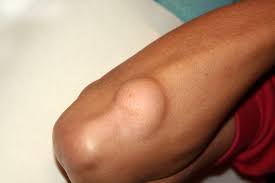
Finding a lump under your skin is immediately alarming — and in most cases, unnecessarily so. The overwhelming majority of subcutaneous lumps are benign: lipomas (fatty deposits), epidermoid cysts, fibromas, or enlarged lymph nodes responding to minor infections. But some lumps are not benign, and the critical challenge is that early soft tissue sarcomas can look and feel like lipomas before imaging is performed.
Knowing which features prompt urgent evaluation — and which are truly reassuring — can mean the difference between early treatment and a delayed diagnosis of a condition that is far more treatable when caught early.
The Rule of Fives
Clinicians use a practical rule of thumb when evaluating subcutaneous and soft tissue masses:
A lump requires imaging and specialist evaluation if it is:
- Greater than 5 cm in size
- Deep to the deep fascia (intramuscular or deeper)
- Growing over weeks to months
Having any one of these features warrants imaging (MRI preferred). Having two or three should prompt urgent referral to an orthopedic oncologist or sarcoma specialist center.
Concerning vs. Reassuring Features
| Feature | Reassuring | Concerning |
|---|---|---|
| Size | <5 cm | >5 cm |
| Depth | Subcutaneous (above fascia) | Deep to fascia / intramuscular |
| Consistency | Soft, doughy, compressible | Firm, rubbery, or hard |
| Mobility | Moves freely under the skin | Fixed to muscle or fascia below |
| Growth | Stable for years | Growing over weeks to months |
| Tenderness | Variable (lipomas can be tender) | Variable (sarcomas often painless) |
Key point about pain: It is a common myth that malignant lumps are always painless. Both sarcomas and lipomas can be tender (especially when near nerves), and both can be painless. Pain alone cannot be used to reassure that a lump is benign.
Lipoma vs. Liposarcoma
This is the most common clinical confusion in subcutaneous lump evaluation. Both arise from fat cells, but they are distinct tumor types with very different behavior.
| Lipoma | Liposarcoma | |
|---|---|---|
| Size | Usually <5 cm | Often >5 cm at presentation |
| Consistency | Soft, doughy, compressible | Firmer than a lipoma of the same size |
| Depth | Usually subcutaneous | Often intramuscular or retroperitoneal |
| Growth | Very slow; stable over years | Progressive growth over months |
| MRI signal | Uniform fat; thin capsule; no septa | Heterogeneous; thick septa; nodular non-fat areas |
| Common location | Any; trunk, arms, neck | Thigh, retroperitoneum |
Bottom line: A soft, mobile, stable lump under 5 cm that has been present for years = very likely a lipoma. A firm, deep, growing lump over 5 cm — especially in the thigh or buttock — needs MRI and specialist evaluation before any intervention.
Types of Malignant Lumps Under the Skin
Soft Tissue Sarcomas
Over 50 histological subtypes exist. Most common in adults:
- Liposarcoma — most common STS; arises from fat; deep thigh and retroperitoneum typical; ranges from low-grade (indolent) to dedifferentiated (high-grade, aggressive)
- Undifferentiated Pleomorphic Sarcoma (UPS) — most common high-grade STS in older adults; thigh/shoulder girdle; typically large and firm at presentation
- Synovial Sarcoma — young adults; near joints (knee, ankle, shoulder); may calcify on imaging; biphasic histology on biopsy
- Dermatofibrosarcoma Protuberans (DFSP) — skin-based; reddish-purple plaque on trunk; locally aggressive but rarely metastasizes; wide excision or Mohs surgery required
Metastatic and Other Malignant Subcutaneous Nodules
- Melanoma — in-transit metastases (between primary and regional nodes) and distant subcutaneous metastases; any new nodule in a melanoma patient requires evaluation
- Breast cancer — chest wall recurrence after mastectomy; inflammatory breast cancer extending into subcutaneous tissue
- Merkel cell carcinoma — rare but highly aggressive; rapidly growing flesh-colored/violaceous nodule on sun-exposed areas in elderly patients; requires urgent specialist referral
The Most Important Rule: Never “Shell Out” a Suspected Sarcoma
Never attempt to excise a large or deep soft tissue mass without imaging and specialist evaluation first. If a sarcoma is excised without adequate surgical margins — even if it appears to “come out completely” — contamination of surrounding tissue planes makes subsequent curative surgery dramatically more complex. This is called a “whoops resection” and may require amputation that could have been avoided with proper upfront planning.
Correct sequence: MRI → core needle biopsy → sarcoma specialist treatment planning → surgery with adequate margins.
Frequently Asked Questions
References
- Casali PG, et al. Soft tissue and visceral sarcomas: ESMO–EURACAN Clinical Practice Guidelines. Ann Oncol. 2018.
- NCCN Clinical Practice Guidelines: Soft Tissue Sarcoma. Version 2024.
- Grimer R, et al. Guidelines for the management of soft tissue sarcomas. Sarcoma. 2010.
- Burningham Z, et al. The epidemiology of sarcoma. Clin Sarcoma Res. 2012.
- Demetri GD, et al. Efficacy and safety of trabectedin or dacarbazine for metastatic liposarcoma or leiomyosarcoma. N Engl J Med. 2016.
- Brennan MF, et al. Soft tissue sarcoma. Ann Surg. 1991;211(1):2–8.
Thank you for covering lump under skin and cancer: how so thoroughly without being overly technical. I especially valued the explanation of why these recommendations exist, not just what they are. Thank you for making complex medical information accessible without dumbing it down.
Bookmarked this article on lump under skin and cancer: how immediately — going to reference it regularly. What I liked most was that the article didn’t just say what to avoid — it also gave alternatives. Exactly the kind of evidence-based information that is hard to find in one place.
I have been reading about lump under skin and cancer: how for weeks and this is the most thorough guide I have found. The specific numbers and thresholds mentioned are exactly what I needed to understand my lab results. Forwarding this to others in my support group who are dealing with similar issues.
I have been reading about lump under skin and cancer: how for weeks and this is the most thorough guide I found. The article answered questions I didn’t even know I had until I started reading. Keep up this kind of thorough health journalism — it genuinely helps patients like me.
My doctor recommended I look into lump under skin and cancer: how and this article covered it perfectly. I appreciate that the article is careful about distinguishing between what is known and what is still being researched. I wish I had found this article earlier — would have saved a lot of confusion.
This is one of the clearest explanations of lump under skin and cancer: how I have found. It is refreshing to see an article that acknowledges individual variation rather than one-size-fits-all advice. Will definitely be coming back to this site for more health information.