
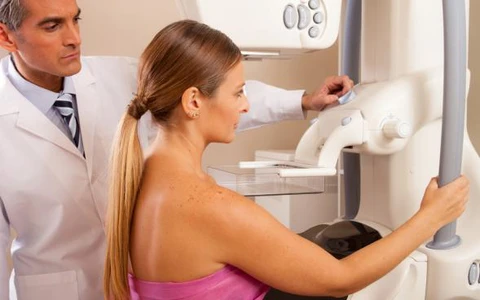
Women face a more complex cancer screening picture than most people realize — one that includes cancers with no male equivalent, a recently updated mammography recommendation that many women haven’t heard about, and gynecologic cancers whose “no screening” recommendation can seem alarming without the context of why. This guide covers every cancer screening a woman needs, organized by cancer type, with clear answers about what to do and when.
One major update first: in 2024, USPSTF revised the mammography recommendation to begin at age 40, not 50. If you’re between 40 and 50 and were previously told to wait, the guidance has changed.
Breast Cancer Screening: What’s Changed and What Hasn’t
Breast cancer is the most common cancer in US women outside of skin cancer. About 313,000 new cases are expected in 2024, and approximately 1 in 8 women (12.5%) will develop it during their lifetime. It is the leading cause of cancer death in women between the ages of 20 and 59.
The 2024 Mammography Update
For nearly a decade, USPSTF recommended that average-risk women begin mammography at 50. The 2024 update lowered that to 40, and the reasons illuminate more than just a guideline shift.
Newer modeling data showed a favorable benefit-to-harm ratio for starting at 40. More specifically, Black women in the US have substantially higher rates of breast cancer before age 50 and a higher proportion of triple-negative breast cancer — a more aggressive subtype that’s harder to treat and more common in premenopausal women. Black women also have approximately 40% higher breast cancer mortality than white women despite lower overall incidence. The 50-year start age disproportionately missed that window. The updated guideline provides a more equitable safety net.
USPSTF 2024 (Grade B): Biennial mammography for women ages 40–74, covered without cost-sharing under the ACA.
ACS (2015 guidelines): Optional annual mammography ages 40–44; annual mammography recommended from age 45; option to switch to biennial from 55. Continue as long as health is good and life expectancy is 10 or more years.
Dense Breast Tissue: What It Means for You
Dense breast tissue is present in about 40–50% of women who get mammograms. Dense tissue and tumors both appear white on a mammogram, reducing sensitivity from about 85% (in non-dense breasts) to 50–63%. Since 2022, all US states require mammography reports to inform women of their breast density.
If your report shows dense tissue, discuss supplemental options with your provider. Options include breast MRI (highest sensitivity), ultrasound, and contrast-enhanced mammography. USPSTF has not yet issued a formal supplemental screening recommendation for dense tissue alone — the decision is individualized based on your overall risk profile.
High-Risk Screening: BRCA and Beyond
For women at elevated hereditary risk, screening begins earlier and intensifies:
- BRCA1 mutation: Annual breast MRI from age 25; add annual mammography from age 30
- BRCA2 mutation: Annual breast MRI from ages 25–30; add annual mammography from 30
- Prior chest radiation before age 30 (e.g., for Hodgkin lymphoma): Annual MRI starting 8 years post-radiation or at age 25, whichever is later
- Lifetime breast cancer risk ≥20% by validated risk model: Annual breast MRI + annual mammography

When to Ask About Genetic Counseling
Consider requesting a referral if any of the following apply:
- A first-degree relative with breast cancer at or before age 50, or with male breast cancer
- Two or more breast cancers on the same side of the family
- Personal history of breast cancer at or before 50, bilateral breast cancer, or triple-negative breast cancer
- Family history of ovarian cancer
- Ashkenazi Jewish ancestry combined with breast or ovarian cancer in the family
- A known BRCA1/2, PALB2, or CDH1 gene variant in a family member
Cervical Cancer Screening: HPV and Pap Smear Explained
Cervical cancer is caused by persistent human papillomavirus (HPV) infection in more than 99% of cases. The Pap smear transformed what was once a leading cancer killer of women — incidence and mortality have fallen approximately 70% since widespread screening programs began.
The Screening Timeline
Ages 21–24: Pap smear (cytology) every 3 years. HPV testing is not recommended in this age group — not because HPV is uncommon here, but because the immune system reliably clears most HPV infections within two years. Detecting and treating HPV in this age group leads to cervical procedures that increase risk of preterm birth and cervical insufficiency without reducing cancer risk.
Ages 25–65 (ACS preferred): Primary HPV testing every 5 years. This is the most sensitive available approach — primary HPV testing detects precancerous changes with 94–97% sensitivity, compared to 53–85% for Pap smear alone. USPSTF also accepts co-testing (HPV + Pap) every 5 years or Pap alone every 3 years.
After age 65: Stop screening if you have had adequate prior history — three or more consecutive negative Pap smears, or two or more consecutive negative co-tests or primary HPV tests, all within the past 10 years, with the most recent within 5 years.
After hysterectomy for a non-cervical indication (such as fibroids): No further cervical screening is needed if the cervix was removed and there is no prior high-grade CIN or cervical cancer history.
Does HPV Vaccination Eliminate the Need for Screening?
No. Even with Gardasil 9 — which covers HPV types responsible for about 90% of cervical cancers — vaccinated women should follow the same screening schedule as unvaccinated women. The vaccine does not cover all oncogenic HPV types, and some vaccinated women were exposed to HPV before or around vaccination. Vaccination and screening are complementary, not interchangeable.
Endometrial (Uterine) Cancer: No Screening, But Critical Awareness
Endometrial cancer — cancer of the uterine lining — is the most common gynecologic cancer in the US, with approximately 67,000 new cases projected in 2024. It is primarily a postmenopausal disease (median diagnosis age: 63), and its incidence is rising, linked in part to the obesity epidemic.
Why There’s No Routine Screening
No validated population screening test for endometrial cancer has been shown to reduce mortality in average-risk women. Critically, about two-thirds (approximately 67–70%) of endometrial cancers are diagnosed at an early, localized stage (when 5-year survival exceeds 90%) because they produce an unmistakable early symptom: vaginal bleeding.
The Symptom That Must Not Be Ignored
In premenopausal women: irregular, prolonged, or abnormally heavy bleeding — especially in women with obesity, polycystic ovary syndrome, diabetes, or a family history of Lynch syndrome — also warrants evaluation.
High-Risk Women
Lynch syndrome: Endometrial cancer lifetime risk of 40–60%. NCCN recommends annual endometrial biopsy from age 30–35. Prophylactic hysterectomy and bilateral salpingo-oophorectomy after childbearing offers the most definitive risk reduction.
Obesity (BMI >30): One of the strongest modifiable risk factors. No validated screening exists, but symptom vigilance is critical.
Tamoxifen users: ACOG does not recommend routine surveillance for asymptomatic tamoxifen users — but any abnormal bleeding must be evaluated immediately.
Ovarian Cancer: High Risk, No Routine Screening
Ovarian cancer causes approximately 13,000 deaths annually — the 5th leading cause of cancer death among women. About 70% of cases are diagnosed at stage III or IV, when 5-year survival drops to roughly 29–35% (stage III) and 13–19% (stage IV). Stage I ovarian cancer has a 5-year survival of approximately 93%.
Why Routine Screening Isn’t Recommended
USPSTF recommends against routine ovarian cancer screening in average-risk women (Grade D). This follows the UKCTOCS trial — the largest ovarian cancer screening study ever conducted, following over 200,000 women for more than 14 years — which found that annual multimodal screening did not significantly reduce ovarian cancer deaths, while generating harm through false positives leading to unnecessary surgery.
BRCA1/2 Carriers
- BRCA1: Lifetime ovarian cancer risk 39–46%; TVUS + CA-125 every 6 months from age 30–35
- BRCA2: Lifetime risk 10–27%; similar surveillance from ages 35–40
- Most important intervention: Risk-reducing bilateral salpingo-oophorectomy (RRSO) — reduces ovarian cancer risk by approximately 80%; recommended after childbearing for BRCA1 at 35–40, BRCA2 at 40–45
Symptom Awareness
Ovarian cancer symptoms are non-specific but real. Seek evaluation if any of the following persist for more than 2–3 weeks: abdominal or pelvic bloating; pelvic pain or pressure; difficulty eating or feeling full quickly; urinary urgency or frequency.
Colorectal Cancer Screening: Same Schedule, Some Unique Context
Colorectal cancer is the third most common cancer in women. Women follow the same USPSTF and ACS screening schedule as men.
First-degree relative with CRC before age 60: Begin at 40 or 10 years before relative’s diagnosis — colonoscopy every 5 years.
Lynch syndrome: Colonoscopy every 1–2 years from age 20–25.
Stop ages: Grade A through 75; individualized 76–85; stop at 86+ (USPSTF).
Oral contraceptive use and hormone replacement therapy are both associated with a modest reduction in CRC risk — not a substitute for screening, and not reflected in any guideline modification.
Lung Cancer Screening: The Overlooked Threat
Lung cancer is the leading cause of cancer death in women, responsible for approximately 60,000 deaths annually — more than breast cancer and ovarian cancer combined. Women who smoke have roughly the same lung cancer risk as male smokers per pack-year. Non-smoking women also have a higher rate of lung adenocarcinoma than non-smoking men — a disparity that is not fully understood.
Skin Cancer Awareness
USPSTF does not recommend routine skin cancer screening (Grade I — insufficient evidence). The American Cancer Society recommends annual skin examination by a dermatologist and monthly self-examination using the ABCDE criteria: Asymmetry, Border irregularity, Color variation, Diameter greater than 6mm, and Evolution.
Among women, melanoma is the most common cancer diagnosed in the 20–29 age group — a fact that often surprises people. Young women should be particularly attentive to changing moles and new skin lesions.
Women’s Complete Cancer Screening Schedule
| Cancer | Start Age | Frequency | Key Source |
|---|---|---|---|
| Cervical | 21 | Pap q3y (21–24); HPV q5y from 25 | USPSTF/ACS |
| Breast | 40 | Biennial (USPSTF); annual from 45 (ACS) | USPSTF 2024 |
| Colorectal | 45 | FIT annually or colonoscopy q10y | USPSTF/ACS |
| Lung (smokers) | 50 | Annual LDCT | USPSTF 2021 |
| Endometrial | None | No routine screening — report PMB immediately | ACOG |
| Ovarian | None | No routine screening — BRCA: specialist surveillance | USPSTF |
| Skin | All ages | Annual derm exam (ACS); monthly self-exam | ACS |
Understanding Your Risk: When to Ask About Genetic Testing
Genetic testing is underutilized in women who meet referral criteria. It is not a prediction of cancer — it is a risk clarification tool that opens access to more intensive surveillance and risk-reduction interventions.
For breast/ovarian cancer (BRCA1/2 and related): ask about genetic counseling if you have personal or family history suggesting hereditary risk. For gynecologic and colorectal cancers (Lynch syndrome): consider testing if you or a first-degree relative has had CRC or endometrial cancer, especially before age 50.
Risk tools such as Tyrer-Cuzick and BOADICEA estimate lifetime breast cancer risk and are available through your gynecologist or primary care provider. A lifetime risk of 20% or more by these models is itself a trigger for annual breast MRI in addition to mammography. A genetic counselor specializes in interpreting results and helping you understand what they mean for you and your family.
Frequently Asked Questions
At what age should women start getting mammograms?
USPSTF 2024 recommends that average-risk women begin biennial mammography at age 40 — changed from the prior recommendation of 50. The American Cancer Society allows optional annual mammography from 40–44 and formally recommends annual screening from 45. If you are 40 or older and have not had a mammogram, schedule one now. ACA covers mammography without cost-sharing under the USPSTF Grade B recommendation. Women at high risk (BRCA carriers, prior chest radiation) should begin annual breast MRI from age 25.
Do I still need a Pap smear if I had the HPV vaccine?
Yes. Current guidelines recommend the same cervical screening schedule for vaccinated and unvaccinated women. Gardasil 9 covers the HPV types responsible for about 90% of cervical cancers — but not all oncogenic types, and some vaccinated women were exposed before vaccination. Screening and vaccination are complementary layers of protection, not interchangeable.
Is there a screening test for ovarian cancer?
Not one recommended for average-risk women. Transvaginal ultrasound and CA-125 blood test both exist, but the largest ovarian cancer screening trial ever (UKCTOCS, 200,000+ women over 14 years) showed that annual multimodal screening did not reduce ovarian cancer deaths and caused harm through false positives leading to unnecessary surgery. USPSTF recommends against routine ovarian cancer screening (Grade D). For women with BRCA1/2 mutations, specialist surveillance (TVUS + CA-125 every 6 months) is offered — but the strongest risk reduction is prophylactic salpingo-oophorectomy after childbearing.
What is postmenopausal bleeding and when should I worry?
Postmenopausal bleeding (PMB) is any vaginal bleeding after 12 consecutive months without a menstrual period. It is always abnormal and always requires evaluation. While approximately 90% of PMB has a benign cause (endometrial atrophy, polyps, fibroids), about 10% is endometrial cancer. Prompt evaluation — typically transvaginal ultrasound and/or endometrial biopsy — is essential. Do not wait or assume the bleeding is hormonal without medical evaluation.
How often do women need a Pap smear vs. HPV test?
For women ages 21–24: Pap smear every 3 years only (no HPV testing). For women ages 25–65: primary HPV testing every 5 years is ACS preferred — it’s more sensitive and a negative result is highly reassuring for 5 years. Alternatively, USPSTF accepts HPV + Pap co-testing every 5 years or Pap alone every 3 years.
What are the signs I might be at high risk for breast cancer?
Signs that warrant risk assessment and possible genetic counseling: a first-degree relative with breast cancer before 50 or with male breast cancer; two or more breast cancers on the same side of the family; any family history of ovarian cancer; Ashkenazi Jewish ancestry with breast or ovarian cancer in the family; a personal history of chest radiation before 30; or a known BRCA1/2, PALB2, or CDH1 variant in the family. If any of these apply, ask your provider about a formal breast cancer risk calculation using a validated tool (Tyrer-Cuzick, IBIS).
Does hormone replacement therapy (HRT) affect cancer risk or screening?
Combined estrogen-progestogen HRT modestly increases breast cancer risk — the WHI trial showed approximately 26% relative risk increase, equivalent to about 8 additional breast cancers per 10,000 women per year after 5+ years of use. Estrogen-only HRT (for women without a uterus) does not increase breast cancer risk and may slightly reduce it. Neither form of HRT changes your cancer screening schedule — continue the same mammography, Pap smear, and other age-appropriate screenings. The risk-benefit profile of HRT should be discussed with your provider.
- US Preventive Services Task Force (USPSTF) — Breast (2024), Cervical (2018), CRC (2021), Lung (2021), Ovarian (2018) recommendations.
- American Cancer Society — Breast (2015), Cervical (2020), CRC (2018), Lung (2023) guidelines; Cancer Facts & Figures 2024.
- NCCN — Genetic/Familial High-Risk Assessment: Breast and Ovarian Cancer, Version 2.2024.
- Menon U et al. (2021). Ovarian cancer population screening and mortality after long-term follow-up in the UKCTOCS trial. The Lancet, 397(10290), 2182–2193.
- American College of Obstetricians and Gynecologists (ACOG) — Practice Bulletins on endometrial cancer, cervical screening, and tamoxifen use.
- Rossouw JE et al. (2002). Risks and benefits of estrogen plus progestin in healthy postmenopausal women (WHI). JAMA, 288(3), 321–333.
I have been reading about cancer screening for women: a complete for weeks and this is the most thorough guide I have found. I appreciated how the article addressed both the clinical side and the practical lifestyle adjustments. Forwarding this to others in my support group who are dealing with similar issues.
I shared this article on cancer screening for women: a complete with my doctor and they appreciated the level of detail. The practical tips at the end made this immediately actionable, not just theoretical. Will definitely be coming back to this site for more health information.
I have been reading about cancer screening for women: a complete for weeks and this is the most thorough guide I have found. I appreciated how the article addressed both the clinical side and the practical lifestyle adjustments. Keep up this kind of thorough health journalism — it genuinely helps patients like me.
I never fully understood cancer screening for women: a complete until I read this. I appreciated how the article addressed both the clinical side and the practical adjustments. Looking forward to reading more articles from this website.
As someone dealing with this personally, the cancer screening for women: a complete section was very helpful. I especially valued the explanation of why these recommendations exist, not just what they are. Appreciate the effort that went into researching and writing this — it shows.
Bookmarked this article on cancer screening for women: a complete immediately — going to reference it regularly. The practical tips made this immediately actionable, not just theoretical. This is going into my health folder that I bring to every doctor’s visit.