
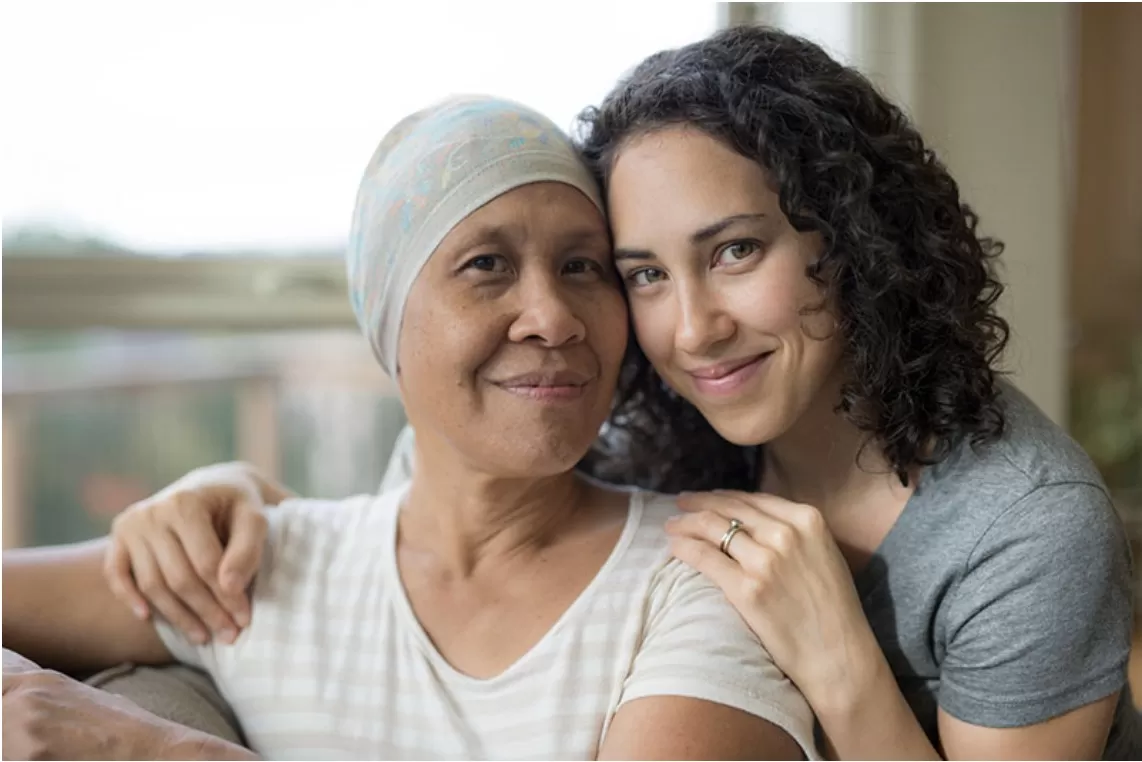
Cancer is not a solo experience. For every person diagnosed with cancer, there is — in most cases — at least one other person who reorganizes their life around the illness: a spouse who learns to manage a dozen new medications, an adult child who drives three hours every other week for chemotherapy, a parent who sleeps in a hospital chair for weeks. These are cancer caregivers, and they represent one of the most essential, most overlooked, and most undersupported populations in all of healthcare.
Approximately 6–7 million Americans are currently providing unpaid caregiving for someone with cancer. Most had no training. Many have full-time jobs of their own, children to raise, and households to maintain. The average cancer caregiver spends 32–47 hours per week on caregiving tasks — equivalent to a full-time job — often without taking a single day off. The research on what caregiving does to the caregiver is sobering: depression rates of 20–30%, sleep disruption in more than 75%, and — in a landmark study by Schulz R and Beach SR (JAMA 1999) — a 63% higher mortality rate among caregivers experiencing significant emotional strain compared to non-caregivers.
This cancer caregiver guide covers what caregiving actually involves, how to manage the practical and emotional dimensions of supporting someone through cancer, how to protect your own health while doing so, and where to find support for yourself.
What Cancer Caregiving Actually Involves
The term “caregiver” encompasses a wide range of roles that rarely come with a job description. Cancer caregiving typically involves five overlapping types of work:
Administering oral chemotherapy, managing wound care after surgery, assisting with daily activities, responding to treatment side effects
Transportation, managing insurance paperwork and billing disputes, shopping, cooking, cleaning, household finances
Listening without judgment, being present during fear and grief, managing your own emotional response while holding space for the patient’s
Tracking multiple providers, managing appointment schedules, ensuring each specialist knows what others are doing, coordinating transitions
Speaking up in medical settings, asking for adequate pain control, ensuring the patient’s values and preferences are heard in clinical decisions
None of these are small tasks. Together, they constitute a second career that cancer imposes on caregivers without asking.
The Emotional Reality of Cancer Caregiving
Research consistently shows that cancer caregivers experience psychological distress at rates comparable to — and in some studies exceeding — those of cancer patients themselves. Depression affects approximately 20–30% of cancer caregivers; anxiety is similarly prevalent. Most of these caregivers are not receiving any mental health support.
Caregiver burden is the clinical term for the cumulative impact of caregiving on a caregiver’s physical, emotional, social, and financial wellbeing. The Zarit Burden Interview (ZBI) is the most widely used validated measure; scores above 21 indicate mild-to-moderate burden and above 41 indicate severe burden. Studies consistently find that cancer caregivers of patients with advanced or aggressive disease have very high burden scores, with the highest burden during active treatment and again near the end of life.
Caregiver burnout is what happens when burden accumulates without relief: a state of physical, emotional, and mental exhaustion in which caregivers can no longer function effectively. Signs include: withdrawal from social relationships and previously enjoyable activities; persistent exhaustion that rest does not relieve; feeling that caregiving has consumed every dimension of your identity; getting sick more often (chronic stress suppresses immune function); using alcohol, sleep aids, or other substances to cope; and experiencing resentment toward the person you care for — followed immediately by guilt. That last pattern — resentment followed by guilt — is extraordinarily common and almost entirely unacknowledged.
Practical Caregiving: Managing Day-to-Day
Medication Management
Cancer patients often manage a complex, frequently changing medication list. A reliable system from the start prevents errors:
- Maintain a written medication log: drug name (generic and brand), dose, timing, purpose, and prescribing provider; update with every change
- Weekly pill organizer: for consistently timed medications, particularly when fatigue or cognitive effects make adherence difficult
- Current medication list accessible at all times: wallet, phone, and medical binder — for every appointment and every emergency department visit
- Oral chemotherapy handling: treat with the same precautions as IV chemotherapy; do not crush, split, or handle without gloves; keep in original containers, away from children
Managing Treatment Side Effects at Home
| Side Effect | Home Management | When to Call / ER |
|---|---|---|
| Nausea | Scheduled antiemetics; small frequent meals; cold/room-temp foods; ginger; avoid cooking smells | Call if unable to maintain oral hydration; ER if persistent vomiting |
| Fatigue | Encourage rest + light daily walking; schedule high-energy activities in morning; protect nighttime sleep | Call if sudden severe worsening; rule out anemia, infection |
| Mouth sores | Saline + baking soda rinses 4×/day; soft diet; popsicles; no alcohol-based mouthwash | Call for Grade 2+ (pain preventing eating); ER for Grade 3+ |
| Fever during chemo | Know the expected nadir window (typically 7–14 days post-chemo dose) | ≥38.3°C during nadir = ER immediately; do not wait for a callback |
| Diarrhea | Grade 1 (1–3 extra stools): hydration + loperamide per oncology protocol | Grade 2 (4–6): call oncology; Grade 3 (7+): ER evaluation |
| Pain | Scheduled pain medications on schedule; prophylactic laxative from day 1 of any opioid | Call for uncontrolled pain; severe new pain may indicate complication |
Organization and Documentation
A cancer diagnosis generates an enormous volume of medical information. Systematic organization is a practical safety measure:
- Medical binder or digital folder: diagnosis documentation, pathology reports, imaging results, treatment summaries, all provider names and contacts, insurance information, medication list, advance directives
- One-page medical summary: diagnosis, treatment history, medications, allergies, provider contacts — to present rapidly at ER visits or with new providers
- Patient portal access: ensure the patient formally authorizes caregiver access; lab results and clinical notes often appear before the next appointment

Communicating With the Patient
What Patients Actually Need
Research on couples coping with cancer consistently finds that patients benefit most when caregivers provide emotional presence — listening, acknowledging, accompanying — rather than immediately moving to advice or reassurance. A key finding: “protective buffering” — when caregivers hide their own fears and avoid difficult topics to protect the patient from distress — is associated with worse psychological outcomes in both partners (Manne SL et al., J Fam Psychol 2004). Open communication, including acknowledgment of difficult emotions, predicts better adjustment for both patient and caregiver.
Language that typically helps: “This is really hard and I’m right here with you.” “I don’t know what to say but I’m not going anywhere.” “What’s weighing on you most today?” “What do you need from me right now?”
Language that often backfires despite good intentions: “Stay positive!” (communicates that fear is unwelcome); “Everything happens for a reason” (feels dismissive of genuine loss); “You’re so strong” (creates pressure to maintain a brave front); “I know how you feel” (each cancer experience is specific).
Talking to Children
When a parent has cancer, honest, age-appropriate conversations — delivered with emotional support and opportunities for questions — support better long-term adjustment in children than protecting them from the truth. Children sense when something serious is happening; silence invites worst-case imagination. Children as young as 3 can understand “Daddy is sick and the doctors are giving him medicine to help. The medicine makes him tired. He still loves you very much.” Notify the school so teachers can monitor for distress. Maintain routines to provide a sense of safety during a destabilizing time.
Difficult Conversations
Advance care planning — healthcare proxy, living will, POLST form — is most valuable before a crisis, and is a gift to the entire family. Many patients want to have this conversation but wait for someone to open the door.
When cancer recurs or progresses, allow space for shock and grief before moving to reassurance. Being present in silence is sometimes the most powerful support. Many patients also want to discuss what dying might look like and how they want to be remembered — caregivers who can meet these conversations with presence rather than deflection give patients an irreplaceable gift.
Communicating With the Medical Team
HIPAA authorization: Under HIPAA, adult patients control who has access to their medical information. Caregivers must be specifically authorized by the patient — typically by signing a form at the cancer center — to participate in medical conversations.
Appointment preparation: Bring written questions; ask most important items first (appointments run short). Take notes or ask to record the conversation. Check patient portal clinical notes after each appointment for accuracy and to reinforce recall.
Identify one primary coordination contact: In multi-specialty cancer care, identify the primary oncologist’s nurse or PA as the central logistical contact rather than trying to reach the physician directly for every question. Know the after-hours nurse triage line — this is the most important number to have for non-emergency but urgent symptoms.
Caregiver Self-Care — Why and How
Caregiver self-care is not selfish — it is a prerequisite for sustainable caregiving. The NCCN guidelines explicitly include caregiver health as a component of optimal cancer care. Psychoeducation programs — structured interventions teaching caregivers what to expect during treatment, communication strategies, and self-care techniques — significantly reduce caregiver distress and improve quality of life (Northouse LL et al., CA Cancer J Clin 2010).
Evidence-Based Interventions for Caregivers
- Psychoeducation: structured programs that reduce distress with moderate effect sizes; available through cancer centers and Cancer Support Community
- Mindfulness programs: MBSR and mindfulness apps (Headspace caregiver program) reduce stress biomarkers and improve mood
- Caregiver support groups: CancerCare, Cancer Support Community, Well Spouse Association; peer connection with others who understand the specific stresses of cancer caregiving
- Respite care: temporary relief from caregiving is one of the most effective burnout prevention strategies; under the Medicare Hospice Benefit, caregivers of hospice patients receive 5 days/month of inpatient respite; for non-hospice patients, arrange through home care agencies or the social worker
Practical Self-Care Framework
- Accept help specifically: assign tasks to helpers rather than saying “we’re fine” — “Can you bring dinner Tuesday?” is more actionable than “let me know if you need anything”
- Maintain a non-caregiving identity: schedule at least one weekly activity that has nothing to do with cancer; non-cancer time preserves selfhood
- Protect sleep: even 20-minute naps partially mitigate sleep debt; discuss nighttime caregiving tasks with the patient to find adjustments that protect both partners’ sleep
- Attend your own healthcare appointments: a caregiver who becomes seriously ill cannot provide care at all
- Use CaringBridge (caringbridge.org): centralize health updates to family and friends on a shared platform; eliminates the burden of individually updating dozens of people
Caregiver Resources
Free counseling for caregivers; online/in-person groups; financial assistance; 1-800-813-4673; cancercare.org
Caregiver support groups and wellness programs; 175+ locations + virtual; cancersupportcommunity.org
Peer support specifically for spousal caregivers; newsletter; biennial conference; wellspouse.org
Free one-on-one peer mentoring for caregivers; matched with experienced cancer caregivers; imermanangels.org
Free platform for health updates to family and friends; reduces communication burden; caringbridge.org
Tools, guides, and legal resources for all types of caregivers; aarp.org/caregiving
Crisis support for caregivers: Crisis Text Line — text HOME to 741741; 988 Suicide and Crisis Lifeline — call or text 988. Caregiver suicidality is underrecognized — if you are in crisis, reach out.
For more on the full landscape of resources available to cancer patients and families, see the cancer patient support article. For guidance on the follow-up care and surveillance your loved one needs after treatment, see the cancer follow-up care guide.
Special Situations in Cancer Caregiving
Long-distance caregiving requires particular attention to coordination: ensure the patient has a trusted local support person; use patient portals and video appointments to maintain involvement in medical decisions; plan intensive in-person presence during critical phases (surgery, high-dose chemotherapy, confirmed recurrence).
Spousal caregiving brings specific challenges: the relationship that is supposed to be the caregiver’s primary source of emotional support is also the relationship most affected by the cancer. Role changes, loss of intimacy, and the caregiver’s own grief require attention. The Well Spouse Association and couples counseling specifically oriented to cancer are both valuable.
Caregiving through end of life and hospice: Hospice care provides medical, nursing, social work, chaplaincy, and volunteer support to patients in their homes — and to caregivers. After a patient’s death, hospice provides bereavement support to the family for up to 13 months under Medicare. For more on survivorship after cancer treatment, see the cancer survivorship article.
Frequently Asked Questions
- Schulz R, Beach SR — Caregiving as a risk factor for mortality; JAMA 1999
- Northouse LL et al. — Interventions with family caregivers of cancer patients; CA Cancer J Clin 2010
- Manne SL et al. — Protective buffering in couples coping with cancer; J Fam Psychol 2004
- National Alliance for Caregiving / AARP — Caregiving in the US 2020
- NCCN Distress Management Guidelines — nccn.org
- National Hospice and Palliative Care Organization — nhpco.org
- American Cancer Society caregiver resources — cancer.org
- CancerCare — cancercare.org
This article is for educational purposes only and does not constitute medical advice. Discuss all caregiving and medical decisions with your loved one’s oncology care team and your own healthcare provider.
I have been reading about cancer caregiver guide: how to support for weeks and this is the most thorough guide I have found. What I liked most was that the article didn’t just say what to avoid — it also gave alternatives. Appreciate the effort that went into researching and writing this — it shows.
Thank you for covering cancer caregiver guide: how to support so thoroughly without being overly technical. The specific numbers and thresholds mentioned are exactly what I needed to understand my lab results. Thank you for making complex medical information accessible without dumbing it down.
Thank you for covering cancer caregiver guide: how to support so thoroughly without being overly technical. The connection between diet, lifestyle, and long-term outcomes is explained clearly here. Appreciate the effort that went into researching and writing this — it shows.
Finally a resource that explains cancer caregiver guide: how to support in plain language. The section on managing this condition day-to-day was especially useful for planning. Exactly the kind of evidence-based information that is hard to find in one place.
Bookmarked this article on cancer caregiver guide: how to support immediately — going to reference it regularly. The article answered questions I didn’t even know I had until I started reading. Looking forward to reading more articles from this website.
This breakdown of cancer caregiver guide: how to support is exactly what patients need before a specialist appointment. The practical tips made this immediately actionable, not just theoretical. This is exactly why I prefer this website over generic health platforms.