
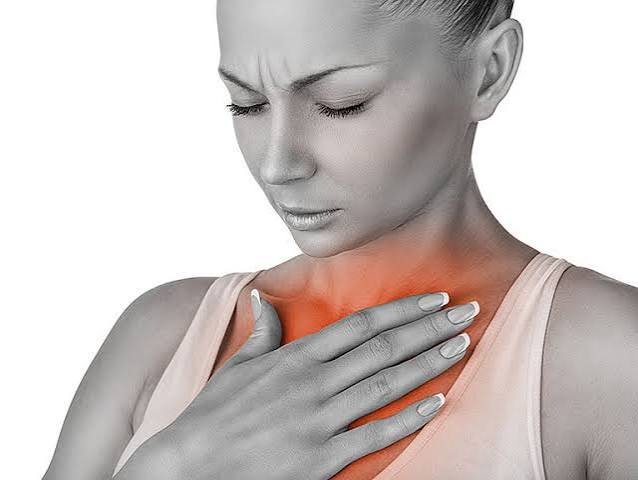
Heartburn is one of the most common GI symptoms in adults, affecting approximately 20 percent of American adults on a weekly basis and 40 percent at least monthly. Despite its frequency, it is often undertreated, misunderstood, or confused with other conditions. The term “heartburn” is somewhat misleading — it has nothing to do with the heart. It is a burning sensation in the chest or throat caused by stomach acid refluxing up into the esophagus, the tube that connects the mouth and stomach. Understanding what is actually happening — and when it requires evaluation rather than over-the-counter management — is genuinely useful for any adult who experiences it regularly. For context on how heartburn relates to the broader spectrum of upper GI symptoms, see indigestion: symptoms, causes, and relief options.
What Heartburn Feels Like
Heartburn is characterized by a burning sensation that typically starts in the upper abdomen or lower chest and rises toward the throat. It may be accompanied by a sour or bitter taste in the mouth from regurgitated acid, a sensation of food or liquid coming back up (regurgitation), or a raw feeling in the throat. Symptoms typically occur after eating, when lying down, when bending forward, or at night. In mild cases heartburn is an occasional discomfort. In more persistent cases it significantly impairs quality of life — interrupting sleep, limiting food choices, and producing anxiety around eating.
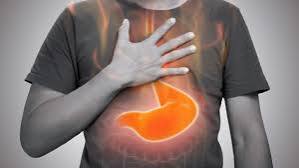
The mechanism is straightforward: the lower esophageal sphincter (LES), a ring of muscle at the junction of the esophagus and stomach, normally prevents stomach contents from moving upward. When the LES relaxes inappropriately — either because it has weakened structurally, or more commonly because of transient LES relaxations (TLESRs) triggered by stomach distension after eating — gastric acid flows into the esophagus. The esophageal lining does not have the same mucous protection as the stomach lining, so acid contact produces the burning sensation. Repeated acid exposure over years can cause esophagitis (inflammation), stricture formation, and in a subset of patients, the cellular changes of Barrett’s esophagus.
Common Causes and Triggers
Heartburn occurs when the balance between LES function, gastric volume, and esophageal acid clearance is disrupted. Several factors reliably contribute to this disruption and are modifiable.
Dietary triggers are the most immediately modifiable. Fatty and fried foods delay gastric emptying and reduce LES tone — both effects increase the time and pressure available for reflux. Chocolate contains methylxanthines that relax the LES. Caffeine, alcohol, and peppermint/mint similarly reduce LES pressure. Acidic foods — citrus fruits and juices, tomatoes and tomato-based products — do not cause reflux mechanically, but they lower the pH of what is refluxed, making it more irritating to the esophageal mucosa when it occurs. Meal size and timing are among the most practical triggers to modify. Large meals produce gastric distension that increases LES-opening pressure and promotes TLESRs. Eating within 2 to 3 hours of lying down allows reflux to occur when gravity no longer helps clear the esophagus. Obesity and overweight significantly increase heartburn risk: increased intra-abdominal pressure from visceral fat pushes stomach contents upward against the LES. The association between BMI and GERD is dose-dependent — higher BMI corresponds to higher GERD frequency and severity. Hiatal hernia — when the upper portion of the stomach pushes upward through the diaphragm — impairs the LES mechanism because the diaphragmatic crural contraction that augments LES function is reduced. Hiatal hernia is present in approximately 15 to 20 percent of adults and increases in prevalence with age. Medications that reduce LES tone include calcium channel blockers, nitrates, benzodiazepines, anticholinergics, and theophylline. NSAIDs and aspirin can worsen esophagitis directly through mucosal irritation independent of reflux. Pregnancy produces heartburn through two mechanisms: progesterone reduces LES tone, and the growing uterus compresses the stomach and increases intra-abdominal pressure.
When Heartburn Becomes GERD
Occasional heartburn after a large or rich meal is common and normal. GERD (gastroesophageal reflux disease) is defined by the Montreal Consensus as reflux that causes troublesome symptoms or complications — the threshold is based on impact on quality of life, not a specific frequency count. For most clinicians, heartburn that occurs twice or more per week consistently, or that is causing sleep disruption, dietary restriction, or esophageal complications, crosses into GERD territory. For context on associated digestive conditions, see common digestive problems in adults.
GERD complications are the reason chronic untreated heartburn warrants evaluation. Esophagitis — inflammation of the esophageal lining — ranges from mild (Los Angeles grade A) to severe (grade D, with confluent ulceration). Severe esophagitis can produce stricture formation — narrowing of the esophagus that causes progressive dysphagia (difficulty swallowing) — requiring endoscopic dilation. Barrett’s esophagus develops in approximately 10 to 15 percent of patients with chronic GERD, in whom the normal squamous esophageal epithelium is replaced by specialized intestinal-type columnar epithelium. Barrett’s itself is not cancer, but it is a pre-malignant condition that increases the risk of esophageal adenocarcinoma. Esophageal adenocarcinoma is currently the fastest-rising GI cancer by incidence in the United States, and the vast majority of cases arise from Barrett’s esophagus with GERD as the primary risk factor. Patients with Barrett’s esophagus require periodic surveillance endoscopy — at intervals based on the degree of dysplasia present — to detect progression. ACG guidelines recommend screening endoscopy for GERD patients who have multiple risk factors for Barrett’s: male sex, age over 50, obesity, long duration of reflux symptoms (more than 5 years), smoking, and a family history of Barrett’s or esophageal adenocarcinoma.
Atypical Presentations of GERD
GERD does not always present with classic heartburn. Several extraesophageal syndromes are well-documented GERD manifestations that are frequently missed because the esophageal connection is not obvious. Chronic cough — lasting more than 8 weeks — is one of the three most common causes of chronic cough in adults (along with upper airway cough syndrome and eosinophilic airway conditions). GERD-related cough can occur without heartburn and is often worse at night or with lying down. It is thought to occur through both microaspiration of acid and reflexive airway hypersensitivity triggered by acid exposure in the lower esophagus. Laryngopharyngeal reflux (LPR) occurs when acid reaches the larynx and pharynx, producing hoarseness, throat-clearing, a globus sensation (feeling of a lump in the throat), and excessive throat mucus. These symptoms are often attributed to allergies or postnasal drip without evaluation for reflux. Non-cardiac chest pain is one of the most clinically important atypical GERD presentations: GERD is the most common cause of non-cardiac chest pain seen in the emergency department — estimated to be responsible for 30 to 60 percent of ER chest pain evaluations in which cardiac disease is excluded. Esophageal pain can be nearly indistinguishable from cardiac pain in character, radiation, and severity. This overlap is clinically important: new chest pain should always be evaluated to exclude cardiac disease before attributing it to GERD. Dental erosion from chronic acid exposure to tooth enamel and asthma exacerbation (acid-triggered bronchoconstriction) are less common but recognized extraesophageal manifestations. The ACG acid reflux resource covers both typical and atypical presentations with clinical guidance.
Alarm Symptoms That Need Evaluation
Heartburn alone, managed with lifestyle changes or OTC medications, is appropriate self-care in most adults under 55 without complicating features. The following findings require medical evaluation rather than continued self-management: Dysphagia — difficulty swallowing solids, liquids, or both — with heartburn suggests esophageal complication (stricture, esophageal cancer, motility disorder) requiring upper endoscopy. Odynophagia — painful swallowing — is a more urgent alarm sign, suggesting esophagitis, infection, or malignancy. Unintentional weight loss accompanying heartburn or a change in heartburn pattern is a red flag for esophageal or gastric cancer. GI bleeding — hematemesis, coffee-ground emesis, or melena — from esophageal source requires urgent evaluation. Worsening heartburn despite adequate PPI treatment (8 weeks of twice-daily PPI) should prompt endoscopy to assess for Barrett’s, severe esophagitis, or other pathology. Age 55 or older with new-onset or significantly worsening heartburn warrants endoscopy to screen for Barrett’s esophagus and esophageal adenocarcinoma. Heartburn persistently waking the patient from sleep despite treatment suggests inadequate acid control or nocturnal hypersecretion. The NIDDK acid reflux and GERD overview provides a comprehensive patient guide to when evaluation is indicated. For numerical benchmarks relevant to GI evaluation more broadly, see liver and digestive health numbers every adult should know.
Treatment Options for Heartburn and GERD
Treatment is matched to the severity and frequency of heartburn, the presence or absence of GERD complications, and the patient’s individual circumstances.
Lifestyle modifications are first-line for all adults with heartburn: elevate the head of the bed 6 to 8 inches using bed risers or a wedge — not additional pillows, which flex the neck rather than tilting the body — to use gravity to keep acid in the stomach during sleep. Avoid eating within 3 hours of lying down. Identify and reduce personal dietary triggers using a food diary. Achieve and maintain a healthy body weight — a 10 percent reduction in body weight in overweight adults significantly reduces GERD frequency and severity. Stop smoking. Wear loose clothing around the waist. Antacids (Tums, Rolaids) provide rapid but short-lived relief by directly neutralizing acid — appropriate for occasional episodes but not for frequent heartburn. H2 receptor blockers (famotidine/Pepcid, 20 mg) reduce acid production for 8 to 12 hours; onset 30 to 60 minutes. More appropriate for frequent heartburn and nocturnal GERD than antacids. OTC proton pump inhibitors (omeprazole, lansoprazole) are the most effective acid-suppressing agents available without prescription. They require consistent use — taken 30 to 60 minutes before the first meal of the day for maximum efficacy. OTC PPIs are labeled for up to 14-day courses without physician guidance; beyond that, clinical guidance is appropriate because of considerations around long-term use. Prescription PPIs at higher doses are used for esophagitis, Barrett’s esophagus, and GERD unresponsive to OTC treatment. Baclofen (a GABA-B agonist) reduces transient LES relaxations and is used in refractory cases. Surgical and endoscopic options — laparoscopic Nissen fundoplication, the LINX magnetic sphincter augmentation device, and transoral incisionless fundoplication (TIF) — are options for patients with confirmed GERD who wish to reduce or eliminate long-term PPI use or who have large hiatal hernias contributing to refractory symptoms. For context on the broader picture of digestive health monitoring see signs of a healthy digestive system.
Frequently Asked Questions
Can heartburn damage my esophagus?
Yes, if chronic and untreated. Repeated acid exposure causes esophagitis (inflammation and ulceration), and over years can produce Barrett’s esophagus — a pre-malignant cellular change in the esophageal lining. Barrett’s esophagus is present in 10 to 15 percent of patients with chronic GERD and requires surveillance endoscopy. The good news is that effective acid suppression with PPIs significantly reduces esophagitis progression and may reduce (though not eliminate) Barrett’s risk over time.
Is heartburn the same as acid reflux?
Heartburn is the symptom — the burning sensation. Acid reflux is the mechanism — acid from the stomach moving up into the esophagus. Heartburn is caused by acid reflux, but acid reflux can also cause symptoms other than heartburn: regurgitation, chronic cough, hoarseness, and non-cardiac chest pain. GERD is the disease — defined as reflux causing troublesome symptoms or complications — of which heartburn is the most common manifestation.
When should I be concerned about heartburn?
Heartburn that occurs more than twice per week, does not respond to OTC medications, wakes you from sleep, is accompanied by difficulty swallowing or weight loss, or begins after age 55 should be evaluated by a physician. Any new chest pain should be evaluated to exclude cardiac disease before attributing it to heartburn — the symptoms can be nearly identical. The Mayo Clinic heartburn guide provides a clear overview of when evaluation is warranted.
Does losing weight help heartburn?
Yes, substantially. Excess intra-abdominal fat increases pressure on the stomach and LES, promoting reflux. Studies have found that a 10 percent reduction in body weight in overweight adults significantly reduces heartburn frequency and severity, and in some patients eliminates the need for acid-suppressive medication. Even modest weight loss — 5 percent of body weight — produces measurable improvement in GERD symptoms. Weight management is the most durable lifestyle modification for overweight adults with GERD.
Can I take a PPI long-term for heartburn?
PPIs are safe and highly effective for long-term use in patients with documented need — GERD with esophagitis, Barrett’s esophagus, or high-risk peptic ulcer disease. For patients taking PPIs long-term, annual review with a clinician is appropriate to assess whether the indication still exists and whether the dose can be reduced. Potential long-term effects of PPI use — modest reductions in magnesium and vitamin B12 absorption, small effects on bone density at very high doses, and associations with Clostridioides difficile infection — are real but generally small in magnitude and manageable with monitoring. Self-discontinuing a PPI abruptly can cause rebound acid hypersecretion (temporary increase in acid beyond baseline); tapering over 2 to 4 weeks is preferable when stopping.
Sources: National Institute of Diabetes and Digestive and Kidney Diseases (NIDDK); American College of Gastroenterology (ACG) GERD Guidelines; American Gastroenterological Association (AGA); Montreal Consensus on GERD; Mayo Clinic.
Heartburn and GERD — Common Misconceptions
Several misconceptions about heartburn lead to either undertreated GERD or unnecessary anxiety. Understanding these clearly improves both the outcomes and the experience of managing heartburn long-term.
Misconception: PPIs are dangerous and should be avoided. PPI safety concerns have received significant media coverage, and many adults have stopped effective acid-suppressive therapy unnecessarily as a result. The evidence on long-term PPI use is nuanced: observational studies have identified associations between PPIs and various health outcomes (fractures, kidney disease, dementia, infection), but most of these associations are weak, potentially confounded, and not consistently replicated in randomized controlled trials. For patients with documented GERD, Barrett’s esophagus, or erosive esophagitis, the risk of untreated acid disease — esophageal complications, cancer progression — substantially outweighs the risks of well-monitored PPI therapy. The decision to stop a PPI should be made with a clinician, not based on general media coverage, and only after confirming the indication is no longer present. Misconception: Heartburn means too much acid. Many adults with GERD have normal or even low levels of gastric acid — what is abnormal is not the amount of acid in the stomach but the frequency and duration of esophageal exposure to it, from abnormal LES relaxations or impaired esophageal clearance. This is why some patients with significant GERD symptoms have normal acid production levels, and why addressing LES function (through lifestyle, baclofen, or surgery) can be as important as reducing acid production. Misconception: Acid foods cause acid reflux. Acidic foods — citrus, tomatoes, vinegar — are frequently blamed for heartburn, but they don’t cause the LES to relax or the stomach to produce more acid. What they do is lower the pH of whatever reaches the esophagus through reflux. If the LES is functioning well, acidic foods pose little problem. For adults with frequent reflux, acidic foods increase the irritating quality of what is refluxed — which is why they are a trigger for symptoms without being a cause of the underlying dysfunction.
Misconception: Hiatal hernia means surgery is needed. Hiatal hernia is extremely common — present in 15 to 20 percent of adults and increasing with age — but the presence of a hernia alone does not indicate surgery. Most hiatal hernias produce mild or no symptoms and are managed with the same lifestyle and medication approaches as GERD without hernia. Surgery (Nissen fundoplication or LINX) is indicated for patients with large hernias (paraesophageal hernias), refractory GERD unresponsive to maximal medical therapy, or patients who prefer surgical correction over indefinite medication use after confirmed objective GERD on pH monitoring. Misconception: Heartburn is just an inconvenience. Chronic untreated GERD with esophagitis can progress to stricture formation and Barrett’s esophagus. The majority of esophageal adenocarcinoma cases arise through the GERD → Barrett’s → dysplasia → cancer sequence, and this cancer has a poor prognosis when diagnosed at advanced stage but an excellent prognosis when identified at early (Barrett’s with low-grade dysplasia) stage and managed with endoscopic eradication therapy. The difference between treating heartburn as an inconvenience and treating it as a manageable but monitored condition can be significant at the 10 to 15 year time scale for a subset of patients. For adults wondering what constitutes normal versus abnormal digestive function across all parameters, see signs of a healthy digestive system, and for the relevant lab values and screening benchmarks see liver and digestive health numbers every adult should know.
Heartburn is not inherently a serious condition, but its course depends heavily on whether it is recognized for what it is, treated appropriately, and monitored when chronic. The tools — lifestyle modification, effective acid suppression, endoscopic surveillance when warranted — are accessible and effective. The barrier is usually recognition and consistency rather than availability.
Practical Day-to-Day Heartburn Management
For adults managing heartburn outside of formal medical care, a few practical principles make the difference between adequate symptom control and ongoing daily discomfort. Timing and positioning matter more than most adults realize. Eating the largest meal at midday rather than dinner reduces the volume of food in the stomach when lying down. A 15 to 20 minute walk after dinner accelerates gastric emptying and reduces the time that food sits in the stomach pressing against the LES. Sleeping with the left side down rather than the right is associated with less nocturnal reflux in studies — when the body is on the left side, the stomach’s greater curvature faces down and the gastroesophageal junction is positioned above the level of most gastric contents.
Food diary use is underutilized for heartburn management. Individual triggers vary considerably — some patients with GERD find coffee has no effect on their symptoms, while others find it a reliable trigger; the same applies to chocolate, mint, and citrus. A 2-week food and symptom diary typically identifies 2 to 3 high-impact personal triggers that can be reduced with meaningful effect on symptom frequency. Blanket elimination of all commonly cited trigger foods is both unnecessary and unsustainable for most patients, and dietary restrictions that are not personally validated by symptom response are simply quality-of-life reduction without benefit.
For adults with nocturnal heartburn specifically, the head-of-bed elevation approach is more effective than medication alone for preventing nighttime symptoms, because lying flat allows stomach contents to pool at the LES regardless of acid production level. A foam wedge pillow of 6 to 8 inches (sold specifically for GERD management) produces the required full-body tilt. Simply adding pillows under the head flexes the neck and waist, which can actually increase intra-abdominal pressure and worsen reflux rather than reduce it. Adults who have been told “elevate your head” and have tried pillows without benefit are typically not doing the full-body elevation that the recommendation requires.
Your section on Barrett’s esophagus is important and I wish I had understood this connection years ago. I had heartburn for approximately 15 years that I managed with OTC antacids and later with famotidine — it was constant but I assumed it was just a chronic nuisance. I never saw a GI specialist because no one told me I should. When I finally had an upper endoscopy at age 52 for unrelated reasons (weight loss), the finding was Barrett’s esophagus with low-grade dysplasia. My gastroenterologist told me directly that this is a consequence of years of inadequately treated reflux causing repeated acid injury. I have since had two sessions of radiofrequency ablation to eradicate the dysplastic Barrett’s tissue, and my six-month surveillance shows no recurrence. The esophageal adenocarcinoma piece is what I didn’t know — the article explains clearly that this is the fastest-rising GI cancer in the US and that it arises through the GERD-Barrett’s-dysplasia-cancer sequence. I was fortunate that mine was found at the treatable stage.
Laura, radiofrequency ablation (RFA) for Barrett’s with dysplasia has excellent evidence — eradication rates for low-grade dysplasia exceed 90 percent in clinical trial data, and the risk of progression to adenocarcinoma drops substantially after successful ablation. The current ACG guideline recommends RFA for all Barrett’s with confirmed low-grade dysplasia after two expert pathologists agree on the diagnosis, precisely because the natural history of untreated low-grade dysplasia shows meaningful progression risk over 5 to 10 years. Post-ablation surveillance at 1-year intervals is appropriate to monitor for recurrence. Nathan, the esophageal pH monitoring result you describe — frequent acid episodes correlating with symptom timing — is exactly the objective confirmation that distinguishes GERD-related chest pain from other causes. The Lyon Consensus (2018) defined reflux disease objectively: pH-impedance criteria for GERD include either ≥6% acid exposure time, ≥ 80 reflux episodes, or positive symptom correlation index. Twice-daily PPI in patients with confirmed objective GERD is supported by ACG guidelines for refractory or nocturnal GERD when once-daily dosing is insufficient.
I want to confirm the point about non-cardiac chest pain from personal experience. I had three separate emergency department visits over two years for chest pain that felt identical each time to what I imagined a heart attack would feel like — left-sided, radiating to my jaw, with shortness of breath. All three workups were negative for cardiac disease. Nobody told me GERD was a likely explanation. I eventually saw a cardiologist who, after a full stress test and echo, told me that my heart was fine and referred me to gastroenterology. An esophageal pH study confirmed frequent acid reflux, including nocturnal reflux that correlated with my symptom timing. I started a twice-daily PPI, made the lifestyle changes your article describes — smaller meals, no eating after 7pm, wedge pillow — and have not had a symptom episode in 18 months. The key point from your article that resonated: new chest pain should always be evaluated for cardiac disease first, which is right, but once cardiac disease is excluded and the pain pattern persists, GERD should be the next serious consideration.