

Nausea after eating is one of the more common and frustrating digestive symptoms adults experience — common enough to be frequently dismissed as minor, but persistent enough in many cases to significantly affect eating, social function, and quality of life. It can be acute (a new development), chronic (recurring over weeks or months), or episodic (appearing and resolving in cycles). The cause determines both the appropriate workup and the effective treatment. Post-meal nausea can arise from a functional GI disorder with no structural abnormality, from a structural problem in the upper GI tract, from a medication side effect, or from conditions entirely outside the digestive system — including pregnancy, inner ear disorders, anxiety, and in rare cases, cardiac events. This range makes a systematic approach to identifying the cause essential, rather than simply reaching for antiemetics that address the symptom without addressing what is producing it.
Functional GI Causes of Nausea After Eating
Functional GI disorders — conditions characterized by symptoms without structural or biochemical explanation — account for a large proportion of chronic post-meal nausea in adults. They are among the most frequently misunderstood causes because the absence of visible abnormality on testing is sometimes interpreted as meaning “nothing is wrong,” when in fact the diagnosis lies in the symptom pattern itself.
Functional dyspepsia is the most common functional GI cause of post-meal nausea. Defined by the Rome IV criteria as bothersome symptoms in the upper abdomen for at least 3 months, with onset at least 6 months before diagnosis, and with no structural abnormality on endoscopy to explain them, functional dyspepsia encompasses postprandial distress syndrome (PDS) and epigastric pain syndrome (EPS). PDS is specifically characterized by post-meal fullness, early satiety (feeling full after very small amounts of food), and nausea — often triggered by normal meal sizes. The underlying mechanism involves impaired gastric accommodation (the stomach failing to relax appropriately to receive a meal), visceral hypersensitivity (heightened perception of normal gastric distension), and sometimes disordered gastric emptying. Treatment options include H. pylori eradication if infection is present, low-dose tricyclic antidepressants or mirtazapine to reduce visceral hypersensitivity, prokinetic agents to improve gastric emptying, and dietary adjustments to reduce gastric distension triggers. For a broader discussion of functional dyspepsia in context, see indigestion: symptoms, causes, and relief options. Gastroparesis — delayed gastric emptying without mechanical obstruction — is a structural-functional overlap condition in which the stomach empties too slowly, allowing food to pool and ferment rather than pass into the small intestine normally. Nausea in gastroparesis is characteristically worst shortly after eating or during a meal (from gastric distension with inadequate emptying), accompanied by early satiety, bloating, and in more severe cases, vomiting of partially digested food more than two hours after eating. The most common causes in adults are diabetic gastroparesis (autonomic neuropathy damaging the vagus nerve and interstitial cells of Cajal), idiopathic gastroparesis, and post-surgical gastroparesis (most commonly after Nissen fundoplication or bariatric surgery). Diagnosis is by gastric emptying scintigraphy — a nuclear medicine study in which the patient eats a radiolabeled meal and gastric emptying is measured over 4 hours. Treatment includes dietary modification (small, low-fat, low-fiber meals; liquid nutrition when solids are not tolerated), glycemic control in diabetes, and prokinetic medications (metoclopramide, domperidone). The ACG gastroparesis guideline provides a comprehensive management framework. Cyclic vomiting syndrome (CVS) in adults is characterized by stereotyped episodes of severe nausea and vomiting lasting hours to days, separated by symptom-free intervals. CVS is strongly associated with migraine (many patients have co-existing or prior migraine history), stress, and in adults, cannabis use. Cannabinoid hyperemesis syndrome (CHS) is a distinct condition in which chronic, heavy cannabis use paradoxically causes cyclical vomiting — not relieves it. The signature feature of CHS is compulsive hot bathing or showering during episodes, which temporarily relieves symptoms through thermoregulatory mechanisms. CHS resolves with cannabis cessation; it does not respond to antiemetics in the same way.
Structural and Organic GI Causes
Structural GI causes of post-meal nausea involve identifiable abnormalities in the upper GI tract — inflammation, ulceration, mechanical obstruction, or impaired bile flow. These causes tend to produce more consistent post-meal patterns and are usually identifiable on endoscopy, ultrasound, or laboratory testing.
GERD and esophagitis produce post-meal nausea through acid exposure to the lower esophageal mucosa and upper stomach, triggering both local irritation and vagal responses. Nausea from GERD is most common after larger meals, fatty foods, and in the supine position. For a detailed discussion of GERD management, see GERD: a simple guide for adults. Peptic ulcer disease produces nausea with a timing pattern linked to ulcer location: gastric ulcers worsen with eating (acid is stimulated by food and contacts the ulcer), while duodenal ulcers more typically cause epigastric discomfort when the stomach is empty and may be relieved briefly by eating (food buffers acid temporarily). H. pylori infection is the most common cause, followed by NSAID use. H. pylori testing by breath test or stool antigen is appropriate in any patient with post-meal nausea associated with epigastric pain, especially before starting long-term PPI therapy. Gastritis — inflammation of the gastric lining — from H. pylori, NSAIDs, alcohol, or autoimmune causes produces post-meal nausea, epigastric discomfort, early satiety, and sometimes vomiting. Autoimmune gastritis specifically destroys parietal cells, causing achlorhydria and pernicious anemia — in advanced cases, nausea from impaired gastric function accompanies B12 deficiency. Gallbladder disease is a frequently underrecognized cause of post-meal nausea. Biliary colic — from gallstone obstruction of the cystic duct — produces episodic, often severe right upper quadrant or epigastric pain with nausea and vomiting, characteristically triggered by fatty meals that stimulate cholecystokinin release and gallbladder contraction. Biliary dyskinesia (impaired gallbladder contractility without stones, diagnosed by HIDA scan with CCK stimulation) produces similar post-meal symptoms in the absence of visible stones. Celiac disease produces nausea, bloating, abdominal discomfort, and diarrhea after gluten ingestion. It is commonly undiagnosed in adults — the classic presentation of malabsorption and weight loss represents only a subset of cases, and many adults with celiac disease have primarily nausea and bloating without prominent diarrhea or steatorrhea. Anti-TTG IgA antibody testing is the appropriate first-line screen.
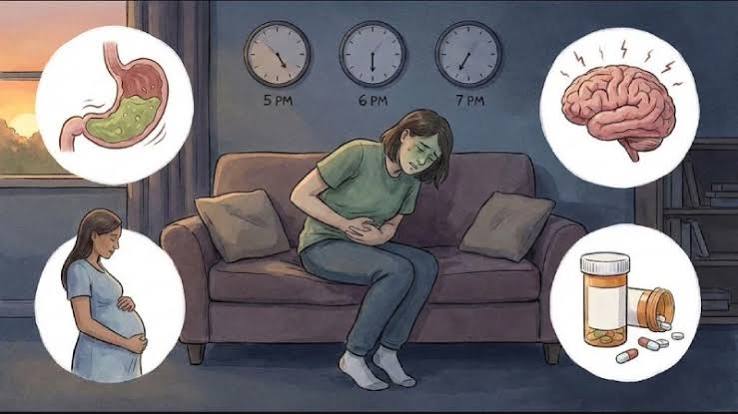
Non-GI Causes of Nausea After Eating
Several causes of post-meal nausea lie entirely outside the digestive system. These are often overlooked because the timing with meals can make them appear GI in origin, while the actual mechanism involves medications, the nervous system, or systemic metabolic conditions.
Medications are among the most common and most reversible causes of chronic post-meal nausea. NSAIDs (ibuprofen, naproxen, aspirin) directly irritate the gastric mucosa and inhibit prostaglandins that protect it — taking NSAIDs with food reduces but does not eliminate this risk. Metformin produces nausea in approximately 20 to 30 percent of new users; taking it with meals and using extended-release formulations reduces GI side effects. Antibiotics — particularly erythromycin (which also stimulates gastric motility via motilin receptors), metronidazole, and amoxicillin-clavulanate — frequently cause post-meal nausea. Iron supplements cause nausea most often when taken on an empty stomach; taking with food reduces nausea at the cost of slightly reduced absorption. Opioids delay gastric emptying and increase nausea through central and peripheral mechanisms. Digitalis (digoxin) toxicity classically presents with nausea, vomiting, and anorexia — new nausea in a patient on digoxin warrants a digoxin level check. Pregnancy — specifically the first trimester — produces nausea through rising human chorionic gonadotropin (HCG) levels. Morning nausea is the classic pattern, but post-meal nausea throughout the day is common. Hyperemesis gravidarum, characterized by persistent vomiting causing significant dehydration, weight loss, and electrolyte abnormalities, occurs in approximately 1 to 2 percent of pregnancies and requires active treatment including IV fluids, thiamine supplementation, and antiemetics. A pregnancy test is appropriate in any woman of reproductive age with new-onset unexplained nausea. Anxiety and autonomic dysregulation produce post-meal nausea through multiple mechanisms: stress reduces gastric accommodation, activates the enteric nervous system via the gut-brain axis, and increases visceral sensitivity. Many adults with anxiety report that nausea is worse before or after meals — particularly in anticipation of eating in social settings. This nausea is physiologically real, not imagined, and often responds to treatment of the underlying anxiety disorder. Vestibular causes — including BPPV, vestibular neuritis, and Meniere’s disease — produce nausea that is position-dependent and may coincide with meals if the act of eating involves head movement. The distinguishing feature is that nausea worsens with specific head positions independent of food. Cardiac causes are uncommon but important: inferior myocardial infarction can present as epigastric pain and nausea after exertion, in at-risk patients with new-onset GI-seeming symptoms. New post-meal nausea with exertional component in a patient with cardiovascular risk factors warrants cardiac evaluation alongside GI assessment.
Red Flags That Require Prompt Evaluation
Most post-meal nausea has a benign functional or dietary cause and can be managed with watchful waiting and basic measures. However, certain accompanying features should prompt timely evaluation to exclude serious or progressive underlying conditions.
Evaluation should not be delayed when post-meal nausea is accompanied by: unintentional weight loss (more than 5 percent of body weight over 6 to 12 months); persistent vomiting lasting more than 24 to 48 hours, or vomiting that prevents adequate fluid intake; hematemesis (vomiting blood) or coffee-ground vomitus — which suggests bleeding from the upper GI tract; melena (black, tarry stools) or bright red rectal bleeding — suggesting significant GI hemorrhage; progressive difficulty swallowing (dysphagia worsening over days to weeks) — which suggests structural esophageal or gastric pathology; severe or worsening right upper quadrant or epigastric pain — which raises concern for biliary, hepatic, or pancreatic pathology; jaundice (yellow skin or eyes) accompanying nausea — which requires urgent liver and biliary evaluation; fever with rigors and right upper quadrant pain (Charcot’s triad) — which suggests ascending cholangitis, a medical emergency; or new onset in an adult over age 55 with no prior GI history, particularly with any of the above features. For context on when digestive symptoms broadly need evaluation, see common digestive problems in adults.
How Nausea After Eating Is Evaluated
The evaluation of post-meal nausea is guided by the clinical history — the timing of nausea relative to meals, the associated symptoms, the duration and pattern, and the patient’s medication list and medical history. A thoughtful history often narrows the differential diagnosis substantially before any test is ordered.
Initial laboratory evaluation typically includes a complete blood count (to assess for anemia from GI bleeding or malabsorption), comprehensive metabolic panel (liver enzymes, kidney function, glucose), amylase and lipase (to screen for pancreatic inflammation), thyroid function (hypothyroidism causes gastroparesis and nausea), and a pregnancy test in women of reproductive age. H. pylori testing — breath test (urea breath test) or stool antigen — is appropriate before empiric PPI therapy in patients with nausea associated with epigastric discomfort, given the high prevalence of H. pylori-related gastritis and peptic ulcer disease. Upper endoscopy is indicated when: alarm features are present; nausea has been present for more than 8 weeks despite empiric treatment; there is suspected peptic ulcer, gastritis, or esophagitis; or celiac disease is a possibility and biopsy of the duodenum is needed. Endoscopy can identify mucosal abnormalities that explain symptoms and provide tissue for H. pylori testing and celiac biopsies. Gastric emptying scintigraphy is the standard test for diagnosing gastroparesis. The patient eats a standardized radiolabeled meal and gastric retention is measured at 1, 2, and 4 hours; retention greater than 10 percent at 4 hours is diagnostic. The test is done off medications that affect motility and after adequate glycemic control in diabetic patients. Abdominal ultrasound is the first-line imaging for right upper quadrant pain with nausea — it identifies gallstones, biliary duct dilation, and liver abnormalities with high sensitivity. The NIDDK nausea and vomiting patient guide provides a clear overview of the evaluation approach.
Managing Nausea After Eating
Management of post-meal nausea should be directed at the underlying cause rather than defaulting to broad antiemetic suppression. However, some general principles apply broadly while evaluation is ongoing or when the cause is functional.
For functional causes (functional dyspepsia, mild gastroparesis): eating smaller, more frequent meals rather than three large ones reduces gastric distension and TLESRs. Low-fat meals empty faster and cause less nausea than high-fat meals. Sitting upright for 30 to 60 minutes after eating improves gastric emptying. Avoiding carbonated beverages reduces gas-related gastric distension. Ginger (in tea or capsule form) has modest evidence for reducing functional nausea and is safe for most adults. For medication-induced nausea: taking the offending medication with food (NSAIDs, metformin, iron) reduces but may not eliminate GI irritation. Switching to extended-release metformin reduces nausea substantially. Reviewing all medications with a prescriber to identify whether an alternative with less GI toxicity is available is appropriate for any patient with chronic medication-related nausea. For GERD-related nausea: the same acid suppression and lifestyle strategies used for heartburn apply — meal timing, head-of-bed elevation, PPI if warranted. For gallbladder-related nausea: a low-fat diet reduces post-meal gallbladder contraction and reduces biliary colic episodes pending definitive treatment. Laparoscopic cholecystectomy is the standard definitive treatment for symptomatic gallstones. For gastroparesis: dietary modification is first line; prokinetic agents (metoclopramide) are used for moderate-severe cases with strict attention to duration given tardive dyskinesia risk with long-term use. For an overview of how digestive conditions connect and overlap, see stomach pain after eating for a related discussion of post-meal symptoms. The Mayo Clinic nausea causes guide provides a patient-oriented overview of the full differential.
Frequently Asked Questions
Why do I feel nauseous immediately after eating?
Nausea that begins during or within 30 minutes of eating most commonly reflects impaired gastric accommodation — the stomach failing to relax appropriately to receive the meal — or a trigger response to specific foods (fatty meals triggering gallbladder contraction, gluten triggering celiac-related responses, high-fat causing GERD). Functional dyspepsia with postprandial distress syndrome is the most common explanation for immediate post-meal nausea without alarm features. If the nausea is only after specific foods, a food and symptom diary helps identify the pattern.
Why do I feel nauseous 1 to 2 hours after eating?
Nausea 1 to 2 hours after eating most often reflects slow gastric emptying — either gastroparesis or a meal high in fat or fiber that delays emptying normally. In gastroparesis, food sits in the stomach and produces nausea as emptying fails to keep pace with gastric acid secretion. GERD-related nausea often peaks 1 to 2 hours post-meal as well, because gastric acid secretion is highest in this window. Peptic ulcer pain (gastric) also typically peaks 1 to 2 hours after eating.
Is it normal to feel nauseous after every meal?
Occasional nausea after a large, fatty, or unusual meal is common and generally not a concern. Nausea after most meals or every meal over weeks to months is not normal and warrants evaluation. The most important factors are whether it is getting worse, whether it is associated with weight loss or vomiting, and whether it is interfering significantly with eating or daily function. These patterns indicate that a structural or persistent functional cause needs to be investigated.
Can anxiety cause nausea after eating?
Yes — anxiety produces post-meal nausea through multiple real physiological mechanisms. The enteric nervous system (the “second brain” in the gut) is extensively connected to the central nervous system, and activation of the stress response through the gut-brain axis impairs gastric accommodation, alters gut motility, and amplifies visceral perception. Many adults with anxiety-related post-meal nausea do not recognize the connection because the nausea feels purely physical — which it is; anxiety produces genuine physiological changes in gut function, not just subjective distress. Treatment of the underlying anxiety disorder typically improves GI symptoms as well.
When should I see a doctor about nausea after eating?
See a clinician when: nausea occurs after most meals or every meal over 2 or more weeks; nausea is accompanied by vomiting, unintentional weight loss, or difficulty swallowing; you notice blood in vomit or black tarry stools; you have significant right upper quadrant or epigastric pain with nausea; or nausea significantly interferes with eating or daily function. These patterns indicate that a cause beyond temporary dietary upset needs to be identified.
Sources: Rome IV Functional Gastrointestinal Disorders Criteria; National Institute of Diabetes and Digestive and Kidney Diseases (NIDDK); American College of Gastroenterology (ACG) Gastroparesis Guidelines; American Gastroenterological Association (AGA); Mayo Clinic.
Nausea After Eating — Patterns That Help Identify the Cause
The timing, context, and associated features of post-meal nausea carry diagnostic information that laboratory tests and imaging cannot replace. A clinician who takes a careful history of the nausea pattern will often have a leading hypothesis before any test is ordered. Understanding these patterns also helps patients describe their symptoms more precisely, which speeds up the evaluation process.
Nausea beginning during the meal or within 30 minutes of eating most commonly reflects impaired gastric accommodation — the stomach failing to relax appropriately to receive incoming food — or an immediate food sensitivity response. Functional dyspepsia with postprandial distress syndrome is the most common diagnosis in this timing category. Large meal size, high-fat content, and carbonated beverages are common triggers that worsen accommodation failure. Celiac disease can produce rapid-onset nausea after gluten ingestion. Psychological factors — anxiety about eating, eating in social situations, or eating after a recent episode of vomiting — can also produce nausea through anticipatory gut-brain axis activation that precedes the meal or occurs during it.
Nausea 1 to 3 hours after eating is the classic gastroparesis window. Food that has not emptied normally from the stomach sits in the gastric cavity, and the combination of ongoing acid secretion, fermentation, and progressive distension produces nausea in this delayed post-meal phase. The diagnosis is suggested when nausea in this window is accompanied by early satiety, bloating, visible distension after meals, and in more severe cases, vomiting of recognizable food eaten hours earlier. GERD-related nausea also peaks in the 1 to 2 hour post-meal window, as this is when gastric acid secretion is highest after eating. Peptic ulcer disease (gastric ulcer pattern) and pancreatitis-related nausea also fall in this timing range.
Nausea associated specifically with certain foods points toward food-triggered causes. Fatty meal-triggered nausea suggests gallbladder disease (biliary colic or biliary dyskinesia) — cholecystokinin released in response to fat stimulates gallbladder contraction, which causes pain and nausea when gallstones or impaired contractility are present. Gluten-triggered nausea suggests celiac disease or non-celiac gluten sensitivity. Dairy-triggered nausea suggests lactose intolerance — lactose malabsorption in the small intestine leads to fermentation in the colon producing gas, bloating, and sometimes nausea. High-fiber meal-triggered nausea is common in gastroparesis (fiber slows gastric emptying further) and IBS.
Episodic severe nausea and vomiting with complete symptom-free intervals between episodes — lasting hours to days, then clearing completely — is the pattern of cyclic vomiting syndrome. The stereotyped, predictable quality of CVS episodes (same symptoms, same severity, same duration for each cycle) distinguishes it from functional dyspepsia, which is more continuous. Associated features that support CVS include migraine history, exacerbation by cannabis use, and relief from hot bathing. Adults presenting with this pattern who use cannabis heavily warrant a trial of cannabis cessation before further diagnostic workup, as cannabinoid hyperemesis syndrome accounts for a substantial proportion of CVS presentations in this population and responds specifically to cessation rather than antiemetics.
The section on gastroparesis was exactly what I needed. I’ve had post-meal nausea for two years and was told repeatedly it was anxiety or functional. After reading this I asked specifically about gastric emptying testing and my doctor agreed it was worth checking — turns out I do have delayed emptying. Knowing the specific test to ask for made all the difference.
That’s a really important outcome, Sylvia — gastroparesis is consistently underdiagnosed because the symptom pattern overlaps so much with functional dyspepsia, and the gastric emptying study is only ordered when someone specifically considers the diagnosis. Early satiety, nausea that’s worst right after or during a meal, and bloating in the absence of typical GERD features are the clues that should prompt consideration of gastric emptying testing. Glad you were able to get to the right evaluation.
I didn’t realize that gallbladder nausea specifically gets worse with fatty meals until I read this. Looking back, I can see that every episode I’ve had was after a high-fat meal. Already scheduled an ultrasound after mentioning it to my doctor. The pattern breakdown was really useful for communicating what I was experiencing.