
Breathing Exercises for Digestive Comfort: What Works and Why
Specific breathing exercises for digestive comfort offer one of the most direct routes to calming an overactive digestive system — not through placebo or relaxation in a vague sense, but through well-understood neurological mechanisms involving the vagus nerve, the enteric nervous system, and the autonomic balance between the sympathetic and parasympathetic nervous systems. This guide explains how breathing affects digestion, which techniques have the strongest clinical support, and exactly how to practice them for measurable gut symptom relief.
Why Breathing Directly Affects Digestive Function
The connection between breathing and gut function is not metaphorical — it is anatomical. The diaphragm, the primary muscle of breathing, sits directly above the digestive organs, with the esophagus passing through an opening (the hiatus) in the diaphragm to connect to the stomach. The vagus nerve, which is the primary parasympathetic nerve governing digestive function, runs through the thorax close to the lungs. And the enteric nervous system — the 500-million-neuron network embedded in the gut wall that controls motility, secretion, and blood flow — receives continuous input from the central nervous system via vagal pathways that respond to breathing rate and depth.
When breathing is slow and diaphragmatic (6–8 breaths per minute, with the abdomen expanding rather than the chest), several physiological effects cascade through the gut:
- The vagus nerve is stimulated through baroreceptors in the lungs and aortic arch, increasing parasympathetic activity (the “rest and digest” state)
- Cortisol and adrenaline levels fall measurably within minutes
- Gut motility normalizes — overly rapid transit (diarrhea-type) slows, and sluggish transit (constipation-type) can accelerate
- The lower esophageal sphincter (LES) tone improves, reducing acid reflux
- Visceral pain sensitivity decreases through reduced central sensitization
When breathing is fast and shallow (thoracic breathing, common during anxiety and stress), the opposite effects occur: sympathetic dominance increases, gut motility becomes dysregulated, cortisol remains elevated, and the gut’s sensitivity to pain and discomfort rises. Understanding this mechanism explains why breathing exercises for digestive comfort are not merely calming — they are a physiological intervention targeting specific gut functions through specific neurological pathways. The scientific evidence on the gut-brain connection provides the full mechanistic basis for these effects.
Diaphragmatic Breathing: The Foundation Technique
Diaphragmatic breathing — also called belly breathing or abdominal breathing — is the single most important breathing technique for digestive health. It is the foundation on which all other techniques build, and practicing it consistently produces the largest improvements in gut symptoms of any breathing-based intervention studied in clinical trials.
In a landmark 2011 study published in the Journal of Neurogastroenterology and Motility, participants with IBS who practiced diaphragmatic breathing twice daily for 8 weeks showed a 31% reduction in IBS symptom severity scores compared to a control group. Abdominal distension scores improved significantly, and the benefit was maintained at 3-month follow-up. A 2018 randomized trial published in Alimentary Pharmacology and Therapeutics found that diaphragmatic breathing training reduced symptom days per week by 45% in people with functional dyspepsia.
How to practice diaphragmatic breathing
Proper technique is important because most adults default to thoracic (chest) breathing and need to relearn abdominal movement:
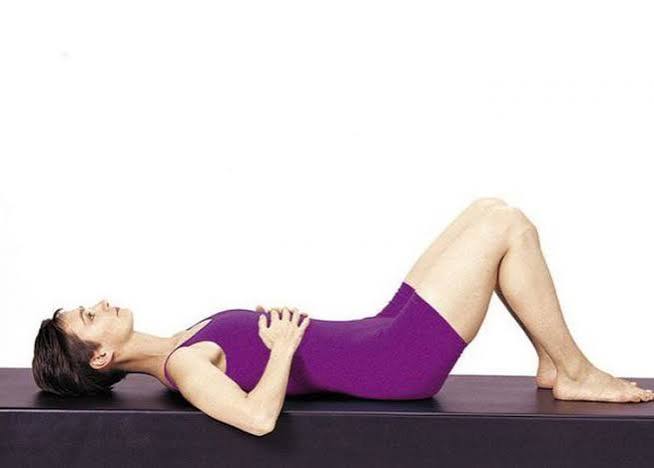
- Lie on your back with knees bent, or sit upright in a comfortable chair. Place one hand flat on your chest and the other on your abdomen, just below the ribcage.
- Breathe in slowly through the nose for 4 seconds. The hand on the abdomen should rise as the diaphragm contracts and the belly expands outward. The hand on the chest should remain relatively still — if the chest rises first, the breath is too shallow.
- Exhale slowly through the nose (or pursed lips) for 6–8 seconds, allowing the abdomen to fall gently inward. The extended exhale is critical — it drives vagal activation more strongly than the inhale.
- Aim for 6 complete breaths per minute (about one every 10 seconds). This is slower than typical resting breathing (12–16 breaths/min) and requires deliberate practice initially.
- Practice for 10 minutes, twice daily — morning and evening are most effective. During an acute episode of bloating or cramping, 5–10 minutes of diaphragmatic breathing often provides noticeable symptom relief within the session.
Most people find the supine (lying down) position easiest to learn, but the technique should eventually be practiced in sitting and standing positions so it is available throughout the day.
Quick Reference: Breathing Rates and Their Effects
12–16 breaths/min = typical resting rate (neutral autonomic state) | 6–8 breaths/min = optimal for vagal activation and gut calming | >20 breaths/min = hyperventilation threshold, activates sympathetic response | 4–5 breaths/min = maximum vagal effect, requires practice to sustain comfortably
Breathing Exercises for Digestive Comfort: The Core Techniques
4-7-8 Breathing for Acute Symptom Relief
The 4-7-8 technique, popularized by Dr. Andrew Weil and based on pranayama breathing traditions, is particularly effective for acute digestive distress — the sudden cramping, urgency, or bloating that comes on during stressful situations. The technique works by using an extended breath hold (7 counts) followed by a very slow exhale (8 counts) to rapidly shift the autonomic nervous system toward parasympathetic dominance.
Practice: Exhale completely through the mouth. Close the mouth and inhale through the nose for 4 counts. Hold the breath for 7 counts. Exhale completely through the mouth, making a gentle whooshing sound, for 8 counts. This is one cycle. Repeat 4 complete cycles. The absolute count is less important than the ratio — what matters is that the hold is longer than the inhale, and the exhale is longer than the hold. For people with IBS, practicing 4 cycles of 4-7-8 breathing at the onset of cramping or urgency often reduces symptom intensity within 2–3 minutes.
Box Breathing for Sustained Digestive Calm
Box breathing (equal time for inhale, hold, exhale, hold) is widely used in high-performance contexts (US Navy SEALs, elite athletes) for its effectiveness in regulating the stress response under acute pressure. For digestive health, it is particularly useful as a midday reset for people whose gut symptoms worsen during work stress. The standard protocol is 4-4-4-4 (four counts each for inhale, hold, exhale, hold), though some practitioners use 5 or 6 counts for a more deeply calming effect.
Box breathing’s four-phase structure produces exceptionally stable heart rate variability (HRV), a marker of healthy autonomic function. High HRV is consistently associated with better gut function and lower IBS symptom severity — the relationship is bidirectional, with gut symptoms worsening when HRV falls and improving when HRV rises.
Pursed Lip Breathing for Bloating and Gas
Pursed lip breathing — inhaling through the nose for 2 counts, then exhaling slowly through lips pursed as if blowing out a candle for 4 counts — creates back-pressure in the airways that helps keep small airways open and slows the respiratory rate naturally. For digestive comfort specifically, it is useful for managing post-meal bloating and gas because the slow, controlled exhalation pace produces consistent parasympathetic activation without requiring any breath-holding, which some people with bloating find uncomfortable due to increased intra-abdominal pressure.
A 2019 study in Gastroenterology found that breathing training combining pursed lip techniques with diaphragmatic breathing significantly reduced post-meal bloating scores in patients with functional bloating over a 6-week program. The effect appeared to work through improved diaphragm-pelvic floor coordination rather than through changes in intestinal gas production itself.
Alternate Nostril Breathing (Nadi Shodhana) for Nervous System Balance
A traditional yogic breathing technique, alternate nostril breathing involves closing one nostril with a finger while breathing through the other, alternating sides with each breath. It sounds simple but produces reliably measurable effects on autonomic balance that have been confirmed by cardiac monitoring in multiple studies. Right nostril breathing activates the sympathetic nervous system (increasing alertness and cortisol); left nostril breathing activates the parasympathetic system (promoting calm and gut motility). Alternating between sides appears to balance the two systems and reduce overall autonomic variability — a beneficial effect for people with IBS whose autonomic systems oscillate dysregulated.
For digestive comfort, the left-nostril phase (right thumb closing the right nostril, breathing through the left) is the most directly therapeutic for acute symptoms. Five minutes of left-nostril-only breathing during an acute IBS episode is worth experimenting with. The full alternate nostril technique (10 minutes of alternating cycles) is better suited to daily practice for its long-term autonomic balancing effects. Understanding how these practices connect to broader stress management for gut health helps place them in a complete therapeutic framework.
Combining Breathing with Movement
Breathing exercises for digestive comfort are substantially more effective when combined with gentle physical movement. Two combinations stand out for evidence and accessibility:
Breathing + Yoga Poses
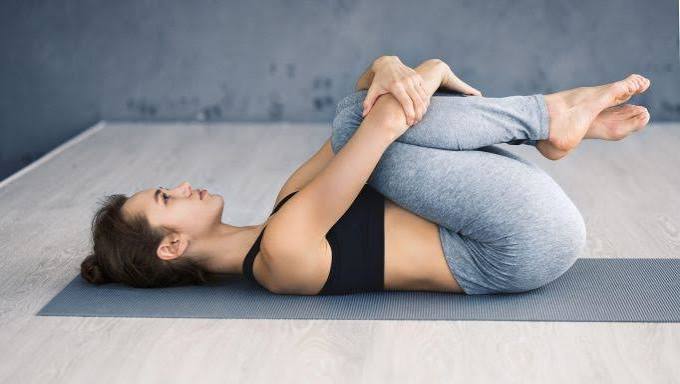
Specific yoga postures have mechanical effects on the digestive tract that complement the neurological effects of controlled breathing. Wind-relieving pose (Pawanmuktasana), where the knees are drawn to the chest while lying on the back, gently compresses and massages the ascending and descending colon, facilitating gas movement and transit. Child’s pose (Balasana) reduces tension in the lower abdominal and pelvic floor muscles, which is directly relevant to constipation-predominant IBS. Cat-cow (Marjaryasana-Bitilasana) rhythmically compresses and decompresses the abdominal cavity, stimulating gut motility. Practicing these poses with coordinated breath — inhaling during decompression phases, exhaling during compression phases — amplifies both the mechanical and neurological effects simultaneously.
Breathing + Walking
Coordinating breathing with walking pace — for example, inhaling for 4 steps and exhaling for 6 steps — combines the motility-stimulating effects of gentle movement with the vagal activation of slow breathing. This is particularly effective as a post-meal practice. The evidence for walking after meals and digestion is well established; adding controlled breathing to post-meal walks enhances the gut calming effect beyond what either practice achieves alone. Ten minutes of coordinated breathing-and-walking after meals, three times daily, is a practical and accessible habit with meaningful cumulative effects on digestive regularity and post-meal comfort.
Breathing Exercises and Acid Reflux (GERD)
Acid reflux deserves particular attention because the relationship between breathing and reflux is mechanically specific. The lower esophageal sphincter (LES) — the valve between the esophagus and stomach that prevents stomach acid from rising — is influenced by pressure dynamics in the thorax and abdomen. The diaphragm wraps around the lower esophagus and provides supplementary closure force to the LES. When the diaphragm is weak or moves incorrectly (as in chronic thoracic breathing patterns), the LES may have less support, contributing to reflux episodes.
Diaphragmatic breathing training directly strengthens the diaphragm and improves its coordination with the LES. A 2012 randomized trial published in the American Journal of Gastroenterology found that participants with GERD who practiced diaphragmatic breathing training for 4 weeks significantly reduced both the frequency of reflux episodes and their use of proton pump inhibitors (PPIs) compared to a control group, with effects sustained at 4-month follow-up. The reduction in reflux was not explained by dietary or weight changes, suggesting a mechanical diaphragmatic mechanism. For people managing GERD, breathing retraining is therefore not just a stress-reduction strategy — it is an evidence-based mechanical treatment for reflux that works through an entirely different pathway than acid-suppressing medication.
Building a Daily Breathing Practice for Gut Health
Consistency matters more than duration in breathing practice. Ten minutes twice daily, practiced consistently for 6–8 weeks, produces measurably more benefit than longer occasional sessions. The following schedule integrates the techniques above into a practical daily routine:
- Morning (10 min): 5 minutes of diaphragmatic breathing to start the day in parasympathetic mode, followed by 5 minutes of alternate nostril breathing for autonomic balance before the day’s stressors begin.
- Post-meal (5–10 min): Pursed lip breathing or box breathing immediately after meals, combined with a gentle 10-minute walk with coordinated breathing counts. This is particularly beneficial for reducing post-meal bloating, accelerating gastric emptying, and reducing post-prandial acid reflux.
- Acute symptom relief (5 min, as needed): 4-7-8 breathing at the onset of cramping, urgency, or acute bloating. Four cycles are usually sufficient for noticeable relief.
- Evening (10 min): Diaphragmatic breathing in the supine position as part of the pre-sleep routine, allowing the gut to transition from day activity to overnight repair mode and supporting the sleep quality that is essential for gut health, as detailed in the sleep and digestive health guide.
The effects of regular exercise and digestive health are complementary to breathing practice — combining both approaches produces better outcomes than either alone, because they address the stress-gut pathway through different but overlapping mechanisms (exercise through HPA axis regulation and motility stimulation; breathing through direct vagal activation and cortisol reduction).
When to see a doctor first: Breathing exercises are safe for healthy adults and appropriate for functional digestive conditions. However, if you experience new or worsening shortness of breath, chest pain, or palpitations when attempting breathing exercises, or if your digestive symptoms include blood in the stool, unintentional weight loss, or symptoms that wake you from sleep, see a doctor before starting any breathing practice to rule out conditions requiring medical treatment.
Frequently Asked Questions
How long before breathing exercises improve digestive symptoms?
Acute effects — reduced cramping, bloating, or urgency — can occur within a single 5–10 minute session for people who are good responders. Sustained improvement in baseline symptoms (fewer symptom days per week, reduced average severity) typically develops over 4–8 weeks of consistent twice-daily practice. This timeline parallels the time needed for structural improvements in vagal tone and HPA axis regulation — changes that require repetition rather than intensity. The 2011 clinical trial on diaphragmatic breathing and IBS showed significant improvement at 8 weeks, with continued benefit at 3-month follow-up. Starting with a daily practice and measuring symptom frequency weekly is the best way to track individual response.
Can breathing exercises help with constipation specifically?
Yes, through two mechanisms. First, diaphragmatic breathing directly massages the abdominal organs with each breath — the descent of the diaphragm on inhalation increases intra-abdominal pressure and mechanically stimulates the ascending colon. Second, by activating the parasympathetic nervous system, diaphragmatic breathing increases gut motility through the enteric nervous system’s cholinergic pathways — the same pathways that prokinetic medications target pharmacologically. For constipation-predominant IBS, morning practice (10 minutes before breakfast, with some added lower abdominal tensing and releasing during exhalations) is most strategically placed to stimulate morning gut motility. Pursed lip breathing and yoga poses (particularly knees-to-chest and child’s pose) can supplement this.
Is there a best breathing technique for IBS with alternating diarrhea and constipation?
Mixed or alternating IBS (IBS-M) reflects underlying autonomic dysregulation rather than a fixed motility pattern — the gut oscillates between excessive and insufficient peristalsis because the autonomic nervous system’s regulation of gut function is unstable. Techniques that stabilize autonomic balance rather than pushing in one direction are therefore most appropriate: box breathing (4-4-4-4) and alternate nostril breathing both have autonomic balancing effects that make them well-suited to IBS-M. These are distinct from techniques that specifically activate the parasympathetic system (most useful for diarrhea-predominant IBS) or gently stimulate motility (most useful for constipation-predominant IBS).
Can breathing exercises replace medication for IBS or GERD?
For some people with mild-to-moderate functional symptoms, breathing retraining alone produces symptom control equivalent to first-line medical treatment. The GERD trial showing reduced reflux episodes and reduced PPI use after diaphragmatic breathing training is a strong example. However, breathing exercises should be seen as complementary to medical management rather than as a replacement, particularly for moderate-to-severe symptoms, for conditions with an organic (structural or inflammatory) component, or for people who have not yet had an appropriate diagnostic work-up. The right approach is to practice breathing exercises consistently, report improvements to your doctor, and discuss whether medication dose reduction is appropriate based on demonstrated symptom response.
Do breathing exercises help with post-meal bloating?
Post-meal bloating has multiple potential causes — excessive gas production from fermentation, delayed gastric emptying, impaired gas transit through the colon, and abnormal visceral sensitivity to normal gas volumes. Breathing exercises address the last two mechanisms most directly. The parasympathetic activation from controlled breathing improves colon transit of gas, and the vagal tone improvement reduces visceral sensitivity so the same gas volume feels less uncomfortable. For bloating primarily driven by slow gas transit, the combination of diaphragmatic breathing with gentle movement (post-meal walking) produces the best results. For bloating driven primarily by visceral hypersensitivity, 4-7-8 breathing during the bloating episode is most effective.
Are there breathing techniques that make digestive symptoms worse?
Some approaches can worsen certain gut symptoms and are worth being aware of. Breath-holding techniques (like extended Kumbhaka in pranayama) can increase intra-abdominal pressure and worsen reflux symptoms if practiced immediately after eating. Forceful exhalation techniques (Kapalabhati or “bellows breathing”) significantly increase intra-abdominal pressure and can worsen GERD, hiatal hernia symptoms, and bloating — they are not appropriate for people with reflux or functional bloating without guidance from a practitioner familiar with both yoga and digestive health. Hyperventilation (very rapid breathing) activates the sympathetic nervous system and invariably worsens functional gut symptoms. Any technique producing dizziness, tingling, or significant shortness of breath should be stopped immediately and reviewed with a healthcare provider.
How do I know if I’m doing diaphragmatic breathing correctly?
The two-hand check is the standard way to self-assess. Place one hand on your chest and one below your sternum on your abdomen. Breathing correctly, the abdominal hand should rise and fall clearly with each breath, and the chest hand should move very little. If both hands move equally, or if the chest moves before the abdomen, you are breathing too shallowly. Most adults need 1–3 weeks of daily practice to fully retrain the breathing pattern because years of stress-driven chest breathing establish a strong motor habit. Practicing in front of a mirror during the learning phase, or using a simple biofeedback app (many measure breathing patterns through the phone camera), can accelerate correct technique acquisition.
Disclaimer: This article is for informational purposes only and does not constitute medical advice. Consult a qualified healthcare professional before making changes to your treatment plan or if you have concerns about your digestive health.
References:
- Kavuri V et al. “Irritable bowel syndrome: yoga as remedial therapy.” Evidence-Based Complementary and Alternative Medicine, 2015.
- Iovino P et al. “Diaphragmatic breathing exercises and GERD.” American Journal of Gastroenterology, 2013.
- Halland M et al. “Diaphragmatic breathing in IBS.” Alimentary Pharmacology and Therapeutics, 2015.
- Chey WD et al. “Irritable bowel syndrome: a clinical review.” JAMA, 2015.
- Mayer EA. “Gut feelings: the emerging biology of gut-brain communication.” Nature Reviews Neuroscience, 2011.
The GERD section is the most valuable part of this article for me. I have been on PPIs for three years and my gastroenterologist has been discouraging me from continuing them long-term due to concerns about magnesium absorption and bone density. I hadn’t found anything clinically validated that worked as an alternative until reading about the diaphragmatic breathing trial showing reduced reflux frequency without medication changes. The mechanism makes complete sense once it’s explained — I had never understood that the diaphragm itself provides mechanical support to the lower esophageal sphincter, and that shallow chest breathing (which I definitely do under stress) would reduce that support. I’m starting the twice-daily practice this week and will track my reflux symptom frequency.
The long-term PPI concern is well-founded and increasingly discussed in the gastroenterology literature. Beyond magnesium absorption (hypomagnesemia) and bone density effects, long-term PPI use has been associated with increased risk of small intestinal bacterial overgrowth (SIBO) — because gastric acid is one of the key defences against bacterial colonisation of the small intestine, suppressing it allows bacteria that would normally be killed by the acidic stomach environment to pass through. This creates a secondary digestive problem (SIBO symptoms of bloating, early satiety, and altered bowel habits) on top of the original GERD. For people whose reflux is primarily driven by a weak or poorly coordinated lower esophageal sphincter rather than excessive acid production — which diaphragmatic breathing directly addresses — reducing PPI reliance through breathing retraining makes both mechanical sense and may avoid some of these long-term risks. The right approach is to practice breathing consistently for 6–8 weeks, track objectively (symptom diary, noting frequency and severity of reflux episodes), and then discuss gradual PPI dose reduction with your gastroenterologist based on documented symptom improvement. PPI discontinuation should always be supervised because of the acid rebound effect in the first 2–4 weeks after stopping.
I’ve been trying to incorporate breathing practice into my IBS management for about two months based on various recommendations, but without specific instructions the technique always felt vague — I wasn’t sure if what I was doing was correct. The two-hand check described here (one hand on chest, one on abdomen, abdomen should rise before chest) finally gave me a concrete way to verify the technique, and when I tried it I realized I was doing it wrong — my chest was rising significantly on inhale. It took about 10 minutes of deliberate practice with the hands in place before the diaphragm movement felt natural. The tip about practicing in front of a mirror is also worth highlighting for anyone else who finds the proprioception of breathing hard to judge.