
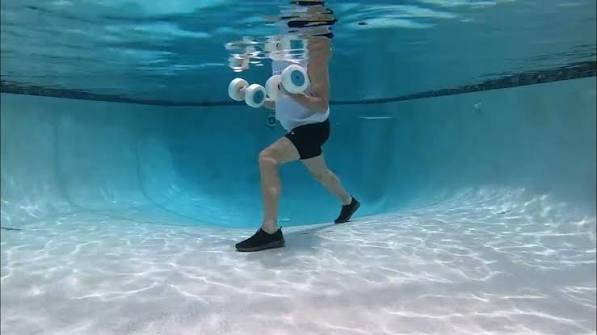
There is a moment familiar to many people with joint pain: the moment when even walking to the end of the street hurts, when the thought of a gym feels impossible, when the cycle of pain and inactivity seems inescapable. Water exercise for joint comfort offers a genuine and clinically evidence-based exit from that cycle. Cochrane systematic reviews confirm that water-based exercise reduces knee osteoarthritis pain by approximately 20%, improves physical function, and enhances quality of life — with effects that are maintained at follow-up. The physics of water — buoyancy removing up to 75% of body weight at chest depth, resistance providing a natural strengthening stimulus, warm water relaxing spasming muscles — create an exercise environment that many people with severe joint pain find transformative. This guide explains how water exercise works, which types are most appropriate for different conditions, and how to access pool and hydrotherapy resources in the UK.
The Physics of Water Exercise — Why It Works
The therapeutic properties of water exercise are grounded in basic physics. Understanding these mechanisms makes clear why water exercise achieves results that land exercise cannot, for people whose pain has become a barrier to movement.
Buoyancy: the defining property. According to Archimedes’ principle, any object submerged in water experiences an upward force equal to the weight of the water it displaces. For a person standing in a pool, this buoyant force directly counteracts gravity and reduces the effective body weight experienced at the joints. At waist depth, approximately 50% of body weight is supported by water — so a person who weighs 90 kg on land effectively weighs 45 kg at the joints during waist-depth exercise. At chest depth, 75% is supported — effectively 22.5 kg. At neck depth, approximately 90% — effectively 9 kg. This transformation in loading allows people to exercise at intensities and for durations that would be impossible on land at their current pain level.
Water resistance: the self-regulating training stimulus. Water is approximately 800 times denser than air. Moving through water requires overcoming viscous drag, which increases with the speed of movement. This creates a unique training environment: the faster you move, the harder you work; the slower you move, the lower the resistance. For people in pain, this is self-regulating — the body naturally tends to move more slowly when in discomfort, automatically reducing the resistance and workload to a tolerable level. As pain decreases and fitness improves, faster movement becomes comfortable, which increases the training stimulus without requiring deliberate progression decisions. Water resistance also acts in all directions — forward, backward, sideways — providing a multidirectional strengthening stimulus that is difficult to replicate with conventional equipment.
Hydrostatic pressure: reducing swelling and supporting circulation. The pressure exerted by water on submerged body parts — hydrostatic pressure — acts uniformly on all surfaces and increases with depth. This pressure reduces oedema (swelling) by supporting venous return and counteracting the tissue fluid accumulation that often accompanies joint inflammation. People with swollen ankles, knees, or hands often find that pool exercise temporarily reduces swelling. For people with dependent oedema from lower limb OA or RA, the hydrostatic effect of regular pool exercise contributes meaningfully to symptom control.
Warm Water — The Extra Benefit
Temperature significantly amplifies the therapeutic effects of water exercise. The distinction between a recreational pool (typically 26–28°C) and a hydrotherapy pool (typically 34–36°C) is clinically significant.
At hydrotherapy temperatures, several physiological changes occur simultaneously. Synovial fluid — the lubricating fluid within joint cavities — decreases in viscosity, improving joint lubrication and making movement noticeably easier and less painful. Muscles relax as the increased tissue temperature reduces resting muscle tone and muscle spasm — the sustained muscle guarding around painful joints that often contributes significantly to the total pain experience. Blood flow to superficial tissues increases, improving local tissue oxygenation. Neurologically, warmth activates thermoreceptors in the skin that compete with pain signals for transmission through spinal cord pathways (the gate control theory of pain), providing a direct analgesic effect independent of any movement.
The practical implication is that people who have tried recreational pool exercise and found it insufficiently effective may have a very different experience in a heated hydrotherapy pool. NHS hydrotherapy is delivered at these higher temperatures precisely because the clinical difference is meaningful — it is not merely more comfortable, it is mechanically different for joint function.
Types of Water Exercise
Not all water exercise is the same, and choosing the right form for your condition, fitness level, and available access significantly affects the outcomes you achieve.
Pool walking is the simplest and most accessible form of water exercise. Walking in waist-deep water engages the same muscle groups as land walking — quadriceps, hamstrings, gluteals, calves — but with 50% less joint loading. It can be done in any public pool without special equipment or class membership. Pool walking also engages the core and hip musculature more than land walking because the water resistance on the swing phase of gait creates additional demand. For people starting water exercise for the first time, pool walking is often the appropriate starting point before progressing to aqua aerobics or swimming.
Aqua aerobics is a structured, instructor-led exercise class in a shallow pool. Classes typically run 45–60 minutes and incorporate a warm-up, aerobic section, strength exercises, cool-down, and stretching. The instructor varies the intensity and movement patterns to achieve a full cardiovascular and strengthening workout within the protective environment of the pool. Arthritis-specific aqua aerobics classes — available through many NHS-linked leisure centres and Versus Arthritis activity programmes — are adapted to avoid movements that commonly provoke joint pain and are led by instructors trained in working with health conditions. The social element of a regular class is often underestimated: exercising with a consistent group of peers who share similar health challenges builds accountability and motivation that sustains attendance.
Swimming provides full-body aerobic conditioning through rhythmic, propulsive movement against water resistance. Different strokes engage different muscle groups and place different demands on specific joints. Freestyle (front crawl) provides excellent cardiovascular conditioning but demands full shoulder rotation — problematic if shoulder involvement is a feature of the arthritis. Backstroke places the spine in extension and is specifically recommended in ankylosing spondylitis because it complements spinal extension exercises. Breaststroke uses a powerful frog-kick that can aggravate medial knee pain in people with significant knee OA — sidestroke or backstroke may be more comfortable alternatives. Swimming is the only water exercise form that provides significant upper body strengthening alongside lower limb and cardiovascular benefits.
Hydrotherapy is clinically supervised warm-water exercise delivered by physiotherapists in a specialist hydrotherapy pool. It is used post-surgically, during active inflammatory flares (where the warmth and support allow rehabilitation that would be impossible on land), and for people with severe mobility limitation. NHS hydrotherapy referral comes through a physiotherapist or rheumatologist — it is not directly self-referrable in most areas. Private hydrotherapy clinics with attached physiotherapy teams offer an alternative for those who do not meet NHS referral criteria but would benefit from warm-water supervised exercise.
Aqua jogging and deep water running uses a buoyancy belt around the waist to keep the swimmer vertical in deep water while performing a running motion. Because the feet never touch the bottom, ground reaction forces are completely eliminated — it is the only form of exercise that provides a running-equivalent cardiovascular stimulus with literally zero ground reaction force. It is used in rehabilitation from running injuries and in high-pain joint conditions where even shallow-water pool walking is too loading. The buoyancy belt provides the support; the vigorous running motion provides the cardiovascular and muscular stimulus.

Water Exercise for Specific Conditions
Knee osteoarthritis: Pool exercise is the most joint-protective aerobic option for severe knee OA. Water walking and aqua aerobics provide cardiovascular conditioning and quadriceps strengthening at dramatically reduced knee loading. The Cochrane review by Bartels and colleagues (2016) — the most comprehensive analysis of water exercise in OA — found that water-based exercise significantly reduces pain and improves physical function compared with no exercise control, with effects maintained at follow-up. For those who can tolerate some land exercise, pool exercise should complement rather than replace walking, as walking’s weight-bearing bone-loading stimulus is not replicated in the pool.
Rheumatoid arthritis: Pool exercise is particularly valuable in RA during active disease periods when joint loading must be minimised. The combination of warm water and buoyancy allows meaningful exercise even during moderate disease activity, maintaining cardiovascular fitness and range of motion while the inflammatory burden is being managed pharmacologically. Hand and wrist ROM exercises in warm water — using the resistance of water and the thermal relaxation effect — are effective for maintaining hand function. A Cochrane review found that aquatic exercise in RA improves aerobic fitness and reduces fatigue without increasing disease activity markers.
Ankylosing spondylitis: Pool exercise — particularly backstroke swimming — is specifically recommended in AS management. Backstroke requires the spine to be in extension throughout the stroke, directly counteracting the flexion deformity that AS tends to produce. The warm water relaxes the paraspinal muscles that become chronically tight in AS, allowing greater spinal range of motion than is achievable on land at the same pain level. The NASS recommends regular hydrotherapy or pool swimming as part of the comprehensive daily exercise programme for axial SpA.
Fibromyalgia: Warm water exercise is the single most consistently evidence-supported physical therapy in fibromyalgia. Multiple RCTs and systematic reviews show that warm-water aquatic exercise improves pain, fatigue, sleep quality, and quality of life in fibromyalgia — with effects that are larger than those seen with land-based exercise in most studies. The key features are the warmth (which directly reduces the pain sensitivity characteristic of fibromyalgia), the self-regulating resistance (which prevents accidental over-exertion), and the buoyancy (which avoids the post-exertional malaise that land exercise can trigger). Starting gently and building very slowly is particularly important in fibromyalgia.
Obesity with joint pain: For people whose weight significantly contributes to their joint pain, pool exercise is often the only form of aerobic exercise that can be sustained at a useful intensity without aggravating symptoms. The buoyancy effectively reduces the body weight experienced at the joints to a level that makes sustained exercise feasible. Regular pool exercise allows caloric expenditure and cardiovascular conditioning during the period when weight is being reduced — and as weight reduces, land exercise options progressively become more accessible. See our companion guide on low-impact exercise for joint pain for the broader range of options as tolerance improves.
Getting the Most from Aqua Aerobics
For people new to water exercise, an aqua aerobics class is often the best introduction because the structure, instructor guidance, and social environment address the uncertainty and motivation challenges that prevent many people from starting independently.
Most arthritis-appropriate aqua aerobics classes follow a consistent structure: a 5–10 minute warm-up of gentle water walking and range-of-motion movements; a 20–30 minute aerobic section of faster-paced movement patterns (walking, jogging in place, side-stepping, arm movements); a 10–15 minute strength section using water resistance or pool equipment; and a 5–10 minute cool-down and stretch. The instructor cues modifications for different ability levels throughout — it is always acceptable to perform a gentler version of any movement.
Arthritis-specific classes (advertised as such through Versus Arthritis, council leisure centres, and NHS referral programmes) differ from general aqua aerobics in that movements are selected to avoid common aggravating patterns for joint conditions, depth is managed to keep loading at appropriate levels, and the instructor is trained in working with participants who have health conditions. Attending a general aqua aerobics class is also appropriate for many people — communicate your joint condition to the instructor before the class and they can advise on modifications.
Building frequency gradually is important — starting with one class per week and observing joint response before adding a second is wise, particularly in the first month. The 24-hour rule applies in the pool exactly as on land: if joints are significantly more painful more than 24 hours after a session, the intensity or duration was too high.
Hydrotherapy — NHS and Private Options
NHS hydrotherapy is a clinically supervised treatment delivered by physiotherapists in a heated pool (34–36°C). It is used for post-surgical rehabilitation, active inflammatory arthritis, severe mobility limitation, and conditions where the clinical benefit of warm-water supervised exercise is established. Referral comes through a physiotherapist, rheumatologist, or orthopaedic surgeon — it is not available via direct self-referral in most areas. Not all NHS trusts have hydrotherapy facilities; many refer to specialist units or private clinics with NHS contracts.
For people who do not meet NHS referral criteria but would benefit from warm-water supervised exercise, private hydrotherapy clinics are available in most major UK cities. These are typically staffed by chartered physiotherapists and provide one-to-one or small-group sessions in heated pools. Costs vary but typically range from £50–£90 per individual session. Some private health insurance policies cover hydrotherapy with a physiotherapy referral — it is worth checking the terms of any existing cover.
The Chartered Society of Physiotherapy (CSP) directory can help locate physiotherapists who offer hydrotherapy services. The Hydrotherapy Association of Chartered Physiotherapists (HACP) maintains standards for clinical hydrotherapy delivery and can advise on accessing services. For anyone being seen by an NHS physiotherapist for a joint condition, asking specifically about hydrotherapy access — whether NHS or privately — is a reasonable and appropriate question during the consultation. The clinical assessments that typically precede a hydrotherapy referral are covered in our article on physical exam for joint pain.
Frequently Asked Questions
Is water exercise good for arthritis?
Yes — Cochrane systematic reviews confirm that water-based exercise reduces knee OA pain by approximately 20%, improves physical function, and enhances quality of life, with effects maintained at follow-up. For inflammatory arthritis (RA, AS), pool exercise allows vigorous aerobic conditioning and range-of-motion work at lower joint loading than land exercise, and warm water provides additional therapeutic benefit through muscle relaxation and reduced synovial fluid viscosity. Water exercise is recommended by Versus Arthritis and used routinely in NHS physiotherapy and rheumatology programmes.
What is better for joint pain — swimming or aqua aerobics?
Both are effective; the choice depends on your condition and preferences. Swimming provides better upper body conditioning and is preferable for those who swim comfortably and enjoy lane swimming. Aqua aerobics provides structured, guided total-body exercise with a social element, and is accessible to non-swimmers. Aqua aerobics classes can be arthritis-specific, whereas swimming requires more self-directed modification. Many people do both — aqua aerobics as their main structured session and swimming for additional aerobic conditioning.
Can I do water exercise if I can’t swim?
Yes — aqua aerobics, pool walking, and shallow-water resistance exercises do not require swimming ability. They are performed in waist-to-chest-deep water where standing is comfortable. A buoyancy belt can provide additional confidence for those who are not fully comfortable in water. Most aqua aerobics classes are run in shallow pools (1.2–1.5 m) with participants standing throughout. Non-swimmers are explicitly welcome at most arthritis-specific aqua aerobics classes.
How warm should the pool be for arthritis?
Recreational pools (26–28°C) provide the joint-loading benefits of buoyancy but limited warmth-specific benefits. Temperatures of 32–34°C, common in many leisure centre pools, provide meaningful warmth benefits — reduced stiffness and muscle relaxation. Full hydrotherapy temperatures (34–36°C) provide the greatest warmth benefit and are used in NHS and private clinical settings. If your local leisure centre pool feels too cool to be comfortable for your arthritis, asking specifically about any warmer pools (sometimes called “training” or “rehabilitation” pools) or NHS-linked hydrotherapy referral is worthwhile.
Does water exercise count as weight-bearing exercise for bones?
Pool walking and shallow-water exercise where the feet contact the pool bottom provide some weight-bearing stimulus, but significantly less than land walking because buoyancy counteracts most of the body weight. Swimming and aqua aerobics where the feet are off the bottom are non-weight-bearing and do not provide the bone-loading stimulus of land walking. For people with osteoporosis, water exercise is an excellent cardiovascular and muscle-conditioning tool, but should be complemented by weight-bearing land exercise (walking, elliptical) to maintain the bone-loading stimulus needed for bone mineral density maintenance. Our article on vitamin D and bone health covers the monitoring and supplementation context for osteoporosis.
How do I find aqua aerobics classes for arthritis in the UK?
Versus Arthritis provides a searchable activity directory at versusarthritis.org that includes aqua aerobics and hydrotherapy options by location. Many council-run leisure centres offer subsidised or free aqua aerobics for people with health conditions via Exercise Referral Schemes — ask your GP for a referral. The NHS Exercise Referral Scheme is available in many areas and specifically includes pool-based exercise options. Swim England’s pool finder at swimming.org helps locate nearby pools with aqua aerobics programmes. NASS provides specific hydrotherapy resources for people with axial spondyloarthritis.
Is hydrotherapy available on the NHS?
Yes — NHS hydrotherapy is available by referral through a physiotherapist, rheumatologist, or orthopaedic surgeon for specific clinical conditions including post-surgical rehabilitation, active inflammatory arthritis, and severe mobility limitation. Not all NHS trusts have dedicated hydrotherapy facilities; many refer to specialist units, private clinics with NHS contracts, or community hydrotherapy providers. If you are under NHS physiotherapy or rheumatology care for a joint condition, asking specifically about hydrotherapy access is appropriate. Your GP can also enquire on your behalf.
Key Takeaways
Water exercise for joint comfort works through three distinct physical mechanisms — buoyancy (reducing joint loading by 50–75%), water resistance (providing a self-regulating strengthening and cardiovascular stimulus), and warm water (reducing synovial fluid viscosity, relaxing muscle spasm, and directly relieving pain). Cochrane evidence confirms approximately 20% pain reduction in knee OA from water exercise, with additional benefits in RA, fibromyalgia, and AS. Pool walking, aqua aerobics, swimming, hydrotherapy, and aqua jogging each suit different conditions and pain levels. Arthritis-specific aqua aerobics classes — available through NHS-linked leisure centres and Versus Arthritis activity programmes — are the most structured and accessible starting point for most people. NHS hydrotherapy is available by referral for clinical conditions. For the full exercise programme that water exercise supports, see our guides on exercise for joint health and low-impact exercise for joint pain. For people managing bone health alongside pool exercise, our article on strength training for bones and muscles covers the complementary weight-bearing exercise needed to maintain bone density.
References and Further Reading
- Bartels EM et al. Aquatic exercise for the treatment of knee and hip osteoarthritis. Cochrane Database of Systematic Reviews 2016.
- Versus Arthritis. Hydrotherapy and water-based exercise — Versus Arthritis.
- National Axial Spondyloarthritis Society (NASS). Hydrotherapy for ankylosing spondylitis — NASS.
- NHS. Swimming for fitness and health — NHS Live Well.
- Swim England. Find a pool near you — Swim England.
- Chartered Society of Physiotherapy. Find a physiotherapist (including hydrotherapy) — CSP directory.
- Häkkinen A et al. Aquatic and land-based exercise in rheumatoid arthritis: review of evidence. Rheumatology International 2012.
Disclaimer: This article is for educational purposes only and does not constitute medical advice. Consult a physiotherapist or doctor before starting water exercise if you have an open wound, active skin infection, urinary incontinence, or severe cardiovascular disease.
I have fibromyalgia and have tried every form of exercise over the years. Land exercise always leaves me worse for days afterwards. A rheumatology nurse suggested warm water exercise six months ago and it has genuinely transformed my ability to stay active. I go to an aqua aerobics class twice a week at a heated pool and I can manage the full 45 minutes without triggering a flare. The warmth makes such a difference. The article’s explanation of why warm water helps – the gate control effect and the muscle relaxation – finally made sense of my experience.
Fiona – the gate control explanation is one of the most clinically useful ways to understand why warm water works beyond just the joint unloading. The thermoreceptors activated by warm water genuinely compete with and partially block pain signals at the spinal cord level – it is not simply a distraction or placebo. The fact that you can sustain 45 minutes twice a week without a flare is a meaningful base to build on. The cardiovascular and muscle conditioning you are building through that consistency will gradually reduce the background fibromyalgia pain sensitisation over months of regular activity. The rheumatology nurse gave you excellent advice.
I had no idea NHS hydrotherapy referral was possible. I have been paying for private hydrotherapy sessions for my hip OA at £65 each. I asked my GP about an NHS referral after reading this and she referred me to the community physiotherapy service which offers a hydrotherapy pool programme. Waiting list is 8 weeks but the cost saving is significant. Worth knowing about.