
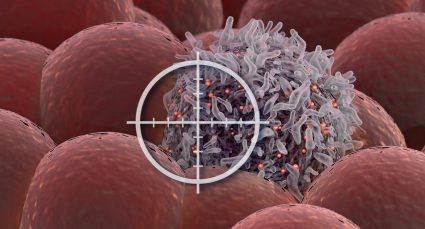
Targeted therapy is a class of cancer treatment that blocks specific molecular alterations — mutations, gene amplifications, chromosomal rearrangements — that cancer cells depend on to grow and survive. Unlike chemotherapy, which kills any rapidly dividing cell, targeted therapy drugs act selectively on cancer cells carrying a specific molecular target, leaving most normal cells relatively unaffected.
The fundamental requirement for targeted therapy is a biomarker: the molecular alteration must be confirmed in the patient’s tumor before prescribing. The same cancer type in two different patients may have entirely different driver mutations — and different targeted therapy options, or none at all. This is the core of precision oncology: treatment matched not to the organ where cancer originated, but to the molecular alteration driving its growth. For how targeted therapy compares to all treatment modalities, see the cancer treatment options guide. For a mechanistic comparison with chemotherapy, see the chemotherapy guide.
How Targeted Therapy Works
Cancer cells accumulate genetic alterations — point mutations, amplifications, deletions, fusions — that activate signaling pathways driving uncontrolled proliferation, survival, and invasion. Targeted therapy drugs block the specific altered protein — the driver — interfering with the signal the cancer cell uses to divide and survive. Normal cells, which typically don’t carry the alteration, are relatively unaffected.
Small Molecule Inhibitors (SMIs)
Oral drugs small enough to cross cell membranes. Most are tyrosine kinase inhibitors (TKIs) blocking intracellular kinase domains. Include EGFR TKIs, ALK TKIs, BRAF inhibitors, CDK4/6 inhibitors, BTK inhibitors, PARP inhibitors, KRAS G12C inhibitors.
Monoclonal Antibodies (mAbs)
Large proteins given by IV infusion. Bind extracellular targets — HER2 receptor, VEGF ligand, EGFR. Blocking receptor activation, triggering immune destruction (ADCC), or cutting off tumor blood supply.
Antibody-Drug Conjugates (ADCs)
Guided missile: monoclonal antibody + cytotoxic payload via cleavable chemical linker. Delivers high-concentration chemotherapy specifically to target-expressing cancer cells. T-DXd, sacituzumab govitecan, enfortumab vedotin are the key approved ADCs.
Targeted Therapy Drug Classes in Detail
EGFR and ALK Inhibitors (Lung Cancer)
Osimertinib (third-generation EGFR TKI) is the first-line standard for EGFR-mutant NSCLC (exon 19 deletion or L858R point mutation) — the most common targetable alteration in lung cancer (~15% of Western, ~50% of Asian patients with NSCLC):
- FLAURA trial (NEJM 2018): osimertinib vs. first-generation EGFR TKI: OS 38.6 vs. 31.8 months; PFS 18.9 vs. 10.2 months; superior CNS activity
- ADAURA trial (NEJM 2020): adjuvant osimertinib for 3 years after resection of EGFR-mutant NSCLC Stage IB–IIIA: 2-year DFS 90% vs. 44% (HR 0.17) — one of the largest DFS benefit effects in an adjuvant oncology trial
ALK TKIs target the EML4-ALK rearrangement (~5% of NSCLC):
- Alectinib (ALEX trial, NEJM 2017): PFS 34.8 vs. 10.9 months vs. crizotinib; superior CNS efficacy — critical because ~30% of ALK+ patients develop brain metastases
- Lorlatinib (CROWN trial): 3-year PFS 63.5% vs. 19% vs. crizotinib; deepest CNS penetration of any ALK TKI; now preferred first-line
BCR-ABL Inhibitors (CML) — A Transformative Success Story
The Philadelphia chromosome creates the BCR-ABL1 fusion tyrosine kinase — the sole oncogenic driver of CML. Imatinib (Gleevec), approved in 2001, transformed CML from a disease with median survival under 5 years to one with >80% 10-year overall survival (IRIS trial) — the most dramatic single targeted therapy success in oncology. Second-generation inhibitors (dasatinib, nilotinib) and the novel STAMP inhibitor asciminib address resistance. Approximately 40–50% of patients who achieve deep molecular remission can successfully stop TKI therapy and maintain treatment-free remission.
BRAF + MEK Inhibitors (Melanoma and Other Cancers)
BRAF V600E/K mutations (~50% of melanomas, ~2% of NSCLC, ~8–10% of CRC). BRAF inhibitors alone cause paradoxical ERK activation through feedback — combination with MEK inhibitors prevents this and delays resistance. Dabrafenib + trametinib (COMBI-d/v trials): 5-year OS 34% in metastatic melanoma — a cancer that was uniformly fatal within months before targeted therapy. BRAF V600E is also targetable in CRC: BEACON-CRC trial (encorafenib + cetuximab): OS 9.3 vs. 5.4 months vs. control.
CDK4/6 Inhibitors (HR+/HER2- Breast Cancer)
Palbociclib, ribociclib, and abemaciclib block cyclin D-CDK4/6 kinase complexes that drive the G1/S cell cycle transition. Combined with aromatase inhibitors or fulvestrant in metastatic HR+/HER2- breast cancer:
- PALOMA-2: Palbociclib + letrozole: PFS 24.8 vs. 14.5 months vs. letrozole alone
- MONARCH 2: Abemaciclib + fulvestrant: OS 46.7 vs. 37.3 months
- MONALEESA-7: Ribociclib in premenopausal patients: 5-year OS 70.2% vs. 46.0%
KRAS G12C Inhibitors — The Undruggable Target Made Druggable
KRAS G12C inhibitors: sotorasib (ORR 37.1%) and adagrasib (KRYSTAL-1: ORR 42.9%) are approved for KRAS G12C NSCLC second-line after platinum + checkpoint inhibitor. Active investigation ongoing for KRAS G12C CRC and pancreatic cancer.
PARP Inhibitors — Synthetic Lethality in BRCA-Mutated Cancers
PARP inhibitors exploit synthetic lethality: cancer cells with BRCA1 or BRCA2 mutations cannot repair DNA double-strand breaks via homologous recombination. They rely on PARP-mediated single-strand break repair. When PARP inhibitors block and trap PARP on DNA, accumulated double-strand breaks become lethal — but only in BRCA-deficient cells. Normal cells with intact BRCA survive.
Olaparib (Lynparza) across cancer types:
- SOLO1 (BRCA1/2-mutated advanced ovarian): maintenance PFS 60.4 vs. 13.8 months — one of the largest PFS effects in gynecologic oncology
- OlympiA (BRCA1/2-mutated early breast cancer): adjuvant: improved invasive DFS at 3 and 4 years
- POLO (BRCA1/2-mutated metastatic pancreatic): maintenance PFS 7.4 vs. 3.8 months
- PROfound (BRCA1/2-mutated mCRPC): OS 19.1 vs. 14.7 months
Monoclonal Antibodies and ADCs
Trastuzumab + pertuzumab dual HER2 blockade (CLEOPATRA trial): OS 57.1 vs. 40.8 months — the most durable OS benefit reported in first-line HER2+ metastatic breast cancer; now the standard regimen for HER2+ metastatic breast cancer first-line.
Trastuzumab deruxtecan (T-DXd / Enhertu) — the most impactful ADC of the current era. The HER2-targeting antibody is linked to DXd (topoisomerase I inhibitor) via a highly cleavable linker. DXd release within tumor lysosomes kills the targeted cell AND diffuses into adjacent cells (bystander effect), relevant for tumors with heterogeneous HER2 expression:
- DESTINY-Breast03: HER2+ MBC second-line: PFS 28.8 vs. 6.8 months vs. T-DM1; OS also superior → new second-line standard
- DESTINY-Breast04: HER2-low MBC (IHC 1+ or 2+/ISH-): OS 23.4 vs. 16.8 months — first evidence that “HER2-low” is a clinically actionable target, potentially expanding HER2-targeting to ~50–60% of all metastatic breast cancer patients
- Also approved: HER2-mutant NSCLC (DESTINY-Lung02: ORR 57.7%), HER2+ gastric cancer
Enfortumab vedotin + pembrolizumab (EV-302/KEYNOTE-A39): urothelial carcinoma first-line: PFS 12.5 vs. 6.3 months vs. platinum-based chemotherapy; OS superiority confirmed — replaced platinum-based chemotherapy as the first-line standard for metastatic urothelial carcinoma.
Biomarker Testing — The Prerequisite for Targeted Therapy
A targeted therapy without its target is either ineffective or potentially harmful. Before prescribing, the tumor must be tested for the specific molecular alteration the drug requires.
| Test Type | What It Detects | When Used |
|---|---|---|
| IHC (Immunohistochemistry) | Protein overexpression: HER2 (3+ = amplified; 2+ equivocal → ISH); ER/PR; PD-L1 | Breast cancer, gastric, lung |
| PCR | Specific mutations: EGFR ex19del/L858R/T790M; BRAF V600E; KRAS; IDH1/2 | Fast single-gene confirmation |
| NGS / CGP | All SNVs, fusions, CNVs, TMB, MSI-H — simultaneously | Metastatic NSCLC, CRC, bladder, melanoma — recommended upfront (NCCN) |
| Liquid biopsy (ctDNA) | Cell-free tumor DNA from blood: EGFR T790M resistance; emerging resistance mutations | When tissue unavailable; resistance monitoring |
| Companion diagnostics | FDA-required specific test for specific drug | EGFR cobas test (erlotinib/osimertinib); Vysis ALK FISH (crizotinib/alectinib) |
Comprehensive Genomic Profiling (CGP) using FDA-approved platforms (FoundationOne CDx, Caris, Tempus) can simultaneously identify all actionable molecular alterations from a single tissue biopsy — and reveal clinical trial eligibility for rare alterations. NCCN recommends upfront broad molecular profiling for all newly diagnosed metastatic NSCLC, colorectal, bladder, and other biomarker-rich cancers. Asking your oncologist what testing was done on your tumor — and whether CGP was performed — is one of the most important questions before starting treatment. See the cancer diagnosis questions guide.
Targeted Therapy by Cancer Type
| Cancer Type | Molecular Target | Drug / Key Trial | Key Result |
|---|---|---|---|
| NSCLC | EGFR ex19del/L858R | Osimertinib (FLAURA) | OS 38.6 vs. 31.8 mo |
| NSCLC | ALK rearrangement | Lorlatinib (CROWN); Alectinib (ALEX) | 3-yr PFS 63.5% (lorlatinib) |
| NSCLC | KRAS G12C | Sotorasib (CodeBreaK 100) | ORR 37.1% 2L |
| HER2+ Breast | HER2 amplification | T-DXd (DESTINY-Breast03) | PFS 28.8 vs. 6.8 mo 2L |
| HER2-low Breast | HER2 IHC 1+ or 2+/ISH- | T-DXd (DESTINY-Breast04) | OS 23.4 vs. 16.8 mo |
| HR+/HER2- Breast | CDK4/6 pathway | Palbociclib/Ribociclib/Abemaciclib | PFS 24.8 mo (PALOMA-2) |
| HR+/HER2- Breast | PIK3CA mutation | Alpelisib + fulvestrant (SOLAR-1) | PFS 11.0 vs. 5.7 mo |
| Melanoma | BRAF V600E | Dabrafenib + trametinib (COMBI-d/v) | 5-yr OS 34% |
| CRC | BRAF V600E | Encorafenib + cetuximab (BEACON-CRC) | OS 9.3 vs. 5.4 mo |
| CML | BCR-ABL fusion | Imatinib → dasatinib → asciminib (IRIS) | 10-yr OS >80% |
| Urothelial | Nectin-4 (ADC) | Enfortumab vedotin + pembro (EV-302) | PFS 12.5 vs. 6.3 mo 1L |
| Any NTRK fusion | NTRK gene fusion | Larotrectinib (tissue-agnostic) | ORR 75% |
| BRCA-mutated cancers | BRCA1/2 mutation | Olaparib (SOLO1, OlympiA, POLO, PROfound) | 60.4 vs. 13.8 mo PFS (ovarian) |
Tissue-Agnostic Approvals
Some targeted therapies are approved based on a molecular alteration — regardless of which organ the cancer originated from:
- NTRK fusion Larotrectinib or entrectinib: ORR ~75% in any solid tumor
- MSI-H/dMMR Pembrolizumab or dostarlimab: approved for any solid tumor with microsatellite instability-high
- TMB-H ≥10 Pembrolizumab: tumor mutational burden-high in any solid tumor (KEYNOTE-158)
- RET fusion Selpercatinib or pralsetinib: any solid tumor with RET gene fusion
Tissue-agnostic approvals represent a conceptual shift: the biomarker — not the organ — determines which drug is used.
Resistance to Targeted Therapy
Nearly all patients with metastatic disease treated with targeted therapy eventually develop resistance. Resistance mechanisms include:
- On-target resistance: A secondary mutation in the same gene being targeted. After first-generation EGFR TKIs, ~60% develop EGFR T790M gatekeeper mutation → osimertinib overcomes it. After osimertinib, C797S can emerge. In CML, T315I is resistant to all first- and second-generation TKIs → ponatinib or asciminib.
- Bypass tract resistance: A downstream pathway activates without passing through the inhibited target. MET amplification after EGFR TKI bypasses EGFR signaling entirely. RET fusions can emerge after osimertinib.
- Histologic transformation: EGFR-mutant NSCLC can transform to small cell lung cancer (~5% after osimertinib) — then requires SCLC chemotherapy regimens, not continued EGFR TKI.
The clinical response to resistance is re-biopsy (tissue or liquid biopsy) to identify the mechanism, then selection of a drug that addresses it. The cycle of response → resistance → re-biopsy → new targeted therapy → response is now the standard management paradigm for oncogene-driven cancers. For information on how hormone therapy works as a form of endocrine-targeted treatment for breast and prostate cancers, see the upcoming hormone therapy cancer guide. For the overview of all cancer treatment approaches, see the cancer treatment guide.
Frequently Asked Questions
- Soria JC et al. / Wu YL et al. — FLAURA (osimertinib 1L NSCLC); NEJM 2018 / 2019
- Wu YL et al. — ADAURA (adjuvant osimertinib); NEJM 2020
- Peters S et al. — ALEX (alectinib vs. crizotinib ALK+ NSCLC); NEJM 2017
- Solomon BJ et al. — CROWN (lorlatinib vs. crizotinib); NEJM 2020
- Long GV et al. — COMBI-d/v (dabrafenib + trametinib melanoma); Lancet 2015; 5-yr update 2017
- Swain SM et al. — CLEOPATRA (pertuzumab + tras HER2+ MBC); Lancet Oncology 2013
- Cortés J et al. — DESTINY-Breast03 (T-DXd vs. T-DM1); NEJM 2022
- Modi S et al. — DESTINY-Breast04 (T-DXd HER2-low); NEJM 2022
- Finn RS et al. — PALOMA-2 (palbociclib + letrozole); NEJM 2016
- Kopetz S et al. — BEACON-CRC (encorafenib + cetuximab BRAF V600E CRC); NEJM 2019
- Skoulidis F et al. — CodeBreaK 100 (sotorasib KRAS G12C NSCLC); NEJM 2021
- Moore K et al. — SOLO1 (olaparib ovarian); NEJM 2018
- Hochhaus A et al. — IRIS 10-year follow-up (imatinib CML); Leukemia 2017
- National Cancer Institute — Targeted Therapy to Treat Cancer
- FDA — Hematology/Oncology Cancer Approvals & Safety Notifications
This article is for educational purposes only and does not constitute medical advice. Discuss all targeted therapy decisions with your oncology care team.
Pingback: Precision Medicine in Cancer: Genomic Testing Explained - Horizon Health Guide
Finally a resource that explains targeted therapy for cancer: how it in plain language. The connection between diet, lifestyle, and long-term outcomes is explained clearly here. Appreciate the effort that went into researching and writing this — it shows.
This is one of the clearest explanations of targeted therapy for cancer: how it I have found. What I liked most was that the article didn’t just say what to avoid — it also gave alternatives. Will definitely be coming back to this site for more health information.
Thank you for covering targeted therapy for cancer: how it so thoroughly without being overly technical. What I liked most was that the article didn’t just say what to avoid — it also gave alternatives. Appreciate the effort that went into researching and writing this — it shows.
Thank you for covering targeted therapy for cancer: how it so thoroughly without being overly technical. The connection between lifestyle choices and long-term outcomes is explained clearly here. This gave me real confidence going into my next specialist appointment.
This breakdown of targeted therapy for cancer: how it is exactly what patients need before a specialist appointment. I appreciated how the article addressed both the clinical side and the practical adjustments. Forwarding this to others in my support group who are dealing with similar issues.
Came across this while researching targeted therapy for cancer: how it for a family member. It is refreshing to see an article that acknowledges individual variation rather than one-size-fits-all advice. Shared this with three friends who are dealing with related issues. Very useful resource.