
Cancer treatment has been transformed in the past two decades. Where once the options were surgery, radiation, and chemotherapy, cancer treatment today encompasses targeted molecular therapies, immune checkpoint inhibitors, CAR-T cell therapy, and precision medicine guided by individual tumor genomics. The 5-year survival rate for all cancers combined has risen from approximately 49% in the 1970s to roughly 68% in the most recent SEER data — a direct result of better treatments and a deeper understanding of cancer biology.
This guide explains the primary cancer treatment types — surgery, radiation, chemotherapy, targeted therapy, immunotherapy, and hormone therapy — how each works, when it is used, and how they are combined to achieve the best outcome for each patient and each cancer.
Treatment Intent: Curative vs. Palliative
The most important cancer treatment question is not “which drug?” — it is “what is the goal?” Every treatment decision flows from the answer.
Curative-Intent Treatment
Aims to eliminate cancer permanently and restore normal life expectancy. Most early-stage and locoregionally advanced cancers are treated with curative intent — surgery, radiation, chemotherapy, or combinations.
Palliative-Intent Treatment
Aims to control disease, relieve symptoms, and extend life — but cure is not the goal. Palliative treatment can last for years. It is not the same as hospice care.
Treatment timing terms:
- Neoadjuvant: Given before surgery — to shrink the tumor, enable organ-sparing resection, or assess the tumor’s biological response to therapy. Pathologic complete response (pCR) after neoadjuvant treatment is a favorable prognostic marker in breast and rectal cancer.
- Adjuvant: Given after surgery — to eliminate micrometastatic disease that imaging cannot detect and reduce recurrence risk.
- Concurrent chemoradiation (CRT): Chemotherapy given simultaneously with radiation; the chemo acts as a radiosensitizer. Standard in head/neck, cervical, rectal, esophageal cancers.
Understanding which category your treatment falls into is one of the most important cancer diagnosis questions you can ask your oncologist before starting.
Surgery
Surgery is the oldest cancer treatment and the cornerstone of curative therapy for most solid tumors. The goal is to remove the tumor and an adequate margin of surrounding normal tissue.
Types of Cancer Surgery
- Curative resection (R0): Complete removal with clear margins — no cancer cells at the cut edge. R1 (microscopic positive margin) and R2 (macroscopic residual) are associated with higher recurrence risk.
- Debulking (cytoreductive surgery): Removes as much tumor as possible when complete removal isn’t feasible — used in ovarian cancer and peritoneal carcinomatosis. Maximizes response to subsequent chemotherapy.
- Sentinel lymph node biopsy: Removes only the first draining lymph node to check for spread — avoiding full axillary dissection in node-negative breast cancer and melanoma.
- Prophylactic surgery: Risk-reducing mastectomy in BRCA1/2 carriers reduces breast cancer risk by ~90%; colectomy prevents colorectal cancer in familial adenomatous polyposis.
- Reconstructive surgery: Breast reconstruction after mastectomy; flap surgery after head/neck resection.
Radiation Therapy
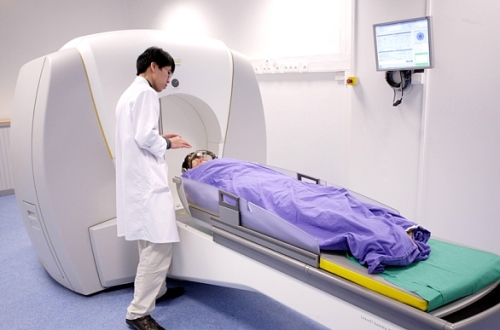
Radiation uses high-energy particles to damage cancer cell DNA. It can be delivered externally (beams aimed at the body) or internally (sources placed inside the tumor).
External Beam Radiation
- IMRT (Intensity-Modulated Radiation Therapy): Modulates radiation intensity within each beam for precise dose delivery to the tumor while sparing adjacent normal tissues. Standard for head and neck, prostate, and cervical cancers.
- SBRT/SABR (Stereotactic Body Radiation Therapy): Very high dose in just 3–5 fractions delivered to small, well-defined targets. Achieves 90–95% local control for small lung tumors — equivalent to surgery in selected cases. Also used for liver, spine, kidney, and prostate.
- Proton beam: Uses protons with Bragg peak physics — dose at a specific depth with minimal exit radiation. Most beneficial in pediatric cancers and skull base tumors. Equivalent survival to IMRT for most adult cancers in randomized data.
- Hypofractionation (FAST-Forward trial, Lancet 2020): 5 fractions of breast radiation over 1 week — non-inferior to 15 fractions over 3 weeks, with dramatically improved patient convenience.
Brachytherapy
Radioactive sources placed inside or adjacent to the tumor — delivers very high local dose with rapid falloff to surrounding normal tissue. HDR brachytherapy (Iridium-192) is used in cervical, endometrial, breast, and prostate cancers. LDR permanent seeds (Iodine-125) are a standard option for low-risk prostate cancer.
Chemotherapy
Chemotherapy uses drugs to kill rapidly dividing cells. Cancer cells divide faster than most normal cells, making them selectively vulnerable — but chemotherapy also affects normal rapidly-dividing cells (hair follicles, GI mucosa, bone marrow), which explains its characteristic side effects.
| Drug Class | Examples | Mechanism |
|---|---|---|
| Alkylating agents (platinum) | Cisplatin, carboplatin, oxaliplatin, cyclophosphamide | Cross-link DNA strands, preventing replication |
| Antimetabolites | 5-FU, capecitabine, gemcitabine, pemetrexed | Interfere with DNA/RNA synthesis |
| Taxanes | Paclitaxel, docetaxel, nab-paclitaxel | Stabilize microtubules, block cell division |
| Anthracyclines | Doxorubicin, epirubicin | Topoisomerase II inhibition + DNA damage |
| Topoisomerase inhibitors | Irinotecan (I), etoposide (II) | Block DNA strand re-ligation |
Key Regimens
| Cancer | Regimen | Components |
|---|---|---|
| DLBCL | R-CHOP | Rituximab + cyclophosphamide, doxorubicin, vincristine, prednisone |
| Hodgkin lymphoma | ABVD | Doxorubicin, bleomycin, vinblastine, dacarbazine |
| Breast cancer | AC-T | Adriamycin/cyclophosphamide → paclitaxel |
| Colorectal cancer | FOLFOX / FOLFIRI | 5-FU + oxaliplatin (FOLFOX) or irinotecan (FOLFIRI) |
| Testicular cancer | BEP | Bleomycin, etoposide, cisplatin — >90% cure at Stage I-II |
| GBM | Stupp protocol | Temozolomide + concurrent radiation, then adjuvant temozolomide |
Response to chemotherapy is assessed by CT scan every 2–3 cycles using RECIST 1.1 criteria: Complete Response (CR), Partial Response (≥30% reduction), Stable Disease, or Progressive Disease (≥20% increase or new lesions).
Targeted Therapy
Targeted therapy blocks specific molecular drivers of cancer growth — proteins or pathways that the cancer depends on. Unlike chemotherapy, targeted therapy requires a matching biomarker. Without the matching driver, the drug doesn’t work. This is why molecular testing of the biopsy is inseparable from treatment planning — and why cancer staging and biomarker profiling should always be complete before treatment starts.
| Target | Drug Examples | Cancer Types |
|---|---|---|
| HER2 | Trastuzumab, pertuzumab, T-DXd | HER2+ breast cancer, HER2+ gastric, HER2+ solid tumors |
| EGFR | Osimertinib, erlotinib; cetuximab | EGFR-mutant NSCLC; KRAS WT colorectal |
| ALK/ROS1 | Alectinib, crizotinib, lorlatinib | ALK-rearranged NSCLC (ALEX trial: alectinib superior) |
| KRAS G12C | Sotorasib, adagrasib | KRAS G12C-mutant NSCLC, CRC, pancreatic |
| BCR-ABL | Imatinib, dasatinib, nilotinib | CML — transformed 5-year survival from ~30% to >90% |
| CDK4/6 | Palbociclib, ribociclib, abemaciclib | HR+/HER2- breast cancer (with endocrine therapy) |
| PARP | Olaparib, rucaparib, niraparib | BRCA-mutated ovarian, breast, prostate cancer |
| BRAF V600E | Dabrafenib + trametinib | Melanoma, NSCLC, CRC (with cetuximab) |
| VEGF/VEGFR | Bevacizumab, sunitinib, sorafenib | CRC, RCC, HCC, ovarian cancer |
• Pembrolizumab for MSI-H/dMMR solid tumors (2017 — first tumor-agnostic approval)
• Larotrectinib/entrectinib for NTRK gene fusions (2018–2019)
• Trastuzumab deruxtecan (T-DXd) for HER2-positive solid tumors (any histology)
This means a colorectal cancer with MSI-H status can be treated with pembrolizumab — the same immunotherapy used for melanoma or lung cancer. The biomarker, not the tumor site, determines eligibility.
Immunotherapy
Cancer immunotherapy redirects the immune system — which cancer has learned to evade — to recognize and destroy tumor cells. It has produced some of the most durable treatment responses in oncology history.
Checkpoint Inhibitors
T cells carry checkpoint proteins (PD-1, CTLA-4) that act as “off switches” preventing autoimmune damage. Cancer cells exploit these checkpoints to hide from immune attack. Checkpoint inhibitors block these switches, re-activating T cells against the tumor.
- PD-1 inhibitors: Pembrolizumab (Keytruda), nivolumab (Opdivo) — FDA-approved across 20+ cancer types including lung, melanoma, head/neck, gastric, cervical, endometrial, MSI-H solid tumors
- CTLA-4 inhibitor: Ipilimumab (Yervoy) — combined with nivolumab; CHECKMATE-067 showed 52% 5-year OS in metastatic melanoma with the combination vs. 26% with ipilimumab alone
- Response rates: 20–40% single agent; 40–60%+ in MSI-H tumors; responders often achieve durable, years-long remissions
Biomarkers predicting response: PD-L1 expression (TPS ≥1% or ≥50%), MSI-H/dMMR status (strongest predictor), and tumor mutation burden (TMB-high ≥10 mut/Mb). Understanding your cancer grade and biomarker profile determines whether immunotherapy is appropriate for your cancer.
Immune-related adverse events (irAEs): T cells activated against tumors can also attack normal tissues — causing colitis, pneumonitis, thyroiditis, hepatitis, or adrenal insufficiency. Grade 3–4 irAEs are managed with high-dose corticosteroids and treatment hold.
CAR-T Cell Therapy
CAR-T (chimeric antigen receptor T cell) therapy extracts a patient’s own T cells, engineers them to express a tumor-targeting receptor, expands them to hundreds of millions, and reinfuses them.
FDA-approved CAR-T products include:
- Axicabtagene ciloleucel (Yescarta): 3rd-line+ DLBCL — ZUMA-1 trial: 39% complete response rate; approximately 30–35% long-term remission at 5-year follow-up
- Tisagenlecleucel (Kymriah): B-cell ALL in children/young adults; 2nd-line+ DLBCL
- Idecabtagene vicleucel, ciltacabtagene autoleucel: Relapsed/refractory multiple myeloma
- CAR-T is now also approved in the 2nd-line setting for DLBCL (ZUMA-7 and TRANSFORM trials showed superiority over standard salvage chemotherapy)
Major toxicities: CRS (cytokine release syndrome) — fever, hypotension, hypoxia from massive immune activation, managed with tocilizumab. ICANS (immune effector cell-associated neurotoxicity) — managed with dexamethasone.
Cancer Vaccines
- HPV vaccine (Gardasil 9): Prevents HPV 16, 18, and 7 other strains — prevents cervical, head/neck, anal, vulvar, vaginal, and penile cancers associated with HPV. One of the most effective cancer prevention tools available.
- Personalized mRNA neoantigen vaccines: KEYNOTE-942 (Phase II, ASCO 2023): mRNA-4157 (Moderna) + pembrolizumab in resected Stage III/IV melanoma significantly reduced recurrence or death vs. pembrolizumab alone (HR 0.56). Phase III trials ongoing.
Hormone Therapy (Endocrine Therapy)
For hormone-driven cancers, blocking hormone production or signaling can halt tumor growth.
Breast Cancer
- Tamoxifen: Blocks estrogen receptor in breast tissue. EBCTCG meta-analyses: tamoxifen reduces recurrence by ~50% and mortality by ~30% over 5–10 years in ER+ breast cancer.
- Aromatase inhibitors (AIs): Anastrozole, letrozole, exemestane — block peripheral estrogen synthesis. Superior to tamoxifen in postmenopausal women; standard first-line endocrine therapy.
- CDK4/6 inhibitors + endocrine therapy: Palbociclib, ribociclib, abemaciclib significantly extend progression-free survival in metastatic HR+/HER2- breast cancer (MONALEESA, MONARCH, PALOMA trials). Abemaciclib also approved adjuvantly for high-risk early-stage disease.
- Elacestrant (EMERALD trial, FDA 2023): First oral SERD — for ESR1-mutated metastatic HR+ breast cancer after prior endocrine therapy.
Prostate Cancer
- ADT (androgen deprivation therapy): LHRH agonists (leuprolide, goserelin) or antagonists (degarelix, relugolix) — suppress testosterone to castrate levels (<50 ng/dL). Cornerstone of locally advanced and metastatic prostate cancer treatment.
- Abiraterone (Zytiga): CYP17A1 inhibitor; combined with prednisone. LATITUDE and STAMPEDE trials: OS benefit when added to ADT in metastatic hormone-sensitive prostate cancer.
- Enzalutamide, apalutamide, darolutamide: Next-generation AR antagonists for hormone-sensitive and castration-resistant settings.
Stem Cell Transplant
Autologous SCT: Patient’s own stem cells are collected, stored, then reinfused after high-dose chemotherapy to rescue the bone marrow. Standard consolidation in multiple myeloma; used in relapsed Hodgkin lymphoma and NHL.
Allogeneic SCT: Donor cells provide a graft-vs.-leukemia (GVL) immune effect in addition to bone marrow rescue. Used in AML, ALL, MDS, and CML. Main toxicity: GVHD (graft-vs.-host disease), where donor immune cells attack normal host tissues.
The Multidisciplinary Team
Most cancer patients receive treatment from a team rather than a single physician. Medical oncologist, surgical oncologist, radiation oncologist, pathologist, and radiologist should all review complex cases — ideally at a formal tumor board. Palliative care, nutrition, and social work are integral components of comprehensive cancer care.
Before starting treatment, ask about tumor board review — see our cancer diagnosis questions guide. If you have any doubt about your treatment plan, a cancer second opinion can confirm or refine the approach. For decisions by cancer type and stage, see our cancer treatment options guide.
Frequently Asked Questions
Sources
- National Cancer Institute — Types of Cancer Treatment
- American Cancer Society — How Is Cancer Treated?
- ASCO/Cancer.net — Treatment Types
- Larkin J et al. — CHECKMATE-067 (nivolumab + ipilimumab melanoma, 5-year OS); NEJM 2019
- Neelapu SS et al. — ZUMA-1 (axicabtagene in 3rd-line DLBCL); NEJM 2017
- Murray Brunt A et al. — FAST-Forward (5-fraction breast radiotherapy); Lancet 2020
- EBCTCG — Meta-analyses of tamoxifen and aromatase inhibitors in early breast cancer; Lancet 2011 and updates
- Ramalingam SS et al. — FLAURA (osimertinib 1st-line EGFR NSCLC); NEJM 2020
This article is for educational purposes only and does not constitute medical advice. Discuss all cancer treatment decisions with your oncology care team.
Pingback: Cancer Treatment Options: How to Choose What's Right - Horizon Health Guide
Pingback: Minimally Invasive Cancer Treatment: Types and Benefits - Horizon Health Guide
Pingback: Chemotherapy: How It Works, Side Effects, and What to Expect - Horizon Health Guide
Pingback: Hormone Therapy for Cancer: How It Works and Side Effects - Horizon Health Guide
Pingback: Cancer Immunotherapy: Types, How It Works, Side Effects - Horizon Health Guide
Pingback: Cancer Clinical Trials: How to Find and Join One - Horizon Health Guide
Pingback: Cancer Follow-Up Care: Schedule, Tests, and Late Effects - Horizon Health Guide
My cardiologist recommended I look into cancer treatment: types, goals, and how and this article covered it perfectly. The specific numbers and thresholds mentioned are exactly what I needed to understand my lab results. Keep up this kind of thorough health journalism — it genuinely helps patients like me.
My cardiologist recommended I look into cancer treatment: types, goals, and how and this article covered it perfectly. I especially valued the explanation of why these recommendations exist, not just what they are. This is going into my health binder that I bring to every doctor’s visit.
I shared this article on cancer treatment: types, goals, and how with my doctor and they appreciated the level of detail. The practical tips at the end made this immediately actionable, not just theoretical. Will definitely be coming back to this site for more health information.
I shared this article on cancer treatment: types, goals, and how with my doctor and they appreciated the level of detail. The specific numbers and thresholds mentioned are exactly what I needed to understand my results. This is going into my health folder that I bring to every doctor’s visit.
Really well-written article on cancer treatment: types, goals, and how. I appreciated how the article addressed both the clinical side and the practical adjustments. Will definitely be coming back to this site for more health information.
This breakdown of cancer treatment: types, goals, and how is exactly what patients need before a specialist appointment. I appreciated how the article addressed both the clinical side and the practical adjustments. Forwarding this to others in my support group who are dealing with similar issues.