
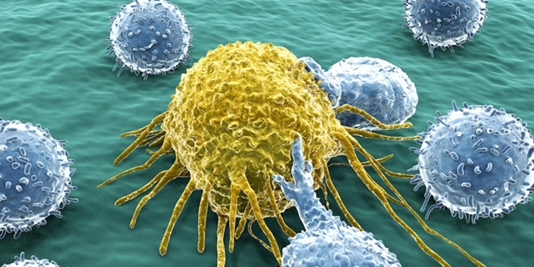
Getting a cancer second opinion is one of the most evidence-supported steps a patient can take — yet most hesitate, fearing it will offend their oncologist or delay treatment. The data says otherwise. In a 2017 study published in JAMA Internal Medicine, Cleveland Clinic researchers found that 21% of patients received a distinctly different diagnosis on second opinion, and only 12% had their original diagnosis fully confirmed without modification. A cancer second opinion is not a sign of distrust. It is a standard of care that major cancer centers actively encourage.
This guide explains what a second opinion can change, which situations most benefit from one, where to go — including remote options that require no travel — and how to arrange one efficiently without significant delay to your treatment.
Why a Cancer Second Opinion Matters
Cancer pathology is among the most subspecialty-dependent domains in medicine. A community pathologist may be highly competent in general pathology but lack the subspecialty experience to classify rare lymphoma subtypes, soft tissue sarcomas, or neuroendocrine tumors with precision. At a high-volume cancer center, pathologists spend their entire careers reviewing one tumor type — and they see subtleties that a generalist may miss.
The evidence across multiple institutions is consistent:
- Cleveland Clinic (JAMA Internal Medicine, 2017): Of 286 patients referred for second opinion, 21% received a distinctly different diagnosis — and only 12% had a fully confirmed, unchanged diagnosis.
- University of Michigan (2019): 38% of oncology second opinions led to a changed or refined treatment recommendation.
- MD Anderson Cancer Center: Management was altered in approximately 20–25% of second-opinion cases, with the highest rates in rare tumor types.
These are not rare exceptions. They represent a predictable frequency of diagnostic refinement that occurs even when the original physician is experienced and careful. Second opinions also frequently reveal clinical trial eligibility that was not identified at the original center — because NCI-designated cancer centers have far more active trials open than community hospitals.
What a Cancer Second Opinion Can Change
| Category | What Can Change | Clinical Impact |
|---|---|---|
| Pathology diagnosis | Tumor type, grade, subtype, biomarker results | Most impactful — wrong diagnosis = wrong treatment |
| Staging assessment | Imaging interpretation, PET vs. CT read, metastasis vs. benign lesion | Determines treatment intent: curative vs. palliative |
| Treatment recommendation | Surgery type, chemo regimen, radiation need, trial eligibility | Affects toxicity, outcomes, quality of life |
| Surveillance approach | Active surveillance vs. immediate treatment (prostate GG1, low-grade thyroid) | Avoids overtreatment in indolent cancers |
Pathology Review — the Most Impactful Change
The single most valuable type of second opinion is often a pathology slide review by a subspecialist. Real-world examples of significant pathology changes at second opinion:
- GIST misclassified as sarcoma — completely different treatment (imatinib vs. cytotoxic chemotherapy)
- Follicular lymphoma misclassified as mantle cell lymphoma — different prognosis and urgency of treatment
- HER2 borderline (IHC 2+) not confirmed by FISH — missing a targetable therapy in breast cancer
- Grade 2 tumor re-graded as Grade 3 — triggers chemotherapy discussion that wasn’t initiated at original consultation
For context on how cancer grade is determined and why misgrading is possible, see our cancer grade guide. Understanding how staging is assigned and can be re-assessed is covered in our cancer staging guide.

When to Seek a Cancer Second Opinion
Eight situations that always warrant a second opinion
- Any rare or uncommon cancer — sarcoma, neuroendocrine tumor, rare lymphoma, mesothelioma, uveal melanoma, cholangiocarcinoma. Volume and subspecialty experience matter significantly for rare tumors.
- Borderline, atypical, or uncertain pathology — when the report uses “cannot rule out,” “atypical features,” “borderline malignancy,” or notes diagnostic uncertainty. Subspecialist pathology review is mandatory before proceeding.
- Aggressive, irreversible, or life-altering treatment proposed — organ removal, limb decision (sparing vs. amputation), high-dose chemotherapy, or extensive resection. The stakes are too high for a single opinion.
- Cancer not responding to treatment as expected — tumors growing, new lesions appearing, markers not declining. A second opinion can identify a missed biomarker, a wrong diagnosis, or a treatment change opportunity.
- Watchful waiting recommended — and you’re not comfortable — active surveillance is appropriate for Gleason Grade Group 1 prostate cancer and low-grade thyroid microcarcinoma, but only if specific criteria apply. Get independent confirmation of those criteria.
- Considering stopping treatment — before stopping, confirm whether alternatives, trials, or palliative care escalation should be considered.
- Treatment deviates from NCCN guidelines without explanation — NCCN guidelines represent evidence-based consensus from leading cancer centers. Significant deviations warrant independent review.
- You simply want confirmation — no patient needs to justify this. Informed consent in oncology includes the right to an independent opinion.
For most solid tumors, a 2–4 week delay for a second opinion does not affect outcome. Exceptions requiring rapid treatment:
• Acute leukemia (AML/ALL): Treatment typically within days of diagnosis
• High-grade lymphoma (DLBCL, Burkitt): Delay beyond 7–14 days may affect outcome
• Spinal cord compression from metastases: Surgical and radiation emergency
• Superior vena cava (SVC) syndrome: Vascular compression requiring rapid intervention
If your oncologist recommends immediate treatment, ask directly: “Would a 7–14 day delay for a second opinion change my outcome given my specific diagnosis?”
Where to Get a Cancer Second Opinion
NCI-Designated Cancer Centers
The National Cancer Institute’s list of 71 designated cancer centers is the starting point for most patients. NCI-designated centers have fulfilled rigorous criteria for cancer research, clinical care, and multidisciplinary expertise:
- Comprehensive Cancer Centers (53): The highest designation — full spectrum of research, prevention, and treatment. Includes Memorial Sloan Kettering, MD Anderson, Dana-Farber, Mayo Clinic, and Johns Hopkins.
- Cancer Centers (18): Focus on basic and translational research; clinical services may be more limited.
NCI centers offer subspecialty pathology review, multidisciplinary tumor boards, and Phase I–III clinical trials unavailable at most community hospitals.
Remote and Virtual Second Opinions — No Travel Required
| Institution | Program | What’s Offered |
|---|---|---|
| Mayo Clinic | eConsults / Mail-in review | Pathology + imaging review; written report |
| Cleveland Clinic | MyConsult / Digital Pathology | Remote oncology consultation |
| MD Anderson | ePathology / eConsult | Pathology review + clinical consult |
| Memorial Sloan Kettering | Remote consultation | Written second-opinion report |
| Johns Hopkins | Pathology consultation | Slide review by subspecialist pathologist |
Remote pathology review is particularly valuable for patients in areas without a nearby NCI center, those unable to travel due to health or finances, and situations where only pathology re-review (not clinical consultation) is needed.
How to Get a Cancer Second Opinion — Step by Step
Simply say: “I’d like to get a second opinion before we start treatment — can you help me gather my records?” Most oncologists will respond positively. A physician who discourages you is not acting in your best interest. Your oncologist does not need to be copied on results unless you choose to share them.
The most critical item: pathology slides — physical glass slides from the biopsy or surgical specimen. Second-opinion pathologists must re-examine the actual tissue. Your hospital is legally required to release slides with a signed authorization. Also gather: full pathology report, all imaging (digital files/CDs), lab results including tumor markers, and prior treatment records. See our biopsy for cancer guide for how specimens are stored and released.
Call the disease-specific program at the cancer center (e.g., Breast Oncology, Sarcoma Program). Ask about turnaround time (1–2 weeks for remote pathology; 2–4 weeks for full clinical consultation), insurance coverage, and whether in-person or remote review is appropriate for your situation.
Digital records go via secure file transfer or patient portal. Physical pathology slides must be mailed via tracked shipping with signature confirmation. Keep copies of everything you send.
Bring your prioritized question list — see our cancer diagnosis questions guide — and a companion to take notes. Request a written report of the second-opinion findings.
If the second opinion differs from the original, discuss both reports openly. Ask each physician to explain the evidence behind their recommendation. If opinions conflict significantly, a multidisciplinary tumor board review at an NCI center is the next step.
Pathology Review vs. Clinical Second Opinion
These are two distinct but complementary types of second opinion:
Clinical second opinion: An oncologist at a different institution reviews your full case (pathology, imaging, labs) and provides an independent treatment recommendation. Requires a video, phone, or in-person visit — typically 2–4 weeks.
Both should be sought for complex or rare cancers. For straightforward presentations of common cancers where pathology is unambiguous, a clinical second opinion on treatment approach may be sufficient.
Cost and Insurance
Most major health plans — including Medicare and Medicaid — cover cancer second opinions as standard specialist consultations. Check with your insurer before the appointment about prior authorization requirements and out-of-network reimbursement rates.
- In-network: Typically the same cost as primary oncology visits
- Out-of-network: Higher cost-sharing, but usually covered at the out-of-network rate — often worth the cost
- Remote pathology review: Often less expensive than a full clinical consultation
- Clinical trial enrollment: If the second-opinion center enrolls you in a trial, trial-related treatment is typically provided at no cost
- Travel assistance: Some cancer centers and patient advocacy organizations offer financial support for patients traveling to second-opinion appointments
Frequently Asked Questions
Sources
- Pauli EM et al. — Second opinion pathology review alters cancer diagnoses; JAMA Internal Medicine, 2017 (Cleveland Clinic data)
- University of Michigan Health System — Oncology second opinion outcomes; 2019
- National Cancer Institute — Find an NCI-Designated Cancer Center
- ASCO/Cancer.net — Getting a Second Opinion for Cancer
- NCCN Clinical Practice Guidelines — Referenced for guideline-concordant care standards
This article is for educational purposes only and does not constitute medical advice. Discuss all cancer diagnosis and treatment questions with your oncology care team.
Thank you for covering cancer second opinion: when and how so thoroughly without being overly technical. The article answered questions I didn’t even know I had until I started reading. Thank you for making complex medical information accessible without dumbing it down.
Came across this while researching cancer second opinion: when and how for a family member. It is refreshing to see an article that acknowledges individual variation rather than giving one-size-fits-all advice. Keep up this kind of thorough health journalism — it genuinely helps patients like me.
Really well-written article on cancer second opinion: when and how. I have tried following advice from several sources but this is the most consistent with what my specialist told me. Thank you for making complex medical information accessible without dumbing it down.
As someone dealing with this personally, the cancer second opinion: when and how section was very helpful. The practical tips made this immediately actionable, not just theoretical. Appreciate the effort that went into researching and writing this — it shows.
This is one of the clearest explanations of cancer second opinion: when and how I have found. The section on managing this condition day-to-day was especially useful for planning. I wish I had found this article earlier — would have saved a lot of confusion.
This is one of the clearest explanations of cancer second opinion: when and how I have found. It is refreshing to see an article that acknowledges individual variation rather than one-size-fits-all advice. Shared this with three friends who are dealing with related issues. Very useful resource.