
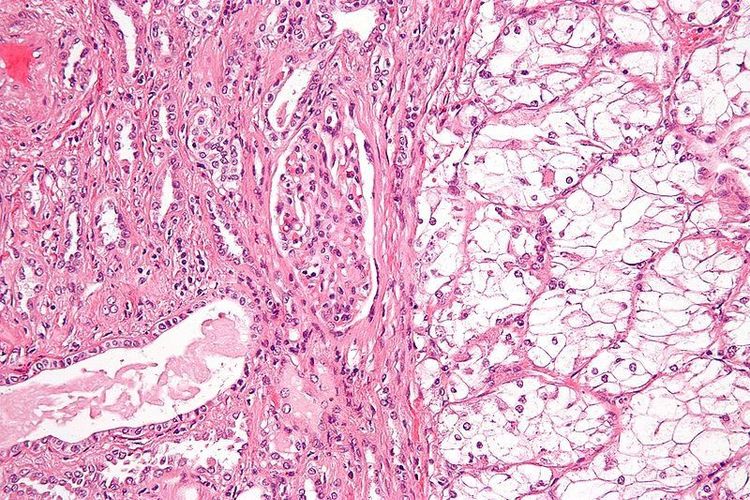
A biopsy for cancer is the definitive step that turns clinical suspicion into a confirmed diagnosis. When imaging finds a mass, blood tests show an elevated tumor marker, or symptoms suggest something is wrong, the next question is always: what is it? That question can only be answered definitively by examining actual tissue or cells under a microscope.
No imaging study alone — not a CT scan, MRI, or PET scan — can determine whether a lesion is malignant or benign. Blood tests can raise or lower suspicion, but they cannot confirm a cancer diagnosis. A biopsy for cancer is the only method that confirms malignancy, identifies cancer type, determines grade, and provides the molecular profile needed to select the right treatment. For how blood testing and imaging complement biopsy in the cancer workup, see our guide to the cancer blood test.
Why a Biopsy for Cancer Is Required
The fundamental principle of oncology is: tissue is the diagnosis. No matter how convincingly an imaging finding or clinical presentation suggests cancer, a biopsy for cancer confirmation is required before treatment begins — except in rare, specific circumstances (such as classic HCC features in a cirrhotic liver meeting precise radiologic criteria).
A biopsy for cancer answers five essential questions that no other test can:
- Benign or malignant? Most biopsied lesions are benign. Only pathology confirms which.
- What type of cancer? Adenocarcinoma, squamous cell, sarcoma, and lymphoma behave differently — even in the same organ. Treatment depends entirely on histologic type.
- How aggressive is it? Cancer grade — how abnormal cells look vs. normal tissue — predicts behavior and influences treatment intensity.
- What is the molecular profile? Tissue is tested for actionable mutations (EGFR, KRAS, HER2, BRCA1/2), MSI status, and other biomarkers that determine targeted therapy eligibility.
- Primary or metastatic? Treatment of colorectal cancer metastasized to the liver differs completely from primary liver cancer — and they can look similar on imaging.
Biopsy for Cancer — Needle Methods
Needle biopsies are the most common type of biopsy for cancer. They are minimally invasive procedures that remove a sample through a needle inserted into the skin, guided by imaging or palpation.
Fine Needle Aspiration (FNA)
FNA uses a thin needle (22–25 gauge — thinner than most blood draw needles) to aspirate cells or fluid. It provides a cytology specimen — individual cells — rather than tissue cores. A cytopathologist examines the smeared cells under the microscope.
FNA is best suited for:
- Thyroid nodules (most thyroid biopsies use FNA under ultrasound guidance)
- Palpable neck or axillary lymph nodes
- Salivary gland masses, cystic lesions, superficial palpable masses
Key limitation: FNA cannot show tissue architecture — essential for lymphoma classification and grading many tumors. Non-diagnostic rate is 5–15%, and 15–30% of thyroid FNAs return as “indeterminate,” often leading to repeat biopsy or molecular testing. The procedure takes minutes, usually with local anesthetic, and most patients return to normal activity immediately.
Core Needle Biopsy (CNB)
CNB uses a larger needle (14–18 gauge) with a spring-loaded or vacuum-assisted cutting mechanism to extract cylindrical tissue cores. Unlike FNA, CNB preserves tissue architecture — allowing histopathologic grading and comprehensive immunohistochemistry (IHC) staining.
CNB is the standard for:
- Breast masses and suspicious areas found on mammography (standard of care per RSNA)
- Liver lesions suspected of being HCC or metastatic cancer
- Kidney masses, lung nodules accessible by CT guidance, prostate cancer
- Lymph nodes when lymphoma is suspected (preserves architecture for classification)
Vacuum-assisted CNB (VAB): Systems like the Mammotome draw tissue into the needle using continuous suction, allowing multiple samples from a single insertion — the standard method for stereotactic biopsy of breast microcalcifications. A small metallic clip is placed at the biopsy site afterward for imaging localization. Diagnostic accuracy: >90% for accessible lesions. The procedure typically takes 20–45 minutes under local anesthesia.
Endoscopic Biopsies — When Cancer Is Inside a Cavity
Many cancers develop in organs accessible through natural body openings. Endoscopic biopsy for cancer in these locations combines direct visualization with tissue sampling.
Upper GI Endoscopy and Colonoscopy
Esophageal, gastric, and colorectal cancers are biopsied during endoscopy using forceps passed through the endoscope channel. The endoscopist visualizes abnormal tissue and takes 4–6 targeted biopsies. Polyps found during colonoscopy are typically removed entirely (polypectomy) — both diagnostic and potentially curative if cancer is confined to the polyp. Larger flat lesions may require EMR (endoscopic mucosal resection).
Bronchoscopy and EBUS for Lung Cancer
Flexible bronchoscopy is used when a lung tumor involves a central airway visible through the bronchoscope. For peripheral lesions, BAL (bronchoalveolar lavage) and brushings provide cytology samples, though sensitivity is lower (~50% for peripheral lesions vs. ~70–80% for central).
EBUS (endobronchial ultrasound) with TBNA is one of the most important advances in lung cancer staging in two decades. An ultrasound probe on the tip of the bronchoscope visualizes mediastinal lymph nodes in real time — a needle samples them directly. EBUS-TBNA has replaced surgical mediastinoscopy for most lung cancer staging, with sensitivity exceeding 90% in experienced centers and the ability to sample nodes as small as 5 mm.
EUS-FNA for Pancreatic Masses
Endoscopic ultrasound with FNA (EUS-FNA) approaches the pancreas through the stomach or duodenal wall. This avoids traversing the peritoneal cavity — a theoretical advantage for potentially resectable pancreatic cancer where peritoneal seeding from biopsy is a concern. EUS-FNA is the preferred biopsy approach for suspected pancreatic cancer in most high-volume centers.
Surgical Biopsies — When Needle Sampling Isn’t Enough
Excisional Biopsy
An excisional biopsy removes the entire suspicious lesion — simultaneously diagnostic and potentially therapeutic. Primary indications include melanoma (suspicious pigmented lesions must be excised with 1–2 mm margins — not sampled by punch biopsy — to allow proper staging), and suspected lymphoma where complete lymph node architecture is needed for accurate classification of DLBCL vs. follicular vs. mantle cell lymphoma.
Sentinel Lymph Node Biopsy (SLNB)
The sentinel lymph node is the first node in the lymphatic chain draining a tumor — the first stop for lymphatic metastasis. SLNB uses radioactive tracer (technetium-99m) and/or blue dye injected near the tumor to map which node(s) drain first. Intraoperatively, a gamma probe identifies the radioactive sentinel node.
Why SLNB transformed breast cancer surgery: Before SLNB, all early-stage breast cancer patients underwent complete axillary lymph node dissection (ALND) — associated with lymphedema in 15–25% of patients. If the sentinel node is negative for cancer, ALND is avoided. SLNB sensitivity for axillary staging exceeds 95% in experienced centers. SLNB is also standard for melanoma ≥0.8 mm Breslow thickness to assess regional lymph node status.
Bone Marrow Biopsy and Aspiration
Bone marrow biopsy samples blood-forming tissue from the posterior iliac crest (back of the hip bone) using a dedicated biopsy needle that extracts both a liquid aspirate (for flow cytometry, cytogenetics, molecular tests) and a solid core (for histologic architecture assessment). It is essential for diagnosing leukemia, staging lymphoma, diagnosing multiple myeloma, and evaluating unexplained cytopenias. Lymphoma staging typically requires bilateral biopsies. Patients experience pressure and brief sharp discomfort during aspiration; mild soreness lasts 1–2 days.
Image-Guided Biopsy — CT, Ultrasound, and MRI
CT-guided biopsy is used for lung nodules (peripheral), retroperitoneal masses, adrenal lesions, and bone lesions. The patient lies in the CT scanner while the interventional radiologist advances the needle under CT visualization. CT-guided lung biopsy carries a pneumothorax rate of 20–30% — but the majority are minor and resolve spontaneously; only ~5% require a chest tube.
Ultrasound-guided biopsy covers most breast core biopsies, thyroid FNA, superficial lymph nodes, liver lesions, and kidney masses. The needle is visible in real time throughout the procedure; no radiation is involved.
MRI-guided biopsy is reserved for lesions visible on MRI but not on ultrasound or CT — including certain MRI-enhancing breast lesions and prostate lesions (PI-RADS 4–5) targeted with MRI/ultrasound fusion (targeted prostate biopsy).
What Happens to Biopsy Tissue — From Needle to Report
- Fixation: Tissue is placed in formalin (FFPE process), stopping cellular decay and preserving architecture
- Processing: Tissue is embedded in paraffin wax; thin sections (3–5 microns) are cut on a microtome
- H&E staining: Standard stain applied; pathologist examines under microscope for primary diagnosis
- Ancillary testing: IHC stains (ER, PR, HER2, PD-L1, Ki-67, CD markers); molecular testing (EGFR, KRAS, MSI, NGS panel) ordered based on tumor type
- Final report: Integrates diagnosis, grade, margins, IHC, and molecular results
Result timelines: Basic H&E diagnosis — 2–3 business days. IHC markers — 1–2 additional days. Full molecular profile (NGS) — 2–4 weeks. Complete final pathology report — 1–3 weeks in most centers.
How to Read Your Biopsy for Cancer Pathology Report
A pathology report is often the most anxiety-inducing document a patient receives. Understanding the key components makes the conversation with your oncologist more productive.
| Term | What It Means |
|---|---|
| Diagnosis | Cancer type and histologic subtype (e.g., “Invasive ductal carcinoma, no special type”) |
| Grade | How abnormal cells look vs. normal tissue: Grade 1 (well-differentiated) = slower growing; Grade 3 (poorly differentiated) = more aggressive |
| Gleason score / Grade Group | Prostate-specific grading: Grade Group 1–5 (higher = more aggressive) |
| Nottingham grade | Breast cancer histologic grade 1–3 |
| Margins | For excisional specimens: “clear” or “negative” = cancer not at the edge; “positive” = may require additional surgery |
| Lymphovascular invasion (LVI) | Cancer cells in blood or lymphatic vessels in the biopsy — adverse prognostic finding |
| IHC (immunohistochemistry) | Protein expression: ER/PR/HER2 (breast); PD-L1 (lung); CD markers (lymphoma) |
| Molecular testing | Mutations identified: EGFR, KRAS, BRAF, BRCA1/2, MSI — each may have a targeted drug |
| Ki-67 | Proliferation index — percentage of cancer cells actively dividing; higher = more aggressive |
If terms in your pathology report are confusing or alarming, your oncologist will interpret them in the context of your full clinical picture. For what to expect at that discussion, see our guide to the cancer checkup. For how tumor marker blood tests complement biopsy results in ongoing monitoring, see our tumor markers guide.
Biopsy Risks — An Honest Summary
| Biopsy Type | Common | Serious (Rare) |
|---|---|---|
| FNA (needle aspiration) | Minor bruising, mild discomfort | Hematoma, infection (<1%) |
| Core needle biopsy (breast) | Bruising, soreness 2–4 days | Hematoma requiring drainage (<1%) |
| CT-guided lung biopsy | Pneumothorax (20–30%, most minor) | Tension pneumothorax, significant bleeding (rare) |
| Liver core biopsy | Mild bleeding at puncture site | Significant hemorrhage (<1%) |
| Bone marrow biopsy | Pain, bruising at iliac crest | Infection, significant bleeding (<1%) |
| EBUS / EUS | Mild cough, sore throat | Bleeding, infection, airway complication (<1%) |
| Surgical excisional biopsy | Scarring, bruising | Wound infection; lymphedema after SLNB |
Frequently Asked Questions
What is a biopsy for cancer?
A biopsy for cancer is a procedure that removes tissue or cells from the body for microscopic examination by a pathologist. It is the definitive method for confirming a cancer diagnosis — the only test that can determine whether abnormal cells are malignant, identify the cancer type, assess its grade, and provide tissue for molecular profiling. According to the National Cancer Institute, biopsy is required for virtually all cancer diagnoses. Types include fine needle aspiration, core needle biopsy, endoscopic biopsy (during gastroscopy, colonoscopy, or bronchoscopy), surgical excisional biopsy, and sentinel lymph node biopsy.
Is a biopsy for cancer painful?
Most biopsies are performed under local anesthesia and are well-tolerated. FNA feels similar to a blood draw — a brief sting, then mild pressure. Core needle biopsy produces a loud click from the spring-loaded device and some pressure. Bone marrow biopsy is the most uncomfortable — patients feel significant pressure and a brief sharp sensation during aspiration. Surgical biopsies under general anesthesia involve post-operative recovery and wound care. Soreness and bruising for 1–5 days after needle biopsies is normal. According to the American Cancer Society, biopsy discomfort is generally manageable and short-lived.
Can a biopsy spread cancer cells?
Clinically significant cancer spread caused by needle-track seeding is extremely rare — estimated at less than 0.003–0.009% per biopsy for most tumor types. Many patients have heard this concern, but the medical consensus is that the risk is far outweighed by the benefit of accurate diagnosis and appropriate treatment planning. For potentially resectable tumors, the biopsy needle path is planned through tissue that will be removed at the time of definitive surgery, further minimizing any theoretical risk.
What does a biopsy result mean?
A biopsy result arrives as a pathology report that includes the diagnosis (cancer type and histologic subtype), grade (how abnormal the cells look), margins (if excision was done), lymphovascular invasion status, IHC protein markers, and molecular testing results. A negative or benign biopsy means no cancer was detected in the sampled tissue. An indeterminate result means the specimen was inadequate or findings were inconclusive — often leading to repeat biopsy with a different technique.
How long does it take to get biopsy results?
Basic H&E histologic diagnosis is typically available in 2–3 business days. Immunohistochemistry (IHC) markers add 1–2 business days. Full molecular profiling — next-generation sequencing panels (EGFR, KRAS, BRAF, MSI, HER2, BRCA, etc.) — takes 2–4 weeks. A complete pathology report integrating all tests typically takes 1–3 weeks. For urgent clinical decisions, results can sometimes be prioritized. Frozen-section intraoperative pathology gives a preliminary answer in 15–30 minutes, but with lower accuracy than permanent sections.
What happens if the biopsy comes back negative but I still have symptoms?
A negative biopsy does not always mean cancer is absent. Sampling errors can occur — the biopsy needle may miss the malignant area within a larger, heterogeneous lesion. If clinical suspicion remains high after a negative biopsy (based on imaging findings, persistent symptoms, or rising tumor markers), your oncologist may recommend repeat biopsy at a different area of the lesion, a different biopsy technique, or continued imaging surveillance. A biopsy result is always interpreted alongside the full clinical picture — symptoms, imaging, and laboratory findings together determine next steps. See our guide to tumor markers for how serial blood tests can complement biopsy follow-up.
Sources & Further Reading
- NCI — Biopsy Fact Sheet
- ACS — Biopsy and Cytology Tests
- NCI — Understanding Pathology Reports
- ACR Guidelines for Image-Guided Percutaneous Biopsy
- College of American Pathologists (CAP) — Cancer Reporting Protocols
- ASCO — Guidelines on Tissue Adequacy for Molecular Testing
- NCCN — Breast Cancer, Melanoma, Lymphoma clinical guidelines
This article is for educational purposes only and does not constitute medical advice. Biopsy procedure selection, preparation, and result interpretation should be discussed with a qualified healthcare provider.
Pingback: Cancer Grade: What It Means and Why It Matters for Treatment - Horizon Health Guide
Pingback: Cancer Staging: What the Numbers and Letters Mean - Horizon Health Guide
Pingback: Ultrasound for Cancer: What It Detects and When It's Used - Horizon Health Guide
Pingback: MRI for Cancer: What It Shows and When You Need One - Horizon Health Guide
Finally a resource that explains biopsy for cancer: types, what to in plain language. The specific numbers and thresholds mentioned are exactly what I needed to understand my lab results. This is going into my health binder that I bring to every doctor’s visit.
This is one of the clearest explanations of biopsy for cancer: types, what to I have found. I appreciated how the article addressed both the clinical side and the practical lifestyle adjustments. Exactly the kind of evidence-based information that is hard to find in one place.
Bookmarked this article on biopsy for cancer: types, what to immediately — going to reference it regularly. What I liked most was that the article didn’t just say what to avoid — it also gave alternatives. This is going into my health binder that I bring to every doctor’s visit.
This breakdown of biopsy for cancer: types, what to is exactly what patients need before a specialist appointment. It is refreshing to see an article that acknowledges individual variation rather than one-size-fits-all advice. Looking forward to reading more articles from this website.
I shared this article on biopsy for cancer: types, what to with my doctor and they appreciated the level of detail. The article answered questions I didn’t even know I had until I started reading. This is going into my health folder that I bring to every doctor’s visit.
My doctor recommended I look into biopsy for cancer: types, what to and this article covered it perfectly. I especially valued the explanation of why these recommendations exist, not just what they are. Appreciate the effort that went into researching and writing this — it shows.