
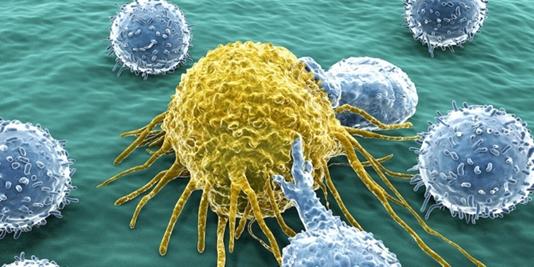
Cancer immunotherapy uses the body’s own immune system to recognize and destroy cancer cells — an approach fundamentally different from chemotherapy, which kills rapidly dividing cells indiscriminately, or radiation, which targets tissue locally. The immune system can already detect cancer in its early stages, but advanced tumors develop molecular strategies to evade immune attack. Immunotherapy dismantles those strategies.
The field has been transformed by a sequence of breakthroughs: the first checkpoint inhibitor approval (ipilimumab, 2011), the first tissue-agnostic cancer drug approval in history (pembrolizumab for MSI-H/dMMR any solid tumor, May 2017), the first CAR-T cell therapy (tisagenlecleucel, 2017), the first LAG-3 inhibitor (relatlimab, 2022), and the first personalized mRNA cancer vaccine to demonstrate benefit in a Phase 2 trial (mRNA-4157 + pembrolizumab, KEYNOTE-942, published 2024). Today, cancer immunotherapy spans checkpoint inhibitors, CAR-T cell therapy, bispecific antibodies, cancer vaccines, and TIL therapy. For context on how immunotherapy fits within all cancer treatment modalities, see the cancer treatment guide.
How Cancer Evades the Immune System
T cells patrol the body scanning for abnormal peptides (neoantigens) displayed on MHC class I molecules on every cell’s surface. When a T cell receptor matches a neoantigen on a cancerous cell, the T cell activates, proliferates, and kills. Most malignant cells are eliminated before they ever form a detectable tumor — a process called immune surveillance.
Cancers that survive and progress have acquired mechanisms to defeat this surveillance:
PD-L1 Upregulation
Cancer cells express PD-L1, which binds PD-1 on T cells → exhaustion signal. T cells remain physically present but become functionally inert — unable to kill.
CTLA-4 Exploitation
CTLA-4 on T cells suppresses T cell activation in lymph nodes during the priming phase. Tumors benefit from fewer new anti-tumor T cells being generated.
LAG-3 Co-Inhibition
LAG-3 synergizes with PD-1 to drive deep T cell exhaustion in the tumor microenvironment — a third brake that compounds PD-1-mediated suppression.
Immunosuppressive TME
Tumors secrete TGF-β, IL-10, VEGF; recruit immunosuppressive Tregs and M2-polarized macrophages — creating a local environment hostile to immune attack.
Checkpoint Inhibitors
Immune checkpoints (PD-1, CTLA-4, LAG-3) are molecular off-switches on T cells that normally prevent autoimmunity. Cancer exploits them to shut down anti-tumor T cell responses. Checkpoint inhibitor drugs are monoclonal antibodies that block these interactions — freeing T cells to attack the tumor.
CTLA-4 Inhibitors — The First Checkpoint
Ipilimumab (Yervoy) was the first checkpoint inhibitor approved anywhere in the world (FDA March 2011) and the first drug to demonstrate an overall survival benefit in advanced melanoma. It works in the lymph nodes — blocking the CTLA-4 brake during T cell priming — allowing more anti-tumor T cells to be generated. Today ipilimumab is most commonly used in combination with nivolumab. The CheckMate 067 trial reported 7-year OS of 49% with the combination versus 26% with ipilimumab alone — landmark data establishing the feasibility of long-term survival in metastatic melanoma.
PD-1 Inhibitors — The Broadest Reach
Pembrolizumab (Keytruda) is the most broadly approved cancer drug in history with indications across 18+ cancer types. It blocks PD-1 on T cells within the tumor microenvironment — restoring effector function where it matters most. Key results:
- KEYNOTE-024 (NSCLC, PD-L1 ≥50%): PFS 10.3 vs. 6.0 months; OS 26.3 vs. 14.2 months vs. platinum chemotherapy → standard 1L monotherapy for high PD-L1 NSCLC
- KEYNOTE-189 (non-squamous NSCLC, all PD-L1): OS 22.0 vs. 10.7 months with pembrolizumab added to pemetrexed/carboplatin → standard 1L combination regardless of PD-L1 status (except EGFR/ALK-positive)
- KEYNOTE-177 (MSI-H/dMMR mCRC 1L): PFS 16.5 vs. 8.2 months vs. chemotherapy (OS HR 0.74) → 1L standard for MSI-H metastatic CRC
- Tissue-agnostic — MSI-H/dMMR (May 2017): First tissue-agnostic cancer drug approval in history — any solid tumor with MSI-H/dMMR, regardless of origin
- Tissue-agnostic — TMB-H ≥10 mut/Mb (June 2020): ORR ~29% across tumor types (KEYNOTE-158)
Nivolumab (Opdivo) is approved for melanoma, NSCLC, RCC, esophageal SCC, HCC, CRC (MSI-H), and gastric/GEJ cancer. In metastatic RCC (CheckMate 214), nivolumab + ipilimumab achieved 5-year OS of 47% versus 26.6% with sunitinib in intermediate/poor-risk patients.
PD-L1 Inhibitors
Durvalumab (Imfinzi) produced one of the most practice-defining results in oncology with PACIFIC: consolidation durvalumab after concurrent chemoradiotherapy for unresectable stage III NSCLC extended OS to 47.5 versus 29.1 months — an 18-month survival gain. Durvalumab + gemcitabine/cisplatin is also the first-line standard for biliary tract cancer after TOPAZ-1 (OS HR 0.80).
Atezolizumab (Tecentriq) combined with bevacizumab is the preferred first-line treatment for unresectable HCC (IMbrave150: OS 19.2 vs. 13.4 months vs. sorafenib). Avelumab (Bavencio) is the standard switch-maintenance therapy for urothelial carcinoma after non-progressive platinum chemotherapy (JAVELIN Bladder 100: PFS 3.7 vs. 2.0 months).
LAG-3 — The Third Validated Checkpoint
In March 2022, relatlimab + nivolumab (Opdualag) became the first LAG-3 inhibitor approved. RELATIVITY-047 demonstrated PFS of 10.1 versus 4.6 months (HR 0.75) in advanced melanoma versus nivolumab monotherapy — validating LAG-3 as a meaningful third immune checkpoint target. Crucially, the toxicity profile was substantially better than the nivolumab + ipilimumab combination, offering checkpoint combination benefit without the same irAE burden.
Immunotherapy Biomarkers
| Biomarker | Assay Method | Clinical Use | FDA Approval |
|---|---|---|---|
| PD-L1 (TPS/CPS) | IHC (22C3, 28-8, SP263 — assay varies by drug) | Pembrolizumab monotherapy (NSCLC TPS ≥50%); combinations (TPS ≥1%; CPS ≥10 for gastric/TNBC) | By tumor type |
| MSI-H / dMMR | IHC (MLH1/MSH2/MSH6/PMS2) or PCR/NGS | Pembrolizumab any solid tumor; nivolumab ± ipi CRC (MSI-H) | May 2017 — tissue-agnostic |
| TMB-H (≥10 mut/Mb) | NGS (FoundationOne CDx or equivalent) | Pembrolizumab any solid tumor (ORR ~29%) | June 2020 — tissue-agnostic |
CAR-T Cell Therapy
CAR-T cell therapy genetically engineers a patient’s own T cells to express a synthetic chimeric antigen receptor (CAR) that recognizes specific cancer cell surface proteins — bypassing MHC-I, the primary mechanism by which tumors hide from T cells.
The CAR-T Process
- Leukapheresis: T cells collected from patient blood (4–6 hours)
- Genetic engineering: Viral transduction with CAR construct: extracellular scFv targeting cancer antigen + CD3ζ signaling + co-stimulatory domain (CD28 or 4-1BB)
- Expansion: Engineered cells expanded to tens–hundreds of millions over 2–4 weeks
- Lymphodepletion: Patient receives fludarabine + cyclophosphamide to create space for CAR-T cells
- Infusion → tumor killing: CAR-T cells recognize cancer antigen → cytotoxic killing + cytokine release
Approved CAR-T Products: Key Results
| Product | Target | Cancer | Key Trial / Result |
|---|---|---|---|
| Axicabtagene ciloleucel (Yescarta) | CD19 | DLBCL, PMBCL, FL | ZUMA-1: ORR 72%, CR 51%, 5-yr OS 42.6%; ZUMA-7: 2L EFS 8.3 vs 2.0 mo |
| Tisagenlecleucel (Kymriah) | CD19 | DLBCL, FL, B-ALL (≤25 yr) | JULIET: ORR 52%, CR 40%; ELARA FL: ORR 86.2%, CR 69.1% |
| Lisocabtagene maraleucel (Breyanzi) | CD19 | DLBCL, FL | TRANSFORM: 2L DLBCL EFS 10.1 vs 2.3 mo |
| Idecabtagene vicleucel (Abecma) | BCMA | Multiple myeloma | KarMMa: ORR 73%; KarMMa-3: PFS 13.3 vs 4.4 mo |
| Ciltacabtagene autoleucel (Carvykti) | BCMA (dual-domain) | Multiple myeloma | CARTITUDE-1: ORR 97.9%, sCR 78.4%; CARTITUDE-4: PFS HR 0.26 |
Bispecific Antibodies and TIL Therapy
Bispecific T Cell Engagers
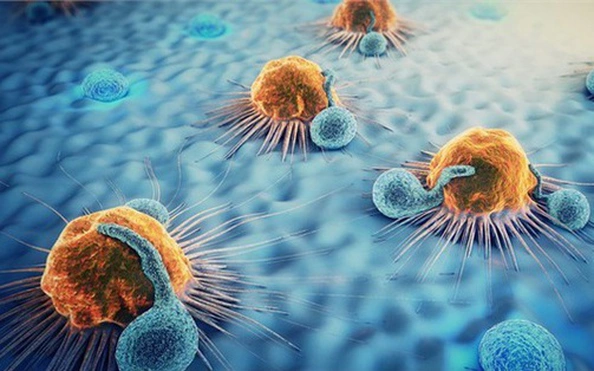
Bispecific antibodies bind two targets simultaneously — typically a cancer surface antigen and CD3 on T cells — physically bridging T cell to cancer cell and triggering killing without MHC-I presentation or prior T cell priming. They are off-the-shelf (no manufacturing wait) unlike CAR-T.
- Blinatumomab (Blincyto): CD19 × CD3 BiTE; continuous IV infusion. TOWER: R/R B-ALL: OS 7.7 vs. 4.0 months vs. chemo. BLAST: MRD-positive B-ALL — 78% achieved MRD-negative remission.
- Teclistamab (Tecvayli): BCMA × CD3; SC injection; R/R myeloma: ORR 63%, CR 39.4% (MajesTEC-1)
- Glofitamab (Columvi): CD20 × CD3; R/R DLBCL: ORR 52%, CR 39%; STARGLO: superior to R-GemOx
- Epcoritamab (Epkinly): CD20 × CD3; SC; R/R DLBCL: ORR 63.1%, CR 38.9%
- Tebentafusp (Kimmtrak): gp100 × CD3 ImmTAC; uveal melanoma (HLA-A*02:01 patients only): OS 21.7 vs. 16.0 months — first drug ever to improve OS in uveal melanoma (IMCgp100-202, NEJM 2021)
TIL Therapy — Lifileucel (Amtagvi)
Lifileucel (Amtagvi, Iovance) received FDA approval in February 2024 as the first TIL therapy. Tumor-infiltrating lymphocytes extracted from the patient’s resected tumor — cells already primed against the patient’s specific tumor neoantigens — are expanded ex vivo to billions and reinfused after lymphodepletion. In the C-144-01 trial, patients with advanced melanoma who had progressed on anti-PD-1 achieved ORR 31.5%, CR 4.5%. Unlike CAR-T, TIL therapy is polyclonal — multiple T cell clones targeting many different neoantigens simultaneously — potentially harder for tumors to escape through antigen loss.
Cancer Vaccines and mRNA Immunotherapy
Sipuleucel-T (Provenge) — First FDA-Approved Cancer Vaccine
Sipuleucel-T collects patient dendritic cells, activates them ex vivo with prostatic acid phosphatase fused to GM-CSF, and reinfuses them to stimulate a prostate cancer-specific immune response. The IMPACT trial demonstrated OS of 25.8 versus 21.7 months in asymptomatic/minimally symptomatic metastatic CRPC — a statistically significant benefit without PSA or radiographic response. Use has declined with newer mCRPC agents, but sipuleucel-T remains FDA-approved and approved by NCCN for selected patients.
Personalized mRNA Cancer Vaccines — The New Frontier
The most consequential development in cancer vaccines applies mRNA technology to cancer’s greatest vulnerability: each tumor carries hundreds of unique mutations creating tumor-specific neoantigens that no other human’s immune system has ever seen. A personalized mRNA vaccine encodes those unique neoantigens, training the immune system to recognize and attack those exact cancer cells.
mRNA-4157/V940 (Moderna/Merck) is the most advanced. In the KEYNOTE-942 Phase 2b trial (NEJM 2024), mRNA-4157 combined with pembrolizumab as adjuvant treatment for high-risk resected melanoma reduced recurrence-free survival risk by 44% (RFS HR 0.561) and reduced distant metastasis or death by 65% (DMFS HR 0.347) compared to pembrolizumab alone at 3-year follow-up. FDA Breakthrough Therapy designation granted. Phase 3 (KEYNOTE-B26) is now enrolling. This approach — sequencing a patient’s tumor, identifying their unique neoantigens, encoding them in mRNA, and delivering a fully personalized vaccine — represents a new paradigm for cancer treatment detailed further in the upcoming precision medicine cancer article.
Immune-Related Adverse Events (irAEs)
By releasing immune checkpoints, checkpoint inhibitors can trigger autoimmune-like inflammation in normal tissues. Most irAEs are manageable, but some can be life-threatening — early recognition is critical.
| Organ/System | irAE | Management | Notes |
|---|---|---|---|
| Skin | Rash, pruritis, vitiligo | Topical steroids; continue IO for grade 1–2 | Vitiligo in melanoma may predict response |
| GI / Colitis | Diarrhea, bloody stool | Hold IO; prednisone; infliximab if steroid-refractory | Most common severe irAE with ipilimumab |
| Thyroid | Thyroiditis → hypothyroidism | Levothyroxine (permanent); NO high-dose steroids | Most common endocrine irAE; rarely reverses |
| Pituitary | Hypophysitis → panhypopituitarism | Physiologic hydrocortisone + other deficient hormones (permanent) | Most common with ipilimumab |
| Pancreas | Type 1 DM (rare) | Insulin (permanent); check glucose if symptomatic | Can present as DKA; permanent |
| Lung | Pneumonitis | Hold IO; prednisone 1–2 mg/kg; CT scan | More common with PD-1/PD-L1; potentially fatal |
| Heart | Myocarditis (rare ~0.1–0.5%) | Immediately discontinue; methylprednisolone 1000 mg/day IV; escalate early | ~50% mortality grade 3–4; cardiac MRI + troponin |
| Liver | Immune hepatitis | Hold IO; prednisone; mycophenolate if refractory | Monitor LFTs every cycle |
Frequently Asked Questions
- Wolchok JD et al. — CheckMate 067 7-yr OS (nivo+ipi melanoma); NEJM Evidence 2022
- Reck M et al. — KEYNOTE-024 (pembro vs chemo PD-L1 ≥50% NSCLC); NEJM 2016; updated OS 2019
- Gandhi L et al. — KEYNOTE-189 (pembro + chemo non-sq NSCLC); NEJM 2018
- André T et al. — KEYNOTE-177 (pembro vs chemo MSI-H mCRC); NEJM 2020
- Spigel DR et al. — PACIFIC 5-yr (durvalumab stage III NSCLC); JCO 2022
- Tawbi HA et al. — RELATIVITY-047 (relatlimab + nivo melanoma); NEJM 2022
- Locke FL et al. — ZUMA-1 5-yr OS (axi-cel DLBCL); Lancet Oncol 2022
- Westin JR et al. — ZUMA-7 (axi-cel 2L DLBCL); NEJM 2022
- Fowler NH et al. — ELARA (tisa-cel FL); Nature Med 2022
- San-Miguel J et al. — CARTITUDE-1 (cilta-cel myeloma); NEJM 2023
- Munshi NC et al. — KarMMa (ide-cel myeloma); NEJM 2021
- Kantarjian H et al. — TOWER (blinatumomab R/R ALL); NEJM 2017
- Weber JS et al. — KEYNOTE-942 (mRNA-4157 + pembro melanoma); NEJM 2024
- Nathan P et al. — IMCgp100-202 (tebentafusp uveal melanoma); NEJM 2021
- Kantoff PW et al. — IMPACT (sipuleucel-T mCRPC); NEJM 2010
- National Cancer Institute — Immunotherapy to Treat Cancer
- Cancer Research Institute — What Is Cancer Immunotherapy?
- ASCO — What Is Immunotherapy?
This article is for educational purposes only and does not constitute medical advice. Discuss all cancer treatment decisions with your oncology care team.
I have been reading about cancer immunotherapy: types, how it works, for weeks and this is the most thorough guide I have found. What I liked most was that the article didn’t just say what to avoid — it also gave alternatives. Exactly the kind of evidence-based information that is hard to find in one place.
This is one of the clearest explanations of cancer immunotherapy: types, how it works, I have found. It is refreshing to see an article that acknowledges individual variation rather than giving one-size-fits-all advice. Keep up this kind of thorough health journalism — it genuinely helps patients like me.
This is one of the clearest explanations of cancer immunotherapy: types, how it works, I have found. The article answered questions I didn’t even know I had until I started reading. Will definitely be coming back to this site for more health information.
This breakdown of cancer immunotherapy: types, how it works, is exactly what patients need before a specialist appointment. The article answered questions I didn’t even know I had until I started reading. Thank you for making complex medical information accessible without dumbing it down.
This is one of the clearest explanations of cancer immunotherapy: types, how it works, I have found. I have tried following advice from several sources but this is most consistent with what my specialist told me. This gave me real confidence going into my next specialist appointment.
I have been reading about cancer immunotherapy: types, how it works, for weeks and this is the most thorough guide I found. I appreciated how the article addressed both the clinical side and the practical adjustments. This gave me real confidence going into my next specialist appointment.