
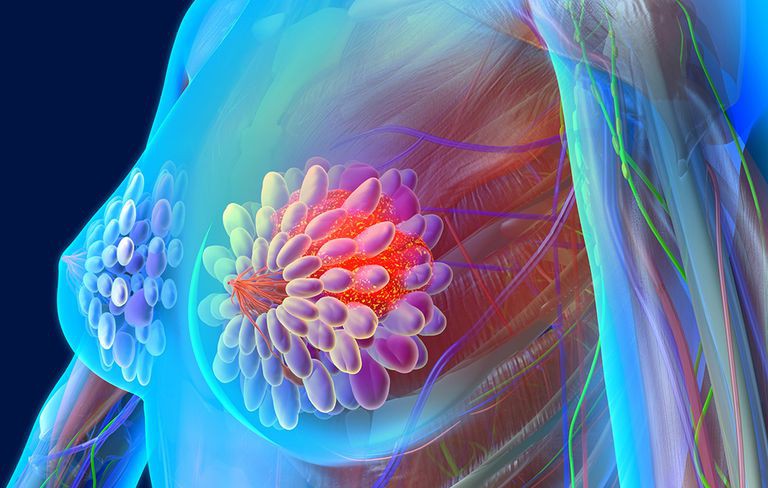
Breast cancer is the most commonly diagnosed cancer in women worldwide and the leading cause of cancer death in women globally. In the United States, an estimated 310,720 new cases of invasive breast cancer will be diagnosed in women in 2024 — along with approximately 42,250 deaths (ACS Cancer Facts & Figures 2024). One in every 8 American women will develop invasive breast cancer in her lifetime.
But the word “breast cancer” describes not one disease but many. Two women in the same oncology waiting room with the same tumor size and the same anatomic stage may face completely different treatments and completely different prognoses — because modern breast cancer care is driven less by tumor size than by the molecular characteristics of the tumor itself. A hormone receptor-positive tumor may be treated with surgery and years of endocrine therapy; a triple-negative tumor of the same size may require a full course of chemotherapy plus immunotherapy before surgery even begins.
This guide covers what breast cancer is, how it is classified, what each stage means, the full range of modern treatment options — including several recently approved therapies that have substantially changed outcomes — and what life looks like for the growing population of breast cancer survivors.
What Is Breast Cancer?
Breast cancer begins when cells in the breast grow uncontrollably. The vast majority originate in the cells lining the milk ducts (ductal carcinomas) or the milk-producing lobules (lobular carcinomas).
Non-invasive breast cancer — also called in situ cancer — remains confined to its origin point and has not grown into surrounding breast tissue. Ductal carcinoma in situ (DCIS) is the most common form, classified as Stage 0. DCIS is highly treatable and is not itself life-threatening, but carries a risk of progression to invasive cancer if untreated.
Invasive breast cancer has grown beyond its cell of origin into surrounding breast tissue and, if untreated, can spread through the lymphatic system or bloodstream to distant organs. Invasive ductal carcinoma (IDC) accounts for approximately 70–80% of all invasive breast cancers; invasive lobular carcinoma (ILC) accounts for roughly 10–15%.
Inflammatory breast cancer is a rare but aggressive form that rarely presents as a lump — instead causing rapid breast swelling, redness, skin dimpling (peau d’orange), and warmth that can mimic infection. It accounts for 1–5% of breast cancers but is disproportionately dangerous because of its aggressive biology and frequent delays in diagnosis.
Breast Cancer Types and Molecular Subtypes
Understanding molecular subtype is essential because subtype determines treatment far more than tumor size or stage alone.
~70–75% of breast cancers. Driven by estrogen. Treated with endocrine therapy (tamoxifen, aromatase inhibitors) ± CDK4/6 inhibitors. Best overall prognosis but can recur late — 10–15 years after diagnosis.
~15–20%. HER2/neu protein overexpressed. More aggressive but transformed by HER2-targeted therapies (trastuzumab, T-DM1, T-DXd). Early-stage HER2+ now has excellent outcomes.
~15–20%. ER-, PR-, HER2-. Highest grade, fastest growing, most likely to recur early. Treated with chemotherapy ± immunotherapy. Dramatic response when pathologic complete response (pCR) achieved.
Previously classified as HER2-negative. Now targeted by trastuzumab deruxtecan (T-DXd/Enhertu) — FDA approved for HER2-low metastatic breast cancer in 2022 (DESTINY-Breast04). A newly actionable subtype.
Breast Cancer Stages
Breast cancer staging uses the AJCC system and considers tumor size (T), lymph node involvement (N), and distant metastasis (M). The AJCC 8th edition also incorporates biomarkers into “prognostic staging” — a patient with Stage II anatomy but very favorable biomarkers may have a prognostic Stage I, reflecting a genuinely better prognosis.
| Stage | Description | 5-Year Survival |
|---|---|---|
| Stage 0 | DCIS — non-invasive; confined to milk ducts; not yet spread into breast tissue | ~100% |
| Stage I | Small invasive tumor (≤2 cm); no or minimal lymph node involvement | ~99% |
| Stage II | Tumor 2–5 cm and/or 1–3 positive lymph nodes; no distant spread | ~95–99% |
| Stage III | Locally advanced; more nodes involved or tumor involves chest wall/skin; no distant spread | ~86% |
| Stage IV | Metastatic; spread to bone, liver, lung, brain, or other distant organs | ~31% (rising) |
Breast Cancer Risk Factors
Factors You Cannot Change
- Sex: Women have approximately 100 times the risk of men
- Age: Risk rises continuously; median age at diagnosis is approximately 62
- BRCA1/2 mutations: BRCA1 confers 55–72% lifetime risk; BRCA2 confers 45–69% lifetime risk (Kuchenbaecker et al., JAMA 2017)
- Family history: First-degree relative roughly doubles risk; two affected first-degree relatives increases risk 3–4-fold
- Dense breast tissue: Increases cancer risk and reduces mammogram sensitivity
- Personal history of breast cancer, DCIS, or atypical hyperplasia
- Prior chest wall radiation (e.g., treatment for Hodgkin lymphoma)
- Reproductive factors: Early first period (<12), late menopause (>55), no pregnancies, or first child after age 30
Factors You Can Modify
- Alcohol: Each daily drink increases risk approximately 7–10% — one of the most clearly established modifiable risk factors
- Postmenopausal obesity: Adipose tissue is the primary source of estrogen after menopause; obesity increases circulating estrogen and breast cancer risk
- Physical inactivity: Regular exercise reduces risk by approximately 10–20%
- Combined hormone therapy (estrogen + progestin after menopause): Established by the Women’s Health Initiative (WHI) trial; risk normalizes after stopping
- Prolonged oral contraceptive use: Modest increase in risk; normalizes within years of stopping
How Breast Cancer Is Diagnosed
Most breast cancers are first detected on screening mammography — before a lump or symptom is present. Some are found when a woman or her clinician notices a lump, nipple discharge, skin changes, or other symptoms that prompt evaluation. For a complete guide to what symptoms to watch for, see the breast cancer symptoms article. For guidance on screening recommendations and scheduling, see the breast cancer screening article.

The Diagnostic Process
Imaging: An abnormal mammogram leads to additional views — a diagnostic mammogram and/or breast ultrasound. Breast MRI is added for extent-of-disease evaluation before surgery, or in women with known BRCA mutations or very dense breasts.
Biopsy: Tissue biopsy is the only definitive way to diagnose breast cancer. Core needle biopsy — performed under ultrasound or mammogram guidance with local anesthesia — is the standard outpatient approach. It removes small cylinders of tissue for pathological analysis.
Pathology report: The biopsy specimen is analyzed for: histological type; grade (1 = well-differentiated to 3 = poorly differentiated); estrogen receptor (ER) and progesterone receptor (PR) status; HER2 status; and Ki-67 proliferation index.
Genomic testing: For HR+/HER2- invasive breast cancer, the Oncotype DX 21-gene recurrence score predicts whether chemotherapy adds benefit beyond endocrine therapy alone — established by the TAILORx trial (Sparano JA et al., NEJM 2018). This test has spared tens of thousands of patients from chemotherapy they do not need.
Breast Cancer Treatment
Treatment is highly individualized. A multidisciplinary team — medical oncologist, surgical oncologist, radiation oncologist — reviews each case, and treatment depends on stage, molecular subtype, patient health and preferences, and genetic factors.
Surgery
Lumpectomy (breast-conserving surgery): Removes the tumor and a surrounding margin while preserving the breast. The landmark NSABP B-06 trial (Fisher B et al.) established that lumpectomy plus radiation provides equivalent long-term survival to mastectomy for most Stage I–II breast cancers. Requires post-operative radiation.
Mastectomy: Removes the entire breast. Options include simple, skin-sparing, and nipple-sparing mastectomy — the latter two enable immediate reconstruction. For most women without high genetic risk, prophylactic contralateral mastectomy does not improve survival.
Lymph node surgery: Sentinel lymph node biopsy (SLNB) — removing the first 1–3 draining nodes — is standard staging for node-negative disease. Full axillary dissection (ALND) is reserved for specific clinical situations; SLNB alone is adequate for most patients with 1–2 positive nodes who receive whole-breast radiation.
Systemic Therapy for HR+ Breast Cancer
Endocrine therapy: Tamoxifen (5–10 years) for premenopausal women, or aromatase inhibitors (anastrozole, letrozole, exemestane) for postmenopausal women. CDK4/6 inhibitor abemaciclib added to endocrine therapy for 2 years reduces distant recurrence in high-risk HR+/HER2- early breast cancer — monarchE trial (Johnston SRD et al., J Clin Oncol 2020), FDA approved 2021.
Systemic Therapy for HER2+ Breast Cancer
- Trastuzumab (Herceptin): Reduces recurrence by ~50% in HER2+ early breast cancer (HERA, BCIRG 006)
- Pertuzumab (Perjeta): Added to trastuzumab + chemo for high-risk HER2+ (APHINITY, NEOSPHERE)
- T-DM1 (Kadcyla): For residual HER2+ disease after neoadjuvant therapy; 50% recurrence reduction vs. trastuzumab — KATHERINE trial (von Minckwitz G et al., NEJM 2019)
- T-DXd/Enhertu: Dramatically improved outcomes in HER2+ and HER2-low metastatic disease — DESTINY-Breast03 & DESTINY-Breast04 (Modi S et al., NEJM 2022)
Systemic Therapy for Triple-Negative Breast Cancer
Pembrolizumab (Keytruda) added to neoadjuvant chemotherapy for high-risk Stage II–III TNBC significantly improves pathologic complete response and event-free survival — KEYNOTE-522 trial (Schmid P et al., NEJM 2020), FDA approved 2021. For residual TNBC after neoadjuvant therapy, capecitabine reduces recurrence (CREATE-X, Masuda N et al., NEJM 2017). For BRCA1/2-mutated early breast cancer, olaparib (Lynparza) reduces distant recurrence — OlympiA trial (Tutt ANJ et al., NEJM 2021).
Metastatic Breast Cancer
Stage IV breast cancer is not curable with current therapies for most patients but is increasingly treatable over extended periods. For HR+/HER2- metastatic disease, CDK4/6 inhibitors (palbociclib, ribociclib, abemaciclib) combined with endocrine therapy have become the standard first-line approach — approximately doubling progression-free survival. Median overall survival now exceeds 5 years with modern regimens. For bone metastases, zoledronic acid or denosumab reduce fractures and bone pain.
For specific questions to ask your oncologist at each stage of breast cancer care, see the cancer questions for doctor guide. For support resources including financial assistance, peer support, and mental health services, see the cancer patient support article.
Life After Breast Cancer — Survivorship
Approximately 4.1 million breast cancer survivors are living in the United States today. Most people diagnosed with early-stage breast cancer are cured. Survivorship brings its own long-term challenges:
- Lymphedema: Arm swelling; risk ~5–7% after SLNB and ~20–30% after ALND; lifelong risk
- Cardiotoxicity: Anthracyclines cause dose-dependent cardiomyopathy; trastuzumab causes reversible cardiac dysfunction; cardiac monitoring is standard during treatment
- Bone health: Aromatase inhibitors reduce bone density; calcium, vitamin D, and weight-bearing exercise are recommended
- Cognitive effects: “Chemo brain” — memory, concentration, and word-finding difficulties — typically improves but may persist for years
- Fertility and sexual health: Chemotherapy can cause premature ovarian insufficiency; fertility preservation should be discussed before systemic treatment begins
- Recurrence anxiety: The most commonly reported long-term psychological effect; merits attention in survivorship care
For more on navigating life after cancer treatment, see the cancer survivorship guide.
Frequently Asked Questions
- American Cancer Society — Cancer Facts & Figures 2024
- Fisher B et al. (NSABP B-06) — Lumpectomy vs. mastectomy; N Engl J Med 1985
- von Minckwitz G et al. (KATHERINE) — T-DM1 for residual HER2+ breast cancer; N Engl J Med 2019
- Schmid P et al. (KEYNOTE-522) — Pembrolizumab for high-risk TNBC; N Engl J Med 2020
- Tutt ANJ et al. (OlympiA) — Olaparib for BRCA-mutated early breast cancer; N Engl J Med 2021
- Johnston SRD et al. (monarchE) — Abemaciclib for HR+/HER2- early breast cancer; J Clin Oncol 2020
- Modi S et al. (DESTINY-Breast04) — T-DXd for HER2-low metastatic; N Engl J Med 2022
- Sparano JA et al. (TAILORx) — Genomic testing in HR+/HER2- early breast cancer; N Engl J Med 2018
- Masuda N et al. (CREATE-X) — Capecitabine for residual TNBC; N Engl J Med 2017
- National Cancer Institute — cancer.gov/types/breast
- American Cancer Society — cancer.org
This article is for educational purposes only and does not constitute medical advice. Consult your oncology care team for personalized guidance regarding your diagnosis and treatment.
Breast Cancer Treatment: Key Advances and Approaches
Breast cancer treatment has become increasingly personalized over the past two decades, driven by advances in tumor biology characterization that distinguish meaningfully different breast cancer subtypes with different biological behaviors and optimal treatment approaches. The four major molecular subtypes of breast cancer — Luminal A (hormone receptor-positive, HER2-negative, low-grade), Luminal B (hormone receptor-positive, HER2-negative, high-grade or HER2-positive), HER2-enriched (HER2-positive, hormone receptor-negative), and triple-negative (estrogen receptor-negative, progesterone receptor-negative, HER2-negative) — each have distinct prognoses, responses to systemic therapy, and optimal treatment sequencing.
Hormone receptor-positive (HR+) breast cancer: HR+ breast cancer, which accounts for approximately 70% of cases, is treated with endocrine therapy (hormone-blocking treatment) as the cornerstone of systemic therapy. For premenopausal women, tamoxifen (5–10 years) or ovarian suppression plus an aromatase inhibitor is standard. For postmenopausal women, aromatase inhibitors (anastrozole, letrozole, exemestane) have superseded tamoxifen as the preferred endocrine therapy due to superior efficacy. In metastatic HR+ breast cancer, the CDK4/6 inhibitors (palbociclib, ribociclib, abemaciclib) combined with an aromatase inhibitor or fulvestrant have transformed outcomes: the MONARCH, PALOMA, and MONALEESA trials established this combination as first-line standard of care, substantially improving progression-free and overall survival compared to endocrine therapy alone.
HER2-positive breast cancer: HER2-positive breast cancer, which accounts for approximately 15–20% of cases, was once associated with a poor prognosis but is now one of the most treatable breast cancer subtypes due to the development of HER2-targeted therapies. Trastuzumab (Herceptin) was the first anti-HER2 agent and remains a cornerstone of treatment. For early-stage HER2-positive breast cancer, neoadjuvant pertuzumab + trastuzumab + chemotherapy followed by adjuvant T-DM1 (if residual disease) is standard, based on the APHINITY and KATHERINE trials. In metastatic HER2-positive disease, trastuzumab deruxtecan (T-DXd / Enhertu) has demonstrated remarkable efficacy even in patients who have progressed through multiple prior lines of HER2-directed therapy, with response rates exceeding 60% in heavily pretreated patients (DESTINY-Breast01/02/03 trials).
Triple-negative breast cancer (TNBC): TNBC — which accounts for approximately 10–15% of breast cancers and is disproportionately common in younger women and Black women — was historically treated with cytotoxic chemotherapy alone. Several advances have improved outcomes: pembrolizumab (Keytruda) added to neoadjuvant chemotherapy for early-stage, high-risk TNBC improved event-free survival in the KEYNOTE-522 trial and is now standard for eligible patients. Olaparib (for BRCA1/2 germline mutation carriers) and sacituzumab govitecan (Trodelvy, an antibody-drug conjugate targeting Trop-2) have improved outcomes in metastatic TNBC.
For authoritative information on breast cancer, the American Cancer Society’s breast cancer resource provides patient-friendly comprehensive guides. The National Cancer Institute’s breast cancer PDQ offers evidence-based clinical summaries. The NCCN Breast Cancer Guidelines are the most widely used clinical practice standards among U.S. oncologists. For information about breast cancer symptoms that often lead to initial evaluation, see our guide to breast cancer symptoms. For information about recommended breast cancer screening approaches — including mammography and supplemental MRI for high-risk women — see our comprehensive guide to breast cancer screening. For information about what a breast lump means and how it is evaluated, see our article on breast lumps.
Breast cancer prognosis has improved substantially over the past four decades: the five-year relative survival rate for all stages combined was approximately 75% in the mid-1970s and exceeds 90% today, driven by advances in early detection through mammography screening and improvements in systemic therapy. For localized breast cancer (confined to the breast, Stage I and II), the five-year relative survival exceeds 99%. Prompt evaluation of symptoms, adherence to recommended screening intervals, and access to multidisciplinary oncology care at a breast cancer program with expertise in genomic testing and clinical trials are the most important individual-level factors in breast cancer outcomes.
Pingback: Breast Cancer Symptoms: Signs to Know and When to Act - Horizon Health Guide
Pingback: Breast Cancer Risk Factors: Genetic, Hormonal, and Lifestyle - Horizon Health Guide
Pingback: Breast Cancer Screening: Guidelines, Age, and What to Expect - Horizon Health Guide
As someone dealing with this personally, the breast cancer: types, stages, treatment, and section was very helpful. The connection between diet, lifestyle, and long-term outcomes is explained clearly here. Forwarding this to others in my support group who are dealing with similar issues.
Came across this while researching breast cancer: types, stages, treatment, and for a family member. It is refreshing to see an article that acknowledges individual variation rather than giving one-size-fits-all advice. Thank you for making complex medical information accessible without dumbing it down.
Came across this while researching breast cancer: types, stages, treatment, and for a family member. What I liked most was that the article didn’t just say what to avoid — it also gave alternatives. Looking forward to reading more articles from this website.
Thank you for covering breast cancer: types, stages, treatment, and so thoroughly without being overly technical. The section on managing this condition day-to-day was especially useful for planning. This is exactly why I prefer this website over generic health platforms.
I have been reading about breast cancer: types, stages, treatment, and for weeks and this is the most thorough guide I found. The specific numbers and thresholds mentioned are exactly what I needed to understand my results. Looking forward to reading more articles from this website.
Bookmarked this article on breast cancer: types, stages, treatment, and immediately — going to reference it regularly. The practical tips made this immediately actionable, not just theoretical. Exactly the kind of evidence-based information that is hard to find in one place.