
Cardiovascular disease kills more people every year than any other cause of death — more than all cancers combined. It accounts for approximately 17.9 million deaths per year worldwide, or roughly one in three deaths globally. In the United States, someone dies of cardiovascular disease every 33 seconds.
Yet “cardiovascular disease” is not a single condition. It is a broad term for a collection of disorders affecting the heart and blood vessels, most of which share a common underlying mechanism — the gradual deterioration of arterial walls over decades — and many of which can be substantially prevented or delayed with the right interventions. Understanding what cardiovascular disease is, what types it includes, and what drives its development is the starting point for understanding virtually all cardiovascular health guidance adults receive.
What Is Cardiovascular Disease?
Cardiovascular disease (CVD) is the umbrella term for all diseases and disorders of the heart and blood vessels. This includes conditions affecting the heart muscle itself, the coronary arteries that supply the heart, the valves within the heart, the electrical system that controls heart rhythm, and the blood vessels throughout the body, including those supplying the brain.
The term is sometimes used interchangeably with “heart disease,” but they are not identical. “Heart disease” typically refers specifically to conditions affecting the heart (coronary artery disease, heart failure, arrhythmias, structural defects), while “cardiovascular disease” is broader — it also encompasses stroke (a disease of cerebral blood vessels) and peripheral artery disease (a disease of leg and arm arteries).
The major conditions included under the cardiovascular disease umbrella are: coronary artery disease, heart failure, stroke, peripheral artery disease, atrial fibrillation and other arrhythmias, cardiomyopathy, valvular heart disease, and congenital heart defects.
Types of Cardiovascular Disease
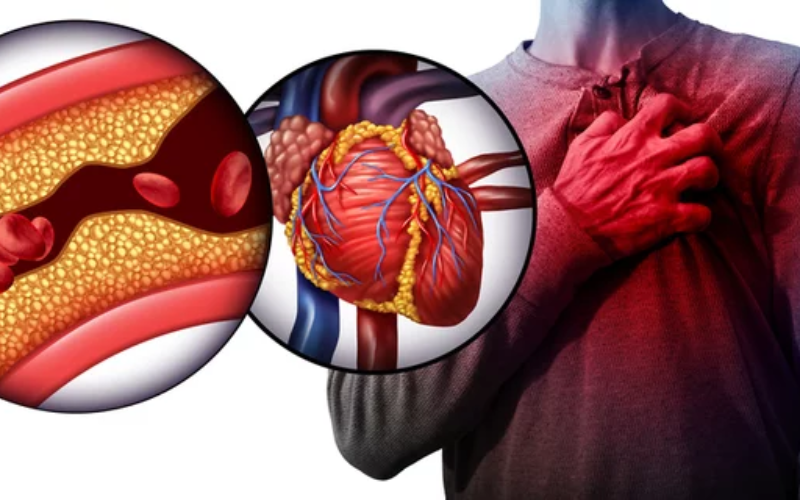
Coronary artery disease (CAD) is the most common type of cardiovascular disease and the most common cause of death in most high-income countries. It results from atherosclerosis — the buildup of cholesterol-laden plaques inside the walls of the coronary arteries. As these plaques grow, they narrow the coronary lumen, reducing blood flow to the heart muscle. When a plaque ruptures and triggers clot formation that abruptly blocks a coronary artery, the result is a myocardial infarction (heart attack). Heart muscle that does not receive blood begins to die permanently within 20 to 40 minutes of complete occlusion.
Heart failure does not mean the heart has stopped — it means the heart cannot pump enough blood to meet the body’s needs. The two main types are heart failure with reduced ejection fraction (HFrEF, EF below 40 percent, in which the heart pumps too weakly) and heart failure with preserved ejection fraction (HFpEF, in which the heart pumps with adequate force but is too stiff to fill properly). HFpEF now accounts for at least half of all heart failure cases, particularly in older adults with hypertension. Symptoms include breathlessness, swollen ankles, fatigue, and difficulty lying flat to sleep.
Stroke occurs when blood flow to part of the brain is interrupted long enough to cause brain cell death. Ischemic stroke (approximately 87 percent of all strokes) occurs when a clot blocks a cerebral artery. Hemorrhagic stroke (the remaining 13 percent) occurs when a blood vessel in the brain ruptures, most commonly due to poorly controlled hypertension. Transient ischemic attacks (TIAs), or “mini-strokes,” produce stroke symptoms that resolve within 24 hours but carry a high short-term risk of completed stroke.
Peripheral artery disease (PAD) is atherosclerosis of the arteries supplying the limbs. The hallmark symptom is claudication: reproducible pain, cramping, or fatigue in the leg muscles that appears with walking and resolves with rest. PAD is a strong predictor of coexisting coronary artery disease and is associated with substantially elevated risk of heart attack and stroke.
Atrial fibrillation (AF) is the most common sustained cardiac arrhythmia, affecting an estimated 6 million Americans. In AF, the atria fire chaotically at 400 to 600 impulses per minute rather than in a coordinated rhythm. AF increases stroke risk approximately five-fold by allowing blood to pool in the left atrial appendage and form clots that can embolize to the brain. Most people with AF require long-term anticoagulation.
Cardiomyopathy refers to diseases of the heart muscle itself. Dilated cardiomyopathy (enlarged, weakened heart) is the most common type. Hypertrophic cardiomyopathy (abnormal thickening of heart muscle) is the leading cause of sudden cardiac death in young athletes. Restrictive cardiomyopathy (stiff, poorly filling heart) is often caused by infiltrative conditions like amyloidosis.
Valvular heart disease can cause either stenosis (narrowing) or regurgitation (leaking). Aortic stenosis — progressive calcification and narrowing of the aortic valve — is the most common valvular disease in adults over 70. Mitral regurgitation is the most common valvular disease overall.
What Causes Cardiovascular Disease?
The central mechanism underlying most cardiovascular disease is atherosclerosis — the progressive accumulation of plaques within artery walls. Atherosclerosis begins with injury to the endothelium (the inner lining of blood vessels), which allows LDL cholesterol particles to infiltrate the arterial wall. These particles become oxidized, trigger an inflammatory response, and are engulfed by macrophages that become foam cells. Over years and decades, these accumulations grow into fibrous plaques that can progressively narrow arteries or rupture suddenly, triggering a heart attack or stroke.
Risk factors divide into non-modifiable and modifiable categories.
Non-modifiable risk factors include age (risk increases steadily; men over 45 and women over 55 are at elevated risk), sex (men develop coronary artery disease approximately 10 years earlier than women, though women’s risk accelerates sharply after menopause), family history (a first-degree relative with heart disease before age 55 in men or 65 in women substantially raises risk), and ethnicity.
Modifiable behavioral risk factors include smoking, physical inactivity, unhealthy diet (high sodium, saturated fat, refined carbohydrates), obesity (particularly visceral/abdominal fat), and heavy alcohol consumption.
Metabolic risk factors include hypertension (the most common treatable cardiovascular risk factor and the leading cause of stroke), dyslipidemia (elevated LDL-C, low HDL-C), type 2 diabetes (which doubles to quadruples cardiovascular risk), and chronic kidney disease.
Symptoms of Cardiovascular Disease
One of the most medically important aspects of cardiovascular disease is that many dangerous forms are completely asymptomatic until a catastrophic event occurs. Hypertension typically produces no symptoms until it has caused a stroke, heart attack, or kidney failure. Early atherosclerosis is entirely silent.
When symptoms do occur, they depend on which part of the cardiovascular system is affected:
- Heart attack: chest pain, pressure, or tightness (often described as “an elephant on the chest”), radiation to the left arm, jaw, neck, or back, shortness of breath, sweating, nausea. Women are more likely to present atypically — with fatigue, jaw pain, or nausea without chest pain.
- Stroke: sudden one-sided weakness or numbness, sudden confusion or difficulty speaking, sudden severe headache. Remember FAST: Face drooping, Arm weakness, Speech difficulty, Time to call emergency services.
- Heart failure: progressive breathlessness with decreasing exertion, swollen ankles, rapid weight gain from fluid, fatigue, difficulty lying flat to sleep.
- Angina: chest discomfort or pressure that occurs predictably with exertion and resolves within minutes with rest or nitroglycerin.
- Atrial fibrillation: palpitations, irregular heartbeat, or — in many cases — no symptoms at all; AF is frequently discovered incidentally on a routine ECG.
How Cardiovascular Disease Is Diagnosed
Blood tests provide metabolic and risk profiling. A fasting lipid panel measures total cholesterol, LDL-C, HDL-C, and triglycerides. HbA1c assesses diabetes status. High-sensitivity C-reactive protein (hs-CRP) measures systemic inflammation, an independent cardiovascular risk predictor. Cardiac troponin is the definitive marker for myocardial injury — rising within hours of a heart attack, detectable within 1 to 3 hours with high-sensitivity assays.
The ECG records cardiac electrical activity, identifying arrhythmias, ischemia, prior infarction, and ventricular hypertrophy. Echocardiography uses ultrasound to assess ejection fraction, chamber dimensions, valve function, and wall motion. Stress testing detects inducible ischemia — evidence that a coronary artery is significantly narrowed but has not yet caused a heart attack.
Coronary CT angiography and coronary artery calcium (CAC) scoring provide non-invasive assessment of coronary anatomy and plaque burden. A CAC score of 0 in someone with intermediate risk is associated with very low near-term event probability. A CAC score above 300 indicates extensive subclinical atherosclerosis and supports intensive preventive treatment. Cardiac catheterization (coronary angiography) remains the gold standard for precisely characterizing coronary artery anatomy and can treat blockages with stenting during the same procedure.
How Cardiovascular Disease Is Treated
Lifestyle modification remains foundational regardless of what medications or procedures are used: dietary modification (reduced sodium, saturated fat, and refined carbohydrates), regular aerobic exercise (at least 150 minutes per week), smoking cessation, weight reduction, and alcohol moderation each independently reduce cardiovascular risk.
Blood pressure medications — ACE inhibitors, ARBs, calcium channel blockers, thiazide diuretics, beta-blockers — dramatically reduce the risk of stroke, heart failure, and kidney disease. A blood pressure below 130/80 mmHg is the goal for most adults with established cardiovascular risk.
Statins are among the most evidence-supported medications in medicine. They lower LDL-C, stabilize existing plaques, and have anti-inflammatory effects. High-intensity statins (atorvastatin 40–80 mg, rosuvastatin 20–40 mg) are standard of care after a heart attack or stroke.
Heart failure with reduced ejection fraction has a well-established medication regimen: ACE inhibitors/ARBs (or sacubitril-valsartan), beta-blockers, mineralocorticoid receptor antagonists, and SGLT2 inhibitors — each class independently reduces mortality.
Coronary revascularization through PCI (stenting) or coronary artery bypass grafting (CABG) restores blood flow to ischemic myocardium. CABG is preferred for left main disease, three-vessel disease (especially with diabetes), and when complete revascularization cannot be achieved percutaneously.
Can Cardiovascular Disease Be Prevented?
The large majority of cardiovascular events are preventable. Studies consistently show that adults who never smoke, maintain a healthy weight, exercise regularly, and keep blood pressure and cholesterol well-controlled have 80 percent or greater lower lifetime risk of cardiovascular events compared to those with multiple risk factors.
The American Heart Association’s Life’s Essential 8 framework identifies the eight most important cardiovascular health metrics: blood pressure control, healthy cholesterol levels, controlled blood glucose, healthy weight, no smoking, physical activity, healthy diet, and adequate sleep. Higher composite scores across these eight factors are associated with dramatically lower cardiovascular disease incidence and mortality.
For secondary prevention — in people who have already had a cardiovascular event — consistent use of proven medications (statins, antiplatelets, ACE inhibitors or ARBs) combined with sustained lifestyle modification substantially reduces the risk of a second event. The evidence base for secondary prevention is among the strongest in cardiovascular medicine.
For a foundational overview of the cardiovascular system itself, see our guide to how the heart works. For understanding everyday heart health metrics and monitoring, see our article on what is heart health. To explore how “heart disease” and “cardiovascular disease” differ in common usage, see heart disease vs cardiovascular disease: what is the difference.
Sources: World Health Organization — Cardiovascular Diseases | American Heart Association | CDC — Heart Disease
The Role of Inflammation in Cardiovascular Disease
Cardiovascular disease was long understood primarily as a problem of cholesterol accumulation — a “plumbing” problem of arteries gradually narrowing with fat deposits. This framing is incomplete. Over the past three decades, research has established that chronic inflammation is not merely a consequence of atherosclerosis but a core driver of it, and that inflammatory pathways independently determine which plaques rupture and cause events and which remain stable for decades.
The JUPITER trial (2008) demonstrated that people with elevated hs-CRP (a marker of systemic inflammation) but normal LDL cholesterol benefited from statin therapy, reducing cardiovascular events by 44 percent — evidence that inflammation is a distinct target beyond cholesterol. The CANTOS trial (2017) went further: it showed that inhibiting interleukin-1β (a key inflammatory cytokine) with canakinumab reduced cardiovascular events in patients with prior heart attack and elevated hs-CRP, without any change in LDL cholesterol — proving that anti-inflammatory therapy alone can reduce cardiovascular risk.
These findings have shifted guidelines. Measuring hs-CRP is now recommended in patients of intermediate cardiovascular risk to help guide statin therapy decisions, and inflammation biomarkers are increasingly integrated into risk calculators alongside traditional lipid and blood pressure values.
Practically, this has important implications for lifestyle choices. Several lifestyle behaviors reduce systemic inflammation independent of their effects on cholesterol and blood pressure: regular physical exercise reduces CRP and inflammatory cytokines; a Mediterranean-pattern diet rich in olive oil, fish, vegetables, and legumes has anti-inflammatory properties; adequate sleep (7–9 hours per night) reduces inflammatory markers; and chronic stress — via cortisol and sympathetic activation — chronically elevates inflammatory cytokines and is increasingly recognized as a cardiovascular risk factor in its own right.
Cardiovascular Disease in Women: A Separate Conversation
Cardiovascular disease is the leading cause of death in women — a fact that remains incompletely recognized by the public and sometimes by clinicians. Several aspects of cardiovascular disease differ meaningfully between women and men and warrant separate consideration.
Timing and risk factors: Women typically develop coronary artery disease approximately 10 years later than men, largely due to the protective cardiovascular effects of estrogen during the reproductive years. After menopause, cardiovascular risk rises sharply, and the lifetime risk of dying from cardiovascular disease equals or exceeds that of men. Conditions specific to female reproductive history also carry cardiovascular implications: preeclampsia (hypertension during pregnancy) is associated with a 2–4× higher risk of subsequent hypertension and cardiovascular disease. Premature menopause (before age 40) is associated with elevated cardiovascular risk. Polycystic ovary syndrome (PCOS) increases the risk of metabolic syndrome, hypertension, and type 2 diabetes — all cardiovascular risk factors.
Atypical presentations: Women having heart attacks are more likely than men to present without the classic crushing central chest pain. Fatigue, shortness of breath, jaw pain, nausea, back pain, and a general sense of “not feeling right” are more common in women and can lead to diagnostic delays when both patients and clinicians fail to recognize these as potential MI symptoms. Studies consistently show that women experiencing MI receive diagnostic evaluation and treatment more slowly than men, contributing to higher in-hospital mortality after first MI despite lower initial disease burden.
Microvascular disease: Some women (and some men) develop angina and evidence of ischemia on stress testing without obstructive coronary artery disease on angiography — a syndrome called INOCA (ischemia with nonobstructive coronary arteries) or coronary microvascular disease. This condition reflects dysfunction of the small coronary arterioles rather than blockages in major coronary arteries. It carries significant cardiovascular risk and requires specific diagnostic approaches (acetylcholine testing, coronary flow reserve measurement) that differ from standard coronary angiography.
Cardiovascular Disease and Mental Health
The relationship between mental health and cardiovascular disease is bidirectional and clinically important. Depression is present in approximately 20 percent of patients following a heart attack and independently predicts worse outcomes — including higher rates of rehospitalization, recurrent events, and mortality. The physiological mechanisms are multiple: depression is associated with higher sympathetic nervous system activity, elevated cortisol, increased platelet aggregation, reduced heart rate variability, and lower rates of medication adherence and lifestyle engagement. Each of these pathways independently increases cardiovascular risk.
Chronic psychosocial stress — from work demands, relationship conflict, economic insecurity, trauma, or social isolation — chronically activates the hypothalamic-pituitary-adrenal axis and sympathetic nervous system, producing sustained elevations in cortisol, inflammatory cytokines, and blood pressure. The INTERHEART study, which examined risk factors for myocardial infarction in 52 countries, identified psychosocial stress as one of nine major modifiable risk factors for MI — with an effect size comparable to smoking and hypertension in some analyses.
Post-traumatic stress disorder (PTSD) doubles cardiovascular risk, independent of other risk factors. Social isolation and loneliness — now recognized as major public health concerns — are associated with increased cardiovascular mortality comparable in magnitude to smoking 15 cigarettes per day. Sleep disorders, particularly untreated obstructive sleep apnea, produce repetitive nighttime hypoxia and sympathetic surges that elevate blood pressure and increase cardiovascular risk substantially.
These findings support an approach to cardiovascular prevention and rehabilitation that addresses psychological wellbeing alongside the traditional biological risk factors of blood pressure, cholesterol, and glucose. Cardiac rehabilitation programs that include psychosocial support and stress management components consistently produce better outcomes than those that focus solely on physical conditioning.
The Economic and Social Dimensions of Cardiovascular Disease
Cardiovascular disease is not evenly distributed across society. Significant disparities in both disease burden and outcomes exist across socioeconomic lines, racial and ethnic groups, geographic regions, and access to healthcare.
In the United States, Black Americans have rates of hypertension among the highest in the world and are significantly more likely to experience strokes at younger ages than white Americans. Hispanic and Latino Americans have elevated rates of diabetes and obesity — major cardiovascular risk factors — while having lower rates of some other cardiovascular risk factors. Native American and Alaska Native populations experience high rates of cardiovascular disease driven partly by historical and ongoing social determinants of health.
Social determinants — income, education, neighborhood environment, food security, housing stability, and access to healthcare — powerfully shape cardiovascular risk. People living in areas with limited access to fresh food (“food deserts”) have fewer options for cardiovascular-protective diets. People in lower-income jobs have less flexibility for physical activity and higher rates of chronic occupational and financial stress. Neighborhoods with higher air pollution exposure carry independently higher cardiovascular risk. People without insurance or with inadequate insurance are less likely to receive consistent treatment for hypertension, diabetes, and dyslipidemia — the conditions that, if well-controlled, dramatically reduce cardiovascular event rates.
Addressing cardiovascular disease burden at the population level therefore requires interventions beyond individual behavior change — including policy approaches to food environments, air quality, stress reduction, and equitable healthcare access. Individual prevention strategies remain important, but they operate within a social context that profoundly shapes the distribution of cardiovascular risk.
A Bottom Line on Cardiovascular Disease
Cardiovascular disease is not one disease but a family of conditions that share a common root in vascular biology — the slow, silent degradation of arterial walls beginning in childhood and expressing decades later as heart attacks, strokes, heart failure, and arrhythmias. Its scale is enormous: it kills more people worldwide than any other condition and consumes an extraordinary proportion of healthcare resources in every country where the cardiovascular risk factor burden is high.
What makes cardiovascular disease medically unusual — and personally important — is how much of it is preventable and how much of what does develop is treatable. No other category of chronic disease has as strong a body of evidence for modifiable risk, effective medications, and life-extending interventions. Blood pressure treated early protects the brain and heart for decades. Statins started after a first heart attack dramatically reduce the probability of a second. Lifestyle changes — diet, exercise, not smoking — independently reduce risk more than almost any single pharmaceutical intervention.
This does not mean that cardiovascular disease is simply a lifestyle choice, or that people who develop it have failed to take care of themselves. Genetics, socioeconomic circumstances, chronic stress, and access to healthcare all shape cardiovascular risk in ways no individual fully controls. But it does mean that the information and interventions needed to substantially reduce cardiovascular disease burden exist, are proven, and are available — making cardiovascular health one of the most consequential areas of medicine in which an informed adult can meaningfully act.
As someone dealing with this personally, the what is cardiovascular disease? section was very helpful. It is refreshing to see an article that acknowledges individual variation rather than giving one-size-fits-all advice. I wish I had found this article when I was first diagnosed — would have saved a lot of confusion.
My cardiologist recommended I look into what is cardiovascular disease? and this article covered it perfectly. The practical tips at the end made this immediately actionable, not just theoretical. Keep up this kind of thorough health journalism — it genuinely helps patients like me.
Bookmarked this article on what is cardiovascular disease? immediately — going to reference it regularly. It is refreshing to see an article that acknowledges individual variation rather than giving one-size-fits-all advice. Exactly the kind of evidence-based information that is hard to find in one place.
As someone dealing with this personally, the what is cardiovascular disease? section was very helpful. The article answered questions I didn’t even know I had until I started reading. Thank you for making complex medical information accessible without dumbing it down.
I never fully understood what is cardiovascular disease? until I read this. I have tried following advice from several sources but this is most consistent with what my specialist told me. Forwarding this to others in my support group who are dealing with similar issues.
My doctor recommended I look into what is cardiovascular disease? and this article covered it perfectly. The article answered questions I didn’t even know I had until I started reading. Looking forward to reading more articles from this website.