
Cholesterol has a reputation problem. For decades, it has been framed in public health messaging as something to minimize or eliminate — a dietary villain responsible for clogged arteries and heart attacks. The reality is considerably more nuanced. Cholesterol is not a toxin. It is an essential molecule that every cell in the human body requires to function. The problem is not cholesterol itself; it is the disruption of the systems that regulate cholesterol metabolism — disruption that allows excess amounts of the wrong type to accumulate in the wrong places.
Understanding what cholesterol is, how it functions, and why its dysregulation is harmful is one of the most important pieces of cardiovascular health literacy available to adults. Nearly half of American adults have cholesterol levels that increase cardiovascular risk, yet most have no symptoms and no direct sensation of the damage accumulating in their arterial walls. The only way to know is to measure — and the only way to act on those measurements effectively is to understand what they mean.
What Is Cholesterol?
Cholesterol is a waxy, fat-like lipid molecule present in the cell membrane of virtually every cell in the human body. Rather than being merely a disease-causing substance, it is a foundational structural and biochemical component of human physiology.
Cell membranes: Cholesterol is embedded in the lipid bilayer of cell membranes, where it regulates fluidity. Without enough cholesterol, membranes become too fluid and unstable; with too much, they become rigid. Cells constantly adjust membrane cholesterol content to maintain optimal fluidity.
Steroid hormones: All steroid hormones — cortisol, estrogen, testosterone, progesterone, aldosterone, and DHEA — are synthesized from cholesterol. Without cholesterol, the endocrine system cannot produce these hormones, which regulate metabolism, stress response, reproduction, immune function, and fluid balance.
Bile acids: The liver converts cholesterol into bile acids, released into the small intestine to emulsify dietary fats and enable their absorption. Approximately 500 mg of cholesterol is converted to bile acids daily; most is reabsorbed and recycled, but a portion is excreted in stool — one of the main pathways for cholesterol elimination.
Vitamin D synthesis: Cholesterol in the skin is converted to cholecalciferol (vitamin D3) upon exposure to ultraviolet B radiation, subsequently activated in the liver and kidneys to the biologically active form that regulates calcium absorption, bone metabolism, and immune function.
The body is so dependent on cholesterol that it does not leave its supply to dietary chance. The liver produces approximately 75 to 80 percent of the body’s cholesterol internally through a biosynthetic pathway regulated by the enzyme HMG-CoA reductase — the enzyme that statins inhibit. Dietary cholesterol from food accounts for only 20 to 25 percent of circulating cholesterol in most people, which is why dietary restriction alone has a more limited effect on blood cholesterol than is sometimes assumed.
How Cholesterol Moves Through the Body — Lipoproteins
Because cholesterol is hydrophobic, it cannot dissolve in blood and circulate freely. Instead, it is packaged into complex transport particles called lipoproteins, which have a hydrophilic outer shell and a hydrophobic core carrying cholesterol and triglycerides.
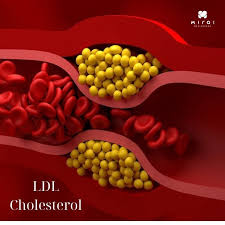
LDL (Low Density Lipoprotein) carries approximately 60 to 70 percent of all circulating cholesterol from the liver to peripheral tissues. Cells absorb LDL through LDL receptors on their surface, using the cholesterol for membrane maintenance, hormone synthesis, and other cellular functions. LDL is referred to as “bad” cholesterol not because cholesterol is harmful but because excess LDL particles — particularly when LDL receptors are saturated or insufficient — accumulate in arterial walls and drive the atherosclerotic process.
HDL (High Density Lipoprotein) performs reverse cholesterol transport: HDL particles circulate through tissues, pick up excess cholesterol from cell membranes and arterial walls, and return it to the liver for recycling or excretion in bile. High HDL levels are associated with lower cardiovascular risk, reflecting more efficient removal of cholesterol from arterial walls.
VLDL (Very Low Density Lipoprotein) is synthesized in the liver primarily to transport triglycerides to peripheral tissues. As it delivers its triglyceride cargo, it becomes progressively smaller and denser, eventually becoming LDL. High VLDL production — driven by high carbohydrate intake, obesity, and metabolic syndrome — is a major driver of elevated blood triglycerides and, through this pathway, elevated LDL.
Non-HDL cholesterol (total cholesterol minus HDL cholesterol) captures all atherogenic lipoprotein particles in a single number: LDL plus VLDL plus IDL plus remnant cholesterol. It is increasingly recognized as a better predictor of cardiovascular risk than LDL alone. A target non-HDL cholesterol below 130 mg/dL is appropriate for most adults.
Cholesterol Numbers and What They Mean
Total cholesterol below 200 mg/dL is desirable; 200–239 mg/dL is borderline high; 240 mg/dL or above is high. Total cholesterol alone is a coarse indicator because it includes HDL, which is protective.
LDL cholesterol is the primary pharmacological target for cardiovascular risk reduction. Below 100 mg/dL is optimal for most adults; below 70 mg/dL is the target for adults with established cardiovascular disease. An LDL of 190 mg/dL or above warrants medication regardless of other risk factors — levels this high are often driven by genetics rather than lifestyle.
HDL cholesterol below 40 mg/dL (men) or 50 mg/dL (women) is an independent cardiovascular risk factor. HDL at or above 60 mg/dL is considered cardioprotective. Pharmacologically raising HDL has not consistently reduced cardiovascular events in clinical trials, suggesting HDL quantity is a risk marker rather than a fully modifiable treatment target.
Triglycerides below 150 mg/dL are normal; 500 mg/dL or above poses a risk of acute pancreatitis. High triglycerides often coexist with low HDL and elevated VLDL — a pattern called atherogenic dyslipidemia, strongly associated with metabolic syndrome, insulin resistance, and type 2 diabetes.
How Excess LDL Causes Cardiovascular Disease
The pathway from elevated LDL to heart attack and stroke runs through a decades-long process called atherosclerosis — one that is silent for most of its course before becoming catastrophically apparent.
The process begins with damage to the arterial endothelium — the thin inner lining of blood vessel walls. This damage is caused by mechanical stress from high blood pressure, chemical damage from cigarette smoke, and inflammatory signals. At sites of endothelial injury, LDL particles cross into the intima — the space between the endothelial layer and the smooth muscle of the arterial wall.
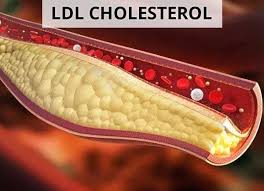
Once inside the intima, LDL particles are modified — most importantly, oxidized. Oxidized LDL (oxLDL) triggers an inflammatory response. Monocytes from the bloodstream are recruited to the site and differentiate into macrophages. Macrophages engulf the oxLDL but become overwhelmed — engorged with lipid, they transform into foam cells. Foam cells accumulate and die, releasing their lipid contents into the arterial wall, forming an atherosclerotic plaque.
Over years and decades, plaques grow, calcify, and may develop a thin fibrous cap over a lipid-rich core. These “vulnerable plaques” — paradoxically not the largest or most calcified, but those with thin caps and large necrotic cores — are most likely to rupture. When a vulnerable plaque ruptures, platelets aggregate on the exposed material, a thrombus forms within seconds to minutes, and if it occludes the artery, blood flow stops. In a coronary artery, this is a heart attack. In a cerebral artery, it is an ischemic stroke.
This is why LDL reduction is the primary pharmacological target for cardiovascular prevention: reducing LDL slows plaque formation, promotes plaque stabilization, and reduces the probability of the cascade of events that ends in an acute cardiovascular event.
Risk Factors for High Cholesterol
Familial Hypercholesterolemia (FH): FH is the most common and most clinically important genetic cause of high cholesterol, affecting approximately 1 in 200 to 250 adults. Individuals with heterozygous FH have LDL receptors that function at reduced capacity, preventing efficient LDL clearance. The result is lifelong exposure to very high LDL beginning at birth. Without treatment, FH typically leads to coronary artery disease in the 40s to 50s for men and 50s to 60s for women. Lifestyle changes alone are insufficient; medication is required from an early age.
Diet: Saturated fat — found in red meat, full-fat dairy, coconut oil, and palm oil — reduces LDL receptor expression in the liver, decreasing LDL clearance and raising LDL levels. Trans fat (partially hydrogenated vegetable oil) both raises LDL and lowers HDL — the most harmful dietary combination. Dietary cholesterol has a more modest and variable effect; saturated fat is the more important dietary target.
Obesity and metabolic syndrome: Excess visceral fat drives elevated VLDL and triglycerides, reduced HDL, and an increase in small, dense LDL particles that are especially atherogenic. This atherogenic dyslipidemia pattern is closely linked to insulin resistance.
Medical conditions: Hypothyroidism reduces LDL receptor expression, raising LDL significantly; checking thyroid function in newly diagnosed dyslipidemia is standard practice. Nephrotic syndrome increases VLDL production. Diabetes produces high triglycerides, low HDL, and elevated small-dense LDL.
Lifestyle Approaches to Cholesterol Management
- Reduce saturated fat: Replacing saturated fat with polyunsaturated fat lowers LDL; each 1% reduction in dietary energy from saturated fat reduces LDL by approximately 3–4 mg/dL
- Increase soluble fiber: 5–10 grams per day of soluble fiber (oats, barley, legumes, psyllium) reduces LDL by 5–10 mg/dL by binding bile acids in the intestine and forcing the liver to use more cholesterol to make new bile acids
- Plant sterols and stanols: 2 grams per day reduces LDL by 5–15% by competing with cholesterol for intestinal absorption
- Eliminate trans fats: Industrial trans fats are largely removed from the US food supply, but checking ingredients for “partially hydrogenated” oils remains relevant
- Aerobic exercise: 150+ minutes per week raises HDL 3–6% and reduces triglycerides; the LDL-lowering effect is modest but cardiovascular benefit is substantial
- Weight loss: Reduces VLDL and triglycerides; modestly raises HDL
Medications for High Cholesterol
Statins (atorvastatin, rosuvastatin, pravastatin) are the foundation of cholesterol-lowering pharmacotherapy. They inhibit HMG-CoA reductase, reducing hepatic cholesterol production and upregulating LDL receptor expression, increasing LDL clearance from the bloodstream. Statins reduce LDL by 30 to 60 percent depending on agent and dose. Decades of randomized trials have demonstrated reductions in myocardial infarction, stroke, and cardiovascular death.
Ezetimibe inhibits the NPC1L1 transporter in the intestinal brush border, reducing cholesterol absorption. Added to a statin, it reduces LDL by an additional 18 to 25 percent. The IMPROVE-IT trial demonstrated that adding ezetimibe to statin therapy reduces cardiovascular events beyond statin alone.
PCSK9 inhibitors (evolocumab, alirocumab) are injectable monoclonal antibodies that block PCSK9 from degrading LDL receptors. With more LDL receptors available, the liver clears dramatically more LDL — reducing LDL by 50 to 60 percent beyond maximally tolerated statin therapy. Primarily indicated for familial hypercholesterolemia and high-risk patients not at LDL goal.
Bempedoic acid inhibits ATP citrate lyase, upstream of HMG-CoA reductase. It reduces LDL by approximately 18% and does not cause myopathy, making it an option for statin-intolerant patients. The CLEAR Outcomes trial demonstrated cardiovascular benefit.
Fibrates (fenofibrate) primarily reduce triglycerides by 35 to 50 percent and modestly raise HDL; generally not combined with statins due to myopathy risk.
When to Get Cholesterol Tested
Adults should have a fasting lipid panel by age 20, repeated every 4 to 6 years if results are desirable and no risk factors are present. More frequent testing is appropriate with elevated levels, risk factors (diabetes, hypertension, smoking, family history of premature cardiovascular disease), or when on lipid-lowering therapy.
For adults over 40, ACC/AHA guidelines recommend using a cardiovascular risk calculator (the Pooled Cohort Equations) to estimate 10-year risk of a major cardiovascular event. This risk estimate, combined with LDL level, informs decisions about when to start medication and how aggressively to treat.
For a comprehensive view of all the numbers that define cardiovascular health, see our guide to heart health numbers every adult should know. For context on how blood pressure and cholesterol together drive cardiovascular risk, see our article on what blood pressure is and why it matters. For the broader picture of cardiovascular health, visit our overview of signs of a healthy heart.
The American Heart Association provides patient resources and tools for understanding cholesterol. The NIH National Heart, Lung, and Blood Institute offers evidence-based information on blood cholesterol and cardiovascular disease. The CDC publishes prevalence data and prevention resources for adults at all risk levels.
Cholesterol is not the enemy — dysregulated cholesterol metabolism is. Understanding the difference turns a number on a lab report into a meaningful signal about cardiovascular risk and an actionable guide for the dietary, lifestyle, and medical decisions that protect the heart over a lifetime.
Common Myths About Cholesterol
Myth: Eating cholesterol-rich foods directly raises blood cholesterol.
For most people, dietary cholesterol has a modest and highly variable effect on blood cholesterol. The liver compensates by adjusting its own production: when you eat more dietary cholesterol, hepatic synthesis tends to decrease; when you eat less, it increases. Saturated fat has a much larger effect on blood LDL than dietary cholesterol — replacing saturated fat with unsaturated fat is a more effective dietary strategy than simply avoiding egg yolks or shellfish.
Myth: HDL is always “good.”
HDL is consistently inversely associated with cardiovascular risk in observational studies. However, pharmacologically raising HDL has not reduced cardiovascular events in clinical trials — trials of agents that specifically raise HDL (niacin, CETP inhibitors) have failed to show clinical benefit. This suggests HDL’s protective function depends on its quality and functionality (how effectively it performs reverse cholesterol transport), not simply its quantity. Low HDL remains a useful cardiovascular risk marker, but raising it pharmacologically is not itself a validated treatment target.
Myth: Once you start a statin, you are on it forever.
The decision to start a statin is based on calculated cardiovascular risk at a point in time. If risk factors change substantially — major weight loss, diabetes remission, smoking cessation — re-evaluation of the risk-benefit balance is appropriate. However, for patients with established cardiovascular disease or familial hypercholesterolemia, statins are typically lifelong because the underlying physiological driver of risk does not resolve.
Frequently Asked Questions About Cholesterol
Can I lower LDL without medication?
For mild to moderately elevated LDL in a person without established cardiovascular disease and without genetic hypercholesterolemia, lifestyle changes can produce meaningful LDL reductions. The combination of saturated fat reduction, increased soluble fiber, plant sterols, and weight loss can achieve 20–30 mg/dL LDL reductions. However, this is rarely enough to reach guideline targets for high-risk patients (LDL <70 mg/dL) or for patients with FH (LDL ≥190 at baseline). Medication is not a last resort for lifestyle failure — it is the appropriate tool when lifestyle changes cannot close the gap to the target level.
Are statins safe?
Statins are among the most studied medications in pharmacological history. The most common side effect is muscle aching (myalgia), which affects approximately 5–10% of patients in observational data but a much lower rate in randomized controlled trials (~1–2%), suggesting much of self-reported statin-associated myalgia is not pharmacologically caused. True statin-induced myopathy with elevated CK is uncommon; rhabdomyolysis is rare. The small absolute increase in diabetes risk (1–2% higher relative risk) is outweighed by cardiovascular risk reduction in most patients at elevated risk.
What is LDL particle number, and does it matter more than LDL cholesterol?
Standard lipid panels measure LDL cholesterol (LDL-C) — the concentration of cholesterol carried in LDL particles. LDL particle number (LDL-P) or apolipoprotein B (apoB), which counts the actual number of atherogenic particles, may be a more accurate predictor of cardiovascular risk, particularly in people with metabolic syndrome where LDL-C can be discordantly low while LDL-P is elevated. ApoB is increasingly recommended by some guidelines as a preferred measure for risk assessment in high-risk patients.
What is the difference between a fasting and non-fasting lipid panel?
Triglyceride levels rise significantly after eating, so traditional lipid panels required fasting for 9–12 hours to obtain comparable values. Current guidelines acknowledge that non-fasting lipid panels are acceptable for routine cardiovascular risk assessment because LDL-C, HDL-C, and total cholesterol change little with meals. Non-fasting is now preferred for first-line screening in many guidelines because it reduces the barrier to testing. Fasting panels remain preferred when triglycerides are high or when LDL is being calculated via the Friedewald equation rather than measured directly.
Key Takeaways
- Cholesterol is an essential molecule required for cell membrane structure, steroid hormone synthesis, bile production, and vitamin D — not inherently harmful
- The body produces 75–80% of its cholesterol internally; saturated fat intake has a larger effect on blood LDL than dietary cholesterol intake does
- LDL delivers cholesterol to tissues and, in excess, deposits it in arterial walls; HDL performs reverse transport back to the liver
- Excess LDL drives atherosclerosis through a sequence: LDL → arterial wall → oxidized → macrophage foam cells → plaque formation → rupture → heart attack or stroke
- LDL ≥190 mg/dL warrants medication regardless of lifestyle factors; this level is often genetic (familial hypercholesterolemia)
- Familial hypercholesterolemia affects approximately 1 in 200 adults and requires early pharmacological treatment alongside cascade family screening
- First-line lifestyle interventions with the strongest evidence: reduce saturated fat, increase soluble fiber, add plant sterols, exercise regularly
- Statins are first-line medication with the most robust outcome data; ezetimibe and PCSK9 inhibitors provide additional LDL reduction for patients who need it
- Cholesterol testing should begin at age 20; frequency depends on risk level, results, and treatment status
Cholesterol and Overall Cardiovascular Risk: Putting It in Context
LDL cholesterol does not cause cardiovascular disease by itself — it is one of several interacting risk factors, and its clinical significance depends heavily on the broader cardiovascular risk context. An LDL of 130 mg/dL in a 35-year-old nonsmoker with normal blood pressure and no diabetes carries far lower absolute risk than the same LDL in a 60-year-old with hypertension and pre-diabetes, because the arterial environment in the second patient is far more susceptible to atherogenic injury.
This is why modern lipid management has moved from fixed LDL thresholds to risk-based treatment decisions. The ACC/AHA Pooled Cohort Equations estimate a patient’s 10-year risk of a major cardiovascular event by combining age, sex, race, blood pressure, cholesterol levels, smoking status, and diabetes status into a single risk score. Patients above specific risk thresholds benefit from lipid-lowering treatment regardless of whether their LDL is at a “normal” level on a standard reference range.
The practical implication: a normal LDL does not mean that lipid-lowering treatment is never appropriate, and a mildly elevated LDL does not automatically mandate medication. The combination of LDL level and overall cardiovascular risk — including blood pressure, smoking status, family history, and metabolic health — determines the right course of action. This is a conversation best had with a clinician who can apply a validated risk calculator to your specific numbers.
I shared this article on what is cholesterol and why is with my doctor and they appreciated the level of detail. The specific numbers and thresholds mentioned are exactly what I needed to understand my lab results. Appreciate the effort that went into researching and writing this — it shows.
Bookmarked this article on what is cholesterol and why is immediately — going to reference it regularly. I appreciated how the article addressed both the clinical side and the practical lifestyle adjustments. Looking forward to reading more articles from this website.
Really well-written article on what is cholesterol and why is. It is refreshing to see an article that acknowledges individual variation rather than giving one-size-fits-all advice. I wish I had found this article when I was first diagnosed — would have saved a lot of confusion.
I shared this article on what is cholesterol and why is with my doctor and they appreciated the level of detail. I especially valued the explanation of why these recommendations exist, not just what they are. I wish I had found this article earlier — would have saved a lot of confusion.
Bookmarked this article on what is cholesterol and why is immediately — going to reference it regularly. I especially valued the explanation of why these recommendations exist, not just what they are. Will definitely be coming back to this site for more health information.
As someone dealing with this personally, the what is cholesterol and why is section was very helpful. The practical tips made this immediately actionable, not just theoretical. Appreciate the effort that went into researching and writing this — it shows.