

Overhydration and Kidney Health
The guidance to drink more water is pervasive in health culture, but for people with advanced kidney disease, the prescription reverses: too much fluid becomes a direct threat to health. Healthy kidneys can excrete anywhere from 500 milliliters to 20 liters of urine per day, adjusting seamlessly to fluid intake through hormonal control of tubular water reabsorption. Kidneys with significantly reduced function cannot maintain this range. As GFR declines, the capacity to excrete a water load narrows, and excess fluid that a healthy kidney would eliminate within hours can accumulate for days in the body of a CKD patient, building pressure in the vascular system, stretching the heart’s chambers, and distributing into tissues as edema.
Overhydration — defined as fluid accumulation beyond the body’s capacity to excrete it — is among the most consequential and least discussed complications of advanced kidney disease. It contributes to hypertension, accelerates left ventricular hypertrophy, raises cardiovascular mortality risk, and in dialysis patients, creates the clinical challenge of managing a fluid state that cannot self-regulate between sessions. Understanding why overhydration happens, how to recognize it early, and how fluid management differs across stages of kidney disease is essential knowledge for anyone living with CKD or caring for someone who is.
How Excess Fluid Harms the Kidneys and Cardiovascular System
Fluid overload in CKD damages health through two parallel pathways: direct cardiovascular strain and accelerated kidney disease progression.
Cardiovascular strain. Excess fluid volume increases preload — the volume of blood returning to the heart — which forces the left ventricle to pump against a chronically elevated filling pressure. Over time, this produces left ventricular hypertrophy (LVH): the heart muscle thickens in response to the increased workload. LVH is an independent predictor of cardiovascular mortality in CKD patients, and the leading cause of death in dialysis patients is cardiovascular disease — a mortality rate that is 10–20 times higher than in age-matched members of the general population. Reducing chronic fluid overload through adequate dialysis, dietary sodium restriction, and diuretic therapy where possible is one of the most impactful interventions for reducing cardiovascular risk in CKD.
Hypertension. Chronic volume overload is a leading driver of hypertension in CKD. The expanded plasma volume raises systemic vascular resistance and mean arterial pressure through direct mechanical effect — more fluid in a fixed vascular space requires higher pressure. In dialysis patients, achieving target dry weight (the post-dialysis body weight at which fluid is optimally removed) can reduce or eliminate antihypertensive medication requirements entirely, demonstrating how much of CKD-related hypertension is volume-driven rather than intrinsic vascular disease. Hypertension in turn accelerates glomerular damage through mechanical stress on the glomerular filtration membrane — creating a self-reinforcing cycle where fluid overload drives hypertension and hypertension drives further kidney damage.
CKD progression. The LANDMARK trial (Hung SC et al., Lancet 2019) demonstrated that bioimpedance-guided fluid management in CKD patients — actively targeting normal fluid status rather than allowing volume overload to persist — slowed GFR decline significantly compared to usual care. This finding establishes fluid overload not merely as a symptom of CKD but as an independent driver of progression: the excess mechanical and hemodynamic stress of chronic volume overload damages residual nephrons and accelerates the loss of kidney function. Fluid management is therefore not just comfort care — it is disease-modifying therapy.
Who Is at Risk for Overhydration?
Overhydration risk tracks closely with the severity of kidney function impairment, but several additional conditions amplify the risk beyond what GFR alone predicts.
Advanced CKD (stages 4–5). As GFR falls below 30 mL/min, the kidney’s ability to excrete a water load slows substantially. Patients with CKD stage 4 can typically still excrete excess fluid with some lag — a large fluid intake will be eliminated, but over hours rather than minutes. At stage 5 (GFR <15), fluid excretion may be severely limited, particularly if significant tubular dysfunction accompanies glomerular failure. These patients often require formal fluid restriction and loop diuretic therapy to prevent chronic overhydration.
Dialysis patients. Hemodialysis and peritoneal dialysis patients represent the clearest case of impaired fluid excretion. Most hemodialysis patients produce less than 500 mL of urine per day (oliguria) or none at all (anuria), making dialysis the primary route of fluid removal. Between dialysis sessions — typically 44–68 hours — fluid accumulates continuously. The recommended interdialytic weight gain is less than 2–2.5 kg; gains above this threshold are associated with intradialytic hypotension during ultrafiltration, cardiovascular stress, and higher mortality. Managing this accumulation requires both dietary sodium restriction (which reduces thirst and osmotic fluid retention) and strict attention to fluid intake volumes.
Heart failure complicating CKD. The combination of heart failure and CKD — cardiorenal syndrome — creates bidirectional impairment: heart failure reduces cardiac output and renal perfusion (reducing GFR), while kidney failure impairs sodium and fluid excretion (worsening heart failure fluid retention). Patients with both conditions typically have the most severe fluid restrictions (1–1.5 liters per day) and require the most careful monitoring to balance avoiding both dehydration and overhydration.
SIADH and dilutional hyponatremia. The syndrome of inappropriate antidiuretic hormone secretion (SIADH) — in which ADH is released despite normal or elevated plasma volume — prevents the kidney from excreting free water even when fluid intake is not excessive. The result is dilutional hyponatremia: plasma sodium falls as water dilutes the extracellular fluid. Common causes include certain medications (SSRIs, carbamazepine, cyclophosphamide, many others), pulmonary diseases, and some malignancies. Treatment centers on fluid restriction rather than sodium supplementation in most cases.
Overhydration and Hyponatremia: The Sodium Connection
Overhydration and hyponatremia are closely related but distinct conditions. Hyponatremia (plasma sodium <135 mmol/L) can result from true overhydration — too much water diluting the plasma — but also from salt loss, kidney failure, heart failure, liver disease, and hormonal dysregulation without true fluid excess. Understanding the distinction matters because treatments differ: dilutional hyponatremia from overhydration is treated with fluid restriction, while hypovolemic hyponatremia (low sodium from salt loss) may require sodium replacement.
Symptoms of hyponatremia range from subtle to severe depending on the degree and speed of onset. Mild hyponatremia (sodium 130–134) often produces non-specific symptoms: nausea, headache, mild cognitive slowing, fatigue. Moderate hyponatremia (125–129) produces more pronounced neurological effects: confusion, gait instability, lethargy. Severe hyponatremia (<125), particularly if acute in onset, can cause seizures, respiratory arrest, and death from cerebral edema as brain cells absorb water from the diluted plasma.
A critical safety principle in treating hyponatremia is the correction rate limit. The brain adapts to chronic hyponatremia by reducing intracellular osmolytes, an adaptation that protects against cerebral edema over time. Correcting chronic hyponatremia too rapidly — faster than 8–10 mmol/L in 24 hours — strips the plasma of water faster than the brain can readapt, causing the myelin sheaths of brainstem neurons to demyelinate: osmotic demyelination syndrome (formerly called central pontine myelinolysis). This complication can cause permanent neurological disability or death. Correction of significant hyponatremia therefore requires inpatient monitoring and careful rate control.
Recognizing Signs of Overhydration
Early recognition of fluid overload allows intervention before it progresses to cardiovascular or respiratory compromise. CKD patients and their caregivers should monitor for the following signs systematically, not waiting for severe symptoms to develop.
- Weight gain: The most sensitive early indicator of fluid accumulation. A 1 kg increase in weight from baseline equals approximately 1 liter of fluid retention. Daily morning weights on a calibrated scale — before eating, after voiding — catch fluid accumulation before it becomes symptomatic. A gain of more than 2 kg from dry weight should prompt contact with the care team.
- Ankle and leg swelling: Dependent edema — swelling that accumulates in the lower legs and ankles with gravity — is a visible sign of interstitial fluid overload. Press a finger firmly against the shin for 5 seconds; persistent indentation (pitting edema) indicates significant fluid in the interstitial space.
- Periorbital edema: Puffy eyes in the morning, particularly in the periorbital tissue around the eye sockets, can indicate fluid redistribution during overnight recumbency. This is particularly noticeable in patients with nephrotic syndrome or SIADH.
- Shortness of breath: Fluid accumulating in the lungs (pulmonary edema) reduces gas exchange, producing breathlessness — initially only on exertion, then at rest, then in the supine position (orthopnea). A new need to sleep propped up on pillows, or waking at night gasping for air (paroxysmal nocturnal dyspnea), are emergency-level presentations requiring immediate evaluation.
- Elevated blood pressure: A persistent rise in blood pressure above the patient’s usual range, in the context of recent increased fluid intake or missed dialysis, often reflects volume overload — particularly if the rise does not respond to the usual antihypertensive doses.
- Hyponatremia symptoms: Headache, nausea, confusion, or cognitive change in a patient who has been drinking large volumes of water should raise concern for dilutional hyponatremia and prompt a basic metabolic panel.
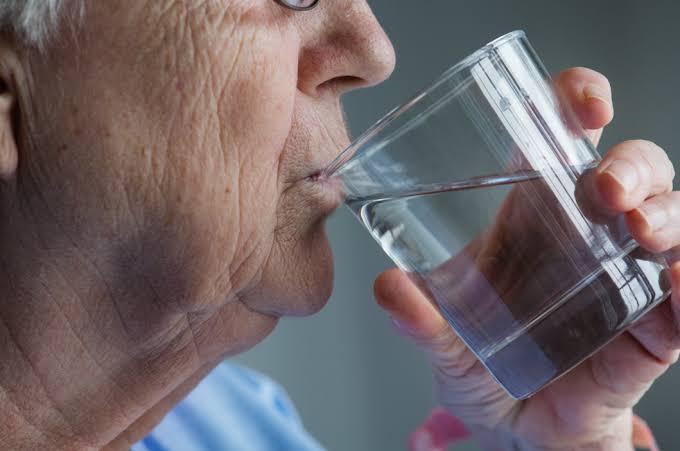
Fluid Restriction in CKD: Targets by Stage
Fluid restriction recommendations are individualized based on kidney function, urine output, cardiac status, and measured fluid balance. The general framework below represents starting points for discussion with the care team, not fixed prescriptions.
CKD stages 1–3: Routine fluid restriction is generally not recommended for patients who are not hypertensive or edematous. The kidneys retain sufficient concentrating and diluting capacity to manage normal variation in fluid intake. The primary dietary intervention at these stages is sodium restriction (1.5–2 g sodium per day), which reduces the osmotic drive for fluid retention and helps control blood pressure without requiring patients to count fluid volumes precisely.
CKD stages 4–5 (pre-dialysis): Fluid restriction typically begins at this stage, particularly if urine output is declining, edema is present, or blood pressure is difficult to control. A starting target of 1.5–2 liters per day is common, adjusted based on urine output (roughly: restrict to urine output + 500–750 mL for insensible losses). Loop diuretics remain effective at these stages and can significantly increase urine output, giving more flexibility in fluid intake while still achieving fluid balance. Preserving residual kidney function at this stage is a priority — it reduces the fluid burden on eventual dialysis initiation and extends the period before dialysis is needed. The broader context of CKD management at advanced stages is addressed in the advanced kidney disease monitoring guide.
Hemodialysis patients: Fluid management becomes the defining challenge of hemodialysis. The standard recommendation is fluid intake of urine output plus 750 mL per day — approximately 1–1.5 liters total for oliguric or anuric patients. The sodium in food drives thirst and fluid retention; achieving sodium restriction of 1.5–2 g/day simultaneously with the fluid target is critical because reducing sodium intake also reduces thirst, making the fluid restriction more manageable. The National Kidney Foundation and NIDDK provide specific guidance on fluid and sodium management for dialysis patients.
Peritoneal dialysis patients: Peritoneal dialysis provides continuous, slow fluid removal throughout the day, giving somewhat more flexibility than hemodialysis’s intermittent large-volume removal. Typical fluid allowances are 1.5–2 liters per day. The peritoneal membrane’s effectiveness at fluid removal varies by patient and decreases over years of treatment; patients who develop high peritoneal transport rates remove less fluid per exchange, requiring tighter restriction or adjusted exchange protocols.
Managing Thirst During Fluid Restriction
Thirst is one of the most difficult aspects of fluid restriction for dialysis and advanced CKD patients. High dietary sodium intake — even within the kidney-friendly sodium restriction — drives osmotic thirst; reducing sodium is therefore the most effective strategy for reducing thirst without requiring willpower alone. Additional strategies that reduce thirst without adding significant fluid volume include: sucking on ice chips (counts toward fluid allowance but produces a disproportionate sensation of relief), using sour candies or citrus to stimulate saliva, practicing good oral hygiene to reduce dry mouth sensation, rinsing the mouth without swallowing, and chewing sugar-free gum.
Fluid choices also matter. High-fluid-content foods — soups, gelatin, ice cream, watermelon — count toward the fluid allowance even though they are eaten rather than drunk. A practical approach is to count everything that is liquid at room temperature as fluid. Conversely, choosing lower-fluid foods (dry proteins, cooked vegetables, bread) over high-moisture foods frees more of the fluid allowance for beverages.
Distributing the fluid allowance across the day, rather than consuming most of it in the morning or with one meal, helps avoid the pronounced thirst that builds when a larger portion of the allowance has already been consumed. Setting alarms for each 200–250 mL portion and keeping a written log of fluid consumed can help patients avoid inadvertently exceeding the allowance before the day is finished. The National Kidney Foundation offers patient-specific guides on fluid management strategies for dialysis patients.
Overhydration, Dialysis, and the “Dry Weight” Concept
Dry weight — the target body weight at which a dialysis patient is in optimal fluid balance — is one of the most clinically important parameters in hemodialysis management. It is defined as the post-dialysis weight at which the patient has neither signs of fluid overload (edema, hypertension, pulmonary congestion) nor signs of volume depletion (low blood pressure, cramping, dizziness). Achieving accurate dry weight requires ongoing reassessment — as patients gain or lose actual body mass (muscle, fat), the target dry weight must be adjusted to distinguish real weight change from fluid change.
Modern dialysis units increasingly use bioimpedance spectroscopy to measure body fluid compartments directly, removing the guesswork of dry weight estimation. Bioimpedance technology can distinguish fluid from tissue, detecting overhydration even in the absence of overt edema. The LANDMARK trial demonstrated that using bioimpedance-guided fluid management reduced GFR decline in CKD patients — evidence that precision fluid management is not just about symptom control but about slowing disease progression. The broader context of protecting kidney function through integrated management is addressed in the guide to slowing kidney disease progression.
Excessive interdialytic weight gain — more than 2–2.5 kg between sessions — forces aggressive ultrafiltration during the dialysis session to remove the accumulated fluid. High ultrafiltration rates cause intradialytic hypotension (blood pressure drops during dialysis), which reduces renal perfusion during the session and is associated with AKI, cardiovascular events, and accelerated loss of residual kidney function. Conversely, inadequate fluid removal — chronic underultrafiltration — results in persistent volume overload with all its associated cardiovascular consequences. The goal is consistent, modest fluid accumulation that can be removed comfortably during each session.
Conclusion
Overhydration and kidney disease form a bidirectional relationship: impaired kidney function reduces the ability to excrete fluid, and chronic fluid overload drives hypertension and cardiovascular damage that accelerates kidney disease progression. For CKD patients in stages 4 and 5, and especially for dialysis patients, fluid management is not a peripheral lifestyle detail but a core component of treatment — as consequential as medication adherence and blood pressure control. Recognizing early signs of fluid overload, understanding the principles of fluid restriction by CKD stage, managing dietary sodium as the primary lever for reducing thirst and fluid retention, and knowing when to seek emergency evaluation for pulmonary edema or severe hyponatremia are the practical competencies that prevent the most serious fluid-related complications of advanced kidney disease.
The Role of Sodium in Fluid Overload: Why Salt Restriction Matters More Than Water
Most patients with CKD hear “restrict your fluids” without understanding that sodium restriction is often the more powerful lever. Sodium and fluid retention are inseparable in CKD because dietary sodium drives osmotic thirst — the more sodium in the diet, the more water the body signals the patient to drink and retain. Reducing sodium intake reduces this osmotic drive, which in turn reduces the volume of fluid the patient needs to restrict. A dialysis patient who achieves a sodium intake of 1.5–2 grams per day will typically find that maintaining a 1–1.5 liter fluid restriction is manageable; the same patient eating 4–5 grams of sodium per day will experience persistent, intense thirst that makes the fluid restriction feel impossible.
Sodium hides in processed foods, restaurant meals, canned goods, condiments, and bread — often without obvious salty taste. Reading nutrition labels for milligrams of sodium per serving is essential; many CKD patients are surprised to find that a single serving of canned soup contains 800–1200 mg of sodium, more than half a day’s allowance. Practical strategies for sodium reduction: choosing fresh or frozen vegetables over canned; selecting low-sodium versions of pantry staples; avoiding adding salt during cooking or at the table; replacing salt with herbs, lemon, garlic, and vinegar for flavor; and eating at home more often than in restaurants where sodium content is rarely disclosed.
The kidney-protective effects of sodium restriction extend beyond fluid management. Lower sodium intake reduces the glomerular filtration pressure driven by high intravascular volume, reduces proteinuria (sodium drives angiotensin-independent mechanisms that increase albumin leak through the glomerular filtration barrier), and improves the effectiveness of blood pressure medications — particularly ACE inhibitors and ARBs, which are less effective in the setting of high sodium intake. The blood pressure and kidney protection guide explains how sodium restriction integrates with antihypertensive therapy to produce better blood pressure control with lower medication doses.
Overhydration vs. Dehydration: Finding the Right Balance in CKD
Managing fluid in CKD is a balance problem with consequences on both sides. Too little fluid causes dehydration and AKI — a risk covered in detail in the context of dehydration-related kidney problems. Too much fluid causes volume overload, hypertension, LVH, and accelerated CKD progression. The ideal is a narrow range that is patient-specific and changes as kidney disease evolves, as cardiac function changes, as residual urine output declines, and as seasons and activity levels alter insensible fluid losses.
The practical implication is that CKD patients need individualized, regularly updated fluid targets — not a single number assigned once and forgotten. At CKD stage 3, the target may be 2 liters with no restriction. By stage 4, it may be 1.5–2 liters with dietary sodium focus. At dialysis initiation, the target drops based on measured urine output. As residual kidney function declines over the first years of dialysis, the target may drop further. Reassessing fluid targets at each nephrology visit — not just when a problem arises — is best practice for proactive CKD management. The comprehensive approach to monitoring kidney function at each stage of CKD is addressed in the guide to slowing kidney disease progression, which places fluid management in the context of the full spectrum of interventions available to CKD patients.
Patients who are uncertain whether their symptoms reflect overhydration or dehydration should not attempt to self-diagnose through fluid manipulation. A same-day contact with the nephrology team for symptom review and a basic metabolic panel — which will show sodium level, BUN, creatinine, and hematocrit — provides the objective information needed to determine which direction the fluid balance has shifted and what intervention is appropriate. Building this communication habit before a crisis develops is one of the most effective safety behaviors for patients navigating the narrow fluid corridor of advanced CKD.
For patients in CKD stages 4–5, a proactive conversation with the nephrologist about individualized fluid targets, sodium goals, and the specific signs that should trigger same-day contact is one of the highest-yield activities in CKD self-management. The advanced CKD care guide provides a framework for these discussions, including questions to raise at each visit about fluid status, medication adjustments, and preparation for dialysis transition. Understanding the specific fluid management strategy recommended for your stage of kidney disease — and knowing it can change as the disease evolves — puts patients in a position to manage fluid balance proactively rather than reactively, reducing the likelihood of the emergency presentations that accelerate kidney function loss. Overhydration and its consequences are among the most preventable complications of advanced CKD when patients and care teams maintain the regular communication and monitoring that allows early correction before fluid excess becomes cardiovascular or respiratory compromise.
Sources: National Kidney Foundation (kidney.org); NIDDK (niddk.nih.gov); American Heart Association (heart.org); Hung SC et al., “Fluid-Related Parameters and All-Cause Mortality in Patients With CKD,” Lancet 2019 (LANDMARK Trial); KDIGO Clinical Practice Guidelines for CKD (2012, 2024); KDOQI Guidelines on Hemodialysis Adequacy.
I never fully understood overhydration and kidney health until I read this. It is refreshing to see an article that acknowledges individual variation rather than one-size-fits-all advice. Appreciate the effort that went into researching and writing this — it shows.
I never fully understood overhydration and kidney health until I read this. The specific numbers and thresholds mentioned are exactly what I needed to understand my results. Will definitely be coming back to this site for more health information.
Bookmarked this article on overhydration and kidney health immediately — going to reference it regularly. I have tried following advice from several sources but this is most consistent with what my specialist told me. Thank you for making complex medical information accessible without dumbing it down.