

Stomach pain after eating is one of the more diagnostically challenging symptoms in primary care — partly because “stomach” in common usage refers loosely to the entire abdomen, and partly because so many different conditions produce post-meal pain through entirely different mechanisms. The location and timing of pain after eating carry the most diagnostic weight. Pain in the upper middle abdomen within 30 minutes of eating points toward different causes than pain in the right upper quadrant starting 60 to 90 minutes after a fatty meal, which points toward different causes than cramping in the lower abdomen followed by an urgent bowel movement. This guide organizes post-meal stomach pain by location and timing — because that framing matches how the differential diagnosis is actually built, and helps both patients and clinicians communicate about symptoms more precisely. For related discussion of nausea after eating, see nausea after eating: possible causes.
Epigastric Pain After Eating
Epigastric pain — in the upper middle abdomen, below the sternum and above the navel — is the most common location for post-meal abdominal pain in adults. The organs in this region whose function is most directly affected by eating include the stomach, duodenum, pancreas, and lower esophagus.
Functional dyspepsia with postprandial distress syndrome (PDS) is the most common cause of chronic epigastric pain and discomfort after eating in adults — affecting an estimated 10 to 20 percent of adults globally, with the majority having no structural abnormality on endoscopy. The hallmark features are upper abdominal discomfort, early satiety (feeling uncomfortably full after a small amount of food), post-meal fullness, and sometimes nausea — all triggered or worsened by eating. The pain typically begins during the meal or within 30 minutes. The mechanism involves impaired gastric accommodation (the stomach failing to relax to receive incoming food), visceral hypersensitivity (an amplified pain response to normal gastric distension), and sometimes disordered gastric emptying. For a deeper discussion of functional dyspepsia, see indigestion: symptoms, causes, and relief options. Peptic ulcer disease produces epigastric pain with a timing pattern that differs by ulcer location. Gastric ulcer pain classically worsens with eating — food stimulates acid secretion and contacts the ulcer. Duodenal ulcer pain peaks 1 to 3 hours after eating (when the meal-buffered acid is cleared and the duodenum is again exposed to concentrated acid), may be temporarily relieved by eating or antacids, and often wakes the patient at night (2 to 3 AM). Both patterns respond to H. pylori eradication when H. pylori is the cause and to acid suppression. H. pylori testing by urea breath test or stool antigen is the preferred non-invasive approach; endoscopy is indicated for alarm features, treatment failure, or when biopsy is needed. Gastritis — inflammation of the gastric mucosa from H. pylori, NSAIDs, alcohol, or autoimmune disease — produces diffuse epigastric discomfort and burning, post-meal nausea, and early satiety. The pain typically has less distinct meal-timing than peptic ulcer disease and is more constant. GERD and esophagitis can produce epigastric burning that is most prominent after large meals, fatty foods, or when lying down — occasionally confused with cardiac chest pain. For detailed GERD management, see GERD: a simple guide for adults. Acute pancreatitis produces severe epigastric pain radiating to the back — often described as boring or band-like — typically beginning 30 to 60 minutes after a large fatty meal or alcohol ingestion. It is accompanied by nausea and vomiting and elevated serum lipase. This pattern requires emergency evaluation. Chronic pancreatitis causes a similar post-meal epigastric pain pattern of lesser severity, often with fat malabsorption (steatorrhea) and sometimes diabetes from progressive pancreatic insufficiency.
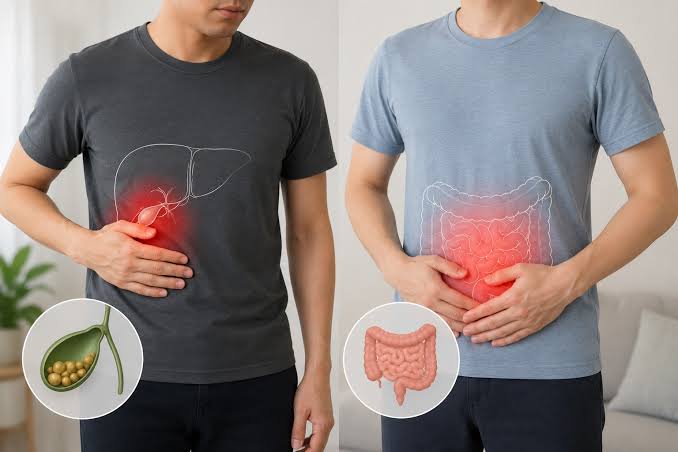
Right Upper Quadrant Pain After Eating
Right upper quadrant (RUQ) pain that is triggered or worsened by eating — particularly by fatty or large meals — strongly suggests a biliary or hepatic cause. The gallbladder and bile ducts respond directly to fat intake through cholecystokinin-mediated contraction, making post-fatty-meal timing one of the most diagnostically specific patterns in abdominal pain.
Biliary colic occurs when a gallstone transiently obstructs the cystic duct during gallbladder contraction. The pain is characteristically severe, steady rather than colicky in quality (despite the name), begins in the RUQ or epigastrium, may radiate to the right shoulder or scapula, and lasts 30 minutes to 6 hours before resolving — either because the stone falls back out of the cystic duct or because gallbladder contraction subsides. It is accompanied by nausea and often vomiting. Biliary colic resolves completely between episodes — sustained pain lasting more than 6 hours suggests progression to cholecystitis. The most common dietary trigger is a fatty or heavy meal, though episodes can occur with any meal. Abdominal ultrasound is the first-line imaging — it identifies gallstones with over 95 percent sensitivity. Laparoscopic cholecystectomy is the definitive treatment for symptomatic cholelithiasis. Acute cholecystitis develops when a gallstone causes sustained obstruction of the cystic duct, leading to gallbladder wall inflammation. Unlike biliary colic, the pain of acute cholecystitis persists rather than resolving — lasting more than 6 hours, accompanied by fever, a positive Murphy’s sign (sudden cessation of inspiration on deep palpation of the RUQ), and elevated inflammatory markers. It requires hospitalization, IV antibiotics, and cholecystectomy. Biliary dyskinesia — impaired gallbladder contractility without gallstones, diagnosed by HIDA scan showing a gallbladder ejection fraction below 35 percent with CCK stimulation — produces post-meal RUQ pain and nausea that is identical in pattern to biliary colic but without stones visible on ultrasound. Hepatic causes of post-meal RUQ pain are less common but include hepatomegaly from congestive heart failure or hepatitis causing right-sided fullness and discomfort, particularly after large meals that expand the stomach upward. The NIDDK gallstones patient guide provides a comprehensive overview of biliary symptoms and evaluation.
Lower Abdominal Pain After Eating
Lower abdominal pain occurring after eating most commonly reflects motility-driven responses — the gastrocolic reflex triggered by food entering the stomach stimulates colonic contractions, producing pain in patients with IBS or IBD in whom those contractions are abnormally strong or produce mucosal inflammation.
Irritable bowel syndrome (IBS) is the most common cause of post-meal lower abdominal pain. The gastrocolic reflex in IBS patients produces abnormally intense colonic contractions and visceral hypersensitivity — resulting in cramping, lower abdominal pain, and bowel urgency that typically begins 20 to 60 minutes after eating. The pain is usually relieved (at least temporarily) after a bowel movement. IBS is characterized by its pattern — recurrent abdominal pain at least once per week for 3 months, related to bowel function changes — rather than by a structural abnormality. For a discussion of IBS in context, see common digestive problems in adults. Inflammatory bowel disease (IBD) — Crohn’s disease and ulcerative colitis — produces post-meal pain from inflamed bowel being stimulated by food passage. Crohn’s disease most commonly affects the terminal ileum and produces right lower quadrant pain 30 to 60 minutes after eating, often with diarrhea. Ulcerative colitis involves the colon and rectum and produces cramping left lower quadrant pain with bloody, mucous diarrhea — often with urgency. Key distinguishing features from IBS include: blood in stool, nocturnal diarrhea, weight loss, elevated inflammatory markers (CRP, fecal calprotectin), and family history. Mesenteric ischemia is a rare but dangerous cause of post-meal abdominal pain in elderly or vascular patients. Chronic mesenteric ischemia (“intestinal angina”) occurs when atherosclerotic narrowing of the mesenteric arteries produces pain 15 to 60 minutes after eating — because the blood flow required to supply the active small bowel after a meal cannot be delivered through narrowed vessels. The classic triad is post-meal pain, weight loss (because patients stop eating to avoid pain), and evidence of vascular disease. The pain is typically central or periumbilical and often severe. Any elderly patient with weight loss and consistent post-meal pain warrants vascular evaluation, as untreated chronic mesenteric ischemia can progress to acute mesenteric ischemia — a surgical emergency with high mortality.
Red Flags That Require Prompt Evaluation
Most post-meal stomach pain has a benign or functional cause and can be evaluated electively. However, several accompanying features should prompt urgent or emergency evaluation because they indicate potentially serious underlying conditions.
Seek evaluation urgently when post-meal stomach pain is accompanied by: fever — which in combination with RUQ pain suggests acute cholecystitis or cholangitis (fever plus RUQ pain plus jaundice = Charcot’s triad, a biliary emergency); severe pain that is constant and worsening rather than episodic — which suggests acute inflammation or ischemia rather than functional cramping; pain radiating to the back with nausea and vomiting after a fatty meal or alcohol — which is the pancreatitis pattern and requires emergency evaluation; unintentional weight loss — which suggests malignancy (gastric, pancreatic, colon), mesenteric ischemia, or severe IBD; GI bleeding signs — hematemesis (vomiting blood), coffee-ground vomitus, melena (black tarry stools), or rectal bleeding — which require urgent upper or lower endoscopy; progressive difficulty swallowing — which suggests esophageal or gastric malignancy; or severe pain in an elderly patient with known cardiovascular disease, out of proportion to physical exam findings — which is the classic description of mesenteric ischemia. The ACG patient resource on abdominal pain covers the alarm feature framework and when to seek evaluation.
How Post-Meal Stomach Pain Is Evaluated
The evaluation of post-meal stomach pain follows a systematic approach guided by the symptom pattern, location, and associated features. A careful history often narrows the differential to two or three possibilities before any test is ordered.
Laboratory evaluation typically includes complete blood count (CBC), comprehensive metabolic panel including liver enzymes, lipase and amylase, H. pylori testing (breath or stool antigen), C-reactive protein and erythrocyte sedimentation rate (inflammatory markers for IBD), and thyroid function. For suspected celiac disease, tissue transglutaminase IgA antibody testing is added. Imaging: right upper quadrant ultrasound is first-line for RUQ pain — it identifies gallstones, biliary duct dilation, and liver abnormalities with high sensitivity. CT abdomen and pelvis with contrast is used for severe acute pain, suspected mesenteric ischemia, or when ultrasound is non-diagnostic. CT angiography or MR angiography of the mesenteric vessels is indicated when mesenteric ischemia is clinically suspected. Endoscopy: upper GI endoscopy (EGD) is indicated for alarm features, epigastric pain not responding to empiric therapy, H. pylori treatment follow-up, and suspected Barrett’s esophagus. Colonoscopy is indicated for lower abdominal pain with IBD features, rectal bleeding, or iron-deficiency anemia. Gastric emptying scintigraphy is the test for gastroparesis when the symptom pattern (early satiety, post-meal fullness and nausea, delayed vomiting) is present. The Mayo Clinic’s stomach pain causes guide provides a patient-oriented overview of the differential and evaluation approach.
Managing Stomach Pain After Eating
Management depends entirely on the identified cause. However, several general principles apply while evaluation is ongoing or for functional causes confirmed by symptom pattern.
For functional causes (functional dyspepsia, IBS): meal size reduction and spacing meals throughout the day reduces gastric distension and gastrocolic reflex intensity. A low-FODMAP dietary trial reduces post-meal pain in IBS. Peppermint oil (enteric-coated) reduces colonic spasm in IBS with modest evidence. Low-dose tricyclics or neuromodulators reduce visceral hypersensitivity in functional dyspepsia. For biliary causes: a low-fat diet reduces the frequency and severity of biliary colic episodes pending cholecystectomy — it does not treat the stones but reduces the stimulus for gallbladder contraction. Definitive treatment is laparoscopic cholecystectomy. For peptic ulcer disease: H. pylori eradication (if present) heals most peptic ulcers and prevents recurrence. NSAID avoidance and PPI therapy are used for NSAID-induced ulcers. For pancreatitis: acute pancreatitis requires hospital management — bowel rest, IV fluids, pain management, and identification of the precipitating cause. Chronic pancreatitis management centers on pain management, pancreatic enzyme supplementation for exocrine insufficiency, and diabetes management. For mesenteric ischemia: definitive management requires vascular intervention — revascularization by stenting or surgical bypass of the mesenteric vessels. Medical management alone is not sufficient for symptomatic chronic mesenteric ischemia.
Frequently Asked Questions
Why does my stomach hurt right after I eat?
Pain that begins during a meal or within 30 minutes most commonly reflects functional dyspepsia with impaired gastric accommodation — the stomach failing to relax appropriately to receive food. It can also reflect GERD (acid stimulated by the meal reaching an inflamed lower esophagus), food intolerance (gluten in celiac disease, lactose in lactose intolerance), or anxiety-related gut motility changes. If it occurs consistently with certain foods, a food and symptom diary helps identify the pattern. If it is persistent and affecting your eating habits, evaluation by a clinician is appropriate.
Why do I get stomach pain 30 to 60 minutes after eating?
Pain in this window is most commonly from biliary colic (gallbladder pain 30 to 90 minutes after fatty meals, with RUQ location and radiation to the shoulder), gastric ulcer (pain worsened by eating), or early functional dyspepsia. Acute pancreatitis also typically begins in this window after a fatty meal or alcohol ingestion, with severe epigastric pain radiating to the back. Any severe, new-onset pain in this window — particularly with nausea, vomiting, and back radiation — requires prompt evaluation.
Why do I get cramping and diarrhea after eating?
Post-meal cramping followed by diarrhea or urgent bowel movements is the classic pattern of IBS — the gastrocolic reflex that normally occurs after eating is amplified in IBS patients, producing strong colonic contractions and visceral pain. IBD (Crohn’s disease or ulcerative colitis) can produce a similar pattern but typically involves additional features: blood in stool, nocturnal diarrhea that wakes from sleep, fever, weight loss, and elevated inflammatory markers. Functional diarrhea and IBS are managed conservatively; IBD requires specific anti-inflammatory therapy.
Can stress cause stomach pain after eating?
Yes — chronic stress activates the hypothalamic-pituitary-adrenal axis and the enteric nervous system simultaneously, producing abnormal gut motility, increased visceral sensitivity, and altered gastric accommodation. Many adults with anxiety or chronic stress report consistent post-meal abdominal pain — particularly in the epigastric and periumbilical regions — that improves significantly when stress levels decrease or anxiety is treated. This is a genuine physiological effect of stress on gut function, not simply a psychological interpretation of normal sensation.
When is stomach pain after eating serious enough to see a doctor?
See a clinician when: post-meal stomach pain is severe, occurs after most or every meal, or has been present for more than 2 to 3 weeks; pain is accompanied by fever, weight loss, vomiting, or changes in bowel habits; you notice blood in vomit or stool, or black tarry stools; pain is severe and accompanied by back radiation; or pain in the RUQ is episodic and associated with fatty meals — which may indicate gallbladder disease requiring imaging. Pain that interrupts sleep, worsens progressively, or is associated with constitutional symptoms (fatigue, weight loss, fever) always warrants evaluation.
Sources: Rome IV Functional Gastrointestinal Disorders Criteria; National Institute of Diabetes and Digestive and Kidney Diseases (NIDDK); American College of Gastroenterology (ACG); American Gastroenterological Association (AGA); Mayo Clinic.
Stomach Pain After Eating — The Role of Food Composition
Beyond the location and timing of post-meal pain, the composition of the triggering meal provides additional diagnostic information. Different macronutrients, food categories, and preparation methods stress different parts of the GI system, and understanding which foods consistently trigger or worsen pain helps both narrow the differential and inform dietary management pending definitive evaluation.
High-fat meals are the most potent trigger for biliary colic and pancreatitis-related post-meal pain. Fat intake stimulates the release of cholecystokinin (CCK), which causes gallbladder contraction, increases pancreatic enzyme secretion, and relaxes the lower esophageal sphincter — explaining why high-fat meals worsen both biliary pain and GERD. Adults who consistently develop post-meal pain specifically after fatty foods — fried foods, red meat, full-fat dairy, avocado in large amounts — should have gallbladder and biliary anatomy evaluated with abdominal ultrasound before other testing. Fat also delays gastric emptying, which worsens gastroparesis symptoms and increases the gastric acid volume available for peptic ulcer disease. A practical initial step for adults with post-meal RUQ or epigastric pain is a 2-week trial of strict fat restriction — if pain frequency decreases substantially during this period, a biliary cause is strongly suggested and ultrasound is indicated.
Gluten-containing foods produce post-meal pain, bloating, and diarrhea in adults with celiac disease — through small bowel inflammatory damage and malabsorption — and in adults with non-celiac gluten sensitivity through mechanisms that are less clearly defined but may involve innate immune activation. Celiac disease is consistently underdiagnosed in adults; the classic presentation of severe diarrhea, weight loss, and malabsorption represents only a subset of cases, and many adults have predominant symptoms of post-meal discomfort and bloating without prominent diarrhea. Anti-tissue transglutaminase IgA antibody testing is appropriate before a gluten elimination trial, since testing requires ongoing gluten consumption to remain accurate. A positive result leads to duodenal biopsy for confirmation.
Fermentable carbohydrates (FODMAPs) — fermentable oligosaccharides, disaccharides, monosaccharides, and polyols — are rapidly fermented by colonic bacteria, producing gas and osmotic fluid shifts that cause bloating, cramping, and diarrhea in individuals with IBS and increased visceral sensitivity. Foods high in FODMAPs include wheat, onions, garlic, legumes, dairy (lactose), high-fructose fruits, and artificial sweeteners. A low-FODMAP dietary trial, typically conducted over 4 to 6 weeks under dietitian guidance, reduces post-meal GI symptoms in approximately 70 percent of IBS patients. The trial involves restriction of high-FODMAP foods followed by systematic reintroduction of food categories to identify individual triggers — since FODMAP tolerance varies widely and blanket avoidance long-term is nutritionally unnecessarily restrictive.
Large meal volume and rapid eating are independent triggers for post-meal pain through several mechanisms: large volumes distend the stomach more than the gastric fundus can accommodate, triggering transient LES relaxations (which worsen GERD and produce epigastric burning), increasing TLESR frequency, and amplifying visceral perception of distension in patients with functional dyspepsia. Rapid eating reduces chewing-mediated digestive prework, increases the rate of gastric filling, and reduces the satiety signals from oral chewing and pharyngeal passage — leading to overconsumption before satiety is perceived. Eating smaller, more frequent meals spaced through the day reduces post-meal pain significantly in functional dyspepsia and gastroparesis patients, independently of food composition. Eating slowly and chewing thoroughly reduces post-meal bloating and epigastric discomfort in most patients with functional upper GI symptoms.
Coffee and caffeinated beverages stimulate gastric acid secretion through adenosine receptor blockade and may worsen both GERD and peptic ulcer disease in susceptible patients. Coffee also increases gastric motility — an effect that can produce post-meal urgency and cramping in IBS patients — and relaxes the LES, worsening reflux. The effect is dose-dependent and individual variation is large. A 2-week reduction or elimination of caffeinated beverages is a reasonable trial in adults with unexplained post-meal epigastric discomfort or aggravated GERD before initiating pharmacological treatment.
Post-meal stomach pain often improves substantially with systematic dietary changes and identification of the underlying cause. Most functional causes respond to conservative measures; structural causes require appropriate medical or surgical treatment. The key is not to tolerate ongoing post-meal pain as inevitable — most causes are identifiable and most respond to targeted treatment once correctly diagnosed.
The biliary colic description finally explained something I’ve been dealing with for two years. Episodic severe pain, always after a big meal, lasting a few hours then completely gone — I’d been told it was GERD and given PPIs that didn’t help at all. The RUQ location and fatty meal trigger you described here is exactly my pattern. Getting an ultrasound scheduled.
Thank you for sharing that, Patricia — the GERD misdiagnosis for biliary colic is extremely common, because both produce upper abdominal discomfort and both can be made worse by eating. The key distinctions — episodic complete resolution between attacks, RUQ or right-sided pain rather than central burning, and specific fatty meal trigger — point clearly toward a biliary cause. An ultrasound is exactly the right first step and will usually provide a definitive answer.
I appreciated the section on mesenteric ischemia. My father is 74 with significant vascular disease and has been avoiding food because of post-meal pain. He’s lost about 15 pounds over the last few months. Based on this article, those are classic warning signs and I’m taking him in this week. I wouldn’t have connected the dots without this.