
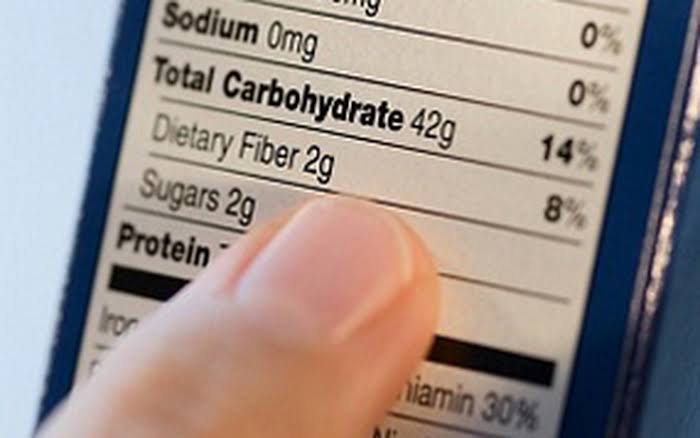
Understanding reading food labels for liver and digestive health transforms grocery shopping from guesswork into targeted decision-making — allowing you to identify hidden sugars that drive hepatic fat accumulation, emulsifiers that disrupt the intestinal mucus layer, artificial sweeteners that alter the gut microbiome, and misleading fibre claims that inflate apparent nutritional value. Food packaging is designed primarily to sell products, and the regulatory requirements for labelling, while meaningful, leave significant room for presentations that obscure the information most relevant to gut and liver health. Learning to decode the specific label elements that matter for digestive and hepatic wellbeing gives you a systematic advantage in every supermarket aisle.
- The ingredients list is more informative than the nutrition panel — it reveals what the food actually contains, in what order, and what additives are present
- Added sugars under 56+ different names (including all “-ose” sugars, corn syrup, dextrin, maltodextrin, fruit juice concentrates) are the most important label feature for liver health — any product with sugar in the first 3 ingredients should be treated as high-sugar
- Emulsifiers (carboxymethylcellulose E466, polysorbate 80 E433, carrageenan E407) in ingredients lists are the most directly gut-disruptive food additives — linked to disruption of the intestinal mucus layer and bacterial translocation
- Fibre claims require scrutiny — “added fibre” from chicory root (inulin) or other isolated fibres is not equivalent to naturally occurring whole food fibre; only whole grain fibre in the first ingredient provides the full digestive benefit
- Artificial sweeteners (aspartame E951, saccharin E954, sucralose E955, acesulfame K E950) disrupt gut microbiome diversity — products sweetened with these are not gut-neutral despite being sugar-free
The Two Distinct Label Reading Tasks
Effective food label reading for digestive and liver health requires two separate analyses: the nutrition panel (the quantitative table showing energy, fat, carbohydrates, sugar, protein, fibre, and salt per 100g and per serving) and the ingredients list (the qualitative list of everything in the product, ranked by weight). These two label elements answer different questions. The nutrition panel tells you how much of the key macronutrients are present; the ingredients list tells you what those macronutrients actually are and what else the product contains that doesn’t appear in the standard nutrition categories.
Most people who read labels focus almost exclusively on the nutrition panel, particularly calorie, fat, and carbohydrate content. For digestive and liver health specifically, the ingredients list is frequently the more important of the two — it reveals sugar types, emulsifier codes, artificial sweetener names, fibre sources, and additive profiles that determine a food’s gut and liver impact far more precisely than headline macronutrient numbers.
Reading the Ingredients List: What to Look For
The Ingredient Order Rule
By law in most countries, ingredients must be listed in descending order by weight — the first ingredient is the one present in the largest quantity, and the last ingredient is present in the smallest amount. This single fact makes the first 3 ingredients the most important information on any food label. A “wholegrain bread” that lists enriched wheat flour first and wholegrain wheat flour third is predominantly refined flour with a token whole grain addition; a genuinely whole grain bread lists wholemeal flour or whole wheat flour as its first ingredient. A “low-sugar yoghurt” that lists sugar or syrup as its second ingredient after milk is not meaningfully low in sugar.
The practical rule: if sugar, refined flour, or vegetable oil appears in the first 3 ingredients of any packaged food, treat it as a high-sugar or high-refined-fat product regardless of health claims on the front of the pack.
The 56+ Names for Added Sugar
Added sugar is disguised under dozens of different names across food labels, allowing manufacturers to list multiple small amounts separately rather than one large total that would rank sugar high in the ingredients order. The most important sugar names to recognise:
- All “-ose” sugars: sucrose, fructose, glucose, dextrose, maltose, galactose, lactose — all are sugars. Fructose and sucrose (which contains fructose) are the most relevant for liver health — they drive hepatic de novo lipogenesis at high intakes
- Syrups: high-fructose corn syrup (HFCS), corn syrup, rice syrup, maple syrup, agave syrup, golden syrup, malt syrup, barley malt syrup — all are added sugars; agave is exceptionally high in fructose (up to 85%)
- Fruit-derived sugars: fruit juice concentrate, apple juice concentrate, date syrup, grape juice, fruit juice — despite sounding natural, these are concentrated sources of fructose that the liver processes identically to refined sucrose
- Other names: maltodextrin, dextrin, treacle, muscovado, panela, coconut sugar, turbinado, demerara, honey — all are added sugars; coconut sugar and honey are sometimes marketed as “healthy” but have equivalent fructose content to refined sugar
- Sugar alcohols with caloric content: maltitol, xylitol, sorbitol, erythritol — these are polyols; they contribute fewer calories than sugar but can cause osmotic diarrhea at moderate intakes and should not be assumed gut-neutral (though erythritol is the best-tolerated). For the evidence on how sugar and fructose affect liver health, see our article on sugar and gut health
Practical rule: if you count more than 2 separate sugar names in an ingredients list, the combined sugar content is likely higher than any single listing suggests. The total sugar figure on the nutrition panel gives the actual gram amount regardless of how many names it appears under.
Emulsifiers: The Most Gut-Disruptive Food Additives
Emulsifiers are surfactants added to processed foods to bind oil and water phases that would otherwise separate, extending shelf life and improving texture. They are widespread in packaged biscuits, breads, ice cream, salad dressings, spreads, processed meats, and dairy alternatives. Two specific emulsifiers have been identified in peer-reviewed research as directly disrupting gut barrier function:
Carboxymethylcellulose (CMC, E466): A 2015 study published in Nature (Chassaing et al.) demonstrated that CMC at doses achievable through normal food consumption in mice disrupted the colonic mucus layer, altered gut microbiome composition (reducing diversity and increasing proximity of bacteria to the epithelium), and promoted low-grade intestinal inflammation. A human clinical trial by the same group published in Gastroenterology in 2022 confirmed these effects in people — CMC consumption led to reduced microbiome diversity and increased markers of intestinal inflammation within 11 days.
Polysorbate 80 (P80, E433): The same research group demonstrated that polysorbate 80 similarly disrupted the mucus layer and altered microbiome composition, with the combination of CMC and P80 producing more severe effects than either alone. These two emulsifiers appear in many processed foods labelled as E466 and E433 respectively on European labels.
Other emulsifiers to note: Carrageenan (E407) — derived from red seaweed, found in dairy alternatives, processed deli meats, and some yoghurts — has evidence for promoting intestinal inflammation through Toll-like receptor signalling. Lecithin (E322, usually from soy or sunflower) appears to be among the safer emulsifiers, with less evidence for gut disruption. Mono- and diglycerides (E471, E472) are very widespread emulsifiers in breads, spreads, and bakery products with less direct gut evidence than CMC/P80 but produced industrially from partially hydrogenated fats in some products, potentially containing trace trans fats. For the comprehensive evidence on emulsifiers and gut health, see our article on ultra-processed foods and digestion.
Practical rule: scan ingredients lists for E466, E433, E407, or their written names (carboxymethylcellulose, polysorbate 80, carrageenan). Products containing these should be avoided or limited for gut health. Products containing only lecithin (E322) as their emulsifier are lower risk.
Artificial Sweeteners: Not Gut-Neutral
Products marked “no added sugar,” “sugar-free,” or “diet” typically substitute sugar with artificial sweeteners. The main artificial sweeteners used in packaged foods and beverages are:
- Aspartame (E951): Found in diet soft drinks, sugar-free chewing gum, and many “light” products. A 2022 Cell study found aspartame consumption at amounts below the acceptable daily intake altered gut microbiome composition unfavourably, reducing beneficial Akkermansia muciniphila populations
- Saccharin (E954): Found in some diet soft drinks and tabletop sweeteners. Demonstrated in multiple studies to alter gut microbiome composition, potentially impairing glucose tolerance through microbiome-mediated mechanisms
- Sucralose (E955): Widely used in “no sugar” baked goods, protein bars, and beverages. Studies have shown sucralose reduces total viable gut bacteria counts and alters the ratio of beneficial to potentially pathogenic species
- Acesulfame-K (E950): Often paired with aspartame in diet products; has shown similar microbiome-disrupting effects in animal studies
- Stevia (E960) and erythritol (E968): Have better gut tolerability profiles — stevia’s main components appear to have minimal microbiome effects, and erythritol is the best-tolerated polyol. However, high erythritol intakes can cause osmotic diarrhea
Practical rule: for gut health, products sweetened with small amounts of actual sugar, honey, or maple syrup are preferable to products sweetened with E951, E954, or E955. “Sugar-free” does not mean “gut-neutral.”
Preservatives and Nitrates
Sodium nitrite (E250) and sodium nitrate (E251) are preservatives used in processed meats (bacon, sausages, ham, salami, deli meats) that are converted to N-nitroso compounds in the gut — direct gut carcinogens associated with colorectal cancer risk at high intakes. Processed meats are independently associated with gut microbiome disruption and colorectal cancer risk. These E-numbers appearing in any meat product are a signal to limit that product regardless of other nutritional qualities. Sulphites (E220–E228) used as preservatives in some wines, dried fruits, and packaged foods can exacerbate IBS symptoms in sensitive individuals.
Reading the Nutrition Panel: What the Numbers Mean
Sugar: Total vs. Added
The “sugars” line in the nutrition panel shows total sugars — including naturally occurring sugars (lactose in milk, fructose in fruit) as well as added sugars. This makes the raw sugar number potentially misleading: plain yoghurt shows approximately 5g sugar per 100g from lactose (a naturally occurring sugar that does not drive hepatic lipogenesis in the same way as added fructose), while a “low-fat” yoghurt flavoured with fruit may show 8g sugar from added sucrose. The ingredients list clarifies which is which: plain yoghurt should list only “milk” and “live cultures”; any yoghurt with “sugar,” “syrup,” or any of the sugar names above in its ingredients list has significant added sugar regardless of the total sugar figure.
For liver health specifically, the sugar figure on the nutrition panel is less informative than the ingredients list identification of fructose-containing sugars. A food with 15g total sugar predominantly from lactose (dairy) and fruit (in whole food form) is very different metabolically from a food with 15g total sugar from sucrose or HFCS. For the evidence on fructose and NAFLD, see our article on fatty liver meal planning.
Fibre: Meaningful vs. Illusory
Fibre content on the nutrition panel requires careful interpretation. There are two very different scenarios that can produce a “high fibre” label claim:
Naturally occurring whole food fibre: A product where wholegrain flour is the first ingredient and the fibre content is 5–10g per serving — this represents the full prebiotic, gut-motility-supporting, microbiome-feeding dietary fibre with the full structural plant matrix intact. This is what the evidence on fibre and digestive health refers to.
Isolated fibre additions: Inulin (from chicory root), soluble corn fibre, pea fibre, or oat fibre added to otherwise refined-flour products — these isolated fibres inflate the fibre number on the nutrition panel and may support a “high fibre” front-of-pack claim while the product is still predominantly refined carbohydrate. Some isolated fibres (particularly inulin and chicory root extract) can worsen bloating in IBS patients and are not equivalent to naturally occurring fibre in their prebiotic effects. Check the ingredients list: if the first grain ingredient is refined flour and “chicory root extract,” “inulin,” or “soluble fibre” appears separately later in the list, the fibre content is partly artificial and the product is not a genuine whole grain choice. For the evidence on whole grain fibre versus isolated fibre, see our article on whole grains and digestion.
Saturated Fat: The Liver-Relevant Fat Metric
The total fat figure on the nutrition panel is less informative for liver health than the saturated fat breakdown. Unsaturated fats (from nuts, seeds, olive oil, and oily fish) are hepatoprotective; saturated fat promotes hepatic ceramide synthesis and NAFLD progression. A product with 15g total fat but only 2g saturated fat (e.g., a handful of mixed nuts) is very different from a product with 15g total fat and 10g saturated fat (butter or coconut oil). For liver health, look specifically at the saturated fat figure: aim for products with ≤3g saturated fat per 100g, and treat any product exceeding 10g saturated fat per 100g as high-saturated-fat regardless of total fat content.
Salt: The IBS and Blood Pressure Consideration
High sodium intake is relevant for both digestive health (excess sodium alters gut microbiome composition, favouring sodium-tolerant pathogenic species) and broader cardiovascular health. Look for ≤0.3g salt per 100g for low-salt products; avoid products with ≥1.5g salt per 100g as daily staples. Canned legumes and tinned fish are often high in salt — rinsing with water reduces sodium content by approximately 40% and makes these otherwise gut-healthy foods more appropriate for daily use.
Front-of-Pack Claims: What They Mean and What They Don’t
“Wholegrain”: Requires only a minimum percentage of wholegrain content in most regulatory frameworks — not that the product is predominantly whole grain. Check the first ingredient in the ingredients list. Only products with wholemeal, whole wheat, or wholegrain flour as the first grain ingredient are genuinely whole grain. For IBS management, this matters especially — a product labelled “wholegrain” with added inulin can worsen bloating. For IBS-specific dietary guidance, see our article on IBS diet: a practical guide.
“Low fat”: ≤3g fat per 100g (EU regulation). Low-fat products frequently compensate for reduced fat with added sugar or thickeners — check the sugar content and ingredients list when buying low-fat alternatives.
“No added sugar”: Means no sugar was added during production — but the product may contain naturally occurring sugars, fruit juice concentrates (which are effectively added sugar despite the “natural” source), or artificial sweeteners. Always check the ingredients list for sugar names and sweetener codes.
“High fibre”: ≥6g fibre per 100g (EU regulation) or ≥6g per serving (UK). This claim can be achieved with isolated added fibres — check that whole grain flour is the first ingredient to verify genuine whole food fibre content.
“Probiotic”: This claim is regulated differently across countries. In the EU, no food is permitted to carry a “probiotic” health claim due to lack of approved claims under EFSA. In other regions, the claim requires only a minimum viable bacteria count without specification of strains or health effects. For genuine probiotic benefit, look for named bacterial strains (Lactobacillus acidophilus, Bifidobacterium lactis, etc.) on the label and a guaranteed live culture count at end of shelf life, not just at production.
“Natural”: No standard regulatory definition in most markets. Products can carry this claim while containing multiple additives. It has no specific relevance to gut or liver health assessment.
A Practical Label-Reading Framework
For efficient label reading at the supermarket shelf, apply this four-step process taking no more than 30–60 seconds per product:
Step 1 — Ingredients list, first 3 items: Is the first grain ingredient whole grain? Is sugar one of the first 3 ingredients? These two questions determine whether this is fundamentally a whole food product or a refined-ingredient product with health claims.
Step 2 — Scan for red-flag additives: Quickly scan the ingredients list for E466, E433, E407 (gut-disruptive emulsifiers), E250/E251 (nitrates in processed meats), and E951/E954/E955 (artificial sweeteners). If any are present, consider whether this product should be a regular purchase.
Step 3 — Nutrition panel: fibre and saturated fat: Check fibre per serving (≥5g for a meaningful contribution) and saturated fat per 100g (≤3g preferred for liver health). These two figures, combined with the ingredients list review above, give a complete picture of gut and liver relevance.
Step 4 — Sugar total and source: Check the total sugar per serving and cross-reference with the ingredients list to determine whether it is predominantly added sugar (concerning for liver health) or naturally occurring (less concerning in context).
Frequently Asked Questions
Q: Are E-numbers always harmful for gut health?
A: No — E-numbers are simply the EU coding system for approved food additives, and they encompass a huge range of substances with very different safety and gut-health profiles. Ascorbic acid (E300, vitamin C), beta-carotene (E160a), and lecithin (E322) are E-numbers with no gut health concerns at food use levels. The gut-relevant E-numbers to watch are specifically the emulsifiers E466 and E433 (the most researched for gut disruption), E407 (carrageenan), artificial sweeteners E951, E954, E955, and nitrate/nitrite preservatives E250/E251 in processed meats. Learning these specific codes rather than treating all E-numbers as harmful allows for accurate, evidence-based label reading.
Q: Is “per 100g” or “per serving” more useful for comparing products?
A: Per 100g is generally more useful for comparing products against each other (because manufacturers set serving sizes strategically — a product might list a “serving” as 15g when a realistic portion is 50g). Per serving is more useful for understanding actual intake from a realistic portion. The most complete reading uses both: compare per 100g figures between similar products to identify the better choice, then check per serving to understand actual impact at your typical consumption. For fibre specifically, check that the per-serving figure reaches ≥5g with a realistic serving size. A product showing 3g fibre per “30g serving” but being typically consumed at 60g actually delivers 6g fibre per eating occasion.
Q: How do I identify genuinely probiotic yoghurts?
A: Look for: (1) specific bacterial strain names rather than just “live cultures” — strains like Lactobacillus acidophilus, Bifidobacterium animalis lactis BB-12, or Lactobacillus rhamnosus GG named explicitly have the most clinical evidence; (2) guaranteed viability through end of shelf life (some labels only guarantee count at manufacture); (3) plain or very low-added-sugar formulations — high sugar content creates an unfavourable environment for the bacteria and offsets their gut health benefits. The best approach is plain, live culture yoghurt from a reputable dairy brand with named strains — avoid labelling that says only “live cultures” without specifics, as this provides less actionable information. For the evidence on probiotics for IBS and digestive health, see our article on IBS diet: a practical guide.
Q: Is agave syrup a healthier sweetener than sugar for liver health?
A: No — agave syrup is particularly unfavourable for liver health because it contains 55–90% fructose (depending on the product), significantly higher than table sugar (50% fructose). Despite being marketed as a “natural,” “low-glycaemic” alternative to sugar, agave’s high fructose content directly drives hepatic de novo lipogenesis at high intakes — the primary mechanism of NAFLD development. From a liver health perspective, agave syrup is worse than table sugar. When food labels list agave as a sweetener in a product marketed as a healthy alternative to sugar-sweetened products, this is one of the most important label misinterpretations to be aware of. For the evidence on fructose and NAFLD, see our article on fatty liver meal planning.
Q: How do I identify high-FODMAP foods on a label for IBS?
A: FODMAP content is not typically declared on food labels — it requires reference to the Monash University FODMAP database or app, which is the most comprehensive and continuously updated source. However, some FODMAP clues can be identified on labels: fructans are in products with wheat, rye, or barley as first ingredients; high-fructose ingredients (agave, apple juice concentrate, pear juice, honey) signal excess fructose; polyols are declared as sugar alcohols (sorbitol, mannitol, xylitol, maltitol) in the ingredients list; GOS content is found in legume-containing products. “Sugar-free” products frequently replace sugar with polyols that are high-FODMAP and particularly problematic for IBS-D patients — checking ingredients for polyol names is especially important when buying “sugar-free” products. For the full IBS dietary framework, see our article on IBS diet: a practical guide.
Q: What does “enriched” or “fortified” mean on grain products?
A: Enriched and fortified grain products have specific vitamins and minerals added back after the refining process removes them — typically B vitamins (thiamine, riboflavin, niacin, folic acid) and iron for enriched products, plus sometimes additional vitamins and minerals for fortified products. This is nutritionally better than nothing, but it does not restore the fibre that refining removes (which cannot be easily re-added) or the full complement of phytochemicals, polyphenols, and resistant starch present in the original whole grain. “Enriched wheat flour” in an ingredients list confirms the product is made from refined flour with some nutrients added back — it is not a whole grain product. The presence of enrichment is a clear signal that the product is refined, not whole grain.
Q: Should I look at the traffic light system or the nutrition panel numbers?
A: The traffic light front-of-pack labelling system (used in the UK and some other countries) provides a quick visual guide but has limitations for liver and gut health specifically. The traffic light assesses fat, saturated fat, sugar, and salt — but does not indicate fibre content, emulsifier presence, artificial sweetener type, or whole grain status. A product can have green lights for all four categories while containing gut-disruptive emulsifiers (which don’t appear in the traffic light framework) and no meaningful fibre. The traffic light system is a useful quick screen for obvious high-fat, high-sugar, or high-salt products, but it should be a starting point rather than an endpoint. For liver and digestive health specifically, the ingredients list review described above provides information the traffic light system does not.
These product categories most commonly have gut or liver health-relevant label issues worth checking:
- “Wholegrain” or “high-fibre” breads and cereals — may have refined flour first with isolated fibre added later; or high-FODMAP inulin content that worsens IBS bloating
- Flavoured and “light” yoghurts — frequently high in added sugar or contain artificial sweeteners; check for sugar in first 3 ingredients
- Protein bars and snack bars — typically high in artificial sweeteners, sugar alcohols, emulsifiers, and isolated added fibres; often not the gut-healthy snacks they appear
- Plant-based dairy alternatives (oat milk, almond milk) — frequently contain carrageenan (E407), sunflower oil, and added sugars; check ingredients carefully
- Salad dressings and condiments — often contain emulsifiers, sugar, and artificial preservatives in small packages that seem low-risk
- Processed deli meats and sausages — contain nitrites (E250) and often emulsifiers; limit regardless of other nutritional profile
This article is for educational purposes only and does not constitute medical advice. Always consult a qualified healthcare provider for personalised dietary guidance.
- Chassaing B, et al. “Dietary emulsifiers impact the mouse gut microbiota promoting colitis and metabolic syndrome.” Nature. 2015;519(7541):92-96.
- Chassaing B, et al. “Randomized controlled-feeding study of dietary emulsifier carboxymethylcellulose reveals detrimental impacts on the gut microbiota and metabolome.” Gastroenterology. 2022;162(3):743-756.
- Suez J, et al. “Artificial sweeteners induce glucose intolerance by altering the gut microbiota.” Nature. 2014;514(7521):181-186.
- Ruiz-Ojeda FJ, et al. “Effects of sweeteners on the gut microbiota: a review of experimental studies and clinical trials.” Advances in Nutrition. 2019;10(S1):S31-S48.
- Bouvard V, et al. “Carcinogenicity of consumption of red and processed meat.” Lancet Oncology. 2015;16(16):1599-1600.
- Dahl WJ, et al. “Review of the health benefits of peas (Pisum sativum L.).” British Journal of Nutrition. 2012;108(S1):S3-S10.
- Zinöcker MK, et al. “The Western diet–microbiome-host interaction and its role in metabolic disease.” Nutrients. 2018;10(3):365.
- Monteiro CA, et al. “Ultra-processed foods: what they are and how to identify them.” Public Health Nutrition. 2019;22(5):936-941.
- Morin P, et al. “Dietary fibre composition of foods: physicochemical, physiological and analytical aspects.” Food Chemistry. 2014;186:140-152.
- Holscher HD. “Dietary fiber and prebiotics: mechanisms and health benefits.” Gut Microbes. 2017;8(2):172-184.
The section on emulsifiers was genuinely alarming — I had no idea E466 and E433 were specifically researched for gut disruption and that the evidence comes from human clinical trials, not just animal studies. I’ve been buying ‘healthy’ wholegrain products with these additives listed and assumed because the fibre content was good the overall gut impact was good. The point that you can have green traffic lights on all four categories while still having gut-disruptive emulsifiers in the ingredients list captures exactly what I was doing wrong: stopping at the nutrition panel and not reading the actual ingredients. I’m going back through my regular purchases with the ingredient scanning approach this week.
The traffic light / ingredients list gap is one of the most practically important points in the article — and it exists because traffic light labelling was designed primarily to address cardiovascular risk factors (fat, saturated fat, sugar, salt), not gut health specifically. From a cardiovascular risk perspective, the four traffic light categories cover a lot of ground. From a gut health perspective, they miss the two things that matter most: emulsifier identity (which requires reading the E-number or name in the ingredients list) and fibre source (which requires checking whether whole grain flour is the first ingredient or isolated fibre has been added to a refined product). The four-step framework in the article — first 3 ingredients, red-flag additive scan, nutrition panel fibre and saturated fat, then sugar total and source — is designed specifically to catch what the traffic light system doesn’t. It adds perhaps 30–45 seconds per product for unfamiliar items, but for regular weekly shop staples you only need to do it once.
The agave section cleared up something I’ve been confused about for a long time. Agave is sold in every health food shop as a ‘low glycaemic index’ alternative to sugar, and I’ve been buying it for that reason. Learning that it’s 55-90% fructose — more than table sugar — and that the liver processes it the same way as HFCS, and that the low GI comes precisely from the liver doing all the work rather than it going to blood glucose, is the kind of mechanistic explanation that makes the GI framing feel actively misleading for liver health. The piece on fruit juice concentrates in ‘no added sugar’ products follows the same logic: natural source, same fructose metabolic outcome. This reframes a lot of label reading assumptions I had.