

Hip fractures in older adults represent one of the most serious consequences of osteoporosis and one of the most avoidable causes of disability, loss of independence, and premature death in people over 70. In the UK, approximately 75,000 hip fractures occur each year — one every seven minutes — at a cost exceeding £2 billion to the NHS. The statistics are stark: 30-day mortality following a hip fracture is approximately 8–10%; one-year mortality is 20–30%; and fewer than 60% of survivors regain their pre-fracture level of walking ability. For many older adults, a hip fracture is the event that ends independent living. Yet the majority of hip fractures are preventable: they require both low bone density and a fall to occur, and both are addressable through assessment and intervention years before a fracture happens. This guide explains who is at highest risk, what treatment involves, what the realistic recovery trajectory looks like, and — most importantly — what can be done to prevent a hip fracture from occurring in the first place.
Why Hip Fractures Are So Serious
The severity of hip fractures in older adults goes beyond the fracture itself. Several factors combine to make the clinical picture far more complex than a straightforward bone injury in a younger person:
Surgical necessity: The vast majority of hip fractures require surgical fixation within 24–48 hours of admission. Surgery in frail, older patients carries inherent anaesthetic and cardiovascular risks, and many hip fracture patients have multiple comorbidities — heart disease, diabetes, dementia, chronic kidney disease — that increase operative risk.
Immobility complications: The period of immobility before and after surgery carries significant complication risk. Deep vein thrombosis (DVT) and pulmonary embolism (PE), hospital-acquired pneumonia, pressure sores, and urinary tract infections are all substantially elevated in the post-hip-fracture period. These complications — rather than the fracture itself — account for much of the excess mortality.
Delirium: Between 20% and 50% of hip fracture patients develop delirium during admission — acute confusion that is both distressing and a significant independent predictor of worse outcomes, longer hospital stay, and higher mortality. Delirium is driven by pain, sleep disruption, unfamiliar environment, anaesthesia, and polypharmacy, and is particularly common in patients with pre-existing cognitive impairment or dementia.
Pre-existing frailty: Many older adults who sustain hip fractures are already frail before the event — they have reduced physiological reserve, multiple chronic conditions, and reduced functional capacity. A hip fracture in a frail person adds a major surgical and recovery burden onto an already compromised baseline, which is why recovery is so protracted and why full return to pre-fracture function is not achievable for many patients.
Types of Hip Fracture
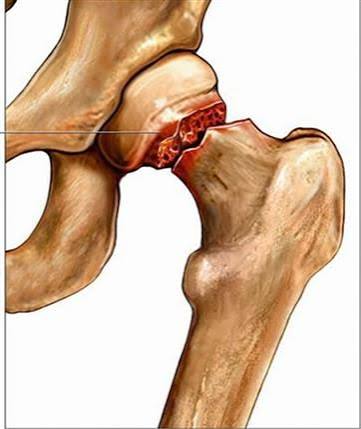
The term “hip fracture” encompasses two anatomically distinct injuries, which have different surgical implications:
Femoral neck fractures occur at the narrow section of the femur just below the femoral head (the ball of the hip joint). Because the blood supply to the femoral head runs through the femoral neck, displaced femoral neck fractures disrupt this blood supply and risk avascular necrosis of the femoral head — the bone dies from lack of blood. For this reason, displaced femoral neck fractures in older adults are typically managed with hemiarthroplasty (replacing the femoral head with a prosthesis) or, in fitter and more active patients, total hip replacement rather than fixation of the fractured bone. Undisplaced femoral neck fractures can often be fixed with screws.
Intertrochanteric fractures occur through the greater or lesser trochanter, below the femoral neck. Blood supply to the femoral head is preserved, so these fractures are typically managed with internal fixation — most commonly a dynamic hip screw (DHS) or an intramedullary nail (IM nail) — rather than joint replacement. Rehabilitation after intertrochanteric fracture is broadly similar to femoral neck fracture management.
Who Is at Highest Risk?
Hip fracture risk reflects the convergence of bone fragility and falls risk. The key risk factors are:
- Age: Hip fracture rates rise steeply from the late 60s. The median age of a hip fracture patient in the UK is approximately 82 years old.
- Female sex: Women account for approximately 75% of hip fractures, reflecting the combined effect of lower peak bone mass, postmenopausal bone loss, and greater longevity.
- Osteoporosis: Low bone density is the primary bone-side risk factor. A T-score of −2.5 or below at the femoral neck substantially increases hip fracture probability.
- Prior fragility fracture: A prior wrist, vertebral, or other fragility fracture approximately doubles future hip fracture risk, reflecting the systemic bone fragility that produced the first fracture.
- Falls history: Two or more falls in the past year, or any fall causing injury, is one of the strongest predictors of hip fracture — because most hip fractures require a fall.
- Cognitive impairment and dementia: Impaired balance, gait disturbance, and increased falls risk make dementia a major independent risk factor for hip fracture. People with dementia account for approximately 25–30% of hip fracture admissions despite being a minority of the population.
- Low body weight (BMI below 20): Lower muscle mass, reduced protective soft tissue padding around the hip, and the association between low weight and lower bone density all contribute.
- Residential or nursing care: Institutionalised older adults have substantially higher hip fracture rates than community-dwelling peers of similar age, reflecting higher baseline frailty.
Our guide to fracture risk: what adults should know covers the FRAX assessment tool that combines these risk factors to estimate individual 10-year fracture probability.
Surgical Treatment — What to Expect
NICE CG124 (Hip fracture: management) recommends that all adults admitted with a hip fracture receive surgery within 24 hours of admission, provided they are medically fit. Delays beyond 48 hours are associated with increased complication rates — particularly pressure sores, DVT, and pneumonia — and higher mortality. The National Hip Fracture Database (NHFD) publishes annual hospital-by-hospital performance data on time to surgery, which drives quality improvement across NHS trusts.
Before surgery, patients receive pain relief (including nerve block techniques that reduce opioid requirement), anticoagulation (to reduce DVT risk), and medical optimisation of any acute problems (fluid balance, anaemia, electrolyte disturbances). Regional anaesthesia (spinal block) is preferred over general anaesthesia where possible, as it is associated with lower complication rates in frail older adults. A geriatrician or physician is involved in perioperative care at most hip fracture units in the UK — the “orthogeriatric” model, which integrates surgical and medical care from admission, is associated with better outcomes than surgical-only management.
After surgery, early mobilisation — ideally weight-bearing on the operated hip within 24 hours where the fixation allows — is the standard of care. Physiotherapy begins the day after surgery in most centres. The goal is to restore the ability to transfer (bed to chair), stand, and walk with a frame as quickly as possible, reducing the immobility-related complication risk and beginning the rehabilitation process. The type of surgical fixation determines how much weight can be borne immediately after surgery: cemented hemiarthroplasty and total hip replacement typically allow full weight-bearing from day one, whereas some internal fixation techniques for femoral neck or intertrochanteric fractures may require a period of partial weight-bearing. The orthopaedic team will specify weight-bearing status for each patient, and the physiotherapy programme is tailored accordingly.
Complications during admission: Even with prompt surgery and good care, complications are common in this age group. DVT occurs in 20–40% of hip fracture patients without anticoagulation (reduced to under 5% with standard anticoagulant prophylaxis). Hospital-acquired pneumonia develops in 5–10%, driven by aspiration risk, immobility, and pain that limits deep breathing. Pressure sores can develop rapidly in immobile patients with impaired skin integrity — regular repositioning and pressure-relieving mattresses are standard nursing interventions from admission. Urinary retention, urinary tract infections, and constipation from opioid analgesia are also common. Each complication extends hospital stay, increases mortality risk, and impairs rehabilitation progress.
Rehabilitation After Hip Fracture
Rehabilitation after hip fracture is a prolonged process — typically measured in months, not weeks — and outcome is strongly influenced by pre-fracture baseline function, age, comorbidities, and the quality of rehabilitation input.
Hospital phase (typically 1–2 weeks): Physiotherapy (mobility and strength work), occupational therapy (function and home assessment), social work assessment (discharge planning, care needs), dietitian input (protein and calorie requirements are elevated in the acute phase post-fracture, and many hip fracture patients are malnourished on admission). The target is to achieve safe mobility for discharge — usually walking with a frame or stick — rather than full recovery, which occurs post-discharge.
Community/rehabilitation phase (weeks 2–12+): Depending on home circumstances and prior function, patients may go directly home with community physiotherapy and occupational therapy, to a step-down rehabilitation bed, or to a temporary care placement. Progressive physiotherapy focuses on restoring walking distance, climbing stairs, and activities of daily living. Occupational therapy addresses adaptations needed at home — a perching stool, raised toilet seat, grab rails, or a temporary hospital-style bed — that allow safe return to independent living. Muscle rebuilding after hip fracture is slow — adequate protein intake (1.2–1.5 g/kg/day in the acute recovery phase) is essential to support muscle regeneration alongside exercise. Older adults who eat poorly during the acute phase often experience greater muscle loss, slower recovery, and higher risk of complications. Our guide to protein and bone strength covers the protein requirements for fracture recovery in detail.
Falls prevention within rehabilitation: Balance retraining is a specific component of hip fracture rehabilitation, not simply an add-on. The fear of falling — which develops in up to 50% of hip fracture survivors — itself impairs recovery by reducing activity and maintaining muscle weakness. A physiotherapist-guided programme that combines progressive strength work with graduated exposure to challenging balance situations (stepping, turning, stair climbing) addresses both the physical and psychological components of fall fear. Our guide to fall prevention and bone health covers the evidence for falls rehabilitation interventions.
Realistic expectations: approximately 50–60% of community-dwelling older adults who sustain a hip fracture regain near-pre-fracture walking ability within 6–12 months. Recovery is better in patients who were more active and less frail before the fracture. Patients with dementia, severe frailty, or major comorbidities have substantially worse functional outcomes.
Secondary Fracture Prevention After a Hip Fracture
A hip fracture is one of the strongest indicators for osteoporosis treatment — the underlying bone fragility that allowed the hip to fracture places the patient at high risk of a second fracture. Yet studies consistently show that fewer than 20% of hip fracture patients receive osteoporosis assessment and treatment without a systematic Fracture Liaison Service (FLS) in place.
Post-hip-fracture management should include: calcium (700–1,200 mg/day) and vitamin D (800–1,000 IU/day) supplementation; initiation of bisphosphonate (typically alendronate or risedronate) or denosumab; DEXA scanning to document baseline BMD; and falls prevention assessment and management. The timing of bisphosphonate initiation after hip fracture surgery has been debated — some early data suggested possible interference with fracture healing from early bisphosphonate use, but more recent evidence and clinical consensus supports initiating bisphosphonate treatment during the hospital admission or within 4 weeks of discharge in most cases. Bisphosphonates reduce subsequent vertebral fracture risk by 40–50% and hip fracture risk by 25–40% in the post-hip-fracture population. Oral bisphosphonates require adequate renal function (eGFR above 35 ml/min/1.73m²); zoledronate (annual IV infusion) is an option when oral bisphosphonates are contraindicated. Our guides to calcium and bone health and vitamin D and bone health cover supplementation guidance. Our guide to bone health after age 60 covers pharmacological treatment options in detail.
Falls prevention is equally essential: the patient who broke a hip falling has a substantially elevated falls risk for subsequent fractures. Physiotherapy-directed balance training, medication review (reducing falls-risk medications), vision assessment, and home hazard modification should all be addressed in the rehabilitation and secondary prevention plan. Our guide to fall prevention and bone health covers the evidence-based falls prevention interventions in detail.
Frequently Asked Questions
How long does recovery from a hip fracture take?
Recovery is typically measured in months, with the most rapid functional gains in the first 3 months and continued slower improvement up to 12 months. Most patients are walking with a frame or stick within 2–4 weeks of surgery; returning to walking outdoors without a frame may take 3–6 months or may not be achieved. Full return to pre-fracture function occurs in fewer than 60% of cases, with higher rates in younger, less frail patients who were more active before the fracture. Factors that improve recovery include starting physiotherapy early, achieving adequate protein and calorie intake to support muscle rebuilding, having good pain control, avoiding delirium, and having strong social support for the rehabilitation period.
Can a hip fracture be treated without surgery?
Non-surgical management of hip fractures is rarely used in current practice and is associated with substantially worse outcomes than surgical fixation — higher mortality, more complications, greater pain, and much lower rates of regaining mobility. It is occasionally considered in patients who are too medically unwell to survive surgery, or in patients with very limited life expectancy where the goals of care are comfort rather than functional recovery. For virtually all older adults who are medically fit for anaesthesia, surgical fixation within 24–48 hours is the recommended treatment under NICE CG124. The decision about surgical fitness is made by the anaesthetic team in consultation with the patient, family, and orthopaedic surgeon.
What is the mortality rate after a hip fracture?
According to the UK National Hip Fracture Database, approximately 7–9% of hip fracture patients die within 30 days of admission, and approximately 25–30% die within 12 months. These figures reflect the predominantly very old and frail population who sustain hip fractures — much of the mortality represents the underlying frailty and comorbidities rather than the fracture itself. However, the fracture is a proximate precipitant: the surgery, immobility, delirium, and complications it causes do contribute to mortality beyond what would have been expected from the underlying conditions alone. For younger, fitter patients who sustain a hip fracture (those in their 60s or early 70s with fewer comorbidities), mortality risk is substantially lower than these population averages.
What should I expect if a family member is admitted with a hip fracture?
Expect surgery to be recommended within 24–48 hours of admission if medically possible. The surgical team and an orthogeriatrician (specialist in medical care of older patients with fractures) will typically be involved. In the early post-operative period, physiotherapy begins quickly — often the day after surgery — aiming for bed-to-chair transfer and standing within days. Your family member may experience delirium (acute confusion) during admission — this is common (20–50% of hip fracture patients) and is usually temporary, though it is distressing. Discharge planning will involve occupational therapy, social work if additional care is needed, and community physiotherapy. Active involvement from family in supporting mobilisation, ensuring adequate food and fluid intake, and reorienting a confused patient can make a real difference to hospital recovery.
How can hip fractures be prevented?
Hip fracture prevention requires addressing both bone fragility and falls risk. For bone: FRAX assessment and DEXA scanning in at-risk adults over 50 to identify those whose 10-year fracture probability exceeds the NICE intervention threshold; initiation of bisphosphonates, denosumab, or other agents for those above threshold; and adequate calcium and vitamin D for everyone. For falls: progressive resistance training and balance training (tai chi, balance exercises) reduce falls rates by 20–35% in older adults; medication review to identify and reduce falls-risk drugs (benzodiazepines, sedating antihistamines, some antihypertensives); vision assessment; and home safety modification (removing trip hazards, installing grab rails). Addressing both components is more effective than either alone.
Should osteoporosis treatment be started after a hip fracture?
Yes — a hip fracture is a strong indication for osteoporosis assessment and pharmacological treatment in any adult over 50. The underlying bone fragility that allowed the hip to fracture places the patient at high risk of a second fracture, and bisphosphonates or denosumab initiated after a hip fracture reduce subsequent fracture risk by 25–50%. NICE guidance recommends that all adults who sustain a fragility fracture (including a hip fracture) are assessed for osteoporosis treatment. In practice, this should be initiated through the Fracture Liaison Service or, if one is not available, through the GP following hospital discharge. Calcium (700–1,200 mg/day), vitamin D (800–1,000 IU/day), and a bisphosphonate (alendronate 70 mg weekly or risedronate 35 mg weekly) are the standard regimen, adjusted for individual contraindications and renal function.
Is dementia a risk factor for hip fracture?
Yes — dementia is one of the strongest independent risk factors for hip fracture in older adults. People with dementia have increased falls risk due to gait impairment, balance problems, and impaired protective reflexes. They also frequently have low body weight, reduced physical activity, impaired nutrition (which reduces bone density), and may be on medications that increase falls risk. Approximately 25–30% of hip fracture admissions involve patients with dementia despite dementia affecting a far smaller proportion of the total population, which illustrates the magnitude of the relative risk increase. Falls prevention in people with dementia is challenging — standard exercise-based programmes are less effective in those with significant cognitive impairment, and environmental modification (home safety, supervised activities, protective hip pads) becomes more important. Our guide to fall prevention and bone health covers falls prevention strategies for older adults.
Summary
Hip fractures are among the most serious and preventable consequences of untreated osteoporosis and falls risk in older adults. Approximately 75,000 occur annually in the UK — a figure projected to rise as the population ages — and the NHS spends over £2 billion per year managing them. Twenty to thirty percent of patients die within a year; and fewer than 60% of survivors fully regain their pre-fracture walking ability. Surgery within 24–48 hours of admission, early mobilisation, orthogeriatric medical care, and adequate nutrition are the foundations of acute management. Secondary fracture prevention — bisphosphonates or denosumab, calcium and vitamin D, falls prevention assessment, and Fracture Liaison Service involvement — is essential to reduce the high risk of subsequent fracture that a hip fracture confers. Our guides to bone health after age 60, fracture risk: what adults should know, and fall prevention and bone health cover the preventive strategies in detail.
Medical disclaimer: This article is for general educational purposes and does not constitute medical advice. Consult a qualified healthcare professional for personalised bone health assessment and management.
References:
NICE CG124. Hip fracture: management. NICE. 2023.
National Hip Fracture Database. NHFD Annual Report 2023. Royal College of Physicians. 2023.
NHS. Hip fracture. nhs.uk. 2023.
SIGN 142. Management of osteoporosis and prevention of fragility fractures. SIGN. 2021.
My mother had a hip fracture at 79 and I want to share our experience for other families going through this. She fell in her bathroom at 11pm, and by the time the ambulance arrived and she was assessed in A&E, she was admitted at 2am. Surgery was scheduled for the following afternoon — about 14 hours after admission. The orthopaedic team explained she had a displaced femoral neck fracture and would need a hemiarthroplasty. The surgery went well but she was extremely confused post-operatively for several days — the nurses explained this was delirium and was common after hip fracture surgery in older people. She was frightened and didn’t always know where she was. The delirium resolved by about day 5 and she began physiotherapy on day 2. She was discharged after 12 days to a rehabilitation unit where she spent 3 weeks before coming home. She now walks with a stick indoors and a frame outdoors — she was walking independently before the fall. She was referred to the FLS who started her on alendronate and vitamin D. It is now 8 months post-fracture. She hasn’t fully recovered her previous independence but she is safe at home with daily care assistant visits. The article’s description of realistic recovery expectations and the high delirium rates is accurate and I wish the hospital team had prepared us better for this.
Fiona, your mother’s clinical course is a typical hip fracture trajectory for her age group — displaced femoral neck fracture requiring hemiarthroplasty, post-operative delirium resolving by day 5, early physiotherapy, 12-day hospital stay followed by rehabilitation, and discharge home with community support. The delirium experience is one of the most distressing aspects of hip fracture admission for families, and you are right that hospitals could do more to prepare families for this possibility in advance. The information that delirium is common (20–50% of cases), usually temporary, and not a sign of permanent cognitive decline is genuinely reassuring when families understand it in advance rather than experiencing it as an unexpected shock. Your mother’s progress — walking with a stick indoors, safe at home — at 8 months post-fracture, with FLS-initiated secondary prevention in place, represents a good outcome for a 79-year-old hip fracture. The alendronate and vitamin D are protecting her from a second fracture, which is a clinical priority given that a prior hip fracture is one of the strongest indicators of future fracture risk. George, your decision to start alendronate based on understanding the consequences of the fracture you are trying to prevent — rather than abstract statistics — is exactly the kind of informed treatment decision that produces better adherence. At a FRAX hip fracture probability of 12% and a T-score of −2.8, you are clearly in the treatment-indicated zone, and bisphosphonate treatment combined with your balance exercise class addresses both bone density and falls risk simultaneously. Alendronate should be taken on an empty stomach first thing in the morning, remaining upright for 30 minutes after — if you experience oesophageal discomfort, let your GP know and consider switching to risedronate or intravenous zoledronate.
I’m 71 and was told I have osteoporosis (T-score −2.8 at the hip) after a DEXA scan following my second fall in a year. I haven’t had a fracture yet but my GP said my hip fracture risk over the next 10 years is about 12% based on FRAX, and that I should start bisphosphonate treatment. I was initially reluctant — I’m generally not keen on long-term medications. But reading articles like this one, and understanding the consequences of an actual hip fracture — the surgery, the recovery time, the mortality statistics, the loss of independence — has changed my perspective. A 12% probability of a hip fracture in 10 years is not trivial, and bisphosphonate treatment that reduces that by 25–40% represents a meaningful risk reduction. I’ve started alendronate and also joined an exercise class specifically designed for older adults that includes balance training. The article’s description of what hip fracture recovery actually looks like — months of rehabilitation, 20-30% one-year mortality, fewer than 60% regaining full mobility — is the kind of concrete information that helps people like me understand what we’re actually trying to prevent.